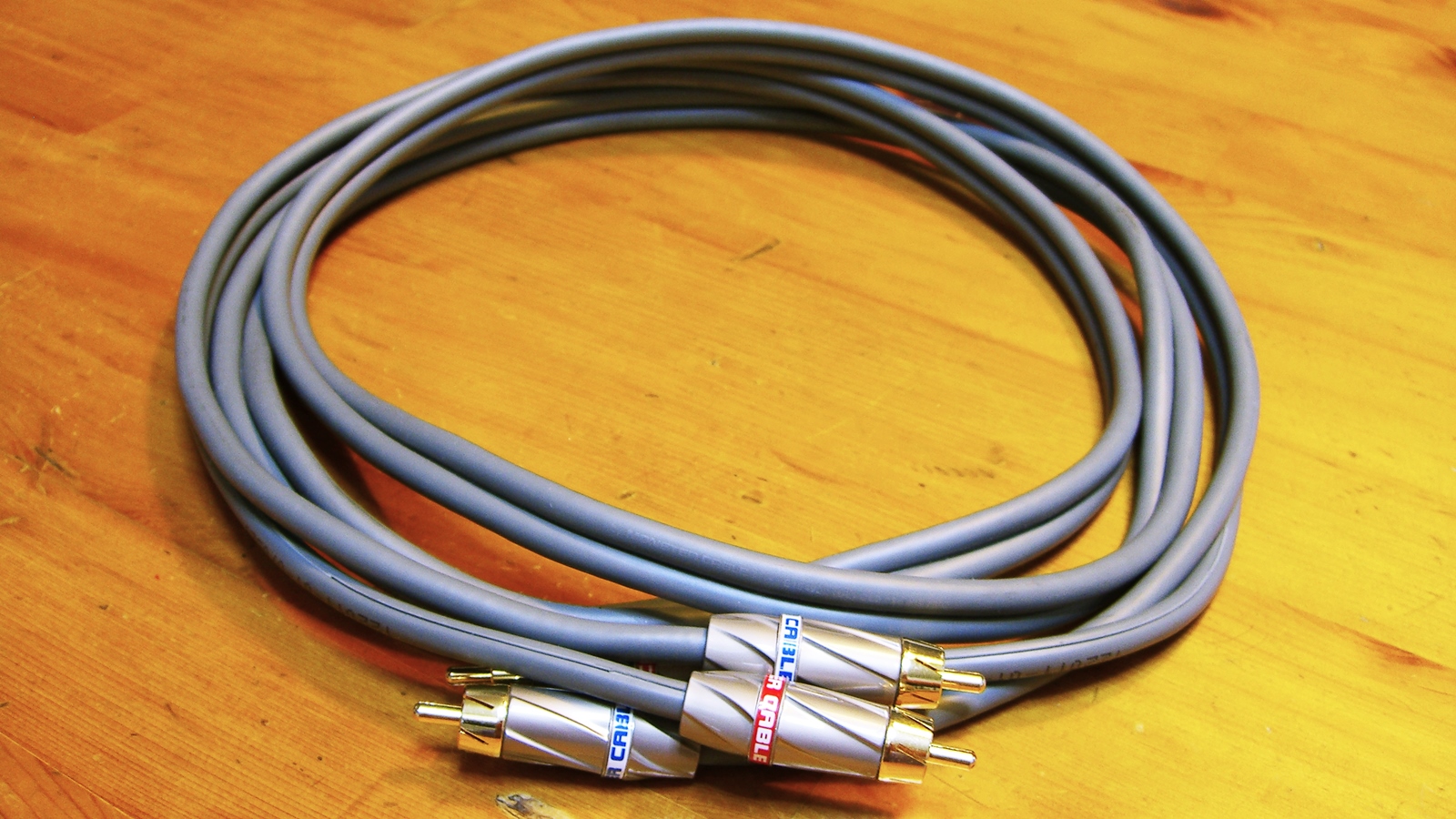
I happened to notice that today the yen hit ¥99 to the dollar for the first time in 12 years and 5 months. This year it seems like it could be a good time to import audio gear personally from the United States again after a long break. I love MLB too, so maybe a trip over there wouldn’t be a bad idea either. So, today I’d like to talk about Monster Cable, one of the largest audio cable manufacturers in America.


 ポチップ
ポチップ
Monster Cable = Rip-Off, Give Me a Break!
Original article (translated) here (Gizmodo Japan)

I read it with great interest, as it had quite a sensational title that apparently caused a bit of a stir in America. Judging by the title alone, it gives a very strong impression of Monster Cable = rip-off, how dare they! The article itself follows along much the same lines, so I suspect most readers who aren’t particularly familiar with the subject will come away with quite a negative image of Monster Cable products just from a quick read.
What I first imagined when I saw that startling title was one of the following:
1) Monster Cable’s wholesale price to retailers is 80% of the list price?
2) The retailer’s margin is 80% of the list price, leaving the wholesale price at just 20%?
3) The manufacturing cost is 20% of the wholesale price?
Those were the sorts of things I had in mind. Reading through the body of the article, the details remained unclear — the original author even notes that they are an outsider to the industry — so I went and looked at the source article as well. To put it bluntly, it turns out to be a rather slanted piece, heavily biased towards a particular impression. Monster Cable Is a RIPOFF!
The link above from THE CONSUMERIST publicly exposes Monster Cable’s wholesale price list for retailers, showing list prices, wholesale prices, and retailer profit margins. As you can see from the table, what is written there is, naturally, list price = wholesale price + retailer margin. Leaking a wholesale price list to outsiders ought to be absolutely against the rules of business, but in terms of its actual content, it is nothing more than a perfectly ordinary wholesale price list for a selection of Monster Cable video products. Whatever one makes of the negative campaign by THE CONSUMERIST and US Gizmodo, I think Monster Cable as the manufacturer has absolutely nothing to be embarrassed about on the substance of the matter.Official Response from Monster Cable’s PR Department
>Surprising results. Monster Cable’s PR department promptly responded
Monster Cable’s “80% Markup” — Technology Worth the Price? | Gizmodo Japan (gizmodo.jp)
>with a lengthy two-page reply.
>“Jewellery, clothing, and furniture often carry even larger margins.”
Written this way, it gives the impression that Monster Cable is brazenly saying, so what if our margins are big? But in the original text, the statement reads more like:
That is my own translation, but it reads quite differently, doesn’t it.
1) Is Monster Cable’s Wholesale Price 80% of the List Price?
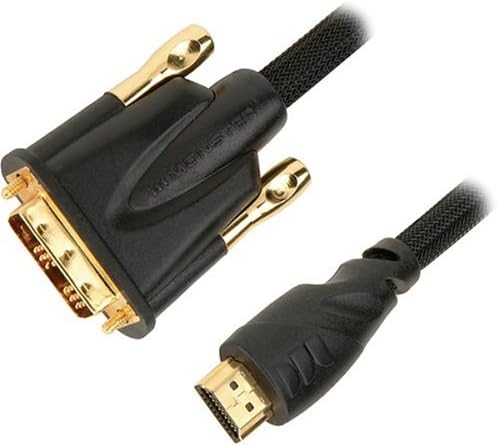
Reading through the table, the wholesale price varies by product, but it generally sits at around 60% of the list price — which is actually quite high, and rather tough on retailers. Monster Cable’s own statement notes that for the majority of products, the retailer’s margin relative to list price is 37–39%. Even the 19ft (approximately 6m) HDMI-DVI cable singled out in the article (which, judging by the price, appears to be the HDMI400/DVI) carries a margin of 44%. The article describes this, for some reason, as being roughly equivalent to an 80% margin. Furthermore, there are some curious products where the list price and wholesale price are identical — leaving zero retail margin — or where selling at list would apparently result in a loss (a promotional campaign of some sort, perhaps?), yet none of this is mentioned anywhere in the article.
2) Is the Retailer’s Margin 80% of the List Price, Leaving the Wholesale Price at Just 20%?
There don’t appear to be any products in this table with a wholesale price of 20%. In fact, there are almost no products where the wholesale price is below 50% — the so-called “juicy” kind with wide retail margins — which makes it rather a stretch to call any of this a rip-off by any normal standard.
3) Is the Manufacturing Cost 20% of the Wholesale (or List) Price?
You cannot tell anything about manufacturing costs from this table at all. The cost ratio for a manufacturer depends entirely on how you calculate it — raw materials, capital investment, research and development, various labour and running costs, shipping costs, taxes, and so on — so no single figure can be stated. It will naturally be lower than the wholesale price; otherwise the business would not be viable. But at the very least, the actual cost cannot be determined from this price list at all. That is the truth of the matter.
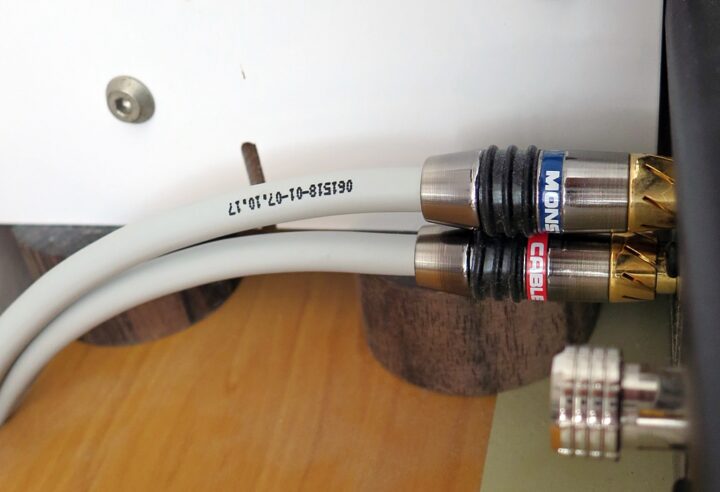
As for the “80% markup” in the title, I have no idea what basis they are using for that figure, but the pricing reference THE CONSUMERIST uses as the target for comparison is an unbranded HDMI cable selling for under $20 at a budget discount store. Compared to that, they argue that a $99 Monster Cable (with a 44% retail margin) is overpriced, and that a premium cable for digital HDMI transmission is pointless to begin with. On top of that, in the spirit of Gizmodo’s anti-audiophile-mysticism stance, the message seems to be that digital signals mean picture quality cannot differ — something along those lines.
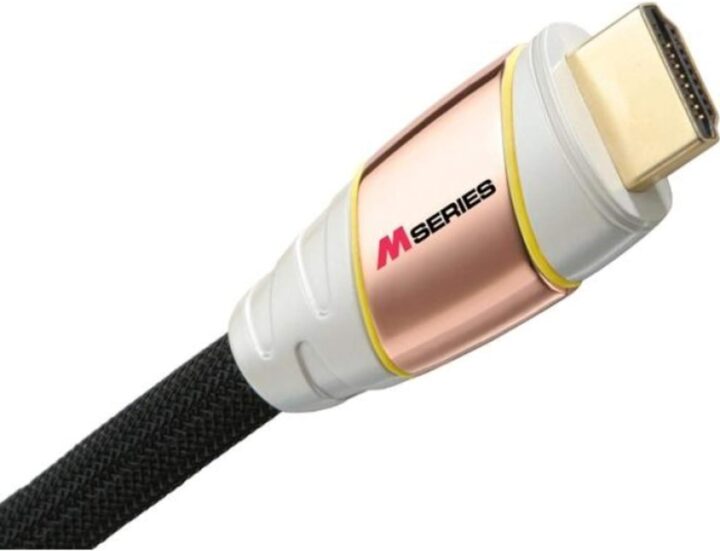
Monster’s Top-of-the-Line HDMI Cable: M1000HDMI
This must rank among the top three HDMI cables in the world for picture quality. It boasts extraordinary transmission capability, with excellent S/N ratio. The contrast is impressively three-dimensional, and every aspect of colour and outline rendering is in a class of its own. This is what an HDMI cable that suppresses information loss to the absolute minimum should look like. Even with SD sources, the crispness and colour clarity are immediately different. Edges remain sharp without bleeding even with highly saturated colours, and when moving to HD sources, the RGB phases lock into perfect alignment. Uniform and consistent, with information filling every pixel gap, the texture of materials and colours feels strikingly lifelike. The bold, direct projection image holds up with plenty of impact even at 120 inches — as if putting the projector’s own capabilities to the test. – Ongen Publishing Cable Taizen 2007, quoted from p.177
Monster Cable, for their part, countered that the no-brand HDMI cable being used for comparison does not even meet the HDMI Ver. 1.3a Category 2 specification, and went on to explain that compared to other manufacturers’ cables of equivalent specification and quality, Monster’s products are actually on the lower end of the price scale (→ as of 2008, the entry-level model in their domestic US HDMI cable lineup had a list price of $49 and up). They are not in the US lineup, but for the Japanese market, the lower-tier MONSTER CABLE HDMI M650HD and MONSTER CABLE HDMI M850HD may have a somewhat smaller gap between Japanese and US pricing.
Gizmodo, seemingly wanting to make the price gap look even more dramatic, recommends just buying a $5 HDMI cable, but as of 2008, could you actually get a certified HDMI cable for ¥500? Even cheap ones typically sell for around ¥2,000–3,000. I myself use a Sony HDMI cable to connect my plasma television and Blu-ray recorder. (Addendum: list price aside, it seems there are indeed HDMI cables from obscure brands selling for a few hundred yen in the PC peripherals market. As for quality — there are many reported problems with extremely cheap HDMI cables, so please check reviews carefully and proceed at your own risk. One low-cost option that worked without issues was the Planex HDMI cable. ※ From the mid-2010s onwards, as the HDMI standard became more widespread, HDMI cables that function correctly for under ¥1,000 have become commonplace.
Incidentally, even if a retail margin is quoted, the final selling price is of course at the discretion of the retailer. Not many people would buy at full list price, so each shop sets its own discounted prices depending on its circumstances. As everyone knows, both in Japan and in the United States, retail stores typically offer discounts of 10–30% as standard, and clearance sales, model changes, and end-of-year sales at half price or less are commonplace.
>It’s not just Monster — pretty much any cable manufacturer selling through home cinema specialist retailers tends to have fairly large margins, I’d say.
I am not entirely sure what THE CONSUMERIST is all about as a media outlet (a latent communist organisation dressed up as consumer advocacy?), but their real grievance seems to be that the AV accessories business is fraudulent in its very nature, and that Monster Cable and retailers making a profit at all is simply unacceptable to them. Faced with such a biased negative campaign, Monster Cable’s response — taking it seriously and providing a careful factual rebuttal — strikes me as the far more reasonable and honest approach.
A Diverse Lineup from Ultra-Budget to Super High-End

Monster Cable at least makes products across virtually every price point, from the flagship high-end speaker cable Sigma Retro Gold (SRGS) costing several hundred thousand yen, all the way down to the S16 speaker cable and other products in the XP/XPHP series, sold by the metre for a hundred-and-something yen at budget home improvement stores. Even people with little knowledge of high-end audio — those who simply want something a little better without spending much — are benefiting from Monster products all over the world, I suspect. The company’s approach of bringing a slightly higher quality cable to as many people as possible, rather than catering exclusively to a select few, is not necessarily something to criticise.

 ポチップ
ポチップ
As a slight digression, I would like to briefly share my own impressions of Monster Cable’s sonic character. Their defining characteristic is that they place the greatest emphasis on the texture and quantity of bass. In audiophile terms, they are cables that produce a pyramid balance. As you move up the range, the sense of mass in the bass is accompanied by increasingly refined quality as well. On the other hand, the texture of the treble tends to be rather subdued, and when it comes to sonic transparency or beauty in the upper frequencies, competing products at a similar price point generally have the edge, in my experience.
The time-correct construction the company advocates — setting aside the question of its theoretical coherence — I understand as an idea aimed at improving the sense of speed and weight in the bass, which can sound sluggish on audio equipment where a flat tonal balance causes the treble to perceptually dominate. Monster Cable is therefore, I think, suited to those who find their system lacking in bass, or who prefer volume and punch from low-frequency instruments over refinement in the treble.
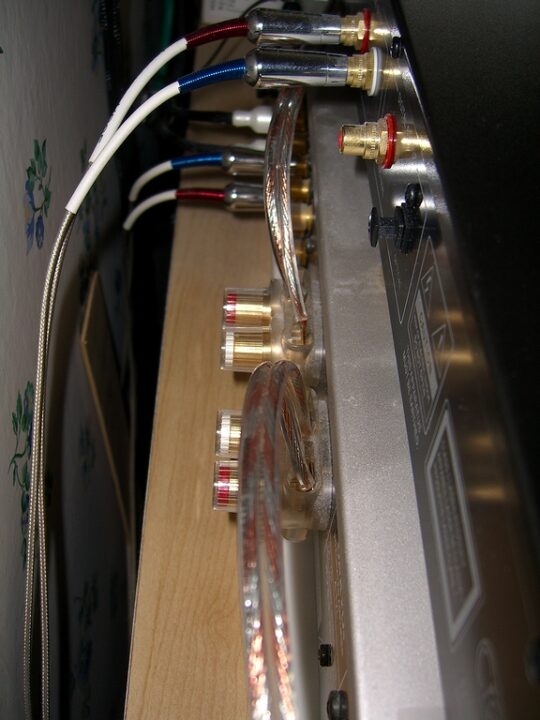
There Are Sound Quality Differences Between HDMI Cables Too
While we’re at it, the question of picture quality differences between various HDMI cables — which lies at the root of the disagreement between the two camps — is a subject that audiovisual magazines cover as a matter of course, with dedicated comparison features. Much like the situation with audio digital cables where the sound inexplicably changes, I actually swapped between several HDMI cables myself — from a low-cost model intended for PC monitors, to the audio-technica AT-HMH/AT-HMZ and AIM AVC-FL01, and the Sony DLC-HE10XF — and both the sound and picture quality did genuinely differ, which left me wondering just what digital transmission really is.
So, all things considered, what actually caught my attention most in the original article might well have been this:
>Did you know that the Monster Cable CEO has several Lamborghinis in his garage and turns up to CES every year like some kind of celebrity? Those aren’t cheap, you know.
The president of Monster Cable is Chinese-American, if I recall correctly. A major business success story, and clearly that sort of world. Before I could even feel envious, I just find myself genuinely — and rather simply — impressed.


Auto Translated by CS4.6