【Banana Plugs and Spade Lugs Unnecessary in Hi-Fi?】
Part 1|Part 2|The Sound of Plating|AT6301|Banana Plug Sound Comparison
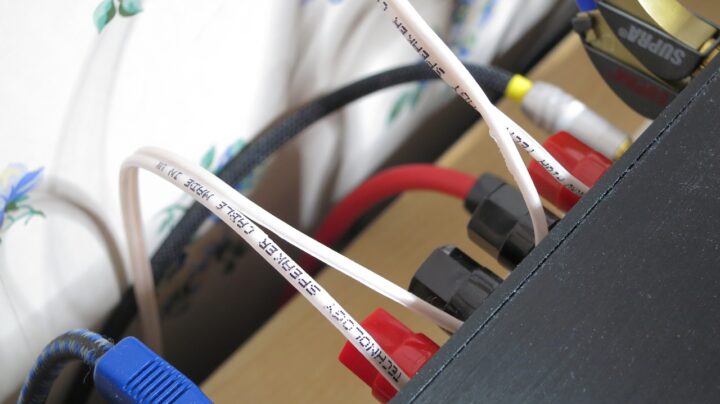
Now, the Miuaudio MKTP-2 (CarotOne ERNESTOLO) valve digital amplifier has extremely small speaker terminals, making it quite difficult to wire bare speaker cable directly — at least on the amplifier side, there is simply no getting around the use of some kind of banana plug or a smaller spade terminal.
In my sub-system, the MKTP-2 and QUAD L-ite2 are connected in bi-wiring configuration, with ORB Innova TS7 handling the low-frequency side and Acoustic Harmony N1 the high-frequency side of the speaker cables. The ORB Innova TS7 is a finished cable with gold-plated pure copper spade terminals at both ends, while the Acoustic Harmony N1 connects to the tweeter via bare wire fitted with audio-technica AT6301 banana plugs.
The speaker terminals on the valve amplifier side are simply too small, making the wiring a rather forced affair, and using bare speaker cable on a permanent basis is just not feasible. Listening to the sound, though, it is quite clear that cheap brass banana plugs are best avoided if at all possible — something I have been telling myself really must be sorted out.
Overview of the Sound Quality Comparison and Test System
With that in mind, I drew up a shortlist of banana plugs that seemed likely to better the audio-technica AT6301 in sound quality — options available in sets of four, ranging from a few thousand yen up to the mid-ten-thousands — and eventually settled on the American-made high-end banana plug Cardas CAB, reasoning that it would be a safe choice. As it turned out, however, the Cardas CAB had rather too pronounced a character, and its compatibility with the Miuaudio MKTP-2 left something to be desired, so I ended up removing it almost straight away. . .
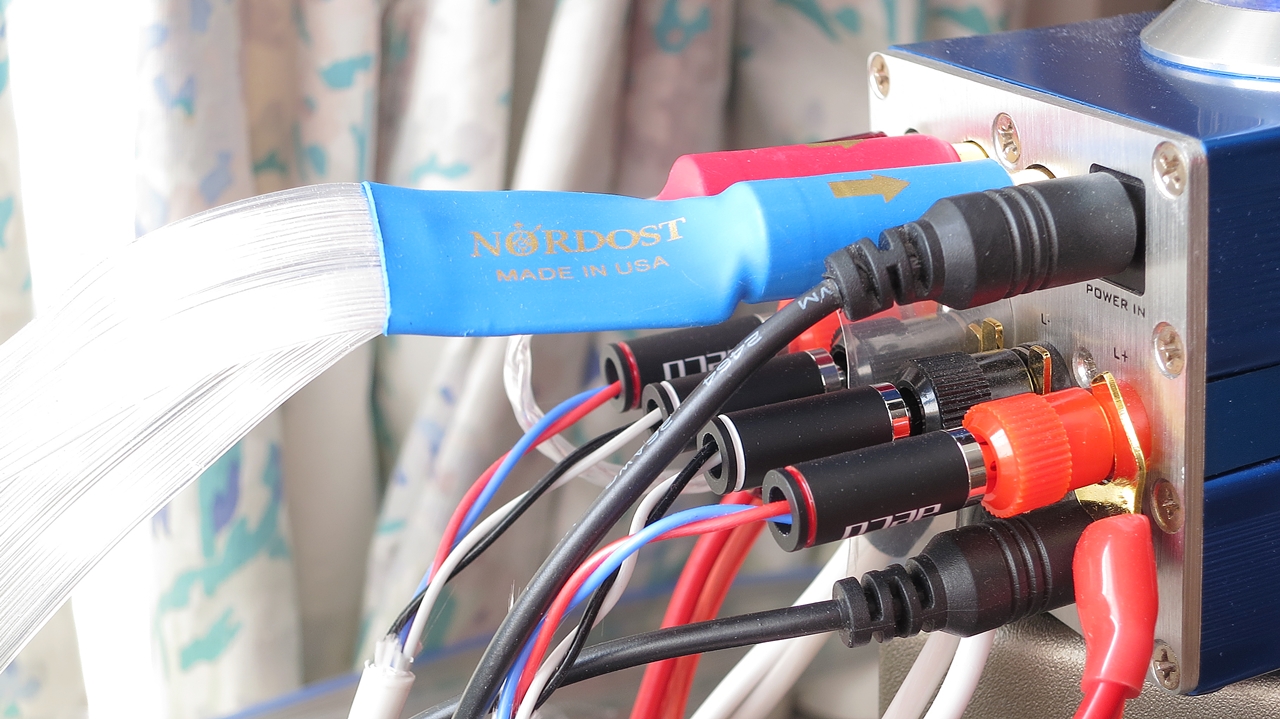
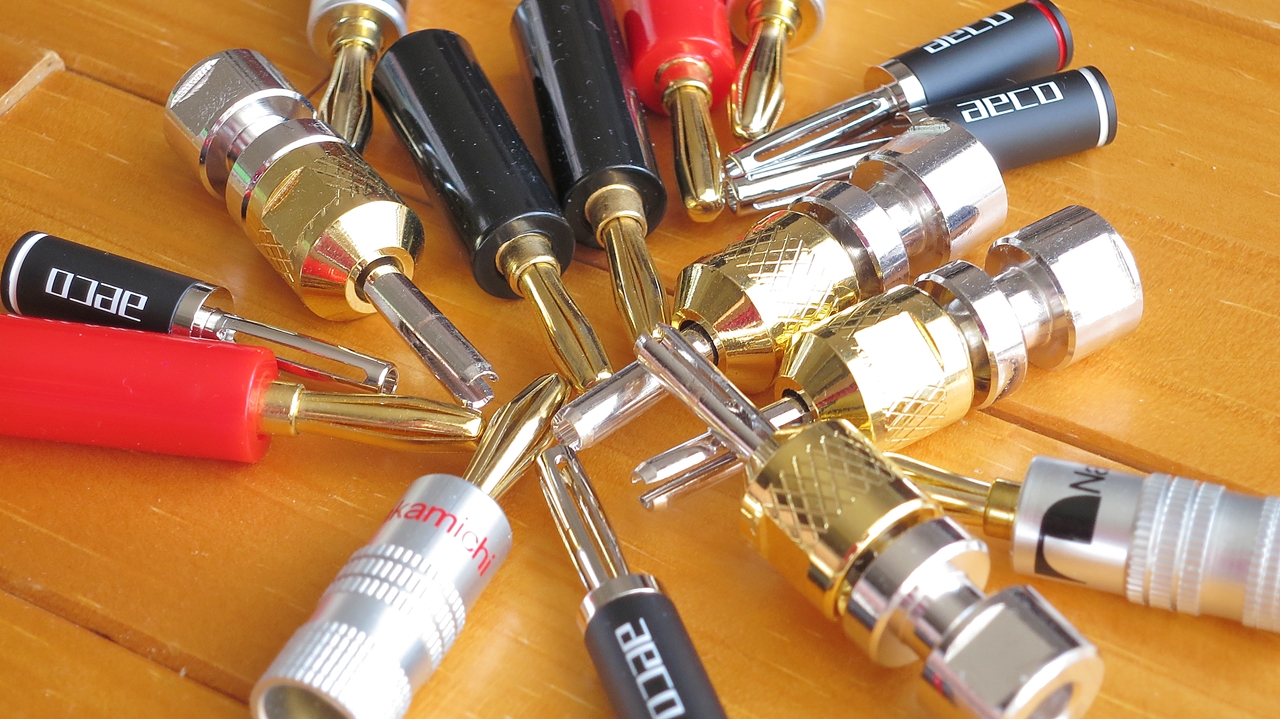
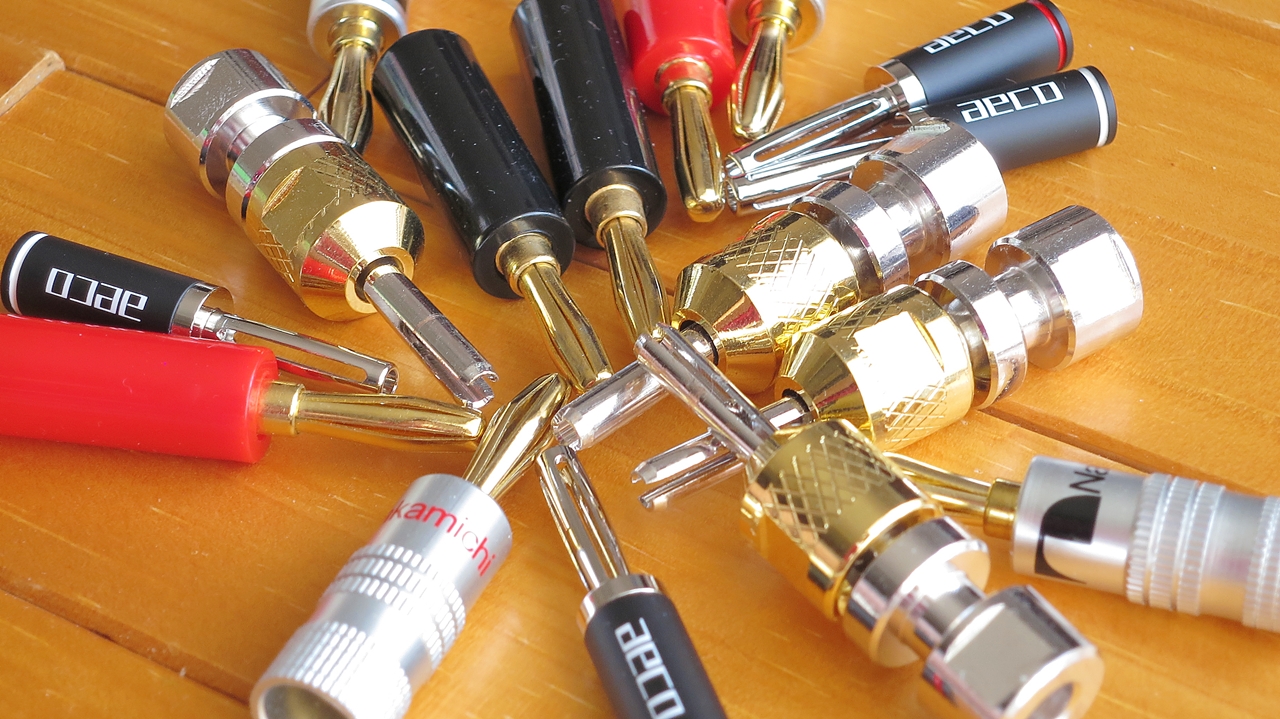
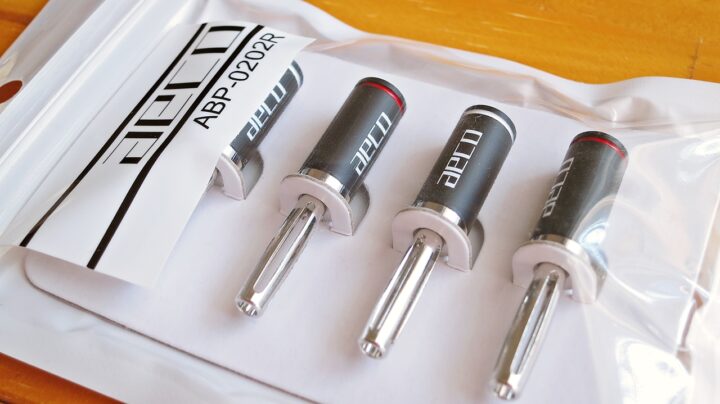
As I mentioned in my recent banana plug review, I was lucky enough to get an early look at a banana plug that Taiwan’s aeco import agent aeco Japan Store had set aside for a Twitter giveaway — just the one, through a fortunate connection (many thanks!). Taking this opportunity, I decided to do a sound quality comparison between several banana plugs I had on hand: the aeco itself, an inexpensive Nakamichi, an Audio-Technica AT6301, the aeco ABP-0202R at a few thousand yen, and the high-end Cardas CAB at over ten thousand yen.
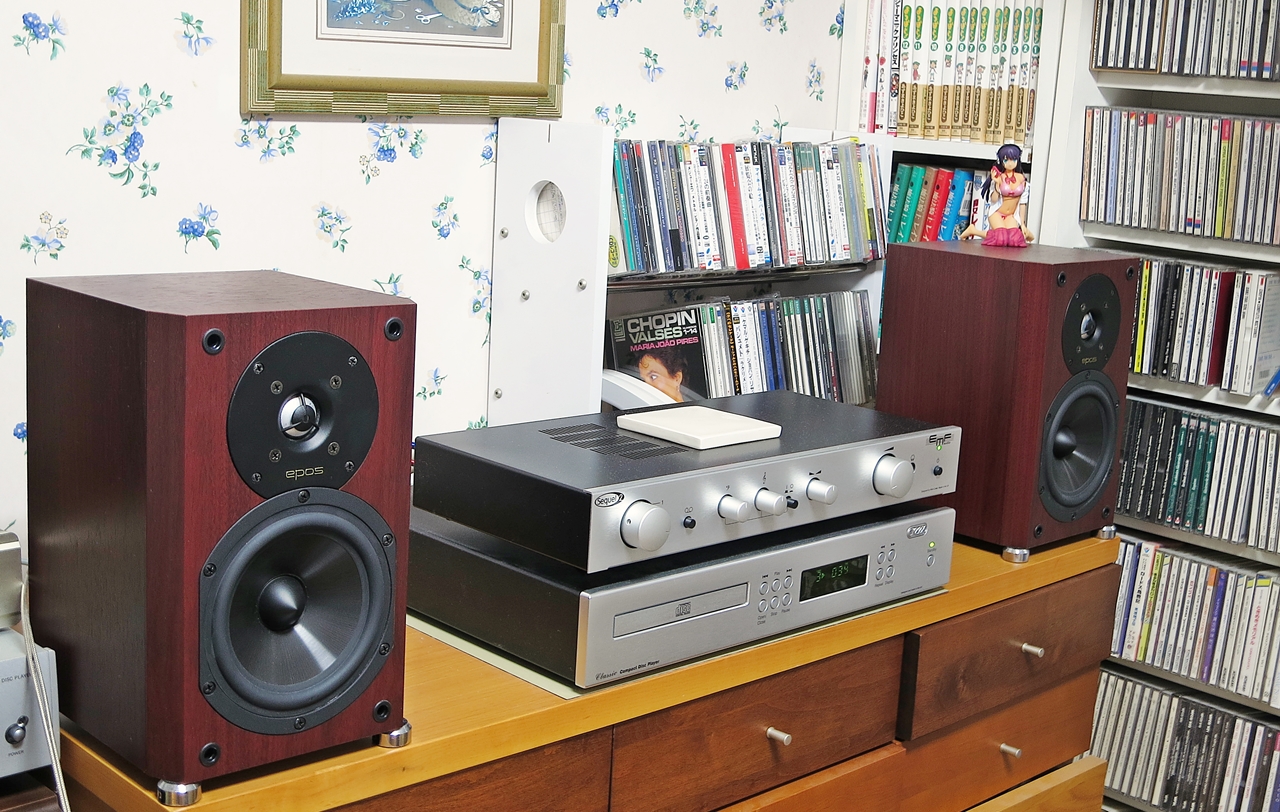
In my current system at home, the only place where banana plug connections are strictly necessary is the tweeter wiring on the Miuaudio MKTP-2 — but swapping things around there looks like it could get fiddly, so I’ll leave that for later. Instead, I’ll start the comparison on the CREEK sub-system, where the speaker cables are much easier to swap in and out. The banana plugs will be connected on the Sequel2 integrated amplifier side. Connecting at the EPOS ELS3 speaker side does produce a stronger sonic impact — for better or worse — but since vibrations are transmitted directly and quite vigorously at that end, the downside of plug resonance also becomes a concern. For that reason, when using banana plugs, I generally try to use them only at the amplifier’s speaker output terminals. As for the speaker cable used in this test, anything with a strong sonic character of its own isn’t really suitable for comparisons, so I went with the French-made Real Cable CAT150, which is inexpensive and tonally plain.

 ポチップ
ポチップ
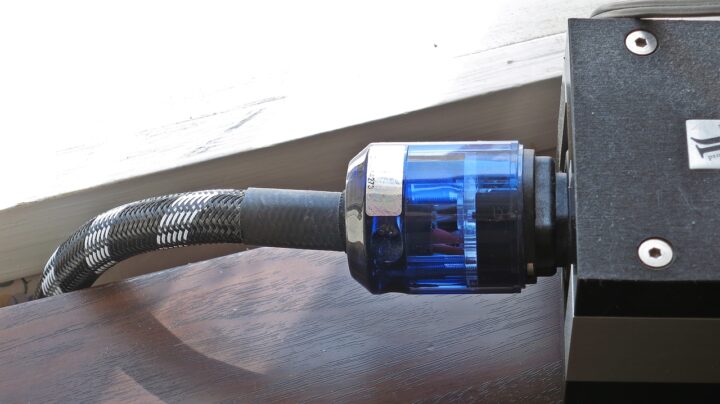
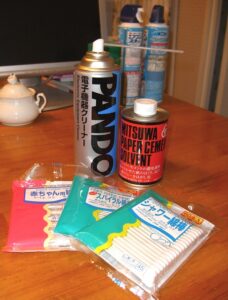
When doing comparative listening, skin oils from handling the banana plugs or bare speaker cable ends gradually cause the sound to become muffled, so each time I touch them during swapping and reconnecting I spray a little Pando 29D onto the plugs and cable ends and wipe them down with Silcot to degrease them. ※ The amplifier and speaker terminal posts are also polished in advance with Pando 29D and audio cotton swabs.

Nakamichi 24K Gold-Plated Banana Plugs
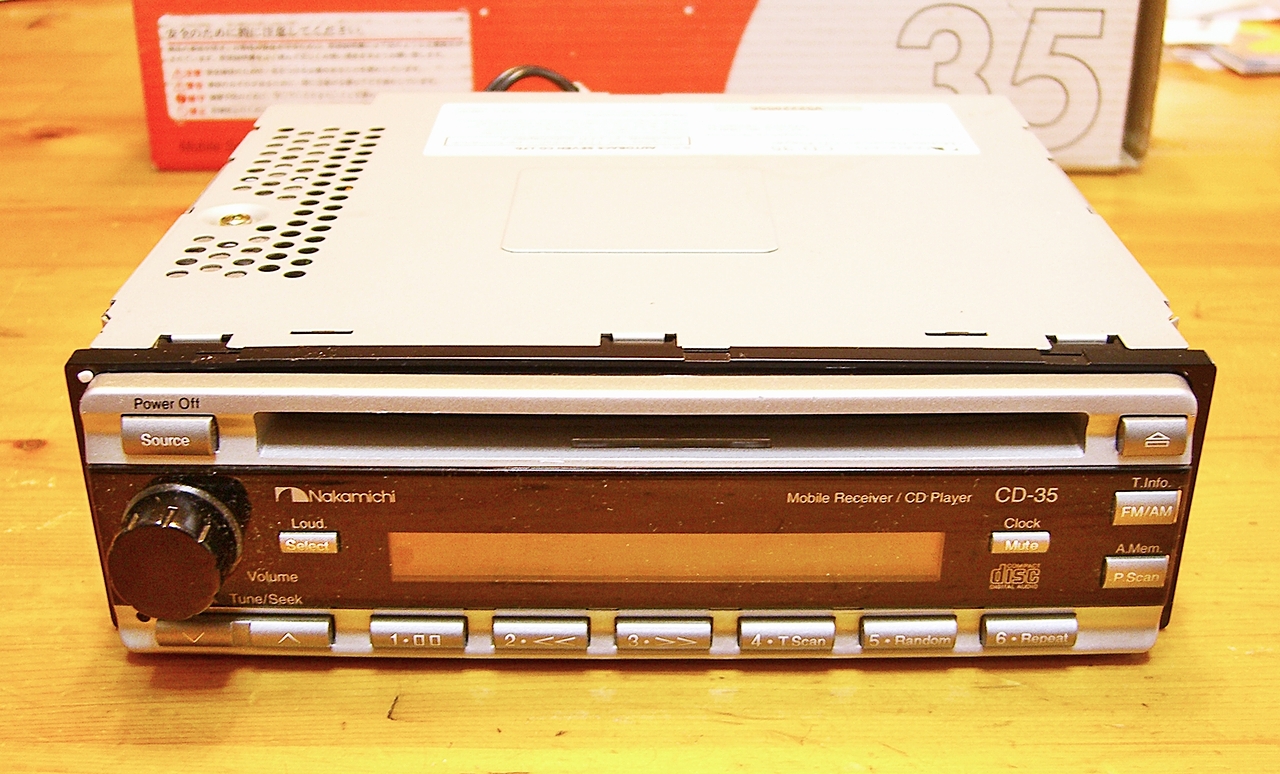
Purchased from Amazon. The brand name says Nakamichi, but the Japanese Nakamichi that made its name with cassette decks went bankrupt long ago, so this is presumably sold by an overseas (Chinese) company that bought the rights to the brand name or something of that sort — I found their website here. Visually identical products printed with different brand names also appear to be circulating. It should be noted that the original Nakamichi, during its active years, never made banana plugs or any other audio accessories. (It may or may not be related to banana plugs, but as for Nakamichi car audio: it seems that some remaining stock manufactured by the Taiwanese OEM — who continued producing and selling products that the original Nakamichi had designed and marketed in the 1990s for a while even after the original company disappeared — is still circulating in certain quarters.)
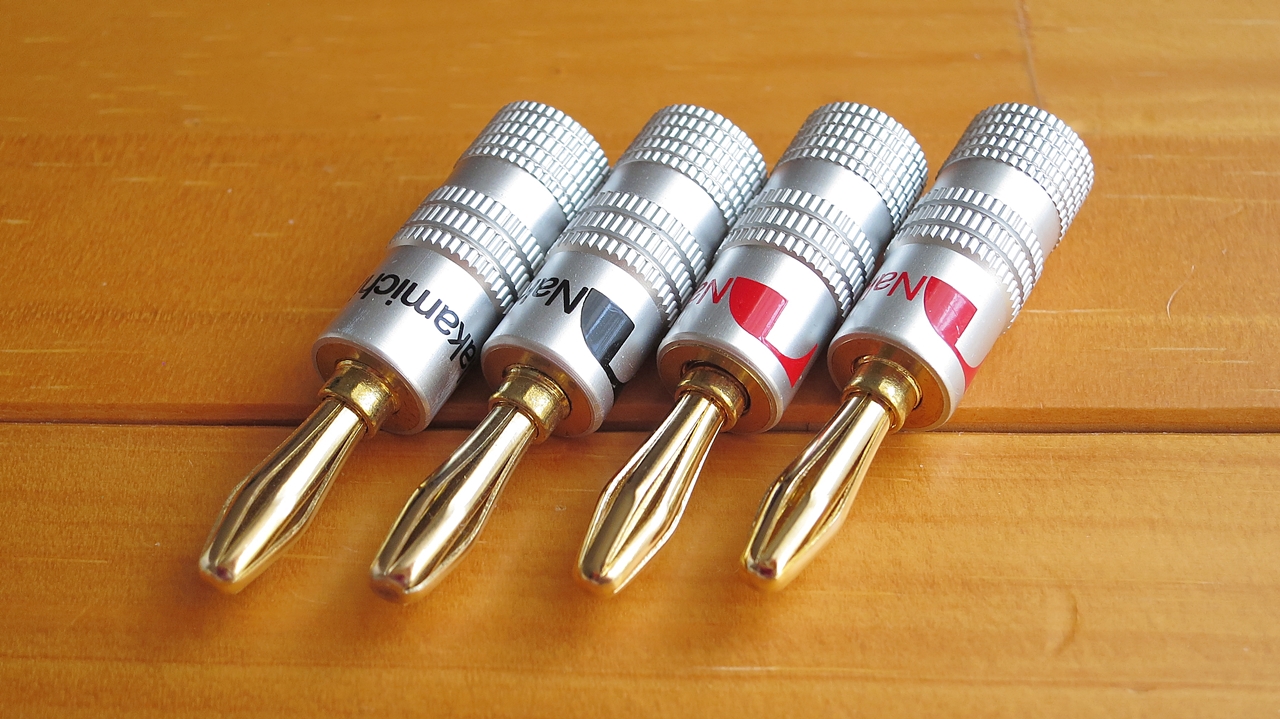
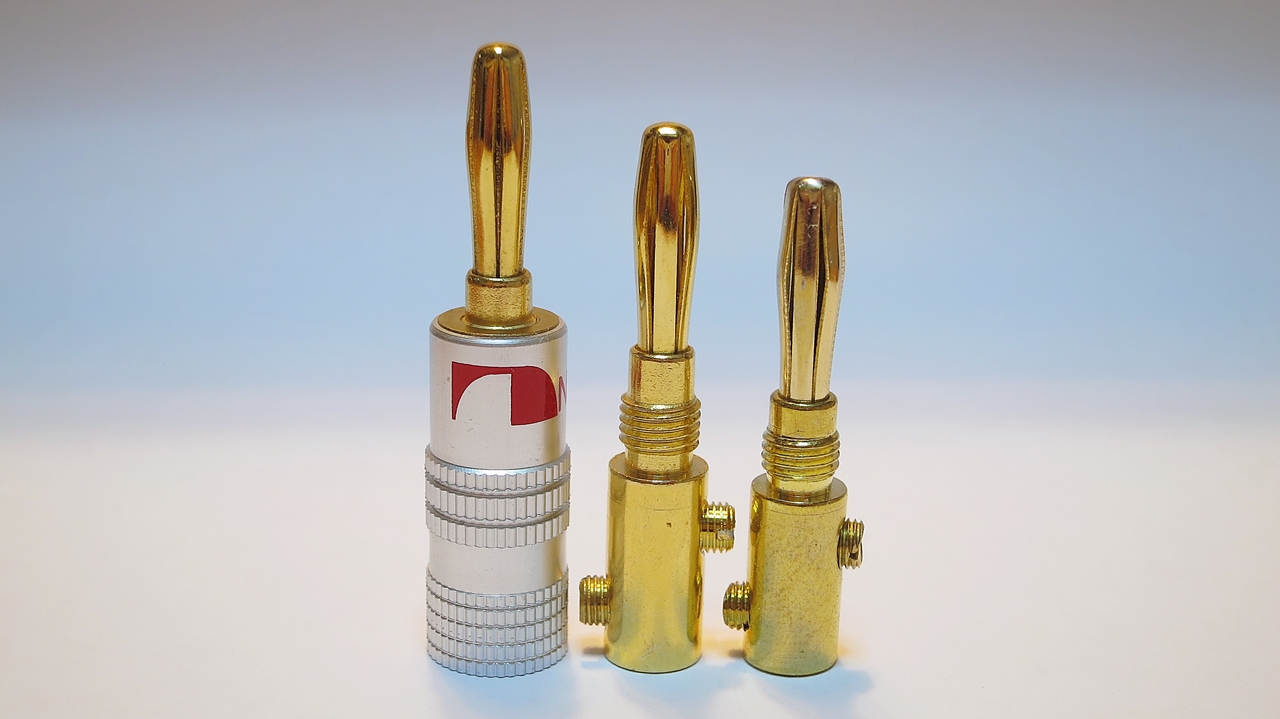
Initially, going by the product images, I had wondered whether this might be from the same OEM manufacturer that supplies the audio-technica AT6301 — but when I actually placed them side by side, the banana plug body itself is slightly smaller than the audio-technica AT6301 in the foreground, the colour of what appears to be 24-carat gold plating looks closer to plain brass, and the plating quality also seems inferior.
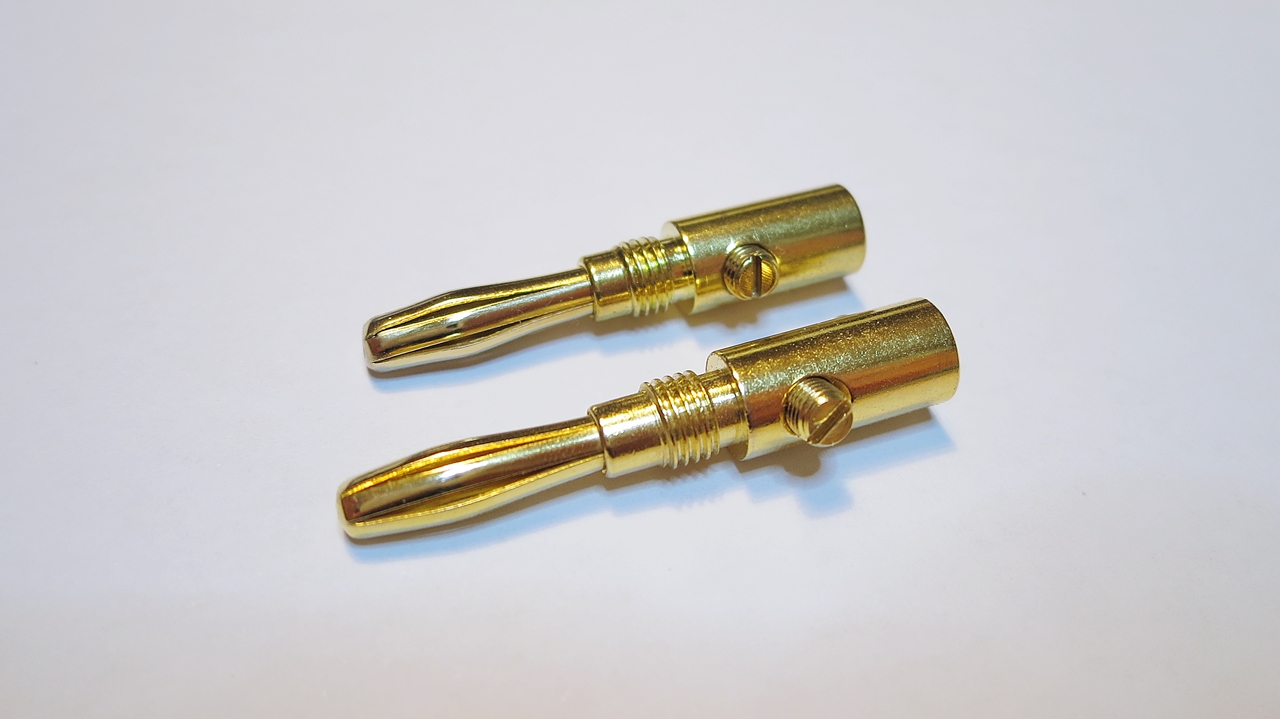
What bothered me most was that the banana plug body itself — the most important part — is not particularly well made; the threads and thread-cutting are notably imprecise, making the screws a little difficult to tighten. That cheapness feels about right for the price. When new, inserting it required considerably more force than with the audio-technica AT6301, while removing it was, conversely, easy. On the other hand, the cylindrical cover — printed with Nakamichi in matt silver — is surprisingly well finished. The cover appears to be a hybrid construction, with brass for the threaded section and aluminium for the cylindrical body.
 ポチップ
ポチップ
The sound has a bright quality with a brassy kind of brilliance to it; the frequency range feels slightly narrow, and the overall impression is neither particularly good nor bad. Musically it is reasonably lively. Given the dubious origins I half expected something far worse, but it is not that bad at all. There is a slight tendency towards a scattered, unfocused quality, but it is perfectly usable in ordinary situations, including disposable applications where plugging and unplugging happens frequently. It is not a product I would actively recommend for a dedicated hi-fi setup, but it is inexpensive, and buying it for the sake of the aluminium cover section — which I will discuss later — might well be worth considering.
audio-technica AT6301 ※ No plastic cover
A model that has been around since time immemorial — the standard banana plug introduced in the Bako-Pure series. It is the same product as the cheapest banana plug sold by the old British IXOS, and the Eagle 2815 sold as a modelling accessory, which shares identical internals (※ Looking at recent images of Eagle Model, it appears that a different product with a shorter head has been substituted under the same part number, so do be careful). The audio-technica version, however, has the brand logo printed on the cover (which, incidentally, used to come without any printing in the old days). The IXOS version happens to be the same plug that was included as an original accessory with CREEK amplifiers back in the 80s and 90s, when CREEK amps were still banana-plug-only.
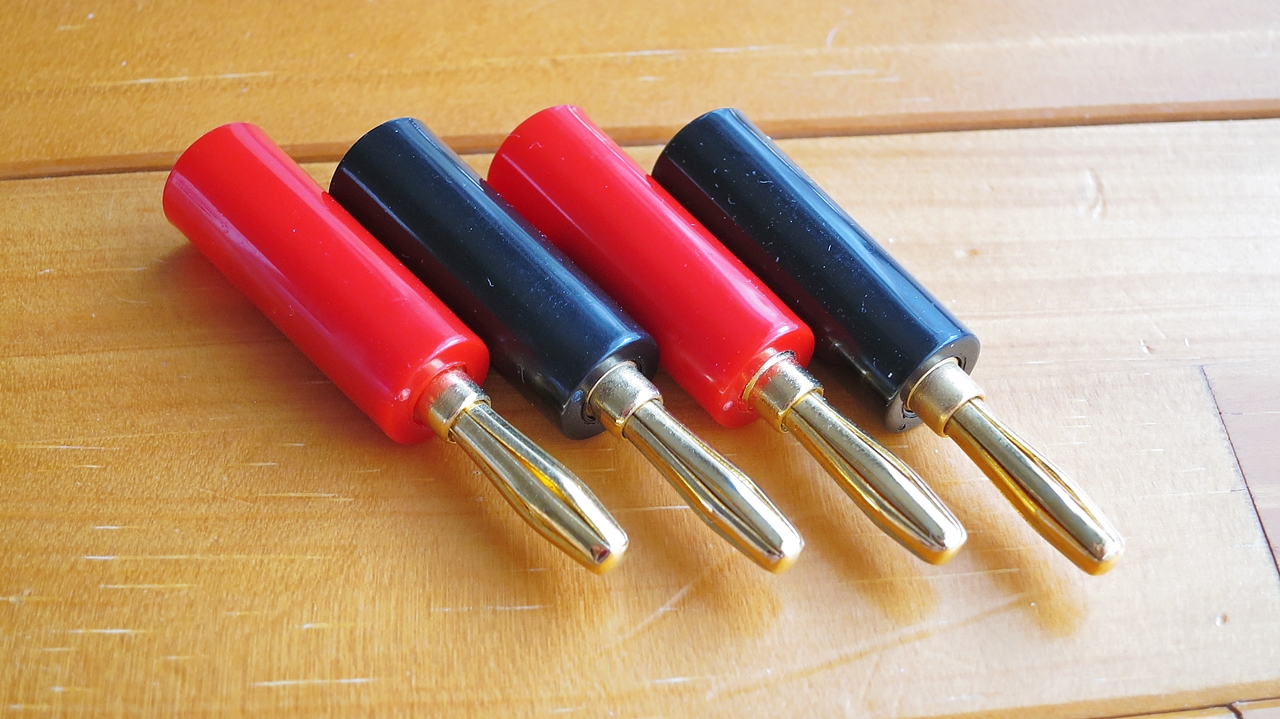
Testing was done without the plastic cover. I have never used those red-and-black plastic covers, as beyond their purpose as insulation they offer no sonic benefit. This plug too has a certain brassy brightness in the mid and upper frequencies. There is a slight barrel-distortion quality — a kamaboko-shaped frequency response — but compared to the Nakamichi, the range opens up, there is more resonance, and musicality improves. If anything, the sound rolls off slightly at both extremes, making the mid to upper-mid range the most prominent region.
 ポチップ
ポチップ
I have been writing about the AT6301 for many years, and at this price point the sound quality on offer is honestly more than one could ask for — when the budget is extremely tight, this is a plug that delivers a genuinely respectable result, and so I have come to regard the audio-technica AT6301 as the benchmark banana plug against which all others are measured.
Some years ago I used a set of four German WBT banana plugs — the WBT 0644R Midline Banana Plug, at around 10,000 yen for four — and comparing them at the time to the far cheaper AT6301, I found they were actually worse sonically, which left something of a scar.
audio-technica AT6301 + Nakamichi Cover
These two banana plugs differ slightly in the size of the banana contact itself, but on closer inspection the thread pitch of the cover-fitting section is identical. On a whim I tried fitting an AT6301 into a Nakamichi cover, and to my surprise it went in perfectly. Then came the sound — which stopped me in my tracks.
The familiar, middling, unremarkable sound of the AT6301 transformed into something sharp, refined, and distinctly upmarket in character. The kamaboko-shaped frequency response opened out into something wide and flat; the stereo image tightened; the direct sound gained focus and density, with an increased sense of damping. The brassy sheen and golden brightness in the upper midrange diminished considerably, giving way to something subtly matte in texture — in short, the aluminium’s character was now overlaid on top, counteracting and blending with the brass’s inherent colouration. The signal-to-noise ratio improved, and the ambient — or rather, spurious — resonance also decreased. Tonally, the overall character is darker and slightly cool. The scattered quality is resolved and the sense of focus on the musical note itself increases — however, after listening for a while, one realises that it has merely acquired a certain kind of atmospheric sound, without any fundamental uplift in quality as such, and the sheer amount of musical information retrieved does not feel greatly increased. If anything, the flatness of the response makes the presentation feel slightly less interesting as expression, and there is also a slight sense of reduced energy — a somewhat suppressed tendency in terms of dynamic musicality.
audio-technica AT6301 + genuine plastic cover
With the plastic cover adding its own character, the sound takes on a naturally soft, mellow quality overall. The brassy resonance is tidied up to a degree. The kamaboko balance — with the mid to upper-mid range standing out — remains unchanged, but the overall frequency range narrows and the sound becomes more rounded, so the sound image tends to spread and lose focus. It may be useful for softening the sound when things become too hard on the ears. When the brass coloration bothers you, or when the system’s overall character feels too harsh, fitting the plastic cover adds a degree of damping and produces a milder output. Sonically, though, it is better without the cover. When used with the cover fitted, the quality is on a par with the Nakamichi (with aluminium cover) or below.
aeco ABP-0202R (rhodium-plated, screw-type)
Of the four types reviewed here, this one has the highest machining precision, accurate to the micron. Being compact and lightweight as a banana plug, it has the advantage of being less likely to add unwanted character to the signal path. That said, it is so small that thicker speaker cables simply will not fit. Anything from 0.75 SQ up to around 2.0 SQ seemed manageable, but for 2.5 SQ class cables — such as the SUPRA CLASSIC 2.5H, which can be inserted directly into the AT6301 — you would likely need to thin out some conductors. The contact head is made of tellurium copper (tellurium-alloyed copper) with high conductivity and a quality rhodium plating; the screw is rhodium-plated brass; the black cover is brass. Initially, the banana section was so stiff that it would not go into the terminal at all, and when I enquired what to do, I was told to screw it in clockwise — and once I tried that, it slid in without any fuss.
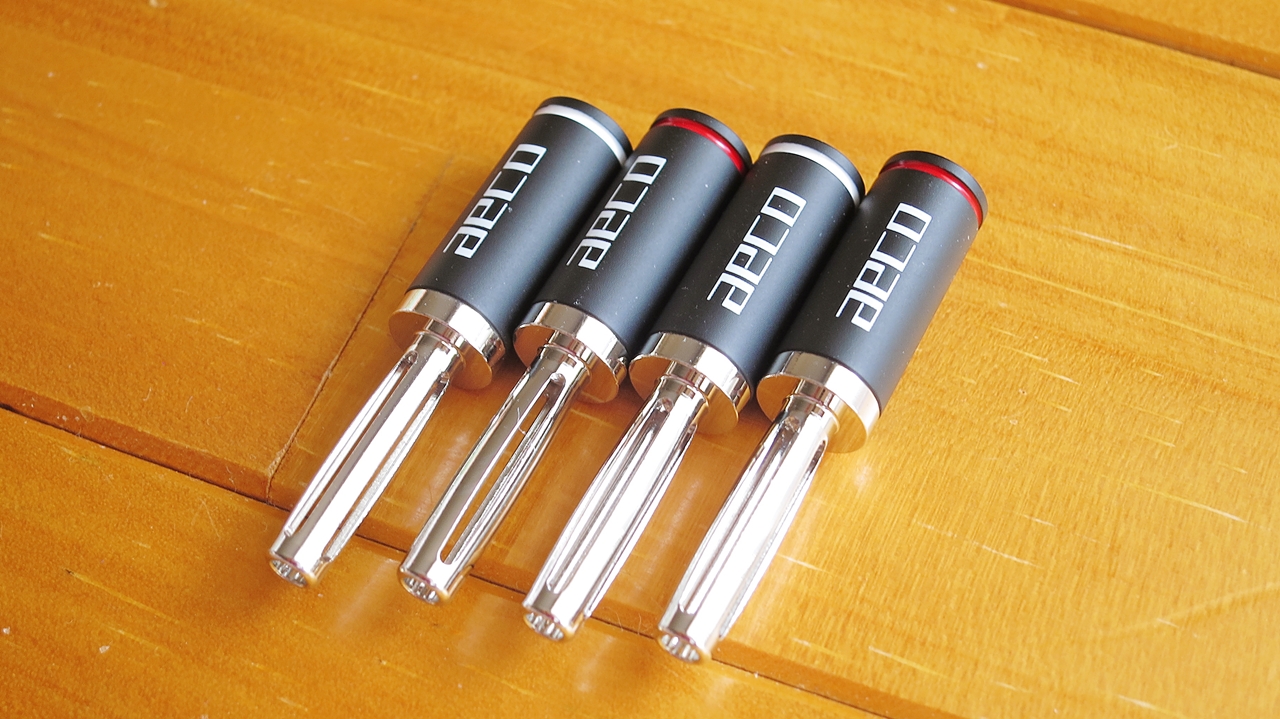
The surface of the sound image is smooth, the projection is good and crisp, the highs extend well, and the tonal character is extremely bright — like a mercury vapour lamp — with well-ordered, clean sound images lined up neatly. Compared to bare-wire connection, the resonance is tidied up just a little, but the sense of freshness is high and the energy of the performance is lively. Being new rhodium, the highs prick slightly, but it is a fundamentally well-behaved sound, so that should sort itself out with burn-in (later note: it did). The lower register — the left-hand direction on the piano — carries an appropriate weight, with a slightly viscous, smooth quality characteristic of rhodium plating, and a touch of hardness. Resolution is high, projection is good in both directions, and the range is wide. The impression is of minimising the loss of freshness that comes with using banana plugs, while adding a degree of brightness and smoothness through the quality plating. The sense of freshness is well preserved, and at this level of product, one barely needs to think about the drawbacks of using banana plugs at all.
For a more detailed review, see here
Cardas CAB Banana Plugs
The only item in this roundup to exceed ¥10,000 for a set of four — the high-end banana plug of the group. Where aeco takes a straight-signal approach, this one goes in the opposite direction entirely, with a large mass of conductive material making it a genuinely heavyweight piece. Banana plugs that allow Y-lugs to be clamped together like this are relatively rare, and the GOLDMUND banana plug that had long been the standard-bearer for this type has been discontinued and is now difficult to find. I was going back and forth about switching to its successor, the TechDAS Super BANANA, but in the end I settled on the Cardas CAB. It features a brass body with a double plating of silver plus rhodium, combined with a gold-plated nut. The distinguishing feature is a two-piece construction that uses no small screws whatsoever; it can also be used to link a further banana plug at the rear, or as a terminal to secure a Y-lug as mentioned above. It feels extremely solid and heavy, though one slightly awkward point is that once the silver-rhodium plating gets scratched, it can flake away rather easily — not that there is much one can do about that in everyday use. It is also worth noting that the sound has a slight resemblance to the wall outlet CARDAS 4181US (under construction), which carries an equivalent plating.
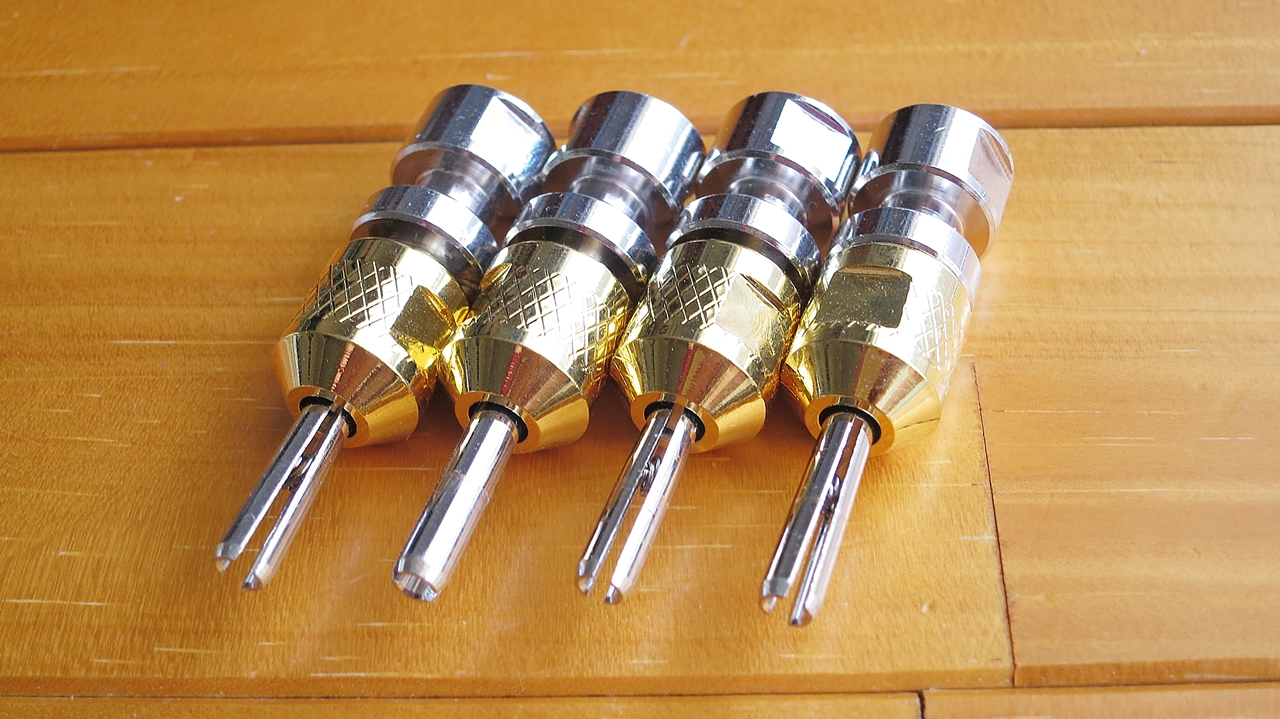
In terms of tonal balance, the sound is full through the midrange and upper bass. The soundstage recedes further back, and there is a lush, moistened quality to the reverb. Compared to using nothing at all, things lean slightly passive, but there is a beautiful, high-end-like atmosphere about it — a certain sense of refinement that is hard to put into words. The high frequencies are surprisingly gentle for a rhodium-plated plug, with none of the harshness one might expect, yet there is no sense of distortion either, and the resolution is high with a reasonable amount of liveliness. That slightly bleached, slick smoothness characteristic of rhodium is present here too — if anything, the plating’s character is even more pronounced than on the aeco ABP-0202R. In the lower frequencies there is a tendency for speed to drop slightly and the attack to soften. Density is high, but the sound images themselves come across as a little broad. Put kindly, it is a well-composed sound with stable tonality; put less kindly, the reverb can feel as though it is overflowing, and depending on the source material, one may wish for a little more separation.
With the Miuaudio MKTP-2, the sense of freshness retreated somewhat and everything settled into a rather predictably neat, tidy presentation, so after using it for a while I eventually removed it — but between the CREEK Sequel2 and the EPOS ELS3, it does a surprisingly good job of dispelling the budget feel of the speaker in a nicely balanced way. It adds a certain charm in that combination — and though it may be somewhat unorthodox, there is a case for deliberately inserting it purely to lend a high-end-like texture to the system. It might also be interesting to try it with the main system’s Vienna Acoustics MOZART T-2, as the connection for radio.wave.cut. As befits a high-end banana plug, it has a distinct character that asserts itself for better or worse, whether one likes it or not — and how that assertiveness is perceived, positively or negatively, seems likely to determine one’s verdict entirely. Whether you can enjoy the CARDAS character is, I think, the key factor in deciding whether this plug is for you.

~ Summary ~
As someone who listens to Hi-Fi in a confined domestic space, my general stance has always been that banana plugs — which introduce additional contact points — are a connector designed with convenience in mind rather than sound quality, and that if you can get by without them, you should. As a basic principle, in cases where you can choose the termination on a pre-made high-quality speaker cable, I believe a crimped spade lug is the better option over a banana plug. That said, as I mentioned at the outset, there are quite a few amplifiers — such as the ultra-compact valve amp from Miuaudio (CarotOne), or the small digital amplifiers with extremely narrow speaker terminal spacing that have become common lately, used in desktop PC audio setups — where wiring a speaker cable without banana plugs is practically impossible. And with high-end speaker cables too, it turns out to be surprisingly common that the cable’s stiffness combined with clearance constraints makes straight-insertion spade lugs simply unworkable. When that happens, banana plugs with minimal sonic drawbacks inevitably become a necessity.
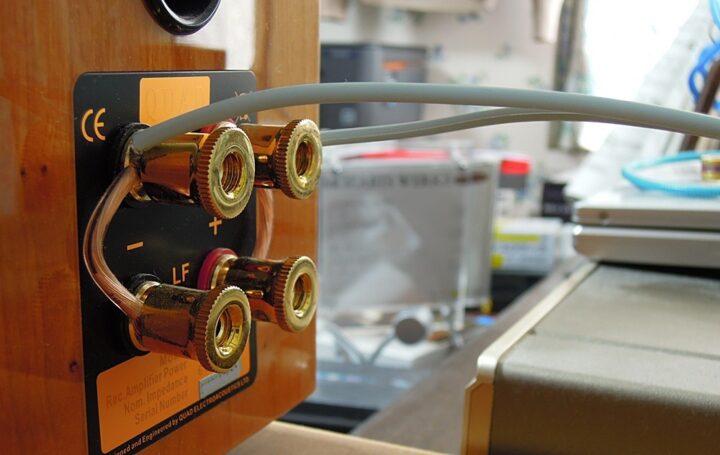
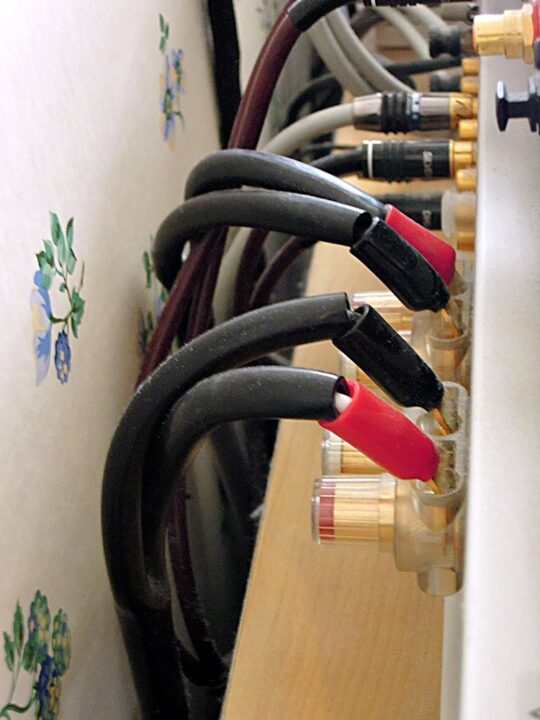
With all that in mind, when it comes to choosing a banana plug, it would be rather nice if the plug offered just a touch of sonic colouration that makes things sound slightly more pleasing to the ear — enough that the drawbacks of added contact points and increased resonance almost fade into the background. Of the plugs I tried this time, the one that seemed to strike that qualitative balance most successfully was the aeco ABP-0202R. Yes, it is a screw-type banana plug, which is structurally at a disadvantage to begin with, but the difference that attention to materials and precision makes is considerable — it clearly sounds several notches more respectable than a cheap brass spade lug, and I would venture to guess that even against other manufacturers’ banana plugs in the few-thousand-yen range (which did not feature in this comparison review), it would likely hold its own at the top of the class.
In contrast, the Cardas CAB takes rather the opposite approach — going all-in on a distinctly high-end-flavoured character. Compared to those two, the audio-technica and Nakamichi banana plugs are at a level where the drawbacks are clearly noticeable against bare wire without any plug fitted at all. That said, the combination of the audio-technica lock-head body with the Nakamichi aluminium cover was personally quite a hit for me. Unlike rhodium plating, the tonal character is noticeably dark, but the sound becomes more neutral in its presentation, and you are freed from the vague, woolly bloom of cheap brass and the barrel-distortion-like narrowing of the soundstage — so if you already own either of these banana plugs, it might be worth trying a Frankenstein combination of one’s cover and the other’s body, just to see what happens.
Next time I am tentatively planning a round-up comparison test of budget speaker cables, though it will probably be a while yet, with a few individual product reviews slotted in between. The author of this desktop Hi-Fi blog does tend to wander about on a whim.
【Banana Plugs and Spade Lugs Unnecessary in Hi-Fi?】
Part 1|Part 2|The Sound of Plating|AT6301|Banana Plug Sound Comparison


Auto Translated by CS4.6