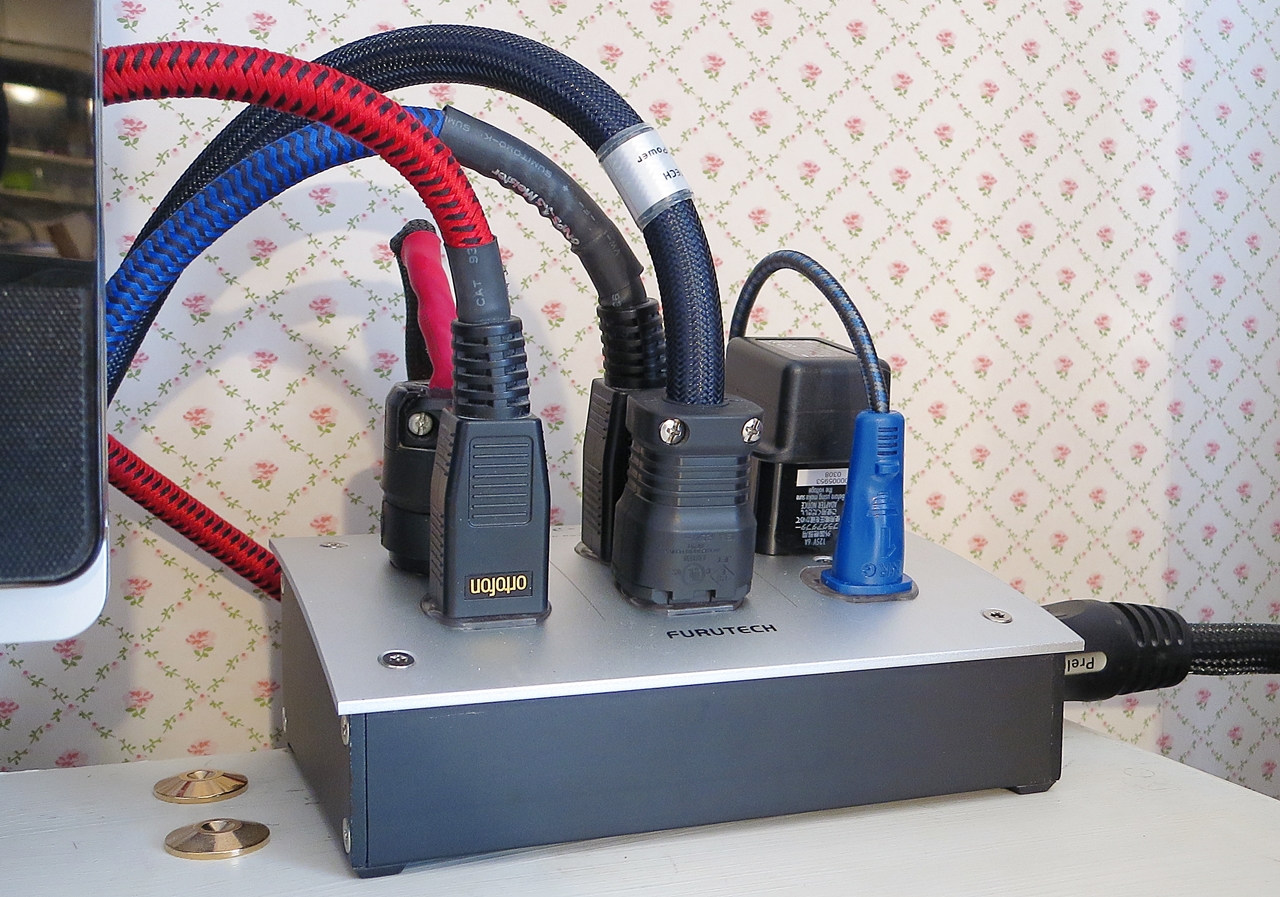
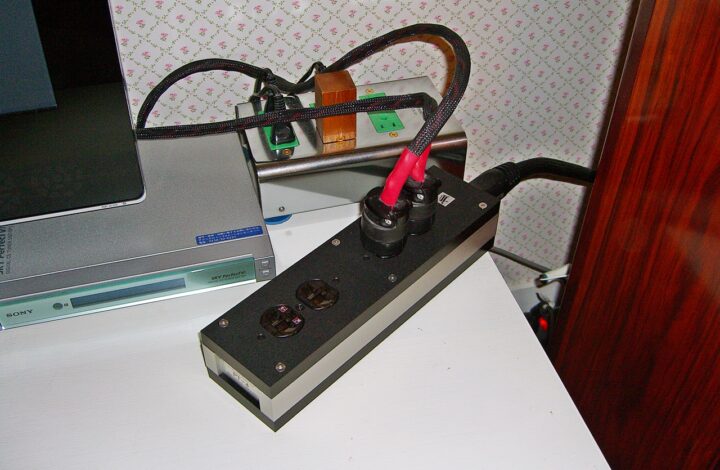
Today I am introducing the FURUTECH e-TP60, the most affordable power strip in FURUTECH’s line-up. Some years ago, Furutech kindly lent me a review unit for a period, and I was very impressed — so much so that I later went ahead and purchased a brand-new one from Murauchi on Rakuten. As of early spring 2019, the FURUTECH e-TP60 is connected as a secondary branch of my main boxed hi-fi system, running from the PAD CRYO-L2 wall outlet (upper of the two sockets) via the PS AUDIO power cable XPD MK2 Prelude.
Is there really any point in investing in a hi-fi power strip? Once you actually try a reasonably good product, the answer becomes self-evident on first listen — but with the e-TP60/e-TP66 range in particular, I think this is, price range included, the foremost candidate for a versatile power strip that can be recommended broadly, from those who have just moved past the beginner stage right through to intermediate-level audio enthusiasts.
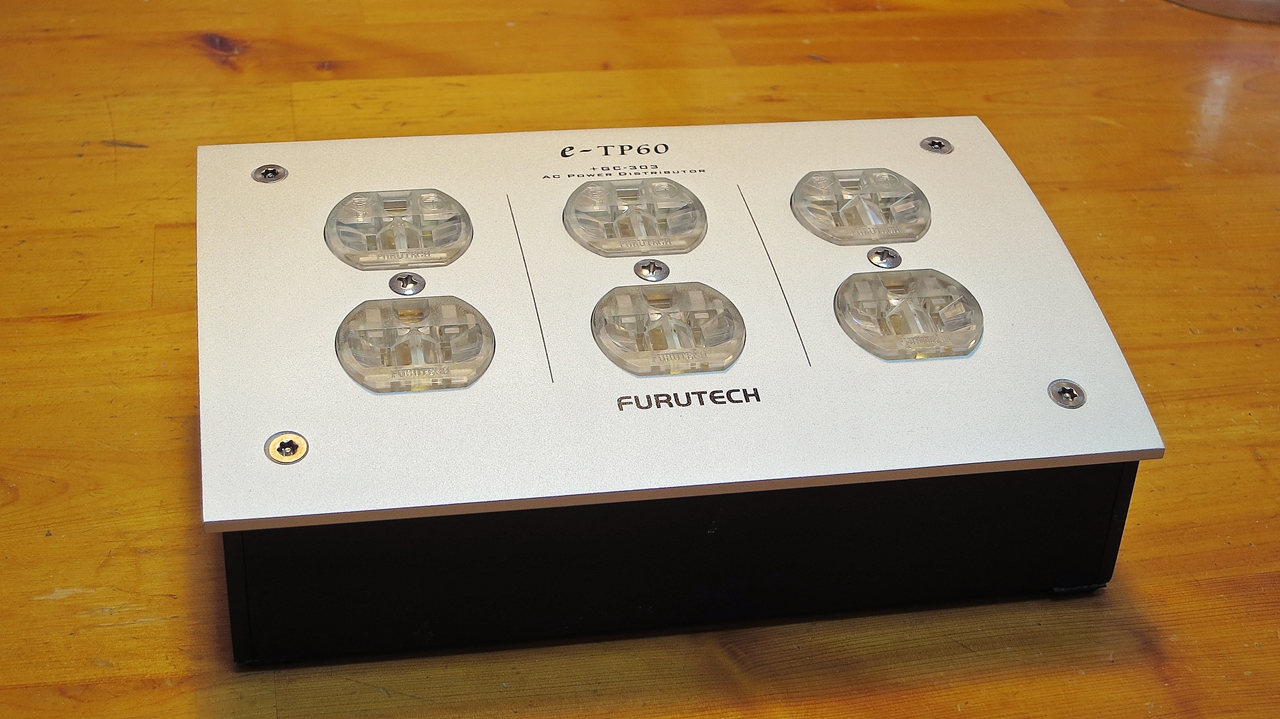
FURUTECH e-TP60: Exterior
The chassis is aluminium, though aside from the top panel the walls are on the thinner side, which makes it comparatively lightweight among high-grade power strips of this type. In person it looks more refined than in photographs — genuinely elegant and rather beautiful. Because the one-piece aluminium top panel curves and slopes at an angle, I did wonder whether plugging in power cables would cause them to jut forward diagonally and look unbalanced — that was actually my biggest concern. In practice, though, the slope is not particularly steep, and even with several thick power cables inserted, there is almost no sense of visual awkwardness or overcrowding.
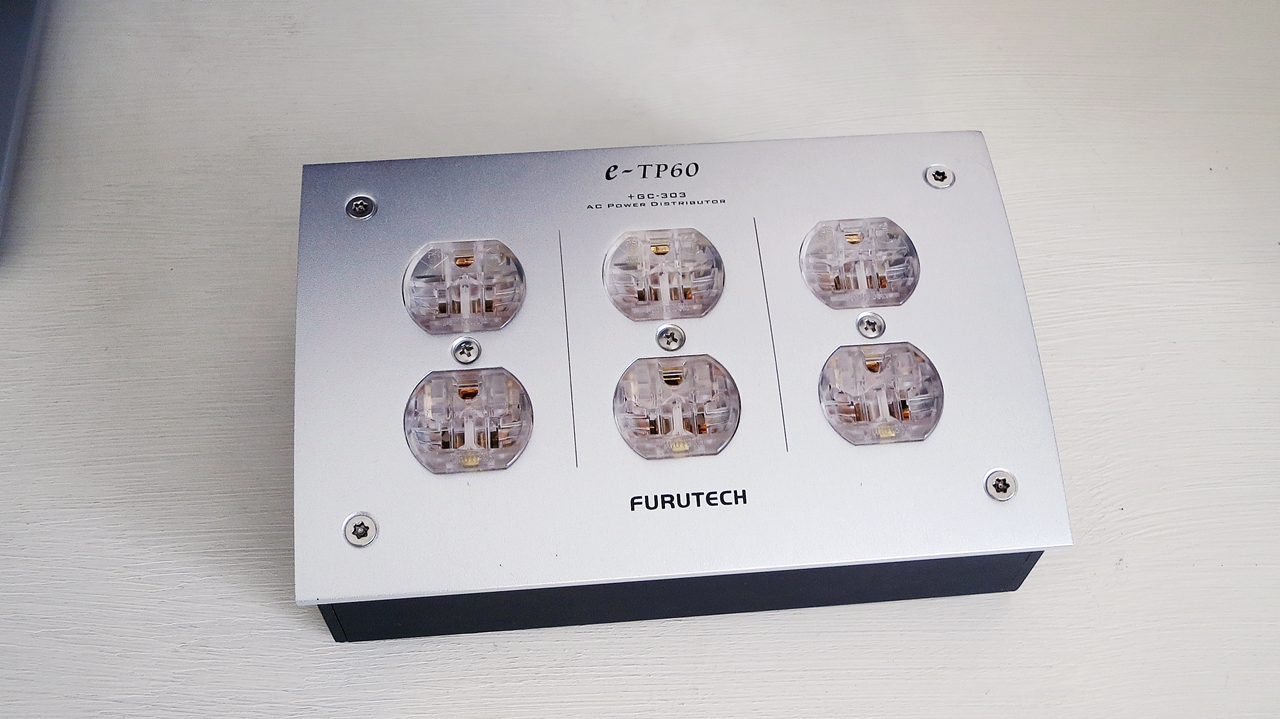
One weakness, however, is that depending on the power wiring in the room, if the inlet power cable needs to enter from the left-hand side, the unit ends up facing backwards. This is a problem I think applies to all of Furutech’s angled-design power strips, not just the e-TP60. Honestly, I could not help wishing they offered a version with the inlet on the opposite side.
The Audio-Grade Outlets Inside
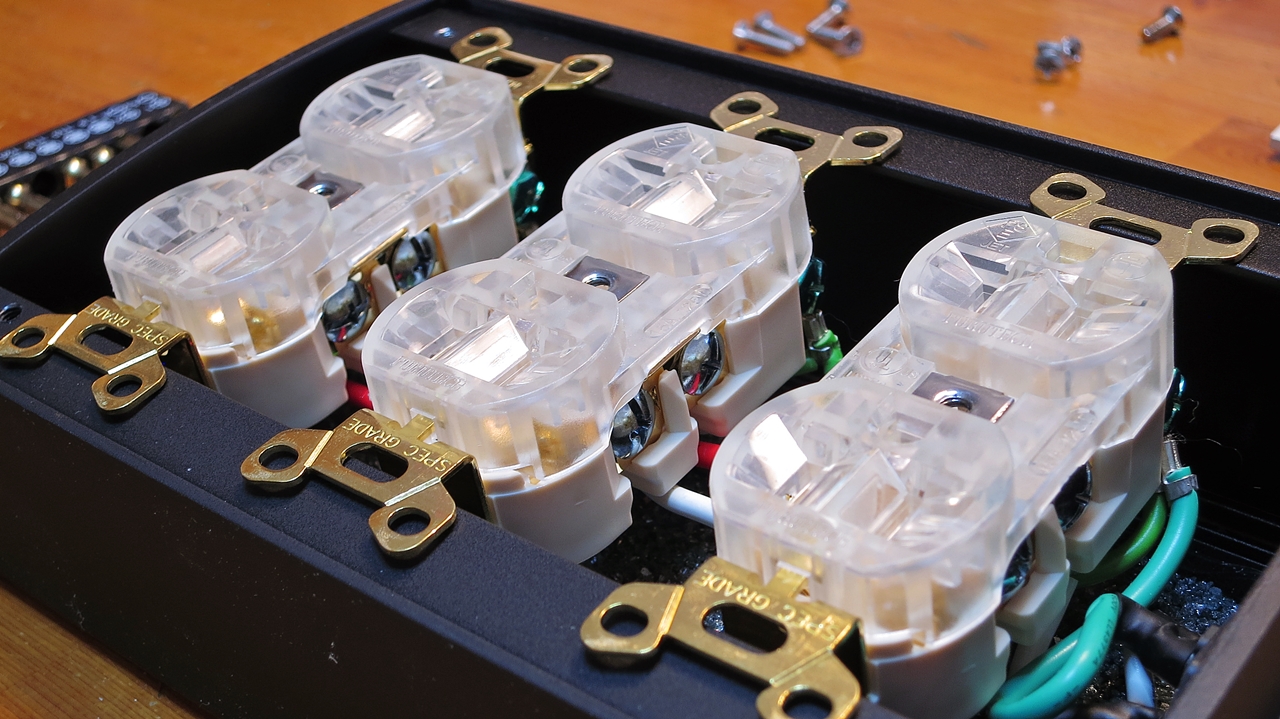
The wall outlets fitted inside the e-TP60 are three units of the FURUTECH FP-15A(G), which has a transparent body and gold-plated contacts. They are the same outlets used as OEM parts in the J1 project PT-4 (first generation), albeit in a different colour — in the J1, the body is a semi-transparent grey. Among the FP-15A models sold individually at the time, there was also a white version called the FP-15A-N1. If I recall correctly, the individual retail price before it was discontinued was ¥6,825 per unit, so having three of them fitted inside gives you a sense of just how good value the e-TP60’s chassis, internal wiring, and inlet are. Incidentally, the individually sold FP-15A also came in an (R) rhodium-plated version and a (CU) unplated version.
The FP-15A(G) itself was discontinued quite some time ago, and the successor FPX(G) gold-plated, FPX(R) rhodium-plated, and FPX(CU) unplated models are now available. The vertically oriented power strip FURUTECH e-TP66, released in 2017, uses the new FPX(G) gold-plated outlets. It would have been nice if the e-TP60 had been updated to FPX as part of a minor revision, but in the 2017-manufactured batch I purchased, they appear from the look of things to still be FP-15A(G). ※ The body is transparent and could easily be mistaken for FPX, so I enquired with Furutech directly and was told they are FP-15A. The official product page also does not state FPX, so there may be some reason they are sticking with the older model — possibly a PSE certification issue that prevents any changes.


 ポチップ
ポチップ
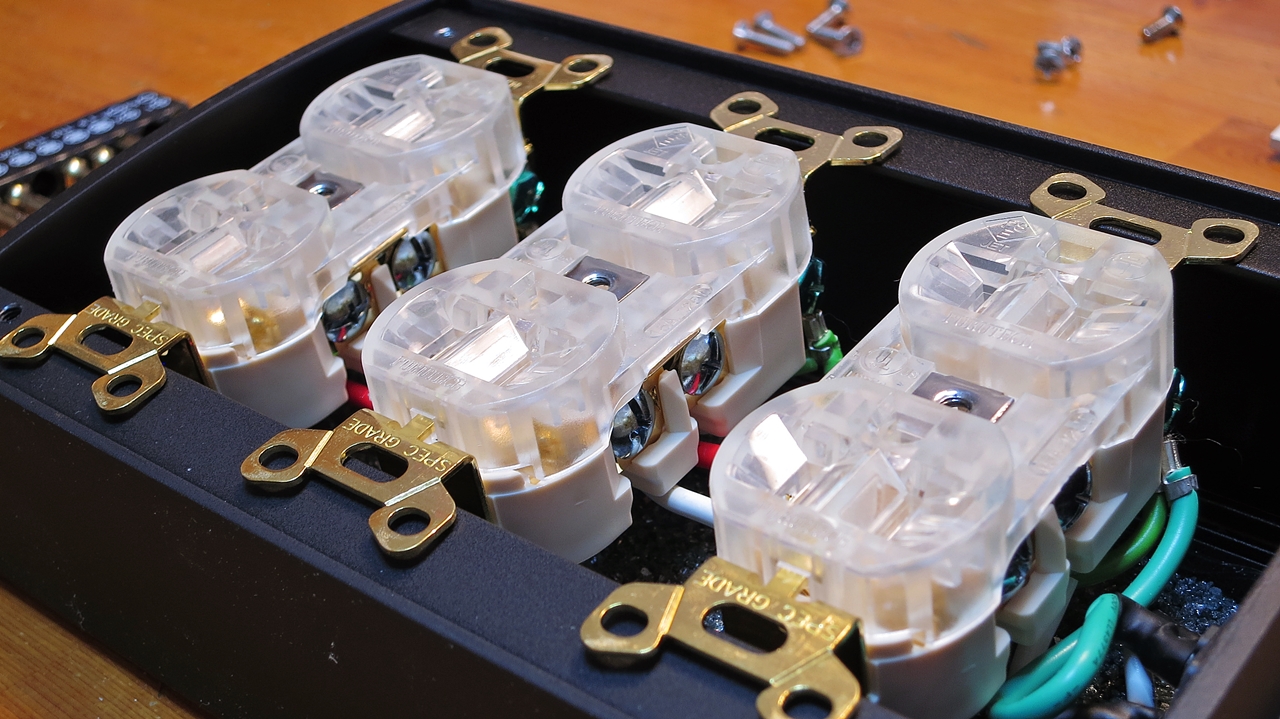
The FP-15A series and its successor FPX series look nearly identical externally, but on the FPX (strictly speaking, the successor to the FP-20A) in 20A specification, if you look closely the neutral terminal is shaped like a horizontal T (to accommodate IL-type blades), whereas the 15A FP-15A series simply has two vertical slots. The internal construction also differs between the 15A and 20A versions, which in turn means there are differences in sound quality. The internal wiring is solid-core FURUTECH μ-14 wire (14AWG ≈ 2mm). Unfortunately it is not sold as a separate component. The base plate is lined throughout with FURUTECH GC-303 electromagnetic wave absorption material — visually it resembles crushed green mineral, rather like tourmaline. As befits a Furutech product, all metal components have been subjected to the α (Alpha) Process treatment. ※ This is Furutech’s cryo-style treatment involving ultra-low temperature processing at −196°C combined with a special electromagnetic field treatment.
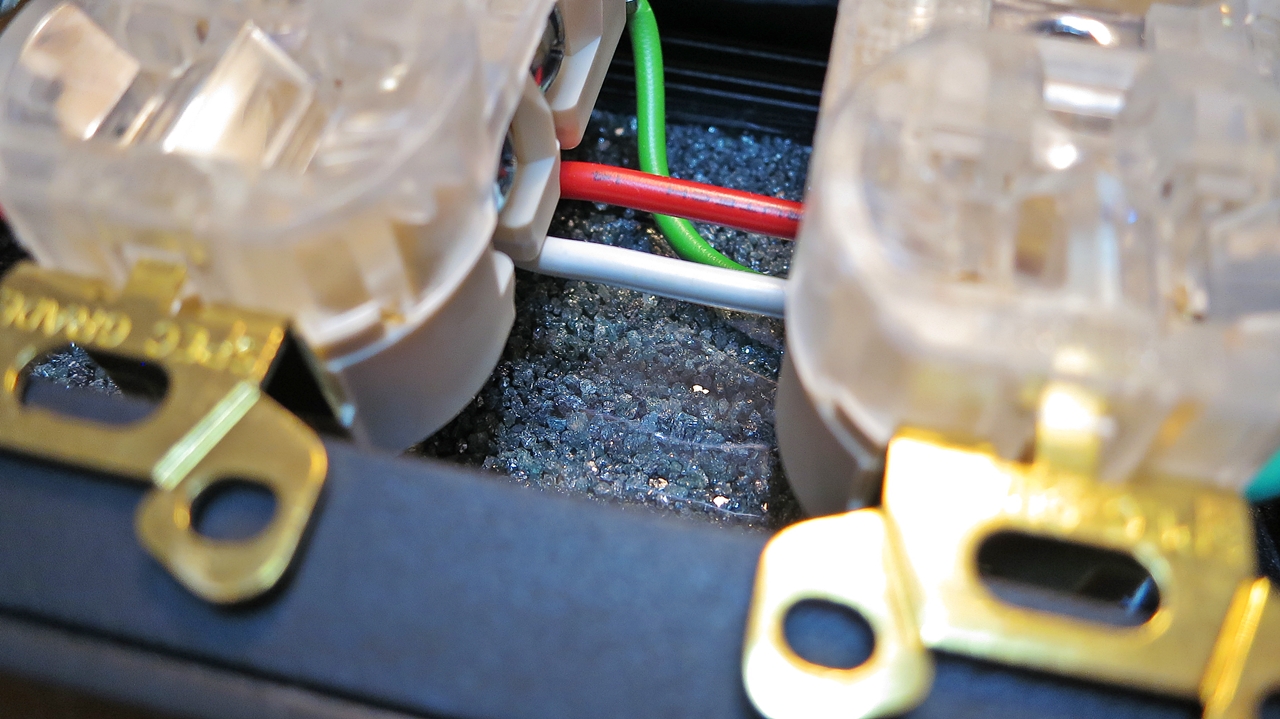
Incidentally, the feet on the underside of the e-TP60 are four simple, firm square rubber feet, so placing it on isolators of your choice should allow you to alter the sound to some degree. For now I have simply set it directly on a granite slab, but I gather that using something like a good quality resonant wooden board or a Kiso Acoustic fo.Q power strip board IP22 would draw out yet another flavour of even better sound — and I must admit that prospect does pique my curiosity.

FURUTECH e-TP60: Sound Quality Review
Now for the most important part: sound quality. To sum up the character of the FURUTECH e-TP60 in a single phrase, it is a power strip with a fresh, transparent, delicate, and very beautiful tonal quality. It is fast and the lines of its sonic imaging are on the fine side — the frequency response spreads out cleanly and evenly, separation of reflected sound is good, and resolution is notably high. Vocal and dialogue articulation is simply outstanding. What impresses me greatly is how honest it is, with very little in the way of odd colouration. If I were to use an analogy, it is like a pastel watercolour rendered with slightly shallow contrast — the temperature is gently cool. It leans towards a light, unassertive character, yet the upper registers extend pleasantly and with ease.
 ポチップ
ポチップ
It belongs to the beautiful-sound camp — there is lustre, brightness, and a sense of moisture, and the musical flow is natural and smooth. Detail retrieval is excellent and the sense of range is wide; this sound quality strikes me as extraordinarily well suited to hi-res sources. The bass too is high in resolution — slim rather than bloated, with good clarity — though among the hi-fi power strips I own, it is the most lightly weighted in the low end. In that area, pairing it with a power cable that has a fuller bass output should bring the overall balance into line. It suits everything from fast-paced electronic music to Western pop — the pinpoint imaging combined with a spacious soundstage makes it attractive for anime female vocals as well — and its refined nature means it is also well suited to classical music. The flip side is that coarse, heavy, or rough sounds are unlikely to emerge from it. In my own system, I have the LUXMAN tube harmoniser, MARANTZ CDR630, PHILIPS FT930, and the HDD/BD recorder SONY BDZ-EW1100 connected to the e-TP60 side, and the video picture too follows the same tendency as the audio — finely drawn, with clean, fresh-looking colour rendition in which clarity and transparency stand out — and the separation and three-dimensionality of ambient sound effects in animation also improves remarkably.
Which Power Cable to Pair With It
Pairing it with Furutech’s own power cables from my collection — the Absolute Power II-18 and the The Astoria — is naturally a good match, and it is the sort of pairing where finding something to complain about seems rather difficult. That said, I have a feeling that The Empire might probably suit it even better than The Astoria. Because the appeal lies in its wide range and the openness it brings to the upper registers, combining it with certain DIY or third-party power cables may produce a tendency towards listening fatigue. Broadly speaking, I think a power cable that is low in coloration and capable of supplementing the low-end body to some degree is the right fit. Also, since there is no built-in noise filter, the background S/N level and sense of a deep, quiet floor will depend on factors beyond the e-TP60 itself. The output has a clean, uncluttered quality and is not noisy, but in a setup like mine where hi-fi and AV equipment coexist, there is a vague temptation to add a noise filter into one of the spare outlets.
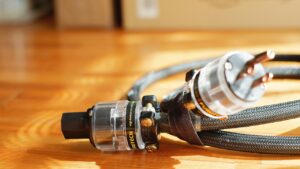
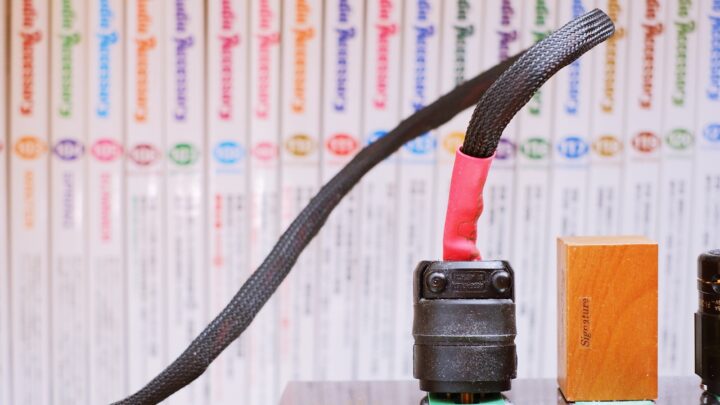
In my case, pairing it with the PS AUDIO XPD Prelude MK2 — which has a bidirectional noise-filtering effect that improves the perceived S/N ratio — gives me a result I find reasonably satisfying. That said, the reason I am using the XPD rather than calling it the best choice is simply that my Furutech power cables are all occupied elsewhere in the system and cannot be spared for the e-TP60.
Come to think of it, the unit I purchased new myself was clearly superior in sound quality to the well-worn review sample Furutech had lent me some time before — covered in scratches, with no telling how many times connectors had been plugged and unplugged over the years. My own unit had a wider range, better articulation, higher resolution, and a fresher quality altogether. The review sample, to put a generous spin on it, had its rough edges worn away, but compared to my unit the extension at both frequency extremes was less assured and the tone carried a slight dullness — it was by no means the strikingly beautiful sound I now know the e-TP60 to be capable of. I came to the conclusion that age-related deterioration must have reduced it to perhaps eighty per cent of its potential. Wall outlets in particular accumulate contamination and scratching at the contact points with repeated plug insertions, and the fit gradually loosens. Contamination can be cleaned off with a cotton bud and cleaner, but the loosening of the fit (new units are quite stiff) is unavoidable, and I think maintaining the tight, articulate sound and initial grip of a new unit in an environment of constant plug and unplug cycles would be very difficult.
As of 2021, the power cable connecting the e-TP60 to the wall outlet has been replaced by the Canadian XLO Electric Reference 3 R3-10 AC Power Cable. A detailed review of its sound quality is planned for a separate article at a later date. ※ A link will be added here once the article is published.
A Closer Look Inside the e-TP60
I removed the top panel of my own unit to photograph it for this article, and found that the Torx screws at the four corners in particular were tightened extremely firmly when new. The Phillips screws securing the wall outlets were also done up fairly snugly. The screw types are T20 Torx (hexalobe) at the four corners, while each of the three outlets is held in place by a single central Phillips screw. The screws themselves are non-magnetic. Please note that disassembling a power strip voids the one-year manufacturer’s warranty, so proceed entirely at your own risk. (As the author of this blog, I do not recommend doing so.)
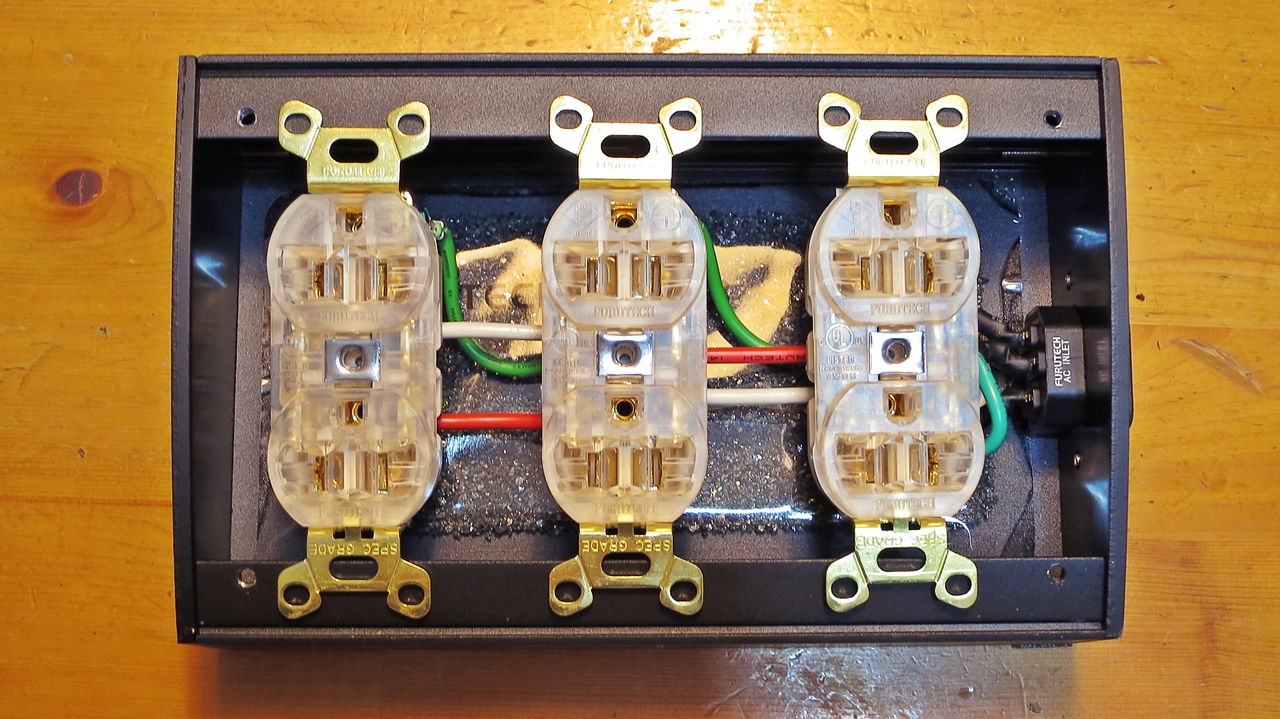
Opening it up reveals a high-quality and rather delicate internal structure. Replacing the wall outlets is possible in principle, but not particularly straightforward. Or rather — to someone in the know the structure itself is not complicated, but the high precision of the chassis and the complexity of the point-to-point wiring means that simply opening it up and putting it back together again calls for surprisingly fine-grained attention, and I suspect a clumsy person messing around inside would most likely end up breaking something. In that respect it requires more care than the J1 project PT-4, which has a straightforward, no-nonsense structure that makes swapping internal components easy. The panel tolerances are tight as well, so even a slight misalignment and it will not seat cleanly. When removing and replacing the screws, a careful, deliberate approach is required — working diagonally in small increments so that stress is distributed evenly.
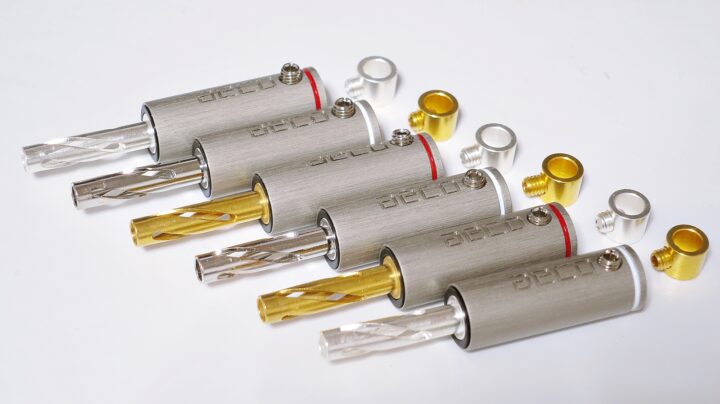
Unfortunately I do not own a precision torque driver capable of managing torque properly, so when replacing the screws I had to rely on memory and feel alone. I suspect I ended up tightening the central Phillips screws (requiring a large No. 2 driver) slightly more than before, as the sound quality changed after reassembly — becoming somewhat tighter than it had been. The slightly looser, more diffuse quality that was there originally was somewhat reined in, but in exchange the density and articulation of dialogue frequencies during film and anime watching increased, making it noticeably easier to follow.
 ポチップ
ポチップ
In any case, this exercise confirmed that the internal FP-15A wall outlets can be disassembled and replaced. The successor FPX series fits as well, and unlike the J1 project PT-4 there is no width restriction on the outlet body, so it would theoretically be possible to fit FURUTECH’s GTX series outlets — currently regarded as among the finest sounding available — if one were so inclined. Replacing all three with GTX units would, however, produce some rather alarming arithmetic in terms of cost. Swapping in other manufacturers’ UL-rated duplex wall outlets should also be possible in principle, but the depth clearance inside is not generous, so anything taller than the FPX’s 28.2mm (H) may not fit depending on the product — worth bearing in mind.
 ポチップ
ポチップ
That said, if I had any clear dissatisfaction with the e-TP60’s sound, replacing the wall outlets would certainly be worth considering for the future — but in all honesty, the e-TP60 is finished to a standard that makes it hard to see the point of replacing the FP-15A(G) at all. I suspect the same would be true of the FPX(G) used in the new vertically oriented e-TP66 as well. The e-TP60 has been voiced with the FP-15A as its starting point, after all, so whether swapping the outlet would produce a dramatic improvement remains firmly in the realm of wishful thinking. For units that have already seen heavy use as second-hand purchases — where the fitted outlets have loosened or deteriorated — replacing them with new FPX series outlets at your own risk does seem reasonable. But, as I keep repeating, this is entirely at your own risk and is not officially recommended.
Regarding the differences between the similarly priced e-TP60 and the later e-TP66: beyond the change in internal outlets from FP-15A(G) to FPX(G), the e-TP66 also uses polycarbonate resin parts before and after the inlet that are absent from the e-TP60, and this is likely to produce differences in sound. The tubular structure of the e-TP66 is more conducive to achieving rigidity in the aluminium chassis, yet its weight is apparently around 100g lighter. Additionally, the electromagnetic wave absorption material FURUTECH GC-303 used inside the e-TP60 has been omitted from the e-TP66, replaced instead by a special vibration-damping material. I passed on the e-TP66 because its total length (416mm) is too long for my available space, but for those who can accommodate it, it is certainly worth considering.
As Ever: Beware of Counterfeit FURUTECH Products
Despite being relatively affordable for a hi-fi product of this type, the FURUTECH e-TP60 has for quite some time been widely counterfeited, with numerous fake units — almost certainly manufactured in China — circulating on the market. Please exercise caution when purchasing through Yahoo! Auctions, overseas auction and shopping sites, flea market apps, marketplace platforms, and similar channels.

One sometimes hears whispers that counterfeits are OEM products from the original manufacturer, but given that people who have compared the genuine article and the fake side by side in terms of both appearance and sound quality have stated they are completely different, this is surely misinformation. Anyone who has heard the genuine product will understand, but no matter how faithfully the dimensions and exterior are copied (assembled from low-purity, cheap components), I can say with confidence that such copies will never arrive at the e-TP60’s refined and crystalline sound. As for second-hand units — given the nature of wall outlets, you are unlikely to enjoy their true potential unless they are new (with second-hand units, the degree of outlet wear is unknown), so for as long as new units remain available, my personal recommendation is to purchase from an authorised domestic retailer. Replacing just the outlet section after the fact would end up costing more, not less.
~ Summary ~
In my own case, both my main and sub systems had previously used several products from a somewhat higher class of power strip, so I did have a nagging concern that I might ultimately find the entry-level FURUTECH e-TP60 or e-TP66 unsatisfying. In practice, though, after actually introducing it and living with it, I found the sound to be naturally versatile and easy to work with in any context, while lifting the hi-fi performance of the system considerably — to the point where I began to wonder whether one really needs anything beyond this level of quality in a power strip at all. In short, it is a product with very few shortcomings. The CSE CX-63A and J1 project PT-4 (×2 units) that I use and am fond of are not so much superior in sound quality to the e-TP60 or e-TP66, as they are more strongly characterful and idiosyncratic — the question becomes whether you can tame that character through pairing and system matching.
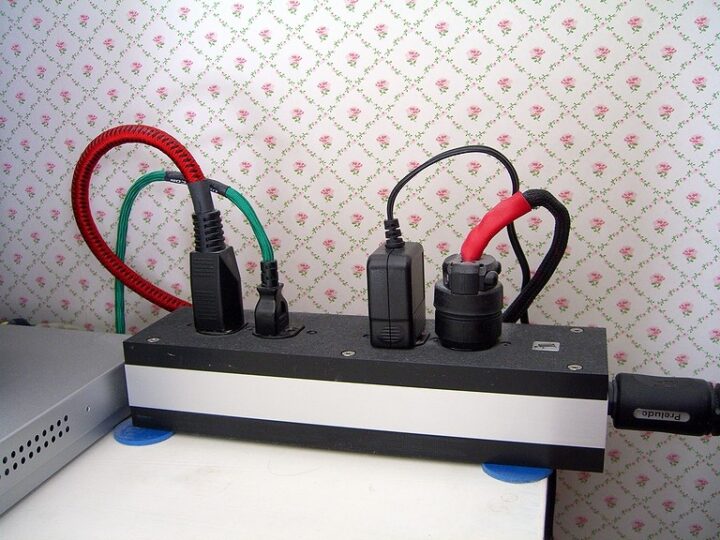
One thing worth remembering with power strips of this kind is that their sonic character spreads not only to the equipment connected directly in series, but also — for some reason — quite noticeably to the main audio components on the J1 project PT-4 side, which share the same wall outlet in parallel. The e-TP60 × PS AUDIO XPD Prelude combination influences those components as well, through mutual interaction. In this instance, using the e-TP60 in parallel produced a clear improvement. In other words, even without an active filter built in, it seems to be functioning in a manner similar to a parallel-type noise filter. The flip side of this is that the sound of every element connected in parallel on the household power line — for better or worse — bleeds into everything else. This is why my view is that the nearer a piece of equipment or appliance is to the main audio components in the power chain, the more it matters — and the more worthwhile it is to use the best-sounding options available, right down to the quality of the wall outlets in each room.
In the case of the FURUTECH e-TP60, a high-end system costing several million yen or more might well find the lightness of the deep bass a concern. But for anyone using an entry-level to mid-range audio system of the kind featured on this site, and who has not yet invested significantly in power strip arrangements — or is getting by with something like a CLASSIC PRO PDS8 or a FURMAN SS-6B as a stopgap — stepping up to a FURUTECH e-TP60 or e-TP66 should deliver, in one move, a wide-perspective soundstage, precise spatial imaging, and a beautifully refined sonic environment. There are products out there that are more analytically austere in their approach, but given how little coloration this one imparts and how naturally it serves the music, I think for a music lover this is comfortably a final destination.
Auto Translated by CS4.6

List of comments (2)
ケーブル類は殆ど自作で(懐具合の関係)いろんな物を作りましたが電源関係はあまり関心がもてませんでした。
数年前、地元公民館のPA一式を任され購入した時のポイントが2万円近くもらえたのでこの際と思い聞き覚えのあったオヤイデのブラックマンバをもらったのですが届いた現物は名前のとおりで使わずに数か月放置後、友人にあげようと思い一応音を聞いておこうと接続してびっくり
足を滑らせ電源の泥沼に入ってしまいました その後いろいろやりましたが私にとって一番効果の見られたのが
アメリカン電気製埋め込みコンセント・サブゼロ処理の製品でした
オーディオって不思議なものですね
そうですね。色々なアクセサリの中でも相対的に電源関係が一番変化が大きく、コスパが良い部類に入るのではと感じてます。