【audio-technica High-Quality Hi-Fi Insulators】
AT6099|AT6098|Discontinued
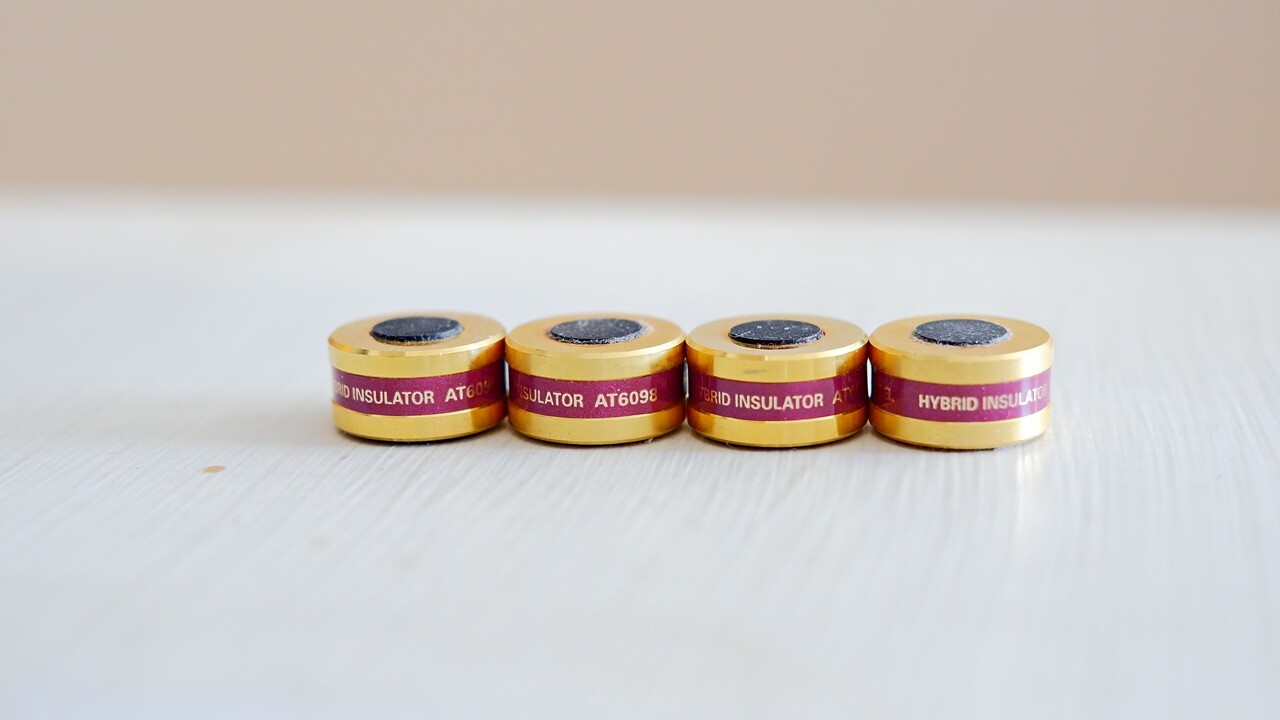
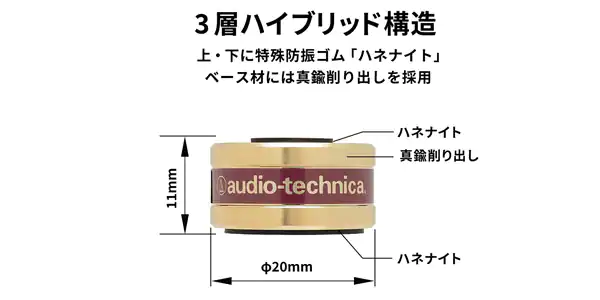
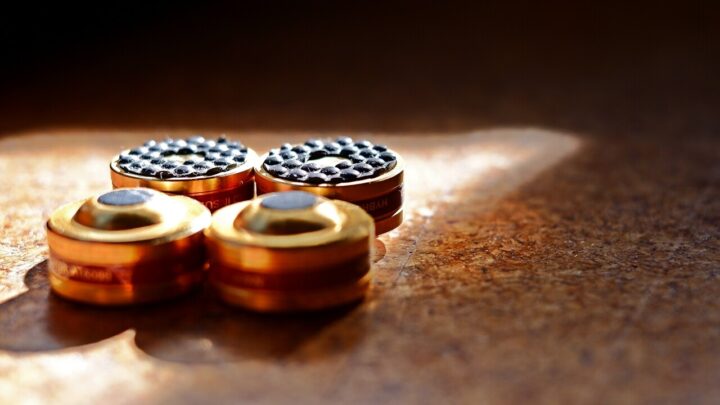
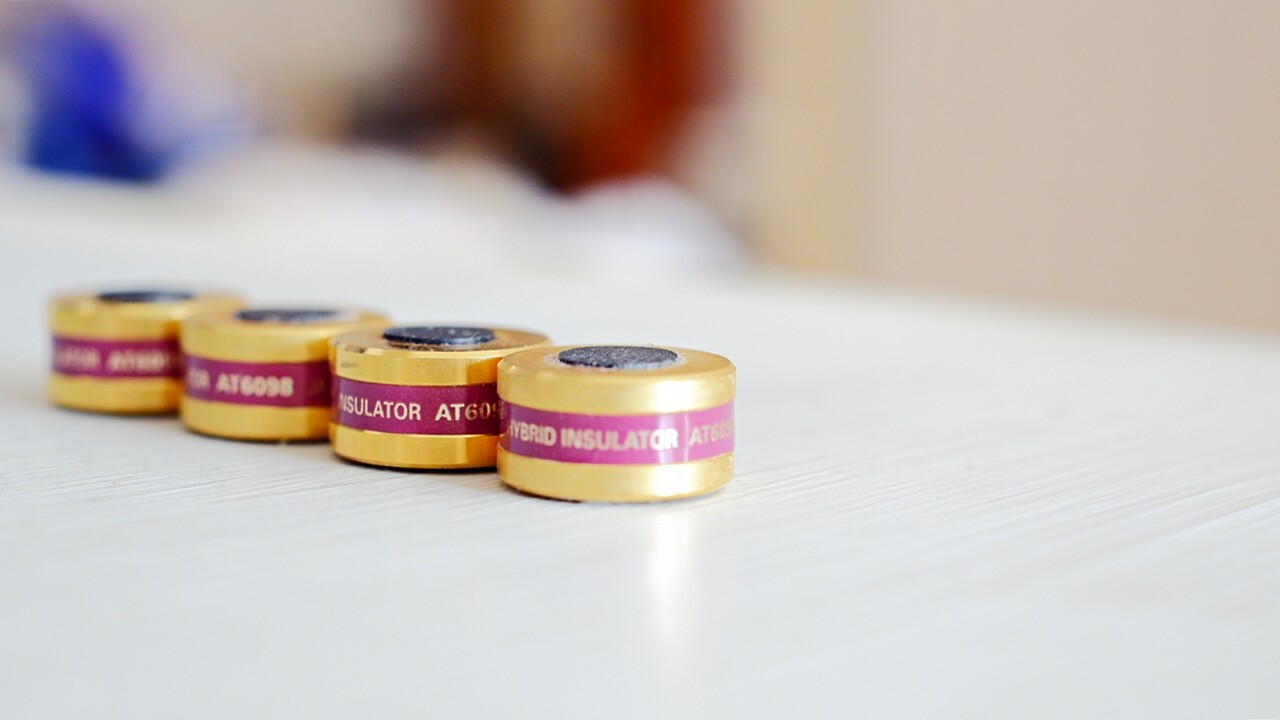
The other day I wrote a detailed review of the AT6099, the hybrid Hi-Fi insulator from audio-technica, and while I was at it I went ahead and picked up its little brother, the AT6098 as well. The AT6098 is considerably smaller than its elder sibling, the AT6099, and comes eight to a set. It uses a three-layer construction with a high-precision machined brass core and Hanenite on both top and bottom, and the key difference from the AT6099 is that it does not use Sorbothane for the base material.
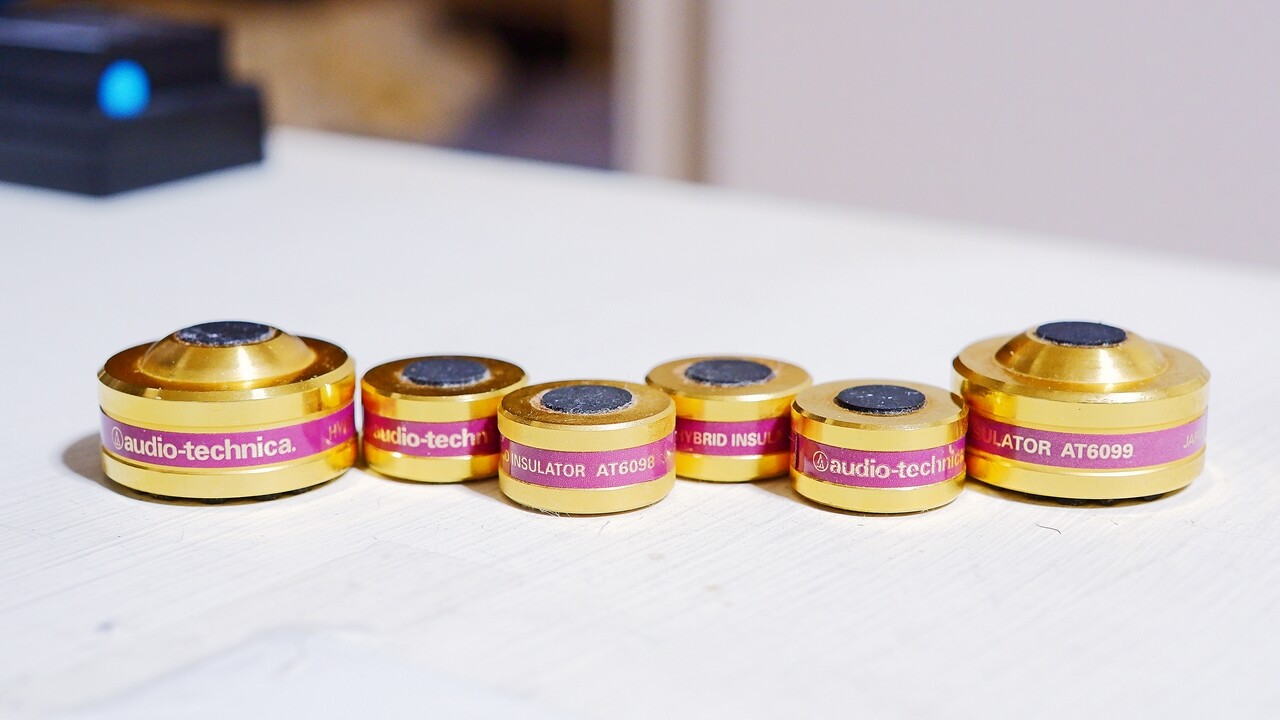
The AT6099, with its golden gleam, makes quite a statement — you can tell at a glance that there’s a flash Hi-Fi insulator about the place — whereas the AT6098, being smaller, gives the impression of blending into the room unobtrusively as a natural foot for audio equipment. It is, I think, particularly well-sized for use under a small desktop PC audio system or as feet for small bookshelf speakers.
AT6098 vs AT6099 — Sound quality comparison with small bookshelf speakers
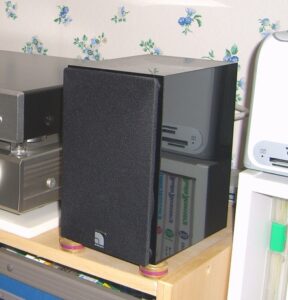
To begin with, I removed the AT6099 (※ the older ones I bought some time ago, now showing their age) that I normally use in a three-point configuration — two at the front, one at the rear — as feet for the small speaker audiopro Image11, and set up the AT6098 in the same three-point arrangement. ···Hmm. The first impression on listening is that it sounds subdued. The tonal balance is flatter compared to the AT6099. In terms of pure sound quality,  AT6098 is more straightforward, and many listeners may well find it higher in fidelity than the AT6099. However, the sense of dynamism and bass drive take a step back. The overall presentation is clean and quiet, with a good signal-to-noise character — where the AT6099 could be described as a bright, expressive, operatic kind of tonal colouring, the AT6098 has the sound of a serious, gentlemanly, composed sort of character. There is no particular sense of treble extension reaching upward; the tone is gentle, with a faint darkness and a sense of shadow to it. In this respect it is quite the opposite of the AT6099, which is soft and open.
A slightly wet quality is common to both. Hmm··· to put it unkindly, the AT6098 may perhaps sound just a little less interesting than the AT6099. Visually, the AT6099 suits the scale of ultra-compact speakers rather better, though··· To put it charitably, the AT6098 is neutral-sounding with few side effects. At the very least, the kind of drastic tonal shift that the AT6099 can sometimes bring about — or the occasional mismatch when its character feels too lively for a given speaker’s voicing — should be largely absent with the AT6098. That said, after listening for a while my mood gradually sank, and in the end I switched back to the AT6099. With the audiopro speakers, which already have a sufficiently crisp and delicate tonal character to begin with, the AT6099 simply gives a more lively and enjoyable sound.


 ポチップ
ポチップ
It depends entirely on compatibility with the speaker in question and will vary case by case, but in terms of musicality the AT6099 wins, while for sheer sound quality the AT6098 may have the edge. Still, even if it is an entry-level, budget insulator — was the AT6098 a mistake? At this point, I honestly felt rather deflated.
Trying the AT6098 under the ONKYO A-1VL integrated amplifier
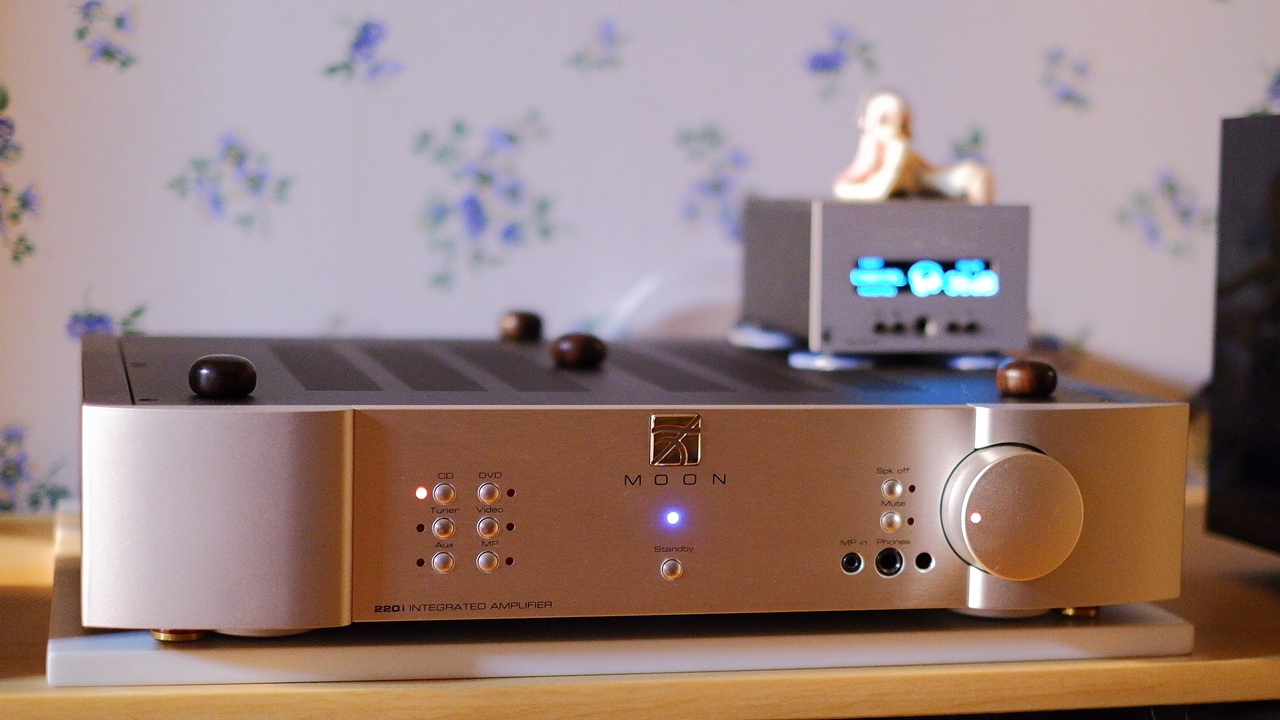
After thinking about it for a while, I realised that, come to think of it, I hadn’t actually put any insulators under the ONKYO A-1VL integrated amplifier I’d recently acquired from ONKYO. The A-1VL comes with a rather lavish standard specification of four brass feet, so initially I hadn’t thought to add anything beyond that. In practice, however, having tried various things, I’ve come to feel that the very rigidity of its chassis makes it, if anything, more susceptible to the influence of external vibration, and the tonal character seems to change drastically depending on what it’s placed on.
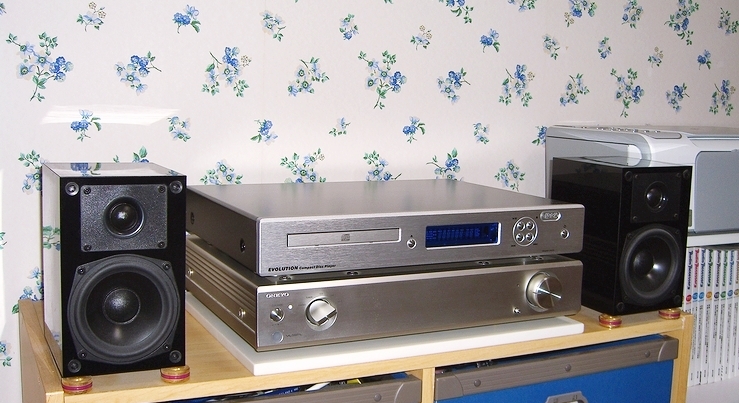
To draw out the inherently pure, luminous tone and well-defined soundstage that the ONKYO A-1VL is capable of, simply placing it directly on a generic particleboard-type rack wasn’t going to cut it, and at my place I had at least lifted it to an acceptable level of sound quality by placing it on an AIRBOW artificial marble board from Ippinkan (DCB Corian board, 350×450mm, 13mm thick).

 At the shop demonstration I’d heard the ONKYO A-1VL set up on a Sound Organisation (Sound Organisation) glass-topped rack, the Z540SL, and with the Corian board I still felt a slight nagging sense that I was one step short of the refined sound I’d heard on that occasion. So, by way of experiment, I decided to try slipping the audio-technica AT6098 underneath. The AT6098 uses the same brass material as the A-1VL’s own feet, and with only a thin layer of Hanenite attached, I did wonder whether it would make much difference at all··· I also considered a four-point configuration, but thinking about stability I opted instead for a three-point arrangement, positioned inward of the standard feet — at the corners of a raised section on the underside of the A-1VL — with two points at the front and one in the centre at the rear.
The first impression on playing music was the same as with the audiopro Image11 — a sense of things becoming slightly more subdued. But the impressions that followed were somehow different. Rather than subdued, what emerged was a sense of depth and quietude. And then — the impression that the bass was sinking deeper, or perhaps that the signal-to-noise character had improved and the floor of the soundstage itself had dropped down by one level. When the A-1VL was sitting directly on the Corian board, there had been a sort of coarseness to the tone — a vaguely restless, slightly dry quality that clung to the sound, and I’d inwardly thought it could do with rather better S/N character (note: as I described in an earlier impression, even so it was considerably better than placing it directly on a wooden board) — and now that rough quality was swept away entirely, replaced by something like a clear, still silence flowing through the soundstage. The tone does remain somewhat darker.
 ポチップ
ポチップ
The ONKYO A-1VL has always had a tendency, if one isn’t careful, to be almost too forceful in its drive — to stay permanently in a mode of positive, linear expression, with the more subtle, minus-direction nuances buried and lost beneath the sheer forwardness of its delivery. The AT6098 brought that unruliness under reasonable control, and I found myself genuinely moved by the newfound depth in the music’s expression at lower dynamic levels. Distortion, too, seemed to decrease as a result. I tried removing the AT6098 again as an experiment, whereupon the soundstage compressed vertically, the bass became bloomy and lightweight, and the mid-to-upper range took on a floaty, dry, thinly textured quality.
Swapping the AT6098 for AT6099 under the integrated amplifier
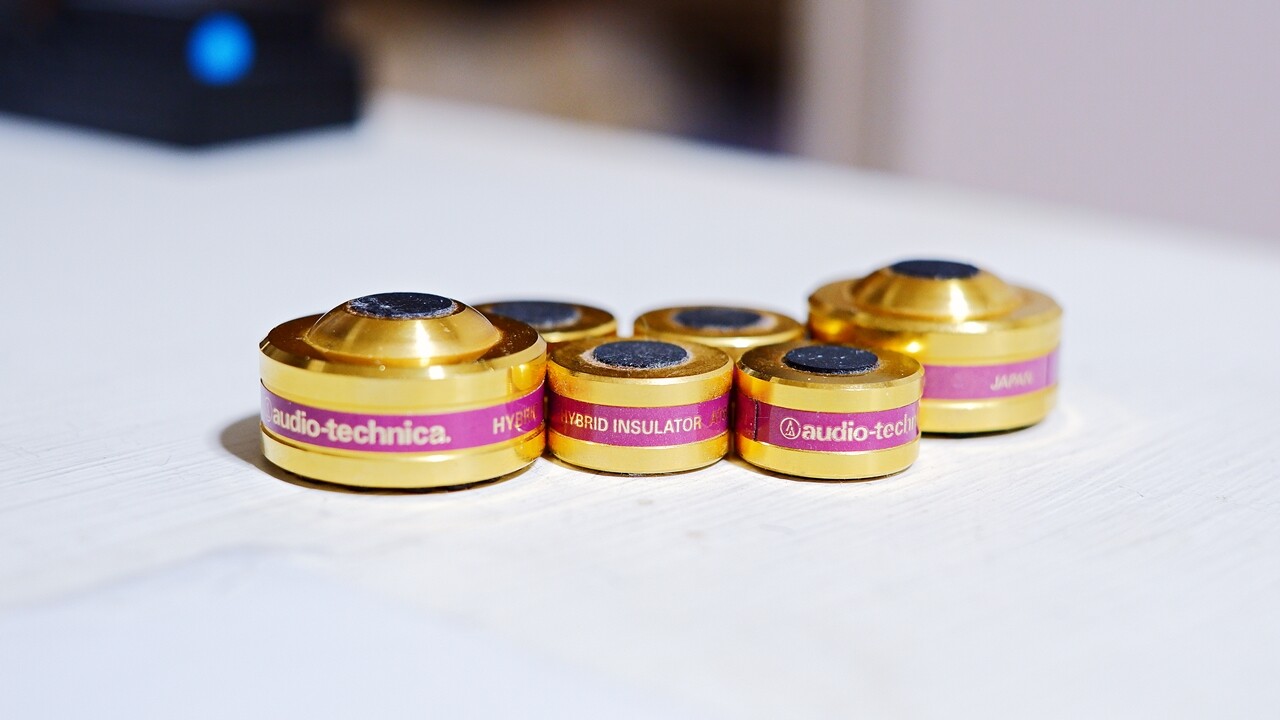
For further comparison I tried the audio-technica AT6099 in the same three-point configuration — and what on earth? The sound turned boomy and indistinct, quite unlistenable··· This is precisely the difficulty with Hi-Fi accessories such as insulators and various cables: just because I write that such-and-such suits an amplifier, or that this insulator works well with a particular speaker, that compatibility and those tonal characteristics will not necessarily reproduce in the same way with a different model or system. Which is precisely why, when all is said and done, one has to try various accessories in one’s own environment and work things out through trial and error.
 ポチップ
ポチップ
The audio-technica AT6098 is a smaller insulator made from the same brass material as the A-1VL’s own feet. It may sound like a minor thing, but by introducing the three-layer hybrid construction with Hanenite, the sound is brought into splendid, disciplined order. With this, I have at last been able to achieve at home something close to the smooth, luminous tonal quality and S/N character I heard during the in-store demonstration of the A-1VL.
Hmm, even so, the ONKYO A-1VL really does require some thought when it comes to vibration control. The construction is, in the way of Japanese domestic-market products, almost too lavish — and I can’t help feeling, though I’m not entirely certain, that the result is to complicate the vibration modes and introduce an unpredictable element of coarseness into the sound. By contrast, most thin-profile British and European integrated amplifiers of the same class use a far simpler chassis construction — fewer screws and all the rest of it.
With the A-1VL, it seems the right approach is to coax out a clean, low-noise setup and a high-quality power supply environment along the lines described above. Get it right and the rather sluggish, poorly defined impression that tends to come across in side-by-side shop demonstrations is dispelled, and the amplifier’s naturally crystalline, hard-edged tonal character appears before you with remarkable density and presence. If that’s not the sound you’re getting, do try giving it a proper setup and a decent power supply.
Trying the AT6098 under the BD-R & HDD recorder SONY BDZ-EW1100
The other piece of equipment in my audio and visual system where the AT6098 has ended up as a permanent fixture, running continuously for several years now, is the BD-R & HDD recorder, the SONY BDZ-EW1100 — apart from the ONKYO A-1VL mentioned above. My SONY BDZ-EW1100 is used almost exclusively for recording and watching anime and recording classical music broadcast programmes. Where broadcast audio sources differ significantly from CD or SACD sources is that the perceived resolution and dynamic range are not particularly wide, and the sound is lean, flat, and plain — easy on the ear, one might charitably say, though rather unremarkable in quality.
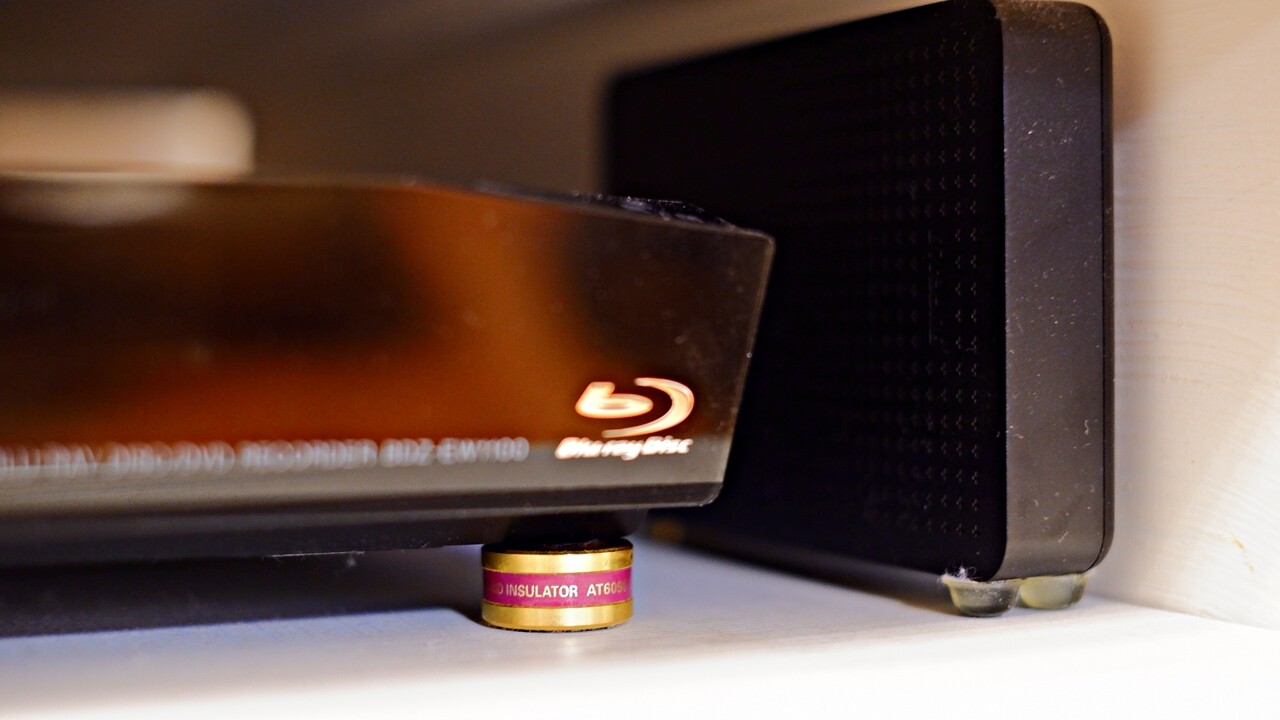
To put it less charitably, the compression is rather heavy, so as digital data the information content is sparse and the sound is a little forlorn. For listening comfortably to this kind of broadcast source, I think what matters above all else is whether the vocal and dialogue frequency range is easy to follow. In that respect, the AT6098’s character adds nothing superfluous, and there is something about it that makes the dialogue range noticeably easier to hear — making it just the right kind of light tuning for my BD/HDD recorder, which I use so often to play back recorded anime. It is, to be sure, a subtle improvement for the price, but the AT6098 does give a more agreeable sonic impression than no insulator at all. As for changes to picture quality, I honestly can’t say I noticed very much. On the page below I’ve also written a brief comparative review of the audio-technica AT6098 and AT6089CK.
~ Summary ~
When used under small speakers — which is presumably the primary design application for the audio-technica AT6098 — compatibility does play a role, and I have not, unfortunately, been able to find a good match among the dozen or so small bookshelf speakers I have to hand. That said, I think it is fundamentally well-suited for use as an insulator with small speakers or audio equipment whose sound is on the harsh, rough, or unruly side. As noted above, it also seems to work well with visual-source equipment such as HDD, BD-R, and DVD recorders, where it delivers a well-ordered, listenable sound without imposing any unwanted character of its own.
Incidentally, this applies not only to the audio-technica AT6098 and AT6099 but to insulators using soft resin or rubber-based materials generally — such as Black Ravioli or J1 Project — none of them will produce their true sound immediately after fitting. At first there is inevitably a slight side effect of the treble sounding a little muffled, and it takes a few days of running in before the awkwardness gradually fades and the sound approaches the kind of impression described in this review··· Once they’ve settled in, they tend to adhere firmly between the board and the amplifier, making them rather difficult to remove afterwards··· Now that I think of it, the AT6098 and AT6099 have such a high anti-slip effect that they might offer excellent earthquake resistance as well!
 Category: Other Hi-Fi AccessoriesCategory: audio-technica
【audio-technica High-Quality Hi-Fi Insulators】
AT6099|AT6098|Discontinued

Auto Translated by CS4.6