Today I would like to write about the essence of hobbyist passion and what it truly means to care deeply about something. In the world of hobbies — covering audio, music, and other such delicate and nuanced pursuits — there are topics that enthusiasts, by a kind of gentlemen’s unspoken agreement, simply do not wish to see raised, whether as a shared premise or as a matter of not causing offence to others. This entry, I’m afraid, deliberately addresses one such topic. To summarise the issue that led to the author of AUDIO STYLE closing the site’s accompanying audio bulletin board (note: this refers to events in 2005): a person who firmly believed that cables make no difference to sound quality took up residence on the board and went on advocating that position at such length that the situation became unmanageable.
I do understand that many people find this sort of debate interesting, and I’ll admit there’s a certain spectator appeal when an argument heats up. If anything, it’s one of those familiar disputes that crop up regularly across social media and bulletin boards, and if you’re a Hi-Fi enthusiast who has lived through a few of them, you’ll know well enough how they tend to go — either running in parallel forever without ever meeting, degenerating into a circular squabble, or leaving behind a sour emotional aftertaste.
Some people can hear the difference, and some cannot
Whether or not a meaningful difference registers in subjective listening is not a question unique to cables — it applies equally to Hi-Fi insulators, other accessories, and indeed to the tonal differences between players and amplifiers; it is a question common to all audio equipment. Even when the same objective change is made, there will naturally be people who can clearly perceive and distinguish it, and people who cannot. The author’s view is that the root cause of these disagreements lies not in the products themselves but, fundamentally, in individual differences in auditory perception and sensitivity on the listener’s side.
Even among Hi-Fi enthusiasts who believe they can hear differences, I get the impression that there is actually quite a wide individual spread in how clearly each person perceives variations in sound quality and tonal character. And whether one finds meaningful value — or indeed monetary value — in those perceived differences is something that falls squarely within the realm of personal taste, a judgement left entirely to the individual.
For my own part, I have always thought that the essence of this hobby lies in attending closely to subtle differences in sound quality, and that the cumulative effect of what might at first seem like small distinctions can produce a profoundly significant difference in the overall impression of music playback — which is precisely why the pursuit is worth making. And it is because I believe I can, in my own way, hear those differences quite readily that I came to write for a weblog devoted to Hi-Fi equipment, and have gone on to produce any number of impressions and review articles.
Hi-Fi is a hobby premised on the ability to distinguish differences in sound
In this world there are people at various manufacturers who develop audio equipment and the cables and accessories that go with it, who shape the sound of their products; there are critics and web writers the world over who audition and compare those products and write about them. And across time and geography, there are great numbers of users who have heard about those audio products, been satisfied with the quality and the price, and bought them. For the most part, it is because each of these people — however much their ability to perceive tonal differences may vary — finds meaningful distinctions and can tell sonic tendencies apart, that they are able to enjoy the deep and demanding hobby that is Hi-Fi; and it is the circulation of makers, sellers, users, critical assessments, user frustrations, and pleasures that has kept this hobby’s market going for so many years.
I quite understand that some people raise objections to all of this, in particular drawing on theoretical knowledge from electrical engineering rather than on direct experience. But for those — and not only the author — who “hear differences in sound quality as a matter of course,” the question of whether a meaningful difference exists at all is so far beyond obvious as to border on the absurd. They are made to perceive sensory differences that exceed any reasonable expectation attributable to placebo — and not merely in cases where things improve to their satisfaction. There are also many instances where the sound doesn’t turn out as hoped, falls short of expectations, or actually gets worse; cases where they are left puzzled and wrong-footed by results that were, for better or worse, entirely unexpected.
The Hi-Fi enthusiasts around me simply listen to differences between cables and insulators as a matter of course, and will debate with each other about compatibility with their respective systems and personal tonal preferences. Even though each person has subtly different ways of perceiving things and different ways of putting them into words, a shared common understanding of the character of individual products tends to emerge naturally through the process of comparing various pieces of audio equipment and accessories. Discussions about “personal preference” and qualitative “good or bad” certainly happen, but nobody imagines there is no meaningful difference to begin with, or that everything is ultimately placebo — and nor is there any intention of making much of differences so subtle they would require exceptional concentration just to detect, at least not in ordinary audio products.


At the risk of being misunderstood: the ordinary Hi-Fi enthusiast enjoying this hobby is someone for whom things that sound different simply sound different — not only when sitting up attentively in front of the system with ears pricked, but also while relaxing and chatting, while moving around from the listening position, while lying on the floor, even while eating a meal.
The lies and deceptions of the placebo argument
The basic idea is that a placebo effect can only properly be said to exist when a prior assumption is realised in the direction that was anticipated. In the Hi-Fi hobby, however, when equipment or accessories are swapped out, it is actually rather uncommon for the result to sound exactly as expected; in most cases the outcome falls below expectation, or delivers a tonal character — for better or worse — that differs from what was imagined, yielding a result that is unexpected, unanticipated. Surely many Hi-Fi enthusiasts have had the experience of thinking: hang on, the sound is nothing like what I read about in that magazine or on that website?
Experience does improve one’s hit rate with combinations, and occasionally a result turns out even better than hoped, which is cause for a small fist-pump. But fundamentally it is an accumulation of trial and error — a paid-for gacha pull where you won’t know until you try. Nor can you fairly judge a piece of equipment’s latent potential, sound quality, or overall merits from a single result in a narrow set of conditions.
In my own case, I have written many times before that even when a piece of equipment or an accessory fails to meet expectations, I tend not to let it go — it usually goes into storage rather than out the door. The reason is that the question of how to combine the cards in hand — the equipment one already owns — often seems to carry more weight in improving sound quality than any single component on its own. I have lost count of the number of times a change in the combination of equipment and accessories has reversed my assessment entirely.
And then, weeks later, years later, sometimes even decades later, after further trial and error, there are even cases where a piece of equipment or an accessory that had been sitting in storage suddenly reveals a potential one never suspected — delivering an unexpected and occasionally miraculous compatibility that seems to turn everything around. These varied experiences, extending in both positive and negative directions, cannot be explained away by a simple placebo effect. In other words: the result turned out completely differently from what was anticipated, yet it was a good result all the same — it is precisely this accumulation of such experiences that represents the concentrated essence of what makes Hi-Fi such an absorbing pursuit, and becomes a form of experiential knowledge.
If anything, isn’t it the “experience of hearing no difference,” stated with such certainty, that is the more typical example of a placebo effect — a bias born of the desire to simplify and dismiss, a negative preconception that leads one to deny any difference exists?
The sonic influence of Hi-Fi accessories
Of course, there are accessories where the difference is so subtle and refined that you really do need to listen carefully to make it out, and there are genuinely ambiguous cases where it is hard to say after a trial whether the effect is real or not. That said, when it comes to the meaningful differences produced by swapping signal cables, speaker cables, power cables, and other audio cables — unless you are comparing models from the same manufacturer with closely similar sonic characters — it is the normal expectation in this field that, as long as the equipment used is reasonably sensitive, audible differences in tonal character can clearly be heard.

There are, however, listening environments and system-level conditions under which differences arising from accessory tuning are difficult to draw out, and meaningful distinctions therefore harder to hear. Beyond that, I have encountered in the past high-end systems where — partly as a result of the owner’s approach to set-up — almost nothing changes in the sound when cables are swapped. There is also the fact that various conditions, including each person’s physical state on the day and the prevailing weather, can mean that even the same cable or accessory gives a different impression on the same system at a different time, which is why a truly absolute evaluation is beyond any human being. All of this is common knowledge shared quite naturally among those who can perceive differences between audio equipment and accessories. Human beings possess a surprisingly delicate capacity for perception, yet as biological organisms we are constantly fluctuating, and it is impossible to maintain a stable and consistent state of sensation at all times.
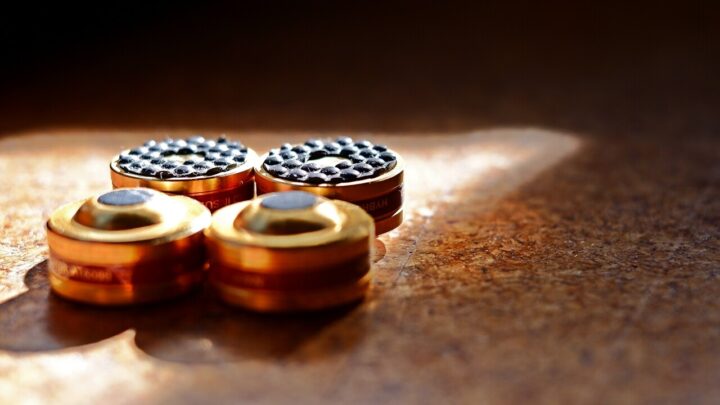
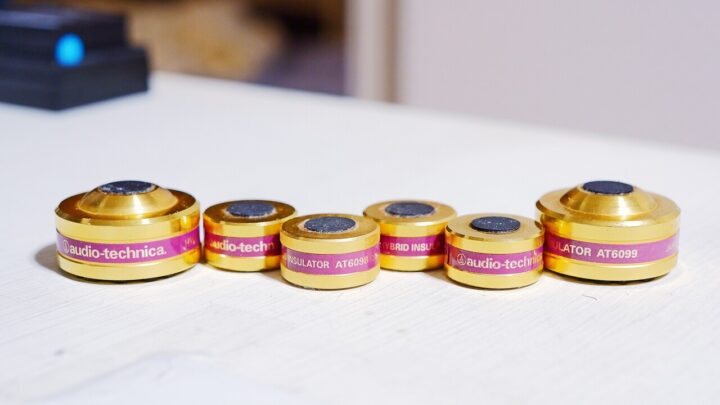

 ポチップ
ポチップ
By way of analogy from other fields…
For instance, I have almost never drunk expensive wine. So if various wines were put in front of me, I would have no basis whatsoever for saying which is good, let alone identifying the label — the prior experience simply isn’t there. If I were ever fortunate enough to be offered a glass of wine costing several hundred thousand yen a bottle, I would accept it gratefully and with some embarrassment, but I could not honestly claim to truly understand its worth. Whether the taste justifies the price, whether it is genuinely outstanding, or whether it is in fact a disappointment — and whether there is any meaningful difference compared with a three-thousand-yen table wine — I would leave all of that to someone who knows about wine. Yet someone with a sharp palate who is passionate about wine, or a trained sommelier, would likely be able to identify labels with considerably more precision than a complete outsider, and offer a detailed and considered judgement: an objective placing, whether it suits their taste or not, what level it represents relative to its price.
Within that world of discernment, the value of a wine is determined by the various demands of the market, and however outrageous the price may seem to an outsider, it would be off the mark to dismiss it as fraudulent without more thought. Among the many wines on offer, some carry a premium that exceeds their intrinsic merit, while others are hidden gems of remarkable quality at a very modest price, and cultivating the eye to find such things out of one’s own passion and curiosity — that too is part of the hobby.

Much the same might be said of the character of camera lenses. I have a friend who can look at a photograph and identify the camera body, the lens, the digital camera model, or the film used. Given all the variables involved in photography, it isn’t always one hundred percent accurate — but to someone like me who knows little about cameras, it is a feat of something close to wizardry. Yet to a photographer with a keen eye, or a camera enthusiast of some years’ standing, it may well be perfectly ordinary. Even someone like me owns a Fujifilm digital mirrorless camera and a film compact fitted with a Carl Zeiss lens for photographing things for the blog. And yet, since I give no conscious thought to the difference between digital and film in everyday life, I lack even the discernment to tell them apart properly.
 ポチップ
ポチップ
Not being able to hear differences in tonal character between cables or insulators is, for someone unfamiliar with Hi-Fi, entirely to be expected. At the same time, there are people with a particularly acute sensitivity who, even with no special interest in Hi-Fi, would readily perceive meaningful differences when presented with a direct comparison; and among those who call themselves Hi-Fi enthusiasts, I am forced by experience to admit that there are in fact a fair number who never really develop the ability to distinguish such sonic differences, no matter how long they remain in the hobby.
Differing levels of commitment to sound quality
Conversely, I have met a handful of people who can effortlessly pick out fine details I had not noticed at all, who go so far as to engage with the spiritual and expressive dimension of the music, and who place very great weight on such nuances. Naturally, the Hi-Fi systems they had assembled produced far better sound than anything I had put together. I feel a small pang of envy, but I readily acknowledge that my skills as a Hi-Fi enthusiast have not reached their level. In the other direction, I also have the impression that there are a fair number of people within the Hi-Fi community who do not seem to be hearing differences as clearly as I do; and I have witnessed cases where someone who initially could not tell one thing from another, having taken an interest and built up experience, went on to develop a genuinely impressive ability to distinguish sound quality and tonal character.
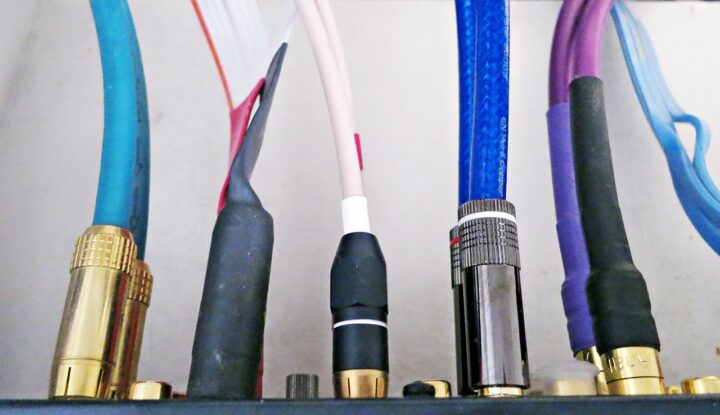
A hobby is, at its heart, something to be enjoyed through the careful consideration of precisely these subtle distinctions. The “level of commitment” to the sound quality and tonal character of audio equipment varies enormously between individuals, and shifts with experience as well. There is nothing wrong with not being able to hear clearly, and in a general sense it is perfectly normal. The level at which one finds oneself satisfied with audio sound quality also differs from person to person, and in any case, in so desperately niche a hobby, being able to distinguish differences in sound quality doesn’t raise one’s social standing or confer any particular distinction.
This is not some absurd matter of belief or disbelief — it is a question of one’s capacity to perceive reality. The notion that because one person cannot hear a difference, everyone else who claims to hear one must be experiencing placebo — I think that is an oversimplification, and a rather presumptuous one at that. And it stands to reason that individuals will differ in the value they assign to what they receive in exchange for their money. Of course, the world of purist Hi-Fi does unfortunately contain no small number of products that border on fraudulent, or that are priced far beyond what their performance warrants. But the fact that many products feel mispriced by ordinary financial standards is a completely separate question — pointing in a completely different direction — from whether a difference in sound quality exists at all, and whether a meaningful difference is perceived.
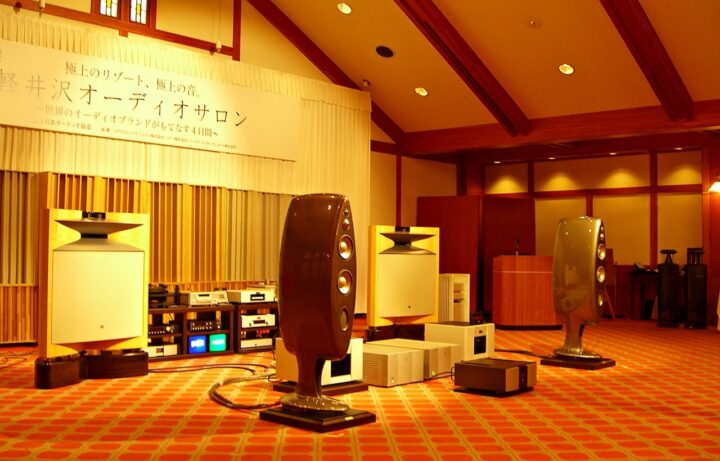
The real essence of this problem is envy towards “those who can hear the difference”
Of course, people are entirely free to find it completely unbelievable that anyone is actually hearing meaningful differences, to think that the blog author is writing nonsense and telling lies, or to regard anyone taken in by the placebo effect as a figure of pity. I am quite unbothered by being thought of in those terms, and equally unbothered by being looked down upon. This is a difference in values, and beyond that point I have no desire to be drawn into further debate — or perhaps those people possess some elevated auditory faculty, “able to discern that no difference exists,” of a kind I can barely imagine, which makes those of us flitting about in what they consider mistaken illusions look rather comical to them.
That said, how do those who “hear differences as a matter of course” perceive those who insist that anyone claiming to hear differences is merely imagining things? Honestly, it looks to me as though the true purpose is to protect one’s pride from being hurt — by refusing to acknowledge that one cannot hear fine sonic detail oneself, and instead treating those who can as somehow aberrant. A petty envy that fears wounded pride, that cannot accept the reality of being less perceptive, and that seeks to defend the self by denying and attacking others who claim to hear differences. That, I think, is the true essence of this problem.
Musical hearing aside, vision, physical coordination, the arts, anything that calls upon bodily and sensory capacity — all of these depend, at their root, on innate individual differences in sensation and ability, and that is the tacit condition that allows culture to be culture at all. A hobby is, by nature, not suited to those who cannot perceive differences. To use an analogy: the author, having essentially no physical coordination, could take up a sport as a hobby and still not get much better after any number of years — and would most likely end up simply being a considerable nuisance to fellow enthusiasts, and nothing more.
The only resolution is for those who cannot hear differences to accept the fact that they cannot, accept the fact that others can, and accept the existence of individual variation. Those who can hear differences have no interest in those who cannot, so long as they are not bothered by them — at which point the discussion is simply over. For the great majority of people, who have no particular pride invested in the act of listening itself, this is a simple enough matter. Yet for a small minority who somehow cannot accept the fact that they themselves cannot distinguish differences, something snaps periodically, and they keep reopening the topic — which is the fundamental reason this debate is continually dredged up and sent into an endless loop.
Blind Testing — What’s That, Is It Tasty?
Write the above, and almost as a conditioned reflex comes the demand to “do a blind test!” — that too seems to come as part of the package. Frankly, for a Hi-Fi enthusiast who is already living with these differences daily and working through them by trial and error, the question of who, exactly, one would be doing a blind test for — and why — is completely baffling. Audio manufacturers, in practice, are probably well used to blind testing as part of the working process, both in product development and in recruiting. But demanding that someone else go to the trouble and produce the results is, in most cases, a request that comes not from any genuine connection to Hi-Fi or music, but from a mean-spirited jealousy that simply wants to be proved right and enjoy a moment of satisfaction at someone else’s expense.
It is true that a blind test would, in all likelihood, expose a certain number of Hi-Fi enthusiasts who believe they can hear differences but turn out, in practice, to be rather less capable of distinguishing them than they thought. But what matters in this hobby is how you yourself feel about the music and the sound — what someone else who cannot perceive the same differences thinks of it is, in any fundamental sense, quite beside the point. Those who are enjoying themselves have no obligation whatsoever to prove anything, and no need to do so. If someone really does want to conduct a blind test, please go ahead and do it yourself — and be satisfied with the result entirely within your own mind. That, ultimately, is all there is to say on the matter.
~ Summary ~
When all is said and done, the truth is simply this: due to individual variation, there are people who can hear subtle differences in sound quality and people who largely cannot, and the degree to which this is so differs considerably from person to person.
These are the kinds of differences in values that I do not normally put into words — and I would rather not be made to say all of this out loud. As a matter of etiquette for this privately owned corner of the internet, and as set out in the rules from the start, please do not turn discussions into the kind of persistent, point-scoring arguments that are premised on winning. That is my request as the person running this site. Of course, not everything the author writes here at AUDIO STYLE is necessarily correct — there are bound to be misunderstandings and errors here and there, and I think that is fair to say. When writing in sensory terms, there will inevitably be cases where the expression is imprecise or wide of the mark, and there are times when I read back my own past reviews and think: what on earth was I writing there.
Moreover, since this is a review blog that prioritises sensory expression over the rigorous technical angle of electrical engineering, I accept that some readers will find the words simply incomprehensible — as if someone were stringing together poetry. That being said, I have no deliberate intention of writing dishonest or misleading subjective evaluations. This blog is premised on the assumption that the author, as the person providing the content, and you, the Hi-Fi enthusiast reading it, can both hear meaningful differences to a reasonable degree — and it is on that basis that the author has written subjective reviews in his own way. Under freedom of expression, complaints about that premise itself — along the lines of “this is an eyesore, stop writing it” — are, I’m afraid, not something I am able to accept.
 ポチップ
ポチップ
The reason is that accepting such complaints would amount to a wholesale denial — right down to the roots — of the meaning of this blog, of the nature of purist Hi-Fi as a hobby, of the existence of the audio-related products introduced here, of the people who make them, the people who sell them, the users who buy and enjoy them, and the sensibility and very way of life of everyone involved in the industry as a writer. No one has the right to impose a difference of opinion — however trivial and however grounded in sophistry — upon others, whoever they may be. I therefore ask that anyone using the bulletin board or comment section of this site please keep their participation peaceful. As a matter of etiquette within a community dedicated to the exchange of information, and as a rule of participation that applies to all visitors, I would be grateful if you could refrain from inappropriate or antagonistic expressions that might disadvantage others, complaints-style remarks, or the raising of topics likely to provoke arguments that leave bad feelings behind. (End)
※ This entry is a rewrite of a post originally published in 2005.
July 9, 2005
Temporarily closing the audio bulletin board.
I sincerely apologise to all readers, but as things have become more than I can keep on top of, I am closing the board for the time being. There is no set date for reopening, though I may restart it if I recover my spirits. To those who posted regarding TAG McLaren/Aura/Creek and the Space & Time Omni: if you have not yet seen the replies from 6–9 July, please do get in touch, and I will follow up with the rest by email.
This has come very suddenly, and I am deeply sorry for the considerable inconvenience caused to all regular contributors and to those who have been reading along quietly. I offer my sincere apologies for what has happened m(__)m. As for past logs, searching Google for “掲示板/箱庭的輸入ピュアオーディオシステムの薦め” should bring up quite a few results. If you have anything you’d like to write or say, please feel free to use the blog’s comment form going forward d(^_-)
The bulletin board I set up in April ended up going in a direction I had not wanted, and after only three months of operation it has been suspended. That said, I have received a great many emails asking for it to be reopened, so I am planning to bring it back at some point — with stricter rules this time. (Later note: in the end, it was never reopened.)
 Category: Pure Audio for Beginners


Auto Translated by CS4.6





List of comments (3)
音楽とオーディオを楽しめるブログを展開してくださり、いつもうれしく思っています。どうぞよい音楽とともに、気持ちよいブログ運営が再開されますように。それにしても pastel_piano さんのシステム、よい音が鳴っていそうですね。記事を読みながらいつもそう思っています。
お気遣いありがとうございますm(__)m
二つともいろいろやりくりの末に組み上げたシステムで、
投資した金額の割にはそこそこ良い音で鳴っていると思います。
とはいえ、更に良い音のシステムをお持ちの方は沢山いらっしゃいますし、
家のシステムもまだまだ理想のイメージ通りに鳴っている訳ではなく、
完成には程遠いです。でもまぁ、その過程が楽しいんですけれどd(^_-)
リライトされた記事にコメントするのはジョン・タイターになった気分ですね。
電源ケーブル等で音が変わらない派と変わる前提派とでは話しが噛み合わないので、管理人さんも随分苦労されたのでしょう。
私など元の電流自体アナログ録音全盛の頃のと最近のデジタル化された機材を使用している物とでは前提となるS/Nとか違っていて、数十年後の感覚でデジタル・リマスターすることには懐疑的だったりします。家庭の電源にも昔は無かったノイズが一杯乗っているのではと。それが聴こえるとは言いませんが(滝汗
アーティストとプロデューサーがO. K.を出して世に問うたものを弄ってどうするという……。話が脱線してすみません。
ここからは私的ポエムです。
ウチの奥さんが草花が好きで、その水遣りを頻繁におおせつかるのです。
私など子供の時から夏休み中とか家の庭で散水係をしてきたんですが、何でといやいややっている不届者でした。
植物への思いやりが欠落しているというか、枯れそうという感じが分からない鈍感な性質なもので、その声が聞こえてこないんです。そういう感覚とかは人それぞれ違っているのでと自己弁護。
その代わり動物達には優しくてその声が聞こえてきます。
「完璧な人間なんていないさ」ということで。