How do you usually go about cleaning the contacts on your Hi-Fi equipment? Setting aside the deeply committed Hi-Fi enthusiasts who somehow find their way to this obscure corner of the internet, most ordinary music lovers who aren’t particularly well-versed in Hi-Fi gear have probably never cleaned their terminals or contacts at all — would that be fair to say?
Leaving aside all-in-one products like boomboxes and mini systems, the nature of combining separate, individual Hi-Fi components means there are inevitably multiple standardised connection terminals on the back of each unit — phono cables, speaker cables, digital cables, power cords, video connection cables, and so on. In principle, these contact points represent electrical resistance and signal loss, so theoretically a direct connection with no contacts at all would be ideal. But the worlds of pure Hi-Fi, home theatre, and professional audio are built from the outset on the premise of combining separate components together.
Regular Contact Cleaning Is Highly Effective at Restoring Hi-Fi Sound Quality
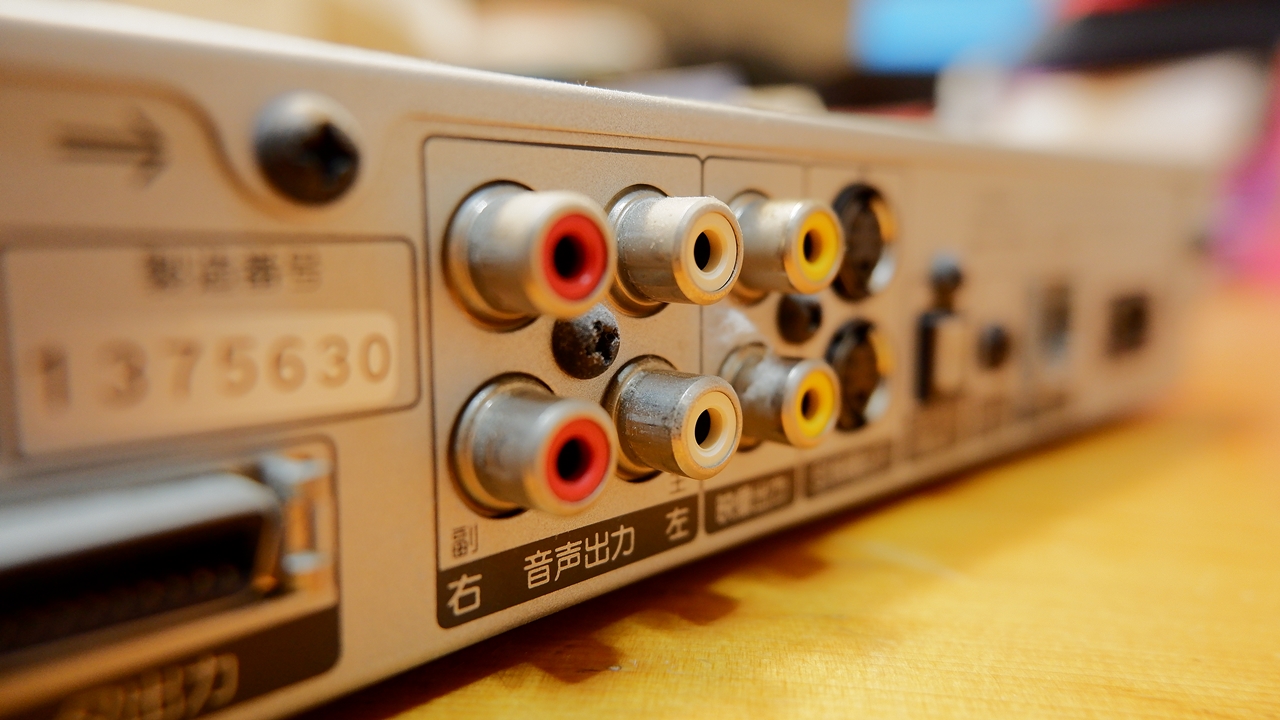
It would be wonderful if the gleaming terminals of brand-new Hi-Fi equipment and cables could maintain their initial performance — resistance values and all — indefinitely once connected. In reality, however, moisture and oxygen in the air at the time of connection, grease from fingers, house dust, and so on, all take their toll. Add to that the oxidation and deterioration of terminals that were already exposed to air for extended periods even before being connected, and in the microscopic world, Hi-Fi terminals are inevitably going to become contaminated over time, whether we like it or not.
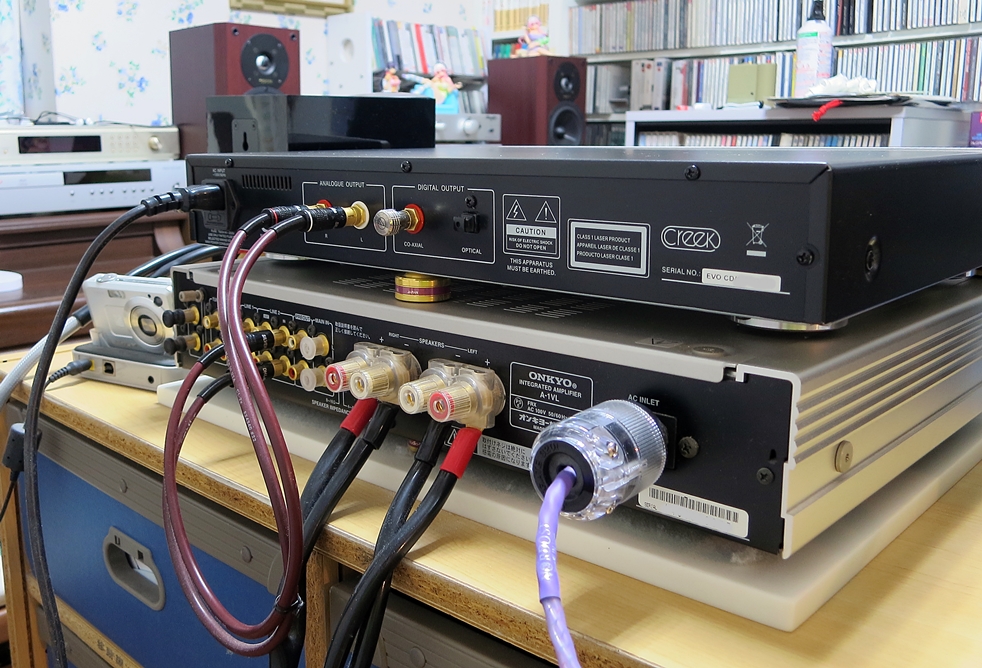
Whether or not you regularly maintain and clean those contact points through which minute electrical signals and currents pass makes a world of difference — the small things add up, and over time the same Hi-Fi system can sound dramatically different depending on how well it has been looked after. With a particularly revealing system, even a single contact point can produce an audible change that is simply impossible to overlook.
Even terminals that were pristine when new will, for whatever reason — metal surface stress from tight connections, or perhaps deterioration caused by vibration — accumulate black grime while left connected. And if you are careless when unplugging, allowing your fingertips to touch the end of a plug, or letting terminals brush against dusty surfaces around the equipment, you will only be pressing more contaminating material further into the contact. As any Hi-Fi enthusiast knows, it is not just signal contacts either — carbon soot and similar deposits gradually build up on the electrical contact terminals of power lines as well.
If you have never paid much serious attention to cleaning your Hi-Fi terminals and contacts up to now — even terminals that look clean at a glance will, when you get at them with a contact cleaner and a cotton bud, turn out to be in a truly alarming state: jet black, just like that. Terminals that have been plugged and unplugged many times are particularly bad — rub them with a cotton bud soaked in contact cleaner and they come up shockingly black, which never fails to leave me somewhat deflated.
What You’ll Need for Contact Cleaning, Part 1: Cotton Buds
Every Hi-Fi enthusiast will have their own various cleaning methods, but here I would like to introduce the approach I personally use.
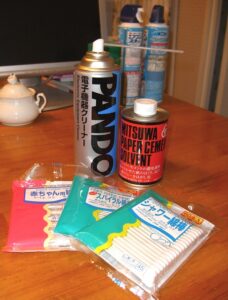
First, you will need two types of cotton bud: regular size (or shower cotton buds with a larger cotton tip) and baby cotton buds. The baby cotton buds in particular are essential — they are just the right size for cleaning inside RCA sockets and phono plugs. Without baby cotton buds to hand, you simply cannot clean the finer terminals properly.


 ポチップ
ポチップ
There are also dedicated Hi-Fi cleaning tools shaped like RCA plugs, such as the audio-technica AT604 and AT6022, but they are rather expensive per unit, the material feels oddly stiff, and I have never found the cost-to-performance ratio or usability particularly impressive — although I do keep them on hand as a matter of Hi-Fi enthusiast principle. The audio-technica AT604 has since been discontinued, so at present the OPSOLU Terminal Clean Kit may be the only option. For thoroughly cleaning heavily oxidised RCA terminals that have gone completely white, or the interior of mains sockets, the OPSOLU Terminal Clean Kit should prove very useful. OPSOLU also makes the rather unusual addition of cleaning kits for XLR connectors and valve sockets.
The advantage of cotton buds, beyond their low cost, is that they are soft — which means the risk of scratching or damaging terminals is virtually nil compared to dedicated cleaning tools. Cotton buds are sold in all sorts of varieties at chemists and supermarkets in the healthcare section, but I tend to avoid those treated with chitosan antibacterial agents or sterilised types (such as the benzalkonium chloride-coated variety made by Johnson). That said, over the past few years plain cotton buds without chitosan treatment (whether any residual effect causes harm I genuinely do not know) have all but disappeared from the baby products market, making them increasingly difficult to find in shops. Still, for peace of mind I try to use plain cotton buds where possible. Regular-size cotton buds and shower cotton buds are used for the outer surfaces of terminals and for power-side connections.
 ポチップ
ポチップ
What You’ll Need for Contact Cleaning, Part 2: Contact Cleaner for Metal Contacts
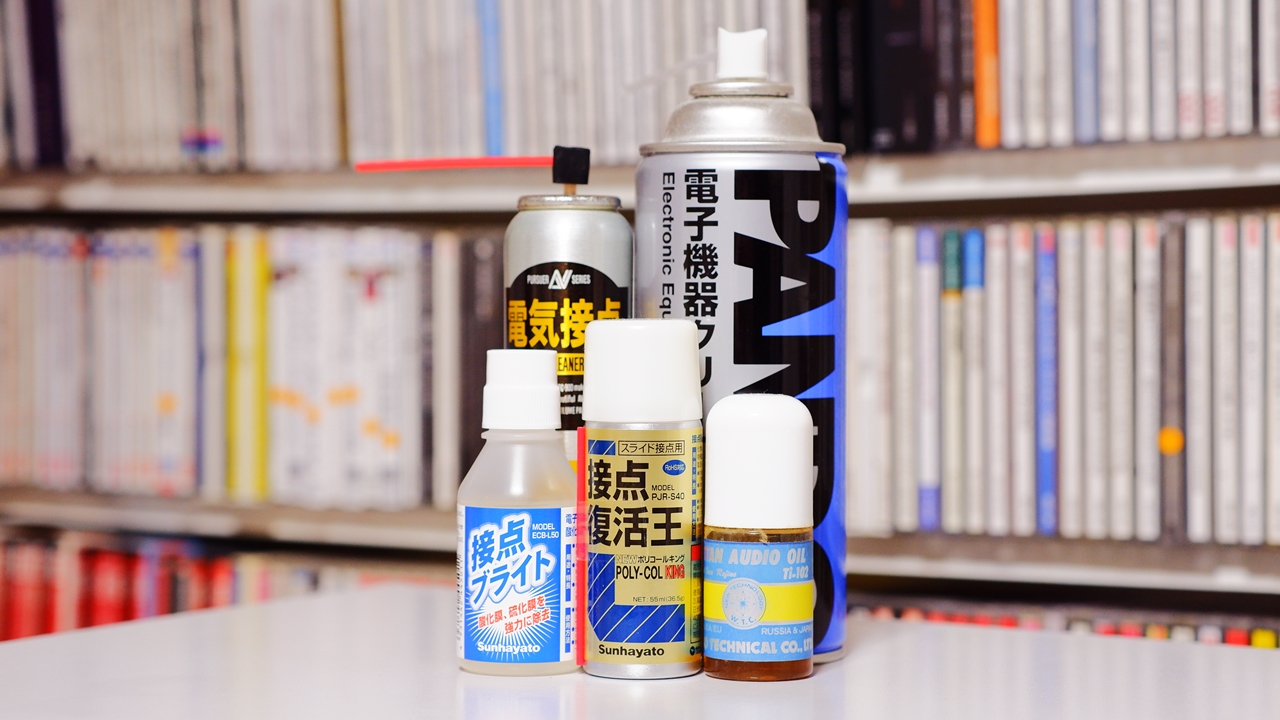
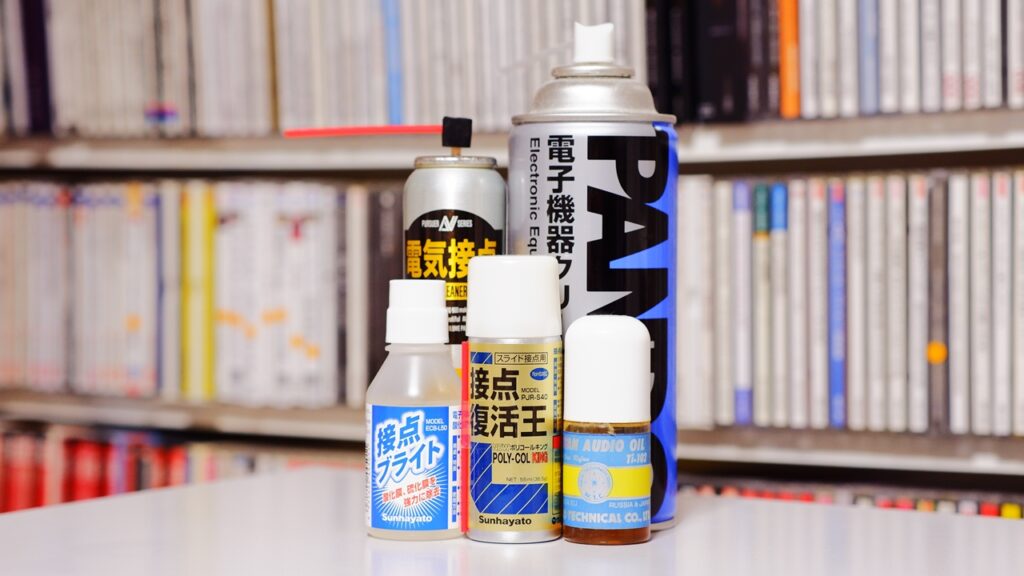
And then there is the contact cleaner itself, which is of course crucial. For the DIY-inclined and the audiophile market alike, all manner of contact cleaners, rejuvenators, and so-called sound quality enhancers have been available for years — oil-based, isopropyl alcohol-based, water-based, you name it — some of them priced at a jaw-dropping ¥10,000 for a single small bottle. I too went through a phase, as Hi-Fi enthusiasts tend to do, of trying various contact cleaners, and what I ultimately came to understand is this: every product imparts its own character to the sound, and when asked whether they actually improve sound quality as the manufacturer claims, the honest answer is that a change in sound does not necessarily equal an improvement.
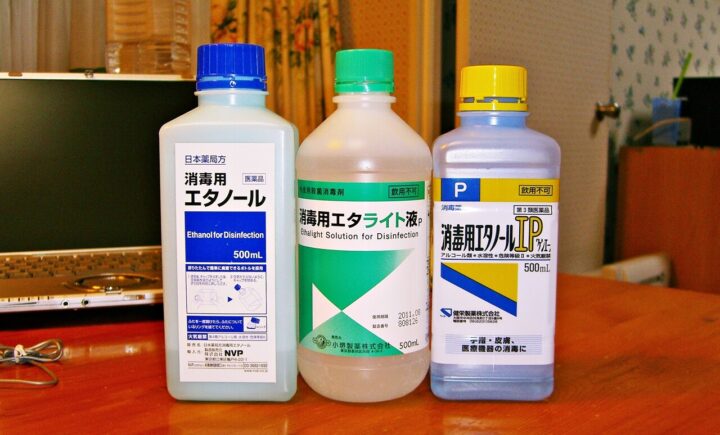
First, the alcohol-based and water-based types containing surfactants and similar agents. These are common among relatively inexpensive products, but their cleaning power is not particularly strong, so they are frankly underpowered when it comes to polishing heavily soiled or whitened, oxidised terminals. Their advantage is that they are less likely to damage metal surfaces, and their effect on sound quality is relatively modest and contained. For routine use, plain anhydrous alcohol from the chemist, or disinfecting alcohol with a small water content (ethanol or isopropyl alcohol), is the safe and sensible choice.
The Drawbacks of Oil-Based Contact Cleaners and Contact Protectants
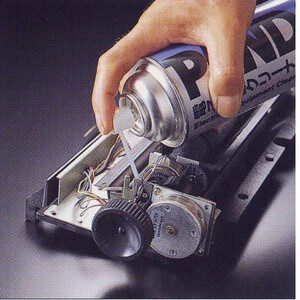
The issue is with oil-based products. These impart an extremely strong character to the sound. If the direction of that change happens to suit your taste, well and good — but in the case of ordinary industrial contact and relay cleaners, the primary purpose is less that of a cleaning agent and more that of a contact conductivity improver exploiting the properties of oil. Whether they have any genuinely positive effect on sound quality is, in my view, highly questionable.
Among oil-based products there are also those aimed specifically at the Hi-Fi market that take a more active approach to altering the sound — incorporating various metal particles or carbon, for instance. And it is true that they do seem to smooth out a certain mechanical roughness in the sound, adding warmth, fluidity, and a sense of atmosphere that can sound rather pleasing. Being oil-based, they can also work well on piano hinges and similar hardware prone to resonance and rattling.

However, one base oil that appears frequently in this type of Hi-Fi contact protection product — alongside synthetic oils such as PAO — is squalane oil. This is the liver oil of deep-sea sharks, widely used in cosmetics. It is often described as highly stable and non-oxidising, but strictly speaking that claim is probably an exaggeration. Even ultra-high-purity cosmetic-grade squalane oil, advertised at 99.something per cent purity, feels quite different to the touch between a freshly opened bottle and one that has been in use for a while with only a little left. It is an animal-derived natural oil at the end of the day, and while there are oils that resist oxidation over the short term at food-grade levels of stability, an oil that does not oxidise at all over the long term simply cannot exist.
It is worth bearing in mind that the sonic character imparted by oil-based products is not something that holds for long — it has a tendency to shift over time. Note: I do not mean that the effect disappears entirely, but rather that its character changes. Moreover, as oil-based products age and deteriorate, they can themselves become a source of contamination around the terminals. Their high penetrating ability means they soak into rubber and plastic parts on plugs and cables, and in some cases may damage the equipment body or the cables themselves. And because they are sticky, applying them carelessly during cleaning can leave residue around the terminals that actively attracts further dirt and dust.

There are certainly situations where an oil-based conductivity agent used as a lubricant is genuinely necessary, and quite apart from that, experimenting with natural-material accessories to vary the tonal character of a system is an enjoyable pastime in its own right. But when you weigh up the safety implications for Hi-Fi equipment and cables, and the question of whether you can return things to their original state, I find myself arriving at the conclusion that a cleaner with as simple a formulation as possible — adding nothing, leaving nothing behind — is probably the better approach.
The Ideal Contact Cleaner Adds Nothing and Leaves Nothing Behind
Having gone through several failed experiments with contact chemicals, the personal conclusion I have arrived at is this: a contact cleaner should be just that — a cleaner. Add nothing, simply clean thoroughly, and leave nothing behind. That, I think, is the ideal.
The Solvent I Used Years Ago
Which brings me to the British KONTAK contact cleaner KT-100 (now discontinued).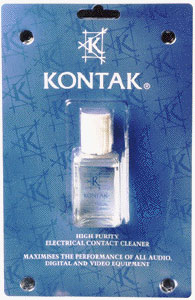 A small bottle at a list price of ¥7,200, which is not cheap — but the description reads: “The active ingredient is a highly safe chlorinated solvent. Exceptionally strong cleaning power, thoroughly degreasing while stripping away all oxidation, and its high volatility means it leaves nothing behind — that is the defining characteristic of a solvent. In sonic terms, it delivers a clear, transparent sound as though layer after layer of veiling has been removed; rather than altering tonal character through the resistance of additives, it contributes to clean, pure signal transmission by thoroughly eliminating the unpredictable elements and electrical resistance of the terminals themselves.” That said, products aimed at the pure Hi-Fi market like this tend to be expensive and come in small quantities that run out quickly. I would happily recommend such an imported chemical with its undeniable air of high-end authority to those of you with deeper pockets — but for someone of my budget-Hi-Fi persuasion, the threshold is rather high. So I had a think. A solvent — surely there’s that other thing! Yes indeed: a well-known staple for anyone who works in or studies the visual arts — Mitsuwa Paper Cement Solvent.
Originally intended for thinning paper cement or removing stickers and adhesive residue, this organic solvent is composed of n-hexane and cyclohexane. The absence of chlorine means its contact-refreshing performance may fall slightly short of KONTAK, but in practice the contact cleaning effect is more than adequate — a careful polish with a cotton bud will have even badly oxidised terminals gleaming in no time. Sonically too, the result is clear and bright, with a wonderfully high-fidelity quality as though every last bit of unwanted interference has been swept away. As for the concern about aggressiveness towards metals — I cannot make any firm promises since I do not know the details of its corrosion resistance properties — but I have been using paper cement solvent for years without noticing any particular problems. It can apparently damage certain types of plastic, however, so do bear that in mind. Inexpensive, with this level of cleaning performance and sonic result, in a 310 ml bottle. Available from art supply shops.
 ポチップ
ポチップ
Paper cement solvent has a relatively mild smell as solvents go, but its volatility is extremely high — work too slowly and the cotton bud dries out almost immediately, and the level in the bottle drops noticeably even while the lid is off. It is also not something you want to be inhaling, so do not forget to ventilate the room while you work.
~ Summary ~
That covers the contact cleaners and cotton buds I use for Hi-Fi terminal maintenance. The basic rule is: whenever a plug has been disconnected, clean it before reconnecting if at all possible — do this before the grime becomes too stubborn to shift. In terms of which product to use when: for terminals in relatively good condition, isopropyl alcohol, anhydrous ethanol, or paper cement solvent are all fine choices — these tend to give a slightly dry, bright sonic character. For cases where some degree of contamination is a concern, PANDO 29D (though I should be honest and say its tendency to make the sound rather cool and flat is a drawback I notice). For removing the white oxidation film from second-hand equipment or terminals that have gone unmaintained for a long time, I would suggest enlisting the help of American-made CAIG DeoxIT, followed up with PANDO 29D or paper cement solvent for the finishing treatment — how does that sound?
 ポチップ
ポチップ
If your Hi-Fi system has been sounding muddy lately, or has simply lost its sparkle, why not use the upcoming holiday to give all the contacts a thorough refresh? I am quite sure you will be amazed at how clean and clear the sound becomes — and equally sure you will wonder why on earth you did not make regular contact cleaning a habit long ago.


Auto Translated by CS4.6