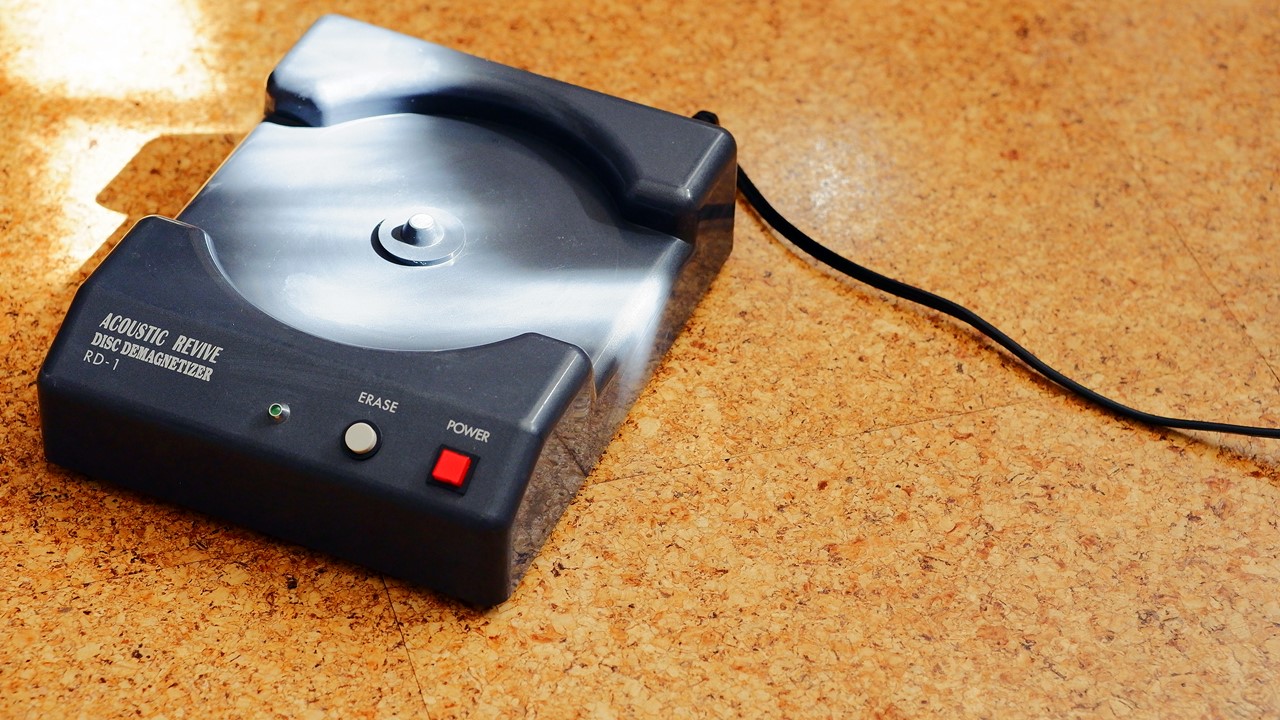
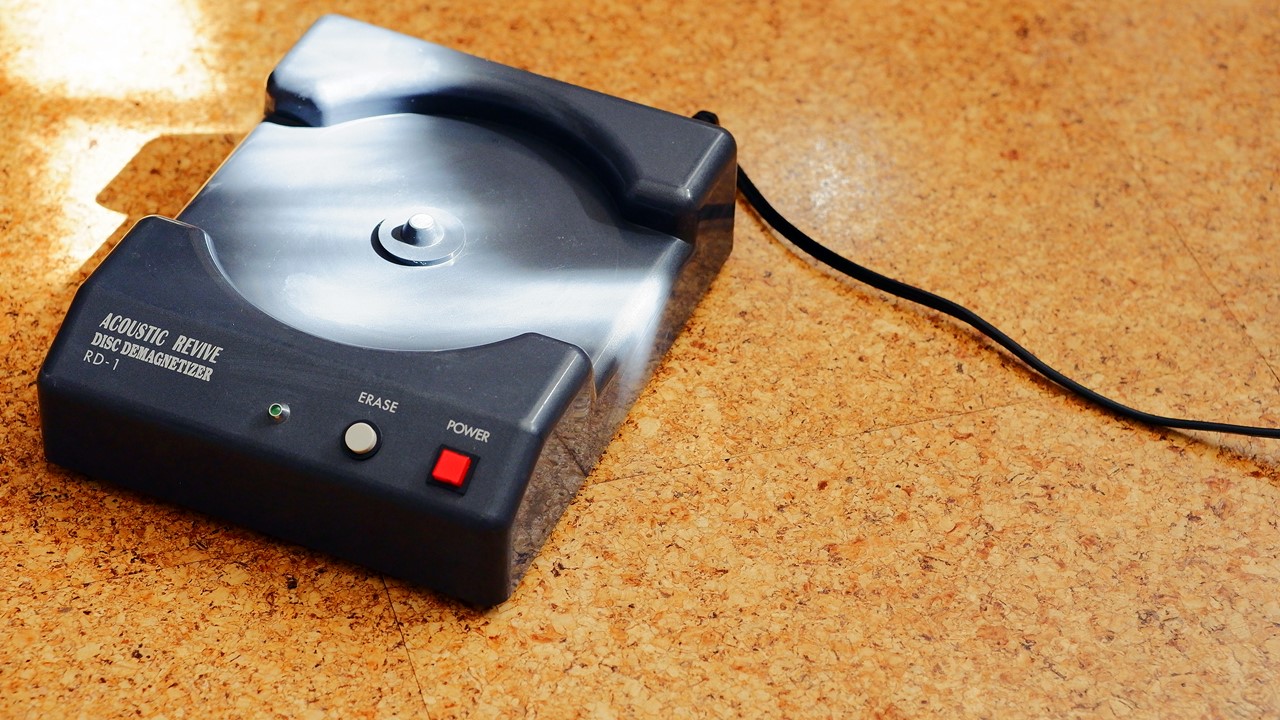
The first instalment in our CD sound quality improvement series covers the RD-1 from Sekiguchi Kikai Hanbai / Acoustic Revive (the current model is the successor, the  RD-3).
Using it is simple: just place the CD on the tray and press the button. A green light comes on, then fades out after a moment. That’s all there is to it. The basic procedure is to demagnetise label-side first, once or twice on each side (once is sufficient for discs in the author’s collection). One can’t help thinking, does this really do anything? — but as a functional test, if you place a magnetised screw on the tray and switch it on, it goes absolutely wild up there. So it does appear to be working physically.
As for the effect of this demagnetisation business — there is quite a substantial change. When I bought it, a member of staff at a certain Audio Union told me I’d never be able to listen to CDs without demagnetising them again, and (setting that aside) the direction of the sonic change does indeed have a wonderful appeal that makes it hard to give up.
To put the sound in a single word: freshness goes up, across the board. Anyone who likes Hi-Fi, high-resolution sound will take to it immediately. The stereo image comes into sharp focus, the sound acquires greater depth and definition, fine details that were previously inaudible rise to the surface, and the perceived information density increases dramatically. Extension in the upper frequencies improves noticeably in particular, and the overall expressiveness shifts slightly towards a brighter, more dynamic character.


 ポチップ
ポチップ
However, there are side effects. This demagnetiser bills itself as a demagnetiser, but in practice it apparently leaves a faint trace of magnetisation behind. The principle involves deliberately magnetising the disc with a coil and then slowly sweeping that field away — but in the first-generation RD-1, the erasure stage is subtly incomplete, leaving a very slight residual magnetic force. That residual force introduces a faint colouration, and the upper frequencies appearing clearer than before is, in part, a result of that. In other words, there is, if one is honest, a somewhat subtle tinting to the sound.
This becomes apparent if you demagnetise the same disc — or a plug, or anything really — three or four times in a row: the RD-1’s effect compounds to the point where the treble extends so aggressively it becomes uncomfortable to listen to, and the bass takes on a thin, distorted, harsh quality. Musically, too, the sense of rhythmic vitality drains away and everything sounds rather flat.
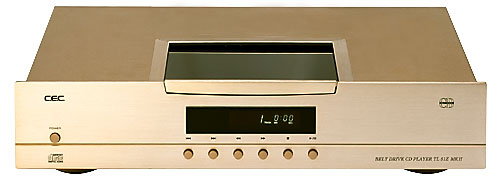
That said, as long as one does not overuse it, applying it periodically to CDs with a muffled or blurred sound, or to accessories, the CEC TL51XR and similar, or to the stabiliser of a belt-drive CD player, can be expected to yield a positive, freshness-restoring effect — though there are occasional cases where one ends up wishing one hadn’t demagnetised at all, and a certain amount of experience is needed to judge the right dosage.
 ポチップ
ポチップ
The basic recommendation is to use it on CDs whose playback sounds vague and leaves you with a nagging sense of dissatisfaction. Rental CDs and second-hand CDs in particular often show a dramatic improvement — one wonders why, but discs of this sort tend to have a closed-in, dark quality to their sound. Similarly, CDs from one’s own collection that have grown stale-sounding with age often respond well to demagnetisation, and even brand-new CDs show some degree of change. That said, if a CD already sounds sufficiently good without treatment, it is probably safer not to bother. Either way, the tonal balance will shift, and there is no guarantee the result will be an improvement.
The key point is this: for CDs whose sound is vague and unclear, or which have an irritating edge to them somewhere — whether new or used — demagnetisation can bring an immediate clarity to the sound, a vivid transformation as though life itself has been breathed back into the disc.
Conversely, for discs where a full-bodied, softly ambiguous warmth, a sweetness and sense of being enveloped in resonance, or a balance with generous low-end weight and a gently rolled-off treble happens to suit the music — where a lack of sharp focus is precisely what makes the whole thing enjoyable — demagnetisation will tidy up the reverberant bloom and leave the sound sounding flat and uninteresting. That is something to be mindful of.
That said, if left alone, the demagnetisation effect gradually fades on its own over time, due to the Earth’s magnetic field and various other influences (this is the author’s speculation), and before long the disc quietly returns to its former state. It does take time, though. To fade to a level where it is no longer noticeable takes several months, and even then it probably does not return completely to how it was. That said, CDs that are being regularly played will have their sound changing gradually regardless, so for a disc whose sound you are unhappy with, going ahead and demagnetising it will more often than not yield a better result. (Note: newly purchased CDs in particular change noticeably after a few plays — or perhaps after a few days? The sharp edges in the sound soften and round off to a comfortable degree. Perhaps an effect of repeated laser exposure?) Either way, there is little point becoming overly anxious about it.
The current successor model, the RD-2, has apparently addressed the incomplete sweep operation, and the time taken for a single demagnetisation sweep cycle is longer than on the RD-1. I had the opportunity to try an RD-2 — a prototype, admittedly — some time ago, and the sonic character it produced was somewhat different from what the RD-1 delivers: less of the treble-range distortion and the sense of extension that goes with it, and a more natural, settled tonal balance overall. In all likelihood the RD-2 is behaving more correctly as a demagnetiser, strictly speaking. And yet — and I realise this may seem an odd thing to say after all that — the RD-1’s husky, slightly rough quality has a charm the RD-2 simply does not possess. If you are something of a demagnetiser enthusiast, having both on hand might not be a bad idea. Those who traded in their RD-1 when the RD-2 came out — well, that is a shame.
Incidentally, the effects of a demagnetiser are by no means limited to CDs; DVDs and CD-R/DVD-Rs respond in the same way, and SACDs apparently show an even more pronounced effect. Video, too, becomes crisper and the signal-to-noise ratio improves — some may find the difference easier to perceive in picture quality than in sound. Hi-Fi accessories are fair game as well: plugs, cables, whatever — demagnetising them all makes a difference. And curiously, the direction of the sonic change is essentially the same regardless of which component you treat, just as with CDs.

Auto Translated by CS4.6






List of comments (2)
はじめまして。いい情報がおおいですね。SHARPのプラズマクラスタ(空気清浄機)に 静電気の除去効果があるのですが、ためしにCDにあててみたら、たしかにボーカルの声がかわりました。
日記に記載しております。
http://mixi.jp/view_diary.pl?id=1799033845&owner_id=13129115
よん様はじめまして。
ホコリと静電気対策は良い音で聞く為の基本かも知れません。うちも東芝のプラズマイオン系空気清浄器で昔同じ遊びをしたりしてました。でも飽きちっゃてRD-1もたまにしか使わなくなってます・・・。
オーディオ機器本体を水拭きしたり、ケーブルを水拭きしたり
その時に使う拭き水も例えば加水アルコールやアルカリ電解水を使ったり、色々手段はあるのですが、こまめに掃除して、一年に一度は大掃除をするのはオーディオマニアの必須条件かも!?
https://www.audiostyle.net/archives/51514299.html