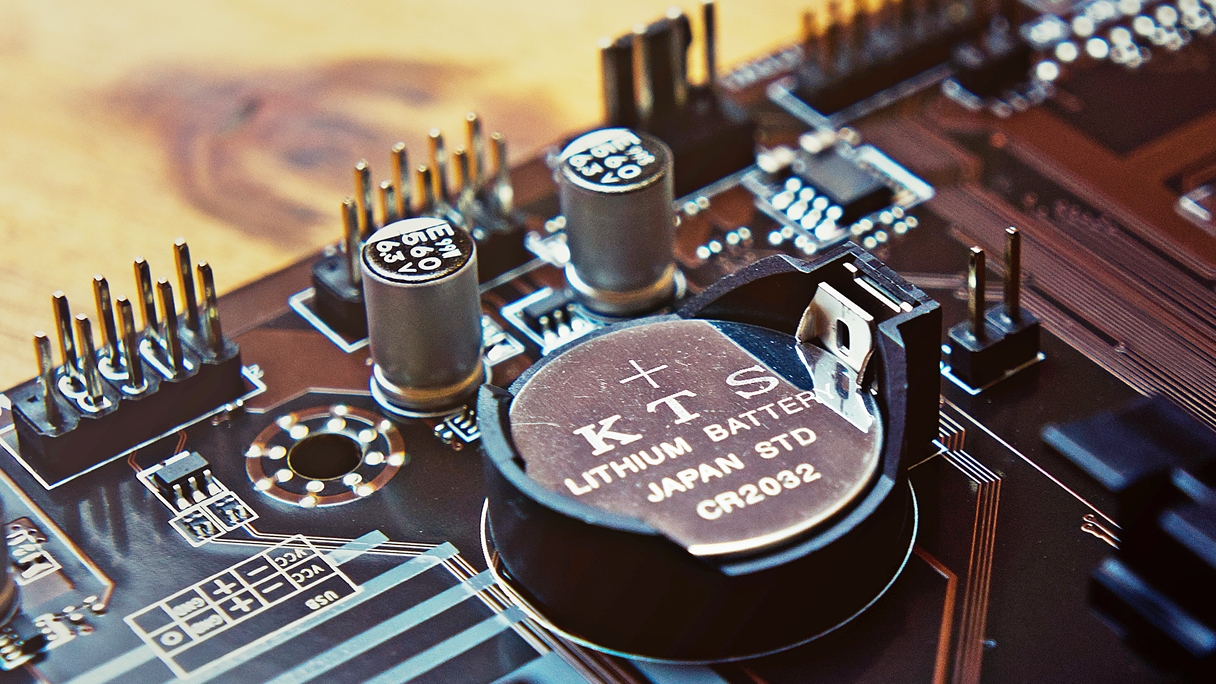
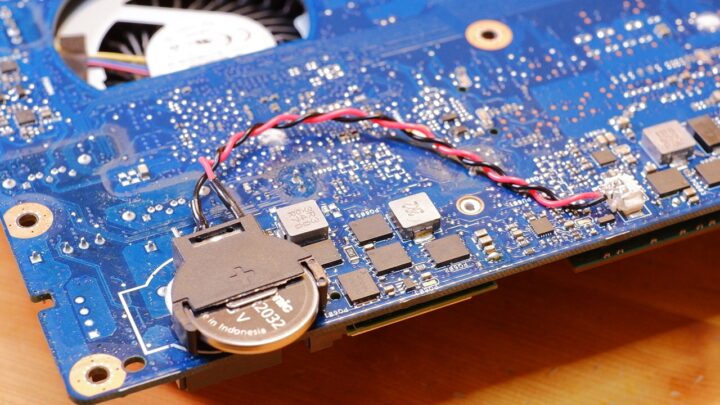
This likely applies to most PCs regardless of whether they are large desktop machines, small-form-factor PCs, or laptops, but the CMOS battery in my ASUS VivoMini VC65 is also what is known as a “CR2032” coin-type lithium battery. There is a similar button cell called the CR2025, and the difference between the CR2032 and the CR2025 is thickness. Viewed from the side, the CR2032 is slightly thicker (3.2mm), while the thinner CR2025 (2.5mm) has a correspondingly smaller battery capacity. The CR2032 and CR2025 share exactly the same diameter, so they are interchangeable provided the CMOS socket holder supports it, but if you want the battery to last, the CR2032 is the only real choice.
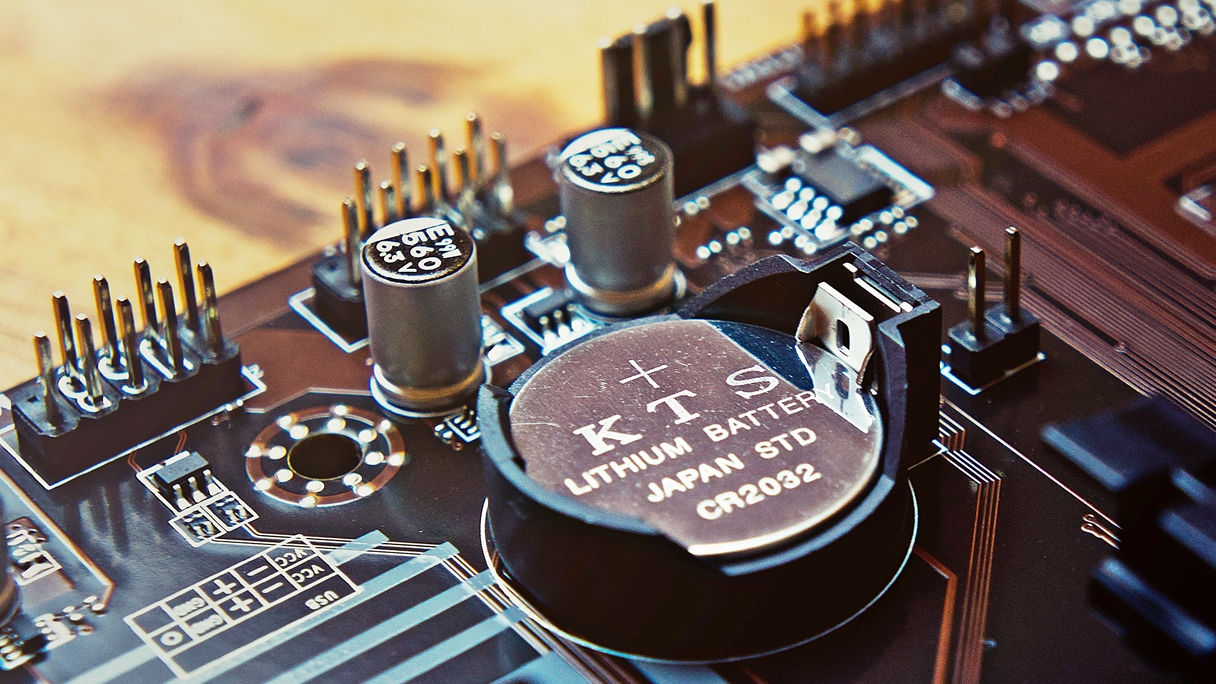
I have written about button cells (coin-type lithium batteries) before, and for cheap fashion watches bought just for fun, an inexpensive Chinese-made battery from a sheet of ten costing a few hundred yen is not really a problem. However, for a PC’s CMOS coin battery, considering the trouble involved in replacing it and the risk of being suddenly caught out one day by a boot failure or similar issue, I would recommend using a battery from a reliable manufacturer. With poor-quality Chinese-made button cells, capacity may be low or inconsistent right from the start, and in some cases the battery can self-discharge and become unusable within three to four years even if stored away and never used.
A Japanese-made CR2032 is recommended over cheap Chinese alternatives.
The brand of CMOS battery that came fitted as standard in the ASUS VivoMini VC65 is Newsun of Hong Kong. I had assumed it was Taiwan’s KTS, but apparently not. Newsun has a high adoption rate among PC manufacturers, and at one point their batteries were also handled by AINEX as CMOS batteries ⇒ PA-2032A.
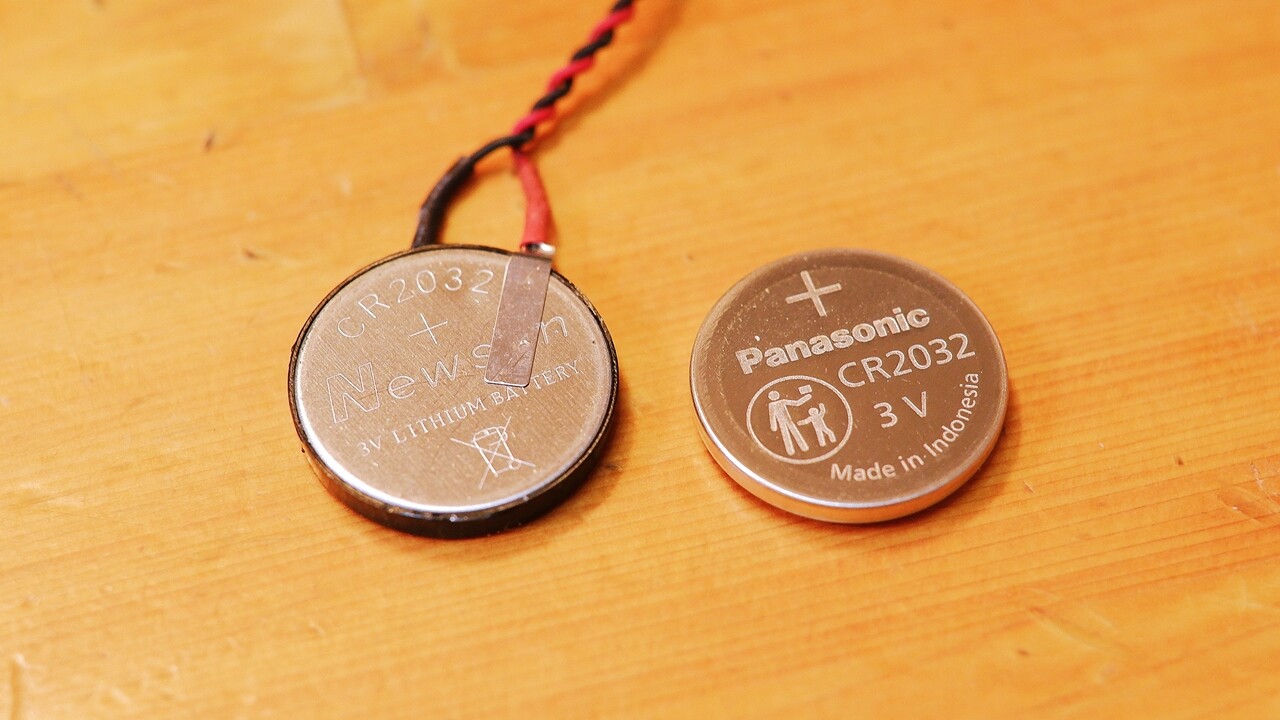
Since Newsun is adopted as standard by major PC manufacturers, their quality presumably carries a certain level of reliability — but if at all possible, I would still rather use a battery from a domestic Japanese manufacturer with a proven track record and genuine technical heritage. When you actually place a ↑ Panasonic (made in Indonesia) battery side by side with a Newsun (made in China) battery and compare them directly, at least in terms of finish and external appearance, there seems to be quite a considerable gap in the level of craftsmanship.
That said, when I tested the voltage on the four-year-old ASUS stock Newsun with a meter, it was still holding 3.015V, so perhaps there genuinely is no problem with the battery quality itself. ※ Incidentally, in other ASUS models and in Chinese-manufactured PCs, you often also see Taiwan KTS CR2032 cells used as CMOS batteries. They do say “JAPAN” on them, though…
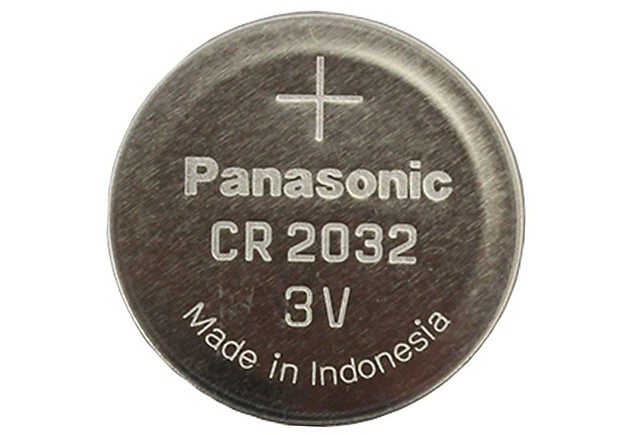
CR2032 battery performance comparisons are covered in detail elsewhere, but from personal experience as well, Panasonic’s lithium batteries give the impression of being a cut above the rest in terms of reliability. Coming in second, Hitachi Maxell and Mitsubishi both perform well. Toshiba, SONY, and Fujitsu FDK seem to fall slightly short of Panasonic on the performance side.
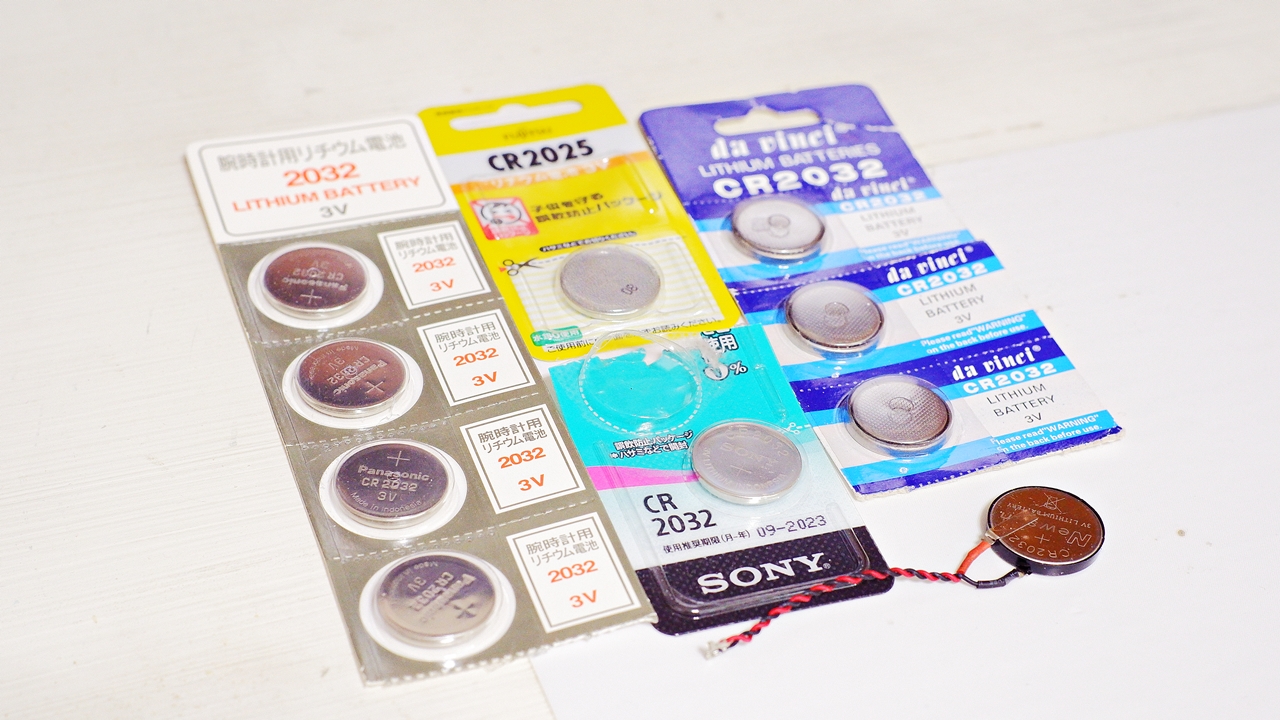
I have no personal experience with the Mitsubishi brand sometimes found at 100-yen shops like Daiso, and it appears that Mitsubishi does not manufacture the batteries themselves — there are various rumours depending on the packaging (and era) that the OEM supplier might be FDK (Fujitsu), Maxell, Panasonic, or others. Hong Kong/China’s GP Batteries is something I have never seen in the shops around here, but apparently the CR2032 batteries of unidentified make sold at Daiso — other than the Mitsubishi ones — are GP “Golden Power.” Looking at the comparison data, they appear to be quite capable batteries for high-current/short-duration use, even compared to Japanese-made ones. However, what is actually required of a CMOS battery in a PC is, at the end of the day, low-power draw combined with long-term self-discharge resistance, so the true picture is unlikely to emerge from that sort of test.
This happened a few years ago. When my car’s remote key suddenly stopped working one day, I assumed it was a flat battery and put in a cheap Chinese-made coin cell I had to hand — only for the remote to do nothing. I assumed it must be an electrical fault with the car rather than the remote itself, so I took it to the dealer, who popped a brand-new Panasonic battery into the remote and, just like that, it worked perfectly. In other words, the battery was simply defective — that was the anticlimactic conclusion. It has already been about five years since then, and the battery still does not appear to need replacing.

Things like that do happen, so please bear in mind that Chinese-made button cells will in many cases perform far below these top domestic manufacturers, with considerable variation in quality to boot. Also, even if the packaging says Panasonic, Maxell, SONY, or similar, batteries sold cheaply in sheet packaging — described as parallel imports, simplified packaging, or overseas-market stock — quite often contain counterfeits, so do be careful.
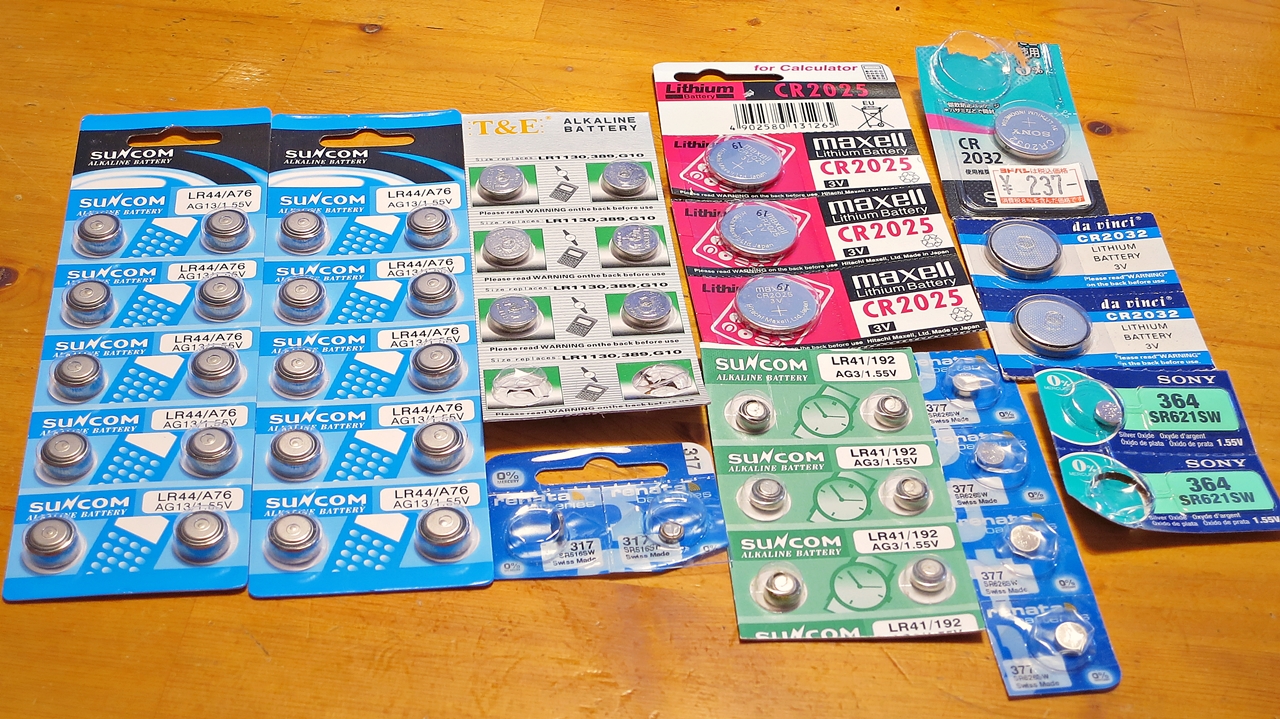
With Chinese-made coin cells, a sheet of ten can be had for the price of one or two top domestic branded batteries, which makes it awfully tempting to go for the apparent value. The photo above shows various button cells I have bought over the years — mixed in among the Chinese-brand ones are what appear to be counterfeit packages as well, and anyone who knows their stuff will probably smile wryly at the image. Come to think of it, what would the average household even do with ten or twenty CR2032 batteries? Most of them would surely sit unused until they pass their expiry date and go flat from self-discharge — that seems the most likely outcome.

When the CMOS battery dies, symptoms can range from the clock showing the wrong time to the OS failing to boot or the screen freezing — all of which can look very much like a hardware fault. Because this kind of trouble is relatively rare, tracking down the cause tends to take time. To avoid problems caused by a dead CMOS battery before they happen, I would recommend using a coin cell from a reputable Japanese brand — at least for the one that goes into your PC.


 ポチップ
ポチップ
In my own case, I make a point of using Panasonic for anything important, such as the CMOS backup battery. For those who are unsure about how to tell genuine products from counterfeits in the supply chain, rather than buying online where quality can be a lottery, I think the safer option is to purchase a domestic-market package from a well-known brand such as Panasonic, Mitsubishi, or Maxell at your local electronics retailer, supermarket, convenience store, or even a 100-yen shop.
 Category:充電池にひたすらこだわる♪Category:ASUS VivoMini VC65 & UL20FT

Auto Translated by CS4.6
List of comments (1)
Newsunで検索して このサイトにたどりつきました。
2007年1月に買ったaopenのマザボに付いていたCMOS電池が 昨夜ご臨終になり交換してみたらNewsun 製で、19年以上使えたことになりますね。
恐ろしい耐久性。