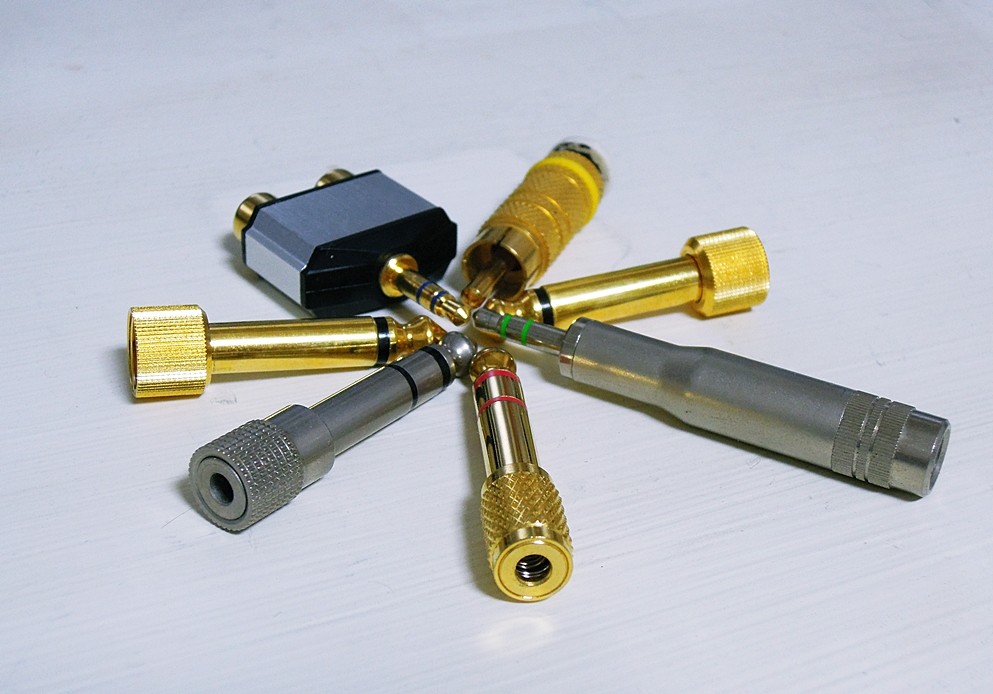
【Banana Plugs and Spade Lugs Unnecessary in Hi-Fi?】
Part 1|Part 2|The Sound of Plating|AT6301|Banana Plug Sound Comparison
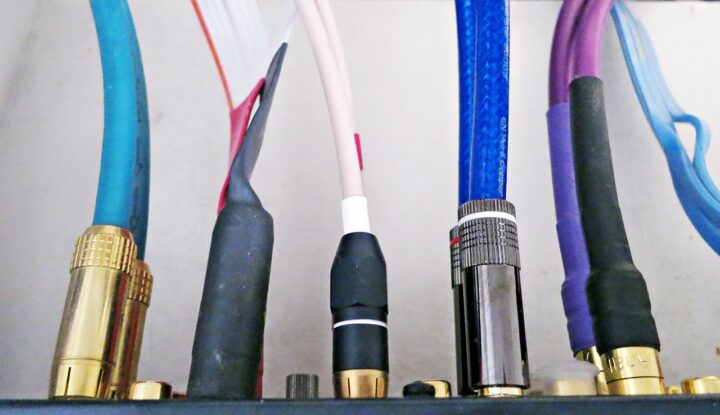
The metal contact surfaces on audio equipment — electrical contacts, power plugs and inlets, RCA pin cables and XLR balanced cables, digital cables, speaker terminals, and the various other connection plugs — are in almost all cases plated with some kind of finish on the copper or brass contact surfaces. (※ Strictly speaking, the correct Japanese term is written in hiragana as “めっき”. In English: “plating”.)
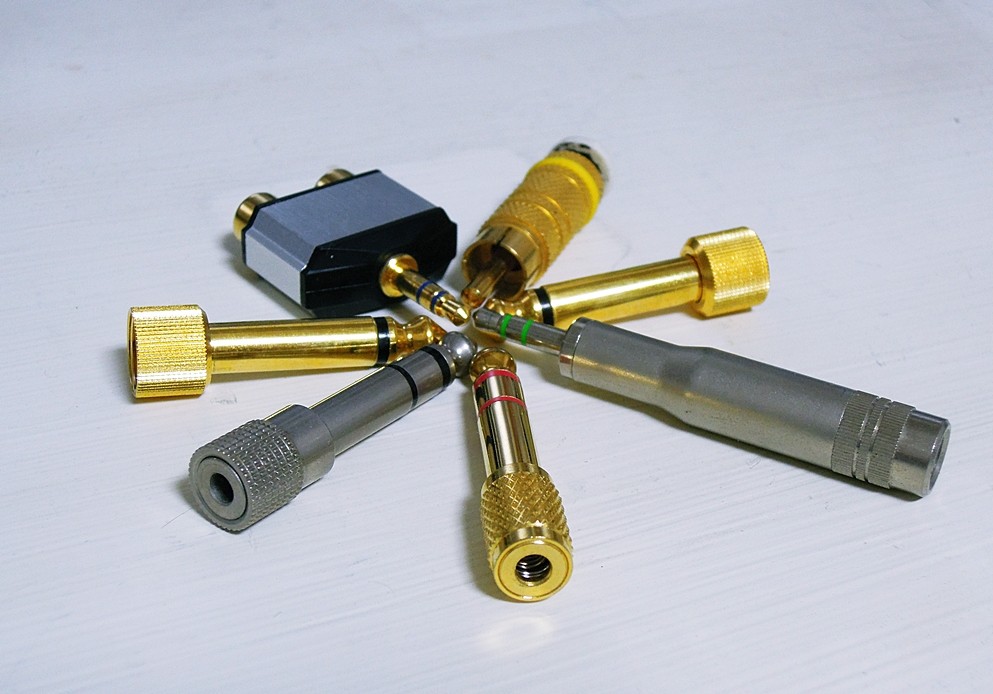
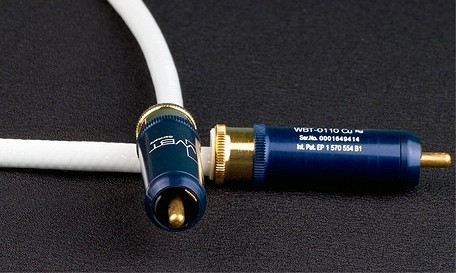
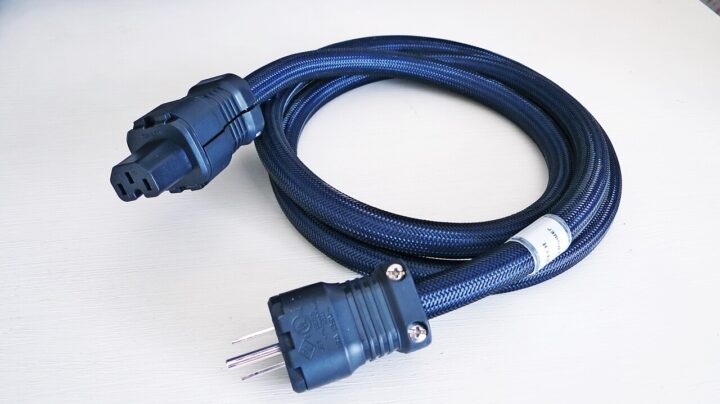
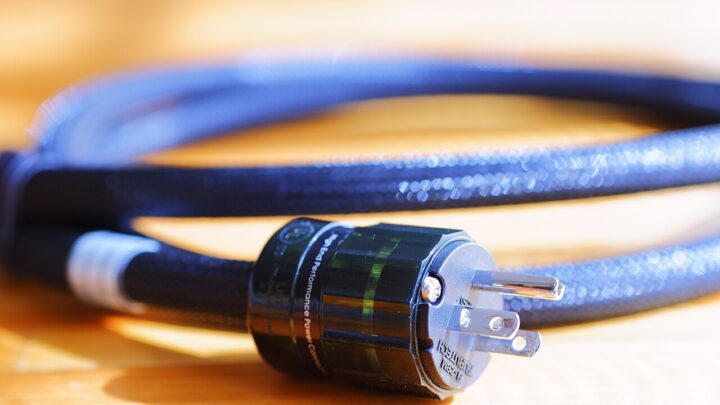
The silver-coloured power plugs and inlets found on most consumer electronics, as well as the majority of RCA terminals on the rear panels of equipment, use electrolytic nickel plating. Next most common in signal paths where sound quality is a concern is gold plating — you can tell at a glance. Beyond that, some overseas-made power plugs and inlets, and older wall sockets and AC power strips from decades past, may have no plating at all, leaving bare copper or brass (the colour of a five-yen coin).
Silver nickel plating is inexpensive and used on the vast majority of power and signal terminals, but over time in humid, dusty air it oxidises and gradually turns a dull white. Gold plating, by contrast, is used on many high-end audio and video components and cable connectors — it offers excellent corrosion resistance, does not oxidise over long periods, and maintains stable conductivity, which is why it is considered well suited to audio use. Strictly speaking, it is said that even the purity of the gold used and the thickness of the plating layer can make a difference to both corrosion resistance and sound quality.
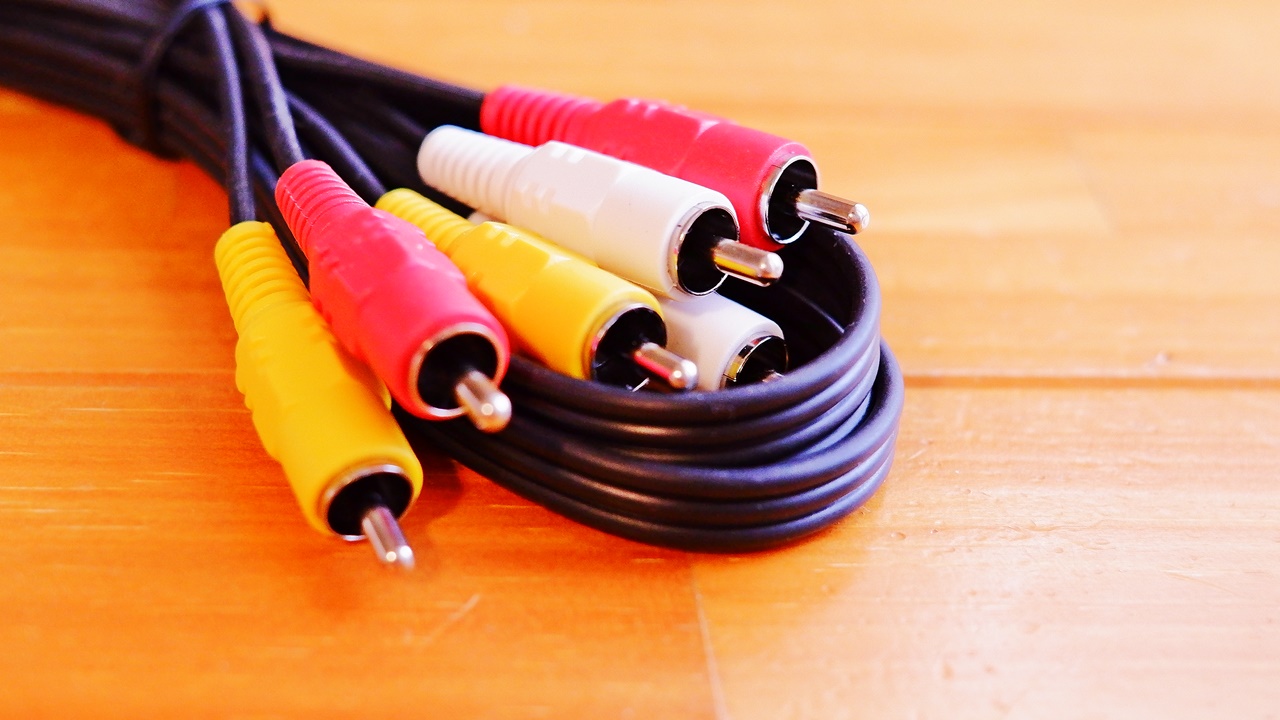
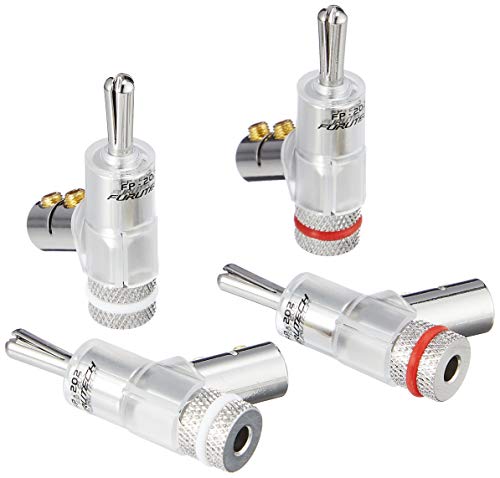
More recently, rhodium plating has appeared on the scene. It looks silver but has a more lustrous finish than nickel plating, and it has begun to be actively adopted in certain high-end products — particularly on the terminals of premium audio cables and power cables, and on accessories such as wall sockets. Going further still, some components have started to appear that skip the usual nickel undercoat in favour of silver plating as the base layer, or use platinum-palladium plating or even ruthenium plating instead of rhodium — plugs, connectors, and various Hi-Fi accessories of that sort. At this point it truly is the world of jewellery and precious metalwork.


 ポチップ
ポチップ
With the arrival of rhodium-plated plugs and connectors, the high-end pure audio world has been enjoying a lively and rather noisy debate over whether gold plating or rhodium plating is better — or whether no plating at all is preferable. Setting aside the measured specifications, this really comes down to personal preference in terms of listening impression. Both gold and rhodium are more resistant to oxidation and age-related deterioration than nickel, but in terms of raw electrical conductivity, unplated silver and copper come out on top (provided they haven’t oxidised, of course…). Gold and aluminium follow in second place. When you factor in long-term corrosion resistance and the effects of surface oxidation, gold is probably the most reliable and stable option overall.

Rhodium’s conductivity is better than nickel’s, but it is still less than half that of gold (and about one-third that of copper or silver), so however expensive it may be, it is electrically an inferior material. Rhodium plating does not, therefore, lower electrical resistance or improve conductivity in any meaningful way. (Silver is electrically the finest material of all, but platinum, palladium, and ruthenium all have lower electrical conductivity than even nickel.)
 ポチップ
ポチップ
That said, I am, for the time being, broadly in favour of rhodium plating — at least for limited applications. Gold plating has been in common use for so long that quality varies considerably; there are plenty of cheap terminals and plugs out there with low-purity gold, odd colouring, and suspiciously thin plating layers. By contrast, the small number of products that have gone to the trouble of being released with rhodium plating tend, at least as industrial products, to be of reasonably high quality and worth trusting — probably. Though of course rhodium plating, too, runs the full gamut from good to bad. Where cheap nickel plating is used as the base layer, galvanic corrosion becomes more likely; higher-quality products apparently use direct plating, or intermediate layers of palladium, silver, or gold.
 ポチップ
ポチップ
In any case, most high-priced audio-grade plug terminals that come in a rhodium-plated version are also available in a gold-plated version, so it is worth trying both and choosing according to the tonal balance of your system and your own preference. Incidentally, for my own part, silver-plated (or pure silver) connectors are actually my personal favourite — even if there are fewer products to choose from.
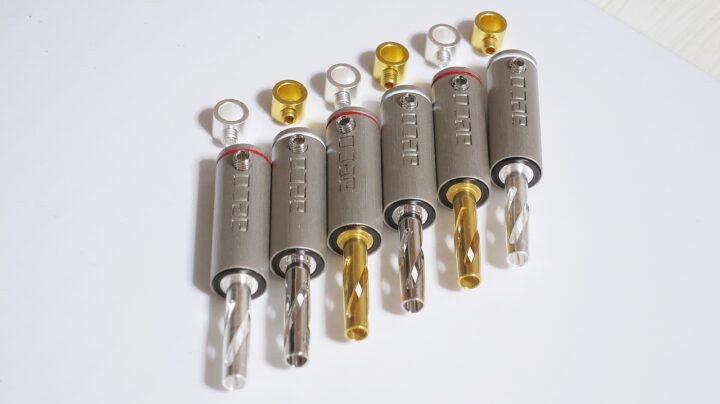
In terms of listening impression, gold plating is said to excel in tonal balance across the musical frequency range, with a subtly warm, soft, and smooth character, while rhodium plating is said to sound cooler with improved resolution and analytical clarity. Some audio enthusiasts, however, have a deep-seated aversion to plating of any kind, on the grounds that it introduces its own characteristic colouration. I recall being given a rather stern lecture at some Hi-Fi shop once, for relying too readily on plated contacts.
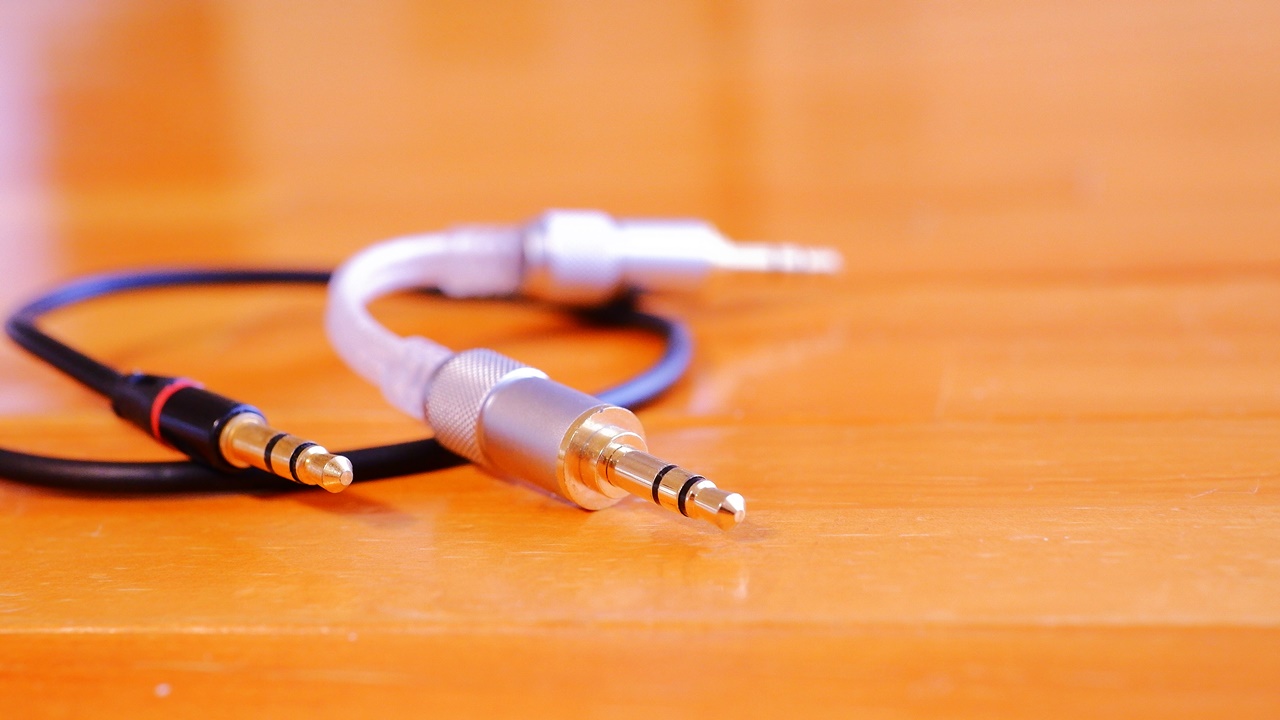
Even for ordinary nickel-plated mains plugs and the like, I have heard it said that taking the trouble to scrape off the plating with a metal file is actually the better approach. Apparently, even with a basic cabtyre mains cable of the sort bundled with equipment — the kind with nickel-plated terminals — scraping off the plating reduces distortion and results in a more energetic, realistic sound. I was given a demonstration in-store, and I cannot say it was wrong exactly, though the balance felt somewhat bass-heavy and the top end a little rounded for my own taste. If you have a spare cabtyre AC cable lying around, it is something you can do as a simple DIY project, so if you don’t mind the effort, it might be worth a try.
Personally, I find that the copper-scented, mellow, chunky-energetic sound of unplated connectors has its own character — a kind of colouration that comes from the material itself — so my stance is that plated and unplated each have their place, and it really comes down to how you balance the combination: use whatever suits your taste. Copper’s character also changes considerably depending on purity and alloy type (beryllium copper, tellurium copper, and so on), so you might find a good balance by mixing and matching — unplated for low-end weight and energy, high-quality plating for resolution and high-frequency extension, that sort of thing. Gold plating… I get the feeling it produces a sound that is somehow the easiest on the ears, the most physiologically gentle on the body. Incidentally, I think ORB products offer the finest plating quality among gold-plated Hi-Fi products. I myself have introduced quite a number of gold-plated ORB products, and the lustrous, almost glossy shimmer of the finish is simply wonderful.
 ポチップ
ポチップ
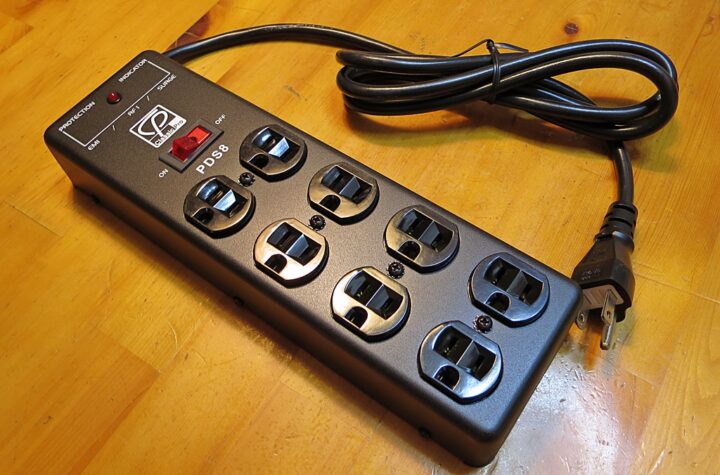
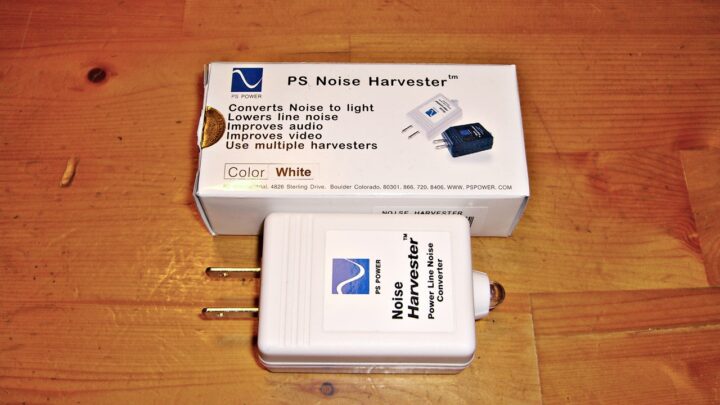
Also, nickel plating — which tends to get a bad press — is not necessarily poor in terms of sound quality. Even when people talk about gold plating or rhodium plating and so on, many such parts actually have a nickel undercoat applied first. ※ Where that is not the case — as with aeco products — the manufacturer will typically make a point of stating that a high-quality direct plating process has been used. You could say that nickel plating, or indeed the tin plating used in circuits and solder, serves to gently neutralise the coloration of copper or brass. Most audio equipment is, to begin with, built from components and terminals that make extensive use of various metals — both as platings and as conductors — and the voicing of that equipment is undertaken with that reality as a given. So if you would rather not upset the balance in an odd way, it may well be fine to simply accept partial nickel plating as it is. Even among audiophile-grade products, PS Audio power cables and outlets, for instance, deliberately employ multi-polished nickel plating.
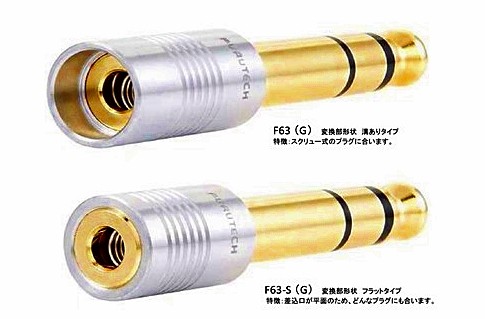
The difference in sound between nickel plating and gold plating is actually quite easy to hear if you try the following: most headphones come with a stereo adaptor plug — a mini-to-standard jack converter — and if you swap between a nickel-plated version and a gold-plated one and listen, the difference becomes clear. Assuming the plug material and quality are otherwise equal, gold plating tends to broaden the perceived frequency range and sense of space compared to nickel plating, adding a touch of brilliance while making the musical character smoother and more richly expressive. Below is the FURUTECH F63S-G, which I use myself.
 ポチップ
ポチップ
In particular, for those of you using high-end headphones from overseas brands such as AKG, SENNHEISER, or Beyerdynamic, it really is a shame to leave that investment paired with the cheap silver-plated adaptor that comes in the box. I would recommend swapping it out for a gold-plated stereo standard adaptor of your choice — be it the FURUTECH F63S, the audio-technica GOLDLINK Basic AT3C1S, or the JVC Kenwood AP-301HF. (※ Please take care when choosing an adaptor plug: if the bottom face of the plug — the opening on the mini-jack side — is not flat, the mini plug may not insert fully depending on its shape.)
One more thing — and this is purely the crackpot theory of a hi-fi obsessive with absolutely no scientific backing whatsoever — but I have this notion that the conductors in the signal path of an audio system actually sound richer in colour and more three-dimensionally resonant when you combine a variety of materials with differing resistance values and natural resonant frequencies, rather than fixating on purity and conductivity ratings… just a mad crackpot idea I’ve been putting out there.
This is something I felt strongly when I first bought my very first high-grade audio cable as a high-school student — the ISODA hybrid cable, which I still use to this day. The ISODA cable is a special audio cable with three different types of conductors twisted together — copper, brass, and aluminium — and the sound is remarkably fresh and three-dimensional, without that characteristic coloration, that tinted quality you tend to get from copper alone. The idea is that the different natural resonant frequencies of each material cancel each other out.
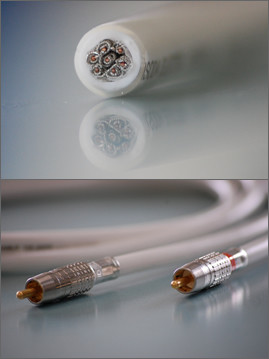
To reduce the warm, languorous, sepia-monochrome quality that copper wire tends to bring to the sound, many cable manufacturers combine multiple copper materials differing in purity, production method, or gauge, or else apply silver plating — but that approach brings its own thing, adding a silver-wire sheen to the upper frequencies, and the result is quite different from the nearly transparent, delicately graded tonal palette that the copper/brass/aluminium hybrid wire offers.
For dual-conductor cables combining copper and aluminium (Alumoy), there are cables from American maker JPS Labs — though I only heard the thin, blue, single-wire RCA cable that was imported in the early days, and that was an entirely different direction altogether: sharp, tight, cutting, with high frequencies that stabbed pinpoint into the ear — my ears! — so I politely declined. I do think it could be tremendously effective in the right context, so if you have an interest in JPS Labs’ current products and your English is up to it, importing directly might be worth a try. (The official distributor is Audio Reference, though it appears they currently only hold older stock and have suspended handling of current products. They may still be willing to order on request at a negotiated price, however.)
~ Summary ~
Based on experiences like these, and from the standpoint of my thoroughly crackpot theory, my personal feeling is that having a good mix of copper, gold, silver, tin, brass, aluminium, rhodium, palladium, ruthenium, and so on scattered through the signal path produces a greater diversity and colourfulness in the sound that I find genuinely pleasant. I appreciate that some people dislike it when the tonal character sparkles and glitters, or when there is too much lustre — but I rather think that enjoying those qualities as a matter of taste, sensibility, and fine-tuning is precisely the pleasure and the style of hi-fi listening, isn’t it. (※ These are the ramblings of an odd soul who perceives sound visually as colour in their mind, so if any of this makes no sense whatsoever, please feel free to disregard it entirely m(__)m)
【Banana Plugs and SpadeLugs Unnecessary in Hi-Fi?】
Part 1|Part 2|The Sound of Plating|AT6301|Banana Plug Sound Comparison





List of comments (1)
オーディオと全く無関係な乾燥で恐縮ですが、当方機械製造業で金属加工の仕事の仕事に従事しているため、めっきや金属の電気的特性に関する記述がとても勉強になりました。尚、真鍮あるいは銅と金鍍金の間にニッケル鍍金を挟むのは、銅と金はなじみが良すぎて接触面が合金化するためだと鍍金業者の方に教わったことがあります。