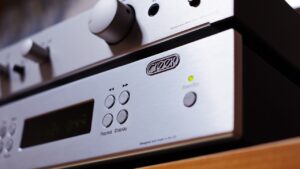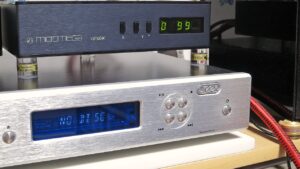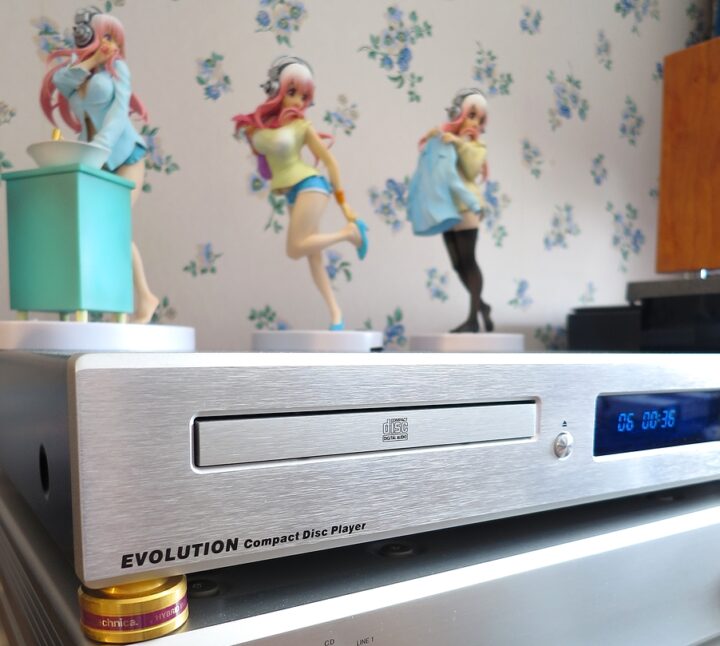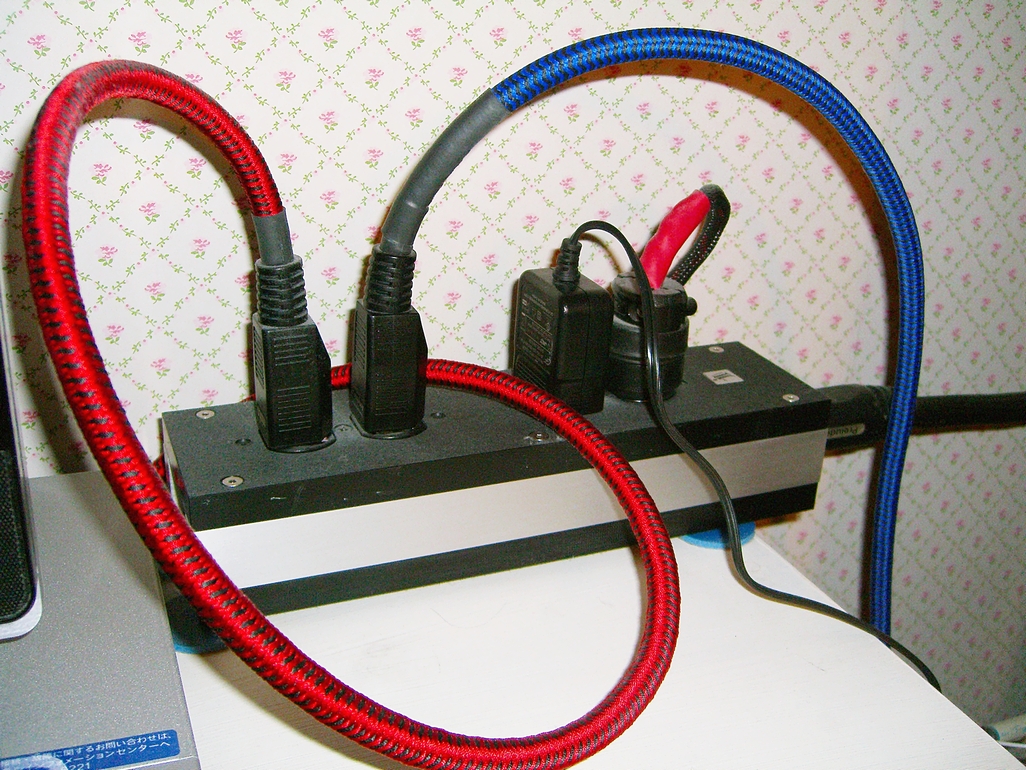
I had introduced the CREEK EVOLUTION CD, and while the sound quality was good, I had been troubled for the past few days by listening fatigue and so on — but as it turned out, the whole thing was resolved quite easily by swapping the power cable.
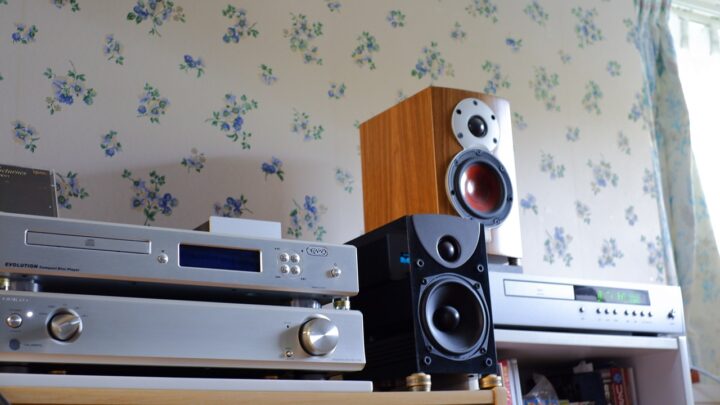
Today I wandered into the audio corner at my local Yodobashi Camera for the first time in a while, and what caught my eye in the display case was the new Zonotone power cable 6NPS-3.5 Meister 1.8m that I had been curious about lately, and the Ortofon PSC-3500XG Silver that I had been wanting for some time but somehow never got around to buying — this one is a popular, long-running staple product that is apparently always in short supply.
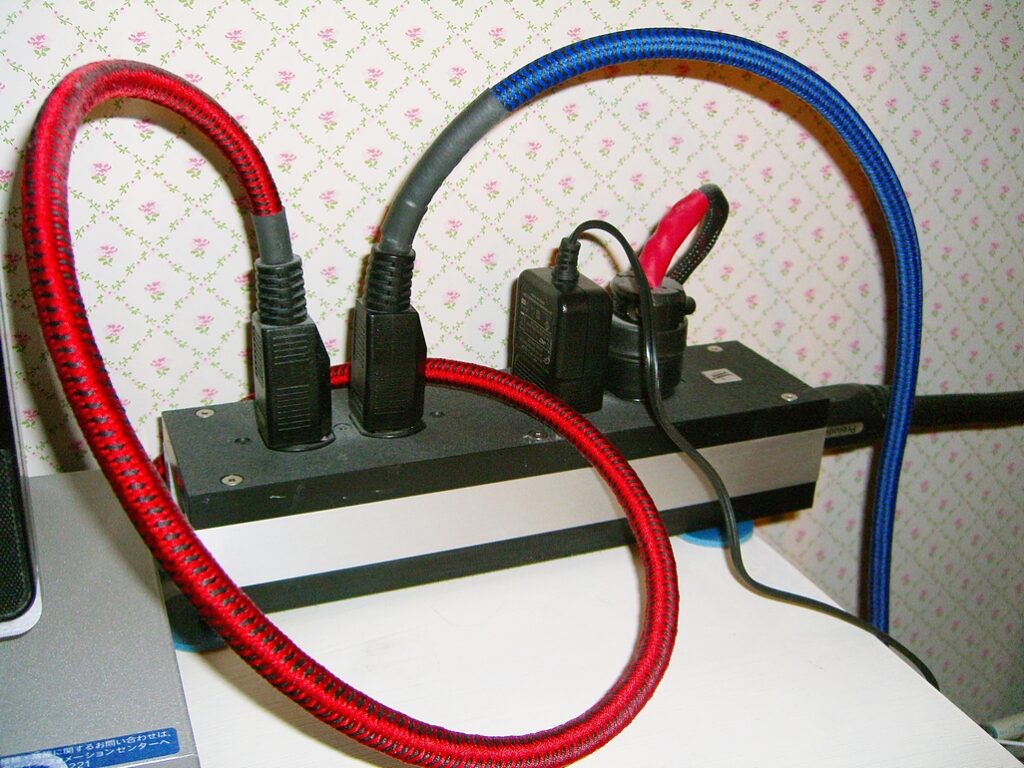
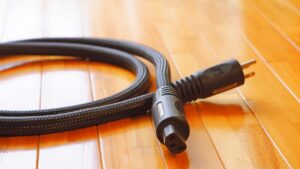
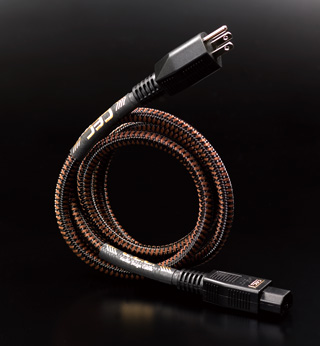
When it comes to power cables in the popular price range that suppress harshness in the high frequencies without sacrificing sound quality, these two are the candidates that naturally come to mind first — and yet these two power cables look completely identical, differing only in colour. The conductor cross-section is the same 3.5 sq mm in both, the jacket diameter is 12 mm, and even the moulded one-piece plugs with rhodium plating are completely identical. However, the internal conductor structure and type differ between them: the PSC-3500XG uses silver-coated 4N oxygen-free copper in a multi-strand configuration, while the later Zonotone 6NPS-3.5 Meister employs a hybrid of three different conductors — silver-plated Higher-OFC, high-purity oxygen-free copper (unplated OFC), and 6N high-purity copper.

 ポチップ
ポチップ
The Zonotone brand is known to every Hi-Fi enthusiast worth their salt — it is the brand of Maezono Sound Lab, founded by Toshihiko Maezono (formerly President of Ortofon Japan; note: PDF file) after he left Ortofon Japan the previous year. Because the manufacturer is the same as for the existing Ortofon products (the conductor material is refined by Dowa Mining, and cable manufacturing is handled by Hisago Densen), Zonotone cables have almost exactly the same feel and appearance as the existing Ortofon products — the jacket colour being red or blue is about the only difference. Since many of the current Ortofon-branded cables were also designed by Mr Maezono, one might say that Zonotone products are the natural evolution of the old Ortofon products, and could in effect be considered their true successors.
There are still people who occasionally get this wrong, but while the “Ortofon” brand name did originate in Denmark, that is a story from long ago — setting aside the traditional analogue cartridges, in practice Ortofon today is largely a domestic Japanese manufacturer, with many of its products conceived and developed on the Japanese side. This is much the same situation as with Marantz Japan (whose brand name derives from an American valve amplifier manufacturer now referred to as Old Marantz and the like).

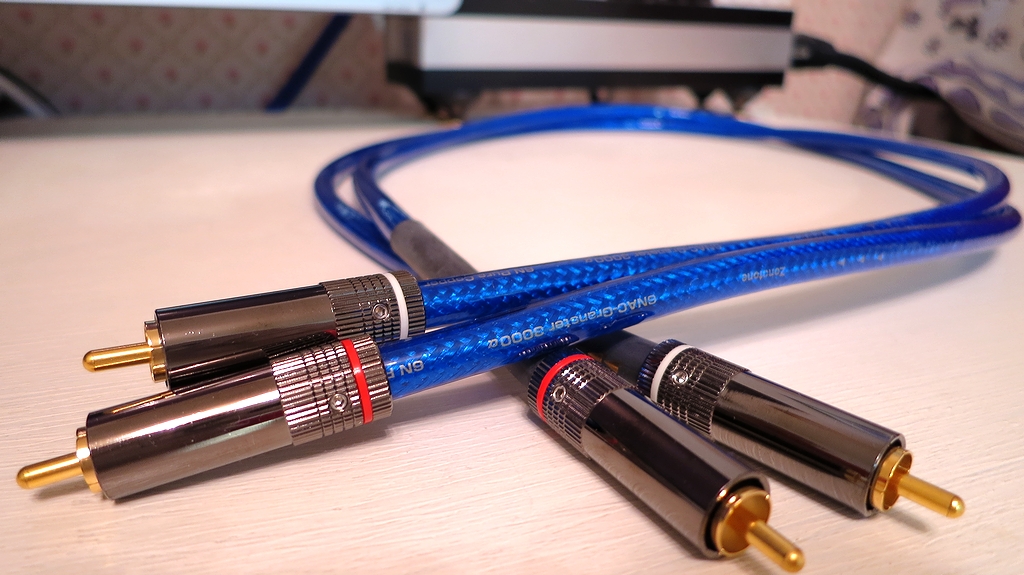
Ideally I would have liked to try the newer Zonotone cables, which presumably offer improved sound quality, but the existing Ortofon power cables are long sellers with a solid reputation, and the warm, lively sound of the Ortofon 7N-PSC2.0 I had previously used with the CREEK 4240 had left a strong impression on me — so in the end I was swayed by the ¥6,000 price difference at the shop and decided to go with the PSC-3500XG Silver this time. Given that harshness in the high frequencies was not my only concern — I was also troubled by a lack of bass — I had considered going for the mid-range PSC-4500XG Silver, but that one has a considerably thick 16 mm jacket and gives the impression of being more suited to integrated or power amplifiers than to a CD player.
The mid-range PSC-4500XG Silver uses a staggered construction of 2 sq mm × 2, giving 4 sq mm per phase… (with three phases plus earth, so six conductors in total). So it is not simply a matter of being thicker. Increasing conductor cross-section enriches the bass, but taken too far it blurs the high frequencies and robs the sound of speed. The staggered construction may well be a measure to counter that.
 The flagship 7NX PSC-5500XG uses a 5.5 sq mm hybrid of three conductor types — 7N copper, 5N copper, and PCOCC copper — and unlike the silver-coated conductors in the lower models, is a different construction (in some ways closer to Zonotone’s approach, perhaps?). If I am honest, what I really wanted was the PSC-4500XG Silver in particular, but for low-power devices such as preamplifiers and CD players, the 3.5 sq mm version should be perfectly adequate — or so I told myself (truthfully, a ¥10,000 price difference simply hurts) — and so I ended up with the cheapest of the candidates, the PSC-3500XG. If this fails to sort out the bass deficiency, that will be a serious problem.
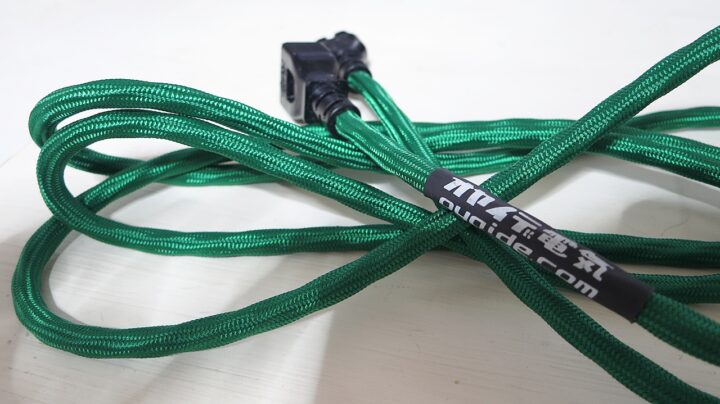
Back home, I immediately removed the Dutch-made Kharma KPL Reference/1a that had been connected to the CREEK EVO-CD, and swapped in the PSC-3500XG Silver. The 1.5 m length was just barely enough and had me slightly anxious. I was relieved that the EVO-CD’s IEC inlet is on the right-hand side — if it had been the CEC TL5100Z on the left, I might have had to force the cable around an awkward bend to reach it. Incidentally, the PSC-3500XG is less than half the price of the KPL Reference/1a, yet the build quality, finish, and sense of solidity are superior on the Ortofon side. The conductors inside both cables are silver-coated OFC wire.
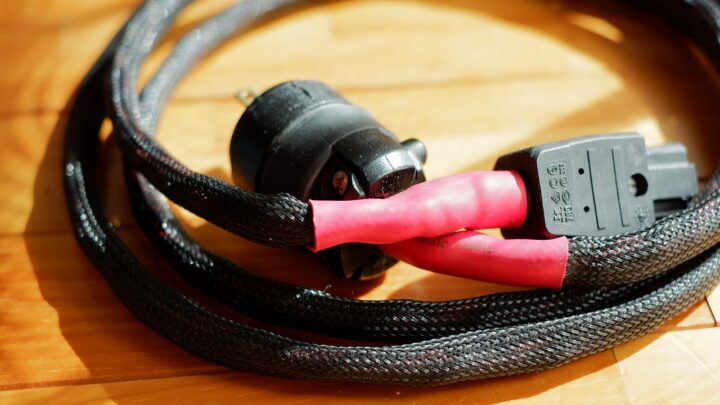
I started by putting on a Baroque music CD where differences tend to be easy to hear. Straight away, the sound had a rather dynamic quality to it. Some of this is down to the Kharma KPL Reference/1a being rather soft and feminine in character, but the bowing of both the violins and the cellos gained strength while also becoming crisper. Silver-coated wire tends to show its character in the high frequencies, so I was not sure what to expect in the bass, but there was a richness and body there that exceeded what the cable’s appearance might suggest. On top of that, the music gained vitality, rhythmic articulation improved, and in terms of musicality the sound moved towards warmth and positivity — a sense of blood flowing through it. And the sound is quite bright. Lustrous, as though light were gleaming off a polished surface — I was immediately smitten by the intensely silver-plated character of it all.
One of Ortofon’s strengths is that even their more affordable products let you enjoy the benefits of silver-coated conductors.

 ポチップ
ポチップ
Despite the flamboyant tonal character in the high frequencies, the sense of distortion that had been bothering me was substantially reduced. The coloration-like echo quality — that ear-grating, tinny ringing — drops away cleanly, which does slightly spoil the sense of height in the reverb, but in its place the attention is drawn more towards the direct sound, and there is a rather seductive quality to the way the resonance clings to the full, rounded images in a rich, enveloping way. Resolution is neither particularly good nor bad — middling. But because the tonal character is vivid and bright, it does not come across as muddy. In this respect it represents a substantial quality improvement over the Ortofon 7N-PSC2.0, which had quite a strong tendency towards muddiness. That said, in practice a fair amount of fine detail does dissolve into the reverberation — yet the temporal flow of the music is smooth, there is a deeply sculpted and dynamic expressiveness, and the overall presentation is lively enough that one does not find oneself dwelling on such things.
The soundstage images are on the larger side — rather than a miniature garden, you could almost say it verges on life-sized. The transient character is curious: a softness in the attack and a crisp, snappy definition somehow coexist, so depending on the instrument you might sense roundness, or freshness might take the upper hand. Either way, distortion is low, so there is absolutely no problem at high volumes. If pressed, the overall sound is on the softer side. String instrument attacks and drum hits have crispness, but piano and voice are rounded, accompanied by a sense of lingering resonance — this is not a hard-edged sound. Yet because the softness is rather dominant, it does not collapse into muddy confusion, and the impression is one of a moderately well-balanced blend of roughly upper-mid-tier Hi-Fi performance and an easy, mild quality to the listening. Rather than a monitor-type, high-fidelity orthodoxy that pursues accurate sound, this feels more like a distinctly characterful power cable that leans quite heavily towards a kind of reproductive artistry.
The Ortofon PSC-1500XG is a type sharing the same 3.5 sq mm cross-section as the PSC-3500XG Silver but using 135 strands of unplated OFC (oxygen-free copper) with no silver coating. For that warm, distinctly Ortofon-like sound quality, this one might actually be the truer representative.
ポチップ
As for weaknesses — well. First, because this cable brings the character of silver-coated wire so strongly to the fore, anyone who dislikes this lustrous, gleaming quality is likely to let it go in short order. It has a distinctive tonal character that stays with you after extended listening. Also, while the surface of the sound shimmers and shines, it is not exactly smooth — there is a somewhat rough, stranded-wire-like quality in the textural detail of the resonance, a coarseness to the way things blur together, so that there is moisture and richness but only moderate clarity.
In terms of perceived frequency balance, bass body is added and the midrange tends to project forward rather than unfold behind the speakers, so the tonal balance does not become flat — the soundstage takes on a slightly barrel-distortion quality, as if heard through a wide-angle lens. The sense is that the entire system gets coated in the PSC-3500XG’s character, and if one is seeking a monitor-like precision in the portrayal, a refined restraint, or a fine level of detail, there will be dissatisfaction. To reach for a perfume analogy alongside classical music labels — the top note is bright and glittering, like a NAXOS label recording, but from the middle notes downward the warm, enveloping sound of the old Philips label starts to make itself felt. In any case, this is a power cable with a notably vivid tonal character and a considerable degree of influence over the system as a whole.
This kind of tonal tendency characteristic of silver or silver-coated wire is usually felt most strongly in the initial state, and tends to settle into something milder and more understated as burn-in progresses — so there is a good chance that after some use, the sound will shift towards something more balanced than the first impressions described above. What balance it will have reached after several hundred hours is entirely unknown at this point, but in any case, with the brand-new PSC-3500XG Silver connected to the CREEK EVO-CD, about 90% of the harshness and hardness in the high frequencies has been removed, and the sound is now perfectly listenable without the shrillness being an issue. In terms of sound quality it is not quite optimal, but it is clearly a better standard than the supplied cable — a step up into a different league altogether.

Unlike the accessory reviewed the day before yesterday, this one does not round off the sound excessively and hold the CD player back. It is a curious-sounding cable — the coloration and warmth feel almost excessive, and yet at the same time there is a contradictory crispness and high-speed quality. That said, rather than straightforwardly bringing out the CD player’s own character, the impression is more of a different tonal palette being added and blended in, sublimating the result into something more artistically heightened — so in terms of realism and sheer sonic accuracy as a CD player per se, the Kharma KPL Reference/1a has a slight edge. (Note: the Kharma is by no means a monitor-type cable either — it is very much a character cable in its own right.)
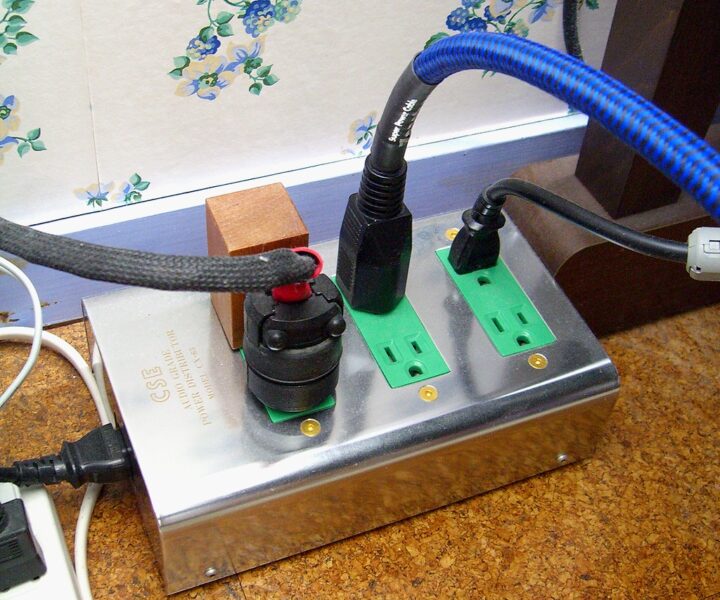
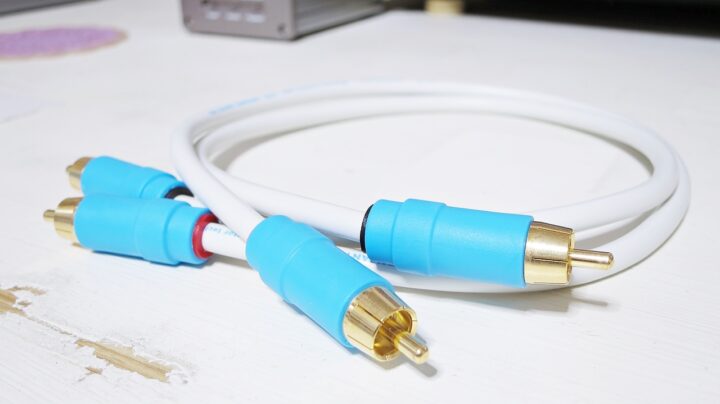
So, in summary — it is not the QUAD 11L, but the CREEK EVO-CD shrillness problem is more or less resolved. I have a vague feeling that if I had gone with the unplated OFC PSC-1500XG or the Zonotone 6NPS-3.5 Meister instead, I might have achieved an even higher level of sound quality while solving the problem with considerably less of the silver-wire gloss and sheen than the PSC-3500XG Silver — but that is something to try another time if the opportunity arises. The remaining 10% is still to be sorted out: I would like to use an RCA cable that cleanly eliminates even the occasional noisy quality in piano attacks that appears with the Red Rose Music 1934, while going beyond it to deliver deeper information retrieval, realism, and artistic expressiveness. That will probably call for quite a high-grade, high-end RCA interconnect — which opens up yet another question of what to do. The line cables currently on my mind are three: British THE CHORD COMPANY, British IXOS, and Dutch Crystal Cable. Among domestic brands, I remain keenly interested in the various Zonotone cables, so if I manage to get hold of any, I will review them here on the blog.

Auto Translated by CS4.6