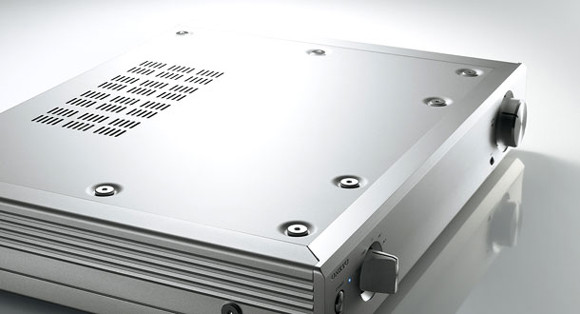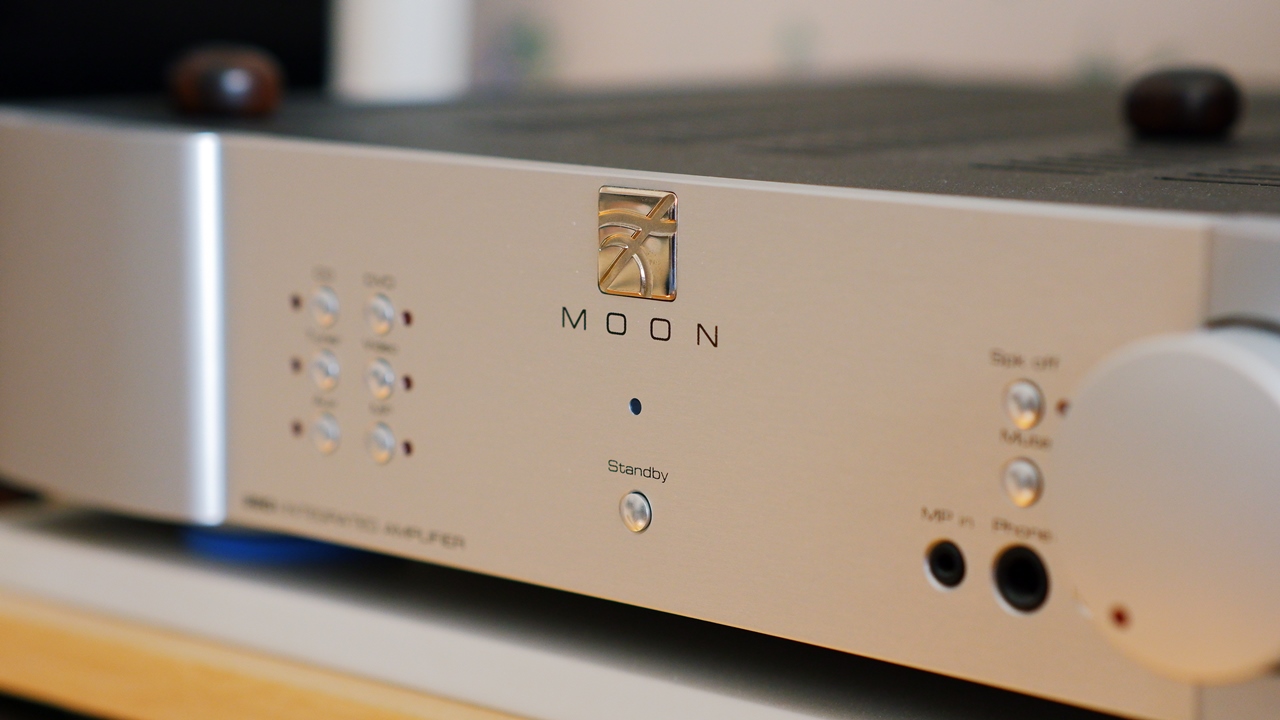
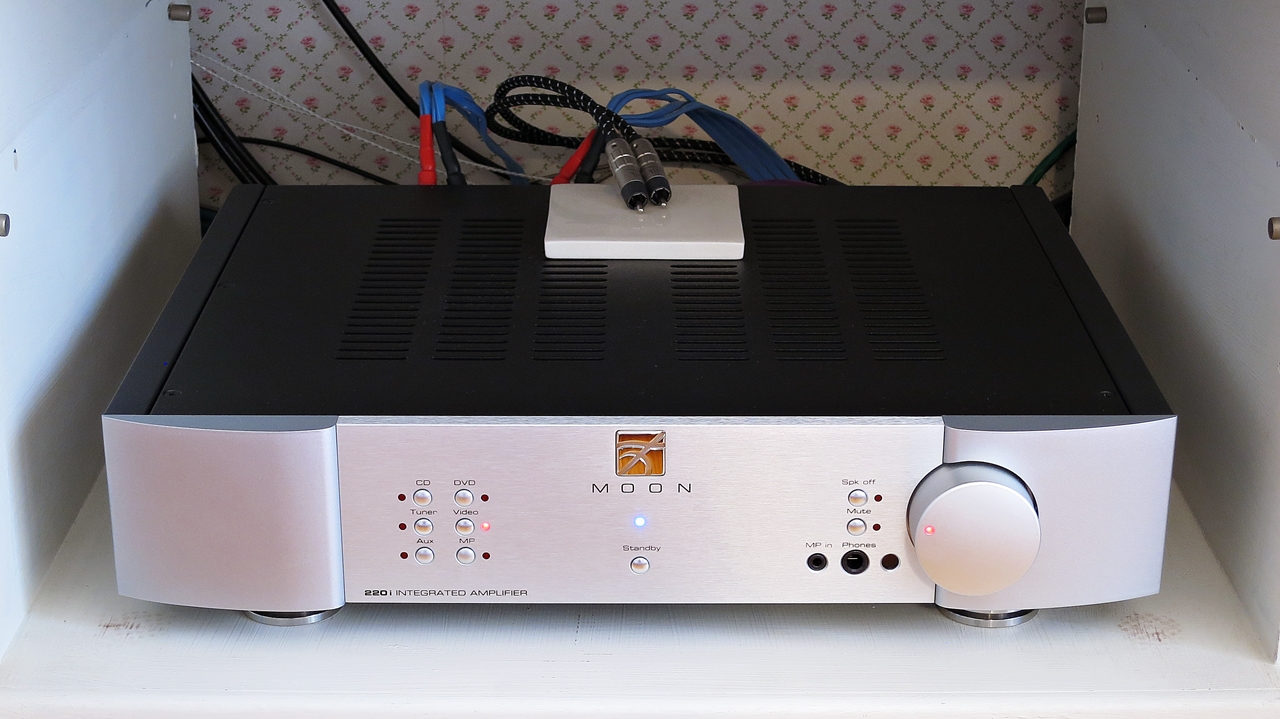
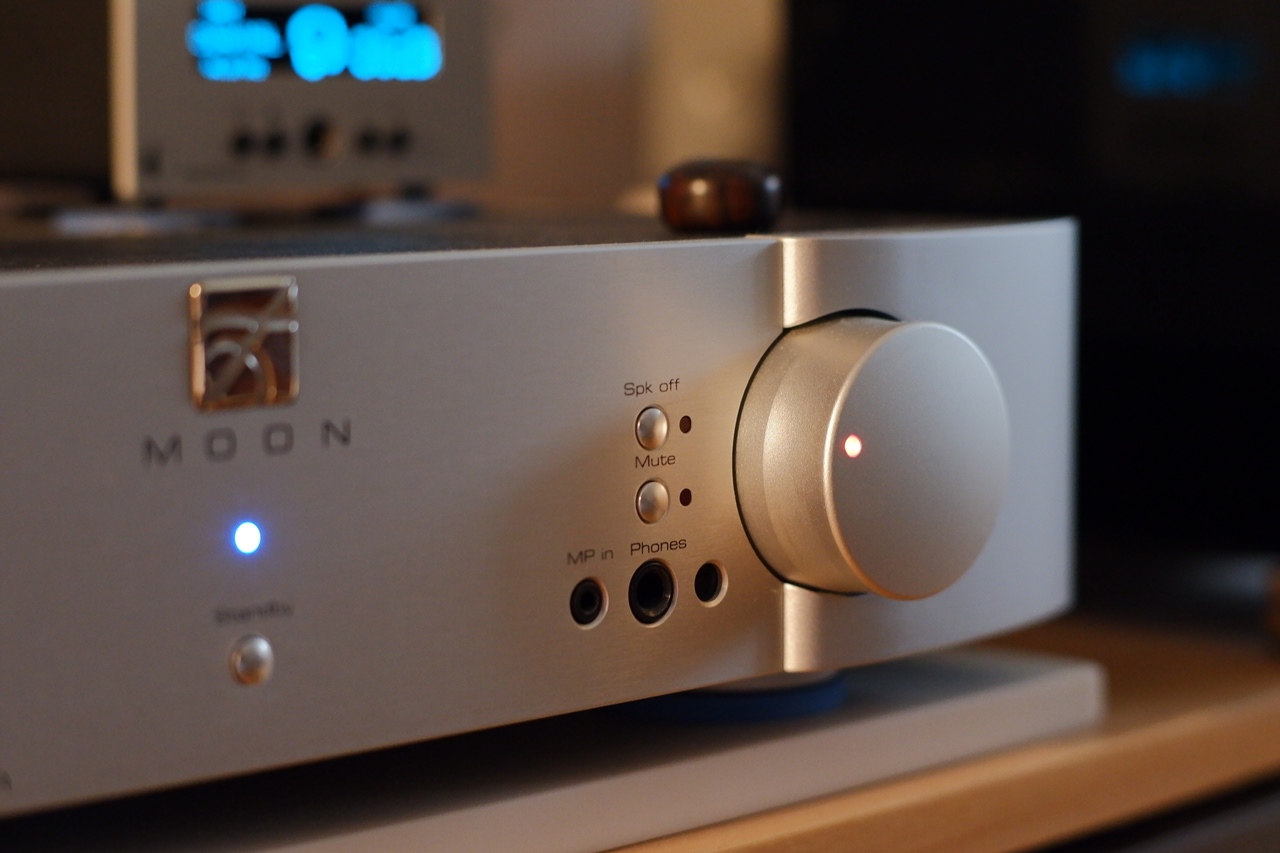
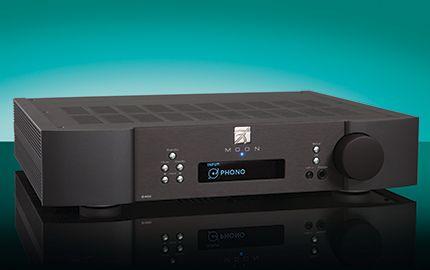
Actually, the recent re-setting of “Sub-system A” — the real purpose behind it was an amplifier swap. The ONKYO A-1VL, which I originally purchased in 2005, had been sitting there for over 15 years, but the new arrival is the integrated amplifier Moon Neo 220i from Simaudio, a high-end audio manufacturer based in the suburbs of Montreal, Quebec, Canada.

 ポチップ
ポチップ
Entirely Made in Canada
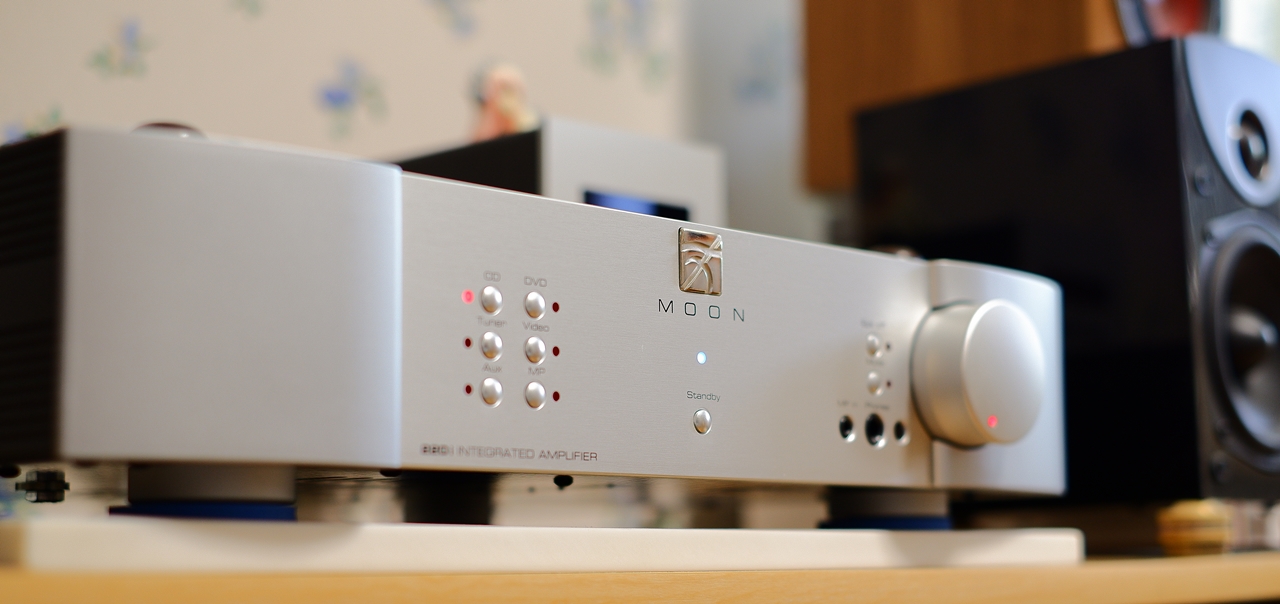
Simaudio is one of the rare manufacturers that produces everything entirely within Canada, and apparently sources its components and parts as much as possible from its own production or from suppliers located within Canada. These days, even if a brand’s design and engineering is based in Europe, America, or Japan, the actual manufacturing and parts procurement is handled largely by Chinese subcontractors and OEM factories. The fact that it is genuinely made in Canada is, in no small way, one of the points that elevates Simaudio’s standing as a high-end audio brand.
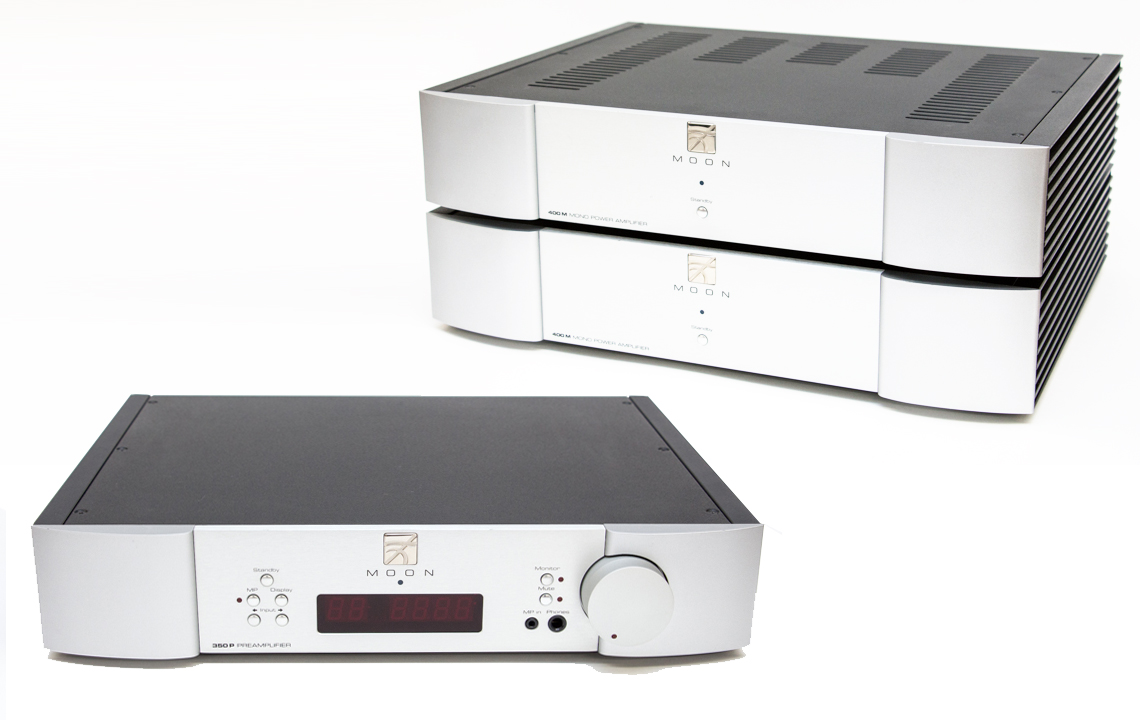
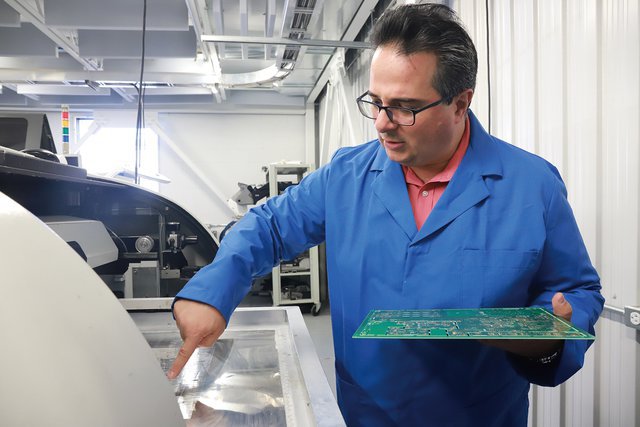
As you will gather from reading the above, with a product warranty of ten years and a minimum assumed service life of twenty-five years, I think there are very few brands in the world that approach the manufacture of audio equipment with this level of commitment to long-term use. Apparently they retain a complete stock of parts for virtually every model they have ever released, past and present.
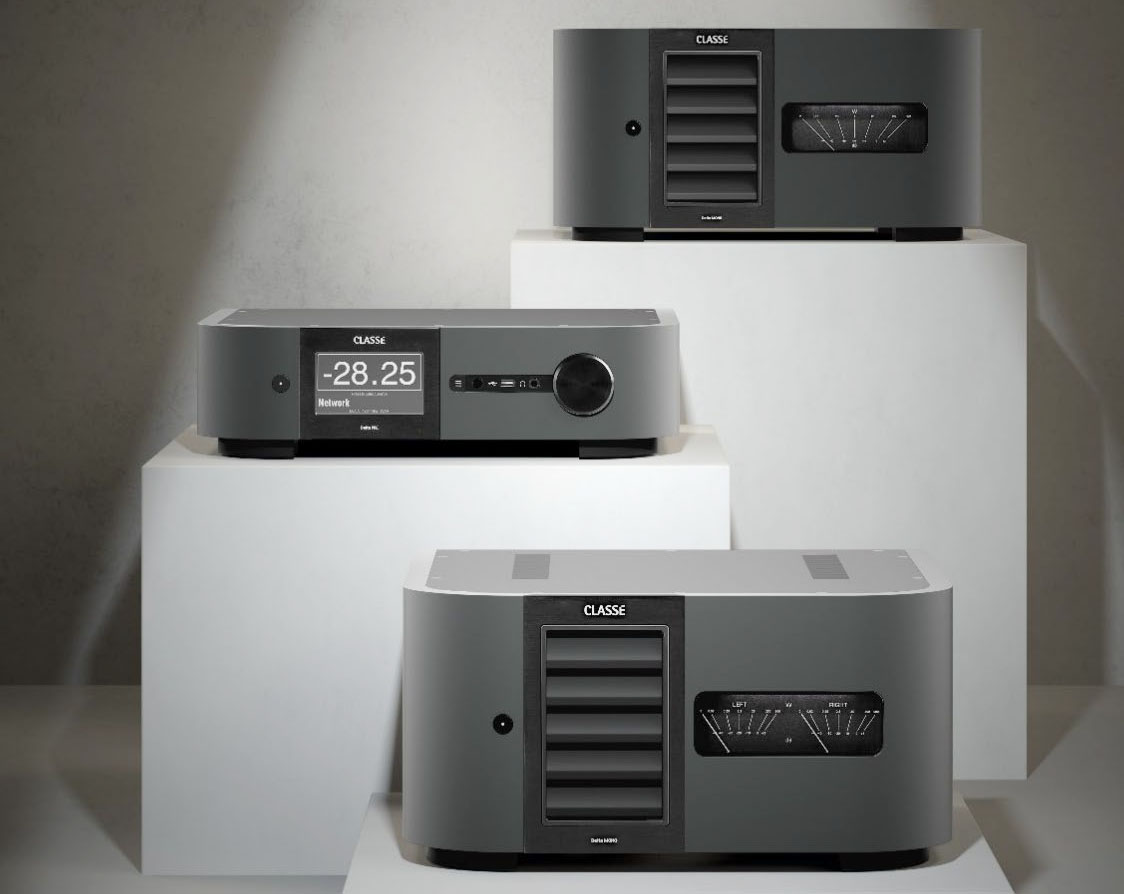
As a digression — another Canadian high-end manufacturer, “CLASSÉ“, which went into administration in 2017, has since been revived, and their current new models are now produced at D&M (Denon and Marantz)’s Shirakawa factory in Japan.
How to pronounce Simaudio
Simaudio is officially rendered in Japanese as “Shimu-audio”, but I had initially learnt it as “Shima-udio”, and honestly that version has never quite left my head. It’s a bit like the Dynaudio/Dyna-audio situation, though I’ll be frank — “Shima-udio” sounds rather more stylish than “Shimu-audio”, so personally I still call it that in my head. After all, the founder of Simaudio (formerly Sima Electronics) was Dr. Victor Sima, a Jewish-Canadian — “Sima” in katakana being シマ or シーマ. Given that Simaudio derives from “Sima Audio”, surely pronouncing it “Shima-udio” isn’t entirely wrong? Or so I tell myself. ※ Incidentally, when I first saw the name, I did briefly wonder whether it might be a Japanese-Canadian called Shima-san. And apparently “Neo” is also not pronounced “Neo” but “Ni-o”.


How the Simaudio Moon Neo 220i came to join the main system
The Simaudio Moon Neo 220i itself was purchased about two and a half years ago, with the intention of using it in the main system, and for a while it did serve in that role. However, various things happened, and it ended up being replaced by the AUDIOLAB 8300A that I added afterwards — leaving the Moon Neo 220i with nowhere to be connected, sitting in the living room as a spare unit for some time…


There is a reason it could not remain in the main system for long: I had purchased it based on my own assumptions without being able to audition it in combination with my speakers, and the result was that it did not match as well with the Vienna Acoustics MOZART T-2 Signature as I had expected. I had come across cases overseas where the higher model Moon Neo 250i paired well with the MOZART T-2G, and I thought this combination might work in the same way — but it was not to be…
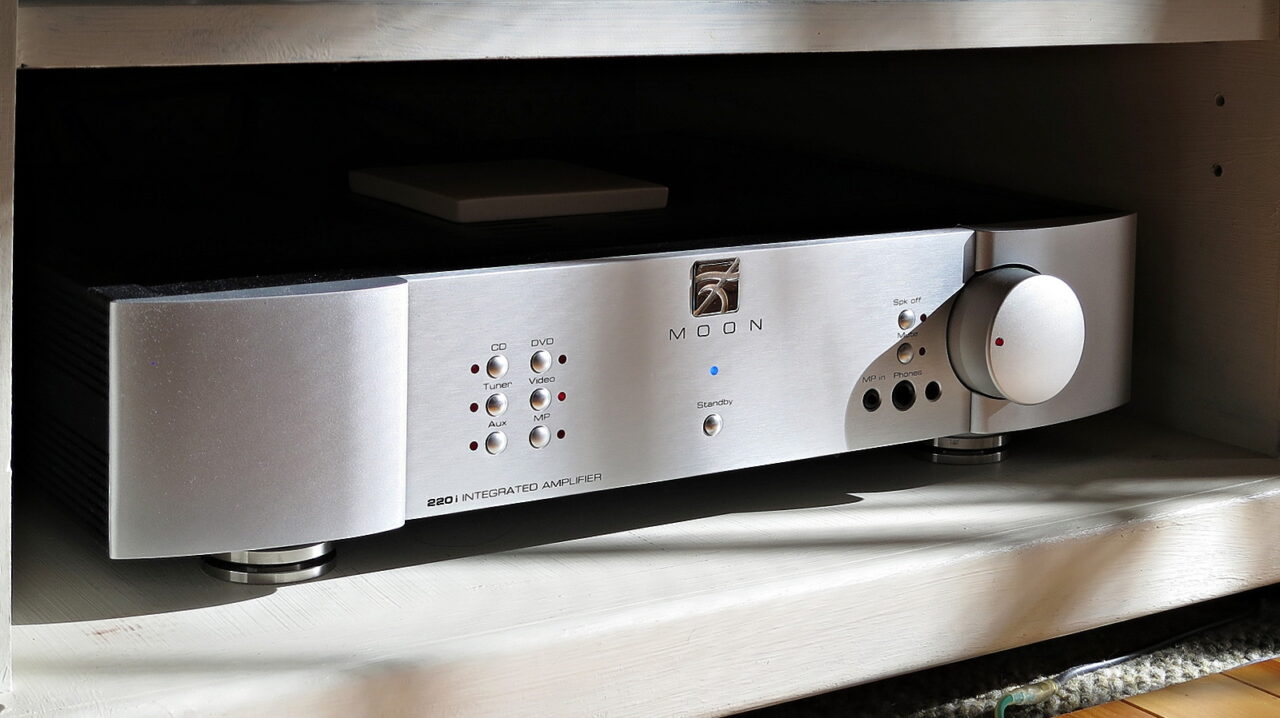
In the end, the point at which the speaker and the amplifier each try to make music, and their fundamental characters, were simply too far apart — the sound that emerged was oppressive and aggressive, the kind you cannot listen to for long stretches, and no matter how much I tried this and that, I could not find a way to bring the two into a successful marriage. Being a small-output amplifier at 6Ω/60W, I had initially worried about insufficient driving power, but in practice, when paired with the MOZART T-2, the drive was if anything too strong — the tweeter in particular seemed unable to handle the input and ran into what felt like an overdrive condition. The sense of sound pressure, the deep reach of the bass, and the absolutely unwavering stability are descriptive qualities that seem almost too high-end to expect from an integrated amplifier of this class — but if I had gone with the more powerful Neo 250i, I honestly think I would have been even more at a loss for what to do with it…
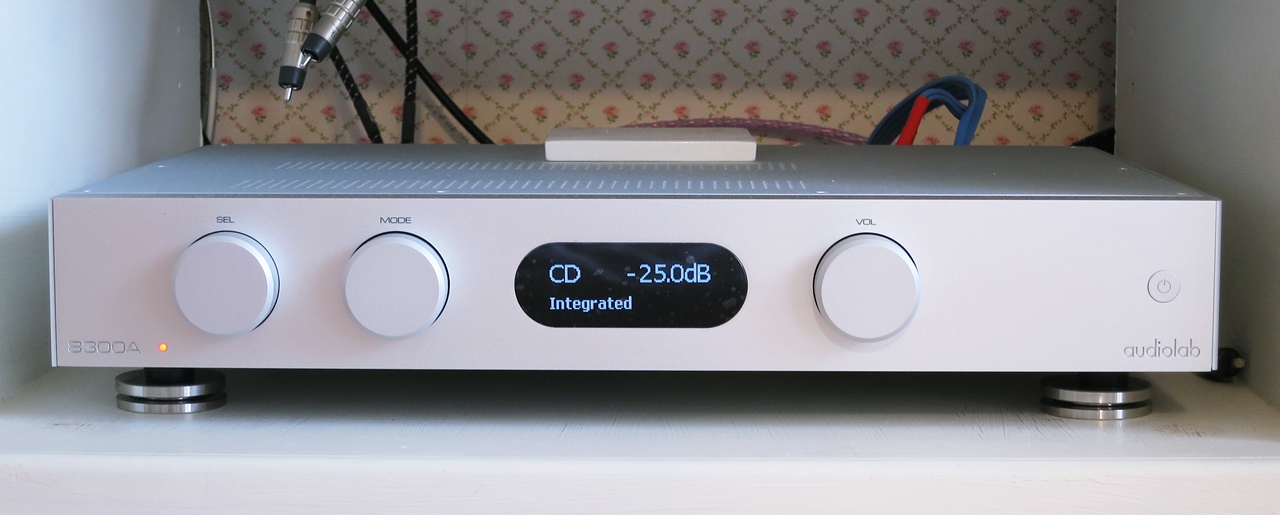
In the case of the main system, the AUDIOLAB 8300A — a more neutral and unassuming successor to the TAG McLaren 60i that had originally been there — caused no compatibility clashes, and the living room integrated amplifier has since settled into that role.
AUDIOLAB 8300A (a digression)
If asked which of the two — the AUDIOLAB 8300A or the Simaudio Moon Neo 220i — has the higher underlying potential, the answer is without question the Moon Neo 220i; and yet I think it is the AUDIOLAB 8300A that is the more versatile of the two, covering a broader range of budget speakers and source material and being the easier of the two to get singing. The AUDIOLAB 8300A is voiced in a way that causes no problems even when swapped directly for any of AUDIOLAB’s (and TAG McLaren’s) equivalent predecessors, and its character is very much in the British sound tradition — a restrained, traditional, and straightforward sound that keeps the sense of dynamic range in check and truly comes into its own at low to moderate volumes in the kind of context it was made for: flats and small living rooms or studies in Britain and across Europe.
That said, both amplifiers have aspects that are rather unimpressive when simply placed and left in their out-of-the-box state, and I feel they are the kind of components that require patience and skill in dialling in the setup. In practice, the sound quality of both models straight out of brand-new condition was quite dire. Simaudio recommends 400 hours of initial burn-in before the amplifier performs as it should, but in reality 400 hours is nowhere near enough — it took well over six months before either unit settled into anything resembling a proper sound.
The relationship between the Moon Neo 220i and the Neo 250i… and the older Simaudio Moon i-1 and Moon i.5
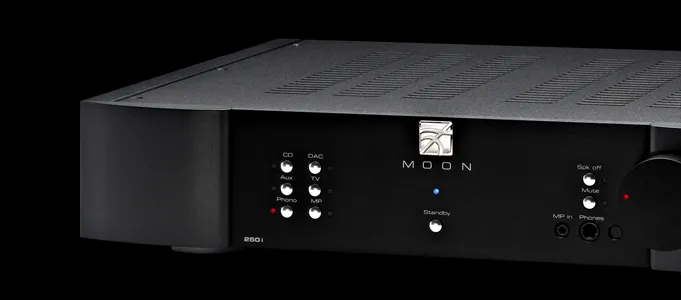
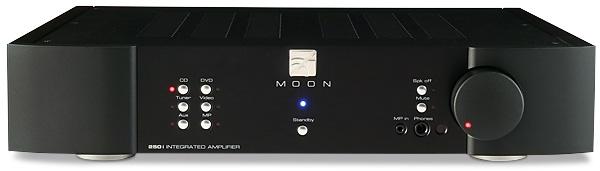
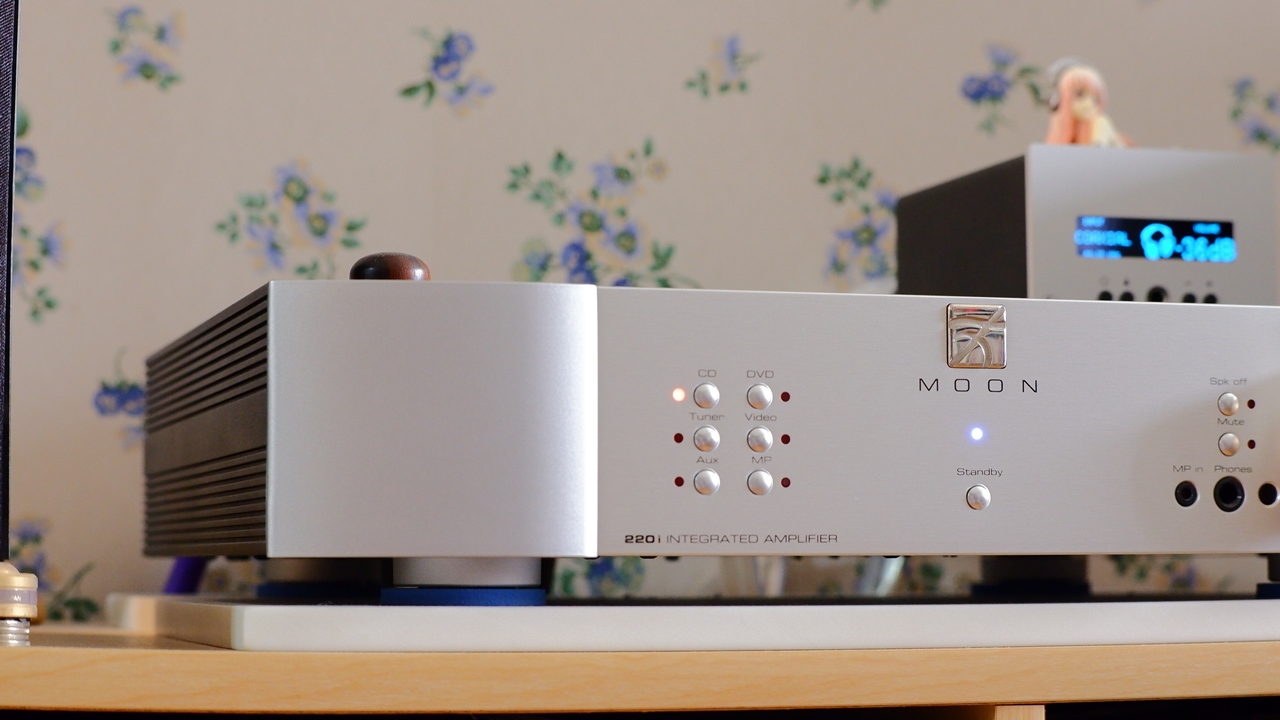
The Simaudio Moon Neo 220i is the youngest sibling in Simaudio’s integrated amplifier lineup, sitting at the very bottom as the entry-level model. However, the circuit itself is almost entirely identical to that of the higher-ranked Moon Neo 250i, and the only difference between the 220i and 250i in terms of specifications and circuitry is that the output from the in-house bipolar transistors has been trimmed by roughly 20%, from 50W/8Ω and 100W/4Ω on the 250i down to 40W/8Ω and 80W/4Ω on the 220i. As a result, the power transformer is a 250VA unit, one size smaller than the enormous 320VA transformer found in the 250i — though even so, compared to integrated amplifiers from other manufacturers in the same class, it would be fair to say the 220i still carries a sufficiently large transformer, and it is probably fitted with a larger transformer than the feature-rich 240i with its built-in DAC. The Neo 250i and Neo 220i do differ in terms of driving capability, but unless you are comparing them side by side directly, I think it is reasonable to treat them as being essentially the same in sound quality. ※ The 220i can be thought of as a value-for-money version of the 250i, though it was discontinued in its home market in 2017 and in Japan in 2020 as well, and as of 2023 the only entry-level models remaining are the 250i and 240i.
The Simaudio Moon Neo 220i and Neo 250i are, as it happens, based on the Simaudio Moon i-1 (250i), originally released in 2007, and the i.5 (220i), released in 2009, and in catalogues and manuals they are sometimes described as the same product for convenience.
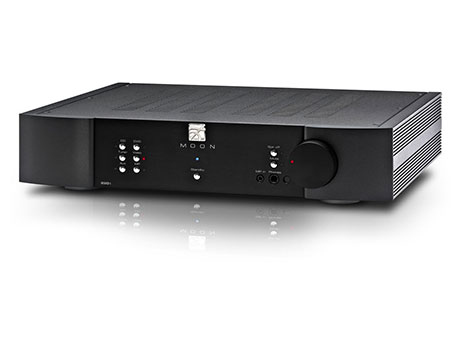
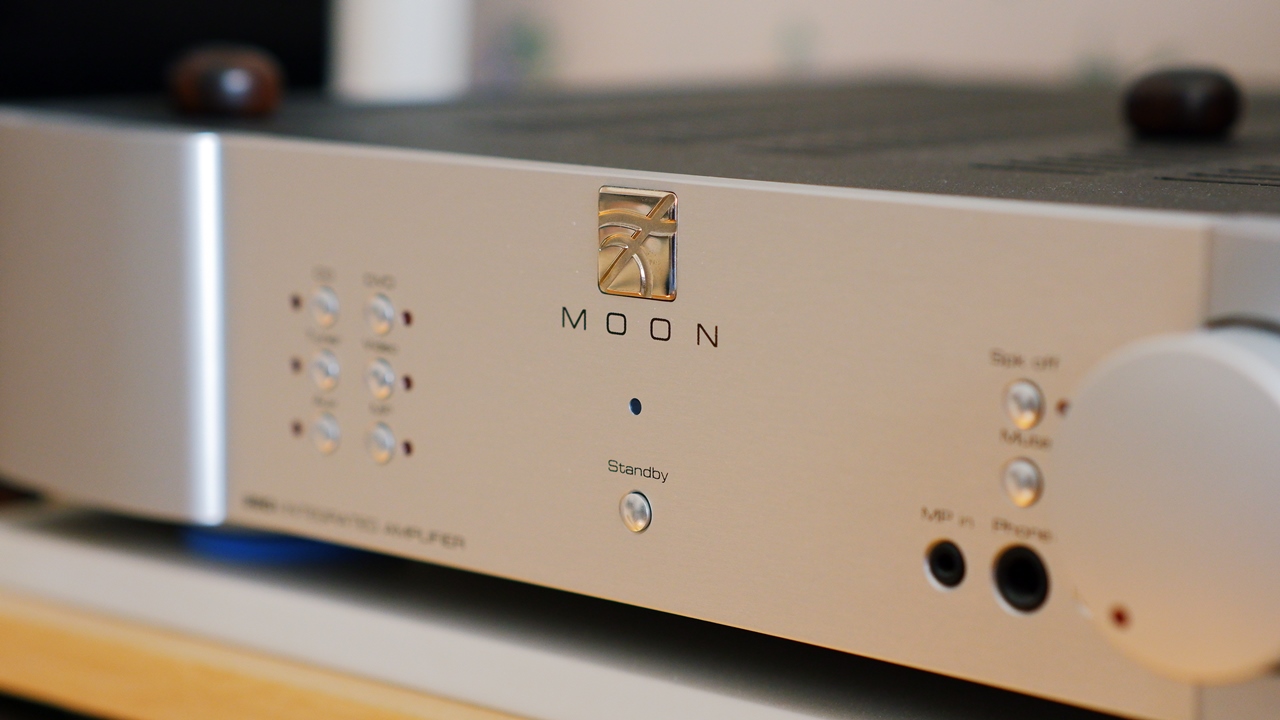
What differs from the old model number is the front panel design. The current Moon Neo series — Silver, Black, and TwoTone alike — comes with quite handsome, high-end-flavoured front panels, but the old model’s front panel dragged along a 90s audio aesthetic: half-hearted, lacking any sense of luxury, and difficult to call attractive even as a compliment. Honestly, I suspect quite a few people simply passed over it on looks alone. From the Moon “Neo” series in 2013 onwards, the design was renewed to what it is today, though whether the internal circuitry was also refined in any detail at the same time remains unclear. Also, the cheap-looking remote control with its rather sorry design carried over unchanged from the previous generation…
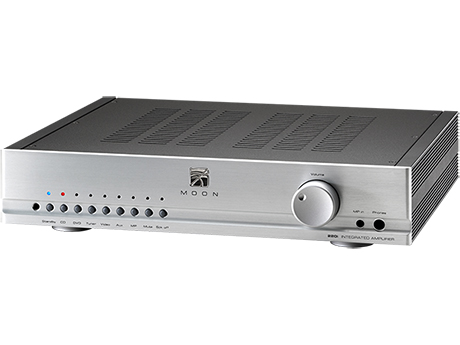
Simaudio’s sound is sometimes described as splitting the difference between American and Scandinavian sound, but the impression it gives is that it faces in the direction of North American high-end audio — it is not the kind of British, easy-to-drive, miniature-garden budget Hi-Fi sound made for minimal spaces. The sound is built for driving capable speakers properly in the context of a spacious North American living room, and this comes through keenly in the surprisingly powerful, wide-dynamic-range sound of this smaller sibling.
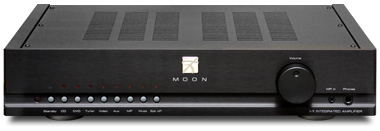
The new Simaudio Moon 250i v2 was released in 2023
This concerns North America, the UK, and Europe: in 2023, the Moon 250i v2 was released as the successor to the Moon Neo 250i. The appearance is identical to the existing Moon Neo 220i / Moon Neo 250i. In keeping with current trends, an MM PHONO stage for analogue turntables has been added, and the printed labels on each input have been changed accordingly — that appears to be about it. Also, it seems the word “Neo” has disappeared from the model number in the catalogue?
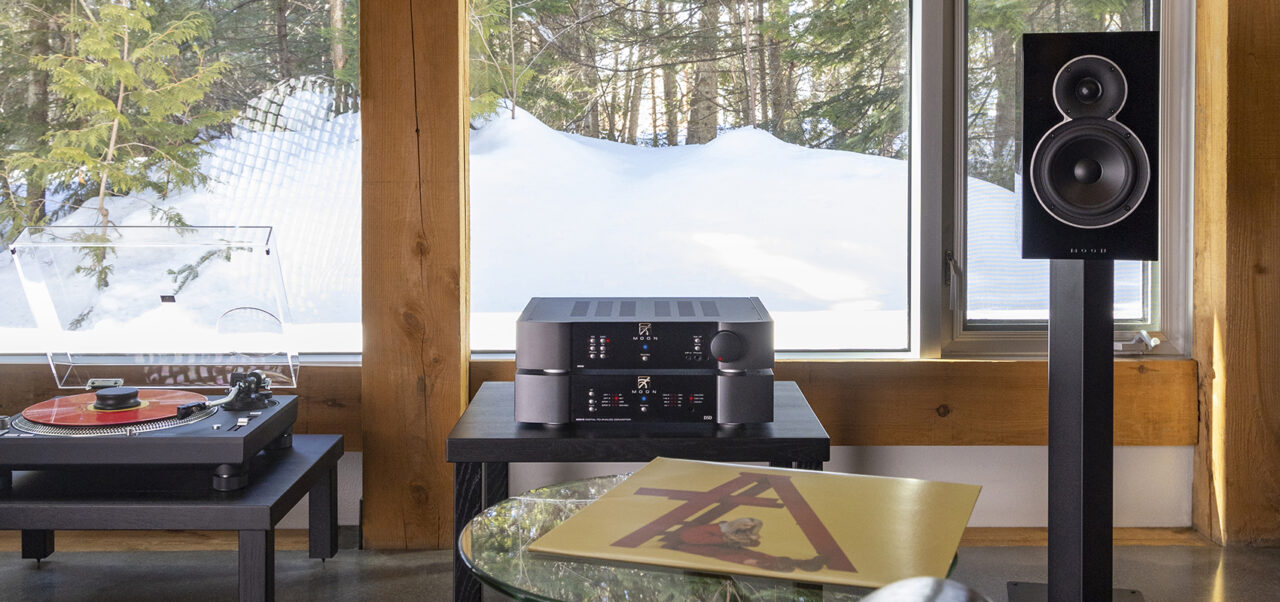
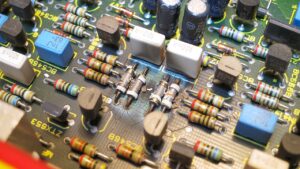
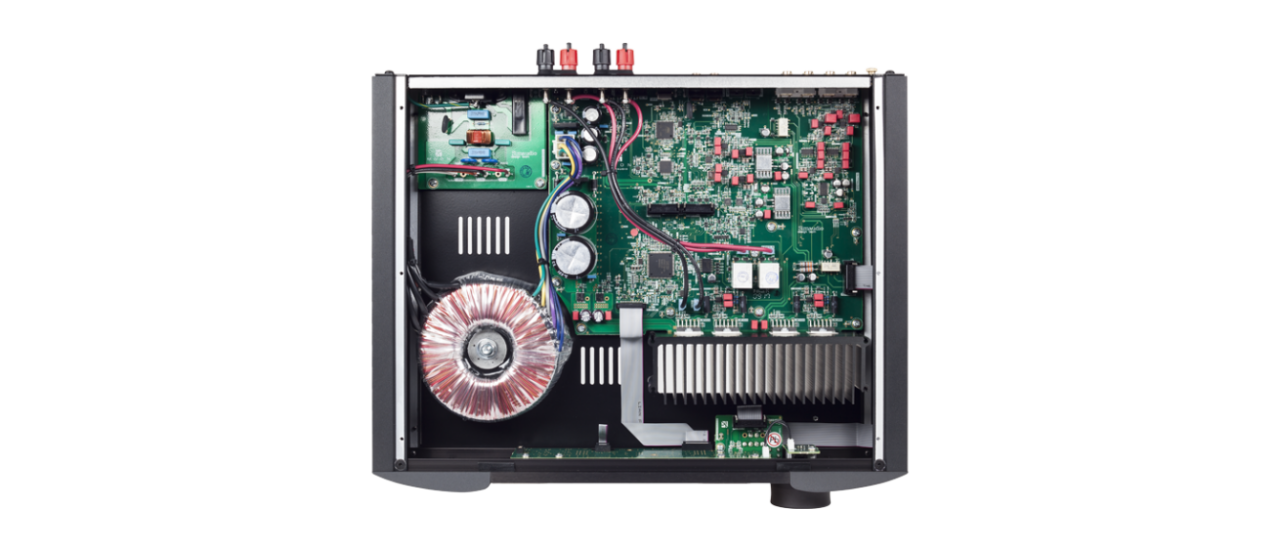
The internal circuitry looks almost identical too, so one might wonder — what exactly is this, just an extra MM input? (with one LINE input removed in exchange) — but at the component level, refinements have been made throughout, and it is apparently an effectively new design that follows the same circuit topology. Specifically: the toroidal transformer has been changed, additional internal shielding has been added (as a measure for the phono stage), and the in-house bipolar transistors have been swapped for the same units used in the higher-class 600i and 888 monaural amplifiers. The printed circuit board and all transistors have been updated to the new generation. High-quality Japanese-made parts have also been adopted, including Nichicon capacitors and an upgraded Alps volume control. Simaudio had previously insisted on Canadian and North American in-house manufacture down to the individual component level, so perhaps they have gone global in pursuit of improved sound quality.
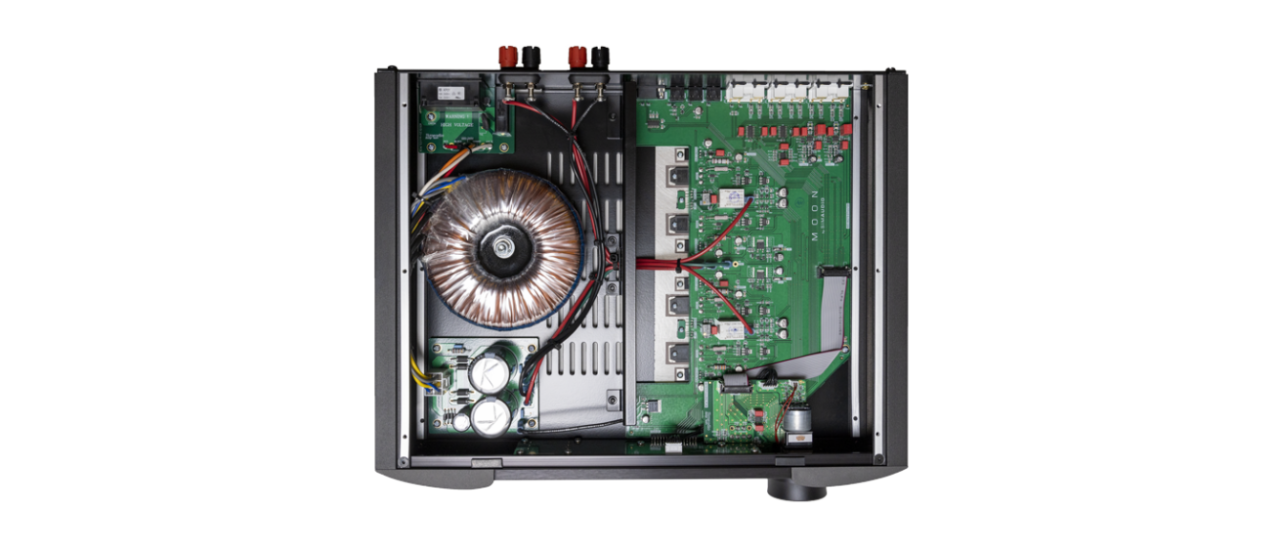
…Looking at it, a PHONO board has been added towards the front on the right side, and the board beneath it is cut away at an angle. The toroidal transformer appears to be one size smaller in diameter, and the main capacitor has been changed. But all in all, it really is just a brushed-up version of the same amplifier. As for when it will go on sale in Japan — where the power supply requires a proprietary 100V 50/60Hz specification — that will probably have to wait until the old 250i stock held by the distributor has been cleared.

Simaudio Moon Neo 220i Sound Review
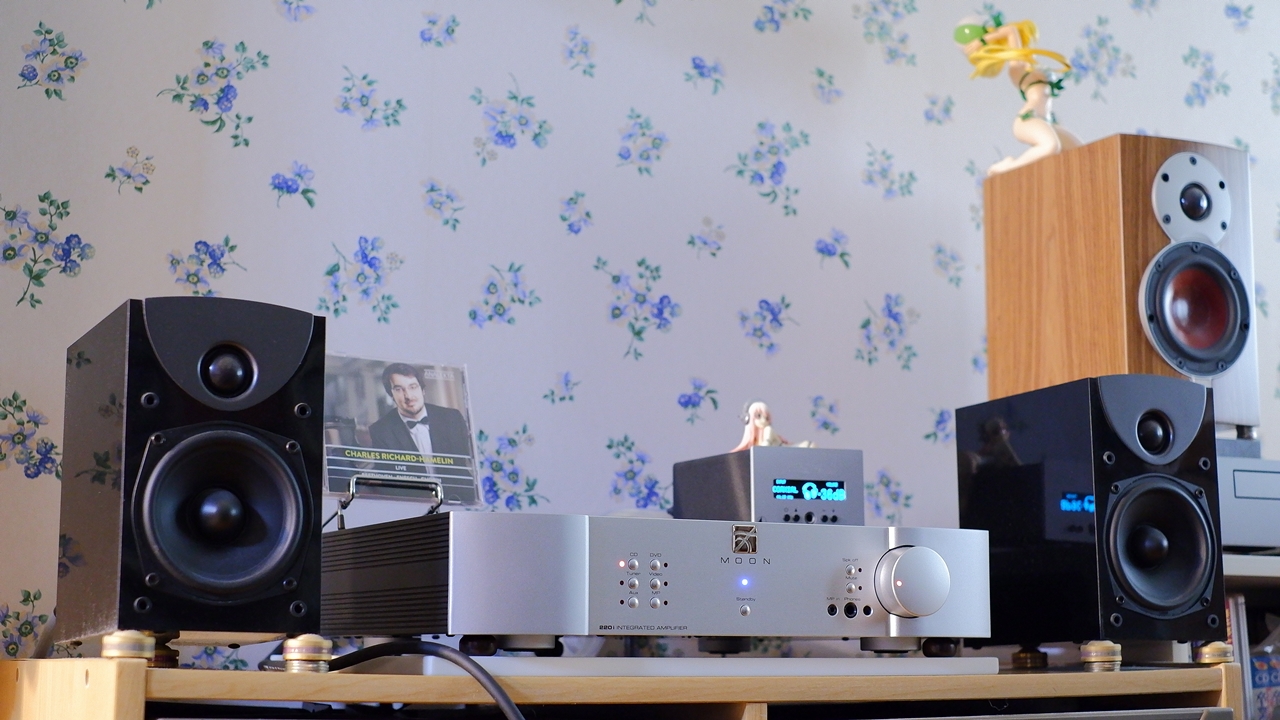
Setting up Sub-system A for the first time in quite a while, I installed the Simaudio Moon Neo 220i — making its debut here — in place of the ONKYO A-1VL that had been with me for so many years. The speakers are audiopro Image12, and the speaker cable is the TAG McLaren F3-10-SPK. To be honest, fitting the Moon Neo 220i — an amplifier whose character is its grand, expansive sound — into this modest system in a cramped space felt, quite apart from the question of price, like something of a fundamental extravagance; I was genuinely rather anxious about whether it would be possible to draw out the amplifier’s full capabilities at all.
Once I actually played some music, well — the way the sound presents itself is entirely different from the ONKYO A-1VL, and that is no exaggeration. It is as if the whole system had been swapped out wholesale; the manner in which the music is laid before you, the way the stage opens up — it is completely different. Every album gives the impression of being a different recording taken in a different concert hall entirely…
First of all, the individual instruments are arranged with great orderliness within a soundstage of remarkable depth and perspective. With the A-1VL, the instruments tended to cluster closer in, around the speakers themselves; with the Moon Neo 220i, the image positions are far more distant, with placement that sits clearly deeper into the soundstage. If the A-1VL’s sound is like listening from the very front row of a concert hall, the Moon Neo 220i gives more the feeling of sitting in the middle — or slightly towards the back — of a larger hall. Because the spacing between the speakers is narrow, the stage is miniaturised, but at lower volumes the impression, perceptually, is rather like looking down at the stage from the rear of a large hall or from the balcony. Even at low volume, the pinpoint placement does not collapse; the miniaturised but deep soundstage simply remains there, intact.
The presentation is of the wide, spacious, ambient variety, yet at the same time the direct sound images are high in density, sharp, and solid. The sense of density and sonic pressure is also quite strong. The linearity is straight and fast, yet there is something warm and organic about the way notes arrive — a certain roundness with blood in it, one might say — which could well stem from the Class A operation up to 5 watts.
The perceived S/N is good, with a background that sinks deep and black. The overall character is sharp and dry, strictly so — an extremely grown-up atmosphere, introverted and tinged with tension; to put it less charitably, one might call it somewhat neurotic. In one sense, this is a musicality that stands at the opposite pole from anything sunny and expansive, or richly singing with expressive inflection — and yet, with its deep portraiture that draws the listener inward, its centripetal pull is remarkably strong. It is the kind of sound that makes you sit up straight, the kind that deepens your intellectual understanding of classical music. It is cool and dry, sounding in an objective way as if you were viewing the soundstage through a camera lens — and yet there is a centripetal pull to each individual note, which is rather curious.
This slight darkness and grown-up atmosphere — the way the direct sound is rich and warm while the space itself rings cool and chilly — reminds one a little of PRIMARE from Denmark in northern Europe, though Simaudio is drier and tighter still, with a more solidly sculpted image.
 ポチップ
ポチップ
︙Bass
The soundstage is expansive in all directions — up, down, left, right, and especially in depth — with solid image portraiture and a linear, pyramid-shaped tonal balance. A strong sense of purpose and outstanding stability: I think these are defining characteristics of the Simaudio Moon Neo 220i.
What struck me most was the bass reproduction. Among all the integrated amplifiers I have owned, I was genuinely astonished by the sheer depth of that sinking-down quality and the deep, large-scale bass it produced — truly in a class of its own. When I connected it to my main system, the bass was so pronounced that I was surprised to find that even the first-generation Vienna Acoustics T-2 Mozart Signature could produce bass this deep, depending on the pairing. To be perfectly honest, for apartment listening at low to moderate volumes it is, if anything, excessive in the bass — or to put it more generously, this is precisely the point at which one senses the American high-end sonic heritage at work, something distinctly non-European. The stability that comes from its high damping factor is also worth particular mention: in comparison, you become aware that the other amplifiers I own all tend to have a soundstage that wanders somewhat.
︙Midrange
Imaging is hard-edged, tight, and solid. Rather than coming forward, it positions itself deep to the rear in pinpoint fashion. And yet, despite not coming forward, the sense of presence is strong. It is not a pure high-resolution type with exaggerated edge definition — there is a certain roundness characteristic of Western products — but the overall atmosphere is taut and composed, with a wide dynamic range, while sensuous expressive inflection is kept somewhat in check. It is more masculine than feminine in character.
︙Treble
Following the low frequencies, the way the mid-high range (the upper end of the musical tone band) behaves is also characteristic of this amplifier — violin, piano right-hand register, soprano, and so forth all come through with extremely high speed and excellent linearity, but conversely, the upper musical tone band is at times aggressive and overly direct, and if the setup is off or the compatibility with the original speaker (tweeter) is poor, there are cases where, as volume rises, one feels a sense of pressure at a level that seems genuinely hazardous to one’s ears.
The upper register of the piano in particular has a tendency to ring out with a hard, clangorous quality beyond what is necessary, and I feel that knowing how to tame this mid-high character — including the choice of speaker to pair with it — is the single most important point in getting the best out of a Simaudio.
The band above that is rather restrained, if anything — the noise floor sounds impressively quiet, and yet there is a lingering impression that fine detail is being reduced and disappearing somewhere… as though something is acting as a bottleneck…? Despite a pleasingly dry, high-S/N presentation, the sense of detail — the sheer number of audible micro-events — does feel somewhat sparser compared to the A-1VL.
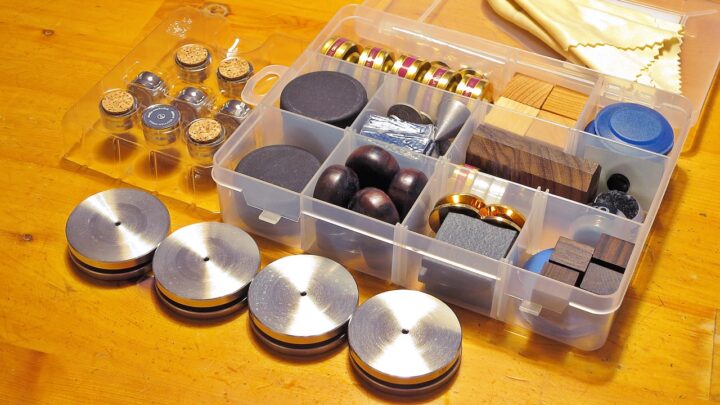
Going forward with setup, I feel it will be necessary to refine things in the direction of drawing out appropriate brightness and raising micro-resolution, without allowing any sense of distortion in the mid-high to high frequencies. The reason Simaudio pairs especially well with Dynaudio speakers likely has much to do with the fact that Dynaudio’s natural, matte-toned tweeters have sufficient headroom on the input side and are less prone to distortion — which suits Simaudio’s somewhat edgy tendencies in the high-frequency region.
 ポチップ
ポチップ
The Wide Dynamic Range of the Moon Neo 220i
The soundstage that the ONKYO A-1VL had been delivering was, for all its clear tonal character, surprisingly close to the British miniature-garden school of sound — not particularly wide in dynamic range, presenting its crispness within a measured, controlled frame, and offering the kind of high resolution and outline-emphasised, high-speed clarity one would expect from a Japanese ONKYO product. It is the sort of amplifier that remains articulate and doesn’t thin out even at low volumes.
The Simaudio Moon Neo 220i, by contrast, has a dynamic range that is vastly wider. When I set the volume to what I unconsciously use as my reference level on the ONKYO A-VL or the AUDIOLAB 8300A — the midpoint for quiet pp-to-p melodic passages — the amplifier produces an unexpectedly ferocious blast of sound at f-to-ff fortissimo passages, and I end up startled into turning the volume down. ※ In other words, it is the opposite phenomenon to the compression that homogenises volume levels. So the first thing to be aware of is that when listening through the Simaudio Moon Neo 220i, you really need to set the volume one or two notches lower than you would with any previous amplifier — otherwise it becomes a little hard going for someone like me who is not particularly fond of loud playback…
Power Consumption and Heat
With a Class A operating region of 5W, I had assumed that threshold would not be crossed during normal domestic listening at low-to-moderate volumes — but when I actually measured the Moon Neo 220i in use, I found that power consumption tracks volume levels with a surprisingly linear responsiveness, fluctuating well beyond 5W even at low-to-moderate volumes, and frequently climbing past 30W. The impression is that this very linearity of power delivery in response to volume is what translates directly into the amplifier’s wide dynamic range.
ポチップ
Idle power consumption, incidentally, is 19W. Standby mode brings it down to 17W… This is actually the same situation as with the CREEK CLASSIC CD, and one does begin to wonder whether standby mode is really serving any meaningful energy-saving purpose beyond switching off the front panel… Switching off the rear panel power switch brings standby consumption down to 0W, but the sense I get is that the manufacturer is implicitly suggesting that the unit should be left powered on at all times in any environment where music is listened to daily — except when away for extended periods. Indeed, when the main power at the rear is switched off and the unit is left to cool completely for more than a full day before being powered up again, the sound tends to remain rough and unrefined for the first few hours. And even resuming from standby mode still leaves a certain distortion-like quality for a while — with this amplifier in particular, I am left in no doubt that continuous power is a necessity.
To minimise component degradation, the manufacturer recommends using standby mode whenever the unit is not in use, except during extended absences. In my case, however, I run multiple audio systems and rotate between them, so it is not at all uncommon for any one system to go unplayed for several days at a stretch — which is why I do switch the Moon Neo 220i’s main power off. I also feel this is an amplifier better suited to focused, concentrated listening sessions than to being left running as casual background music.
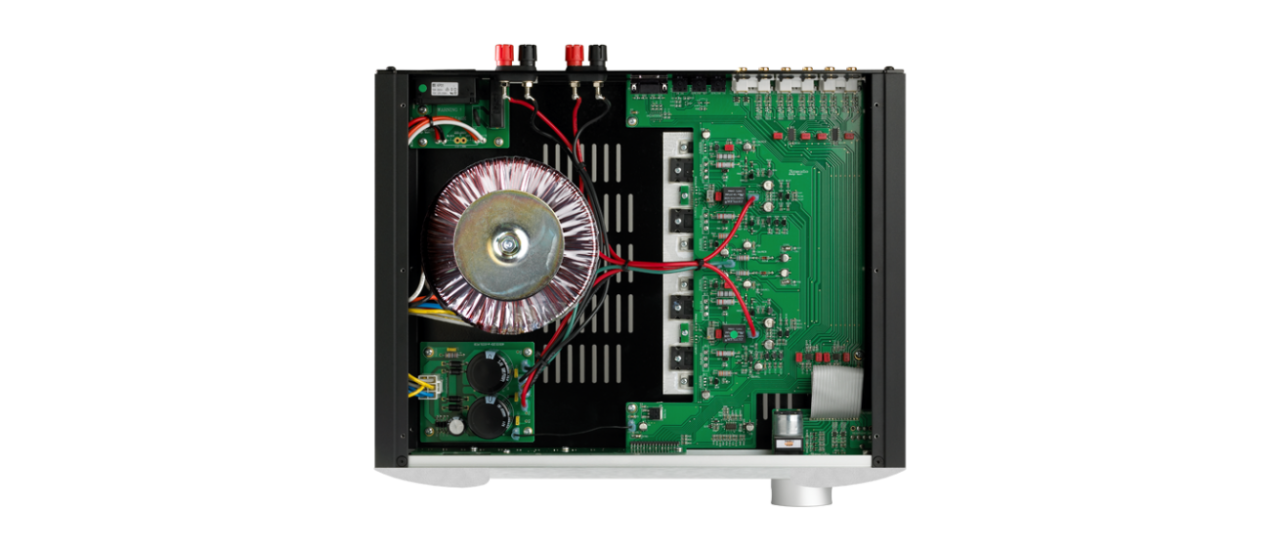
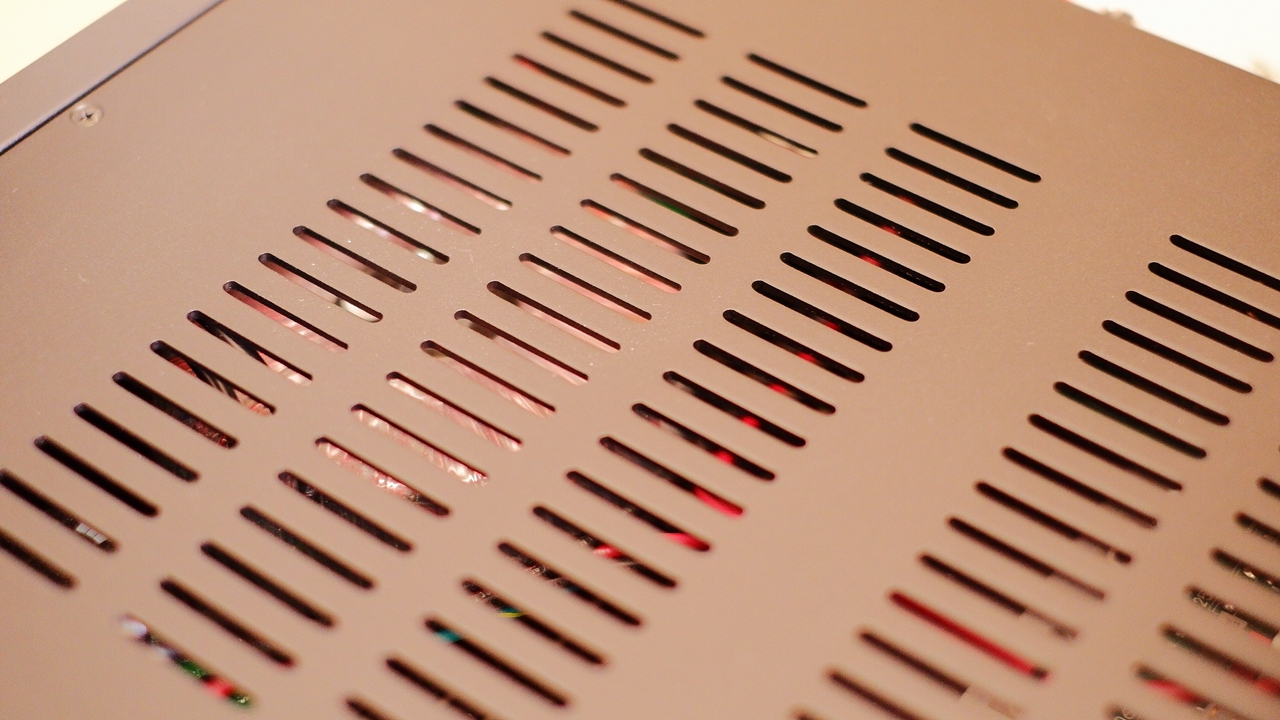
Despite operating in Class A up to 5W, heat generation is surprisingly minimal, and the top panel barely gets warm to the touch. Inside, there is no large heatsink of the kind fitted in most amplifiers; structurally, the aluminium base plate doubles as the heatsink. Under normal use it remains close to room temperature, so placing a CD player on top should cause no problem whatsoever. If there is one drawback to mention, it is that despite the low heat output, the ventilation slots in the top panel are quite large, making it easy for dust and debris to get inside. ※ Personally, I think an internal clean at least once a year is advisable.
Reviews in Western Specialist Press
This time, before presenting my own assessment, I will introduce the evaluations from the UK’s WHAT Hi-Fi and the US’s TechRadar. ※ These are not reviews of the Moon Neo 220i itself, but rather a review of its predecessor the Moon i.5 — which shares virtually the same circuitry — along with a review of the i-1, which is roughly equivalent to the sibling model 250i, and for reference, a review of the separately designed DAC-equipped model, the Neo 240i.
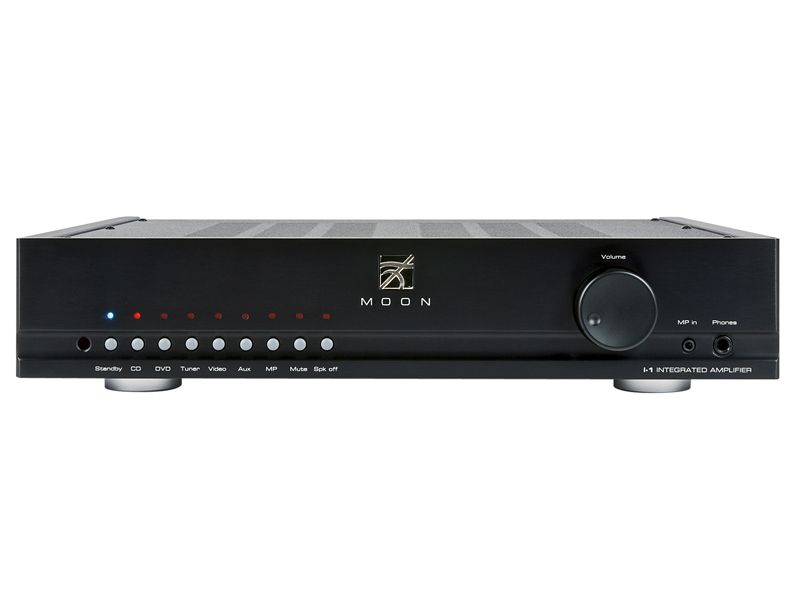
The Moon i.1 excels in the bass, is well-detailed throughout, and is practical with a tidy construction. This amplifier communicates music well, creates a real sense of drama, and is quite compelling. That said, it can occasionally turn rough with vocals and bright-toned melodic instruments.
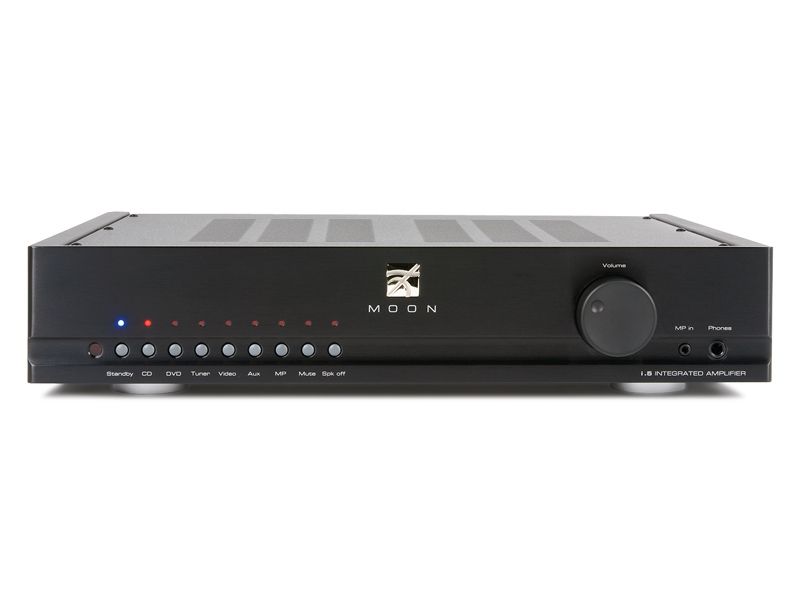
A hidden gem from a high-end manufacturer. The bass is highly convincing, and the sound is energetic enough, but the flow of vocals is surprisingly difficult to grasp. That said, many instrumental lines come across more clearly, and the sense of dynamics is good. Which side one comes down on will clearly depend above all on whether one listens primarily for bass or for vocals. There is a certain consistency to the i.5’s vocal uncertainty — interestingly, it fares comparatively well with choral music, but when solo vocals are accompanied by instruments, the instruments tend to take the upper hand.
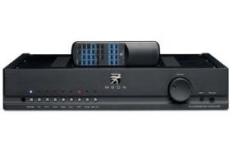
The Moon i-1’s approach delivers a thrilling, fluid performance, producing what is arguably the largest and deepest soundstage of the units tested, and it is always an enjoyable listen. The bass goes thrillingly low, the mid-range drums have a remarkably rich body, and the whole track rises and falls on a smooth wave of dynamics. However, that fluidity comes at a price, and it manifests in precision and resolution. In the quieter passages of a piece, the texture and delicacy of a solo violin are not fully rendered, and while the bass goes very deep, compared to the other amplifiers tested it is a touch loose and overbearing.
For the old Moon i.1 and Moon i.5, both TechRadar and WHAT Hi-Fi? gave four stars — not their highest rating — and while TechRadar’s summary praises the detail, the body of the review, much like WHAT Hi-Fi, qualifies this by noting it is “perhaps, not quite the best.” Honestly, my own impression is much the same: despite a tonal character that really ought to be capable of top-class resolution, there is a tendency for fine detail to get masked, and I get the feeling there is a bottleneck somewhere that needs addressing. It has also been noted that female vocals and brightly timbred instruments can occasionally sound harsh — depending on the speaker, saturation in the upper midrange can become an issue, and managing that is arguably the most important challenge in getting the best out of this amplifier.

Moon Neo 240i — Redesigned Sibling Model with Built-in DAC and MM Phono Input
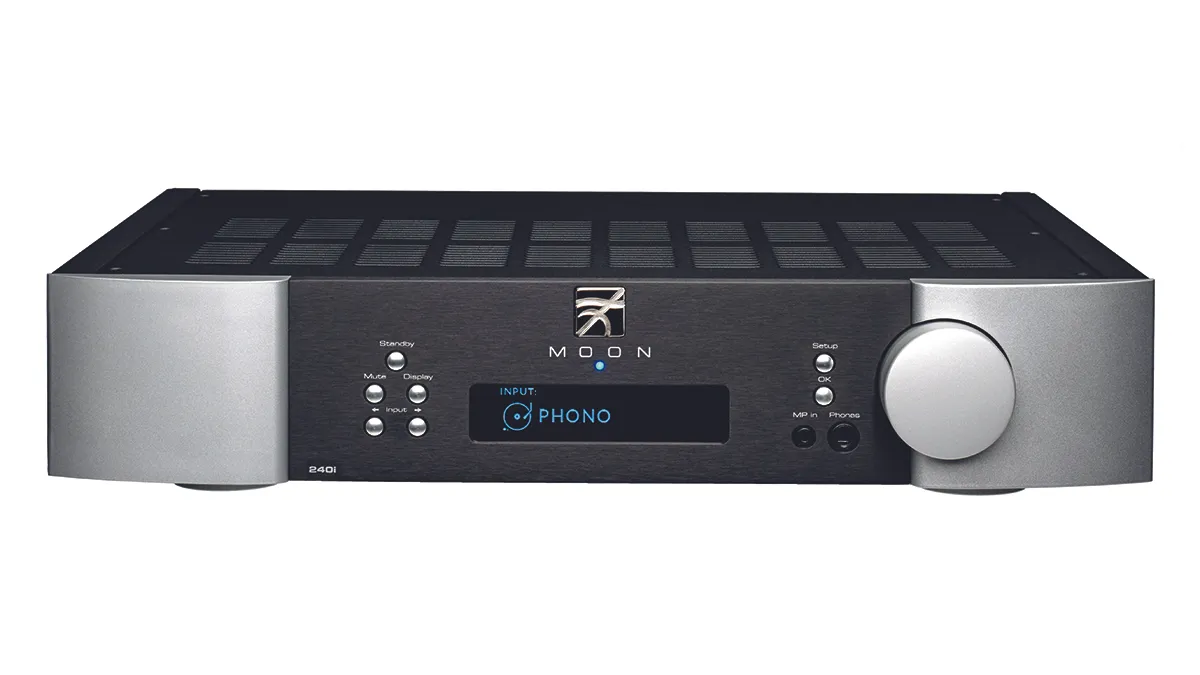
Understated yet highly accomplished, an amplifier that leads with delicacy and dynamism. Timing is nimble and precise, every instrumental strand taut and well organised. Note edges are crisp and clear, silences are canyon-deep, and the liveliness of drums and guitar brings a deep sense of satisfaction. The presentation is smooth, yet not at the cost of detail. That said, those who prefer a muscular attack may find this amplifier is not quite for them.
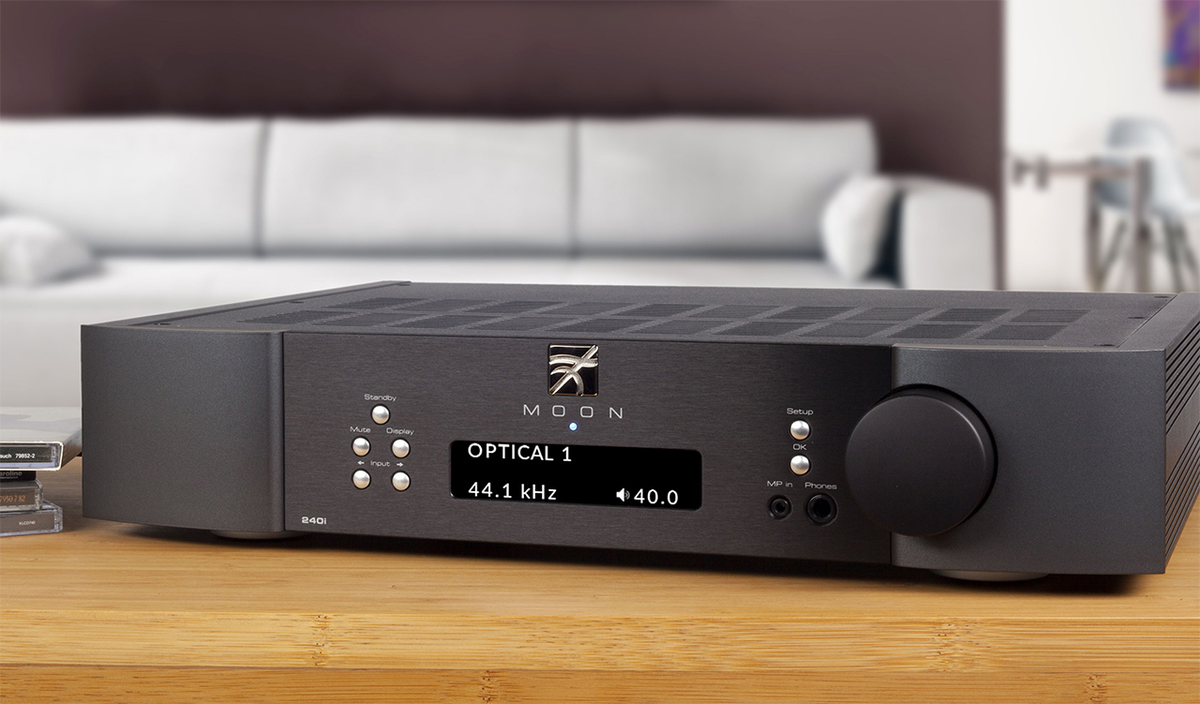
You need not worry about annoying the neighbours to get the most out of the Moon Neo 240i. It is rare to find an amplifier that sounds this engaging at quiet volumes. Turn it up and the sound simply gets louder — the character does not change, nor does it harden. It never sounds as though the volume is too high, which says a great deal about how clean and distortion-free the Moon’s performance is. Because it faithfully conveys the spirit of the music, we find ourselves drawn in, simply enjoying the enchanting sound and playing track after track from our music library.
Regarding the Moon Neo 240i — a sibling model expanded with AV functionality — this is purely for reference, but the WHAT Hi-Fi review is extremely enthusiastic about it. It features a built-in DAC and MM phono input, and is an entirely new circuit design throughout. That said, the general tendency of the pros and cons described there would seem to apply, to some degree, to the Moon Neo 220i and 250i as well. The Moon Neo 240i uses a somewhat smaller transformer and holds back on driving power accordingly, while being tuned to excel at low-volume playback, with a more pronounced emphasis on contemporary delicacy and resolution.
~ Summary ~
That is more or less my personal assessment here at the small-world “AUDIO STYLE.” It is rather unusual for me to list as many shortcomings as strengths, but because the unit blends genuinely admirable qualities with a high-end-leaning character alongside the awkwardness that comes with that territory, I would say it tends to suit more experienced listeners — this is a sound character that is selective about who handles it. The compatibility with whichever speakers you pair it with is particularly demanding, so if you are considering a purchase, I would strongly encourage you to take care — including auditioning it in a shop before you buy.
What is a shame is that, owing to exchange rates and other factors, the Japanese retail prices for Moon by Simaudio products have, as of 2023, ballooned to easily two or three times what they were just three years ago…… When I went looking for product links to include in this article, I was once again struck by how staggering the prices have become. These are no longer products that belong anywhere near the affordable end of the market.
The Moon Neo series has for many years been among the most popular choices at the top of the lower-to-mid price bracket — the mass-market range just below high-end — in Europe and North America, yet it is a shame that audio equipment of this calibre, so well suited to musical reproduction, tends to go under-appreciated and overlooked in Japan. It is not the sort of product that suits every type of music and every source, but across all genres, for music that calls for a sense of spirituality or depth, a Moon by Simaudio system may well allow you to peer into the profound depths hidden within that music.
Auto Translated by CS4.6