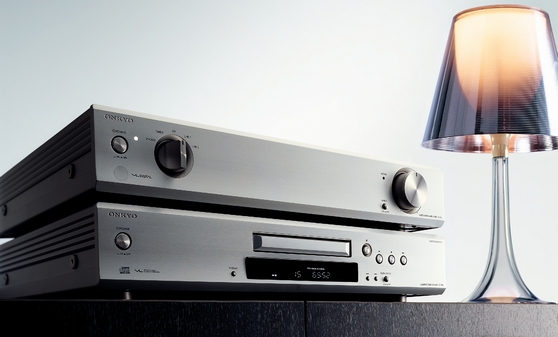
【ONKYO A-1VL & C-1VL In-Depth Review】
A-1VL/C-1VL Launch|A-1VL (Part 1)|A-1VL (Part 2)|C-1VL
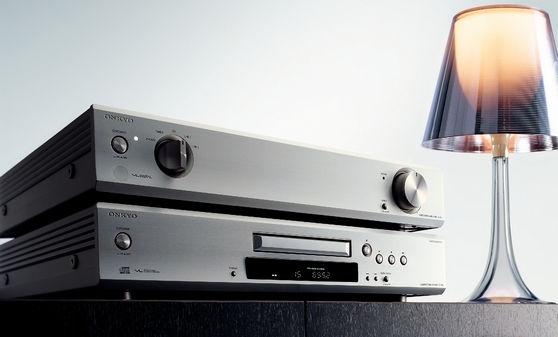
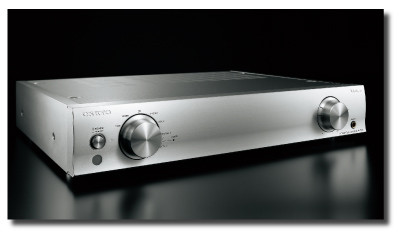
It’s May. The ONKYO A-1VL has finally arrived. This is the digital integrated amplifier I had been eagerly waiting for — nearly a month of stock shortages and waiting for production delivery. I had come down with a cold and had been sleeping since midday, but this is no time to be saying things like that! It has only just been unboxed and burn-in (ageing) is nowhere near complete — it is in a completely fresh state — but I am going to throw caution to the wind and give my initial impressions anyway.


 ポチップ
ポチップ
Incidentally, I have been coming across various rumours that the A-1VL’s sound changes considerably over the course of burn-in, so please treat these impressions of the initial state as no more than a rough reference. m(__)m
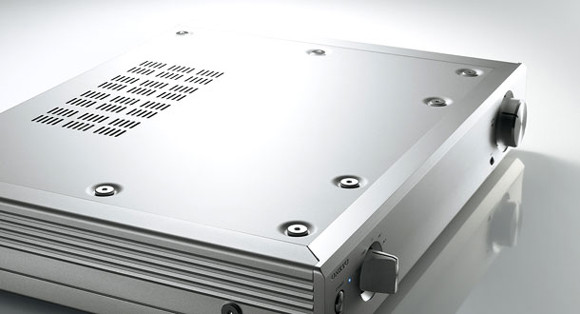
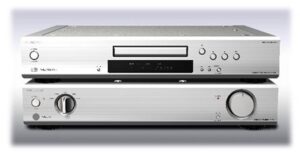
Opening the box, it is surprisingly large. It has considerable depth, and is thicker than I expected. And heavy. For someone used to the lightweight British amplifiers of past generations, the weight comes as quite a shock. It is listed at 11.3 kg, but it feels far heavier than it looks. I had been worried the silver panel might look good in the shop but come across as overly sombre under indoor lighting at home, yet it actually carries a sense of luxury while fitting in perfectly with the British-style décor of my study — no problem at all. Placed side by side, the materials on the TAG McLaren 60i look just a touch cheap by comparison… which is rather galling.
The rigidity is superb. The top-panel screws are Torx, just like on the TAG McLaren and Vienna Acoustics — as if to say, don’t open it unless you have the tool? Well, I happen to have a full set of Torx wrenches , thank you very much. The insulators are already a rather lavish brass hybrid design from the factory, so there should be no need to replace them. The speaker terminal area is insulated and uses WBT post terminals — also rather luxurious; very much as one would expect from a Japanese-made product. The A-1E ver2 used WBT too, come to think of it. In any case, the attention to detail here is such that even the most demanding Hi-Fi enthusiast poking around in every corner would have little to complain about.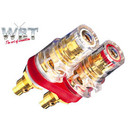
That said, if I am going to pick nits: the position and size of the volume knob are, design-wise, ever so slightly off. It seems to be subtly displaced from the optimal point that would make for the most beautiful balance. Also, when I touched the volume knob on the display unit in the shop, it felt light and hollow — a rather cheap feel to it — but the volume on the A-1VL that has arrived here has a proper, solid resistance to it. A minor revision, perhaps, or just unit-to-unit variation? It does not match the superb volume knob feel of the TAG McLaren 60i, but the feel of the power switch and selector on the A-1VL is actually crisper and more satisfying. The power indicator is a white LED; on the McLaren it is blue. Both are far too bright. I do wish they would take a cue from AUDIO ANALOGUE products and others in that regard — the light gets in the way of the music.
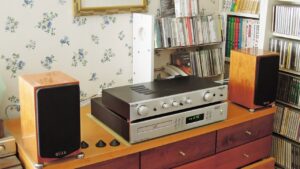
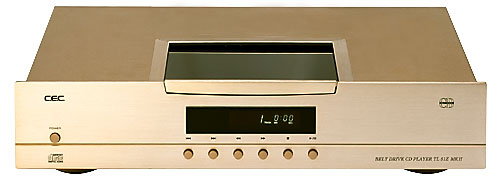
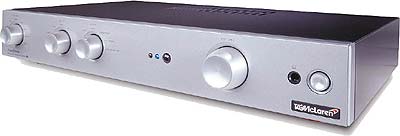 Now, let us have a listen. First, I swap the TAG McLaren F3-60i — the cornerstone of my main system, driving the Vienna Acoustics T-2 — directly for the A-1VL, leaving all surrounding cables and settings as they were for the 60i. The CD player is the CEC TL5100Z.
The sound that comes out straight away is pleasingly crisp and composed. There is a stability to it that the TAG McLaren — which tends to let the sound float gently into the air — does not quite have. No doubt the rigid, high-rigidity construction has something to do with it. The tonal structure itself seems to be announcing: I am a high-grade pure Hi-Fi amplifier. Among recent slim-profile amplifiers, the A-1VL and the Audio Analogue PUCCINI SETTANTA are, I must say, still in a class of their own for structural solidity.
On balance, at this early stage it produces a rather ordinary sound. So ordinary, in fact, that I found myself saying aloud: “So this is the kind of ordinary sound the T-2 makes when you change the amplifier.” It is somewhat surprising that a sensible, well-mannered sound should come from Vienna Acoustics speakers, which normally do not produce anything of the sort. Put another way, my system as it usually operates delivers a soundstage that is ever so slightly beyond the realm of the conventional — so measured against that, this does feel rather run-of-the-mill, if I am being honest.
The aspect I had been most concerned about — “musicality” — turns out to be no problem at all. The sound is lively and buoyant. It cannot match European amplifiers for sensuality or delicacy, but it plays with genuine vitality, and is emphatically not the dark, lifeless, depressive sound that Japanese-made audio equipment so often falls into. It comes forward with energy — though compared to European amplifiers it is perhaps just a touch on the busy side.
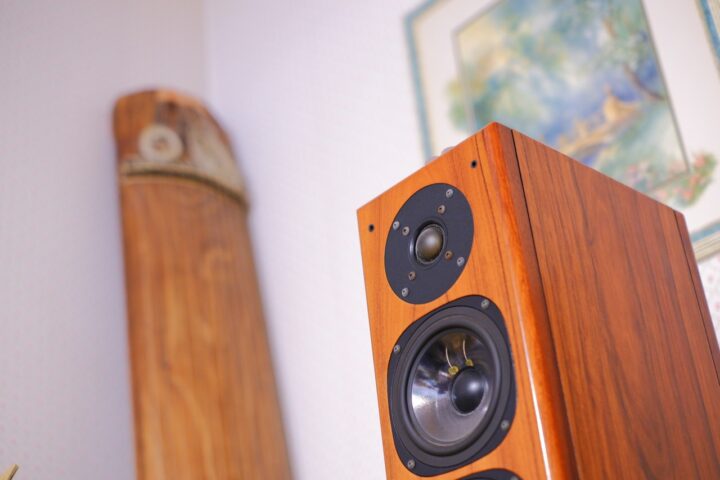
Listening through the Vienna Acoustics Mozart T-2, high-frequency distortion is extremely low. There is no harshness that makes the ears ache. The frequency range feels slightly limited, yet both tweeter and woofer are driven steadily and without wavering. I had been concerned the highs might be fatiguing, given how extended the treble sounded in the shop demo — but no, absolutely no problem there. The 60i extends further in both directions, but in doing so it tends to become unruly and difficult to control. The A-1VL, by contrast, has no such precariousness about it; there is a sense of security and ease. That said, I had been hoping for the kind of powerful bass that had outshone other slim amplifiers in the shop, and while the upper bass has a certain rounded, voluminous quality, the true deep bass lower down is actually rather thin. The McLaren clearly produces more solid, thumping bass. Partly a matter of speaker matching, no doubt — but perhaps this too needs to wait for burn-in?
With classical sources generally, there is an insufficient sense of detail and a feeling of muddiness in the soundstage. A safe, middle-of-the-road character predominates, and it cannot honestly be described as especially high-quality. On the other hand, with Western pop, jazz, and particularly Norah Jones, it is a perfect match — utterly immersive. The quality of the voice and the quality of the amplifier are in complete sync. Japanese popular music also works rather well. With sources of this kind, the textural realism of the guitar, for instance, can be genuinely striking.
 ポチップ
ポチップ
These impressions are from a state far from the amplifier’s true potential — straight out of the box — but what I liked: the low level of distortion, a reasonable degree of musicality, and a dynamic range on the positive side that makes it sound its best at moderate to high volumes. With non-classical sources, it shows some genuinely impressive compatibility.
…What I did not like.
A general tendency toward muddiness with classical music. In other words, insufficient resolution and dynamic range on the downward side. The sound is quite different from what I had come to understand during the shop audition of the VL set. The sparkle in the upper midrange is pleasant enough, but it does not carry through consistently into the bass. There is a vaguely woolly, lukewarm quality to it.
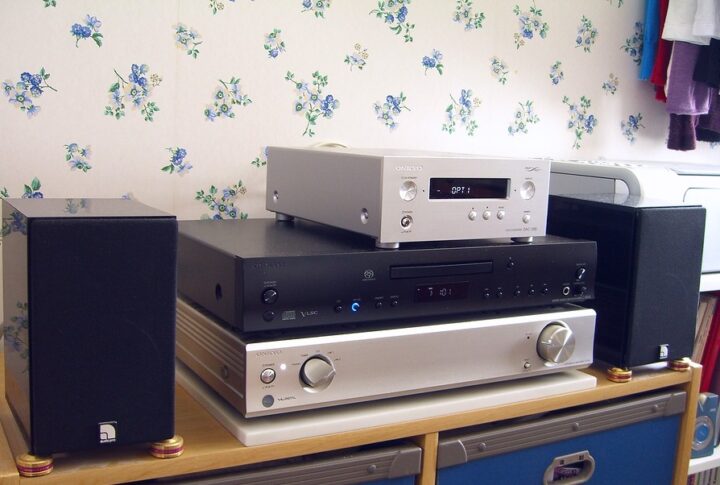
In the shop, I had almost always auditioned it paired with its sibling, the C-1VL. All those past impressions — subtly cool, brilliant, high-resolution, high-speed, and so forth — were formed during listening sessions where the VL series CD player and amplifier were used together as a set. The speakers were B&W 704, Elac CL310.2 JET, Audio Pro Image11, ALR/Jordan Entry Si, and various others. I had, in fact, auditioned the amplifier on its own on one occasion, and the impression then was similar in character to what I am hearing at home now — I had an uneasy feeling about it at the time, if I am honest, but I had held back from writing it up, telling myself it was down to the shop demo’s particular combination or less-than-ideal conditions. But now that I have actually lived with it… combinations are a difficult thing. At this point, the thought passing very much through my mind is: perhaps you simply cannot draw out even half the VL digital amplifier’s true capabilities without using the C-1VL as the CD player? Which would mean a further 80,000 yen down the line. So the thing I feared has come to pass…
That said, these are impressions from immediately after opening the box, and things may well change as it is used. Many accounts suggest the sound shifts quite a bit over the first few days, so I have high hopes for what is to come. In any case, I cannot bear to leave it connected to the main system while it burns in sounding this different from what I had anticipated, so I am putting the TAG McLaren 60i back there and trying the A-1VL with the sub-system — the Audio Pro Image11. The overall impression is unchanged. To describe it in piano terms: a crystalline right-hand register up top, and a somewhat dry, woolly left-hand register below. It reminds me of a recent Yamaha concert grand CFIIIS… And there is a body-temperature warmth to it. Of past amplifiers I have heard, the one that comes closest — just slightly — is the AURA VA200/STINGRAY. In the treble alone, there is a slight resemblance. That shimmering quality is rather pleasant. The middle and lower bass, on the other hand, puts me in mind of Musical Fidelity or Audio Analogue… hmm, I am not sure.
In short, it is nothing like the wet, air-filled sound I heard at Yodobashi when trying various combinations. The cool transparency and the spine-tingling realism of the soundstage that struck me during the audition — that sense is somehow lacking. The sound is good enough for the price, certainly, but in my case the reference points are TAG McLaren, Musical Fidelity, CREEK… and so on, which means I cannot be satisfied unless I feel that clear value and advantage over everything else — the kind of thing that had struck me in the shop. At the same time, I am also, in a good way, a little puzzled to find it has quite a lively, musical quality that I had not particularly noticed in the shop.
The main issue, when I put my finger on it, is that the perceived S/N ratio feels insufficient. It strikes me as somehow a bit noisy?!
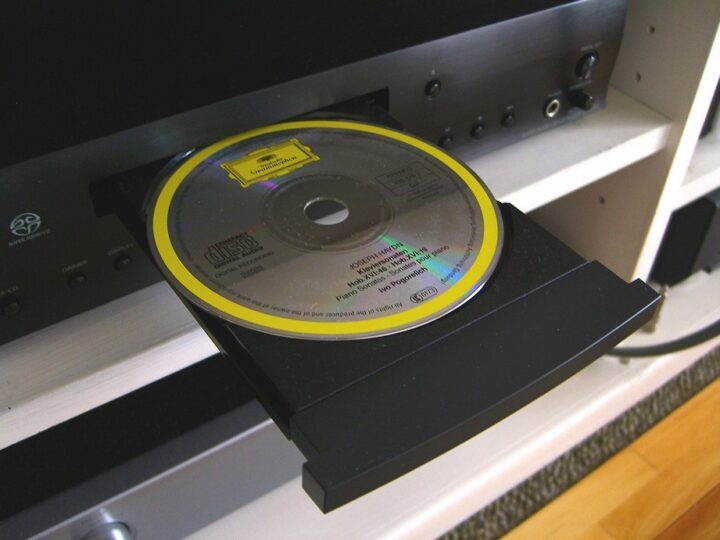
With the suspicion growing that perhaps the C-1VL is simply necessary, and doing my best to remain calm, I try swapping the CD player from the CEC TL5100Z to the MARANTZ CDR630. This is an unassuming, take-it-or-leave-it sort of sound. But the balance does improve. It seems the A-1VL does not pair especially well with the TL5100Z’s smooth, soft, relatively bass-heavy character. Next, the DV-545. Quality aside, its sonic character is the closest I have on hand to what I would expect from the C-1VL. …Oh, this is rather good actually. The overall sound is slightly thin and inexpensive-feeling due to the DV-545’s own limitations, but the balance and sense of scale are good. It does seem that CD players with a domestic Japanese character — slightly treble-tilted — pair better with it. Which brings me back to the question of adding the C-1VL after all…
The dilemma of choosing a CD player
Initially, with the ONKYO A-1VL still unburnt-in, I wrote that it might only come into its own when paired with the C-1VL — and I still think that is probably true — but now that the sound has come on this far, the wonderful sound I heard in the shop is being reproduced quite sufficiently, and even with an entry-level player like the DV-545, the music is being presented with a vivid and superb sense of soundstage — quality that, in a sense, feels like enough. I have started to think, rather improperly, that perhaps there is no need to add the C-1VL after all…
In short: oh, I want to stray…
Adding the ONKYO C-1VL would mean an outlay somewhere in the mid-70,000 yen range including tax and delivery. That is certainly the safe option, and it would make sense aesthetically as a matched pair — but I can already predict to some degree what it will sound like. Or rather, I think I can predict it, when in reality I am probably wrong, and combining it with the A-1VL in practice would likely reveal all sorts of charms I had not noticed in the shop… Though it is a bit rich to go around recommending single-brand systems to others while doing something entirely different myself.
Originally, alongside the A-1VL, my shortlist for a CD player included the AH! Njoe Tjoeb 4000 that jazzaudiofan uses. A valve player. From the various reviews I have read, its musicality appears to be exceptionally high. The frequency specification seems to venture into rather adventurous territory, and that is actually rather appealing.
The Ah!, at domestic dealer price, comes to around 105,000 yen.
Somewhat more expensive than the Onkyo C-1VL… but it would satisfy my vanity — that persistent desire to always have something a little out of the ordinary. Someone is bound to say “just buy both” — but that is simply not possible. I have been turning it over in my mind, idly wondering whether I might perhaps be able to buy the Ah! with a certain someone’s cheque…
…So, what to do?
【ONKYO A-1VL & C-1VL In-Depth Review】
A-1VL/C-1VL Launch|A-1VL (Part 1)|A-1VL (Part 2)|C-1VL
Auto Translated by CS4.6