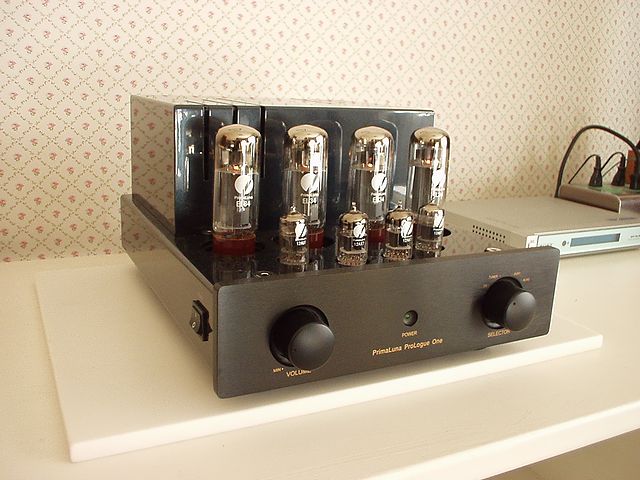
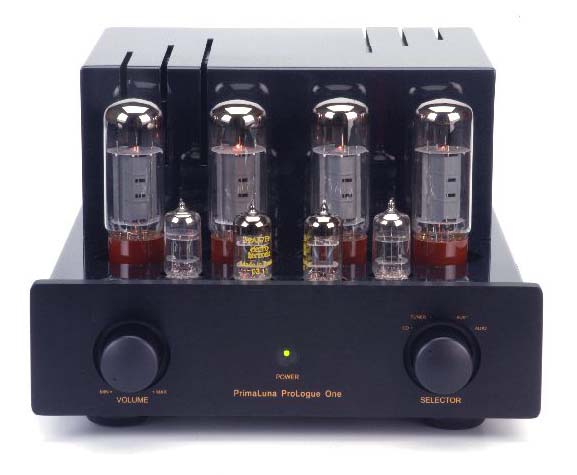
【Prima Luna ProLogue One Listening Report】
AH! Njoe Tjoeb 4000|Listening Event|Part One|Part Two
I was astonished. It was the morning of the third day. I switched the amplifier on and left it for a while, then played Perahia’s (Pires’s) Nocturnes… and it was clearly different from anything I had heard before. To put it plainly: it had become transparent. Or rather, extremely transparent. Like diamond dust. And the expression was vast. The sound moved with vitality, organic and alive, with wonderful musicality. This CD is also exceptionally well recorded as a piano recording — but even so, what on earth was the sound up until yesterday? Is this not simply a completely different thing altogether? Had Santa crept in while I was sleeping and swapped out the review unit?


 ポチップ
ポチップ
The focus of the sound image, too, had snapped firmly into place. Until the previous day things had felt somewhat blurred, but now there was a crisp, hard-edged quality — like colourless, transparent  crystal glass — and definition of outline had emerged as well. What remained unchanged was the sheer ease of its sound-making and the near life-size scale of the soundstage. This feeling of a life-size scale expanding forward and back from the centre seems to be a hallmark of Prima Luna. In the upper frequencies, things had initially felt powdery, and after that like something dissolved into creamy sugar confectionery — not unpleasant to the ear, but in the opposite sense there was something unnatural about it; now, however, resolution and extension upward had also appeared, and it no longer sounds rolled off in the least.
At this point I tried switching the speaker terminals from 4Ω to 8Ω. Immediately there was even more extension upward and a greater sense of scale in the overall expression — which was a good feeling. To put it negatively, there is a tendency toward a V-shaped sound, but even so, the sense of energy and the lyricism were better at 8Ω. The 4Ω has good control and gives a monitor-like impression — accurate, but the expression feels slightly heavier and flatter. For the Vienna Acoustics MOZART T-2, if I could ask for anything more, ideally there would have been an intermediate 6Ω option.
 ポチップ
ポチップ
Playing the soprano Olga Borodina’s album “None But the Lonely Heart — Tchaikovsky Songs”, the voice soared and soared, extended so far it seemed the tweeter might be on the verge of blowing apart. And then the sheer volume of information — microscopic detail I had never heard before appeared in abundance. This was quite something. I had always thought the resolution of my TAG McLaren and ONKYO machines was relatively high by my own standards, but the impression here was that they belong to a different class entirely. This kind of reproduction — as though viewed through a magnifying glass — must be a characteristic of a well-made valve amplifier. For this alone it might be an amplifier worth acquiring.
With its large, lively, and thoroughly enthusiastic way of playing, I kept finding myself reaching for the volume knob. Marimba and percussion, too, had a visual quality to the sound unlike anything I had heard before — with the bass so full it was extraordinarily real. The only thing is that each instrument tended to assert itself rather too strongly, so there was a slight tendency for vocals to become buried. This was a different impression from the day before. Vocals were clear, but as time went on, accuracy seemed to come at the expense of sensuality. And when voices were pushed, the energy grew so intense that the speakers were close to crying out in protest.
In any case, the sound was entirely different from the previous days. I wondered whether it was simply down to my own condition — but even accounting for the way earlier listening leaves a temporary impression on the ear, the shift in character felt too drastic to explain that way, and I was honestly rather bewildered. Because the impressions I wrote in the earlier part of this report and those from the third day onward are so completely different, I cannot say with confidence “this is what this amplifier sounds like.” It may be due to the delicate nature peculiar to valve amplifiers, and to the sensitivity and sharp responsiveness of this amplifier itself — as though the amplifier gradually adapts over time to the particular character of the waveforms produced by the combination of speakers, mains conditions, and cables, and the output waveform shifts and changes in all directions. It may be that I am only finding this strange because my own skills are limited — but that is how it feels, and for this reason alone I find I cannot write about it with any real confidence this time.
 ポチップ
ポチップ
By the fourth day, things had settled somewhat. The tonal colour remained that of crystal glass, but the expression had come down from its enthusiastic, expansive heights and settled into a comparatively quiet, cool manner. Yes — at first it had been warm and hot, which in that respect too had me thoroughly at a loss. My notes from day one read “generous and slightly vulgar,” yet now it has a northern European, Swiss-made kind of clarity — the complete opposite. The soundstage presentation and energetic expression are still in the lively vein, so it does not have quite the refined and noble quality of the TAG McLaren, but nor is it vulgar.
Even so, it remained a puzzle. In the end I still could not determine which sound was the real Prima Luna. What I can say with certainty: the scale, the vitality, the quality of the bass and its drive, and the sheer volume of information. As for the character of the upper frequencies, the tonal colour, and the musicality — these shifted constantly at the slightest provocation. They changed over time even when nothing was done, and swapping in an arbitrary Hi-Fi board (the Corian board was the worst) or simply exchanging the power cable I had to hand caused drastic changes. The Kharma KPL Reference/1a — from the same Netherlands — pairs well, but what about the supplied cable? It is the Japanese-specification 3P/2P cable, and I have doubts about its contribution to the sound quality. Since even small changes to peripheral accessories can shift the tonal character completely, it may well prove surprisingly easy to tune the sound to one’s own taste through accessories alone, not just by swapping valves.
In any case the soundstage is life-size. This is absolutely not a miniature-garden kind of sound. In my own environment the information content overflows — a 16.5-tatami room is easily outclassed. With my current rather poor setup the Vienna Acoustics speakers are being outdriven, and I feel the need to let the sound breathe more freely, to give it more open and unrestrained extension. Since the soundstage expands forward and back at life-size from the centre of the speakers, with small-scale classical music the impression is of listening even closer than the front row of a concert hall. For jazz that works perfectly, but as I listen mainly to classical, I would personally prefer the soundstage to unfold a little more in the miniature-garden manner, ordered and extending to the rear.
I think that anyone who has known only Japanese-made, high-specification heavyweight amplifiers up to around 200,000 yen would in most cases be astonished upon hearing the Prima Luna. Whatever the differences in musical character, in terms of information retrieval, resolution, and Hi-Fi performance across the board, it is in a different class. And yet the manner in which it plays — energetic and forward-projecting — is common to many Japanese-made amplifiers, so it seems likely to be accepted without discomfort by those who have assembled their systems entirely with Japanese speakers and Japanese equipment. (The sound of the miniature-garden-style European systems I have recommended in the past tends to be nuanced, delicate, and quiet, with the soundstage spreading in an orderly fashion to the rear — rather different in nature from heavyweight Japanese-made amplifiers, and I think fundamentally different in manner of reproduction from those that give the feeling of listening from the middle of a concert hall.)
Finally I tried connecting it to the miniature mini-garden sub-system centred on the Audio Pro Image 11. These are 4Ω speakers, so I connected straightforwardly to the 4Ω terminals. The CD player was the Pioneer DV-545. The fundamental clear character was the same as with the Vienna Acoustics T-2, but again things tended to overflow. The presentation became firmer, but in terms of free tonal extension and richness of nuance, it yielded ground to a lower-output compact amplifier. With the TAG McLaren 60i or the ONKYO A-1VL, there is an image of the whole room singing, and listening from the next room is a pleasant experience — but that kind of open sense of presence did not materialise here. It was completely overkill. I have a feeling that the ALR/JORDAN Entry S I used to own, with its fine, exuberant way of playing, would have been a better match.
And so, that is roughly how things went. Over five days of listening, I was honest enough to admit that I only managed to glimpse the edges of what this amplifier is truly capable of. I did think for a moment about keeping the review unit as my own — but other amplifiers were already scheduled to arrive, and I held myself back for now. The volume of information, the clarity of tone, the weight of the mid-to-bass, the scale of expression — all of these pass. This does not sound like a 150,000-yen amplifier, and at this level it would be quite capable of impressing visitors. What did concern me was the harmonic distortion characteristic — particular, perhaps, to valve amplifiers. It is not the kind that causes the ears to ache, but it is the sort that, after extended listening, makes the sound of the television afterwards seem changed. I did not notice it at the listening event, so it is probably because the drive capability is not well matched to the speakers, causing the distortion to come through more strongly. (One example: when overdriven, violin attack shifts from an “ah” to an “eh” quality.) However, this is something one feels to a greater or lesser degree with other valve amplifiers too, so it is not a criticism specific to the ProLogue One. It is simply that I am accustomed to solid-state. It seems the kind of thing that could change with burn-in and setup, and if a speaker better suited to the PrimaLuna were to be found, I would expect all of this to be a non-issue and the result to be something even more splendid.
Finally, I repacked the review unit and set up the A-1VL and 60i again. The sound that came from them… well, this too has its own charm. In terms of information retrieval it is no contest, and it is very much a miniature-garden sound — but precisely because there is nothing eccentric about it, I can listen to music with a sense of ease and security. The TAG McLaren: soft, refined, and rich in nuance. The ONKYO A-1VL: to the beautiful density of its mid-to-upper frequencies it adds a modern, high-speed, and straightforwardly honest quality, without exaggerated colouration, with a unified and consistent tone throughout. Each has its own different kind of good sound, so perhaps there is no single right answer. It is a luxurious dilemma — but since I cannot reach a conclusion, I think I shall carry on considering it for a little while longer. This time, the experience has become a good opportunity to re-examine what it is I am actually looking for in audio equipment.
I would like to express my sincere gratitude to Bach Kōgei-sha for lending me the review unit.
【Prima Luna ProLogue One Listening Report】
AH! Njoe Tjoeb 4000|Listening Event|Part One|Part Two

Auto Translated by CS4.6
List of comments (10)
詳しいレポート、興味深く拝見しました。
コロコロと音の表情が変わったというのは、
バーンインなのかウォームアップなのか原因もわかりませんが、
不思議なことですね~。
独特の魅力がある、ということは伝わってきました。
もしかしたら既に御覧になった後かも知れませんが、
前記事でのお返事の書き込み、削除してしまい申し訳ありませんm(__)m
(…色々あって消しました(^^)ゝ)
MC275ではこのような変化はありませんでしたでしょうか?
プロローグワンは良いアンプなのですが、
T-2と組み合わせることを考えると少しドライブ力が過剰で、
もう少し出力が控えめな真空管アンプがより合いそうな感じです。
Njoe Tjoeb 4000に関しては、高価な上に試聴は出来ないみたいですので、
買うべきか迷っています。なんとしても買った方が良いですか~?。
pastel_pianoさんの裁量で削除していただくことに
何ら異存はありませんので、どうぞお気になさらず…。
MC275でそれほど大きな変化はなかったように思います。
100時間くらいで低音がぐーんと出るようになって、
SPや部屋との関係で低音過多になったくらいですが、
音のキャラクターは変わりませんでした。
(僕の駄耳では聴き取れなかっただけかもしれませんが・・)
Njoe Tjoeb 4000、ご自宅で試聴できないというのは残念ですね。
さすがに「なんとしても買うべき!」とまでは言えません^^;。
が、一応システムに組み込まれたかたちでは試聴されたのですよね。
それから、仮に若干好みと違ったとしても、真空管の差し替えも含め、
色々アップグレードする道が開かれている、ということは
つけ加えておきます♪
すみませんm(__)m、削除したのは不穏当な私の投稿文のみでして、
jazzaudiofanさんの投稿を消したりはしませんのでーd(^_-)
MC275は中古とのことでしたので、最初期のエージングは済んでいたのかもですね。
Prima Lunaの試聴機は貸し出ししてくれたお店の音が移っているような印象でした。
ProLogueOneの音質がビックリするくらい良かったですので、
Njoe Tjoeb 4000の購入は是非!と言いたいところなのですが、
あとは、かなりマイナーな製品群という事で、
輸入/販売側のサポートとか体制が気になる今日この頃です。
はじめまして
私も11月下旬にバック工芸さんからプロローグ1をかりて聞きました。切れ込みが良く、ノリノリになってくれました。また、ドライブ力がありこのまま購入しようと思っていましたが、聴くに従い音の厚みがなく、全体的に軽く落ち着かない感じがしてなりませんでした。
しかし、トライオードのEL34の球を使い限定品が出ていたので、店頭で試聴しましたが、いまひとつノリが足りません。やはりプロローグ1でないとという感じがしています。
cheryさんはじめまして。
遅レス失礼しますm(__)m体の具合が悪くなりまして、暫くネットが出来ずにいます。レスはもう暫くお待ち下さいませm(__)m。
cheryさんはじめまして(^^)
お返事が遅くなってしまい大変ご迷惑をお掛けしましたm(__)m
ProLogue Oneは、実はなんだか良くわからないアンプでした。
ハイエンド機のように解像度が高く情報量が多くて凄い音だなぁと思う部分と、国産中級機のような押しつけがましさと混在しているというか…少なくとも私が基準としている他の大人しい欧州製のアンプ達とはまるで違うベクトルにあると思います。Vienna Acousticsとはキャラが違いすぎて喧嘩しているみたいでした。最終的にこの派手な鳴り方を受け入れられるかどうかで評価は変わって来るのではないでしょうか。私ならプリマルナに決める前にオーストラリア、Melodyの真空管アンプも一度聴いてみたいです。
はじめまして。東京に住んでいる外国人のrachaelと申します。最近、ハーベスのSHL5を購入して相当時間も経っていたので、今度アンプを購入しようと思います。海外のオーディオファンたちにもPrimaLunaのアンプをお勧めしてもらいましたが、東京で貸出か試聴できる店をご存知ですか? よろしくお願いいたします。
管理人のpastel_pianoです。
認証とレスが遅くなってしまい申し訳ございません。多忙で数日ブログにアクセスしてませんでした(滝汗)
貸し出しについてですが、リンクのバック工芸社さんは山形のお店ですが東京へも貸し出して貰えると思います。
http://www.bach-kougei.com/
店頭試聴については、DOTLABOさんへ直接メールで最寄りのお店を質問された方が早いと思います。
http://dotlabo.cside.com/index.html
あと、東京ではありませんが神奈川でしたら
http://www.krypton.co.jp/
Audio Shop PLUTON(クリプトン/クライナ)さんの試聴環境が良いと思います。AH!以外にも音の良いオリジナル製品を色々扱ってらっしゃいますので、更に音の良いアンプが見つかるかも知れません。小田急線で新宿からでしたらそんなに遠くないです。
個人的には、ハーベスの持つ箱鳴り感と大人しくゆったりした優しさとレトロな暖かみを生かすには、Prima Lunaよりももっと他に相性の良い真空管アンプが色々あるのではと感じます。
管理人様、
お返事をありがとうございました。投稿してから、BookMarkを忘れてしまい、このページを暫くチェックしてなかったです。私のほうからレスが大変遅れて失礼しました。
最近Lebenのアンプも試してみたけど、パワーアンプの相性に合わないというか、分からないですが、音が曇っていて、ちょっとがっかりしました。 まだアンプの探しが続いていますが、もし何かアドバイスがあれば教えていただければうれしいです。個人のメールでも構いませんが、よろしくお願いいたします。
まさか、楽しいオーディオ地獄に入っている状況です。(笑)