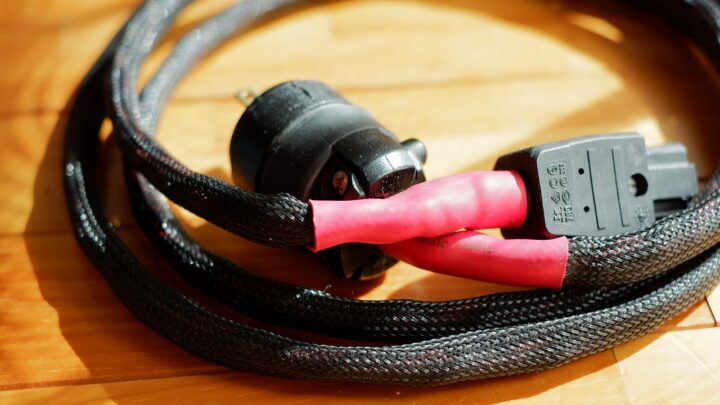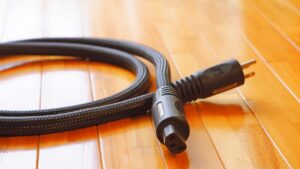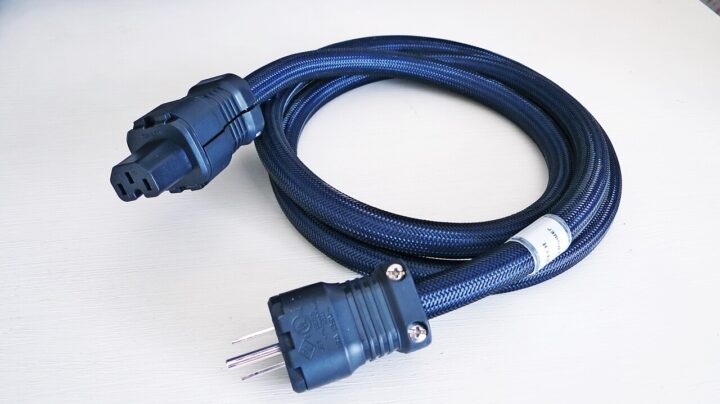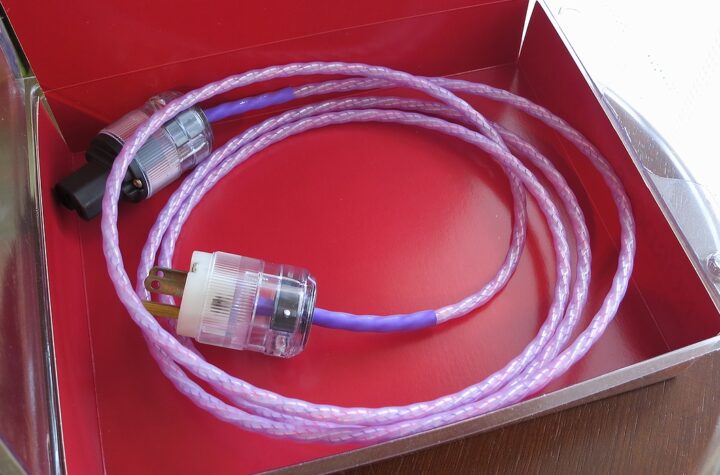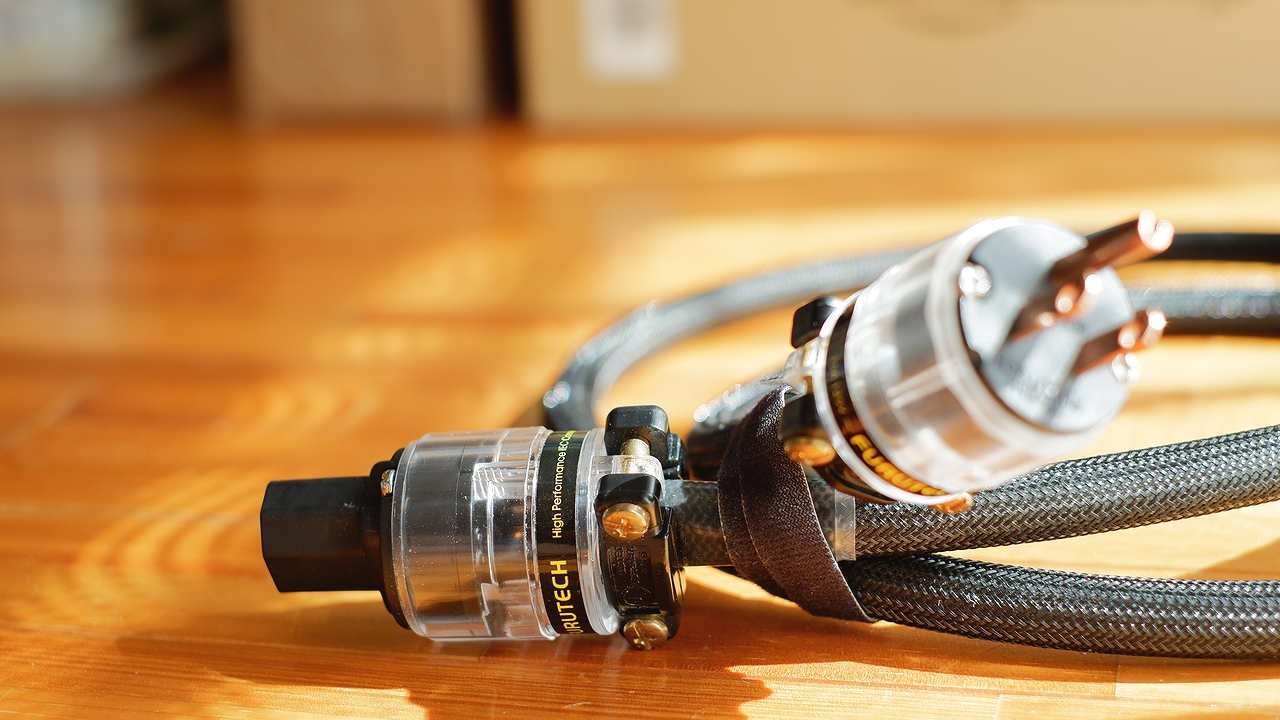
The Astoria and The Empire are FURUTECH’s latest power cables using Pc-Triple-C conductors. The Astoria and The Empire caught my attention when they were extensively reviewed in Audio Accessory magazine issue 161 at the time of release. I have always had a soft spot for FURUTECH’s power products, and there was also a campaign running at the time where purchasers received a QUO card and a disc cleaner, the FURUTECH PC-α Pure Clean Water (note: this was an introductory offer at the time of release) — and so I ended up bringing forward my plans and buying The Astoria, the slimmer and less expensive of the two.
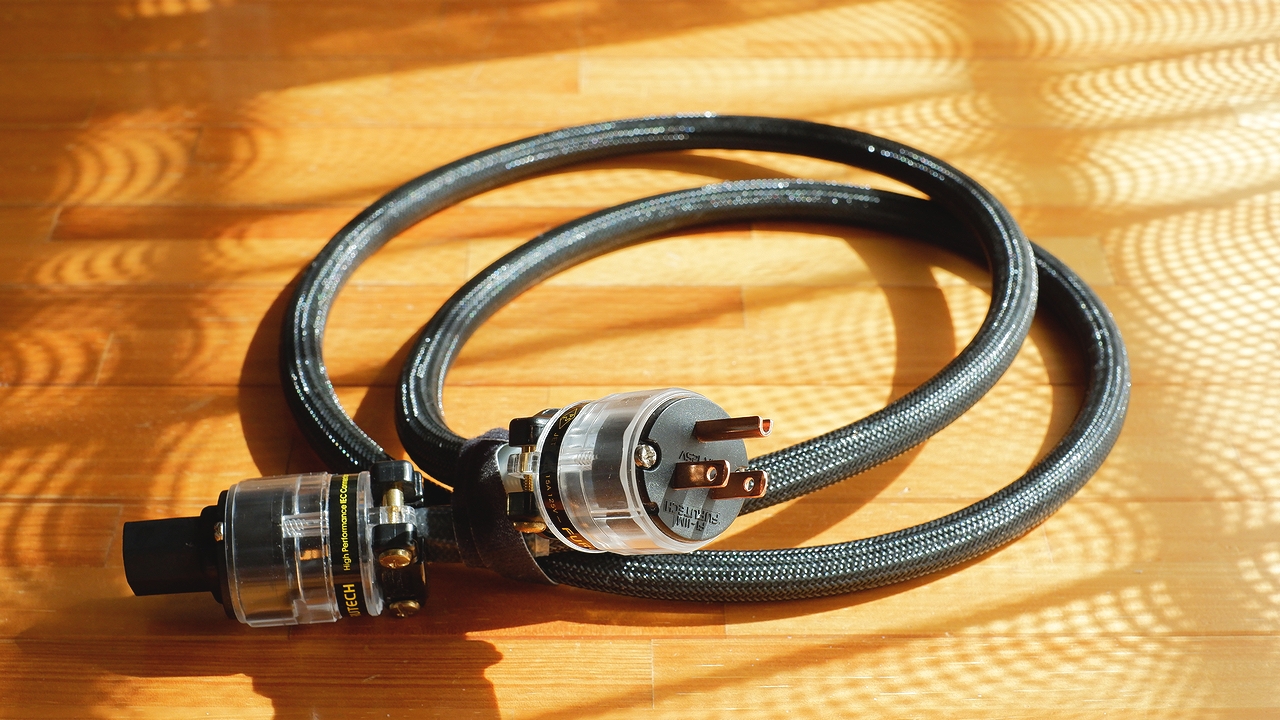
The Astoria takes its name from the London live music venue that is no more. Judging by the name, I wonder whether it was developed with classic British rock gigs in mind rather than classical music? There is something about the stylish sense of naming that I simply took a liking to — though just between us, the first thing that came to mind was The Vision of Escaflowne…
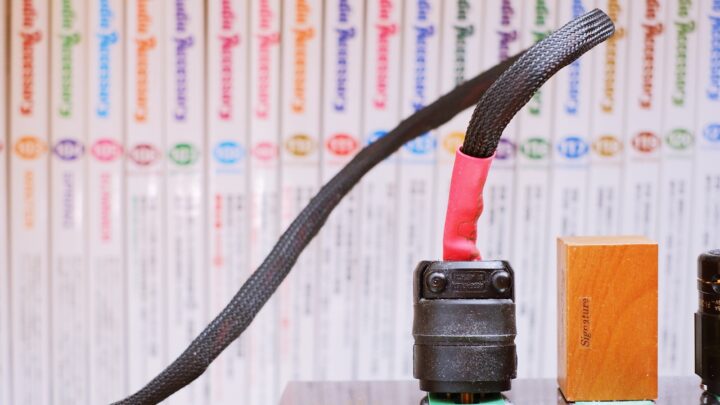
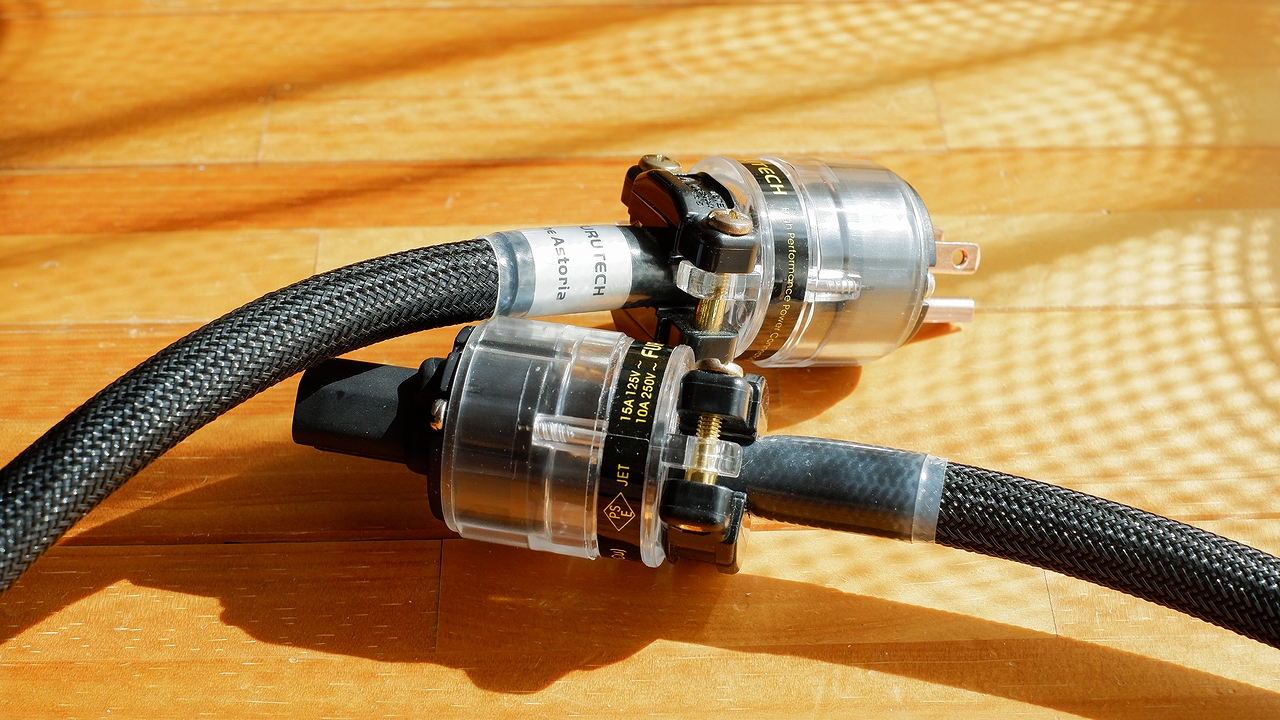
FI-11M(Cu)/FI-11(Cu) Plugs and PC-Triple C
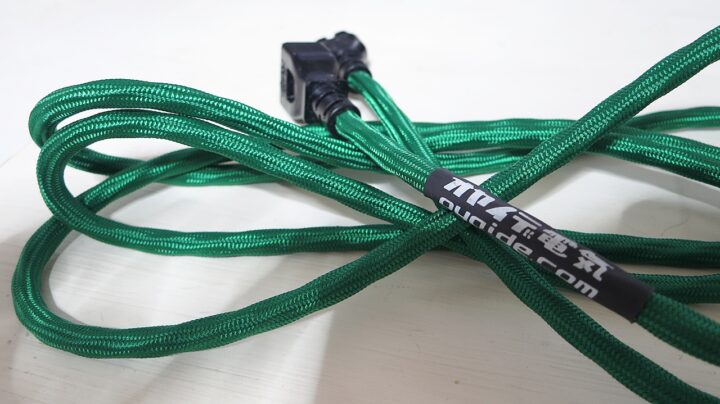
Among the power cables for audio currently on the market, The Astoria sits squarely in the entry-level bracket in terms of price, yet its appearance carries a certain refinement and sense of quality. With an outer diameter of 12.8 mm I assumed the conductors inside would be 3.5 sq, but The Astoria’s conductors are PC Triple-C / 80 strands / 0.18 mmφ, which is equivalent to 2 sq. ※ The Empire, with its 16 mm outer diameter that gives the appearance of 5.5 SQ, uses PC Triple C conductors of 45 strands / 0.32 mmφ, giving 3.6 sq. The shield is 0.12 mm OFC braid. The sheath and insulation are a special heat-resistant audio-grade PVC. The outer sleeve is nylon braid. Picking it up, it feels surprisingly heavy and rather stiff.
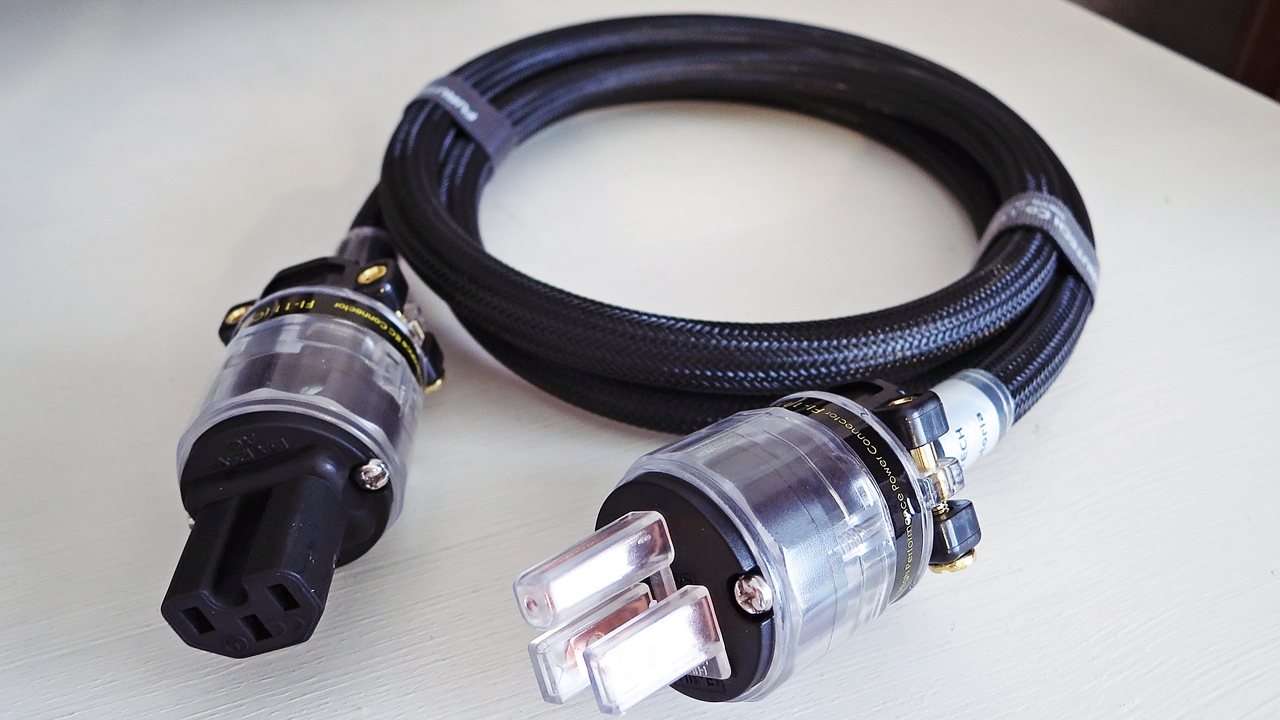
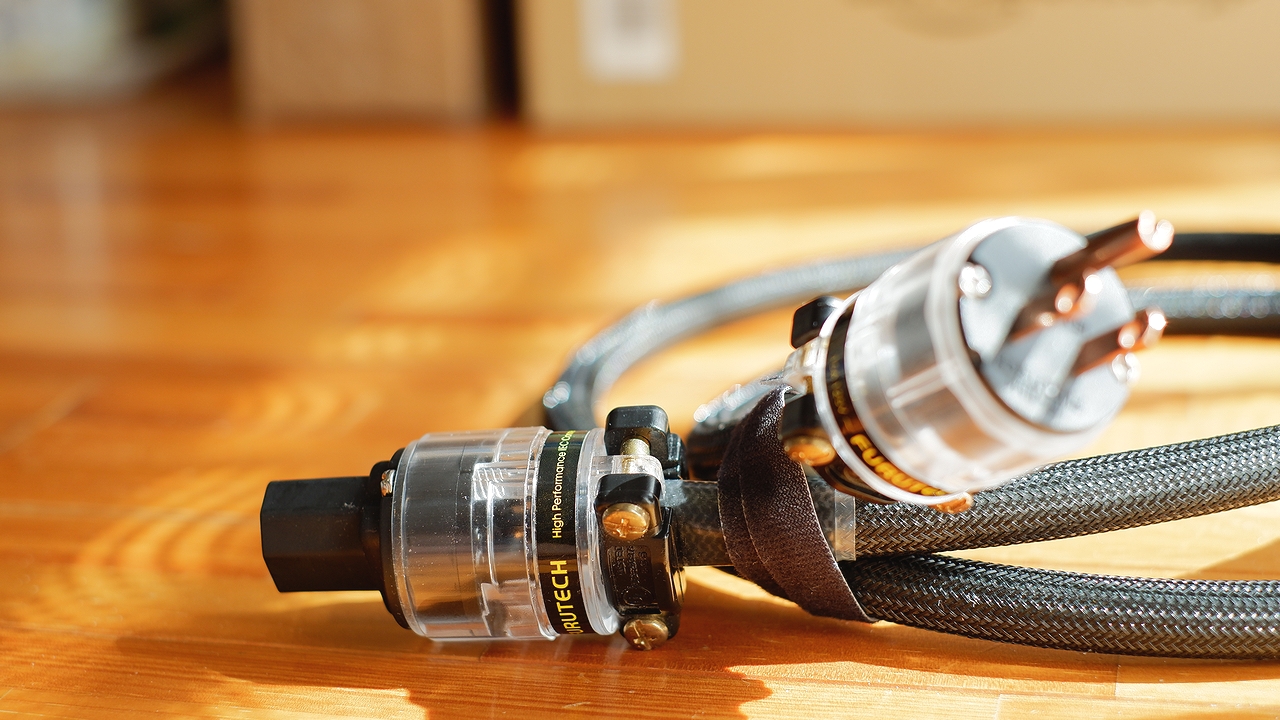
FURUTECH cables often have conductors that are on the slender side relative to the outer diameter of the cable, but from experience they are a manufacturer with a knack for producing curiously effective cables that deliver a full, weighty low end in spite of the thinness of the conductor, so there is no need to worry about the slenderness here. The Astoria uses pure copper FURUTECH “FI-11M(Cu)/FI-11(Cu)” plugs at both ends. The Empire uses the gold-plated version, “FI-11M-N1(g)/FI-11-N1(g)”. The fact that even a relatively affordable power cable can be fitted with plugs that are a class above the competition is something only the original manufacturer can achieve. Considering the cost of buying the plugs separately, the finished cable at this price represents quite remarkable value.
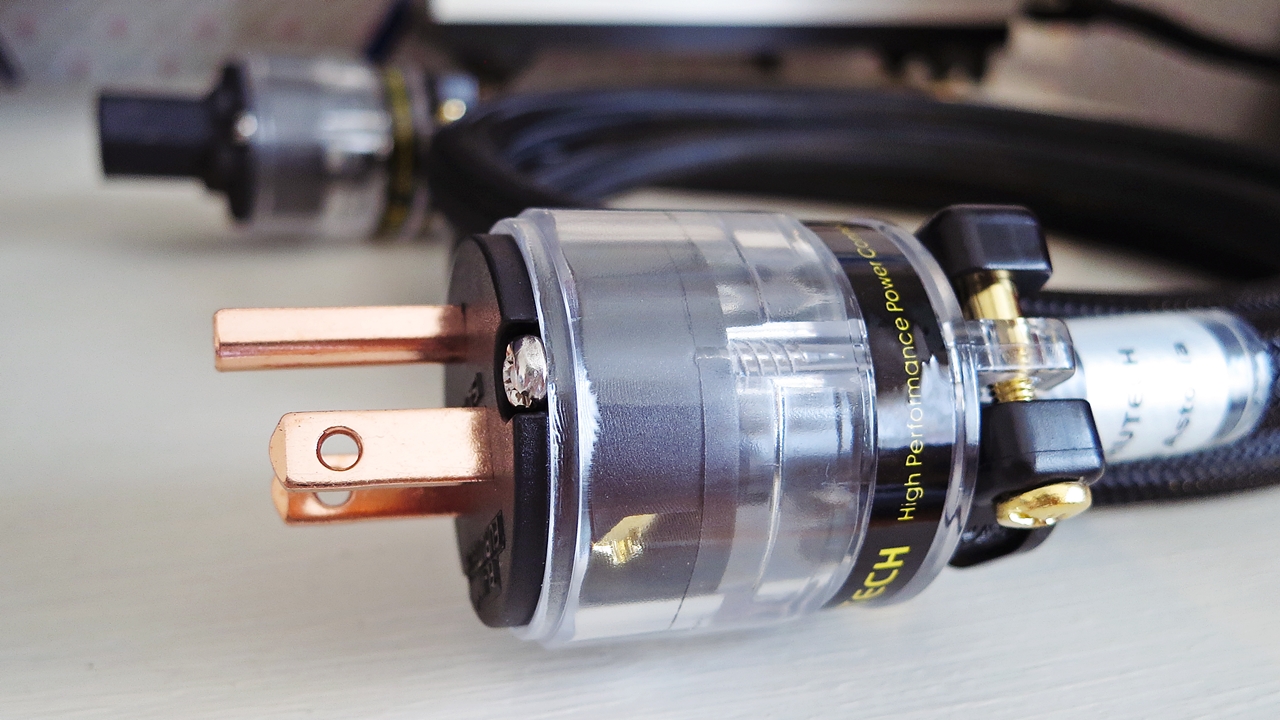
Pure copper might raise concerns about corrosion over time, but in the case of the “FI-11M(Cu)/FI-11(Cu)”, the copper is copper-plated pure copper, so even after four years the blades remain perfectly bright. There are naturally some surface marks from repeated insertion and removal, but…


 ポチップ
ポチップ
Audio Accessory magazine (issue 161) carries detailed impressions from Mr Masamitsu Fukuda and Mr Yutaka Suzuki, and reading them side by side there are some rather notable differences in how the two come across in print. Personally I went in hoping for the sound quality that Mr Fukuda’s review suggested, while harbouring a slight unease about what Mr Suzuki’s review implied — and in the end I took the plunge and bought it without auditioning it first.
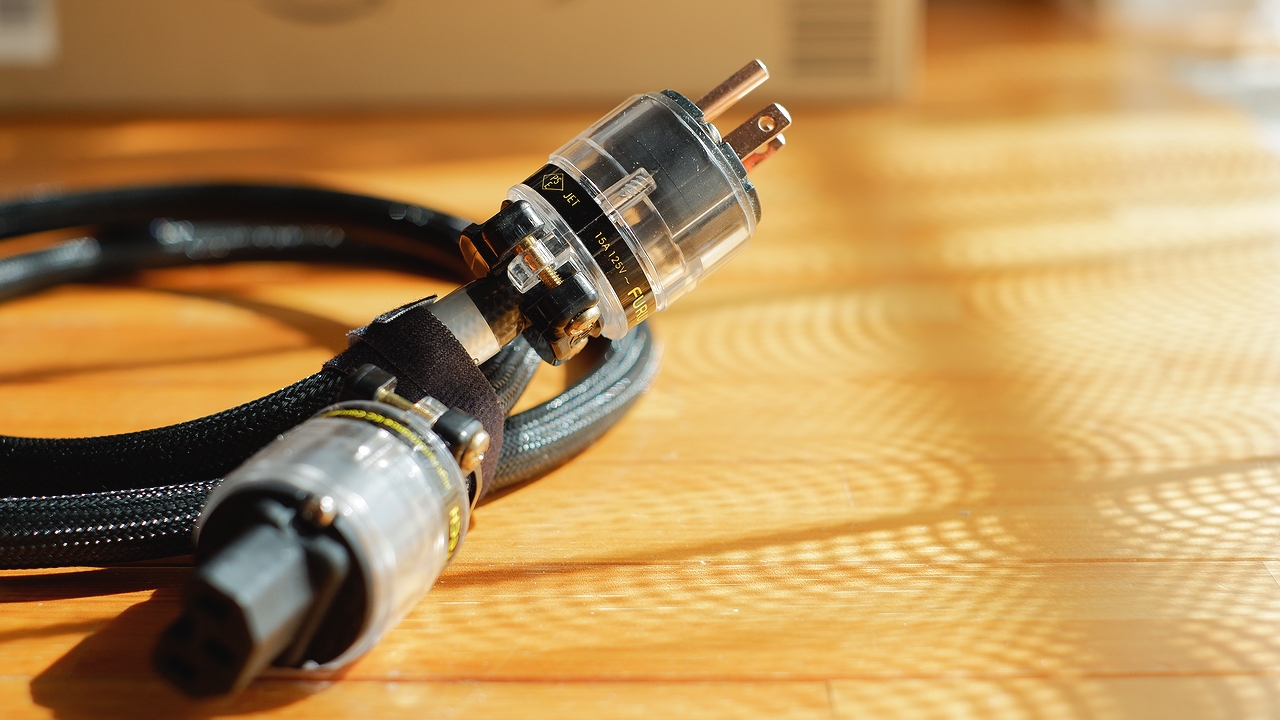
FURUTECH The Astoria Sound Review / Comparison with Absolute Power-15 Plus
I expected FURUTECH’s Astoria to be one of those colourless, transparent, high-resolution, high-speed and glittery-sounding cables that are so fashionable these days — but it is nothing of the sort. Fundamentally it has excellent musicality and a richly saturated tonal character. It carries the high S/N ratio and resolution one would expect from the latest generation of PC-Triple C as a foundation, while delivering a sound with analogue-like density and a tangible physical presence… this was genuinely unexpected. The low frequencies, and the mid-bass in particular, have a full, resonant quality and reach down with real depth. The image is tight and has a slightly crisp, firm edge to it, but I expected this to ease with initial burn-in (note: it did ease). The impression is of a cable that renders the light and shade, the nuance and shadow of music in an adult yet organic manner — one whose appeal lies in the expressive power to draw out deep, unhurried music within an energetic and lively presentation. The sound is richly coloured yet never tips into monotone; if anything, its sense of colour is abundant. The vivid, colourful expressiveness caused various scenes I had never previously noticed in familiar recordings to surface one after another, which came as something of a surprise. This is an interesting power cable capable of rendering both the shadow-rich elegance of Baroque music, the thoughts of Ravel drifting in the darkness, and the demonic intensity of Mahler.
In the mid-bass, woofer control is good — the expression is transparent and richly sculpted, yet the response is consistent and time alignment does not lag. The deep bass is not exactly lavish, but it does make itself felt to a reasonable degree. The left-hand register of the piano sounds deep and focused rather than blurred, which means the variation in each individual touch, including the right hand, is very easy to follow. I think this is a genuine strength of The Astoria that is difficult to find in other power cables at this class. The midrange is slightly heightened in tension, carrying a sense of weight and density, and the density itself is considerable. There is also no artificially enhanced outline emphasis. In its initial state there is a slight sense of congestion in terms of openness — a feeling of something pressing lightly against the eyes, so to speak — which I expected to resolve over time (note: it did loosen up with burn-in). The slightly bony character that appears accentuating the upper midrange is a detail somewhat reminiscent of the FURUTECH Absolute Power-15 Plus. In the high frequencies, the indirect sound is transparent, and the resolution is quite high as one would expect from a modern cable — but fundamentally it is a smooth-sounding cable with moderate punch, low distortion, and a tendency to remain fatigue-free over long listening sessions.
 ポチップ
ポチップ
In the Audio Accessory magazine review mentioned earlier, Mr Suzuki described the tonal character as having a matte nuance — and since there is no gold, silver, or rhodium plating adding a glittery quality, in that sense the surface texture is agreeable and non-glittery. The particulate overtones of string ensemble playing are perhaps a slight weakness here. Well, I think this is simply the sound of unplated pure copper, as one would expect. That said, there is a moisture and bloom to the hall acoustics, so it is by no means dry or truly matte — it is more of a chic smoothness with a moist, lingering resonance.
 ポチップ
ポチップ
My overall impression is that the cable is fundamentally dynamic and bright-sounding by nature, and that by pairing it with the darker, more subdued FI-11(Cu)/FI-11M(Cu) plugs, FURUTECH has succeeded in achieving a balance while lending it a sense of shadow and depth. Personally, if I were going to follow my own taste with this sound, I feel that swapping the plugs for silver-plated or rhodium-plated versions within the same FI-11 series, or the gold-plated ones used on The Empire, or perhaps a gold-silver combination, would strip away a little of the colour and raise the brightness another notch in a way that I would find even more to my liking. The temperature is on the warm side — a blood-warm, lively sound. That too was unexpected. Warm yet high-response, reasonably bright, and sitting in the high-resolution camp — that is quite a rare combination, I think.
 ポチップ
ポチップ
Mr Suzuki’s review had hinted at a narrow soundstage, which had me rather worried (the author of this miniature Hi-Fi blog is not good with narrow soundstages), but in my environment the soundstage is reasonably wide in normal terms. It is true that lateral width does not extend enormously (this I think is down to the FI-11(Cu)/FI-11M(Cu) plugs). However, the reason there is little of the claustrophobic quality where sound clumps together between the speakers is that vertical space extends naturally to a reasonable degree without the imaging floating unsteadily. As for the observation that the front-to-back depth is shallow — the sound does not lunge forward aggressively, but the view into the stage is clear, and I would consider this to fall within the range of commendable reproduction. In all likelihood, it is simply that the soundstage feels compact relative to The Empire, because the lower frequencies are less powerful. Of course, compared to soundstage-oriented high-end cables of a considerably higher class, you do start to wonder about the depth, admittedly.
FURUTECH’s stated design goal for The Astoria is “to purely reproduce fast response and speed while reinforcing the power of the mid-bass”, and I think this has been achieved exactly as intended. The conductors are a slender 2 sq inside, yet the tonal centre of gravity does not float unnaturally upward, and the mid-bass-to-bass weight and resolution — combined with a sense of speed — are at least the equal of a typical 3.5 sq cable, without any ground given away. Rather than being a cable that excels in the high frequencies, I think the appeal here lies in a midrange-to-bass contrast that punches above its class and in a rich, dynamic expressiveness. In terms of sound quality as well, compared with the differently designed Absolute Power-15 Plus, there is a clear impression of improved soundstage transparency — or rather, increased information and resolution.
 ポチップ
ポチップ
The Audio Accessory Magazine Review and The Empire
At this point in time, my impression was that, between the two reviews in Audio Accessory magazine, Mr Suzuki’s impressions were closer to my own rather than Mr Fukuda’s. The cable was also described as one that makes speakers sing — and indeed that is very much the feeling here. The sound seems noticeably louder even at the same volume position, and since the sound does not thin out when the volume is turned down, you can reduce the volume setting by three to five positions compared to before and still enjoy the music without any sense of the sound becoming lean.
When I consider the qualities Mr Fukuda mentions — delicacy in the high frequencies, musical contrast, precision of outline, high purity and freshness, a clear and expansive soundstage — I think there are other power cables from other manufacturers for which such descriptions would be even more fitting. Mr Fukuda writes that “if contrast and resolution are your priority, The Astoria scores higher than The Empire — a masterpiece-level achievement from FURUTECH”, and so I decided against taking on the larger The Empire. But Mr Suzuki’s assessment goes in the opposite direction: “The Empire has greater resolution than The Astoria, stronger contrast, and the fine details of the sound emerge with greater clarity” — so to be perfectly honest, now that I think about it, The Empire with its greater sense of scale and headroom might well have produced even better results in the author’s miniature Hi-Fi environment… only saying so now, rather belatedly. That said, with The Empire, particularly the bass apparently expands and the sense of scale in the soundstage grows larger, but at the cost of the overall sound becoming darker — so I can understand why Mr Fukuda implicitly steers readers towards The Astoria over The Empire.
Comparison with Absolute Power II-18
If I were to identify the weaknesses of The Astoria as I personally experience them, it is a cable with high response and a stage full of live energy, but it is the type that centres its presentation on the midrange to mid-bass rather than being truly wide-range and flat. The extremes at both ends fade away naturally and smoothly, but there are moments when I find myself wanting a little more crispness and detail in the highs, more notes, more breathing room in the soundstage — a greater sense of extension and openness in the upper and lower registers.
 ポチップ
ポチップ
FURUTECH describes the higher-ranking The Empire as “a cable with high resolution capable of faithfully reproducing fine detail, strong attack, high response, and an overall well-balanced character” — and since I trust the tuning sensibility and pricing judgement of the people inside FURUTECH, I imagine the difference in PC-Triple C gauge, strand count, and plating makes an audible impact that would be apparent immediately on first listening.
 ポチップ
ポチップ
Comparing The Astoria with the Absolute Power II-18 — another FURUTECH power cable I own, and one that appears to be the predecessor model to The Empire — The Astoria’s resolution is higher than the Absolute Power II-18, yet in terms of effortless body and weight, a certain ineffable high-end quality, and tonal brightness, it does not quite manage to step into the Absolute Power II-18’s shoes. It seems that the qualitative difference in the plugs at each end is hard to overcome — the Absolute Power II-18 uses FI-28(R)/FI-28M(R). In comparison, The Astoria’s frequency range extension feels somewhat miniature and a touch narrow; in terms of overall grade, my impression is that it is essentially an Absolute Power-15 Plus with dramatically improved resolution and information retrieval. I imagine that The Empire, compared with the Absolute Power II-18, would show the PC-Triple C character to full advantage with a significant leap in resolution and an overall improvement in sound quality — or so I assume. Even so, the Absolute Power II-18 has a unique tonal character all of its own, and I think it probably aims in a different direction from The Empire altogether, so I do hope it never gets discontinued.
※ Further comparative reviews of The Astoria can also be found here.
~ Summary ~
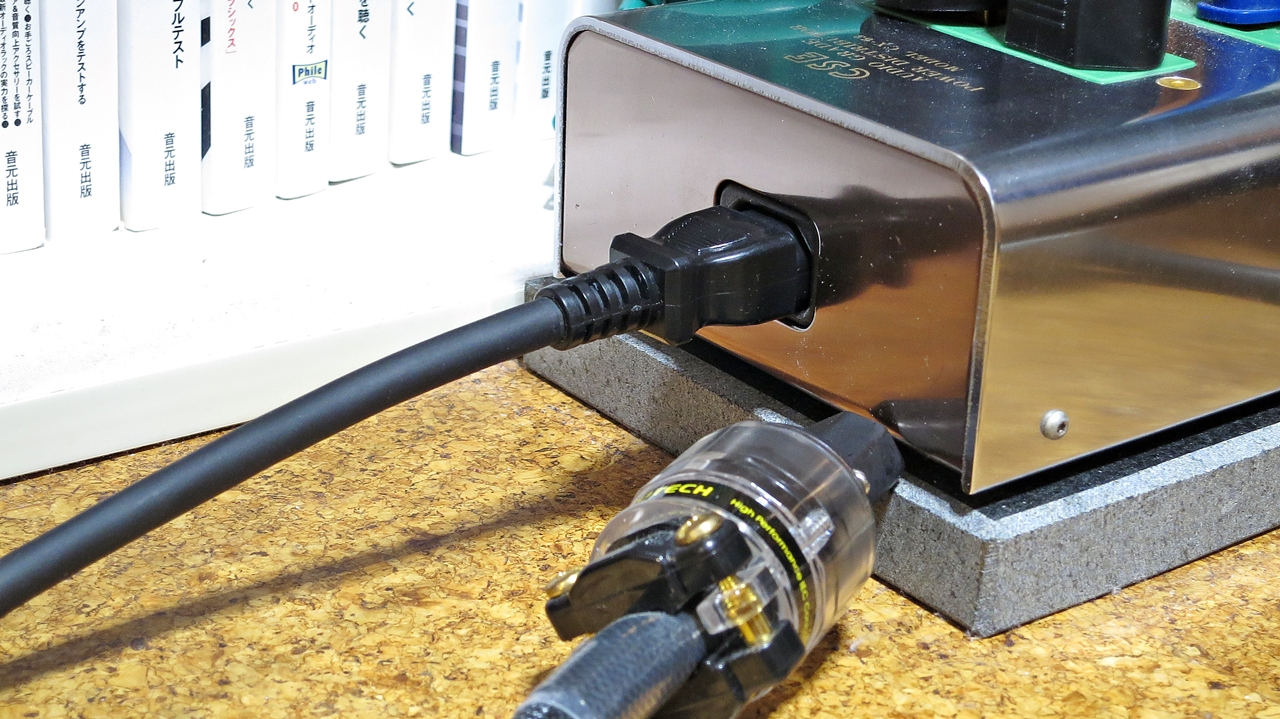
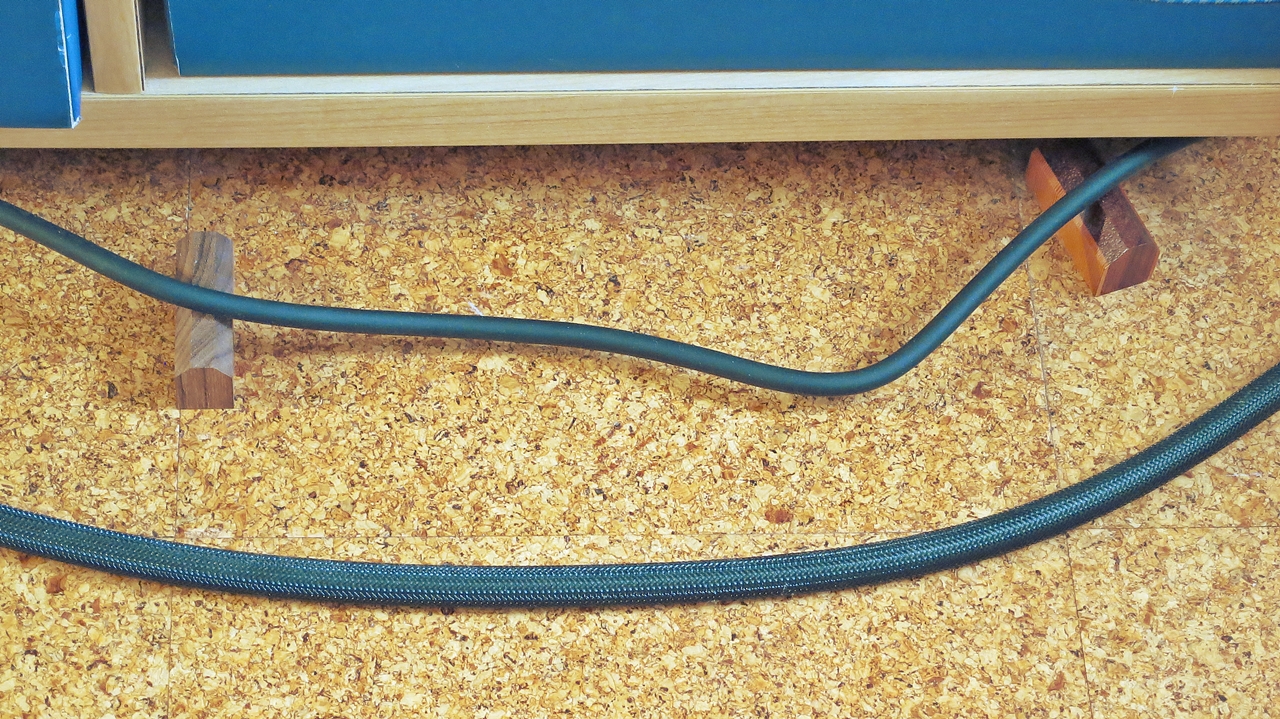
As has become a habit, I have been searching for years for the right reference power cable for the integrated amplifier, and I am frankly rather worn down by the whole process — but in the end I decided against using The Astoria in the main system and transferred it to the source end of the sub-system, where its more compact sense of scale seems a better fit. Connect The Astoria to a thin-sounding CD player or digital player and it transforms into something that combines the sound quality and density of a recent analogue record; as a means of raising the overall quality of the miniature Hi-Fi sub-system, it is quite effective. The Astoria’s richly saturated tonal character has a strong enough personality that even recordings which are distorted, glassy, dry, or rough-edged to the ear end up coated in an analogue-flavoured density and smooth surface texture, making them altogether more enjoyable to listen to as music — and that is no small benefit.
 Category:FURUTECHCategory:Power Cables & Power Accessories

Auto Translated by CS4.6