【Comparative Listening: 23 Compact Speaker Models】
Part 1|Part 2
My first in-store listening report in quite a while. This was actually written around two years ago and had been sitting offline unpublished for various reasons, but since many of the models covered are still available new, I’ve decided to put it up now, late as it is.
This is a general overview compiled across multiple visits to several shops, spread out over time, with each speaker auditioned only briefly — so please note that the reviews are not all based on comparisons made in the same environment. As these were auditioned at consumer electronics retailers, the setup, speaker cabling, and selector switching arrangements meant conditions were far from ideal for drawing out the true potential of the speakers, amplifiers, or players, and I was doing my best simply to catch the essence of each.
These are purely subjective impressions from one enthusiast, and there is every chance that even I myself would reach quite different conclusions in a properly set-up listening environment. With that firmly in mind, please read this as something too casual to really count as a reference — just enough to give a sense of general tendencies. When it actually comes to purchasing, please try to audition for yourself and only buy once you’re satisfied.
Also, the ★ ratings here reflect how much I personally wanted each speaker rather than any recommendation in a general sense — they are heavily influenced by tonal preferences and value for money, and should not be taken as any sort of objective quality assessment. There were plenty of other speakers that received zero stars, but I didn’t feel they were worth writing about, so the fact that something appears here with even a single star means it touched something in me.


 ポチップ
ポチップ
As for the equipment used: the first half was an all-British combination — integrated amplifier AUDIOLAB 8200A + CD player ROKSAN Kandy K2 CD. From the KEF section onwards, a French combination — integrated amplifier ATOLL IN100SE + CD player ATOLL CD100SE-2.
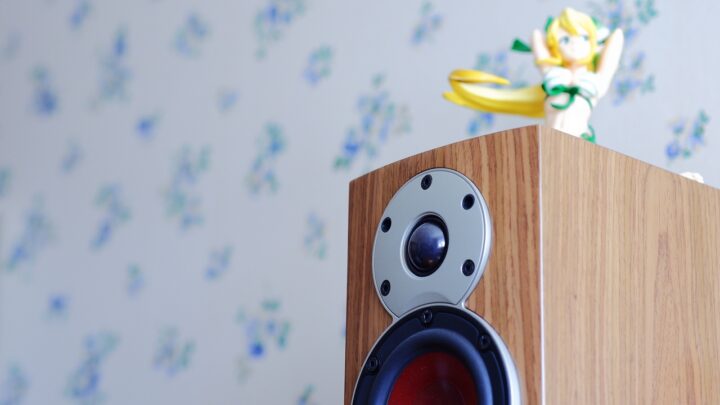
DALI ZENSOR1
 ポチップ
ポチップ
★★★ DALI’s most popular budget model, which I reviewed previously as well. A contemporary woody, slightly dry tonal character — there are moments where the direct sound quality reminds you that this is, after all, entry-level, but the natural way the sound opens up and the wide soundstage it presents are genuinely appealing. Given the price, it’s easy to see why it became such a hit — this is a beginner’s speaker that lets you taste the essence of European sound for very little money. Personally, I find myself wanting to keep the DALI ZENSOR PICO — a size smaller than the Zensor 1 — close at hand if at all possible. Though the price hikes have gone a bit too far…
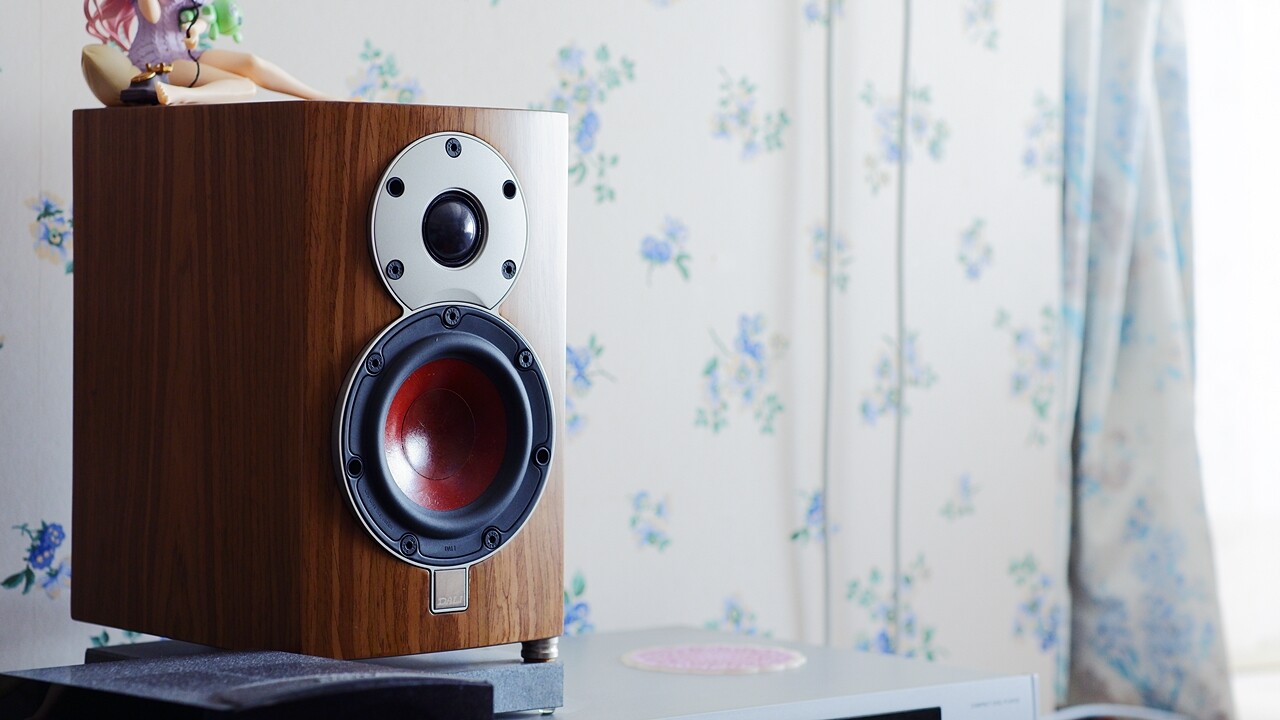
DALI MENTOR MENUET

★★★★★ The way the MENTOR MENUET presents sound is entirely different from the Zensor — the soundstage is not natural but distorted in a fisheye-lens fashion, with images lined up in the foreground. The tonal character is similarly DALI-esque and woody, but here it is brighter and wetter, with an extraordinarily realistic sense of texture for woodwind instruments, plucked strings, and acoustic instruments generally. Female vocals are beguiling and life-sized. It feels like listening in a small concert hall with good acoustics, seating around 300 to 500 people. Above all, the musicality is among the highest of any speaker I heard in this session. The small enclosure does mean the upper bass is tuned to bloom a little to add a sense of body, so real deep bass is in short supply, and the distorted soundstage does mean it can be particular about source material — but in its ability to bring music to life with such richness of texture, this felt like a speaker I’d very much want to bring into a secondary desktop system. (Note: from autumn 2015, the model was given a minor revision and renamed simply the MENUET.)
B&W 685S2
 ポチップ
ポチップ
★★ I used this initially as a benchmark for comparison purposes. The thin, wire-like tweeter character that is so typical of B&W, the resolution that punches above its class, and the wide frequency range are all there. However, there is a general sense of cabinet colouration from insufficient rigidity along with a certain roughness, and this does leave a clear impression that differentiation from the higher models is very deliberate — the overall result feels appropriately priced, no more. The S2 revision brought an oddly inflated list price that has done away with the original value proposition, and if you’re going to invest in B&W at all, I would recommend pushing up to the CM series or something a step further up the range.
Ortofon Kailas SS200
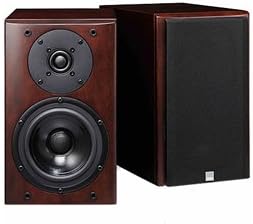
★ The traditional Ortofon sound is alive and well. Warm, unhurried, with a pleasing kind of muddiness — well suited to older analogue recordings and, in classical terms, to string music in particular. On the surface it has something of a European flavour, but there is still something unmistakably Japanese about the sound.
Fundamental SOULNOTE SS1.0
★ The price tag was a shock. Far too expensive to fit within the concept of a compact desktop system, and yet there is something about it that pulls you in regardless. This is based on the assumption that a side-by-side retail audition like this is probably drawing out no more than half its true potential — but the looks alone are extraordinary, and as a full-range driver design the sound on its own has a distinctly individual tonal character. Rather than talking about straightforwardness or anything of that sort, the way it speaks is thoroughly Japanese, and I think it is oriented towards Japanese music by nature. It could well suit not only jazz but also anime songs, pop, and all sorts of things. That said, the sonic philosophy of SOULNOTE is not something you can achieve by dropping in just one of their speakers — the thinking runs consistently throughout, and a complete SOULNOTE system from source to speaker is absolutely the right way to approach it. If you did that, it would be the ultimate secondary system. I do wish they’d bring out a successor to the small, affordable sm1.0.
British reissue: Stirling Broadcast LS3/5a V2
ポチップ
★★★★★ I haven’t directly compared the various LS3/5a reissues against one another, but as far as I can hear, the Stirling Broadcast is genuinely the LS3/5a sound. Being the LS3/5a, you can’t expect extension at the top or contemporary-style resolution, but what you get is dense, warm sound with a stable, well-centred image that doesn’t float upwards. And you can have a properly conditioned LS3/5a at this price — so there may no longer be any need to insist on the antique originals, many of which are half broken by now. Whether you find value in the retro LS3/5a sound for listening to older analogue recordings will naturally affect how you rate it, but this was a speaker I found myself wanting quite straightforwardly.
ポチップ
Spendor Classic SP-R S3/5R2
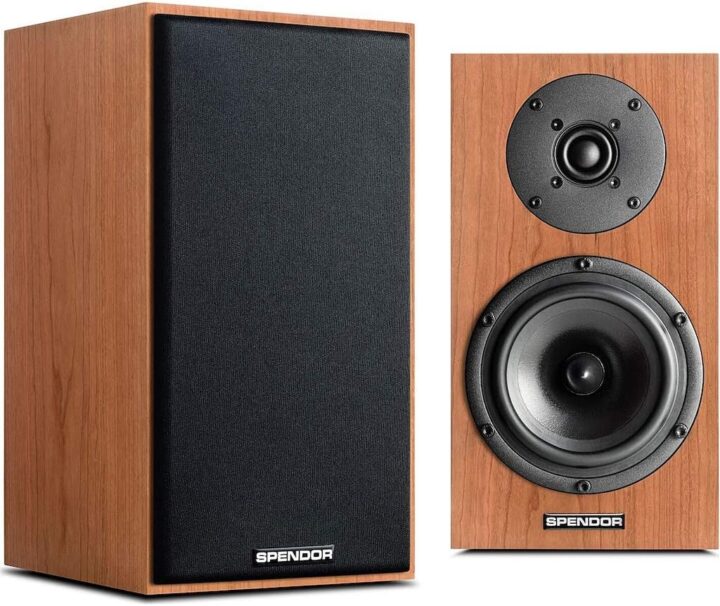
★★★★ Unmistakably Spendor — a shadowed quality that calls to mind the colour of English skies. Like the LS3/5a V2, the S3/5R2 has an easy confidence to its sound, and rather than tilting towards the tweeter as budget speakers tend to, it starts from the lower registers of the woofer, which gives it that sense of being a proper upper-tier speaker. Tonal preferences aside, when you compare it against speakers in the vicinity of ¥100,000, the S3/5R2 operates a class or two above in terms of sound quality, pure and simple. Its distinctive slender, crisply articulate textural quality is a perfect match for early music. And plucked strings — guitar in particular — seem to suit it well across the full range from early to contemporary repertoire. My earlier review is here.
KEF LS50 Standard
 ポチップ
ポチップ
★★ The standard version successor to the LS50 Anniversary model released for KEF’s 50th anniversary. A sound that makes full use of the metallic-tinged Uni-Q driver — the music comes forward. Resolution is high, but the soundstage presentation has a strong barrel-distortion quality, like a wide-angle lens, which gives it a very individual character. The potential here seems enormous, but getting it to sing without distortion appears to require an amplifier well above the speaker’s own price point, and judging this speaker’s true worth from a side-by-side retail display — taking setup, combination, and everything else into account — seems extremely difficult, if not simply impossible. In the right environment, with someone able to drive it properly, this could easily be a ★★★★★ speaker.
KEF R100
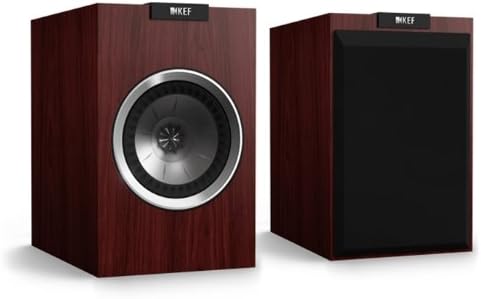
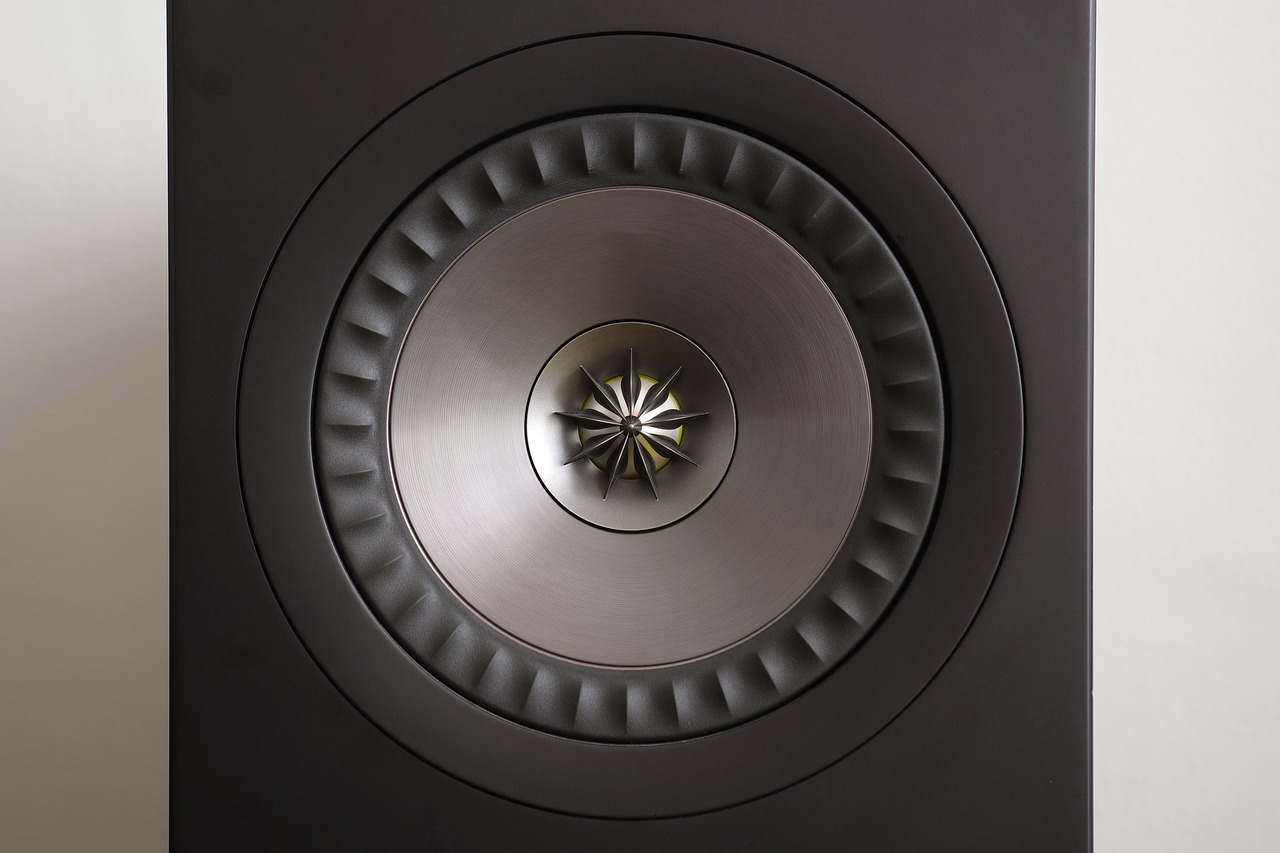
★★★ The coaxial two-way Uni-Q driver’s bright, sharp character combines well with the traditional KEF warmth and moist cabinet resonance in the mid-to-low registers, leaving a quite favourable impression overall. Looks aside, the sound quality is the familiar, natural-sounding KEF of old, and personally I prefer the R100 to the LS50. For those who don’t have the skill or the system budget to really optimise placement and matching, the R100 would probably yield good results more easily and more reliably, wouldn’t it?
KEF Q100
 ポチップ
ポチップ
★ The Uni-Q driver’s distortion gives the bright treble an even more prominent feel here. Compared with the R100, there’s a dryness, and the sound quality feels commensurate with the price. If I were going to settle for the Q100, I’d rather make every effort to stretch to the R100.
DYNAUDIO DM2/6

★★★ Distinctly Dynaudio — high resolution with a somewhat woody, dry tonal character. The tweeter phase is accurate, but tonally the woofer tends to dominate. It has a kind of high-end car audio balance to it — solid and stable for its size. That said, having heard various more impressive Dynaudio compact bookshelf speakers in the past, the DM2/6 itself doesn’t leave a particularly strong impression.
This has run rather long, so the second part will follow in the next entry.
【Comparative Listening: 23 Compact Speaker Models】
Part 1|Part 2
Auto Translated by CS4.6