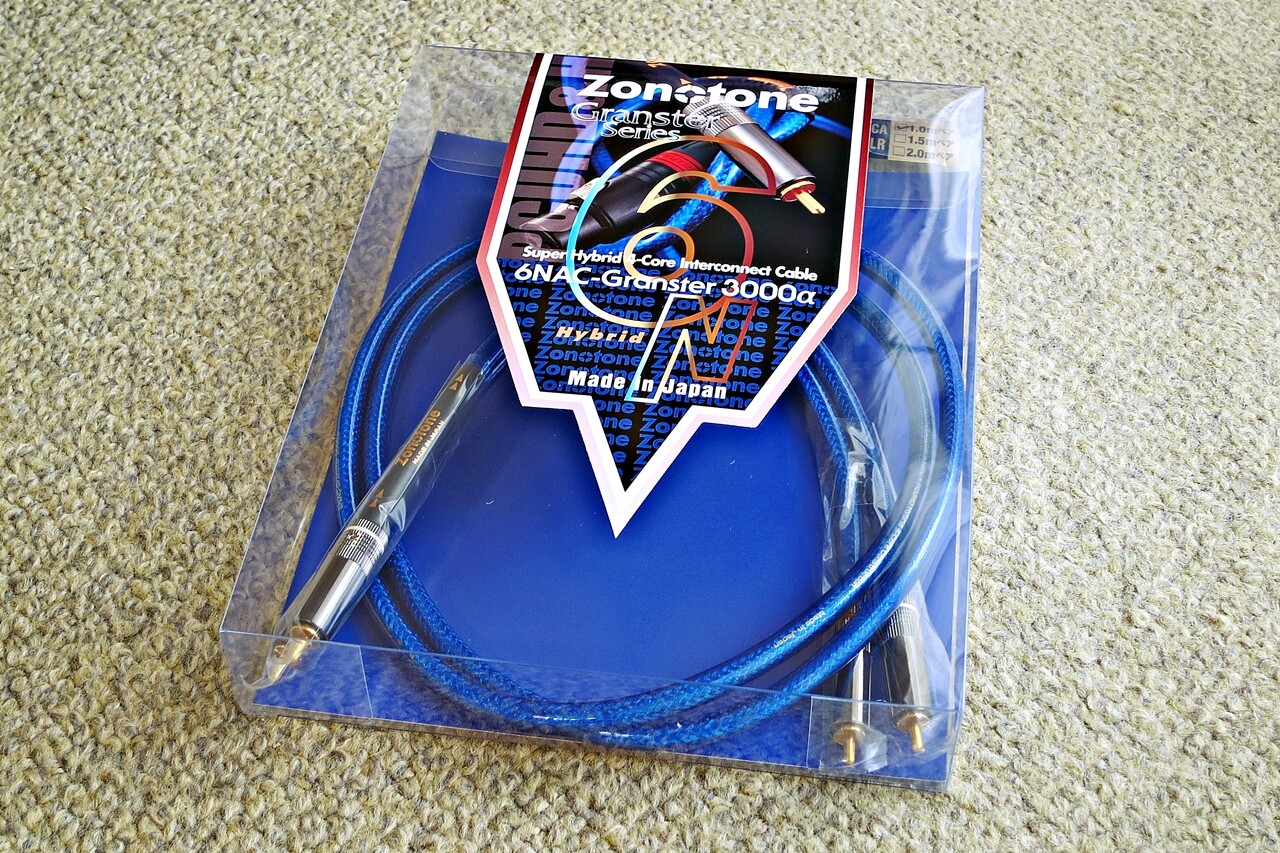
I had applied for Zonotone’s review monitor programme in early summer, and — remarkably — I was actually selected! Thank you very much, President Maezono. You may not be reading this, but I’d like to express my gratitude here all the same m(__)m. And so, I have been using the cable I received, the 6NAC-Granster 3000α, since the end of August. After roughly two weeks of burn-in, my impressions have shifted somewhat from those initial ones, so I’d like to write a detailed review that touches on that as well.
As it happens, I had also entered the new product monitor giveaway back in 2012, but was not selected at that time — so this was perhaps a case of second time lucky.
The monitor giveaway this time featured four new RCA cable models
Silver Granster AC-1001α


 ポチップ
ポチップ
6NAC-Granster 2000α
 ポチップ
ポチップ
6NAC-Granster 3000α RCA ※The model I received
 ポチップ
ポチップ
6NAC-Granster 3000α XLR
 ポチップ
ポチップ
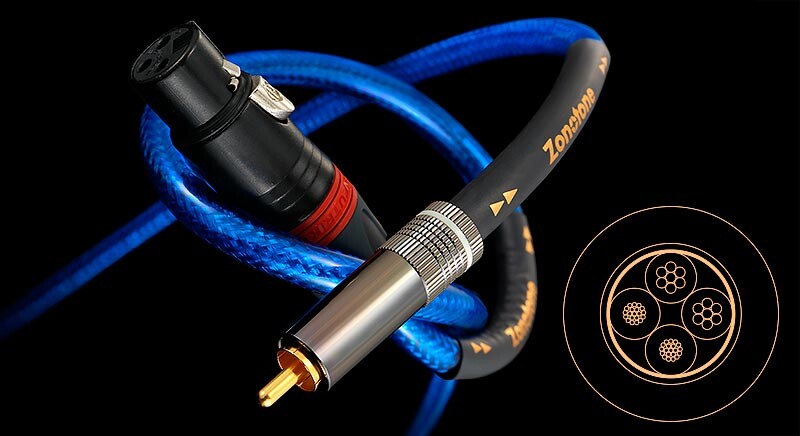
The entry-level Silver Granster AC-1001α uses a four-type hybrid of silver-coated OFC / HiFC / PCUHD / OFC in a 0.78sq two-core double-shielded construction. The 6NAC-Granster 2000α uses a four-type hybrid of 6NCu / HiFC / PCUHD / OFC in a 0.78sq multi-strand two-core double-shielded construction. The 6NAC-Granster 3000α uses the same conductors as the 2000α but doubled, in a four-core configuration. The XLR balanced version uses XLR plugs made by Swiss manufacturer NEUTRIK.
Zonotone 6NAC-Granster 3000α — Sound Quality Review
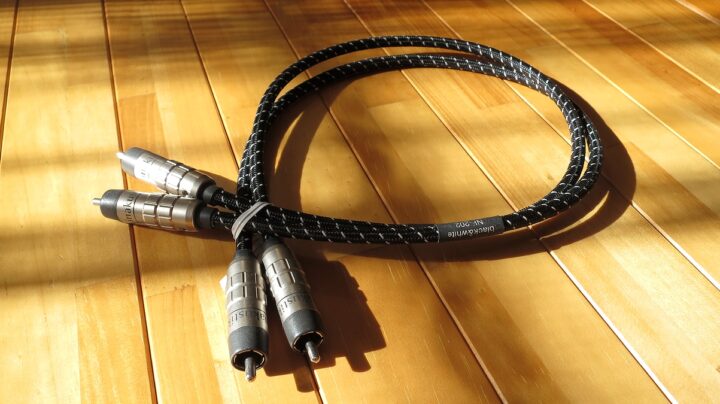
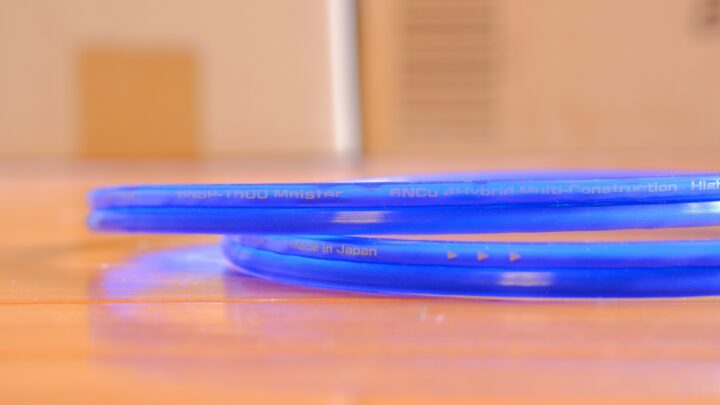
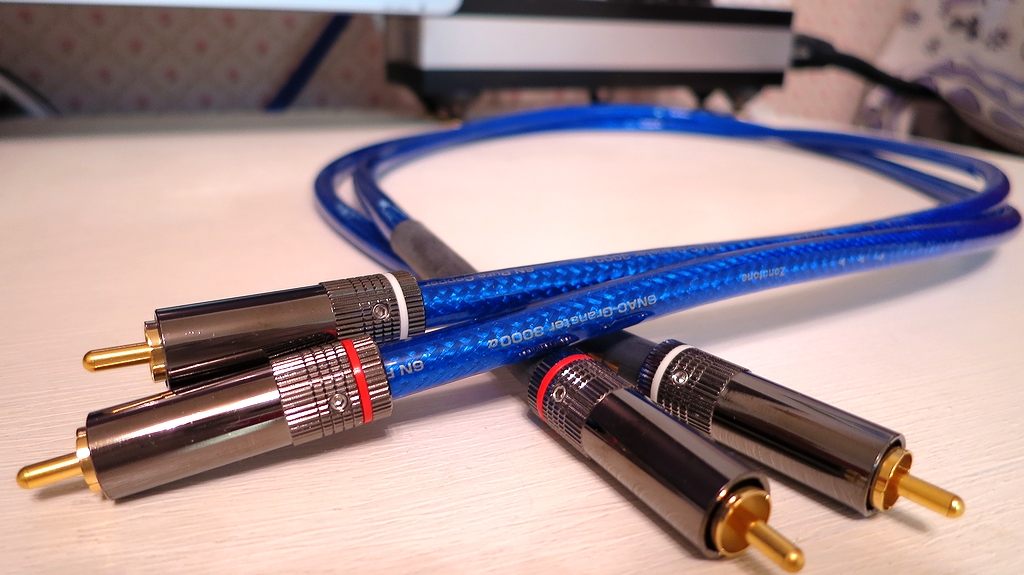
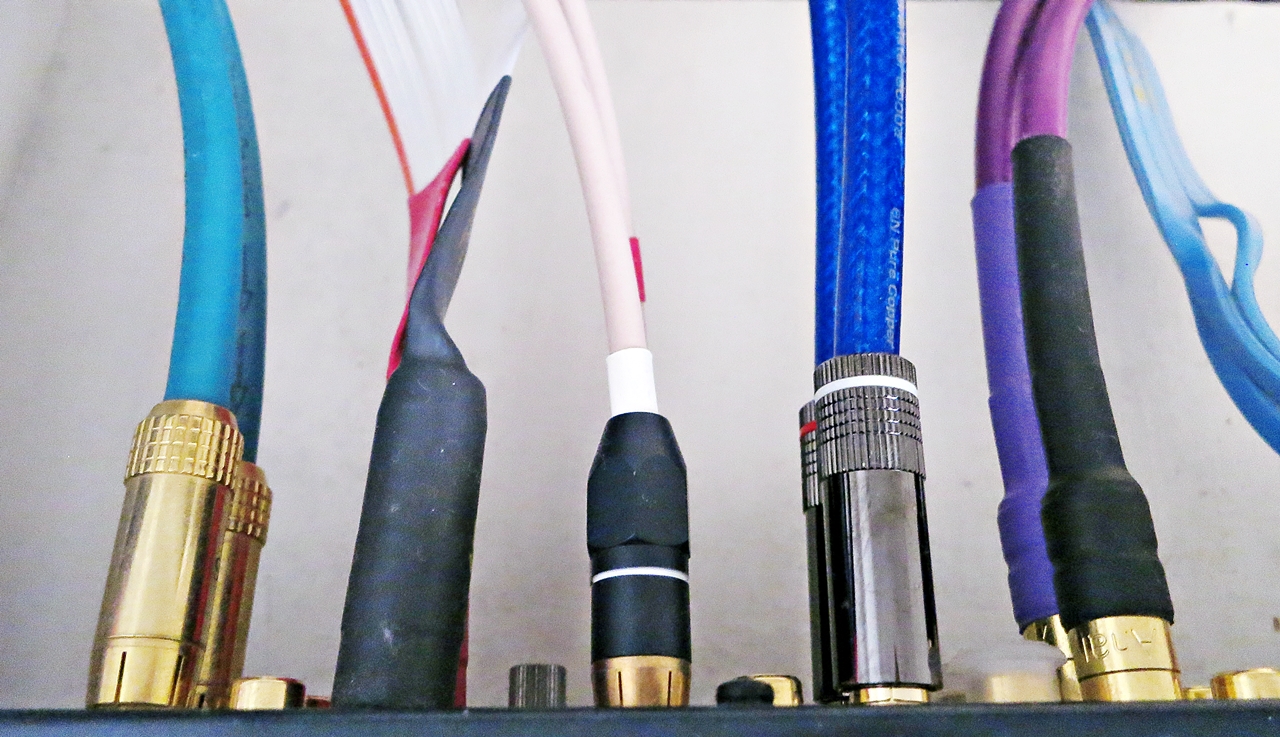
Here is what the 6NAC-Granster 3000α looks like. The previous model, the 6NAC-3000 Meister, had a rather subdued dark-coloured sheath, but the new model has been updated to a translucent blue sheath — beautifully see-through and very Zonotone in character. The RCA plugs are Zonotone originals and have a premium feel, though they are not of the collet-chuck type, so the contact grip is on the gentler side. In terms of overall quality, I’d say it’s a sensible and inoffensive design for its price range. Both the RCA and XLR versions are also available in a single-cable packaging under the name 6NAC-Granster 3000α AV, aimed at home theatre use.
First of all, I connected the 6NAC-Granster 3000α between the ONKYO C-S5VL and the TAG McLaren 60i — a pairing I had been agonising over in terms of RCA cable choices — and put some music on. And oh my, this was unmistakably Zonotone. It somehow reminded me of Godiva chocolates (don’t ask me why). In Hi-Fi terms, it has an analogue-like character that “stands apart from the thin, contemporary hi-res sound”. Musically, it is a thoroughly straightforward sound that “portrays the very heart of the music honestly”. This has been true since the Ortofon days, but Maezono-san’s sound has a quality that is slightly off-axis from the high-resolution, wide-range, transparent aesthetic typical of Japanese Hi-Fi — there is something in it that speaks the same language as overseas cables. Given that the somewhat bass-light frequency balance of the C-S5VL no longer bothers me greatly with this cable, I imagine that pairing it with a CD player or amplifier that is inherently strong in the bass would make the drop and weight of double bass and drums hit you squarely in the chest. ···Particularly for jazz listeners, that sort of presentation is surely the right way to go.
The tonal character becomes progressively more mellow and warm as you move from the midrange down into the bass. In terms of bandwidth, the frequency range feels perhaps very slightly narrow for this class? Going through the bands: the bass has depth and genuine low-end extension; the midrange has tight imaging and a sense of density, yet it is not overly hard — rather, it is analogue in quality. In the upper midrange there is something like light filtering through, a sense of accent, while frequencies above that are actually rather restrained. Most of all, the cable’s greatest strength lies in its ability to draw the listener into the music. With orchestral music, height in the soundstage is somewhat limited, but the bass is full-bodied, and the strings have a steel-string-like incisiveness where the fundamental tone is prominent — yet, curiously, there is no sense of distortion whatsoever, and the body resonance sounds entirely real. The timpani plunges deep and lands with a heavy, weighty thud.
The soundstage is not particularly wide either vertically or laterally, but imaging is stable, without phase scatter in the vertical axis, at a depth of roughly just behind the plane of the speakers. That lack of vertical phase scatter is actually quite an important point. It reminds me slightly of that moment of surprise I had when listening through a Sonus Faber Cremona M paired with an Accuphase separates system — though that was, of course, the higher-grade 7NAC-Grandio 07, so a direct comparison would no doubt reveal considerably deeper depth of field. Either way, this is not the sort of simplistic sound that just hurtles aggressively at you from the front.
 ポチップ
ポチップ
The 6NAC-Granster 3000α has a character that points in a completely different direction from the C-S5VL’s light, bright, fresh, and sensitive sound — combined together, the result takes on an uncharacteristic, faintly European CD player sort of tonality. Those who love the ONKYO sound may well raise an eyebrow, but for anyone who has found it a touch too bright or lacking in depth, I think this cable carries a strong enough personality to actually turn those perceived weaknesses around. Connecting it to the sub-system — CREEK CLASSIC CD and EMF Sequel2 — the midrange imaging gains further density and richness. The warm-natural-meets-natural tonal match works well, but with the EPOS speakers which are already fairly strong in the bass, the midrange-to-bass thrust and the assertiveness of each individual note become so pronounced that it occasionally ceases to be background listening material — in the best possible sense.
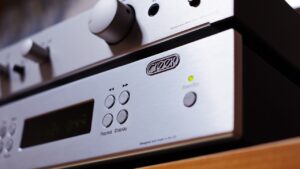
Perhaps owing to the hybrid conductor construction, the tonal quality is distinctive in a particular way: the direct sound is analogue — slightly dark, warm, and richly textured, reminiscent of vinyl — while the reflected sound, on the other hand, is lower in temperature. To put it the other way round, there is a sense of passion residing within a cool space. Zonotone’s tonal character has this rare duality where heat and coolness coexist, so pinning it down in words as either “warm” or “cool” is genuinely difficult. ※ My own instinct would be to describe it as fundamentally warm.
6NAC-Granster 3000α RCA — After Two Weeks of Burn-in
After two weeks of burn-in, the sound changed considerably — and in a good way. The roughness and hardness fell away, leaving a smooth, sensuous, warm, and richly hydrated tonal quality. The somewhat dark and melancholic character is not something you would ever guess from the glittery, youthful appearance of that blue jacket. The organic quality of the midrange and bass became more pronounced than at the outset, and the emotional and musical persuasiveness seemed to deepen further.
Straight out of the box, beyond the straightforward analogue sound, there was a faint quality lurking in the upper midrange of musical tones — something that reminded me of, say, the character of an aluminium dome tweeter, or a jazz piano sort of flavour in the right-hand register — which I personally rather enjoyed and found quite exciting. But after about a week of burn-in, it had become thoroughly mellow, settled, and quiet. So, on a whim, I tried reversing the direction of connection — opposite to the specified direction — and that sense of light filtering through returned. In my main system with the ONKYO C-S5VL, the reverse connection seems to suit better than the specified direction. That said, in the sub-system with CREEK + EPOS, the specified direction sounds straightforwardly better — so this is entirely system-dependent. Feel free to try it as a little tweak if you’re curious…
Comparison with the Previous Model: Zonotone 6NAC-3000 Meister
My apologies — this is not a sound quality comparison. In terms of appearance, the 6NAC-3000 Meister had a dark-coloured cable sheath, whereas the 6NAC-Granster 3000α now has the transparent, sparkling blue jacket familiar from Zonotone’s cut-to-length speaker cables. It looks similar to the previous lower-tier model, the 2000 Meister 6.5NAC-2000MEI. The new model’s handling is quite normal — not particularly stiff. As for the four-type hybrid conductors: the previous 6NAC-3000 Meister used 6N copper and OFC alongside PCOCC (now discontinued) and silver-coated OFC, both of which have been dropped, replaced in the new model by HiFC and PCUHD.

Also, the previous model used the same four-core star-quad construction, with two types of conductor arranged diagonally, whereas the new model uses a parallel arrangement — the same as the 7.6N·AC-4000 Meister. The plugs have also been changed to the same ones used on the 7.6N·AC-4000 Meister. The redesigned sheath makes the visual impression bold and youthful, yet the actual sound is quite grown-up and sophisticated — so if you pick it up based on looks alone, that blue jacket may leave you rather pleasantly caught off guard by how mature the sound turns out to be.
Compared with the Zonotone AC 6NPS-3.5 Meister Power Cable
The analogue-like tonal character and the general direction of the sonic presentation are broadly similar between the two. However, the analogue-esque roughness I notice with the AC 6NPS-3.5 Meister is less present here. That is probably just the nature of an RCA interconnect compared to a power or speaker cable, but it may also be a sign of evolution with the new model. On the other hand, a sharper, more incisive quality is something I associate more with the AC 6NPS-3.5 Meister. In return, the 6NAC-Granster 3000α shows no trace of the tendency towards sibilant smearing in the upper midrange that I had previously noted.
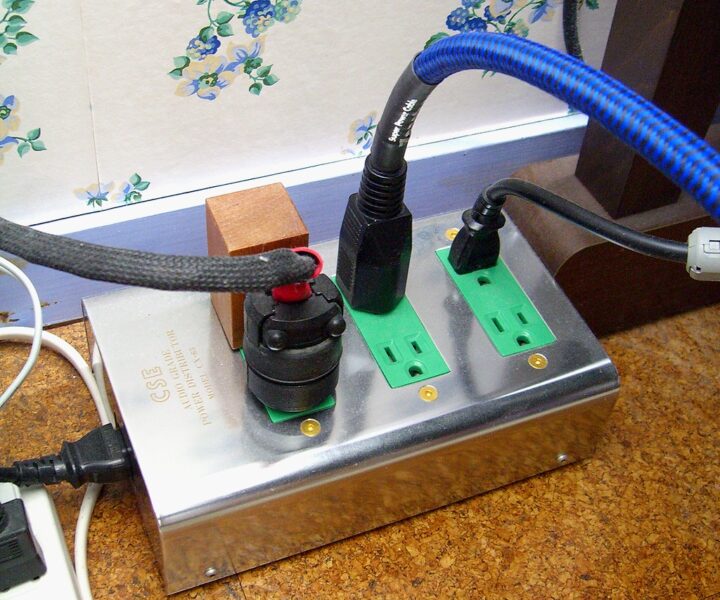
I have been using the power cable 6NPS-3.5 Meister as the mains cable for the CEC TL5100Z for the past few years now. ← This has turned out to be a better tonal match than I expected, neatly tightening up the slightly over-bloomed imaging that is a characteristic weakness of belt-drive machines. The tonal character of a CEC belt-drive and the tonal character of Zonotone make for a marriage of analogue-like player and analogue-like cable — a collaboration in shared direction that I find genuinely pleasing.
~ Summary ~
The upper-midrange character is something like a seasoning — a touch of spice — but the cable’s essence is dominated by a deep, somewhat dark tonality. The midrange range and sense of dynamic contrast are, perhaps surprisingly, held back with a certain restraint, and what defines this cable is a high-density portrayal that draws the listener into the deeper layers of the music within a composed and unhurried flow. It is an analogue-like, shadow-rich world of its own, full of dense atmosphere — like the play of light and shadow in an oil painting faded gently with age. A calm, grown-up sound, one might say.
Acoustic Revive, AET, Kaiser Sound KOJO Technology SAEC Zonotone — you can compare the sonic differences between all of these here.
 ポチップ
ポチップ
As for the “dynamic and overwhelmingly energetic” claim on the packaging — well, in the sense that the density is high and the bass is abundantly present, one could perhaps say that is not entirely wrong. That said, and contrary to what the appearance might suggest, there is a certain propriety and refinement to the sound; it convinces through a mature authority, and it is not the sort of boisterous, thick-fisted, in-your-face presentation that simply rams force at you. Its strength lies, first and foremost, in depth and persuasive power. In terms of source material, jazz would seem the natural fit — and even then (as with classical music), I think it suits older analogue recordings rather better than high-resolution releases with wide-range transparency. And this kind of sound is, perhaps surprisingly, also quite well suited to Baroque music: the high strings of harpsichord and Baroque violin are sharp and clear, yet without any unpleasant distortion in the upper harmonics, which makes it very well suited to long, unhurried listening sessions.
Using the 6NAC-Granster 3000α adds a quality reminiscent of a fine analogue pressing to the sound of CD and SACD — yet it manages to reconcile that analogue density with a degree of modern resolution and soundstage, bringing together both worlds in a single answer that represents Zonotone’s carefully considered balance. For those who have never known the appeal of analogue sound, or who are firmly in the pure-digital camp with no need for any old-fashioned tonal sensibility, this may perhaps be a cable that leaves you wondering.
Zonotone’s sound feels, at its core, tuned more for the deeply committed music lover than for the Hi-Fi enthusiast. The spatial presentation is not of the perspectival, expanded-soundstage variety — rather, it begins first and foremost with living, breathing images, and the space unfolds from there. Whether with classical or jazz, it seems to show its true strengths increasingly with the great recordings and older analogue sources. It is suited, one might say, to those who wish to sit quietly every day with a large collection of records and CDs, rather than those who pursue the visual sense of resolution and three-dimensionality in modern audiophile releases.

In the four-core 6NAC-Granster 3000α that I reviewed this time, the flow of the sound runs deep into the bass, and that bass-dominant quality means the upper-midrange character remains only the faintest touch of seasoning without crossing over into distortion — and that, I think, is the key. In the case of the 6NAC-Granster 2000α or Silver Granster AC-1001α with their half the conductor cross-section, I would expect the bass weight to be more moderate, with the upper-midrange brightness — that bright, ringing, sparkling quality — brought forward more clearly. Therefore, for systems that already have excess bass or a muffled character, or where you want to add some openness to the mid and upper registers, I would suggest considering the 6NAC-Granster 2000α or Silver Granster AC-1001α before reaching for the 3000α. The higher-spec 6NAC-Granster 3000α is particularly recommended for systems that are deficient in bass, or where you deliberately want a more relaxed and generous low end. And if you wish to build further on this tonal foundation while adding the three-dimensional spatial expression and step-up resolution of a high-end cable, I would suggest progressing — in line with the grade of your Hi-Fi system — through: 6NAC-Granster 3000α→ 7NAC-Granster 5000α → Royal Spirit AC-1 → Grandio AC-1 → Shupreme AC-LX → 7NAC-Shupreme X.
 Category: Ortofon and ZonotoneCategory: Interconnect Cables


Auto Translated by CS4.6