【SACD Player ONKYO C-S5VL Detailed Review】
Announcement|Purchase|Part 1|Part 2|Part 3|Part 4|Part 5|Part 6|Part 7
Yes, I know — cracking it open before even listening to a single note is a bit much. But that’s just the way things go with the miniature-world AUDIO STYLE author, as ever. Internal photos of the ONKYO C-S5VL have already been circulating on the web to some extent, so this is perhaps nothing new — but there may have been minor revisions along the way, and besides, you always want to see these things for yourself.
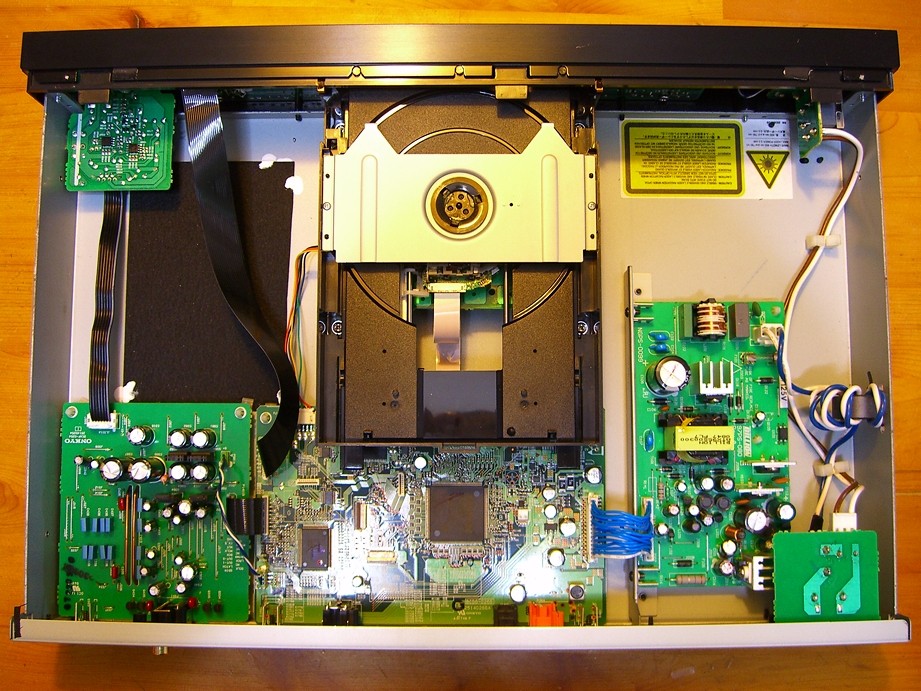
Ta-daa! Well, yes — it’s looking rather sparse inside… At the price, it’s doing its best, but it’s not the densely packed, fully dual-mono layout you’d find in mid-range and above domestic Japanese models, and the overall configuration is similar to imported players in the ¥100,000–150,000 class. One thing that does look promising is that the C-S5VL has separate boards for the digital section, analogue section, and power supply. I should mention, by the way, that “sparse” is practically the house word on this miniature-world Hi-Fi blog — and just like the author’s own mind, it is used here entirely as a term of endearment.


 ポチップ
ポチップ
C-S5VL and A-5VL Were Offered in Black and Silver Finishes, Exclusively Through ONKYO DIRECT
The C-S5VL is made in Malaysia. The matching digital amplifier, the A-5VL, is presumably the same. Domestic Japanese manufacturing would make it very difficult to deliver this much at this price point, and I must admit I was quietly dreading the possibility that it might turn out to be made in the PRC — so when I checked the rear panel and saw otherwise, I was genuinely rather pleased. All the way from a tropical island! As a side note, the upper models such as the A-1VL are made in Japan. Probably manufactured in Osaka, I’d imagine.
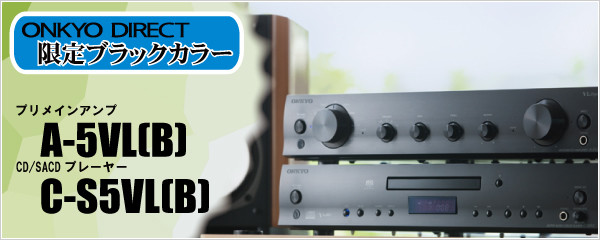
This is the black model that’s been quite fashionable lately. It’s an exclusive colour available only through ONKYO DIRECT, so you won’t find it in regular shops. Buying direct from the manufacturer tends to conjure up images of steep prices, but when you factor in the generous points you accumulate and the premium audio cables sometimes included in the bundle, working it all out you often find it’s actually quite good value — not to mention the more comprehensive warranty. The standard silver model is also available through the direct store, incidentally. The silver has a surprisingly upmarket feel, so it’s worth popping into a retailer to see it in person if you can.
Manufacturer of the SACD Drive Mechanism Was Not Disclosed
 ポチップ
ポチップ
Is the drive mechanism an ONKYO original design? I searched the model number but couldn’t find any details. I did enquire with ONKYO directly, but was told it is not disclosed. Its somewhat delicate appearance is a slight concern… On the plus side, the pickup is exposed, which should make maintenance fairly straightforward. You can occasionally open the lid and carefully clean the lens using a cotton swab and cleaning fluid, which means there’s no need to resort to the rotating contact-type lens cleaners that carry a real risk of damaging the pickup. A blessing, really. Note: as I’ll discuss later, the sound quality as a CD transport is actually rather good.
Digital board and DAC with Native DSD Processing
The digital board is a large one. At the centre sits the American video processing LSI, the ZORAN Vaddis 886-S, which handles the SACD encoding. It is a high-performance LSI capable of handling virtually anything — multi-channel DVD-Audio, video, and so on — but in the C-S5VL it would appear to be used solely in DSD mode. Incidentally, ZORAN was absorbed into UK-based CSR on 31st August of this year.

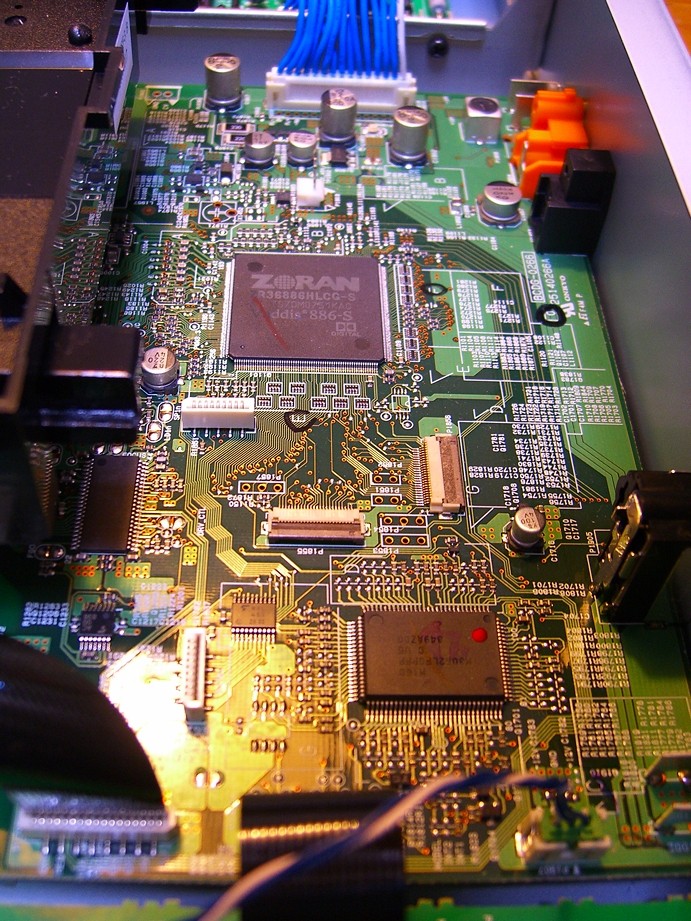
I was keen to get a look at the DSD/DAC circuitry using the latest DSD-compatible 24-bit DAC, the Wolfson WM8742, but it isn’t visible from above. There’s a board underneath the mechanism as well, so it may be on that side or on the underside of another board. The Wolfson DAC is also British, which means the key components are all Great British — and, perhaps for that reason, despite being a Japanese product there’s a faint whiff of England about it somehow. (That probably makes no sense.) Malaysia was a British colony, after all. (Even less sense.) Incidentally, the WM8742 has also been used in the German LINDEMANN USB-DAC 24/192, the American PS AUDIO Perfect Wave DAC, and the British Cambridge Audio DacMagic 100 and AZUR 651C — all of which cost considerably more than the C-S5VL.
 ポチップ
ポチップ
 ポチップ
ポチップ
Analogue Board and Switching Power Supply
The analogue board is solidly built for the price. I was looking to see what op-amp they’d used, but couldn’t spot one anywhere. Could this be a fully discrete design, not relying on op-amps at all? Note: I can’t read circuit diagrams, so I’m just guessing here.
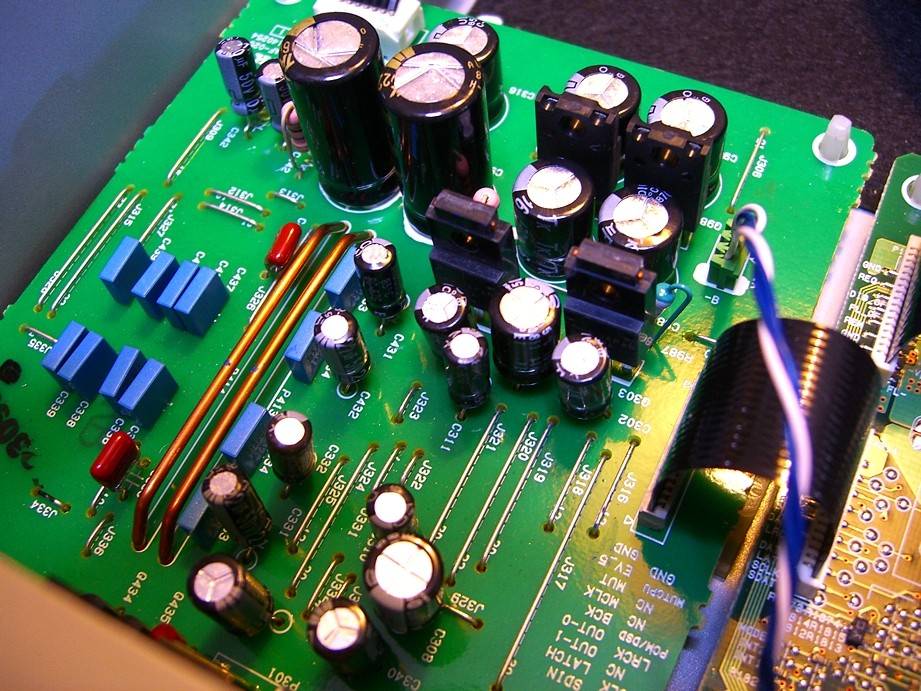
The power supply section. There’s no large transformer to speak of, and according to what I’ve read online it uses a switching power supply. If they’d made a bold statement here and fitted a toroidal transformer on a par with the DAC-1000, I would have been absolutely beside myself with joy… Still, as I’ll discuss later, the sound does have a crispness and speed to it that makes you wonder whether the switching power supply might actually have been the right call.
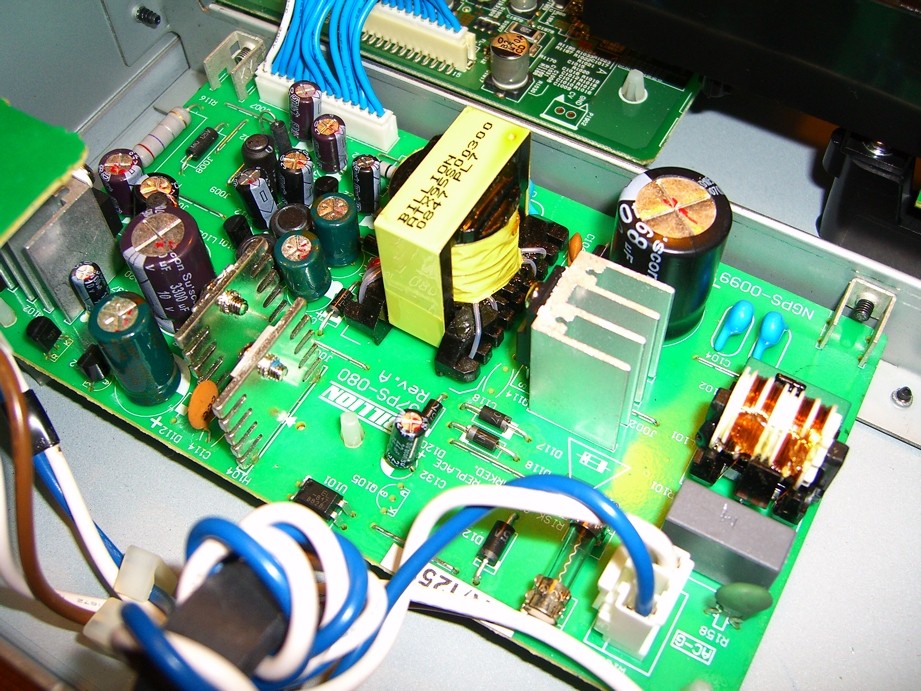
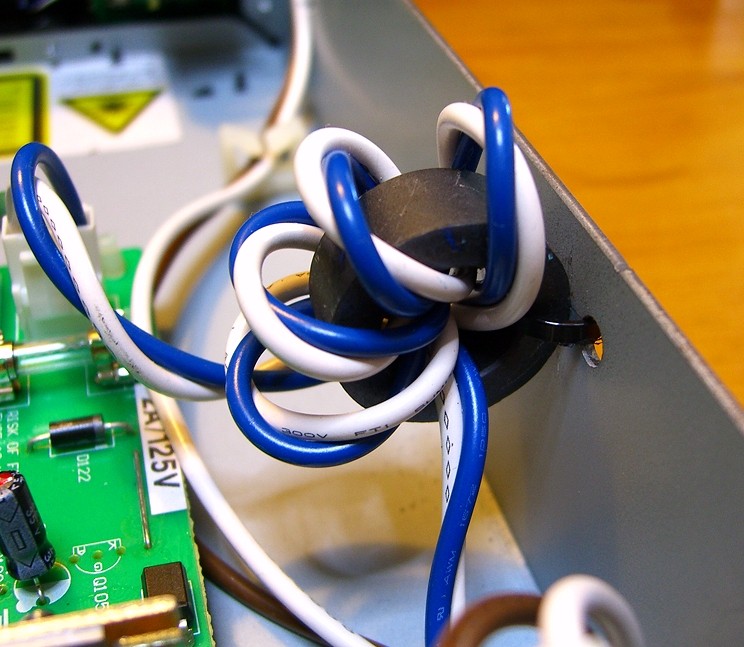
One thing that caught my eye: the AC cable coming in from the 3-pin IEC inlet is immediately wound several times around a ferrite core. It has a certain artisanal quality to it, and looks rather elegant — though it does remind me a little of the tentacles from Squid Girl… On the whole, the component mounting on the boards throughout is done with reasonable care.
Luxurious Gold-Plated Machined Output Terminals
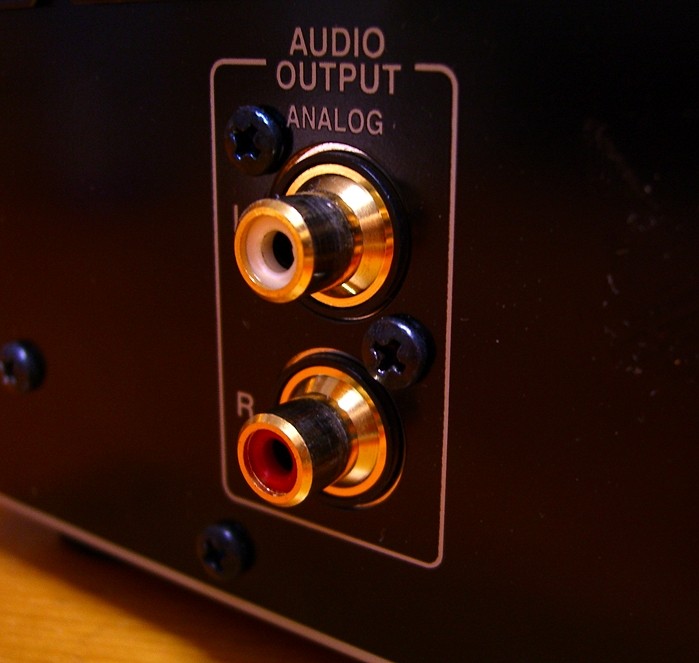
The analogue and S/PDIF digital RCA output terminals are also machined and look properly substantial. At this price point, flimsy terminals tend to be the norm, so this is genuinely welcome. The C-S5VL is built to withstand even the absurdly tight RCA plugs that come with Monster Cable. There’s also a black sheet bonded to the chassis base plate on the analogue board side. It seems too oddly placed to be vibration damping — perhaps it’s an electromagnetic absorption sheet of some kind? I wonder whether sticking one to my own head might cure me of my susceptibility to audiophile mysticism.
 ポチップ
ポチップ
Weak Point: A Thin and Lightweight Chassis
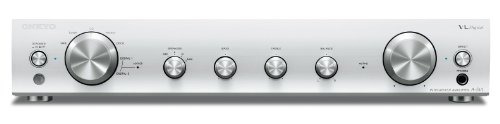
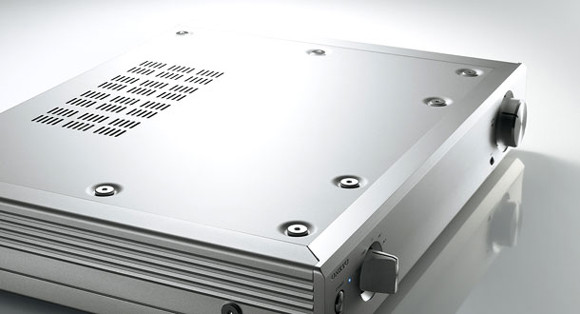
The boards were more interesting to look at than I’d expected, but the one clear weakness I noticed was the flimsy top panel. For a DVD player or video deck that would be one thing, but it’s quite rare to see a Hi-Fi product using sheet metal this thin. Tap it and it rings out with a hearty clang, so personally I’d consider damping the top panel with something like Real Schild or similar vibration-damping sheet to be more or less essential. The sense I get overall is that the budget was invested in the boards, and the chassis paid the price for it. Hence the rather remarkable lightness of 4.5 kg. The matching digital amplifier, the A-5VL, is packed solid inside — pick it up and you get quite a shock at how heavy it is. With the C-S5VL, the underlying sonic character is good, so I suspect that simply replacing the enclosure with something heavier would transform it further.
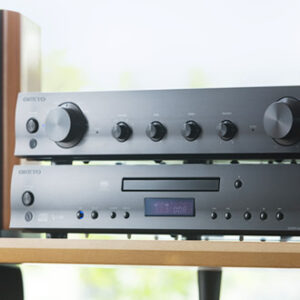
Even at 1.5 times the price, I’d have loved to see a successor model released in the chassis of the C-1VL or the ONKYO A-7VL… though saying so now is rather pointless. Anyway — writing all this out, I’ve only just realised: you could simply place the heavy A-5VL at 10.2 kg or A-7VL at 10.7 kg on top of it. Perhaps that’s actually by design — the idea being that stacking the amplifier on top also serves as vibration control for the C-S5VL?
 ポチップ
ポチップ
 ポチップ
ポチップ
Next time: we finally put the C-S5VL through its paces — tentatively.
【SACD Player ONKYO C-S5VL Detailed Review】
Announcement|Purchase|Part 1|Part 2|Part 3|Part 4|Part 5|Part 6|Part 7


Auto Translated by CS4.6
List of comments (2)
復活なさってたのですね、気づきませんでした。
アンプを重ねるっていうのは他のブログの方も書かれてました。電気的なアースと同じようなもんらしいです。
失礼しました。
とおりすがりさんこんばんわ♪
復活・・・一応しているのかな?(滝汗)
病人身分ではありますがぼちぼちやっております。
C-S5VLやA-5VLの場合、インシュレーター部分が樹脂+コルクで出来ていますので、金属製フィートのようにシャーシの電位を重ねることで揃えることは出来ないのですけれど、まぁこの点はケーブルで電気的に繋がっていれば良いって事に為るのかも?です。