I once owned a Cambridge Audio DacMagic Plus for a brief period, so I thought I’d write up some notes before the memory fades entirely. I had to let it go rather quickly for various reasons, so things are already getting a little hazy in my mind…
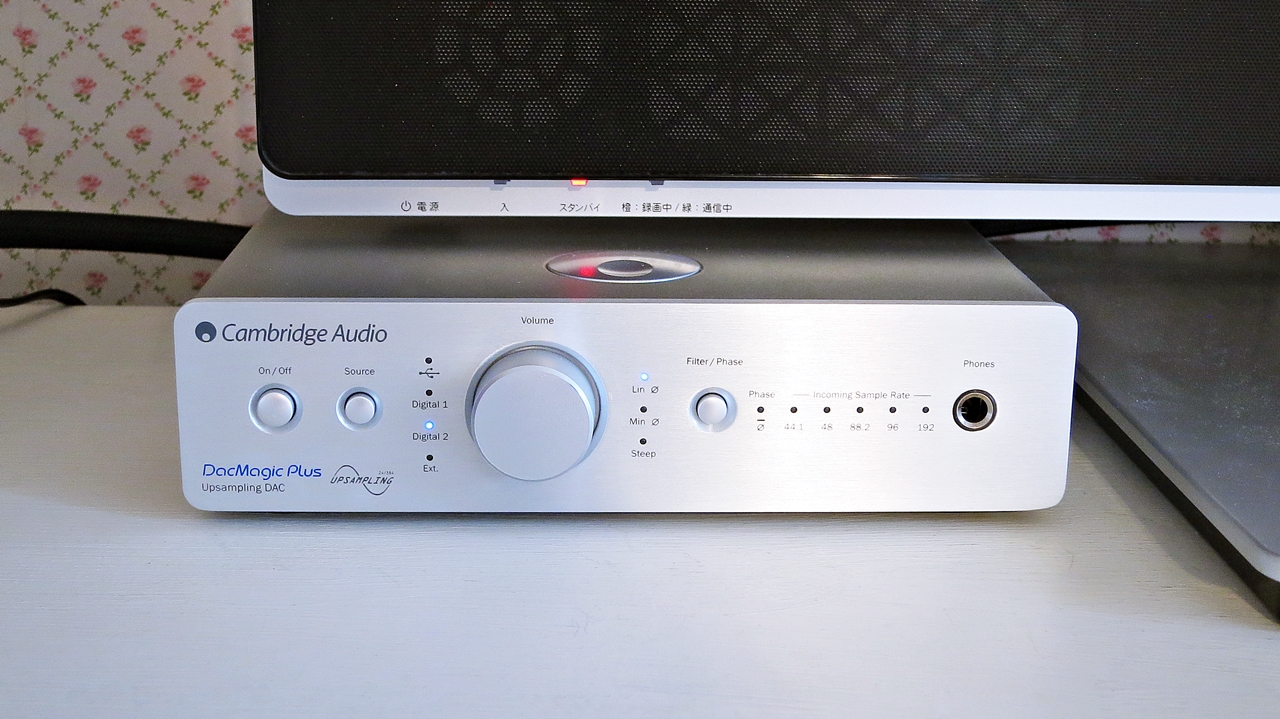
Cambridge Audio is one of Britain’s representative Hi-Fi manufacturers, offering a lineup centred mainly on budget Hi-Fi — that is, affordable products for the general public. The name “Cambridge” tends to conjure up images of Cambridge University and lend the brand a slightly snobbish air, but in fact it simply takes its name from the city of Cambridge where the company is based. The products themselves sit at the most reasonably priced end of the British Hi-Fi market, with not the faintest whiff of high-end audio about them — yet the company was founded in 1968, so it does have a certain history behind it.

The Cambridge Audio DacMagic Through the Years
My first encounter with Cambridge Audio products was in the early 1990s, when I came across the integrated amplifier A1 MK3, the original DacMagic, the S700 IsoMagic, and the CD player D300 — which shared the same body as the A1 — in a shop. If I recall correctly, the first A1 MK3 amplifier was designed under contract by Mike Creek, and for the CD and DAC side of things I seem to have half-heard the names of John Westlake of Pink Triangle and Mark Schifter, who would later go on to ONIX — though it was all so long ago that I can’t be certain. The products of that era were priced at a list price of ¥54,000, affordable even for a student, and I remember going into shops several times to audition them while considering a purchase. I never actually got around to buying one, but the sound had a flavour I quite liked — very much in the vein of the good old British sound tradition.

Then, entering the 2000s, the old-fashioned black-box design was completely overhauled into the current stylish look, and the new-generation Azur series arrived — still affordable as ever, but now spanning a much wider range of models. The DacMagic and DacMagic Plus DACs were born as part of this Azur lineup, carrying on the lineage of the 1990s black DacMagic, DacMagic 2, and S700 IsoMagic. The S700 IsoMagic in particular was a remarkably innovative product for its time — an isolation-type audio board combined with a D/A converter (featuring the HDCD-compatible Pacific Microsonics PMD100 chip), and at a list price of ¥80,000, no less. I remember agonising considerably over whether to buy one.


 ポチップ
ポチップ
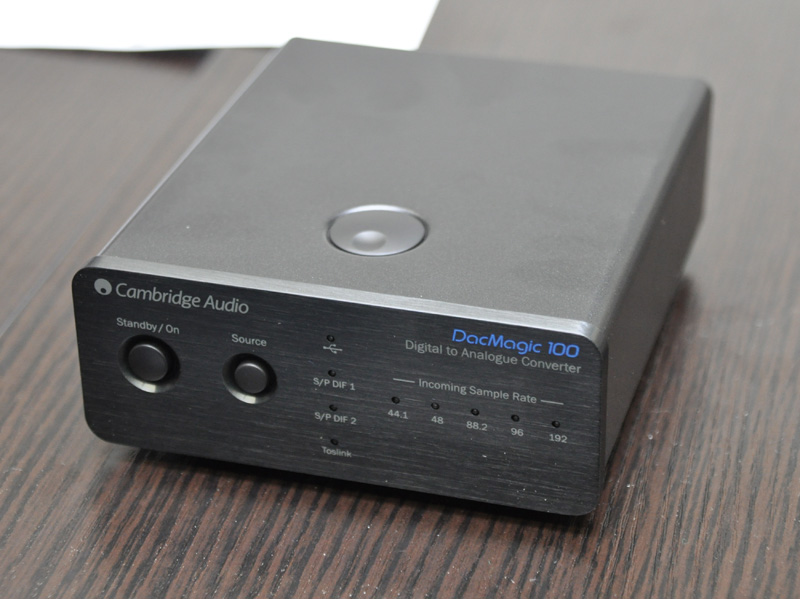
The DacMagic Plus arrived in 2012 as the successor to the newer Azur DacMagic, making it the second-generation model (or fifth, if you count the old DacMagic/DacMagic 2/S700 IsoMagic). From the Plus onwards, the unit became a combined DAC and headphone amplifier. There is also a lower-tier model, the DacMagic 100, which is a standalone DAC in a half-width chassis at a reduced cost, allowing customers to choose according to their needs.
How I Came to Buy the DacMagic Plus
The model I purchased was the DacMagic Plus with volume control. My reasoning was that it offered a generous set of inputs for a compact DAC — two S/PDIF coaxial and two optical (four terminals in total), one USB, and on the analogue output side both RCA unbalanced and XLR balanced, two sets in all — and the DAC chip complement of two Wolfson WM8740s, one per channel, was rather lavish. My thinking was that it might therefore serve as a direct replacement for the Musical Fidelity V90 DAC in my main system.
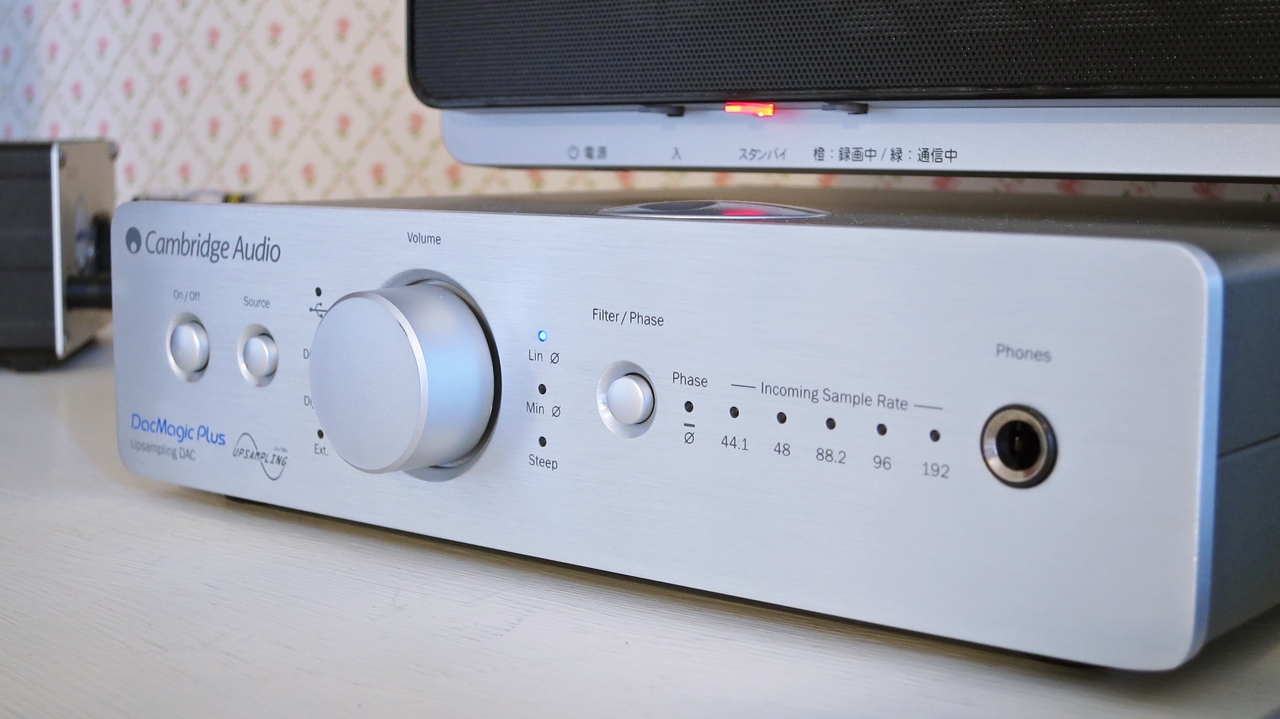
Whether it would represent a clear step up in price-to-quality terms was debatable, but the internal circuitry was at least a little more elaborate than that of the V90 DAC, and as is my habit I had read through a good number of reviews both at home and abroad — including the one in the UK’s WHAT Hi-Fi — and the DacMagic Plus had received consistently high marks. The headphone amplifier function was not something I strictly needed, so the DacMagic 100 would technically have done the job, but there were reports that even as a standalone DAC the DacMagic Plus had somewhat more sophisticated circuitry and better sound quality than the DacMagic 100, so with an eye on versatility I went for the Plus.
An interview with DacMagic Plus developer Matthew Bramble.
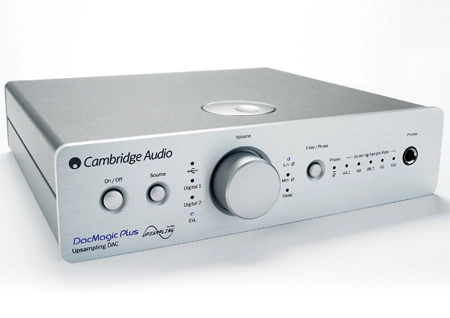
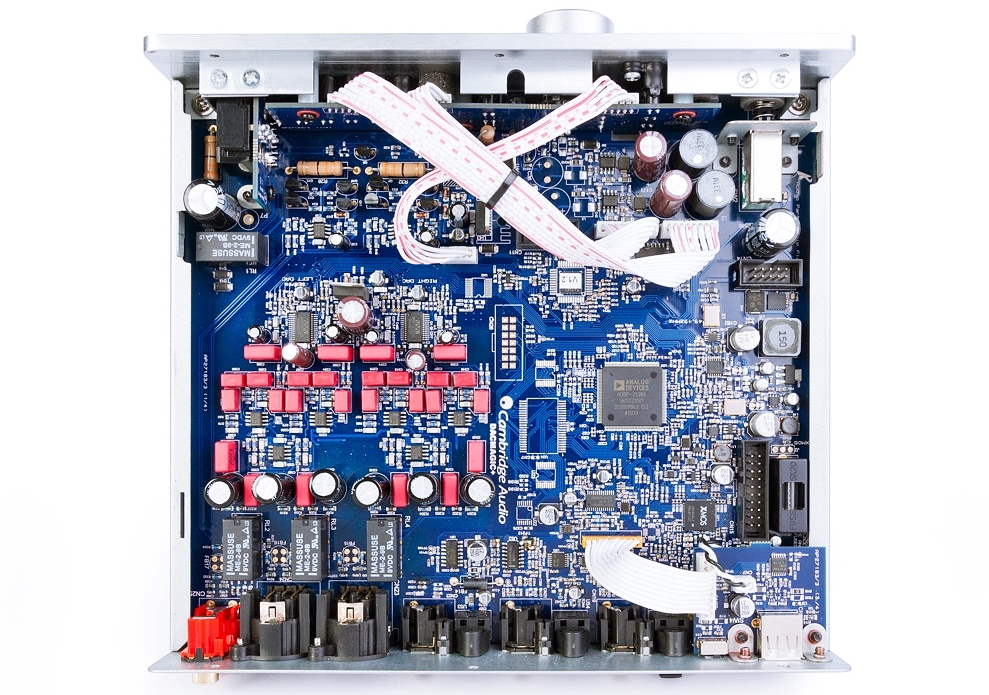
The physical unit is quite well put together — manufactured in China, yet with an appearance that feels very much like British design. At 1.2 kg it is lighter than it looks (215×52×210 mm). All this functionality, headphone amplifier included, is I think the result of cramming in every globally demanded feature expected of a modern standalone DAC while still keeping the price down. That said, the rear panel has an extraordinary number of screws, and the disassembly is rather tricky — without a long-shaft screwdriver you simply cannot access the circuit board. Which, honestly, left me thinking: what were they thinking? It at least suggests that the designer rather glossed over the fact that the layout of screws and terminals on the rear panel is not entirely without influence on sound quality…
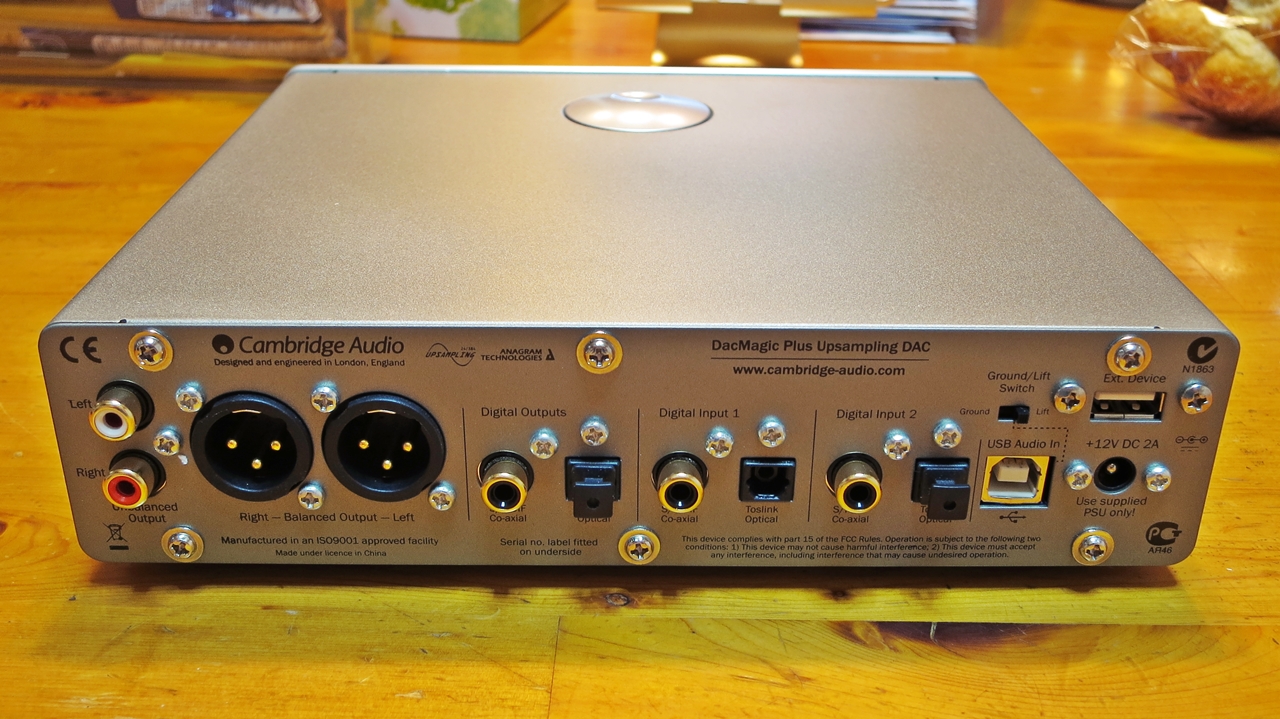
Cambridge Audio DacMagic Plus — Sound Quality Review
The following review concerns the sound quality when used as a standalone DAC. I let it go in under a month without ever checking its performance as a preamplifier, so I cannot speak to that — apologies. Using the CEC TL5100Z as a CD transport in my main system, with the digital cable Acoustic Revive DIGITAL-1.0R-TripleC-FM, the very first thing that struck me on listening was: ah, this is not going to replace the Musical Fidelity V90 DAC after all — regrettably. The DacMagic Plus is physically larger and looks somewhat more substantial (and its local list price of £350 is higher too), yet in terms of quality it gave an impression of being a step down… The DacMagic Plus has a sound character that is languid and richly reverberant — generous, one might say, or loose and lukewarm if one is being less charitable. There is not much in the way of drive or dynamic thrust; it leans towards a polished, pretty kind of sound, neatly presented. Both the Musical Fidelity V90 and the Cambridge Audio DacMagic Plus are DC-powered via external switching AC adaptors — a power arrangement not conducive to forceful sound — but even allowing for that, the DacMagic Plus felt rather passive and on the soft side. I now fully understood what WHAT Hi-Fi meant when they listed “Lacks dynamic power“ plainly under Against…
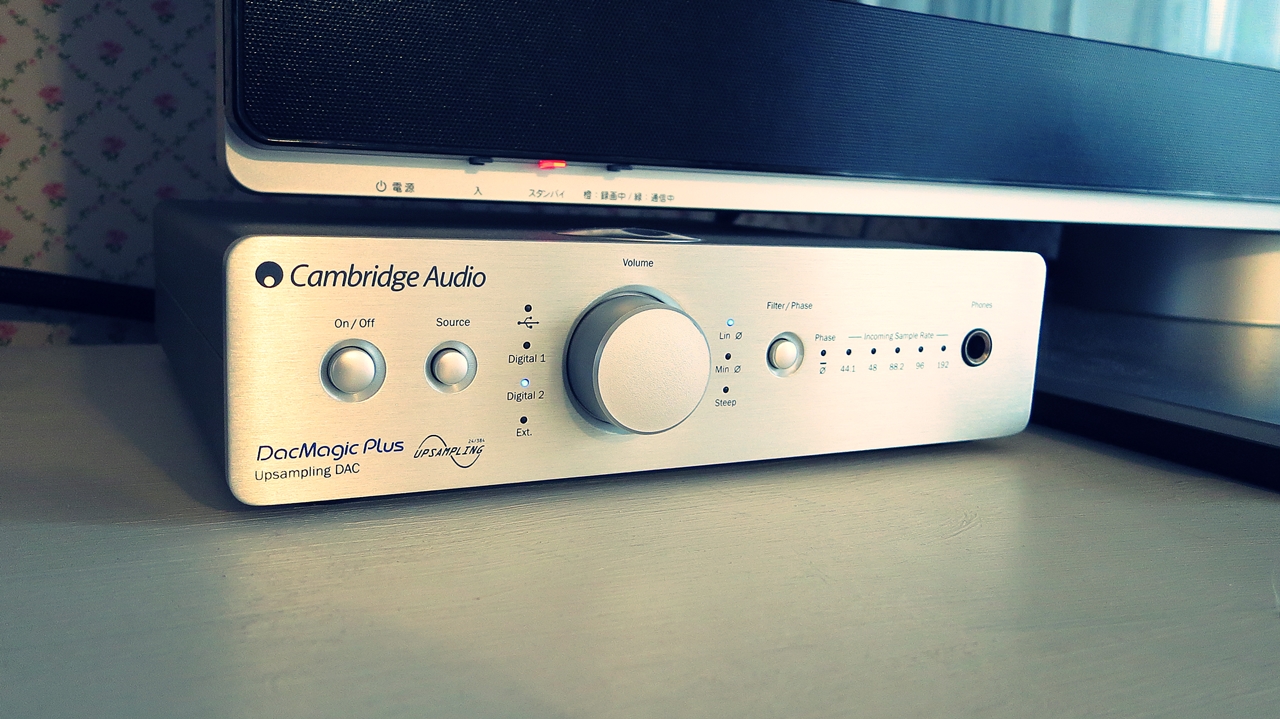
This is another product I have yet to review on AUDIO STYLE, but among Cambridge Audio products I also happen to have had the small bookshelf speaker Sirocco S30 (review pending) sitting around here for about ten years. The Cambridge Audio Sirocco S30 is a fairly lively speaker with a full mid-to-lower midrange — a very much working-class British, rock-and-roll, hot-blooded kind of sound — but the DacMagic Plus had a delicate character entirely different in feel from the S30. Comparing it with my memory of the old original DacMagic from the 1990s, the two share nothing but the name; tonally they are completely different creatures. It has been refined into a modern sound, certainly, but I had been hoping for something a little warmer and more traditionally British — instead, the impression it gave was closer, if anything, to the sound of a Chinese-made amp like a TOPPING.
Sound Quality Testing in the Secondary System
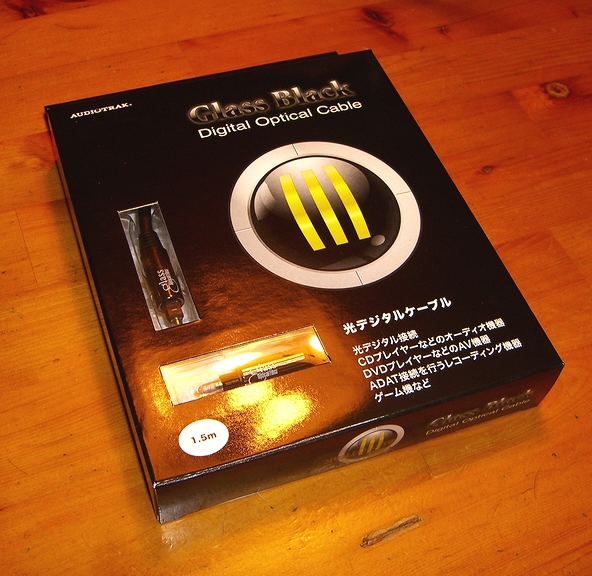
Using the CREEK EVO-CD as transport in my secondary system with the optical digital cable AUDIOTRAK GlassBlack2+ yielded much the same result: a balanced, middle-of-the-road presentation with a generous amount of reverberance, wrapped in a beautifully pure, distilled-water-like clarity, though resolution was not particularly high and detail was pleasantly masked rather than exposed. The output was quietly refined and on the slightly bright side, with no particular emphasis on image definition or density — if anything, it felt better suited to relaxed background listening. For better or worse, it gives the impression of making good use of the transparency and freshness that the Wolfson WM8740 24-bit DAC chips (×2) naturally bring. Yet it lacks the sharp-edged resolution and sense of pace found in the ONKYO C-S5VL, which uses the related DSD DAC chip Wolfson WM8742, and compared even to the (already somewhat lightweight-sounding) C-S5VL it is even lighter and more top-heavy in balance. It meets a reasonable standard as budget Hi-Fi, but its plainness and lack of strong personality means it is inoffensive and unlikely to clash with anything — which could perhaps be counted as a virtue.
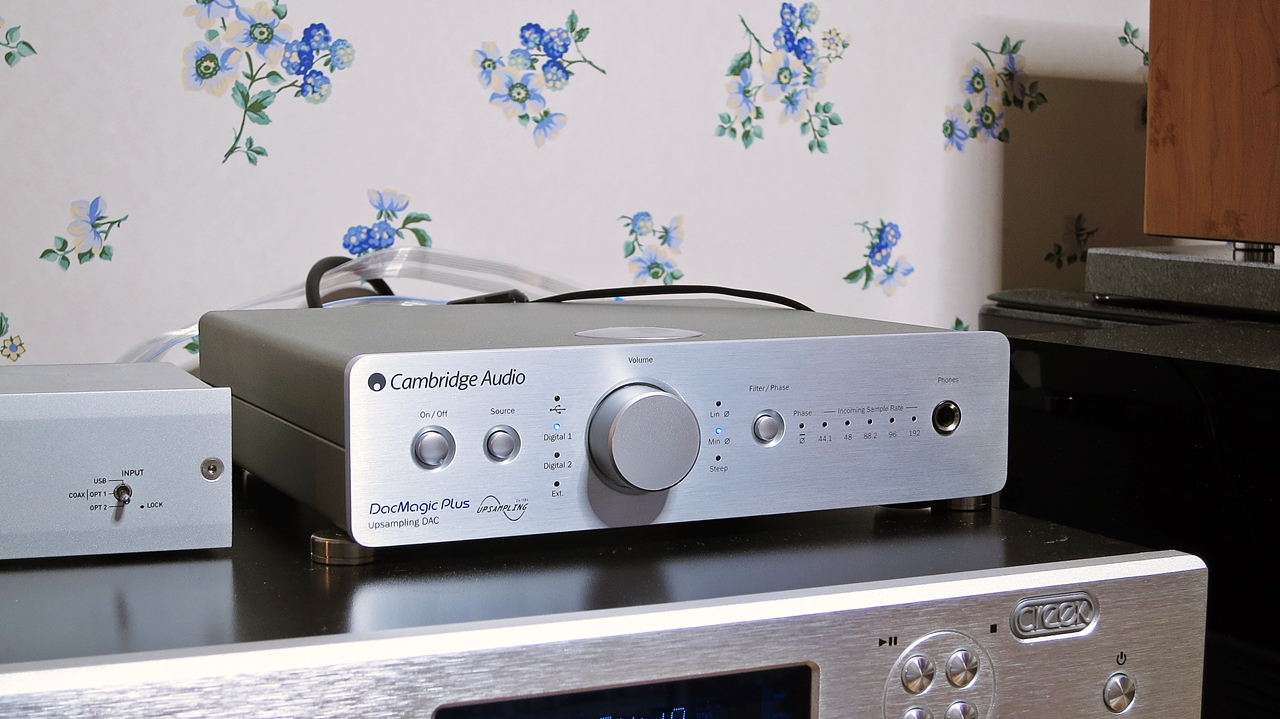
An Analog Devices ADSP21261 is used for the digital filter, and the specification calls for constant upsampling to 384kHz/24-bit via DSP. The DacMagic Plus also has a phase inversion function and a choice of three digital filters, which — like the C-S5VL — makes for an enjoyable degree of tonal variation, but I’m afraid I’ve lost the notes I made on the sonic differences between the filter settings. This is exactly why leaving a gap before writing a review is such a problem… What I can say across all the digital filter settings is that the essentially dry, powdery quality characteristic of modern upsampling DACs lurks beneath the surface, and the overall impression is that generous, moist, beautiful reverberation has been layered on top to artfully smooth over — or rather, tastefully work around — the blurriness that upsampling can introduce, drawing everything together in a gentle, unified way. Since the DacMagic Plus cannot be used without upsampling, I think one simply has to accept this kind of modern, hi-res-flavoured, finely textured sound and work with it accordingly.
 ポチップ
ポチップ
The sound quality from the headphone output was much the same and left little impression on me. Compared with taking the headphone output directly from an inexpensive SACD player such as the ONKYO C-S5VL, or from the headphone outputs built into British integrated amplifiers from CREEK or TAG McLaren (which are remarkably good for built-in affairs), it fell somewhat short in terms of texture and drive, so in my own setup I found little compelling reason to use it as a dedicated headphone amplifier. Of course, how it fares will vary depending on what class of headphone amplifier one is comparing it against, but for desktop audio use, compared to the sound straight out of a PC, it would deliver a comparatively dramatic improvement in cleanliness, I think.
~ Summary ~
This review has ended up being a rather critical one, and I think part of that comes down to the fact that the DacMagic Plus was selling for around ¥60,000 at the time I bought it — and when you compare it against other DACs and standalone CD players in that price bracket, it sits in a somewhat awkward position. Plenty of other reviews out there give it perfectly glowing praise, so perhaps I’m the odd one out… Looking at it from the other angle, though: if I had ended up with the DacMagic 100 — roughly the same sound quality but at less than half the price and in a smaller chassis — I think I would have been quite happy with it and probably wouldn’t have let it go. Writing all this is now making me think I might go back and pick up a DacMagic 100 at a bargain price towards the end of its production run… which is rather the trouble with me. That said, I already have rather too many small DACs sitting around in reserve, so I really must try to restrain myself.
 D/A Converters — DACsUK / Cambridge Audio


Auto Translated by CS4.6