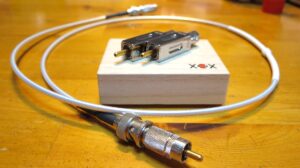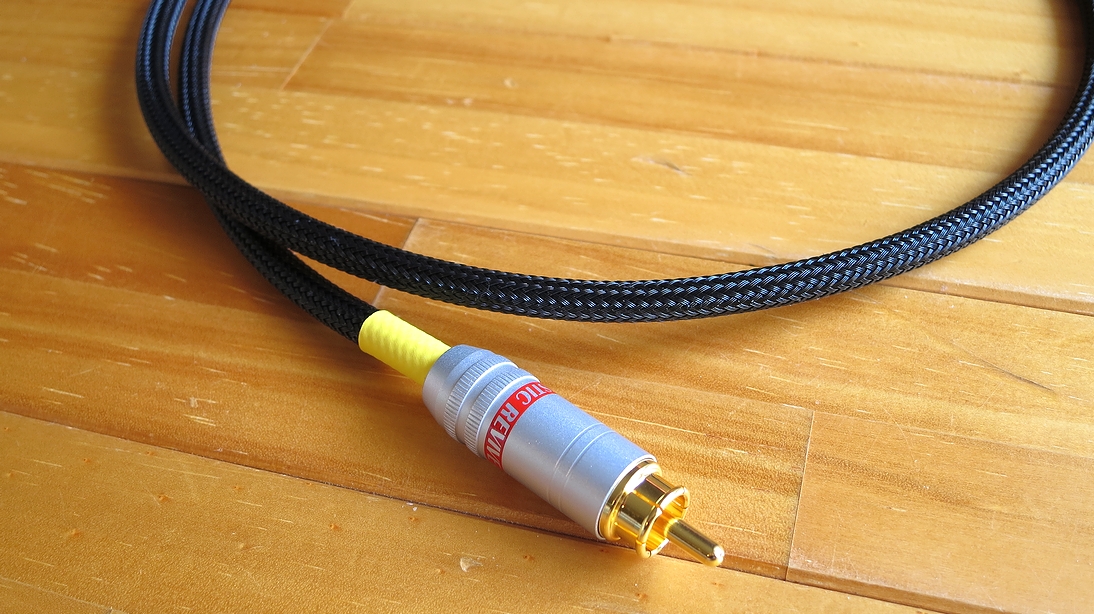
Following on from the QED the other day, today brings yet another digital cable review. I usually write about overseas products — audio cables that don’t circulate much in Japan — but this time, unusually, it’s a review of a rather popular Japanese-made (entirely class) digital cable, the Acoustic Revive DIGITAL-1.0R-TripleC-FM.
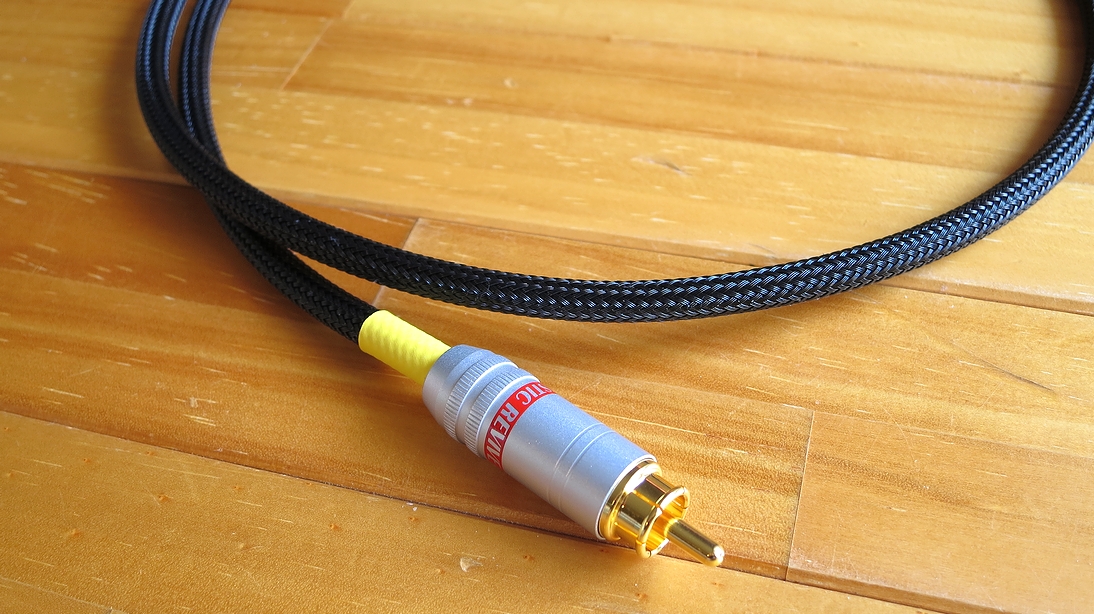
I brought in the Acoustic Revive DIGITAL-1.0R-TripleC-FM in the spring of 2017. I had been looking for a coaxial digital cable with genuinely up-to-date sonic performance, ideally at a reasonable price (budget around ¥10,000–20,000), but still of a quality that could hold its own in a main system — and that was when Acoustic Revive, known affectionately as Acoriba, caught my eye. As usual I had a few promising overseas candidates lined up, but I also received a quiet word of advice from the author of a blog with particularly deep knowledge of Acoustic Revive products, and that’s what pushed me to go ahead with the purchase.
Materials and construction of the DIGITAL-1.0R-TripleC-FM — with Hitachi Metals Finemet beads
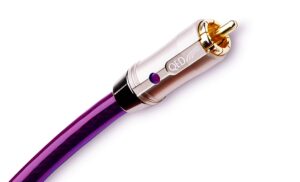
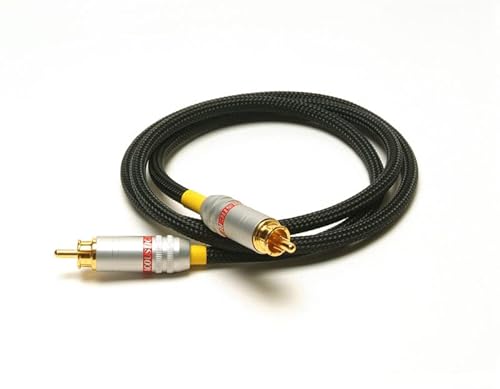
The Acoustic Revive DIGITAL-1.0R-TripleC-FM features a solid-core conductor made from the latest PC-TripleC material, and notably has a Finemet noise suppressor (Hitachi Metals Finemet beads) built into the plug for noise reduction. For reference, the equivalent BNC-terminated model is the CLOCK-1.0BNC-TripleC-FM, and the professional AES/EBU version is the DIGITAL-1.0X-TripleC-FM. Most digital cables use a single-core coaxial construction, but reading the product description, it appears this one employs a twin-core shielded structure.

 ポチップ
ポチップ
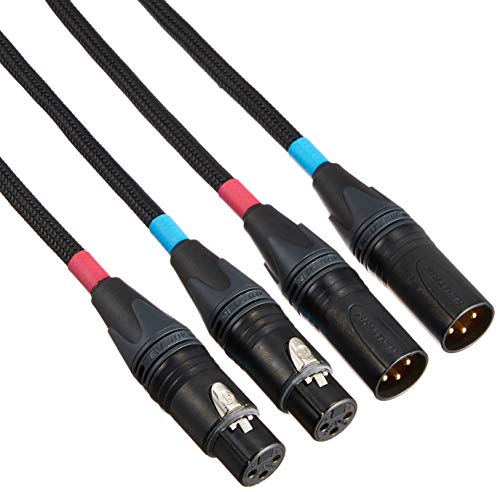
Alongside this, there are companion RCA analogue cables in the form of the LINE-1.0R-tripleC-FM, and an XLR balanced version, the LINE1.0X-TripleC-FM. These also use a twin-core shielded construction (the XLR balanced type uses three cores); they were developed at the same time, their appearance is virtually identical, and I would expect their sonic character to be broadly similar — so if you are considering the RCA cable LINE1.0R-TripleC-FM, this digital cable review may well serve as a useful point of reference.
 ポチップ
ポチップ
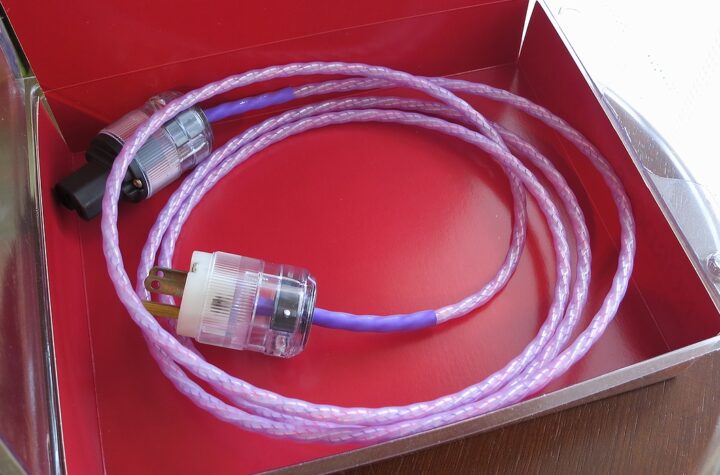
Handling the actual product, the slender conductor and relatively compact RCA plugs have a surprisingly premium feel about them. In the product photos the aluminium-shell RCA plugs looked a little cheap, but in person the finish and build quality are precise and make a far better impression. The fit is neither too loose nor too tight — just right. Do note that because a solid-core conductor is used, the cable itself is somewhat stiff, and bending it sharply will likely leave a permanent kink, so it is best to avoid forcing it into tight bends during installation.
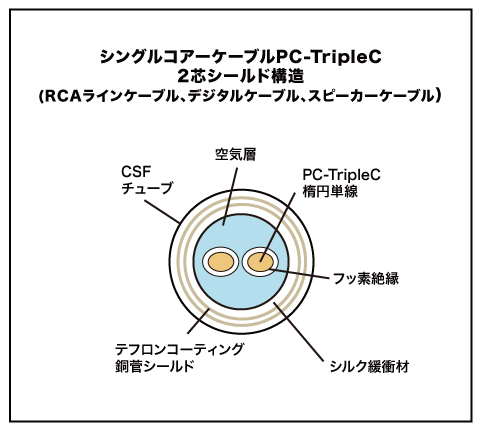
The insulation on the PC-TripleC conductor is not PVC or polyethylene but Teflon, as commonly used in high-end cables. Structurally, another notable point is that the space between the conductor and the shield is air-insulated. Frankly, the level of construction here is the sort of thing you would normally only find in cables costing considerably more, and at a street price in the ¥10,000s (recommended retail ¥16,000), it is honestly something of an extraordinary proposition — a high-value cable packed with strategically chosen features aimed squarely at the budget-conscious general user.
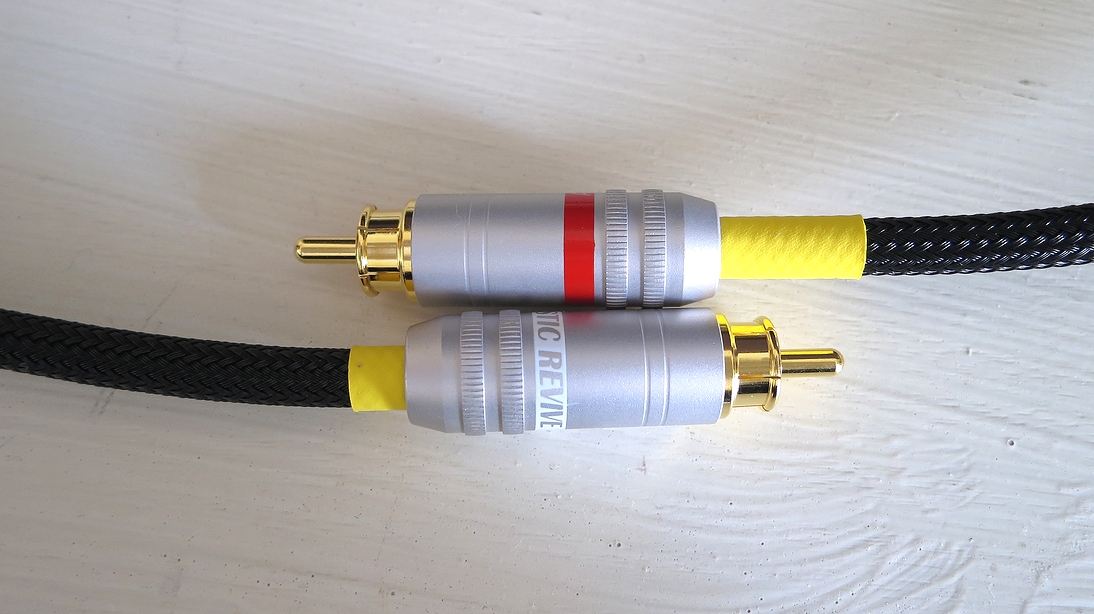
When I first got it, I wasn’t sure which way round to connect it, and had the red plug end containing the Finemet core (the side with the longer yellow sleeve) going into the DAC — which, it turns out, is actually the reverse of the intended direction. That said, I gather you can simply connect it whichever way sounds better to your ears, and having tried it both ways across a few of my systems, I found I personally prefer the “reverse” orientation — so from here on, this review is based on that reverse connection (Finemet beads at the DAC end).
Acoustic Revive DIGITAL-1.0R-TripleC-FM — Sound Quality Review
Immediately after purchase, the sound was rounded and slightly woolly, with a somewhat forward midrange, and I spent a while wondering what to make of it — but after about a week of initial burn-in, the solidity and tightness characteristic of Acoustic Revive products began to emerge, the frequency response flattened out, and the sound metamorphosed into something crisp, sharp, and tight across the board. I then used it in my main system for around a year, and my overall assessment is that it is characterised by high resolution, with a sharply focused, pinpoint stereo image — clean, precise, and tight. It has exceptionally good perceived S/N, with a clarity and transparency that extends right down to fine detail, and a delicacy that goes hand in hand with that. There is no sense of anything being added to the music; this is a cable whose sole ambition is monitor-like accuracy, and the result is a quietly confident sound that, in the best sense, feels distinctly Japanese in its quality and seriousness. In pure Hi-Fi terms, I would suggest that among digital cables under ¥50,000 from any manufacturer, it is genuinely difficult to find one that surpasses the Acoustic Revive DIGITAL-1.0R-TripleC-FM — particularly among overseas products.
The tonal balance is essentially flat. The bass is transparent and well-defined, with accurate pitch and high resolution, though it is restrained in terms of body and weight. The midrange is tight and precisely rendered. Treble is highly resolved and sharp, with a slight shimmer of lustre. The overall character is cool, with the fine detail of reverb tails etched out with precision; the tension and stillness of the concert hall are reproduced with exceptional accuracy, and the overall flavour has a slight astringency to it. If anything, I would wish for a touch more weight in the bass and a somewhat larger sense of spatial scale — but those are areas I would expect to be addressed only by stepping up to a higher-tier cable. Fundamentally, this is an accurate, earnest monitor-type sound, a cool, near-monochromatic tone, with a quietly composed atmosphere that speaks of Japanese integrity in the best and perhaps also in the limiting sense. The kind of musical sensuality and richness that many overseas audio cables seem to conjure — a certain warmth and colouration — has been stripped away entirely; this is a high-precision sound that sits at the opposite end of that spectrum. If you are after a cable that adds a little character, colour, or indulgence to the music, this probably isn’t the one for you.
 ポチップ
ポチップ
With the Finemet beads at the source end (CD transport side) — the standard/forward direction — the sound becomes even wider in bandwidth, sharper, and tighter, with a strongly monitor-like character; dry and tense. However, I do find the treble edge becomes a little more cutting, and with certain recordings it can become somewhat fatiguing. In the reverse orientation, there is a very subtle added warmth and smoothness to the bloom around image outlines; a slight barrel-like rounding enters the otherwise flat soundstage, making the presentation just a touch gentler on the ear, with a slightly more relaxed sense of pace and a certain charm to it. Either way, the perceived S/N remains impressively high — though for everyday, relaxed listening, I would say the reverse connection is the more comfortable choice.
 ポチップ
ポチップ
An unexpected benefit of the Finemet beads / Finemet noise suppressor
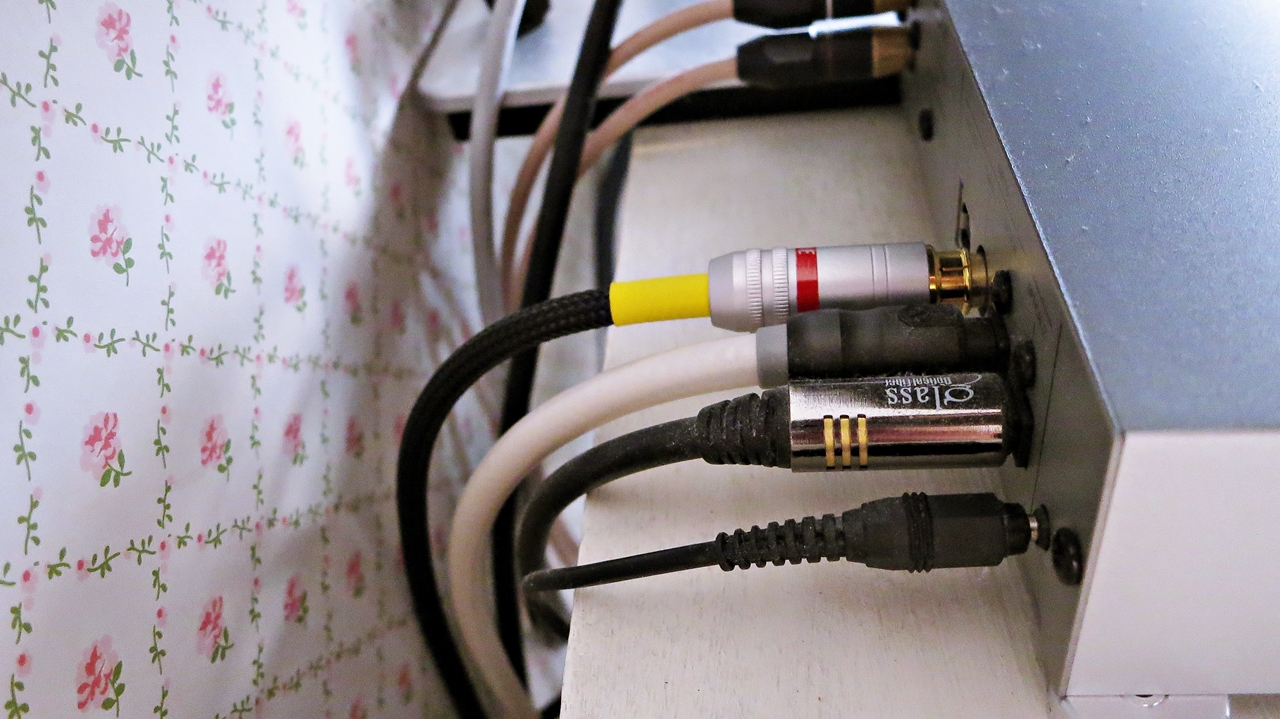
My main system’s digital cable is now the Black Cat Cable Silverstar!75, and the Acoustic Revive DIGITAL-1.0R-TripleC-FM has been moved to a secondary system — but this cable actually has one further significant side effect that I discovered along the way. Even when the digital cable itself is not being used as the active signal path, simply having it connected seems to improve the perceived S/N of the system as a whole and to make the sound feel tighter. In other words, when it is plugged into the digital output of a CD player, it appears to improve the overall perceived S/N even when you are listening via the optical digital output, or indeed via the player’s own analogue output into an amplifier. My suspicion is that the Finemet core built into the Acoustic Revive DIGITAL-1.0R-TripleC-FM is acting indirectly on the ground noise loop, producing a noise reduction effect.
I would expect a similar S/N improvement to be obtainable from the equivalent analogue cables, the LINE1.0R-TripleC-FM and LINE1.0X-TripleC-FM. With analogue cables, two runs are needed for L and R, which physically means two Finemet beads in the circuit — so the effect might even be greater. In my own main system, for instance, alongside my belt-drive CD player as the primary source, I also have an FM tuner, a standalone DAC, an SACD player, a Blu-ray recorder, and other equipment — six sources in total connected to the integrated amplifier. Even if the primary cables in use are of a higher class, inserting an Acoustic Revive DIGITAL-1.0R-TripleC-FM or LINE1.0R-TripleC-FM somewhere in the chain — whether in a parallel analogue connection to the amplifier or somewhere in the digital part of the system — could potentially deliver a Finemet-bead-derived improvement to the overall system S/N. When you factor that in, the ability to use it as a high-value secondary cable that doubles as an S/N-improving accessory seems to me an advantage unique to Acoustic Revive products, one that no other digital or analogue cable can quite replicate. This is, of course, a subjective impression based solely on my own system, and I cannot guarantee the same effect in every environment, but…
~ Summary ~
The latest PC-TripleC material, solid-core construction, and the genuinely sophisticated hollow-shield structure — these are the hallmarks of a manufacturer that knows what it is doing, and I think the greatest appeal of the DIGITAL-1.0R-TripleC-FM is its ability to deliver a truly monitor-grade sound at a genuinely reasonable price. For anything better, you would be looking at stepping up to Acoustic Revive’s own higher-tier digital cable, the COX-1.0TripleC-FM, or — for overseas alternatives — into the six-figure-yen range and beyond, which, as a hobby, starts to become a matter of rather questionable cost-to-performance ratios. For most Hi-Fi enthusiasts, I personally feel this cable more than satisfies any reasonable sonic requirement.



Auto Translated by CS4.6