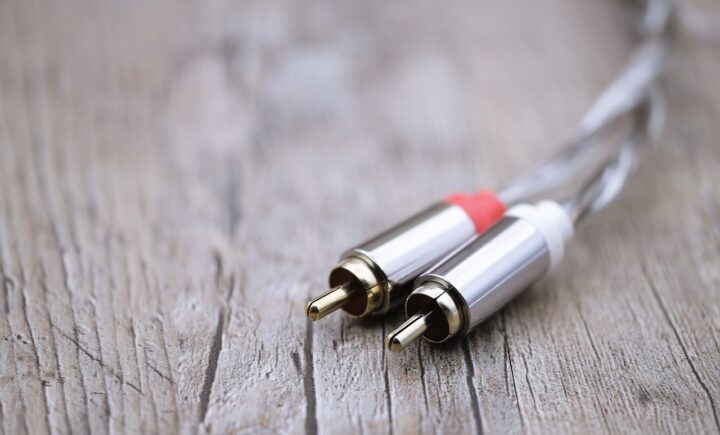
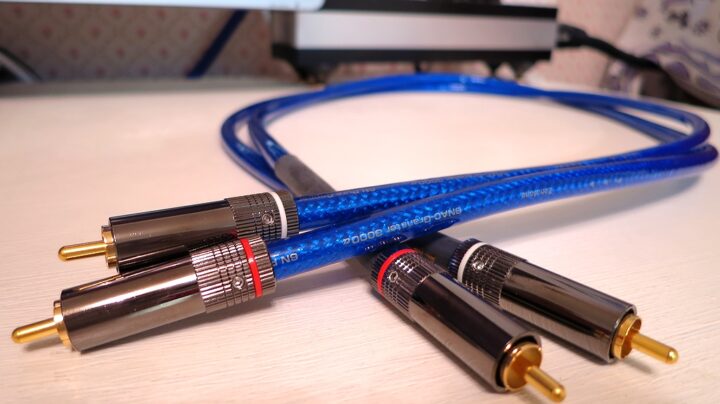
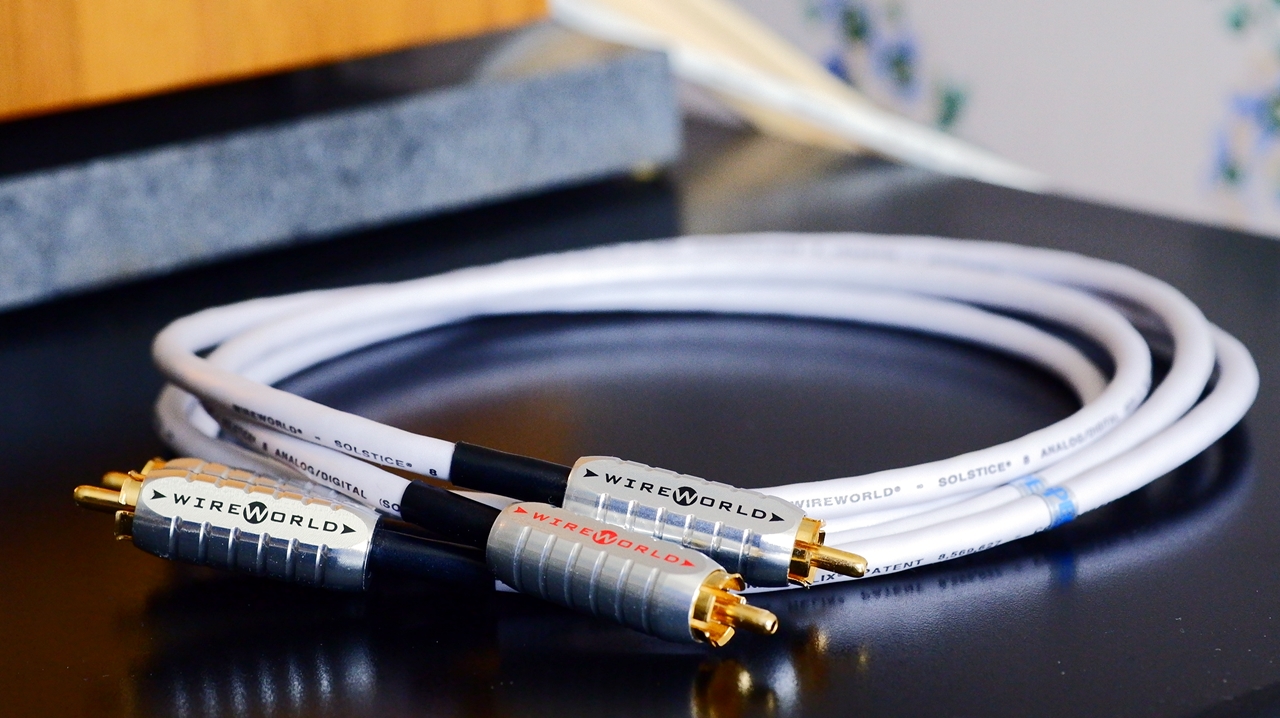
This time I would like to take a look at the Wireworld Solstice 8 , an RCA cable I recently purchased for desktop PC audio use. The Solstice 8 belongs to the Series 8 lineup of American manufacturer WireWorld Cable Technology, refreshed in 2018, and is an entry-class RCA cable sitting third from the bottom alongside the speaker cable of the same name. The US price for the 1m model is $99. In Japan it is also written as SOS8.
WireWorld’s RCA Cable Range and Where the Solstice 8 Sits
WireWorld Cable Technology is a high-end audio cable manufacturer founded in 1992 and based in Florida, USA, with all products designed and developed by president and cable designer David Salz. The RCA cable lineup runs, from bottom to top: Terra → Stream → Luna 8 → Solstice 8 → Oasis 8 → Equinox 8 → Eclipse 8 → Silver Eclipse 8 → Gold Eclipse 8 → Platinum Eclipse 8 (top model), with every model carrying an astronomical name — a distinctive trait of the brand. “Solstice” means the solar solstice (summer or winter solstice) in Japanese, and by extension something like a peak or highest point. ※ The lower model Stream was added from Series 10 onwards. ※ It also appears that the Series 9 designation was skipped this time around.
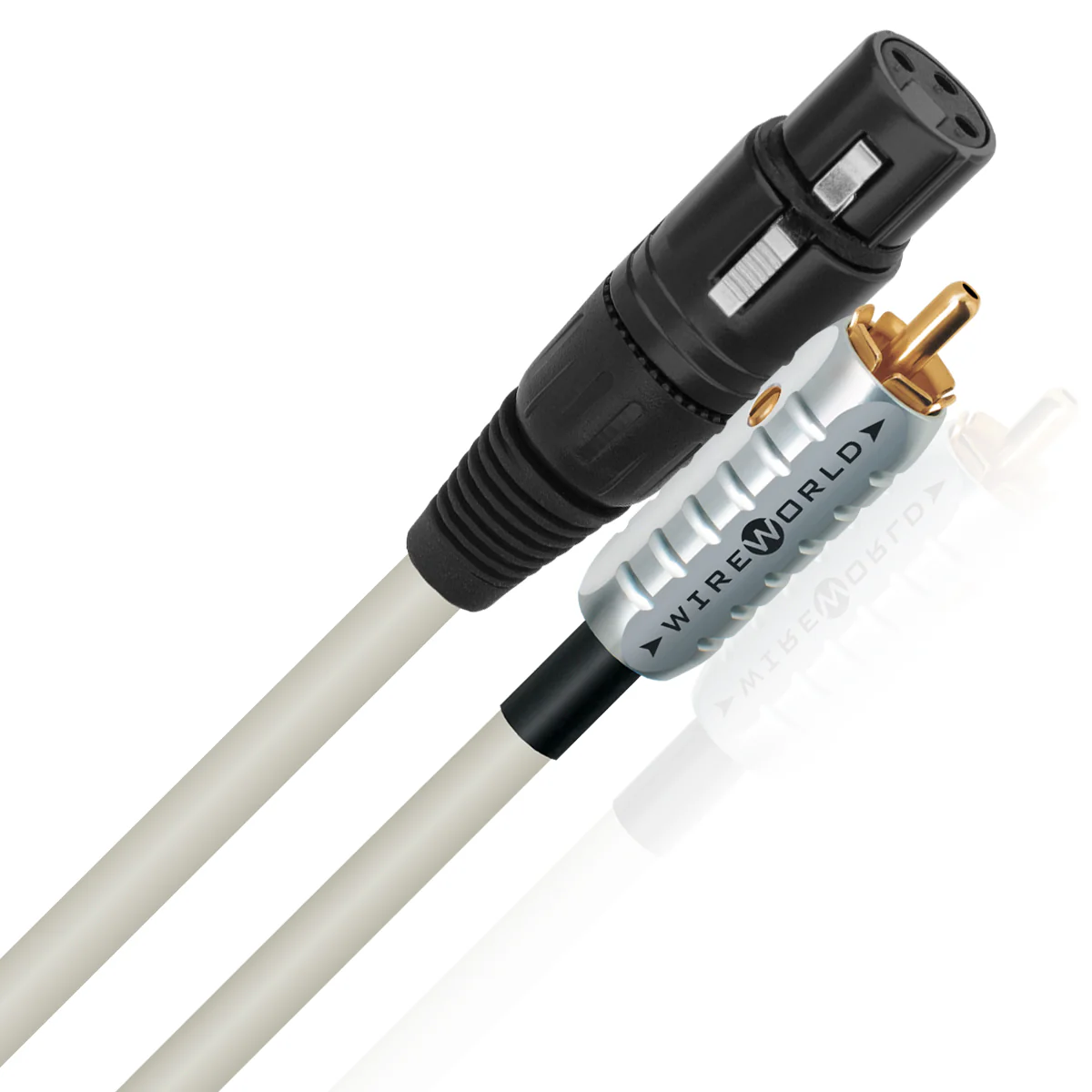
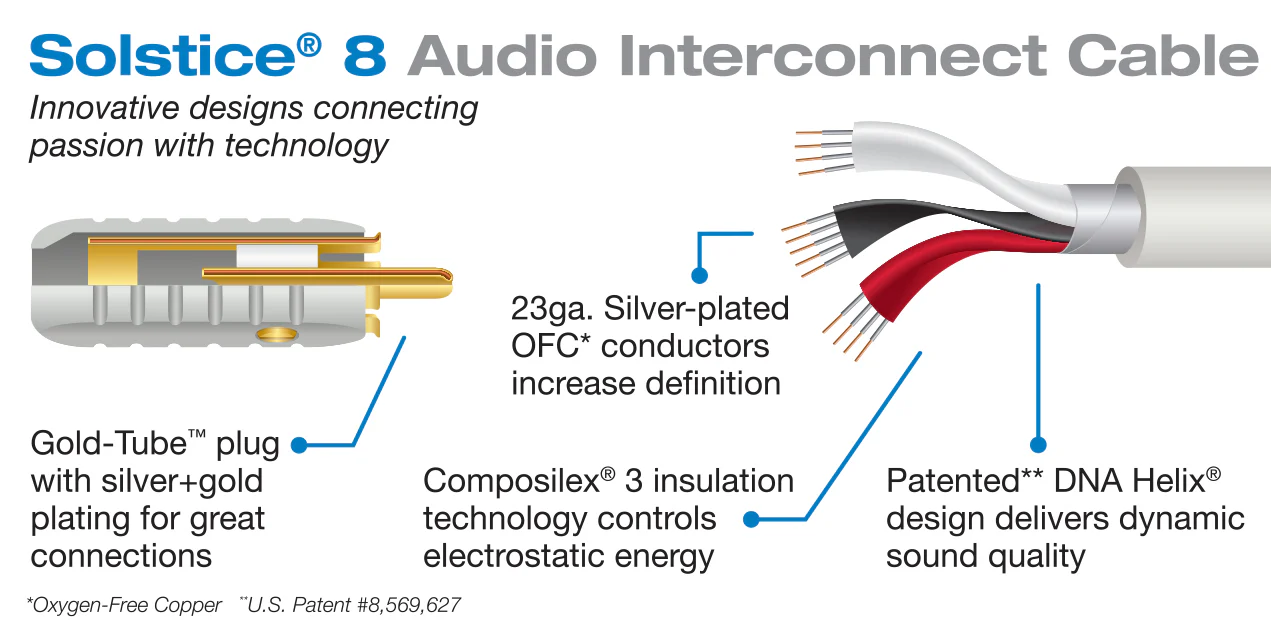
Among the lineup, the Solstice 8 stands apart from neighbouring grades in one key respect: despite being a lower-tier model, its OFC conductors receive a silver plating. If you want silver plating in the upper models, you have to jump all the way up to the Silver Eclipse 8 — there is nothing in between.
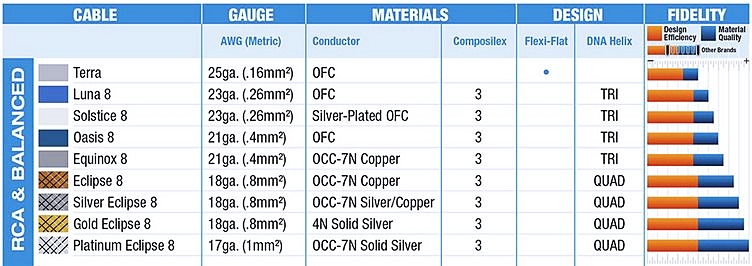
The Solstice 8 uses silver-plated OFC (Silver-Plated OFC) as its conductor and employs WireWorld’s proprietary “DNA Helix Design” (a Tri DNA Helix structure in Series 8). This design is intended to improve signal transmission efficiency and minimise electromagnetic interference and signal loss. The insulation uses the third-generation “Composilex 3”, which reduces triboelectric noise (static-induced noise) compared to conventional insulating materials, delivering cleaner sound quality.
As of spring 2025, WireWorld is progressively releasing the successor Series 10 as part of a full lineup refresh, and I have started to see the customary clearance sales on older models — half price at some retailers — that tend to accompany each new Wireworld generation. The price gap between Japan and overseas was never particularly large to begin with, partly due to the weak yen, but during a sale it is possible to pick these up for even less than the US price.


 ポチップ
ポチップ
The Evolution: Solstice Series 7 (2013) ⇒ Series 8 (2018) ⇒ Series 10 (2024)

Regarding the differences between Solstice Series 8 and the previous Solstice 7 released in 2013: the aluminium-shell RCA plugs and the silver-plated 4N OFC conductors are shared between the two. However, the structure and gauge differ fundamentally (Series 8 = 23AWG vs Series 7 = 24AWG), and in Series 8 the conductor geometry is an entirely new design. The texture of the whitish outer sheath also differs. Up through Series 7, the two slender L/R channel conductors were bundled together — very much signalling entry-class status — but from Series 8 onwards, the left and right channels are fully separated.
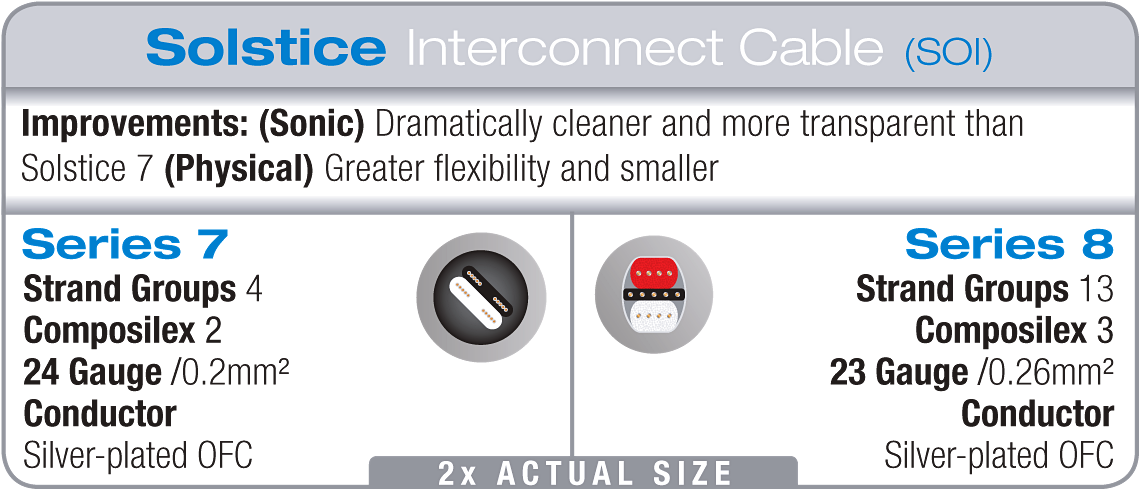
Moving on to the changes from Solstice Series 8 (2018) to Solstice Series 10 (2024): the central conductor count increases from five to six strands, and the insulation advances from COMPOSILEX 3 to 5. The aluminium shell of the RCA plug also changes from the distinctive cigar-like design that had been a hallmark of previous models to a more rectilinear, plainer appearance.
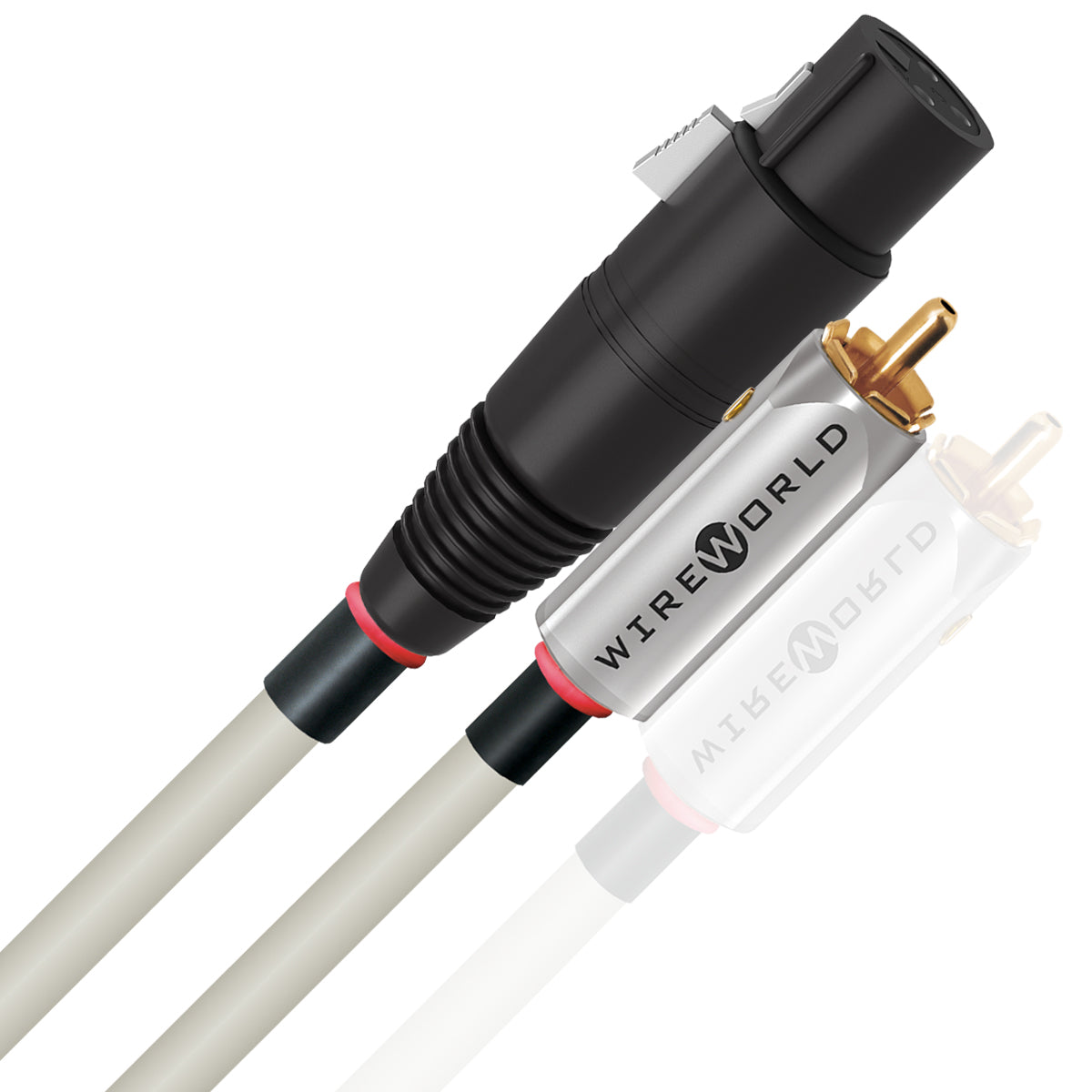
On the whole, the change from Series 8 to Series 10 involves no fundamental redesign — it looks more like a minor revision aimed at refinement. So, with value for money in mind, I decided to go ahead and pick up the older model at well under half the price.
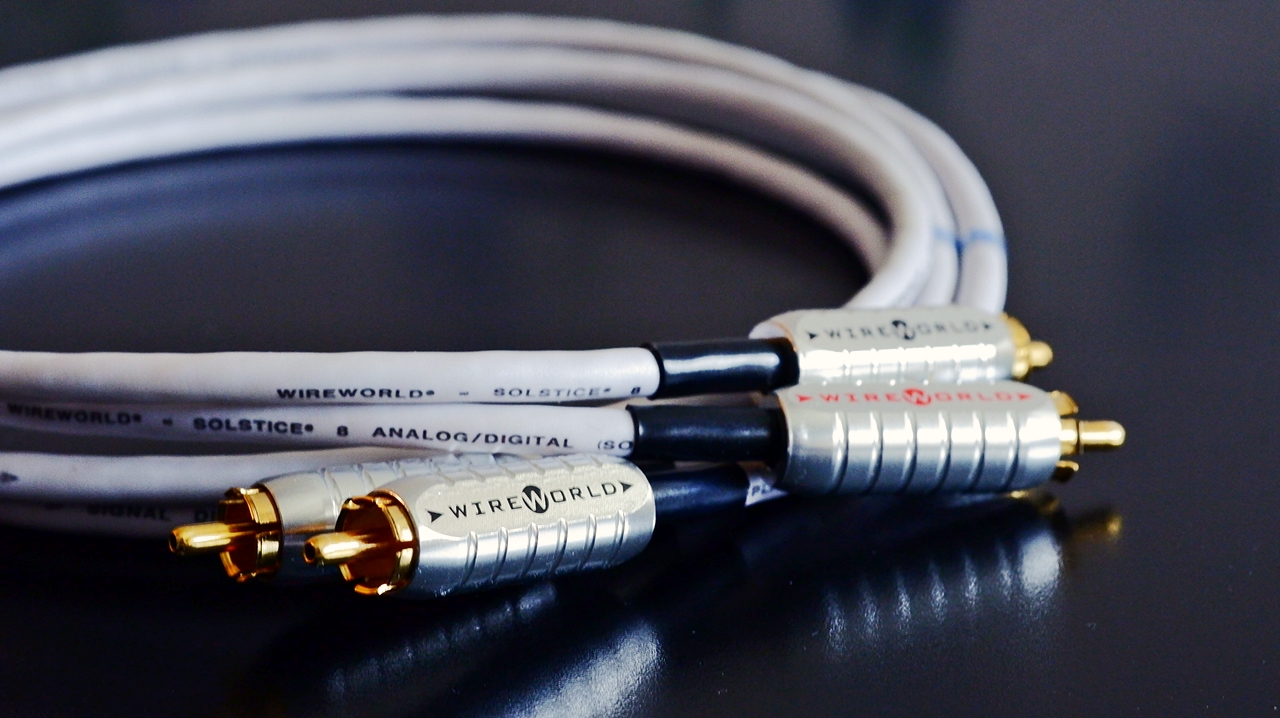
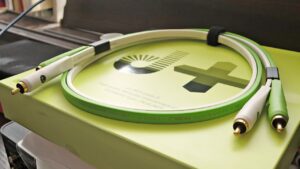
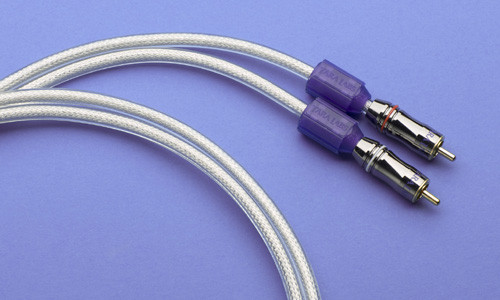
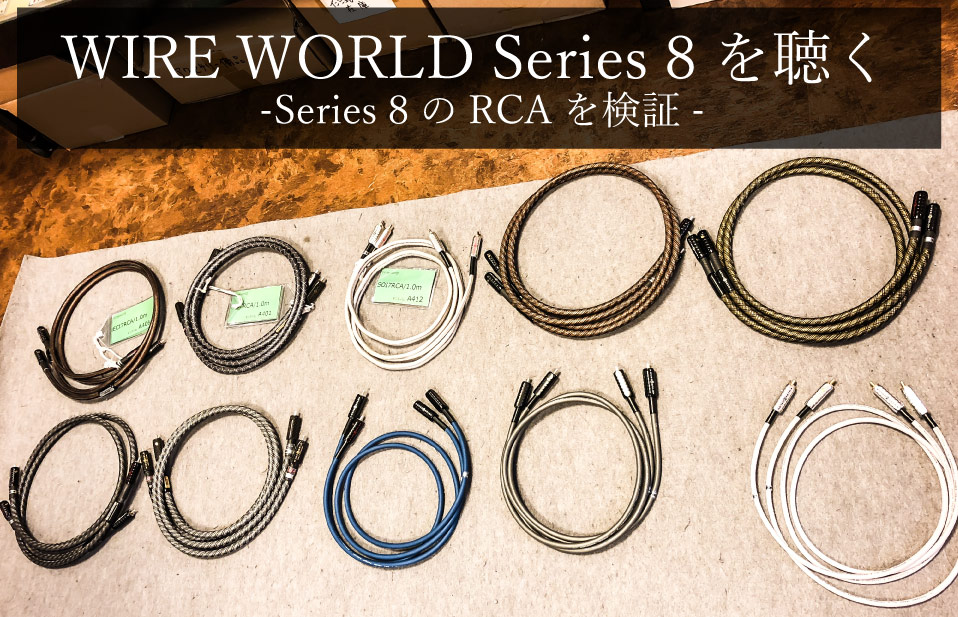
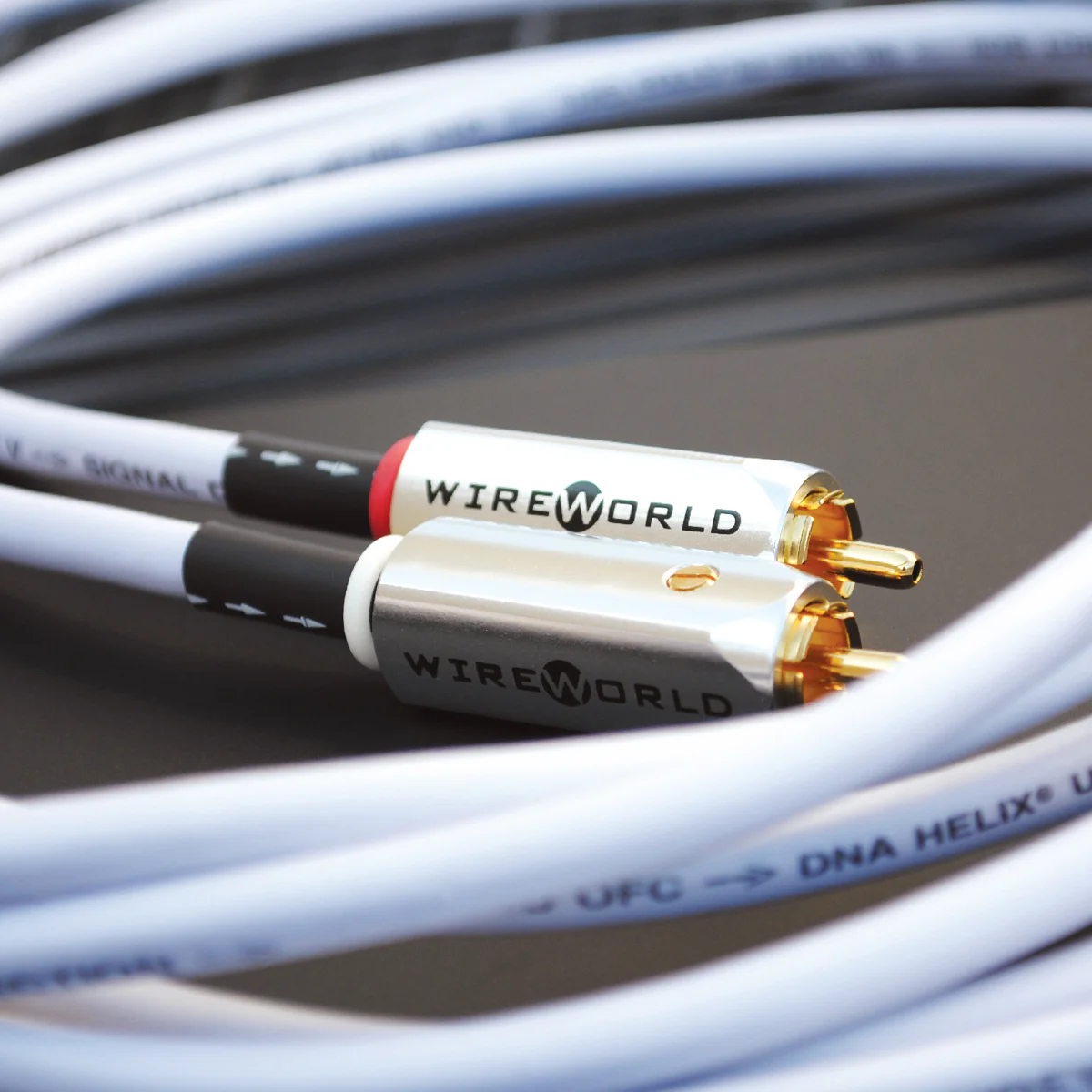
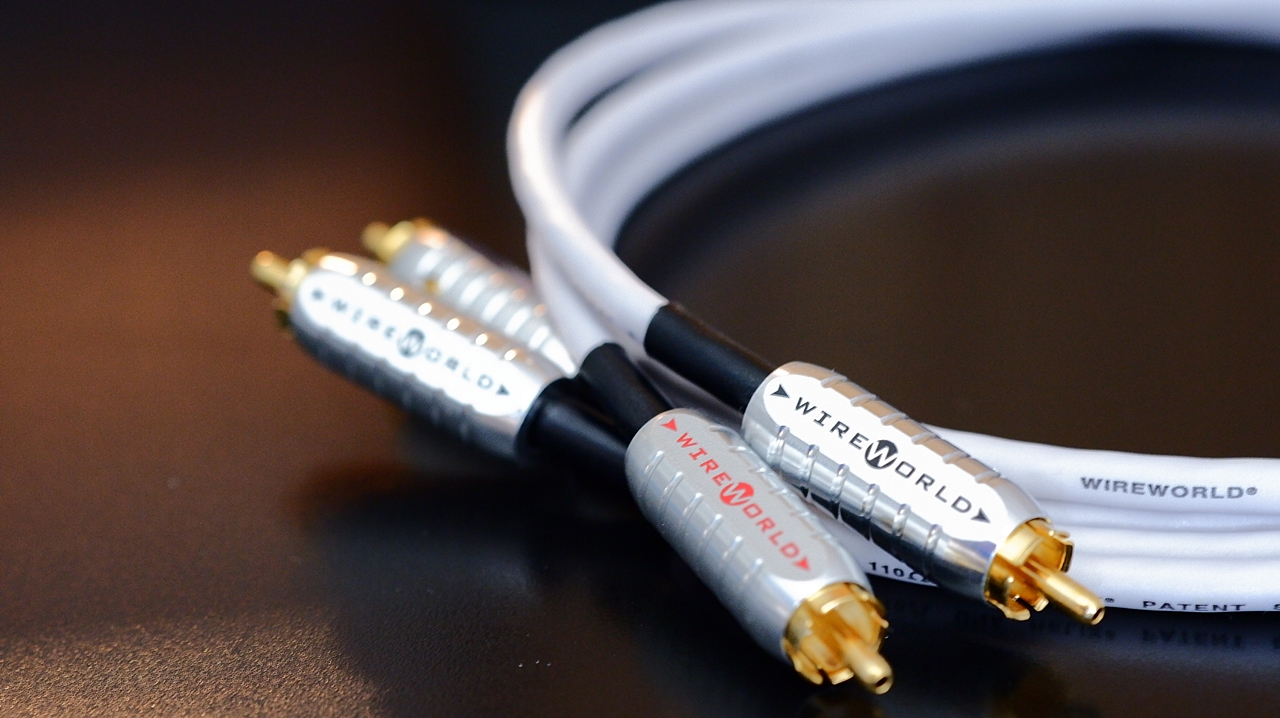
The Solstice 8’s appearance is very much to my taste — which was one of the reasons I bought it. The cigar-shaped aluminium shell RCA plug, like a little spacecraft, is genuinely handsome. While other WireWorld models tend to come in black, the polished plated finish here makes a good impression. The RCA plug, with gold plating applied over silver, is quietly luxurious. The contact grip is on the looser side, but that means less strain on the equipment during insertion and removal, and honestly this is probably about right. Picking it up, it feels not just slim but lightweight. Also, the conductor appears whitish in photographs, but in person it is a matt light grey.
Solstice 8 Sound Quality Check | Main System
I had originally purchased this with desktop PC audio or a secondary system in mind, but first I connected it to the main system — DAC Pro-Ject Head Box DS ⇒ amplifier AUDIOLAB 8300A — in order to get a clear sense of its capabilities. The speakers are Vienna Acoustics MOZART Signature T-2. This was a replacement for the DH Labs Pro Studio RCA (review pending), which sits in a considerably higher price bracket. Incidentally, DH Labs is also a Florida-based cable manufacturer, the same state as WireWorld.
 ポチップ
ポチップ
Well, switching to the Solstice 8, the first thing I noticed on listening was that the volume seemed to have dropped. The sound is lively and very bright — bright and gentle, like spring sunlight. Imaging is pinpoint. There is quite a lot of reverb, but there is a distinctive character to it: a kind of delayed, out-of-phase quality to the decay. Behind that drifting ambience, the midrange and upper frequencies reveal a surface that is sharp yet slightly rough-edged. The level of detail is modest, as befits an entry-class cable — the type where fine detail tends to be masked by the abundance of reverb.
Musically, the presentation is rather matter-of-fact, with shallow shading and contrast, tracing the surface of the music rather than drawing it in depth. The dynamic range feels slightly narrow. There is a certain coquettish lightness that tickles the ear, but this is a silver-plated cable that leans toward brightness in the high frequencies, and one hopes burn-in will address that. The bass is clearly lacking, which makes the soundstage rise up and feel somewhat compact. Even so, within those constraints, the precise pinpoint three-dimensional imaging is distinctly WireWorld. There is no barrel-type distortion of the kind you get with wide-angle lenses — the spatial spread itself is accurately aligned, which is pleasing.
Solstice 8 Sound Quality Check | Sub-System A
My impressions from the main system were not particularly encouraging, and I was beginning to think this cable might end up in a drawer, but I pressed on with further testing in a secondary system of a different character. The current Sub-System A consists of Q Acoustics 3010i (review pending) speakers, a Simaudio Moon Neo 220i integrated amplifier, and a CREEK Evolution-CD as CD player and transport. The Solstice 8 RCA is placed between the ATOLL DAC100 Signature (review pending) and the Simaudio Moon Neo 220i. My usual reference cable here is the SUPRA EFF-IRB RCA cable (review pending). All cables were connected in the direction indicated on the cable throughout this listening session.
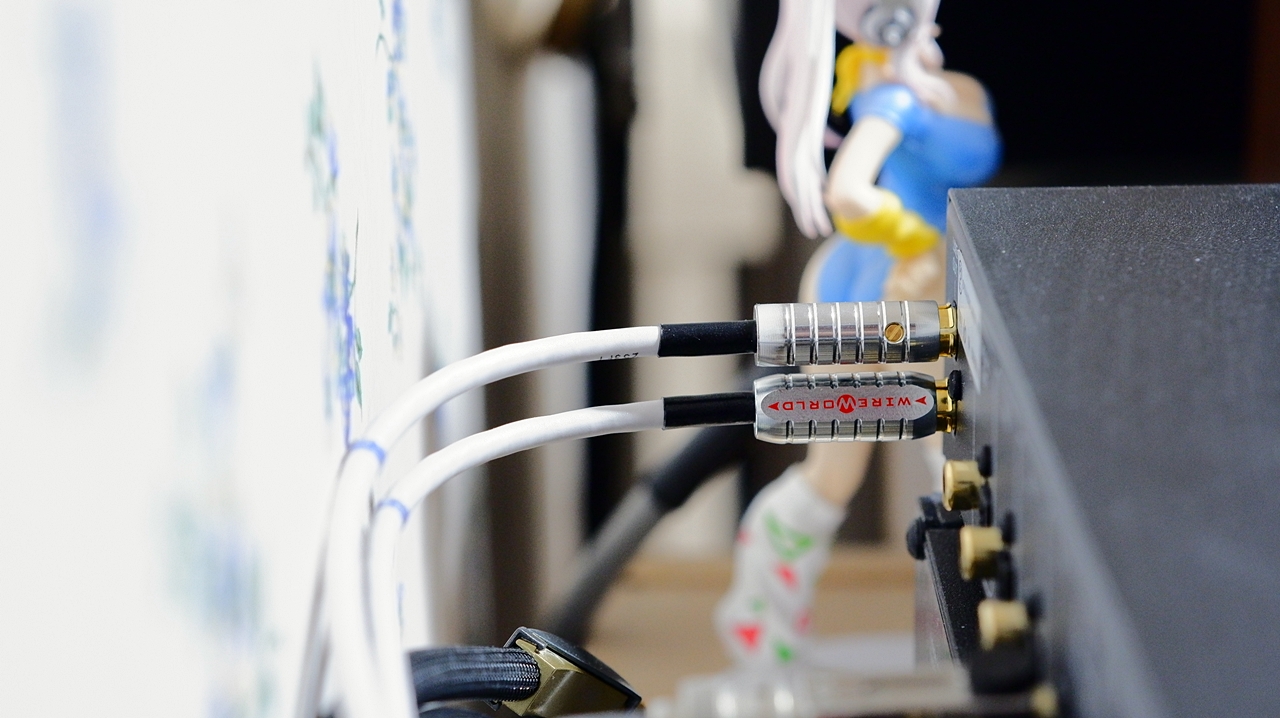
Oh? Here, the negatives that bothered me in the main system are much less noticeable. When paired with an amplifier whose natural character is on the darker side with an excess of bass weight and control, the Solstice 8 seems to compensate by adding brightness and improving tonal balance — the two weaknesses appear to cancel each other out rather neatly.
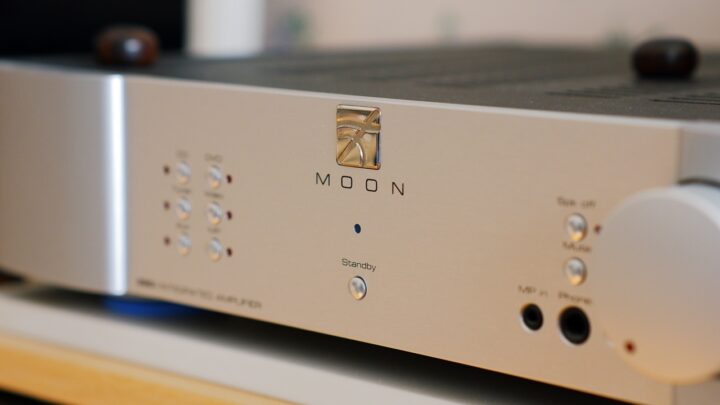
It does make me wonder whether, by doing so, the cable is also neutralising some of the Simaudio’s own strengths — a thought I cannot entirely dismiss. And yet, despite being essentially opposite in character, the pairing is surprisingly well-matched. This reminds me somewhat of what happens when the ONKYO C-S5VL — with its very light bass — is used with the Moon Neo 220i: the amplifier corrects for that lightness, the frequency balance ends up pleasingly even, and the SACD player’s sonic shortcomings become almost imperceptible.
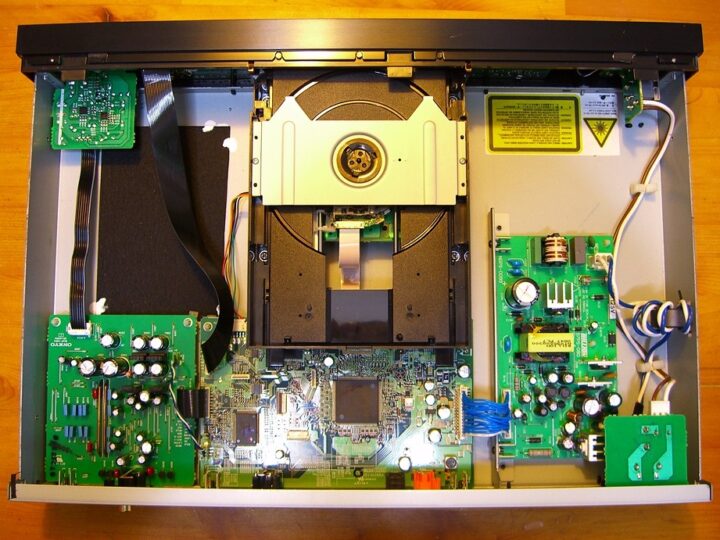
In a system that already leans towards the bass end of things, a cable like this — with its shallow low-frequency extension — can work as a corrective, flattening the tonal balance by mutual cancellation. It should be noted, though, that when components of differing characters are combined carelessly, they are statistically more likely to produce an awkward mismatch than a happy marriage. This time, it was a fortunate pairing.
Whatever else one might say, this bright tonal character is genuinely one of a kind. Everything is bathed in the equivalent of midday sunlight — there are simply no shadows, in the best sense of the phrase. Lustrous and supple. Not particularly forceful, but with a feminine softness and gentleness to the sound. Once you find the right place for the Wireworld Solstice 8, it seems like the sort of cable that will earn its keep regardless of the grade of the system around it. The sound is on the slightly soft side, though not as one-sidedly soft as my old Solstice III — the imaging itself is sharp. A graceful, bright beauty of tone with a pleasing sheen, into which incidental resonances gently dissolve, meaning finer detail is somewhat subdued.
The weaknesses are: the bass, which sounds looser and lagging behind the treble, is insufficient in weight, so that even with amplifier compensation the bassline remains an understated presence; and the direct sound is somewhat thin overall. The musical flow leans towards the languid, with a lack of drive and energy. The compatibility here is not bad, but comparing it honestly with the SUPRA EFF-IRB RCA cable (review pending) that I normally use, I would say the Solstice 8 sits around two to three grades below in terms of objective sound quality. ※ Relative to WireWorld’s own lineup hierarchy.
 ポチップ
ポチップ
Solstice 8 Sound Quality Check | Desktop PC Audio ⇒ Adopted for Regular Use
The real intended purpose for this WireWorld Solstice 8 was always PC audio. On a cramped desktop, if you want to push the DAC and amplifier as far back as possible, you really do not want stiff, poorly-flexing cables running between them. However, RCA and digital cables designed for pure audio use often have rigid conductors or elaborate shielding structures, and it is not uncommon to find they require more clearance behind the equipment than you might expect. The WireWorld Solstice 8, though, is just 5mm in diameter, and multiple reviews describe it as flexible and easy to route. Its light grey, near-white appearance also means the cable does not stand out unpleasantly on my white desk.
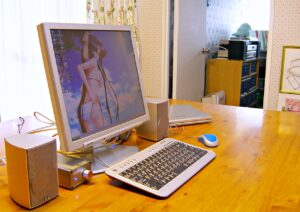
For reference, my desktop PC audio setup as of 2025 is as follows:
| PC | Lenovo ThinkCentre M75q Tiny Gen2 |
|---|---|
| USB Cable | SUPRA USB 2.0 |
| DDC | Trends Audio UD-10.1 (review pending) |
| Digital Cable | QED Reference Digital Coaxial |
| DAC | Musical Fidelity V90 |
| RCA Cable | ISODA HA-08PSR ⇒ WireWorld Solstice 8 |
| Digital Amplifier | ROTEL RDA-06 |
| Speaker Cable | AET EVO-F125 |
| Speakers | Monitor Audio MASS-2G (review pending) |
Something along those lines.
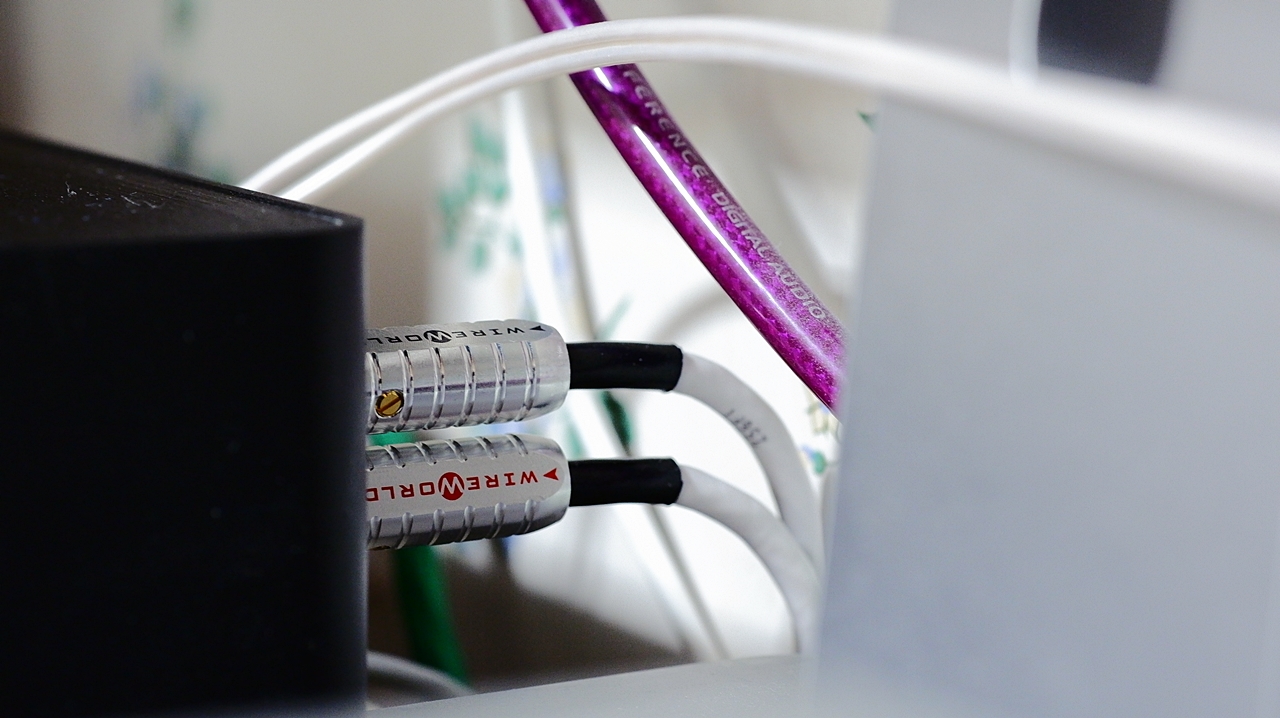
The WireWorld Solstice 8 tends to produce a tonal balance where the bass is loose, the midrange does not project forward, and the treble is prominent. In PC audio, by contrast, compact desktop speakers often artificially boost the 100–200Hz region, which causes the most common use case — spoken voice, particularly female voices — to sound thick and unnatural, an effect that frequently creates a sense of wrongness. Here, inserting the Solstice 8 works to neutralise that exaggerated frequency balance in small speakers, meaning the treble-forward, bass-light character that feels like a weakness in a proper hi-fi system actually becomes a positive influence.
Phase Performance
One of the advantages that is distinctly WireWorld — present even in an entry-class cable like the Solstice 8 — is the phase coherence: sharp, pinpoint imaging and genuinely three-dimensional stereo localisation, as you would expect of a modern high-fidelity cable. The absolute scale of the soundstage, the density of tone, the dynamics, and the fine detail all fall short of the upper models, as one would expect — but the transparency, with images that localise cleanly in all directions, up, down, left, right, and into the depth of the stage, is the polar opposite of what you tend to get from cheap cables: that flat, compressed, centrally-collapsed, indistinct and chaotic stereo image. In my own setup, the speakers are entirely hidden behind three monitors — a configuration deeply unfavourable to three-dimensional sound reproduction — and yet even so, the Solstice 8 delivers a noticeably clearer 3D stereo image than other entry-class cables I have tried.
The Double-Edged Nature of Silver Plating
One of the virtues of the Solstice 8 is a tonal character that is unmistakably silver — very bright and lustrous. The kind of colouration associated with the more flamboyant end of high-end audio sound coming through clearly even in an entry-class RCA cable is a genuine selling point. PC audio tends to fall into a colourless, monochrome sound that can feel rather joyless, and plugging in the Solstice 8 allows you to create a richer, more vividly coloured tonal character that feels closer to proper hi-fi.
One slight concern: whether this is actually due to the silver plating, or the purity of the underlying OFC, or the particular parallel single-wire geometry, I cannot say with certainty — but there is a slightly rough edge to the high frequencies, a faint tendency to sting the ears. When the cable was new, I hoped burn-in would take care of it, but even after several hundred hours of use, it has not changed much. In practice, this contributes to a needle-sharp, crisp sense of imaging, so it cannot simply be called a flaw — but it does make the Solstice 8 particular about where it is used. For what it is worth, the level is not beyond my personal threshold of tolerance, and I think it should be possible to neutralise it to some degree with other accessories or cables. ※ That said, for anyone who simply does not get on with the sound of silver-plated cables, this is clearly a tonal character to avoid.
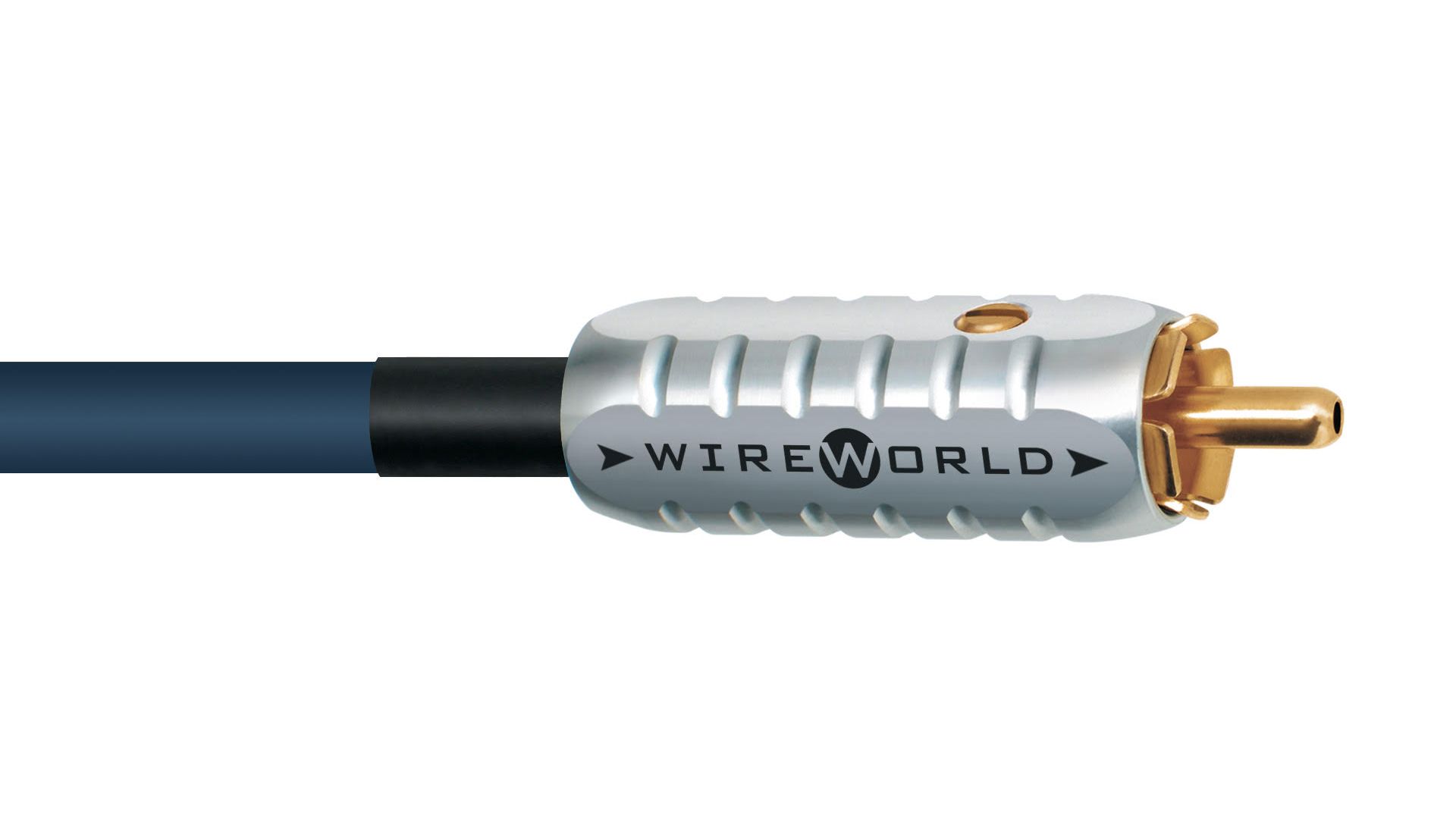
Incidentally, the specification difference between the lower model Luna 8 and the Solstice 8 is simply the presence or absence of silver plating. If you are after more bass weight or a more neutral tonal character, the unplated OFC Luna, or the one-step-up Oasis, would likely be the better choice.
 ポチップ
ポチップ
 ポチップ
ポチップ
Bonus: Wireworld Solstice 8 vs Solstice III — A Comparison
In the early 2000s, the first WireWorld cable I ever bought was the Solstice III, an ancestor of today’s Solstice 8. At the time, I was looking for an affordable but genuinely capable RCA cable for AV use — a Sky PerfecTV tuner, a video recorder, and so on — and this was what I landed on. I bought four pairs, importing them personally from the US, and I recall they were less than $20–30 a pair at the time.
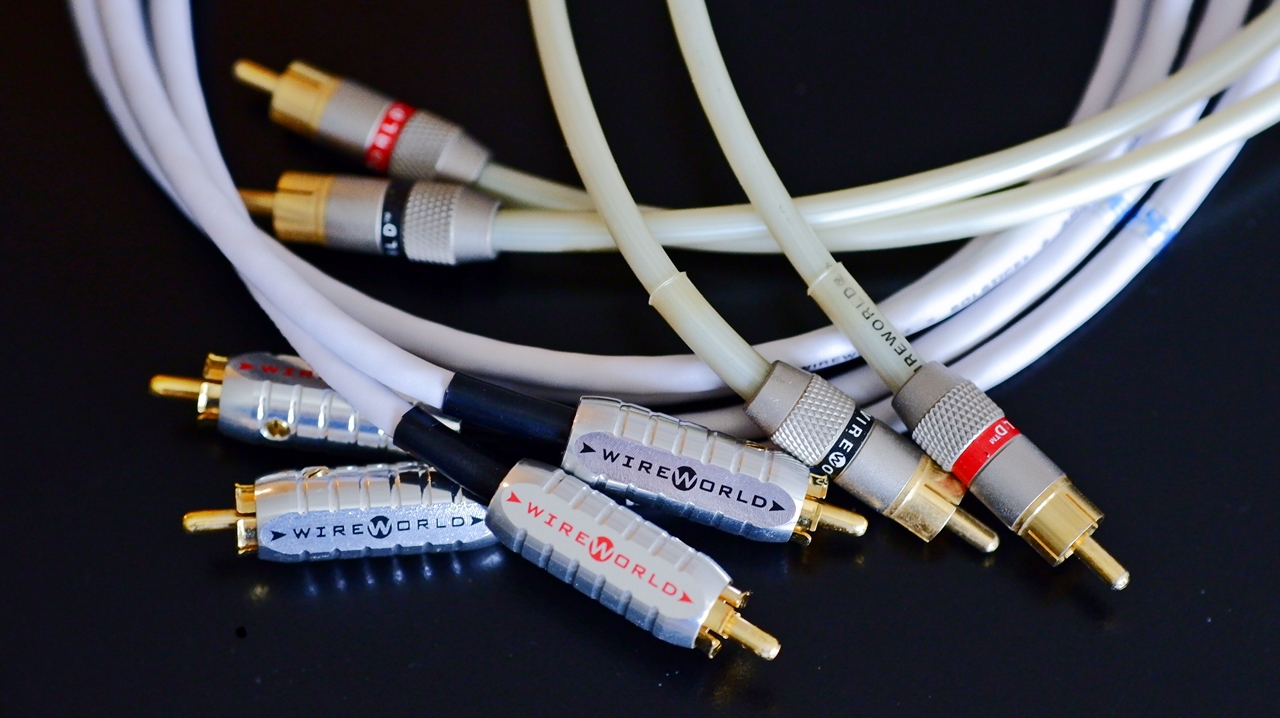
The Solstice III also had a bright, gentle, and soft tonal character as its defining trait, and I was surprised to find that the fundamental sonic concept carries through to the Solstice 8 rather more directly than I expected. Both use a similar slender white conductor, but the Solstice III’s conductor is unplated OFC — and the insulation is, remarkably, described as Teflon. The outer sheath, however, appears to be PVC: over the years it has yellowed and become sticky from humidity. Incidentally, the Solstice 8 is made in Taiwan, whereas this Solstice III is Made in USA.
The Solstice III’s sound quality was, shall we say, representative of its era — even at the time it struck me as broadly commensurate with its price, and no more. But it has one merit that the Solstice 8 lacks: a springy, rhythmically alive musicality. Its resolution and transparency belong to their time, and the phase coherence is nothing to write home about; the stereo image tends to be a rather compact, bunched cluster centred in the midrange. With a soundstage and frequency range this narrow, there is honestly no place for it in a modern system, and it has been sitting in storage ever since — though even so, it offered a meaningful improvement over the red-and-white cables that come bundled with equipment.
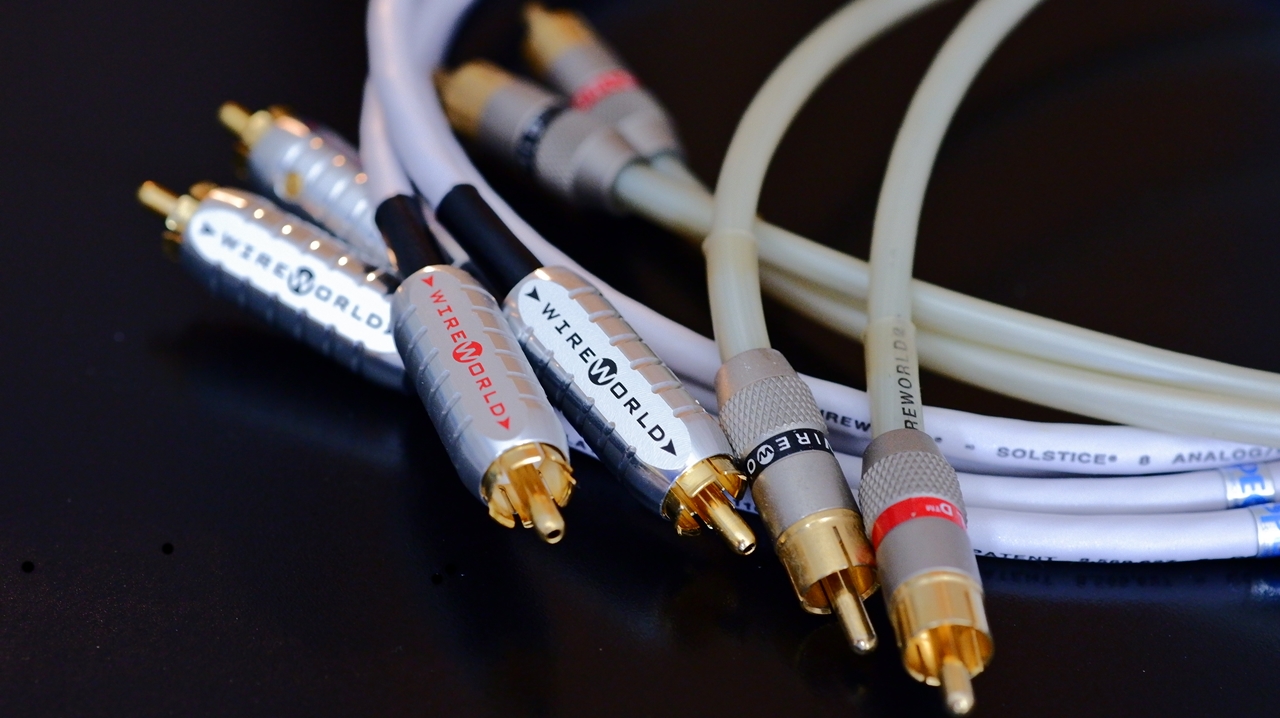
The sonic gap between several generations of development and today’s Solstice 8 is far more than just one step forward — it is a wholesale improvement across every dimension: transparency, phase coherence, soundstage, and tonal refinement. That said, the current Solstice 8 prioritises spatial reproduction, and in doing so the sense of energy becomes rather attenuated, with a tendency towards the languid — and for sheer rhythmic vitality and vivid expressiveness in the midrange, the old Solstice III still has the edge, I feel.
~ Summary ~
Given that it was a heavily discounted clearance price tied to the model change, I had been considering buying additional units of the Solstice 8 if it turned out to suit my tastes — but having actually listened to it, the urge to do so was not particularly strong. Cables whose looks appeal to me usually turn out to appeal to me sonically as well, but with this one, while it was a perfect fit for my original goal of improving the sound quality in my PC audio setup, whether there are other places to use it is another question — and honestly, I find it quite specific about where it works.

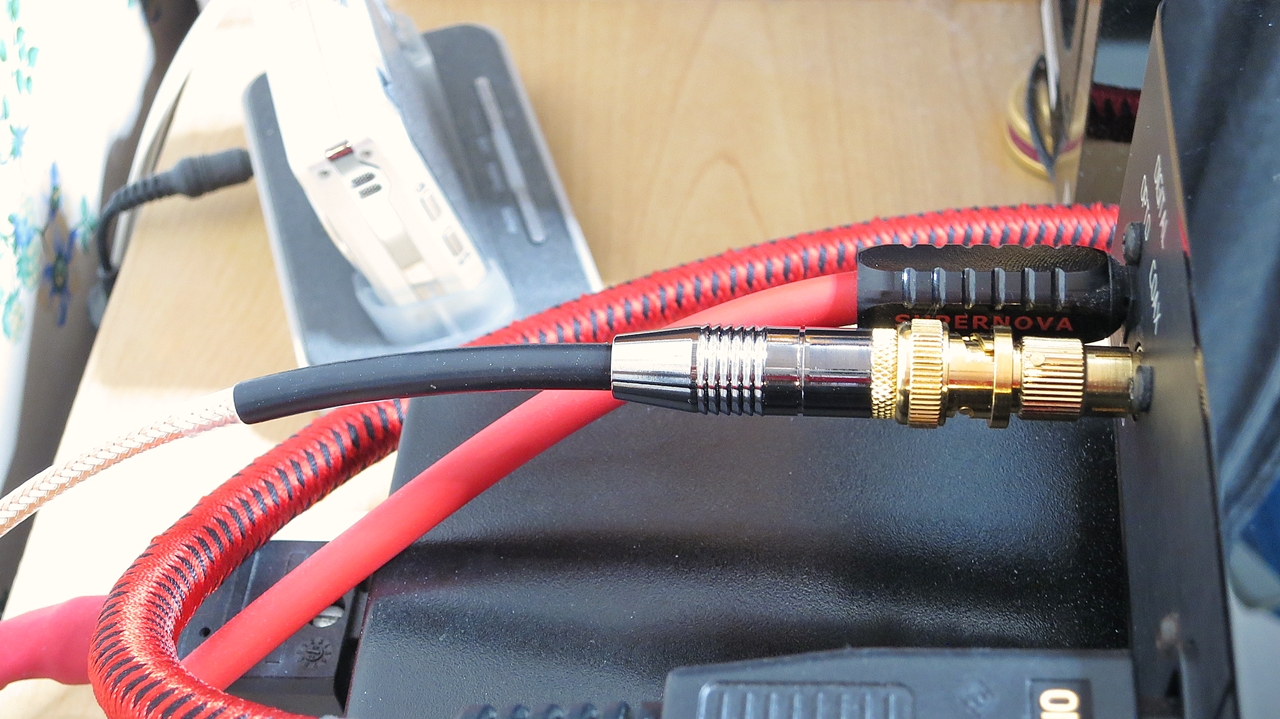
I own several other WireWorld cables, and there are models I am genuinely fond of — the optical digital cable Supernova 7 (review pending) and the coaxial digital cable Silver Starlight 7 (review pending), for instance. Compared to those, however, I cannot shake the impression that the Solstice 8 has been deliberately held back to a level of quality appropriate to its grade. In a pure hi-fi system, it falls just slightly below the minimum level of sonic quality I look for in an RCA cable — that is my honest assessment. The combination of a 23AWG conductor that is, frankly, simply quite thin in terms of its parallel single-wire geometry, together with the treble-tipping influence of the silver plating, results in a sound where brightness and the lack of contrast that accompanies it are the dominant qualities, for better or worse. And yet — from WireWorld’s perspective, what they have done is: within a lineup of Terra → Stream → Luna 8 → Solstice 8 → Oasis 8 → Equinox 8 → Eclipse 8 that otherwise uses unplated copper conductors throughout to maintain a neutral sound, deliberately insert just one silver-plated model — the Solstice — to offer an option for those who want active colouration within a budget. In a sense, it is a gift for the truly devoted audiophile.
In my own setup, the sound coming out of the desktop PC audio has been a source of dissatisfaction for years — stuck in that colourless, monochrome quality so typical of digital output from a PC, and seemingly unable to escape it. As long as you are using the digital output from the PC itself, the sound simply does not reach the level of a hi-fi system that reflects a genuine aesthetic sensibility — the kind of sound that feels considered and refined — and that fundamental problem was the one the WireWorld Solstice 8 resolved so neatly. Through a form of high-end-flavoured colouration and enhancement, it brought a polished, bright and rich tonal character along with a more coherent sense of phase — and at last, I was able to break free from the monochrome. Objectively, it remains in the entry-class bracket — the quality is middling and appropriate to its US price point. And yet, for use cases where the ceiling is naturally limited, such as PC audio with its physical constraints, I am confident in concluding that the Solstice 8 is entirely effective at removing bottlenecks and raising the overall quality of an entry-level system.
ポチップ

Auto Translated by CS4.6