【Nordost Silver Shadow Coaxial Digital Cable Review】
Part 1|Part 2
Sub-system A: Comparison with the Wireworld Supernova7
In the audition on the main system, the Nordost Silver Shadow lost narrowly, largely down to a matter of compatibility. As it happens, whichever cable lost that audition was always destined to become an upgrade for the coaxial digital cable on either sub-system A or C, so from here I’ll move on to testing it on each of the sub-systems in my study.
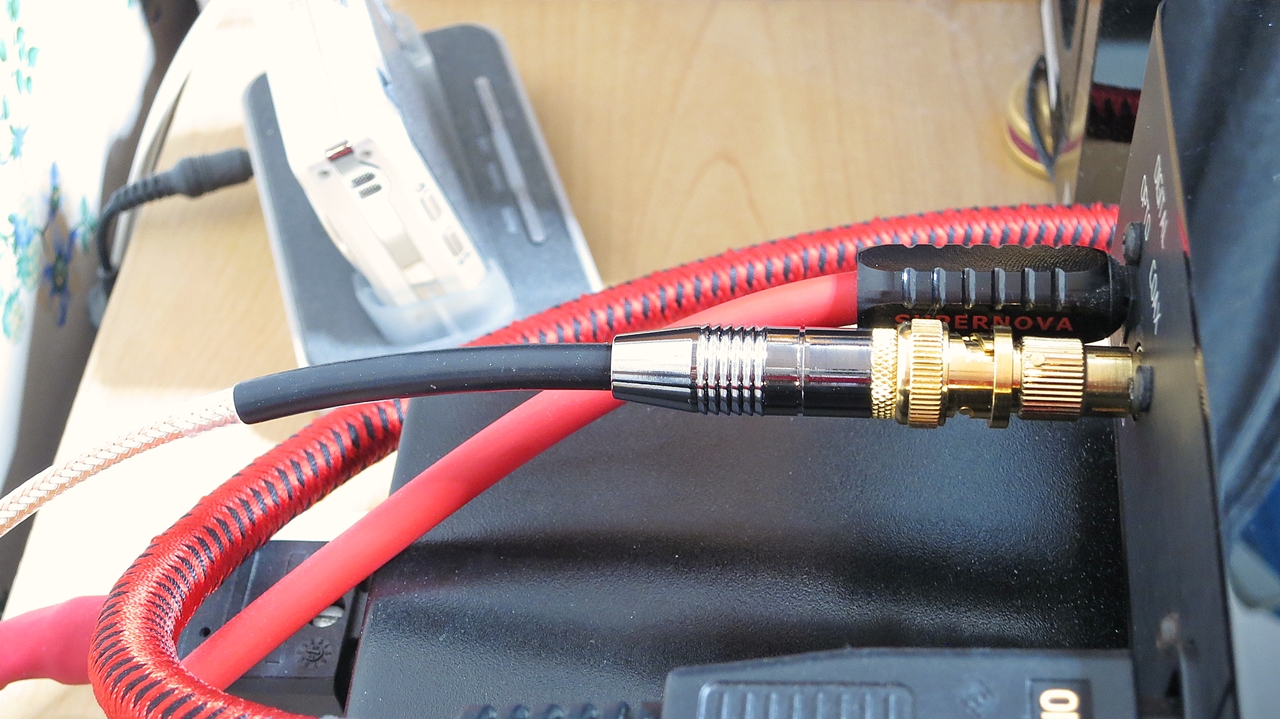
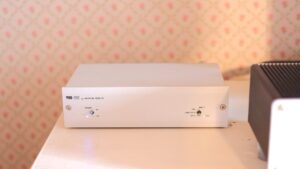
Sub-system A’s proper resident is the ONKYO A-1VL (the “A” in A stands for A-1VL), but since it’s currently been temporarily promoted to the main system, the ROTEL RDA-02 has stepped in as its stand-in. The digital cable in this system runs from the digital output of the CREEK EVO-CD to the Micromega VARIODAC (article pending). The usual reference is the Wireworld Supernova7 (article pending), a TOSLINK optical digital cable.


 ポチップ
ポチップ
I’m perfectly happy with the Wireworld Supernova7, and there’s really no need to replace it with another digital cable at all — but the coaxial input happens to be free, so while I’m at it, I thought it might be nice to run a coaxial cable of a different tonal character alongside it, switching between the two digital paths depending on the album’s sound. I usually keep an Acoustic Revive DIGITAL-1.0R-TripleC-FM connected in parallel, chasing the S/N improvement that its Finemet effect (presumably) offers, but this time I decided to try putting the Nordost Silver Shadow in that slot instead…
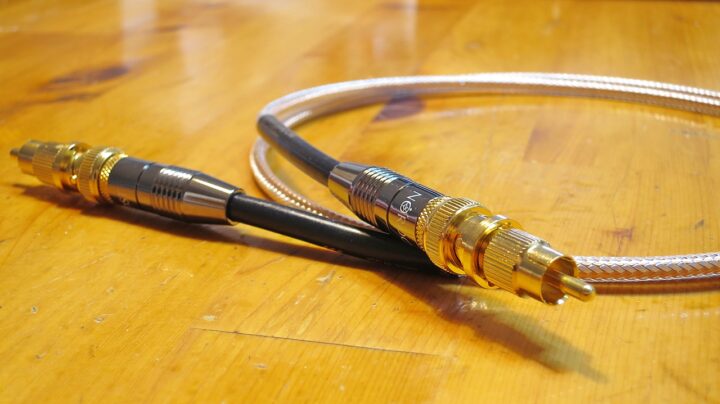
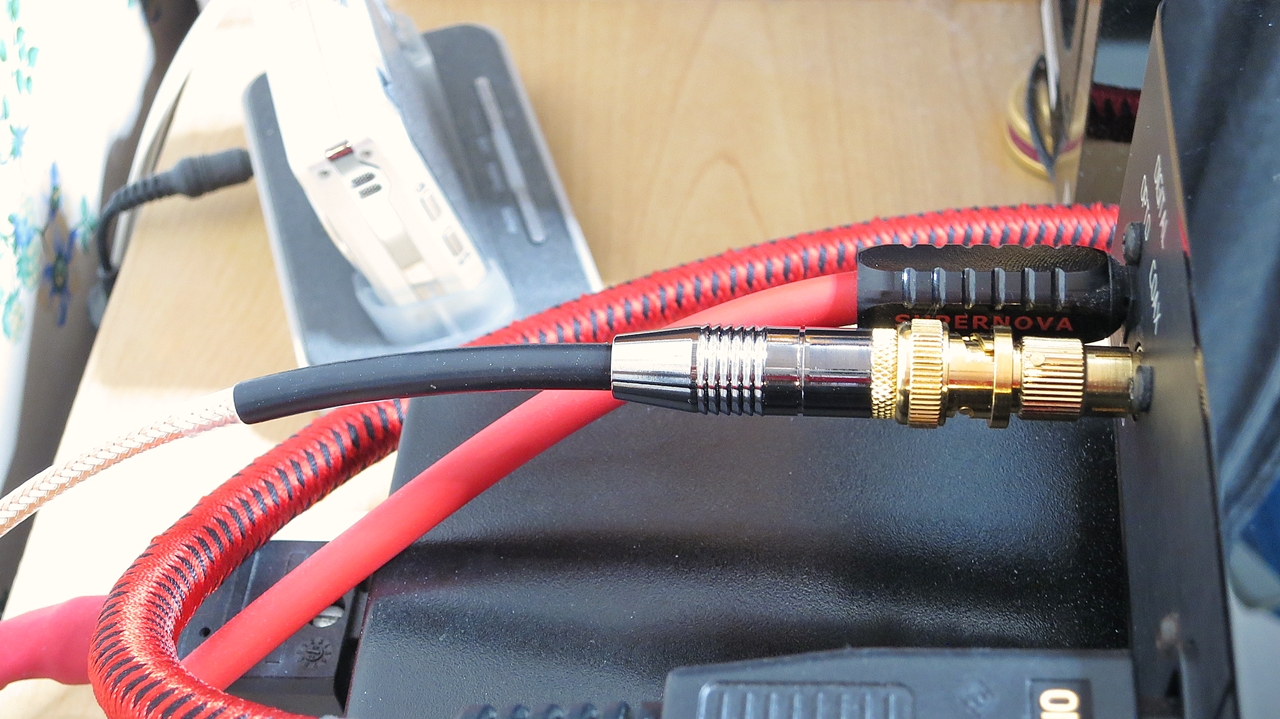
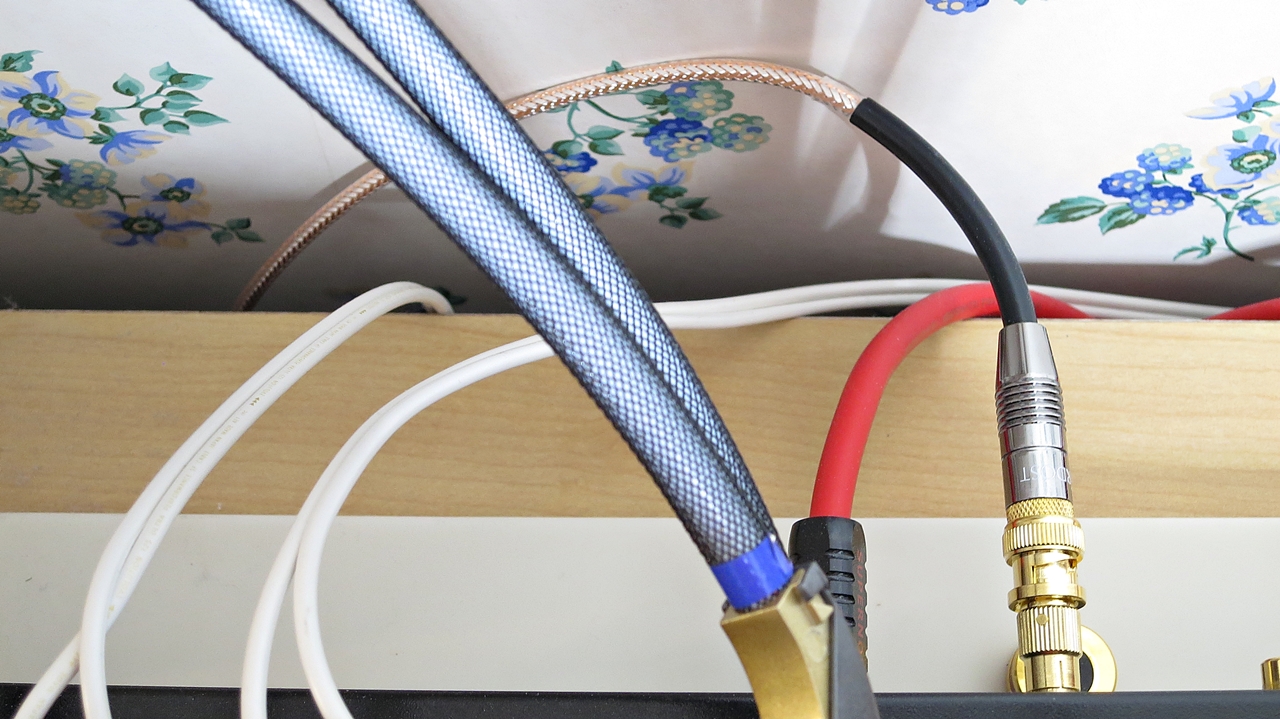
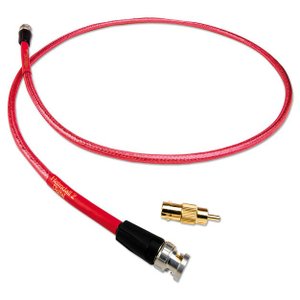
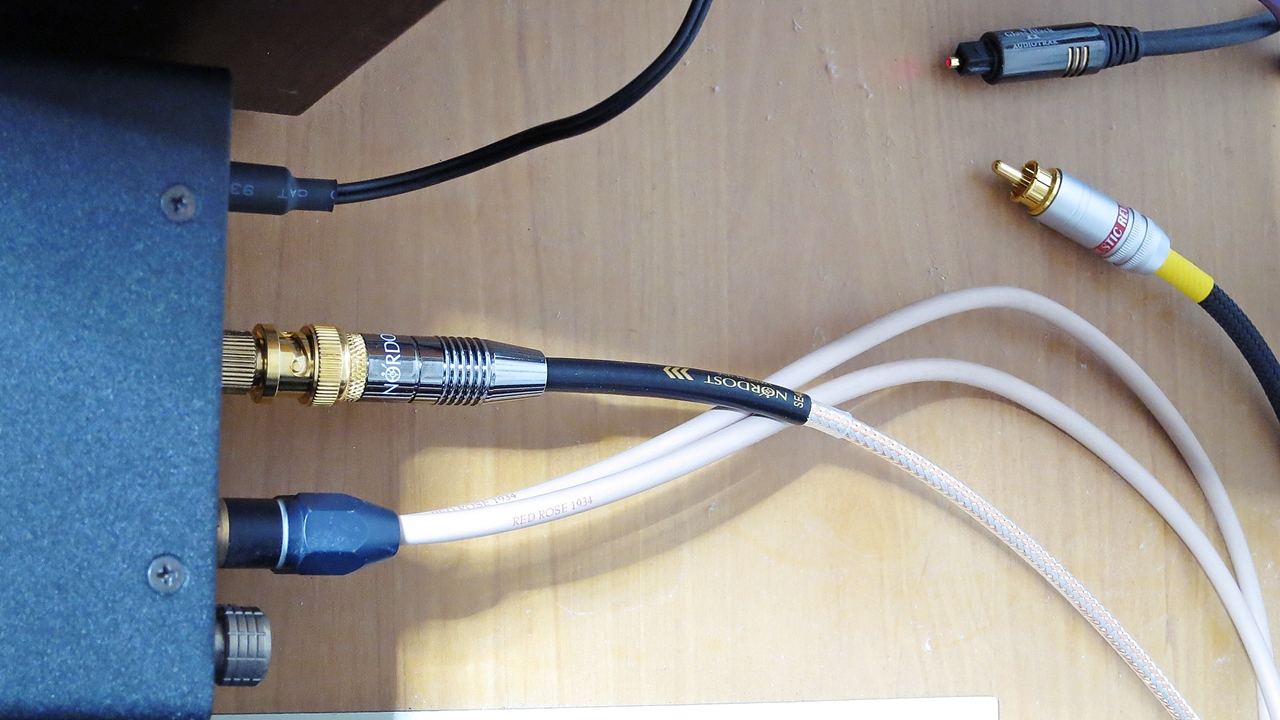
So when I went to wire up the Silver Shadow on sub-system A, an unexpected problem cropped up. The Nordost Silver Shadow I’d obtained this time turned out to have BNC plugs rather than RCA plugs. (The shop told me it was RCA, but… what arrived was different) For a coaxial connection you need to fit the supplied BNC-to-RCA adapter plug, which makes the overall length of the plug assembly considerable — and given that sub-system A is set up against the wall, I found myself in the rather absurd position of having to pull the entire chest of drawers forward just to get the cable connected. I could have forced it into a bend, but this isn’t a cheap cable, so that was obviously out of the question. In effect, given the furniture layout of my study, this meant the Silver Shadow was essentially unusable here… Still, just to hear what it sounded like, I did a makeshift, rather unsightly temporary hook-up, pulling the CD player forward for the occasion.
As for the sound itself… hmm. Soft, is the word. Its gentle, unassuming quality that doesn’t intrude even as background music is appealing. Perhaps down to the difference in amplifiers, but the softly-rounded impression was even more pronounced than it had been on the main system. There’s a musicality to it that’s appealing, but there’s also a sense that the sound clumps together and doesn’t quite open up. I listened repeatedly, switching back and forth between this and the TOSLINK Wireworld Supernova7, and the conclusion is: the Supernova7 simply sounds better. Beyond the sheer quantity of detail, the Supernova7 also wins out in the amount and unravelling of hall reverberation and spatial expanse. On musicality the Silver Shadow edges ahead slightly, but it left me with a “well, this is its own thing, I suppose” feeling rather than any strong sense that running both together was worthwhile… sigh.
Pulling myself together — Sub-system C: CREEK CLASSIC CD × Musical Fidelity V90 DAC
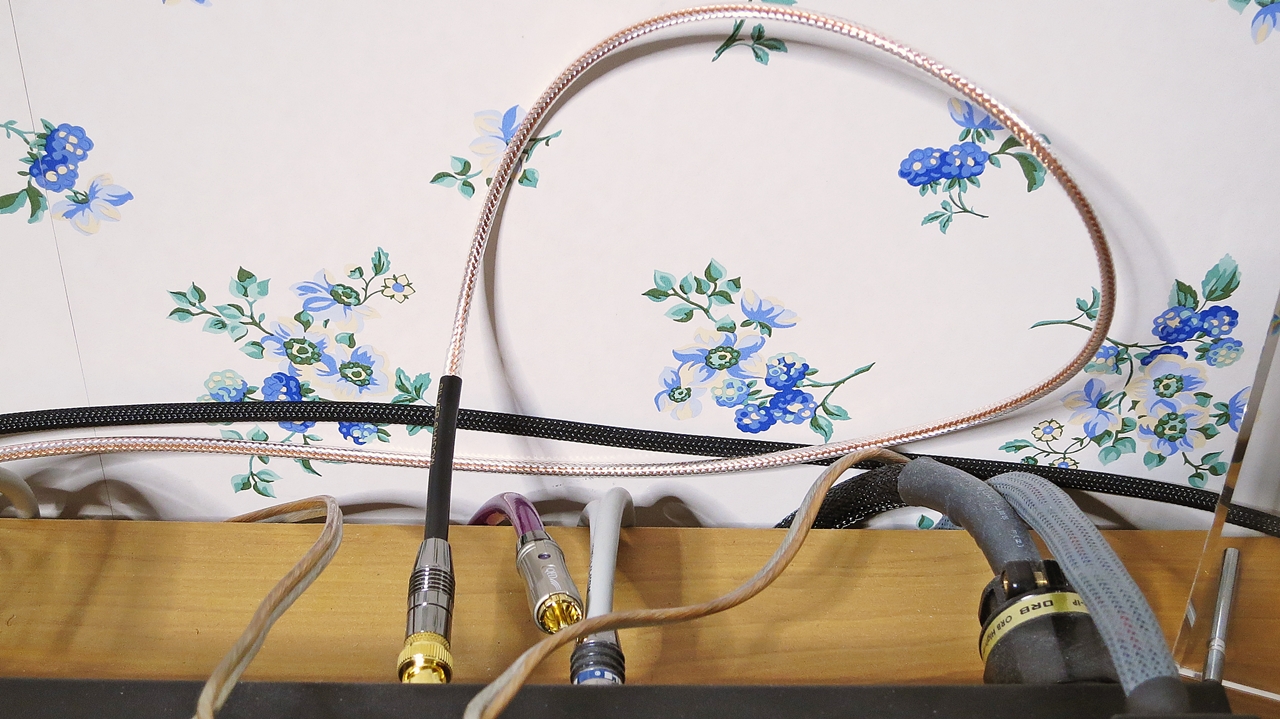
The “C” in sub-system C stands for CREEK. On the coaxial digital link connecting the CD player CREEK CLASSIC CD to the Musical Fidelity V90 DAC, I’d been using the QED Reference Digital Cable, chosen for its musicality even at some cost to sound-quality refinement. Now it’s up against a cable with a five-fold price difference at UK list price.
Here, it’s really a different league altogether, and the verdict goes overwhelmingly to the Nordost Silver Shadow. With the Silver Shadow, the attack takes on a rounded quality, and a distinctive elasticity and softness in the low-mids becomes dominant — so there’s a slight sense that the digital cable’s own character is pushing a bit too far forward — but the mildness in the treble is somewhat compensated for by the Red Rose Music 1934 sitting on the DAC’s output side. The Silver Shadow’s rich, bright expressiveness in dynamics, along with its mild warmth, matches beautifully with CREEK’s brick-red colouring, further reinforcing the warmer, more musical direction the system already leans towards. What unfolds is a charming, enjoyable world coloured in cherry-blossom pink.
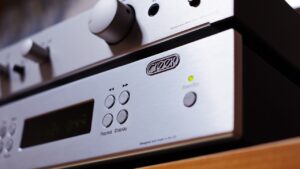
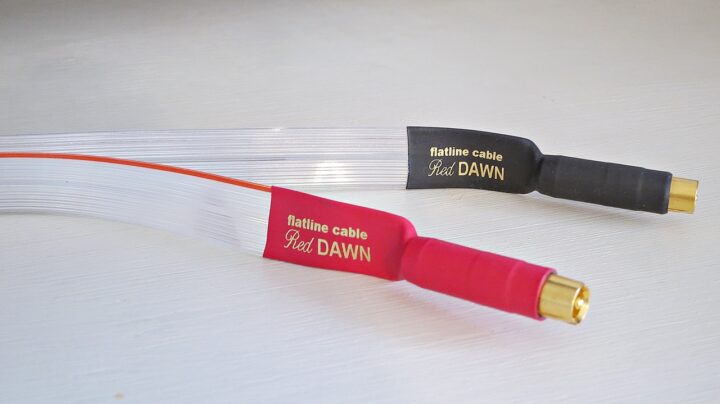
The QED Reference Digital Cable is likewise a warm, musical digital cable, but where the QED carries a certain blurring quality typical of stranded conductors, the Nordost Silver Shadow leans towards a much smoother sound, at the cost of somewhat reduced granular detail. Within that smooth, gentle-edged rendering, if you listen closely you can find, deep inside, the same taut transparency found in Red Dawn and Blue Heaven — though the Silver Shadow never lets it show fully on the surface.
 ポチップ
ポチップ
One virtue of the Silver Shadow is that it never gets shrill even at high volumes. This holds true across the main system and both sub-systems A and C, and violins in particular never grate or catch the ear. As for piano, cables that can vividly render, without burying it, the low end of the piano — the pianist’s touch and pedalling, the resonant hum and decay of the bass strings under the left hand, the wavering of the resonance — are actually rare, which speaks to just how fundamentally superior this cable’s time-domain precision is. As a result, even with the CREEK system, whose fine detail tends towards a rather flat, “colouring-book” resolution, I was surprised to find the sense of resonance actually stirring the air coming through clearly. If I’m being greedy, I’d like just a touch more information, but that would require swapping out the EPOS ELS3 speakers.
Swapping the DAC: Musical Fidelity V90 DAC ⇒ Pro-Ject Head Box DS
On something of a whim, I swapped in the Pro-Ject Head Box DS (article pending), from Austrian Hi-Fi maker Pro-Ject, which offers higher resolution than the British Musical Fidelity V90 DAC. The Head Box DS runs the 24-bit/192kHz-capable Cirrus Logic CS4344, giving it a high-resolution sound character with a faintly cool, bluish-white tinge. Pairing that with the warm-toned pastel colours of the Silver Shadow means combining opposing vectors, so to speak — but curiously, the result was a carefully drawn-out rendering of each individual note, producing an even richer gradation of colour, and one that I quite liked. Overall, an organic, bright, warm-blooded sound tends to dominate, though the whole leans towards a softer character with a pronounced elasticity in the low end, so it may be somewhat picky about source material — but it has its own bewitching appeal, and I think opinion will vary depending on whether you welcome such an assertive, coloured presentation or not.
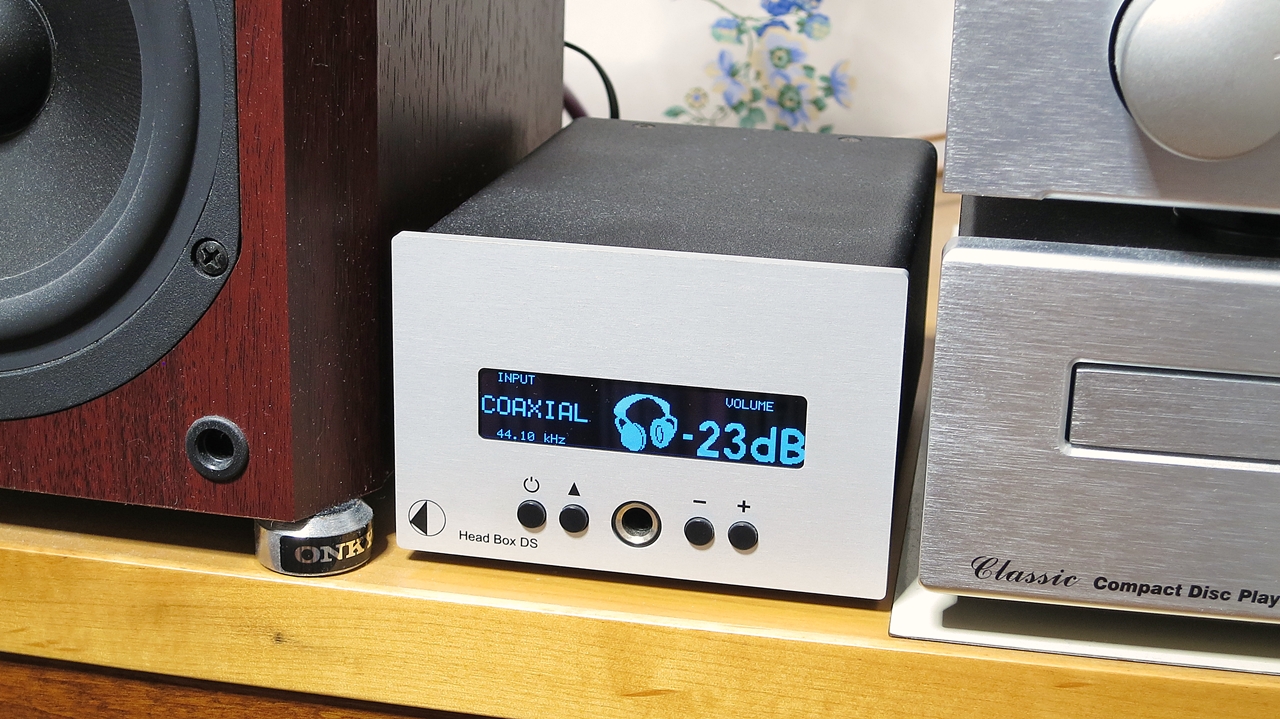
While at it, I also tried out other digital cables with this CREEK × Pro-Ject Head Box DS combination on sub-system C. The QED Reference Digital came out hazy and simply not in the running. Surprisingly, though, the one that proved a genuine match for the Silver Shadow — despite being its polar opposite in character — was the Acoustic Revive DIGITAL-1.0R-TripleC-FM. Acoustic Revive’s digital cable has a monitor-like tendency to convey the DAC’s inherent cool, tight character in a flat, straightforward manner — its weakness being a lack of dynamic expression that can sap the musicality — but in this particular pairing, the rhythm and time alignment became more accurate in the best sense, each note gained density and focus, and, oddly enough, musicality wasn’t lost either. With the Musical Fidelity V90 as DAC, by contrast, the Acoustic Revive cable lost mid-range contrast and dynamics, and the QED came out ahead there. This was a completely unexpected good match — combinations really are something you can’t judge until you try them, full of irregularities; genuinely a strange business.
Its weak points, I’d say, are a somewhat smaller soundstage and a treble that carries a faint metallic edge, right on the border of becoming harsh… This would need careful balancing elsewhere in the system. Also, once again, adding the Acoustic Revive DIGITAL-1.0R-TripleC-FM here improved the S/N of the whole system. Even the sound quality of the seemingly unrelated CLASSIC CD‘s RCA analogue output → Monster Cable m350i → integrated amplifier Sequel2 path improved in terms of S/N, moving towards a clearer, tighter direction. The Silver Shadow, by contrast, produces a larger soundstage, with the mids pushing forward and back into a somewhat “kamaboko”-shaped image, giving a warm, lively, relaxed, and bright impression. Do you go with the Silver Shadow, accepting its distinctly imported-Hi-Fi-style flourish and colouring while enjoying its positive expressiveness, or do you go with the Acoustic Revive, chasing a flat, tight, high-resolution monitor-style reproduction? In the end this comes down to horses for courses and personal taste, but however many times I swapped cables back and forth, I couldn’t quite settle on which was better — a rather luxurious sort of dilemma to find myself stuck with, perhaps…
~ Summary ~
And so, in a rather unplanned turn, the Nordost Silver Shadow has ended up finding its home in sub-system C — not really a scenario I’d originally envisaged. That system was originally built with musicality as the priority, deliberately biased in its sound-quality character, so adding a further layer of colouring here only strengthens the exaggeration of its musical worldview even more. But since sub-systems A and M already provide a reasonably straightforward, uncoloured character, I’m content to accept this embellishment here, and I intend to keep pursuing systems that let me enjoy the music itself, wholeheartedly, without reservation.
【Nordost Silver Shadow Coaxial Digital Cable Review】
Part 1|Part 2



Auto Translated by CS5