【aeco ABP-1111 vs ABP-0202 Comparative Review】
ABP-0202|ABP-1111 Structure|Plating Comparison|ABP-1111 Overall Verdict
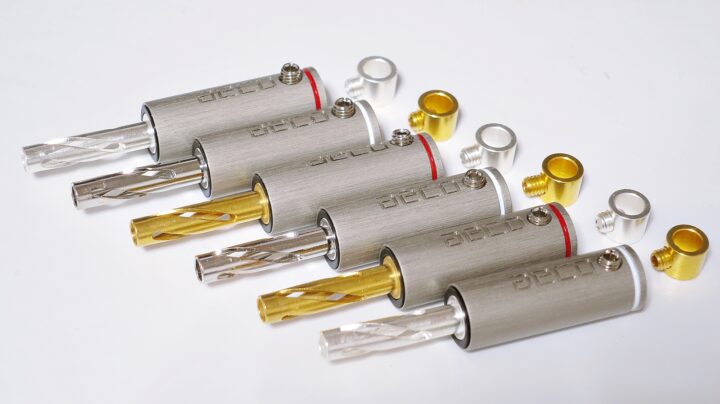
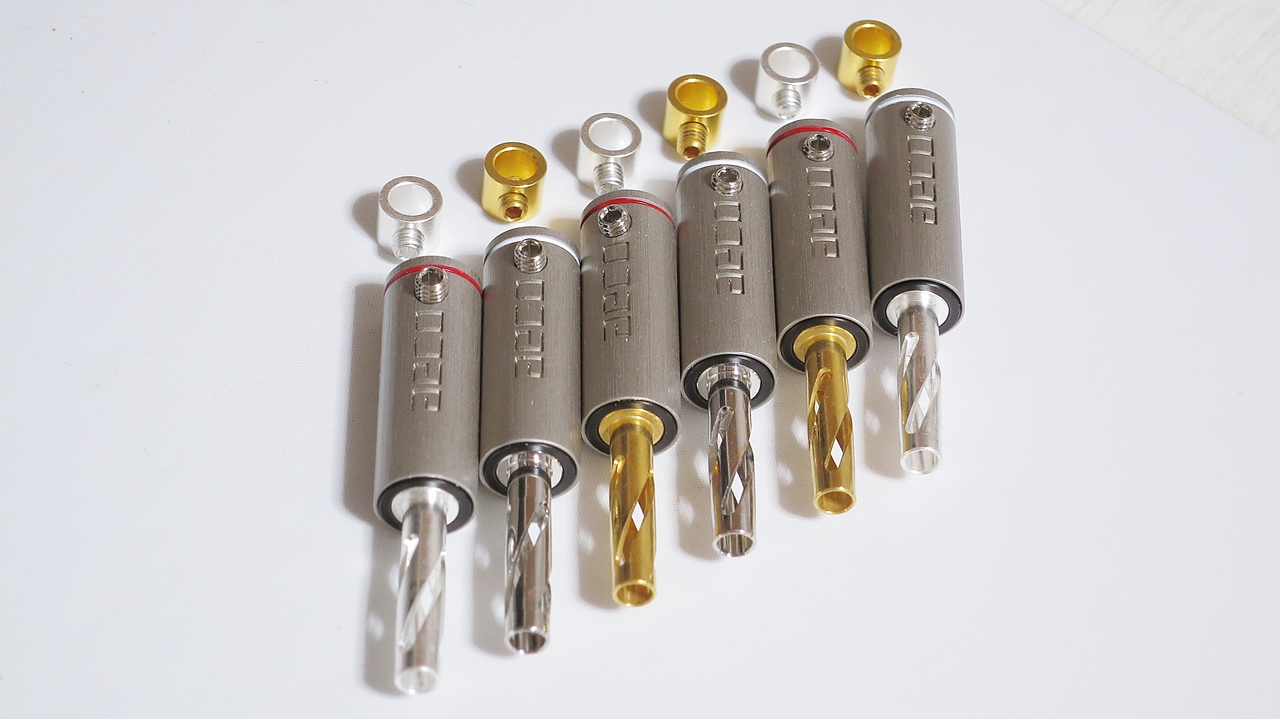
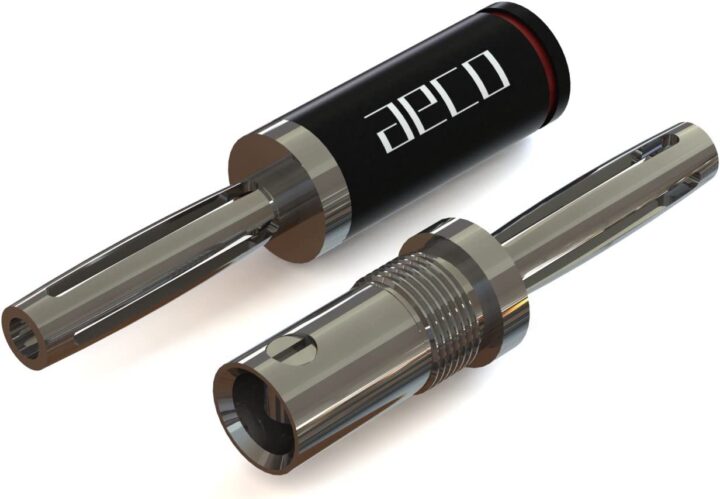
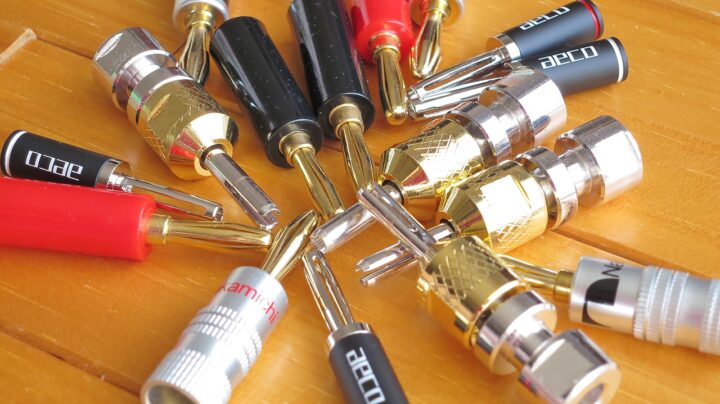
Continuing from the structural overview of the banana plugs by aeco — the premium brand of Taiwan’s AEC Connectors — here are my impressions of the sound quality, which is of course the main point. I hope this also serves as a useful reference on how plating affects sound quality, not just for aeco banana plugs but more broadly. The units compared this time are the ABP-1111 in gold, silver, and rhodium plating, plus the ABP-0202R (the older rhodium-plated model). The conductor material is high-purity tellurium copper. All versions use pure direct plating with no nickel undercoat — which is commonly used as a base layer — and the plating quality is extremely good. This is not the kind of fragile plating that starts flaking after a few insertions and removals of the banana plug.
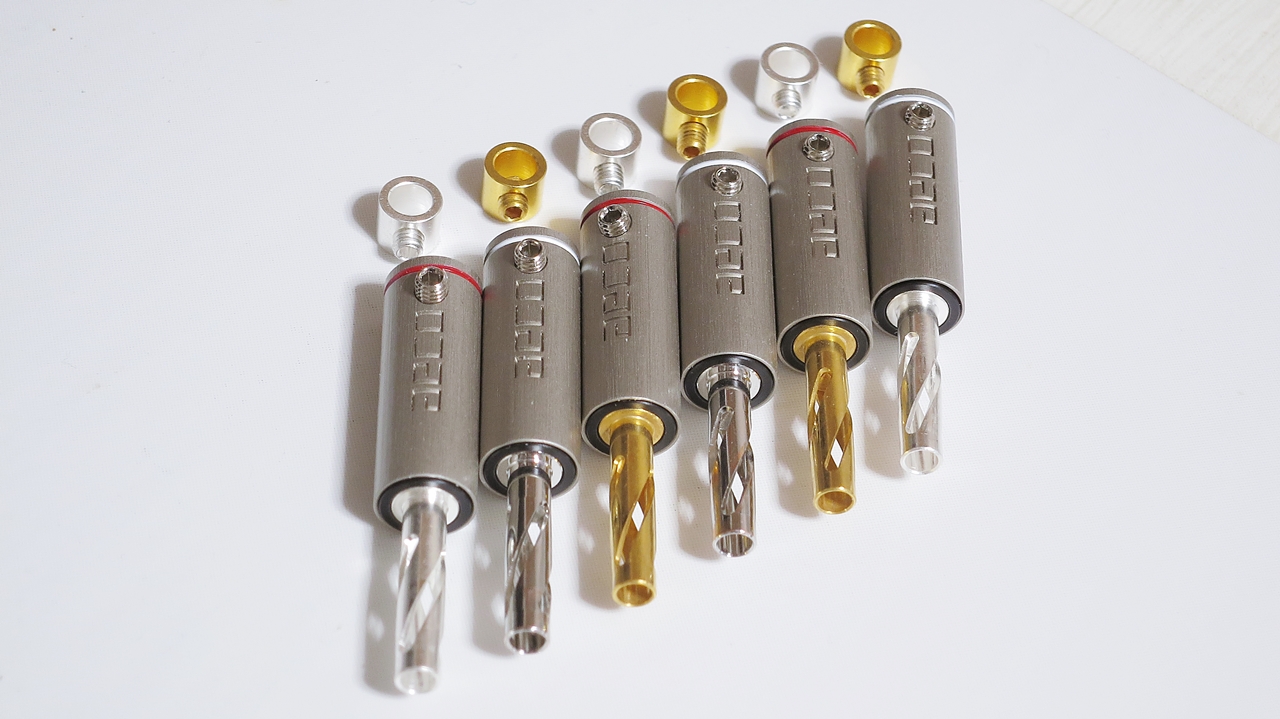
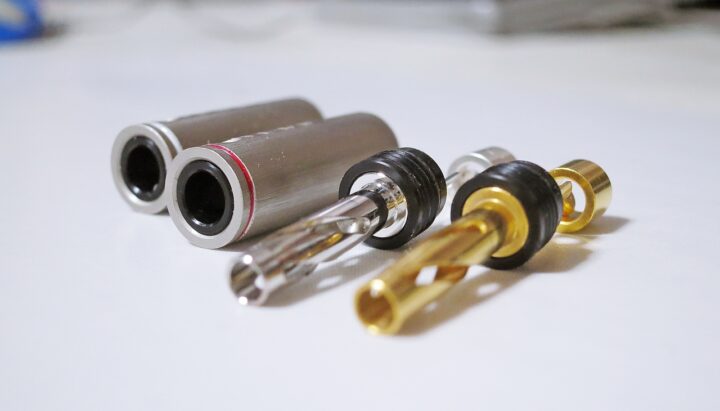
The ABP-1111 is considerably more complex in construction compared to the older ABP-0202. Insertion from new is firm but not excessively so — just about right. Whether the damping provided by the resin parts turns out to be a blessing or a curse remains to be seen. The contact head on the conducting section, made from beryllium copper, is even smaller than on the old model, and the conductor-to-plug-head connection uses a single screw. The rear screw is for securing the speaker cable sheath.
The three test systems are introduced in the latter half of the previous entry. Since impressions and system compatibility shift to some degree as conditions change, please treat individual reviews as loose references — bearing in mind they will not be an absolute guide in other systems. As usual, I cleaned the contacts using Pandoo 29D or isopropyl alcohol and Silcot wipes during installation.
ROTEL RDA-06 × audiopro Image12
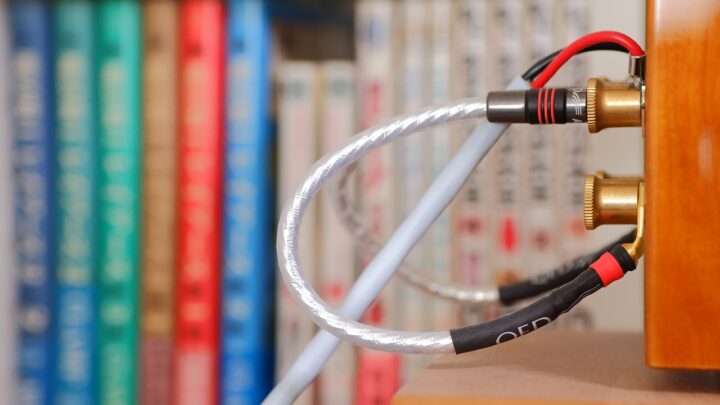
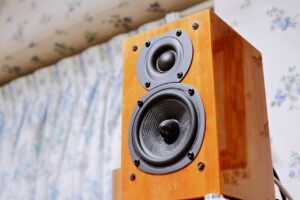
The ROTEL RDA-06 — effectively a Bang & Olufsen ICE Power digital amplifier — paired with the Swedish compact speaker audiopro Image12. A sensitive, high-resolution, cool-sounding system. The speaker cable is the AET EVO-F125. Since it was brand new, I listened with bare wire connections for several days before beginning the banana plug comparisons. ※ A standalone review of the speaker cable is planned for a separate entry at a later date.
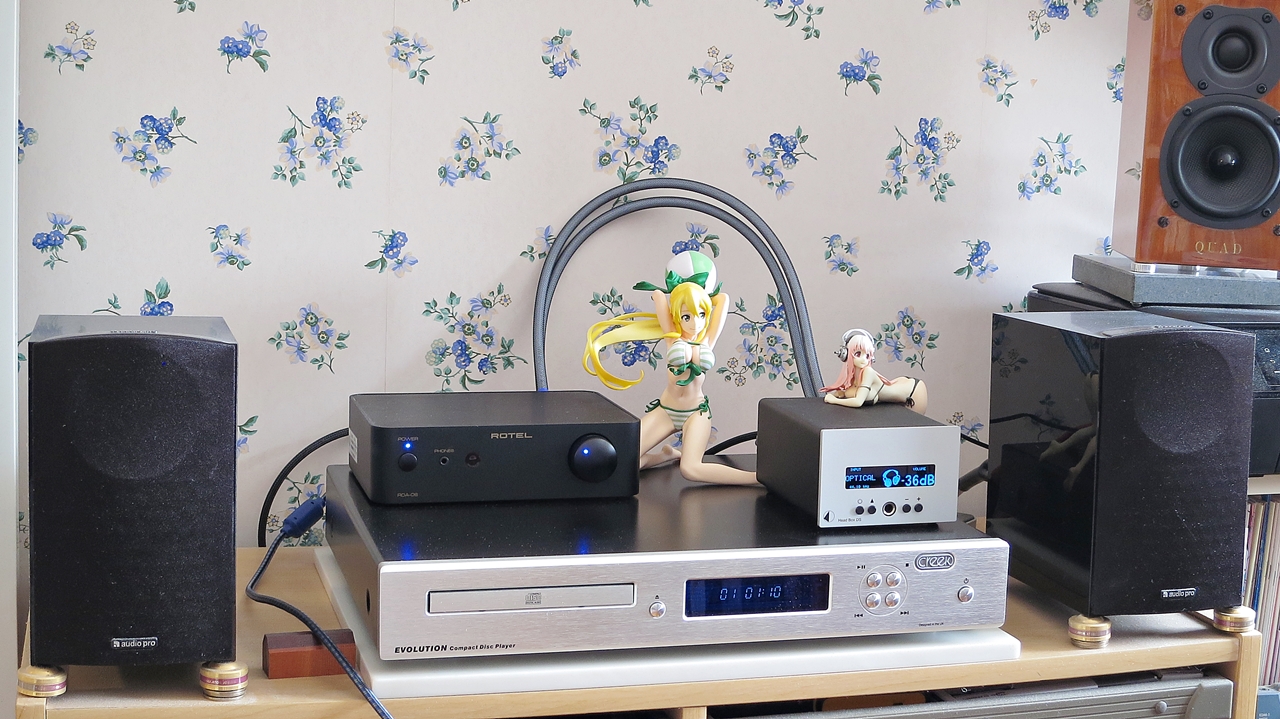
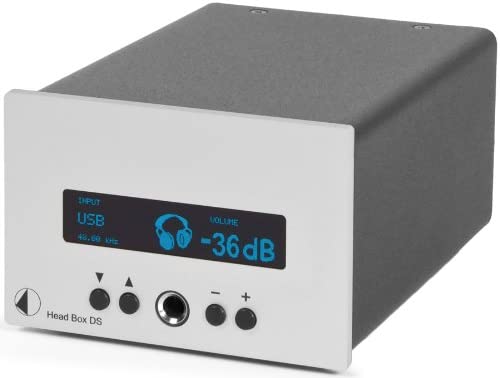
Incidentally, this time I used the banana plugs on the audiopro Image12 speaker side rather than the amplifier side. Since vibration is transmitted more intensely at the speaker end, both the merits and drawbacks of using banana plugs there tend to show up more strongly than at the amplifier end. The CD transport used is the CREEK Evolution-CD, and the DAC is the Austrian-made Pro-Ject Head Box DS.
Rhodium Plating — ABP-1111R
A bright tonal character, with crisp, sharp attack — a clear, lively, high-speed sound with good dynamic contrast. Imaging definition improves noticeably, while the reverb is trimmed back slightly. Although it has that silver-white lustre you’d associate with rhodium, to the ear it sounds subtly more matte compared to the older ABP-0202R, with less of the liquid, metallic sheen that banana plugs can sometimes add. The high-quality rhodium plating gives it a glossy look, but in practice the colouration is less pronounced than the appearance might suggest. Musically, the expression is slightly harder-edged compared to the other plating options, and the mid-to-high frequencies feel a touch prominent — but the frequency range itself is wide, the damping is well controlled, and the musical flow remains energetic and forward-going without losing momentum.


 ポチップ
ポチップ
Silver Plating — ABP-1111S
Compared to rhodium, there is noticeably more resonance, with a gentle roundness to the transient attack across the whole range, and the overall feel is softer on the ear. It concedes to rhodium in terms of dynamic contrast and sense of energy, but it has greater depth and richness of nuance, and the silver plating wins out for inward-looking, expressive qualities. Light and shadow are rendered well, and somehow the S/N ratio sounds better too. One might expect the high frequencies to take on a bright, dominating silver-plated sheen, but in the case of this plug, the character is more composed — a mature, settled sound. The treble is mild and easy to listen to, without the silver plating’s characteristic tendencies becoming excessive. There is a slight sense of fine detail being masked by the resonance, and — as with the rhodium version — the overall gloss is more restrained than on the older ABP-0202R; the influence of the plastic parts’ damping structure seems quite significant. The resonance takes on something of a misty, nocturnal quality. Come to think of it, CHORD Company cables — with the exception of the C-line — unusually use silver-plated plugs, and I’ve long suspected that a fair part of CHORD’s distinctive character actually comes down to that plating.
 ポチップ
ポチップ
Gold Plating — ABP-1111G
Like the silver plating, the resonance here is softer than rhodium and the transient attack is a touch gentler — but gold brings its own distinctive warmth: a rich, incandescent colour to the sound, reminiscent of the warm glow of tungsten bulbs in a concert hall. It shares something with the character of brass, though it is not as flamboyant. The overall presentation is well-balanced and reassuring — warm and rich — while maintaining resolution. The tonal balance shifts slightly downward, and of the three plating options this is the most even-handed. The bass region becomes more clearly defined, and the sense of depth in the noise floor improves further still.
 ポチップ
ポチップ
Older Rhodium Plating — ABP-0202R
This is the older ABP-0202R reviewed previously. In the best possible sense, very much rhodium. Compared to the new model, the old one has more of the characteristic lustre of rhodium plating along with a smooth, brass-like sense of moisture — the beautiful, elegant decay it leaves is quite striking. In my earlier review I described it as “fresh-sounding, with a clear, bright, lively high-speed character,” but placed alongside the new model, the old one sounds relatively unhurried by comparison, with a milder transient attack. The frequency extension at both ends is also not as wide as the new model, and the overall dynamic contrast is more restrained. The soundstage has a slightly mid-range-centred quality with just a hint of roundness. Expressiveness sits somewhere between neutral and slightly positive.
In terms of compatibility with the ROTEL RDA-06 × audiopro Image12, the new rhodium plating comes out on top across the board — sound quality, liveliness, frequency extension, and sense of energy. The gold plating wins on bass depth and musical balance. The silver plating offers a more introverted quality, wrapped in its own distinctive resonance and atmosphere — and for silver enthusiasts like myself, it has a nuance that would be easy to fall for. That said, the silver plating turned out to be somewhat different in character from what I’d expected, and in the case of the ROTEL × audiopro combination — which already has a strongly treble-tilted, sensitive tendency — the compatibility was frankly not ideal.
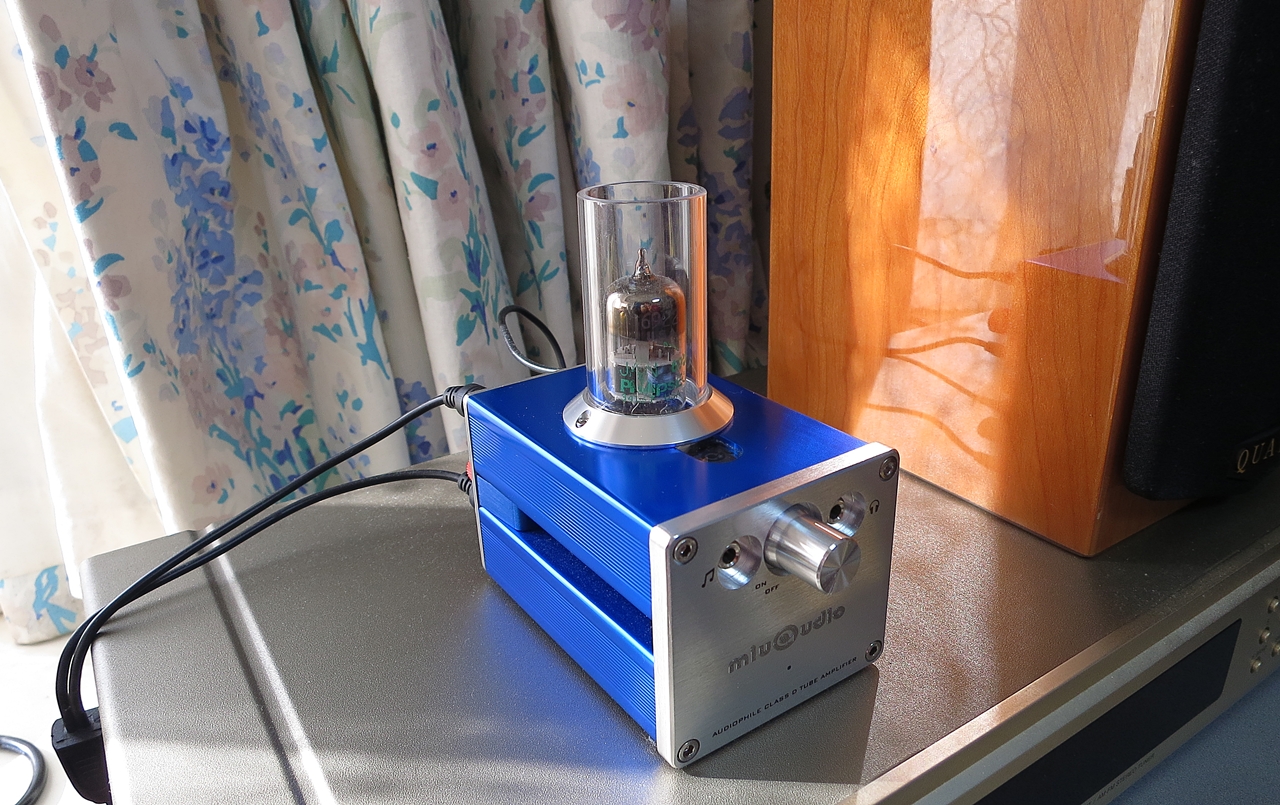
Miuaudio MKTP-2 × QUAD L-ite2
A hybrid amplifier combining a valve preamp with a digital power amp — the Miuaudio MKTP-2 (CarotOne ERNESTOLO) — paired with the British ultra-compact two-way speaker QUAD L-ite2. The system is characterised by a wide, transparent soundstage with a high proportion of reflected sound. Since this system is configured for bi-wiring, the test covers only the tweeter terminals — i.e., above the crossover frequency of 2,200Hz. The speaker cable is the Acoustic Harmony N1. Because the tweeter covers a wider and lower portion of the frequency range than average speakers (what you might call the upper midrange), changes made to the high-frequency side have a comparatively large effect. The CD player is the ARCAM CD72T.
Rhodium Plating — ABP-1111R
The high frequencies are more damped and less resonant compared to the older ABP-0202R and the new silver-plated version. Having heard the new rhodium as the standout choice on the ROTEL + audiopro system, I half-expected it to lead here too on the miuaudio × QUAD L-ite2 — but hmm… For use specifically on the tweeter terminals of a bi-wired setup, the lack of reverberation feels like a shortcoming. Interestingly, unlike the silver plating, the treble isn’t all that harsh. The high frequencies do take on a focused edge, but the overall impression is a little stiff. If pushed to find a positive, it has more concentration than the older ABP-0202R.
Silver Plating — ABP-1111S
A lively, sharply defined high-frequency response with a refined, sweetly resonant quality — this is silver plating working exactly as intended, in the best possible way. Perhaps because it does not strongly influence the energy of the woofer section, the lack of energy and sense of darkness I noticed with the ROTEL + audiopro single-wiring setup is barely perceptible here. The crisp, lively musicality that is the new model’s strength is also present in just the right measure, giving a well-balanced result. Perceived resolution increases while nuance is preserved in abundance. It also suits the tonal character of the speaker cable well, resulting in a sound that is both rich and lush.
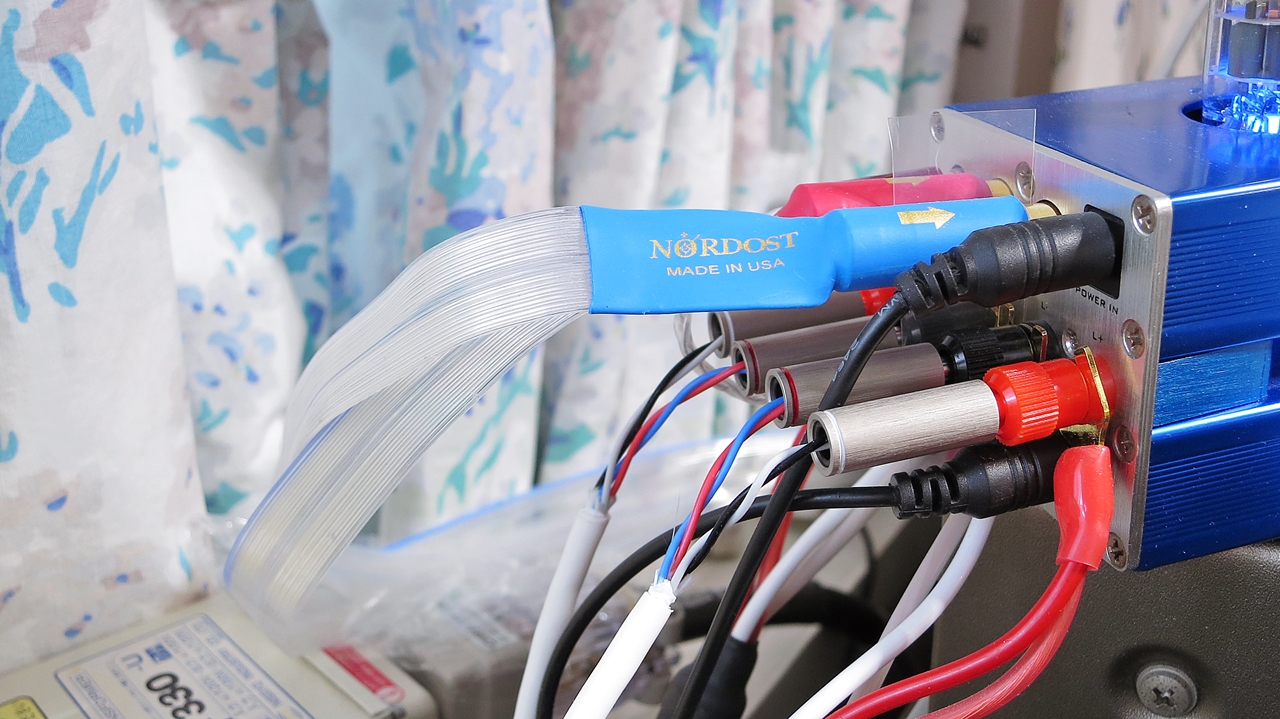
Gold Plating — ABP-1111G
Not quite as resonant as the silver plating, but there is still a reasonable amount of bloom, and the high frequencies here too take on a bright, warm, and colourful tone. It falls slightly short of the older ABP-0202R in sheer quantity of resonance, but the image is sharper and the expression more lively. A good balance between musicality and sound quality, with a well-damped, bright, and airy character.
Older Rhodium Plating — ABP-0202R
This was originally what I had been using with the miuaudio × QUAD L-ite2, so the new model reviews above all use this as the reference point — but by comparison, the old model has more hall resonance and a more relaxed sound, with a stronger lean towards tonal beauty. However, in terms of resolution and image focus, it tends to lack a certain concentration, and from the perspectives of both sound quality and musicality the new model is clearly more transparent and vivid — a livelier, more enjoyable listen. Whether the old or new model works better will depend on the speaker and cable combination, but for the tweeter terminals of the miuaudio + QUAD L-ite2, the silver-plated ABP-1111S was the overwhelming winner.
CREEK Sequel2 × EPOS ELS3
A musicality-first system with a retro British sound character. The tonal quality is warm and high-frequency resolution is modest, but the density of the direct sound is high, and compared to the two previous systems, the sense of energy is stronger and the bass more present. The banana plugs are used on the amplifier’s speaker terminals. The CD transport is the CREEK CLASSIC CD, paired with the Musical Fidelity V90 DAC.
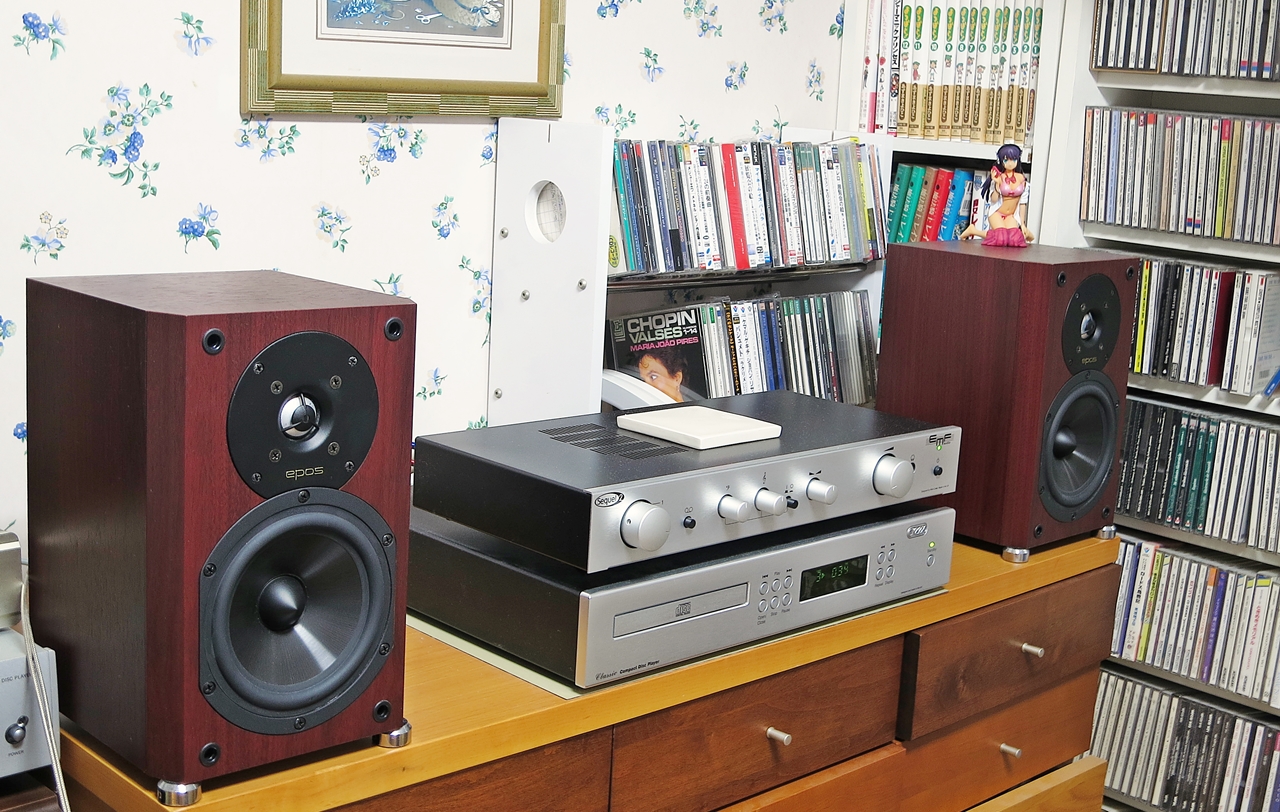
Rhodium Plating — ABP-1111R
Some of the fine detail in the reverb is trimmed back slightly, but the surface of the sound image becomes smoother and easier to listen to, the density of the direct sound increases, and the sense of energy and damping both improve. Rhodium’s characteristic brightness is also added to the tonal palette, lending the overall presentation a lively, cheerful atmosphere. Strictly speaking, resolution drops ever so slightly compared to using no banana plug — but I never chose the CREEK for its modern, forensic detail retrieval in the first place, and more importantly the dynamic musicality clearly improves, which makes it actually a preferable sound for music playback than going without banana plugs at all.
Gold Plating — ABP-1111G
The gold plating’s characteristic warm colouration is present, but since it is a warm tone, it blends naturally with the CREEK’s own retro, sepia-toned character without any sense of incongruity. The overall impression is well-balanced and even-handed, yet again the energy of the sound image and damping improve, and the dynamic musicality is enhanced. Rhodium has the edge for smoothness and luminosity, but gold offers a more orthodox balance with greater bass body, combining both brilliance and depth. Gold plating is quite appealing in its own right, and it is genuinely difficult to choose between it and the rhodium.
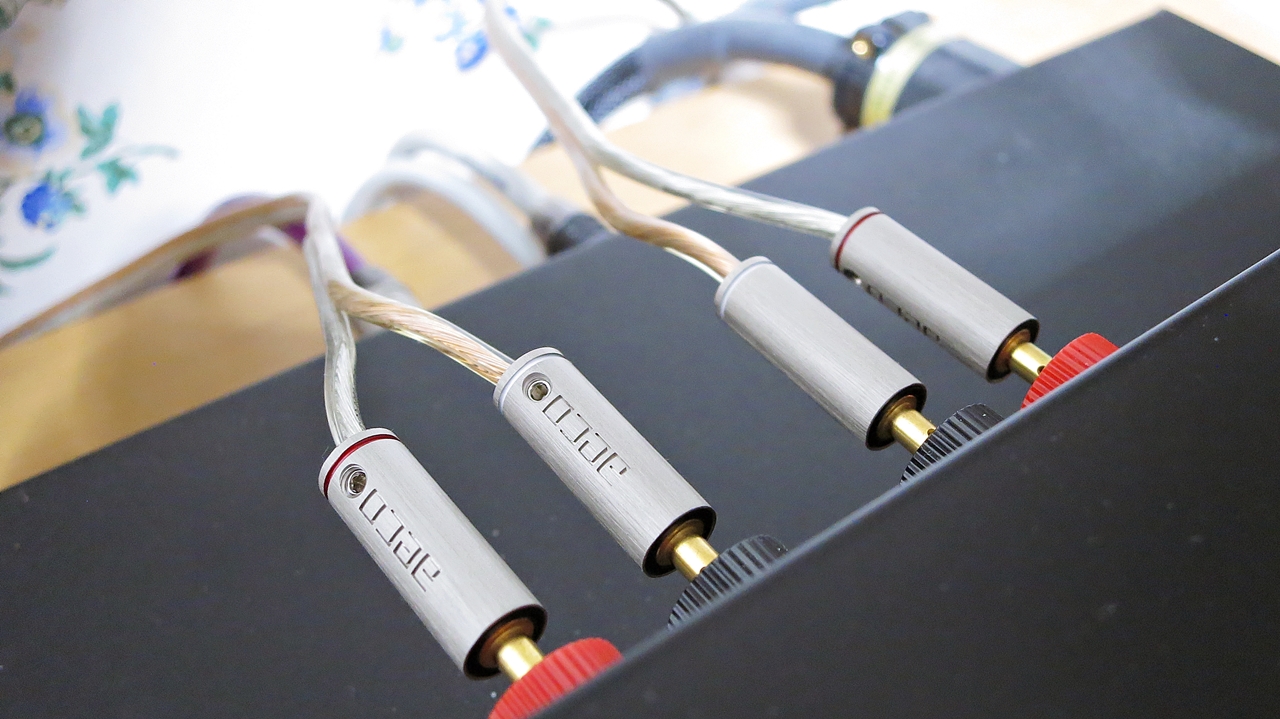
Silver Plating — ABP-1111S
Compared to gold, the attack is sweeter still and the resonance is even more present. The CREEK system has always struck me as slightly lacking in tweeter resonance, but here that impression is beautifully resolved. The balance shifts more towards the treble compared to gold, and the bass range narrows somewhat — but the sound has a mature, adult quality: nuance-rich expression that rises like particles of light from a dark, deeply settled background. The perceived frequency response has a mild, midrange-forward character that feels full and warm. The system’s inherently strong energy means that a slight passive tendency here actually helps bring things into better balance. If tonal beauty and a distinctive character are what you are after, this is the one.
Older Rhodium Plating — ABP-0202R
I compared this in an earlier article as well, but since the conditions are different here, I will revisit it. More resonant than the new model and oriented towards tonal beauty. The sound image is firm and smooth, and the indirect sound has a pleasing sense of moisture — when you lay all four side by side like this, it no longer feels strictly necessary to treat it as a rhodium-plated plug per se. Where one might expect it to sound more passive compared to the new model, when the underlying system already has strong projection, the older model can actually provide better overall balance.
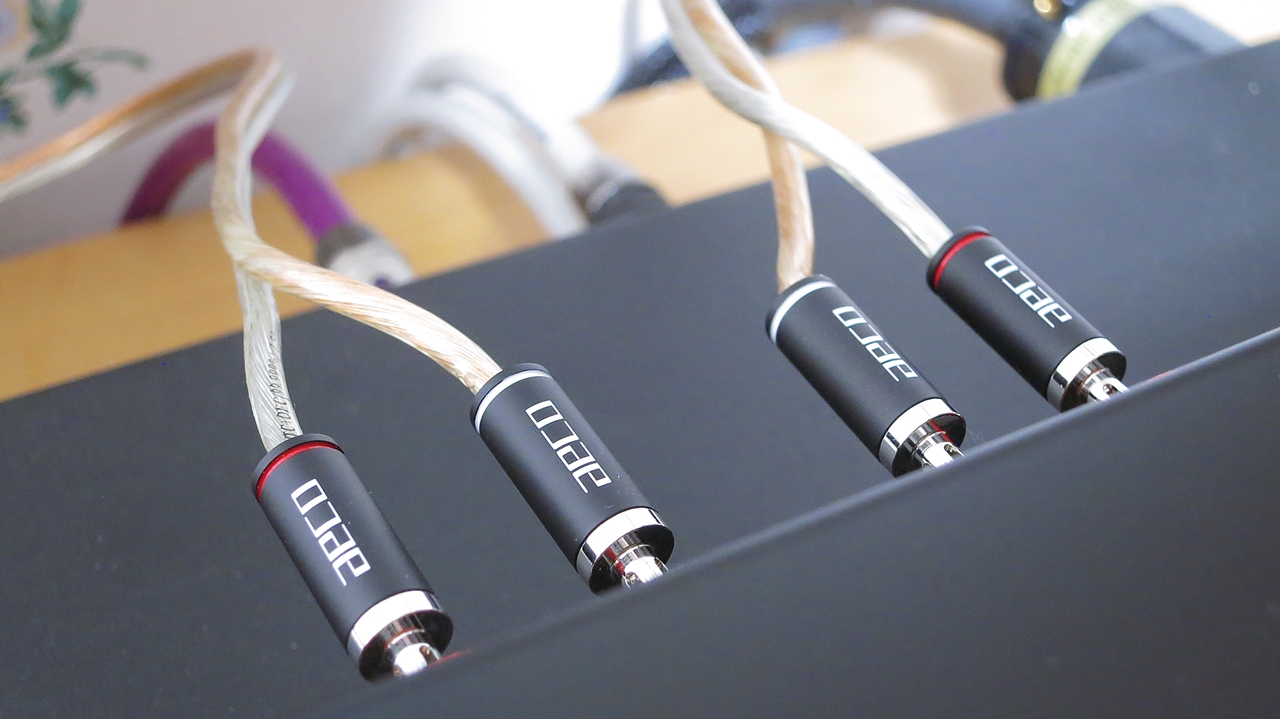
With the CREEK system, whichever of the four I used, the sound was better than bare wire — a fact that I, as a proponent of keeping things simple, was rather reluctant to admit. Each option has its merits and drawbacks in terms of pure sound quality, but in terms of musicality they are all clearly a step up, which meant the option of “not using them” simply ceased to be an option. The silver-plated new model has already been earmarked for the Miuaudio MKTP-2 on compatibility grounds, so it comes down to choosing one of three — the new and old rhodium, or the gold — for permanent use here, and I genuinely cannot decide. (Still undecided as of now. I suspect it will probably end up being the new rhodium or the gold…)
This has grown to nearly 6,000 characters, so I will split the article here again. In the second half, setting aside the differences between plating types, I will pull together an overall verdict on the new banana plug aeco ABP-1111, covering both its merits and drawbacks.
【aeco ABP-1111 vs ABP-0202 Comparative Review】
ABP-0202|ABP-1111 Structure|Plating Comparison|ABP-1111 Overall Verdict


Auto Translated by CS4.6