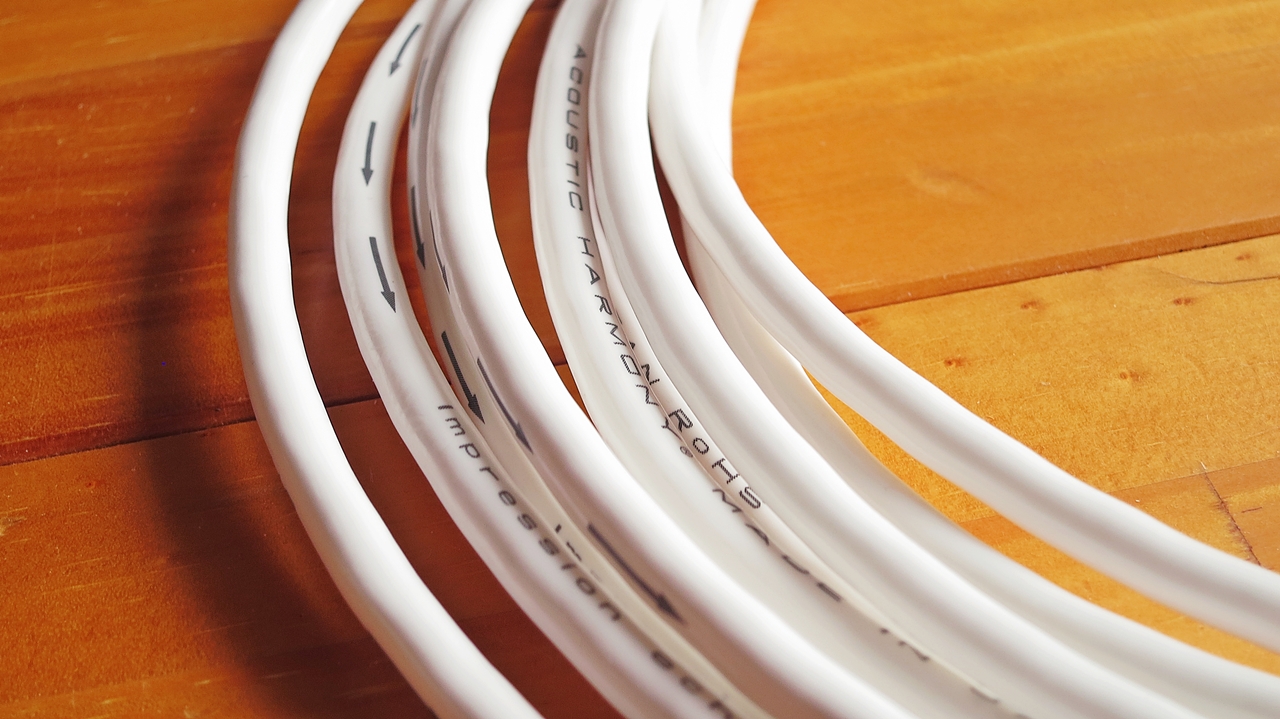
This time I am introducing the N1 Speaker Cable from Acoustic Harmony, a domestic high-end cable manufacturer. Acoustic Harmony is a Japanese-made audio cable manufacturer with its head office in Aichi and its manufacturing base in Shizuoka. It is a brand I have had my eye on for some years, as it has appeared here and there in audio accessory magazines and the like, but there are few stockists and sound quality reviews online are virtually non-existent, so this purchase was made unauditioned.
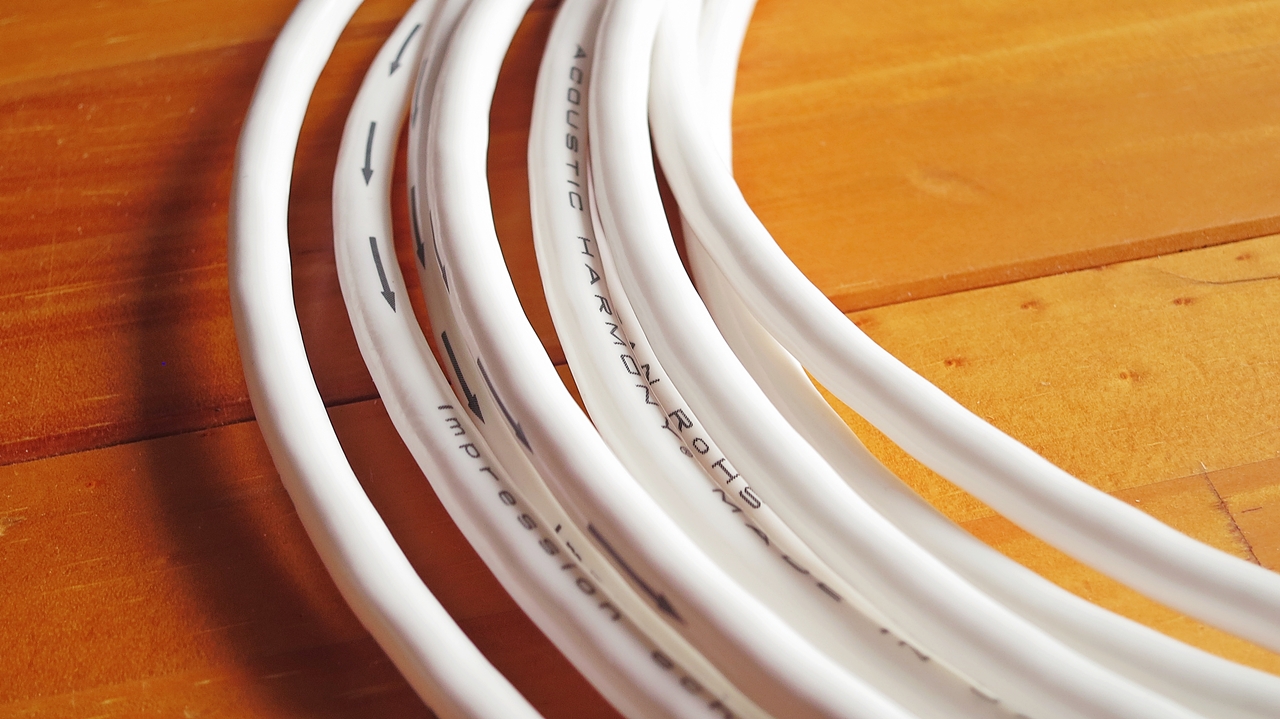
In Japan, Acoustic Harmony is better known through car audio channels than through pure Hi-Fi or high-end Hi-Fi outlets, and their range covers not only ultra-premium products but also cables at more accessible price points. Among these, the Acoustic Harmony N1 speaker cable is the entry-level model of the N Series, sold by the metre. The finished, terminated version won a category award in the under-¥100,000 terminated speaker cable division at the Audio Accessory Meikinshō 2015.
Stripping Back the Jacket
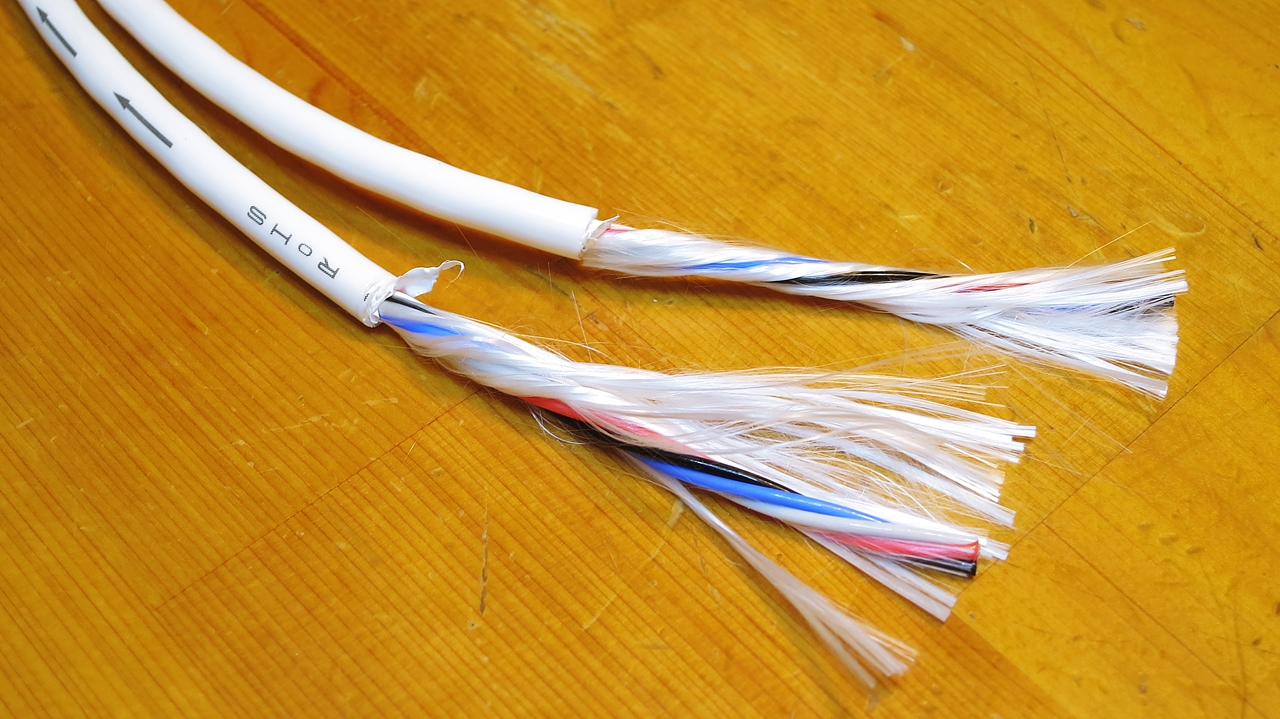
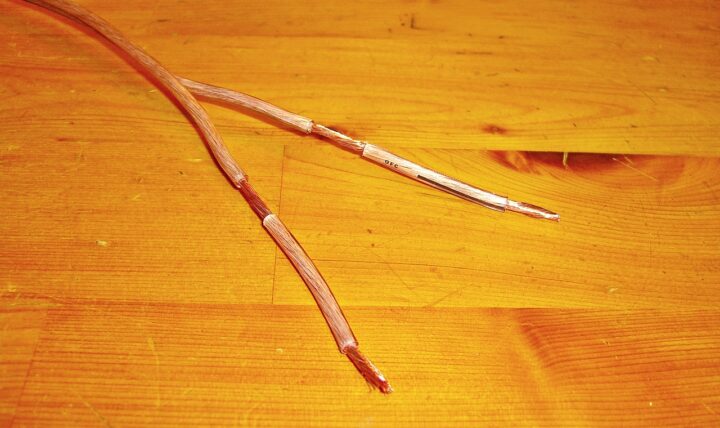
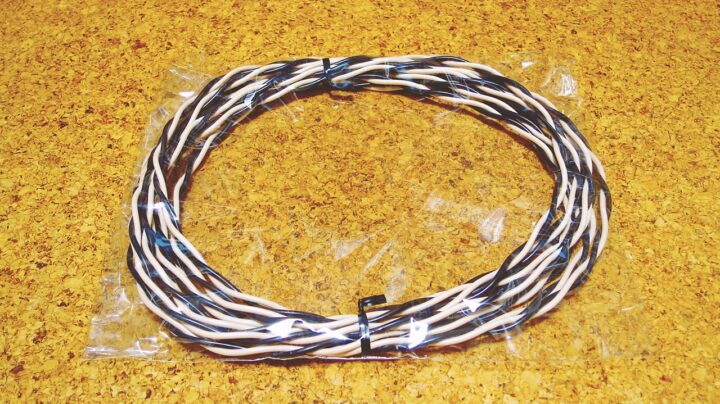
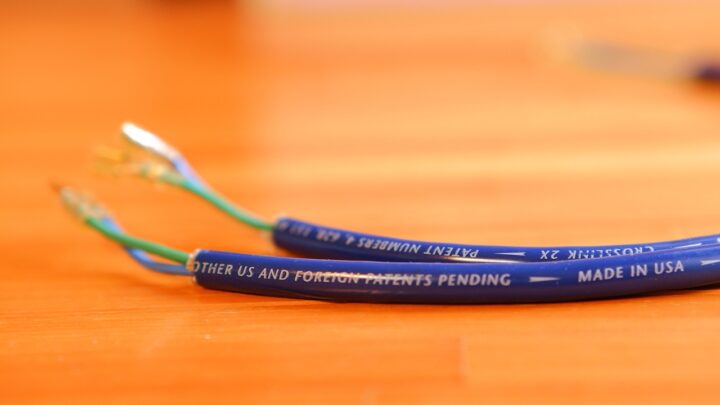
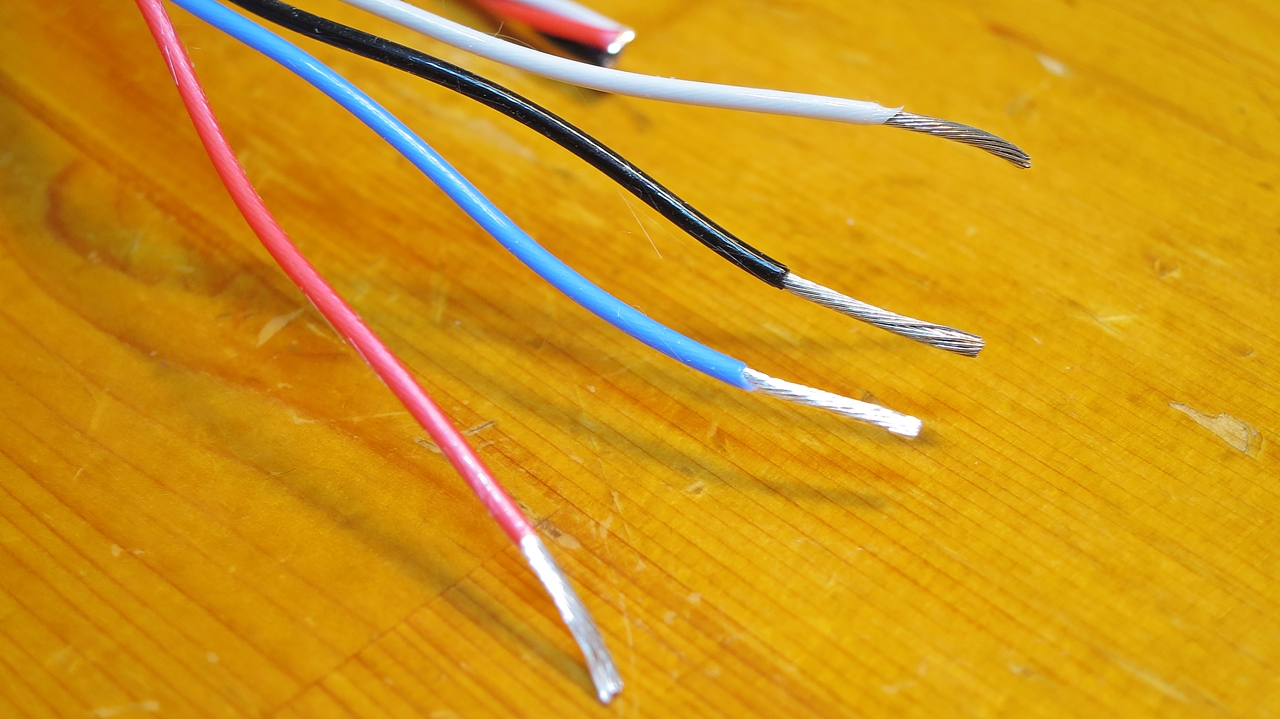
The N1 is not particularly expensive for an entry-level cable in the Acoustic Harmony range, yet its construction is remarkably intricate. The outer diameter is just Φ5mm, extremely slender, so I was genuinely surprised to find such a carefully considered structure inside. The outer jacket is a white Hi-Flon FEP sheath, beneath which is a layer of PTFE tape with a vinyl-like elastic stretch, and below that a bundle of ultra-fine glass fibres together with four colour-coded conductors in a harder resin jacket. There are two silver-plated 0.18mm × OFC 19-strand cores (red/blue) and two tin-plated 0.18mm × OFC 19-strand cores (white/black), making a total of four conductors in a star-quad configuration.
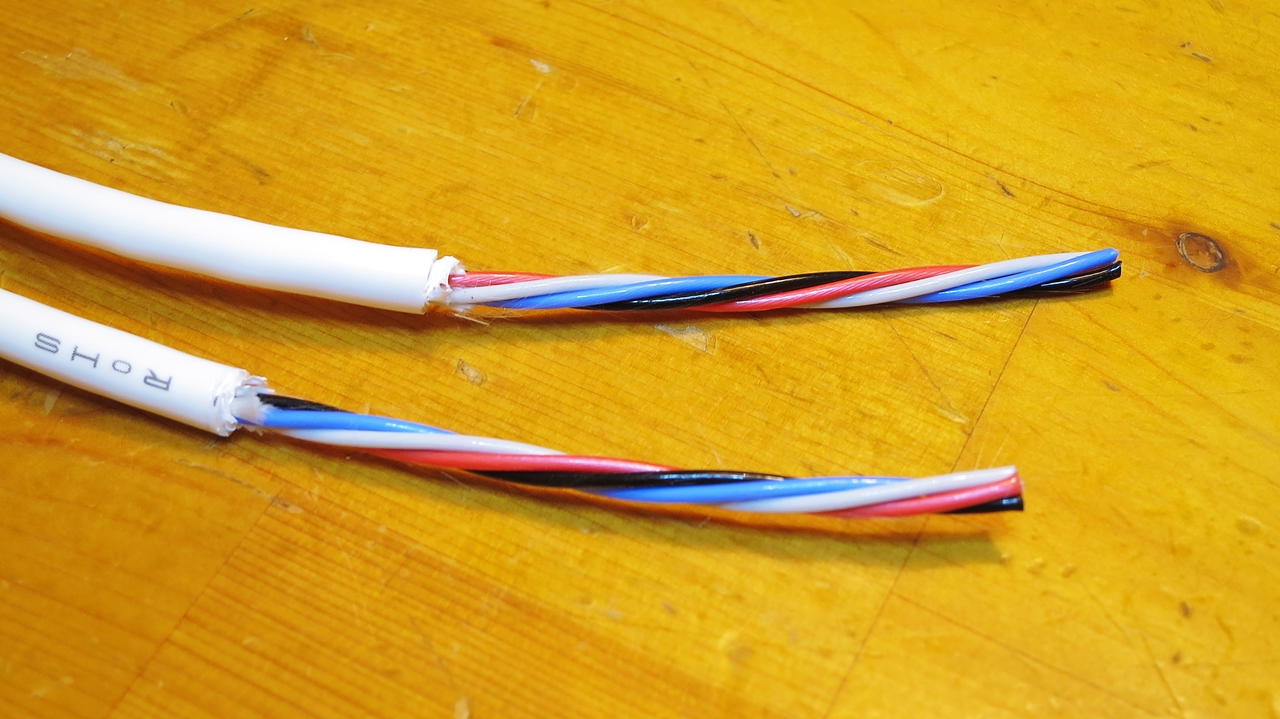
Given the slender diameter and the complex four-conductor star-quad structure, I expected termination to be quite a fiddly business — but in practice, the outer jacket came off with a cutter and scissors, and the four inner conductors, whose resin jackets are rather stiff, stripped cleanly using a wire stripper set to 0.75 or possibly 0.5 (I cannot quite remember) — just clamp and pull with your fingers, and the insulation slides off without losing a single strand. Termination turned out to be easier than I had expected.
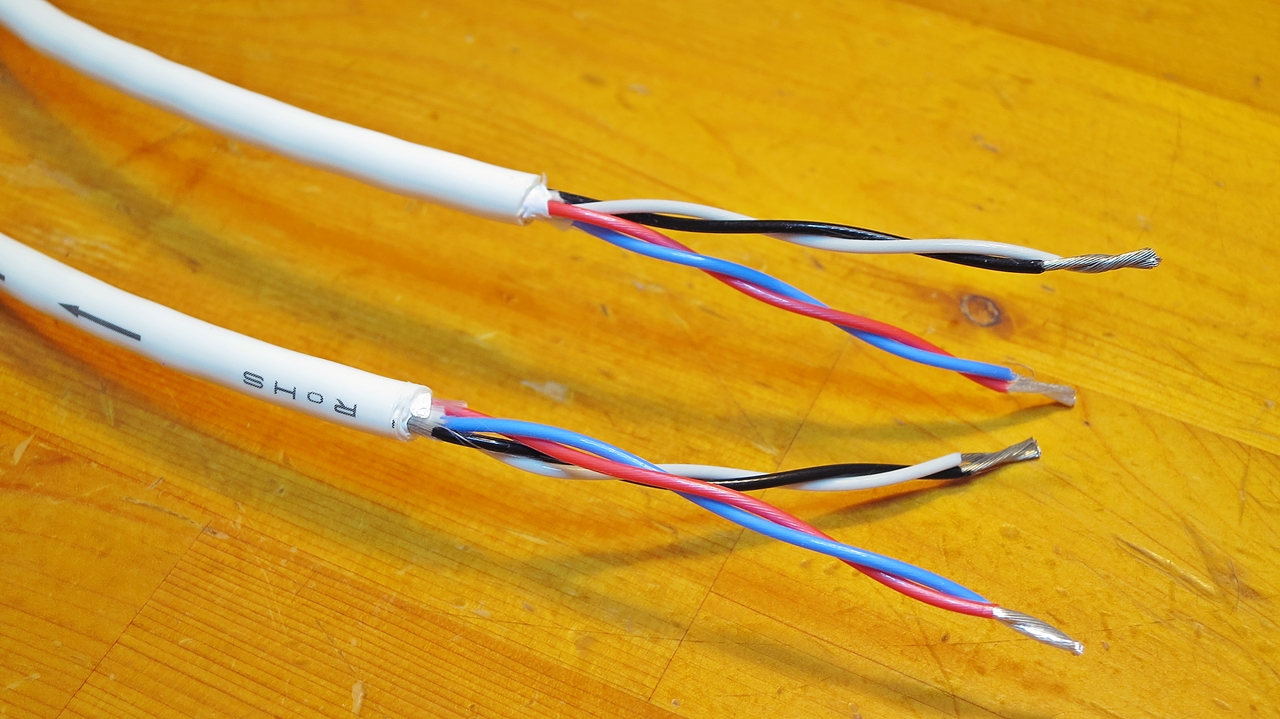
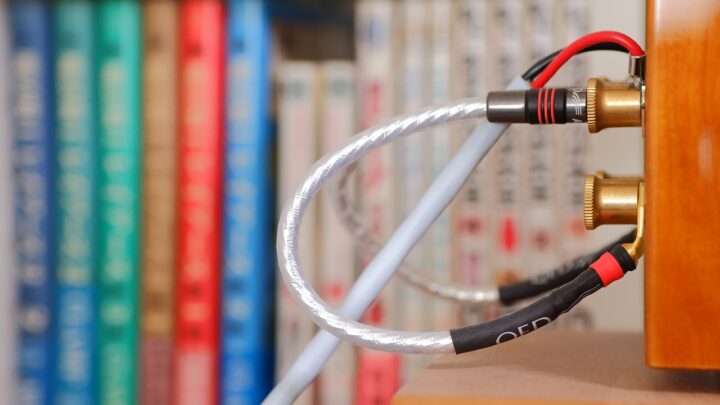
With the Acoustic Harmony N1, how you handle the four conductors with their differing plating allows you to shift the sonic character to some degree. At 0.48SQ per conductor, the cross-section is on the small side for a woofer run, but this single cable can also be used for bi-wiring, in which case it seems best to assign the two silver-plated conductors to the tweeter and the tin-plated pair to the woofer. For my own part, I initially ran it in single-wire for a period specifically to burn in the cable, before eventually repurposing it as the dedicated high-frequency speaker cable in the bi-wired configuration of the QUAD L-ite2.


Acoustic Harmony N1 Sound Quality Review
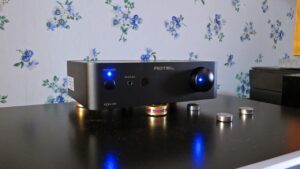
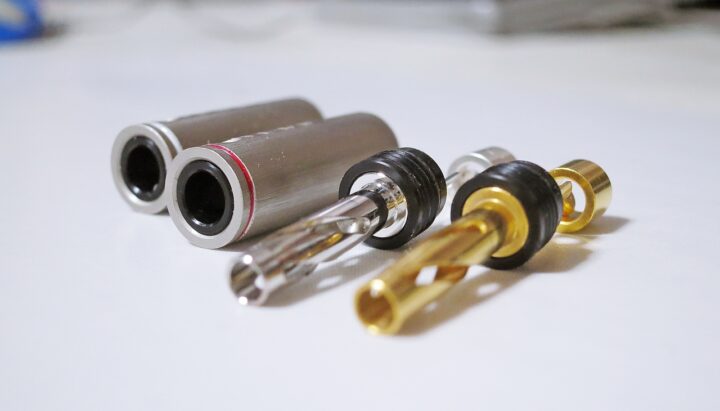
From here I will write up the sound quality review as tested with the Miuaudio MKTP-2 and QUAD L-ite2 system, using Cardas CAB silver-rhodium banana plugs on the amplifier side, with the N1 tested in single-wire configuration. In single-wire, one faces the question of whether to bundle the four star-quad conductors with their mixed silver and tin (tin-coat) plating together, or to deliberately keep the plating types separate — for this test, I chose to keep them separate in order to bring out the silver-plated character more strongly, with the red + blue silver-plated conductors on the positive side and the white + black tin-plated conductors on the negative side.
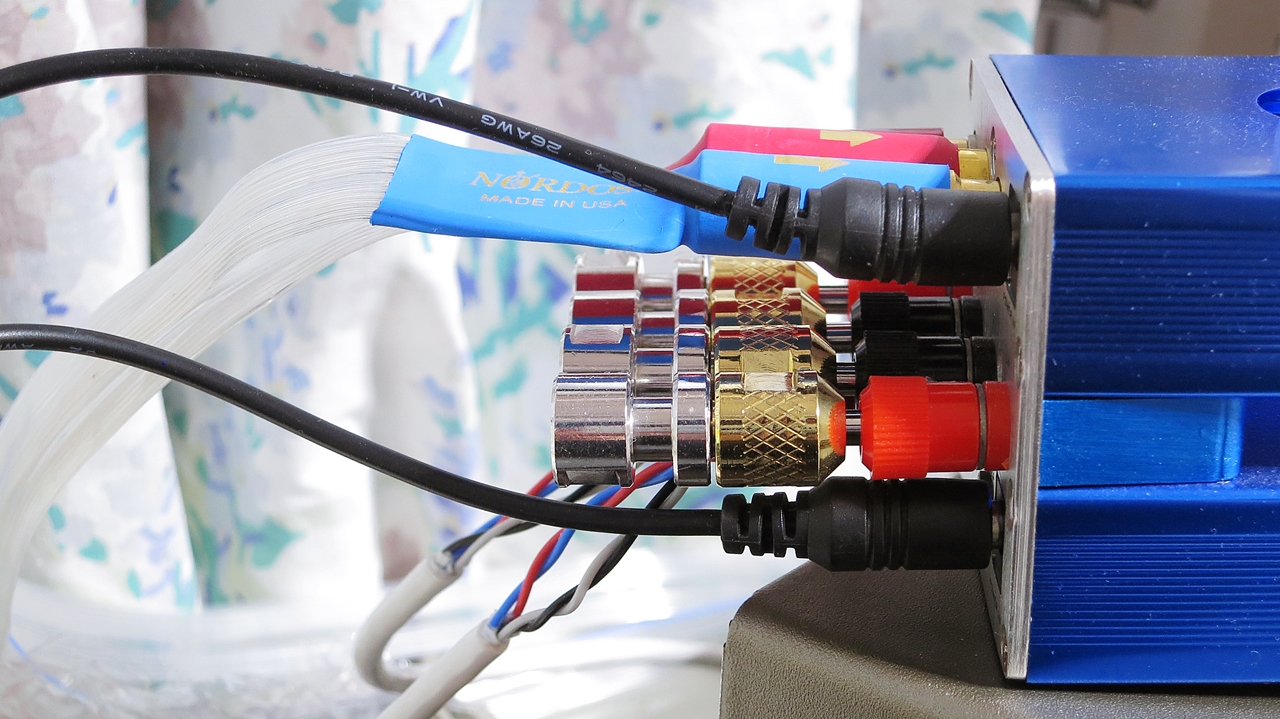
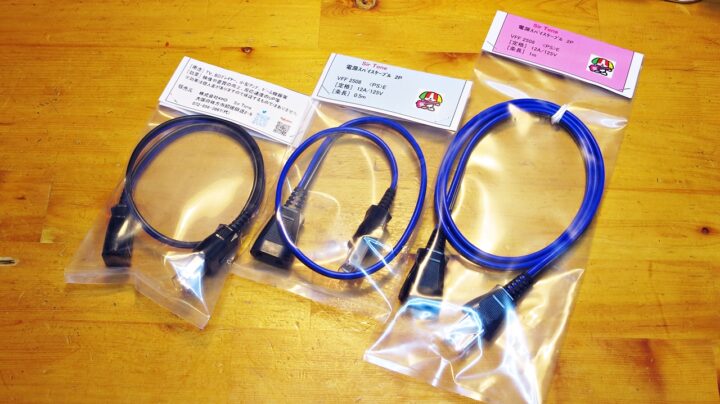
The direction arrows were observed, pointing toward the speakers. For comparison, the reference cable is an OFC copper wire in transparent sheathing at 0.75SQ, made by KHD Densen under the Sir Tone brand — a label that has been putting out some rather interesting audio cables of late — purchased from a home centre for a few hundred yen per metre.
Straight out of the box, compared to the plain OFC wire from KHD Densen (Sir Tone), the N1 has a more settled character and a very slightly reduced sense of musical engagement. The midrange has a slightly humped, kamaboko-like quality that pushes forward, making the staging and imaging feel larger, and there is a sense of good underlying character in its wide frequency range and sense of scale. Tonally, the impression is of the silver’s gentle warmth and resonance mixed with the tin’s rougher, coarser edge — a separation that hasn’t yet blended cleanly, a stranded-wire rawness still lingering, perhaps. That said, there is nothing harsh or unpleasant to the ear. The texture is still somewhat coarse overall, so it seems best to wait for the tin-plated conductors to settle down.
This may partly be because it is a small speaker with no deep bass extension, but the low end feels surprisingly adequate given the slender gauge. The high frequencies, too, don’t extend as far as one might expect; instead the presentation is easy on the ear, with an emphasis on the midrange. The tonal character is quite heavily processed, one might say. Grain resolution is high. Temperature is unexpectedly warm and lukewarm — rather like an elegant cake topped with sweet whipped cream. The attack and touch are soft and rounded, and yet there is a surprising degree of speed and punch beneath that. I had been expecting something more Japanese in character, something purer and more restrained, but it is quite oil-painting-esque, quite lavishly made-up — yet the low sense of distortion and the absence of listening fatigue even at higher volumes leave a very favourable impression.
After half a day. The graininess typical of tin-plated conductors has gradually settled. The sound has a whitish, softly luminous quality with a notably high density of fine detail — very much to my taste. There is an airy, floating resonance that is gentle and unhurried, yet the midrange nuance is richly textured, with a wide range of touch expression and a sense of depth. The N1 demonstrates that depth of expression need not rely solely on low-frequency weight — it can equally emerge from the richness of nuance across the mid and upper frequencies. Even with both conductors bundled together the gauge still falls short of 1SQ, yet the sound itself does not feel thin, and the sheer dynamic range within the natural musical frequencies is genuinely surprising.
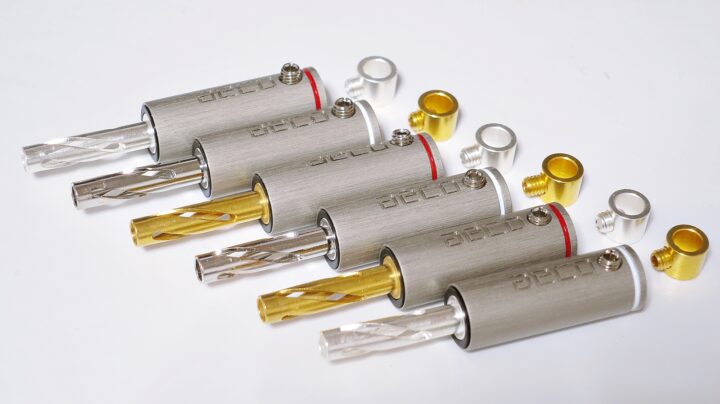
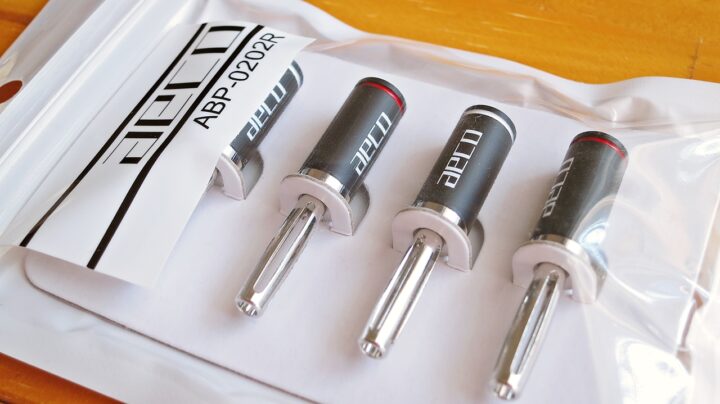
Swapping the Banana Plugs from Cardas CAB to aeco ABP-0202R
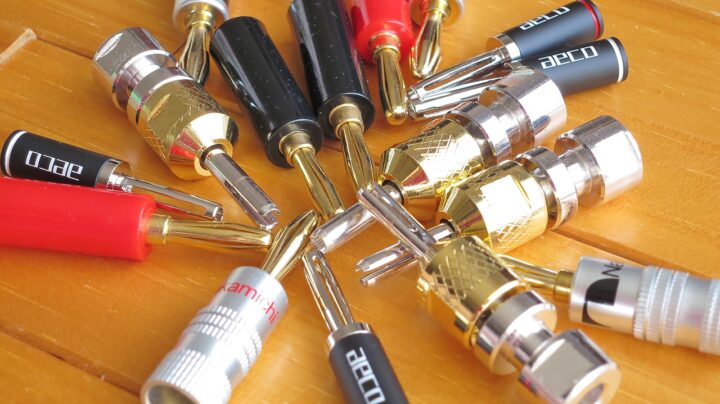
The aeco ABP-0202R offers a brighter tonal character than the Cardas CAB, with outlines drawn in a high-speed, sharply delineated manner and an increase in transparency. The result is a straightforward sound that draws on the rhodium plating’s beautiful tonal quality, its high manufacturing precision, and the small mass of the banana plug itself. Compared to the Cardas, which has a pyramid-weighted balance with more body in the bass and midrange, the ABP-0202R slims down those regions toward a flatter balance overall. For single-wire use with a small speaker that is already light in the bass, if you are looking for low-frequency weight, the Cardas is the one — but that is because the CAB is a rather special banana plug that adds thickness in the bass direction; the aeco ABP-0202R’s balance actually comes closer to the system’s and the speaker cable’s true native frequency response. ※ In the first place, achieving a fully satisfying bass response from a speaker cable of under 1SQ with nothing more than a single banana plug is the anomaly.
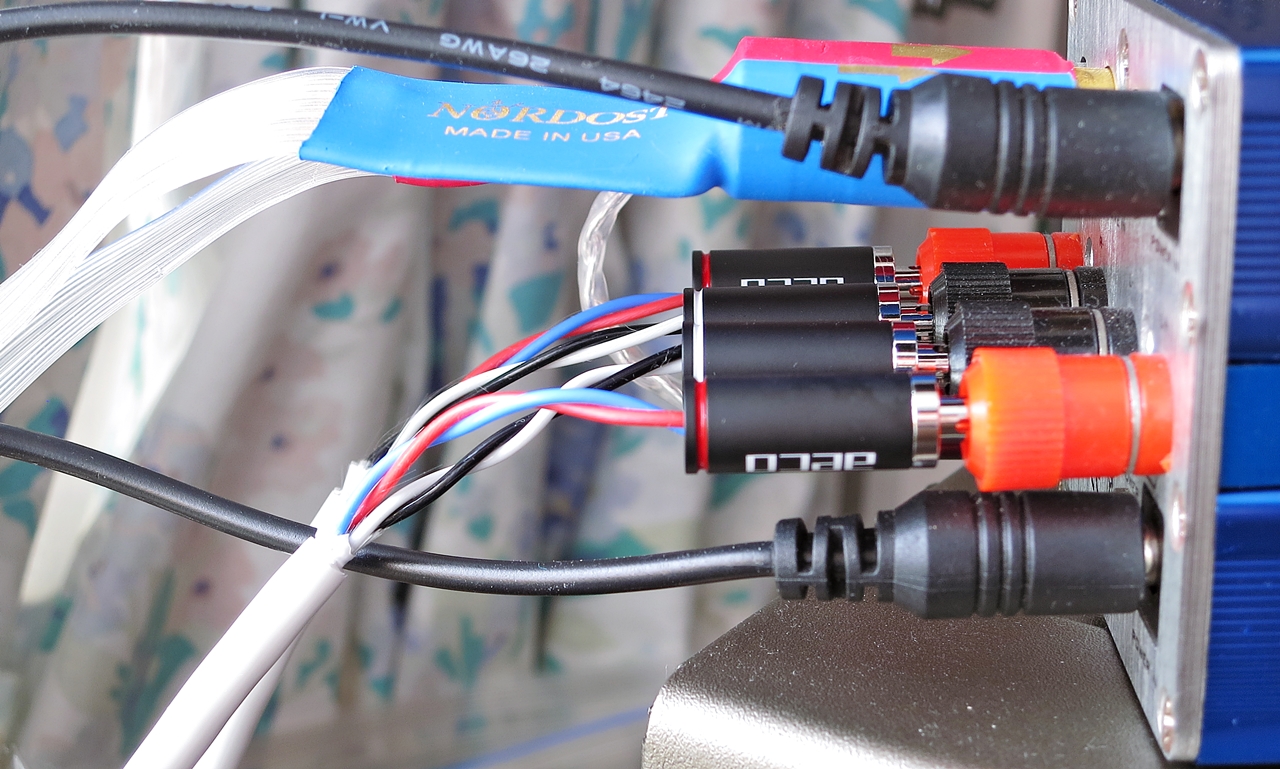
For speakers where there is no particular dissatisfaction with the low-frequency balance in the first place, or when using the cable as the tweeter run in a bi-wire configuration, the higher resolution and freshness of the aeco ABP-0202 would seem to be considerably preferable to the CAB. The impression is that the aeco ABP-0202R’s crisp outlining and sense of freshness compensate for the areas where the Acoustic Harmony N1 can be a touch too mild and sweet. Compared to the Cardas CAB, which leads with a sense of composure, the aeco is brighter and more lively with better temporal expression — though with the shallower bass there is a tendency to skim the surface of the music, and the expressive range narrows somewhat. The gloss and smoothness in the upper frequencies that rhodium plating brings are common to both the Cardas CAB and the ABP-0202R, but choosing a gold-plated or silver-plated type would produce a quite different character, I think. Asked which banana plug I would choose for single-wire listening, in the combination of the Miuaudio MKTP-2 (CarotOne ERNESTOLO) and the QUAD L-ite2, I would take the aeco.

 ポチップ
ポチップ
Since this was becoming unclear as to whether it was a banana plug review or a speaker cable review, from here I will note purely my impressions of the Acoustic Harmony N1 speaker cable on its own. After the initial new-condition assessment described above, having used the N1 for some time, what struck me was: firstly, that despite being silver-plated (plus tin-plated), the sound is gentle on the ear with absolutely no trace of distortion, such that even when combined with rhodium-plated banana plugs there is no harshness whatsoever; and secondly, that it has a beautiful-sounding character with a thin, powder-soft veil — like a light dusting of face powder. It is an inexpensive speaker cable, but it has been tuned in a clearly high-end-oriented direction with a beautified tonal quality, and there is none of the cheap-sounding edge-emphasis or unnatural prominence in specific frequency bands that you sometimes encounter. In terms of internal information density it also offers more than its price would suggest. Imaging and the way reverberation spreads are entirely natural, with no artificial quality. In terms of musicality it is not the type to draw you in dramatically on the strength of the cable’s own colour and character, but I think its strength lies in a moderate, natural quality that does not unnecessarily compromise the music as it actually is.
Even in single-wire with both conductors bundled, each side comes to just under 1SQ, so I did expect the bass in particular to feel underpowered — but in practice a frequency response with no particular complaint in either direction and a relatively flat tonal balance can be achieved. The imaging is natural, and since this is not the sort of sharply focused, razor-edged, hyper-solid presentation, the sense of using an ultra-thin speaker cable is not especially prominent. The slightly mellow attack is probably because both silver-plated conductors are on the positive side, and it seems worth adjusting this to taste — either by bundling them with the tin-plated conductors, or by swapping the tin-plated side to the positive.
Swapping the Silver-Plated and Tin-Plated Conductors Between Positive and Negative
Regarding the sonic differences that come from swapping the plating assignments on the Acoustic Harmony N1: as a general guide, if you want to emphasise the beautiful sound of the silver plating, put silver on the positive side; if you want the gutsy, assertive quality of the tin plating to come forward, put tin on the positive side; and if you want something in between, assign one of each plating type to the positive and negative respectively. This is not limited to the N1 — with any speaker cable where the two conductors carry different plating (or where only one conductor is tin- or silver-plated), which you assign to positive and negative will make at least some difference to the sonic character. I would recommend that anyone using this sort of speaker cable try swapping them around and comparing, to find what works best with their system and personal taste.
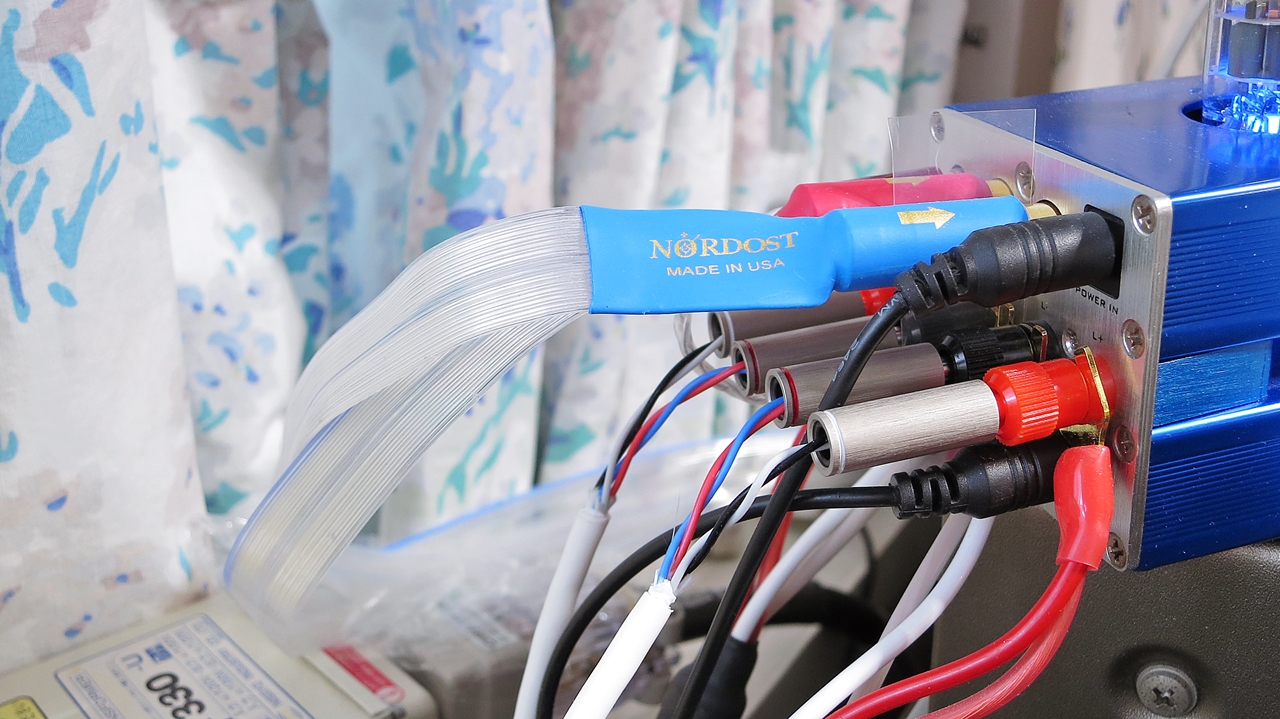
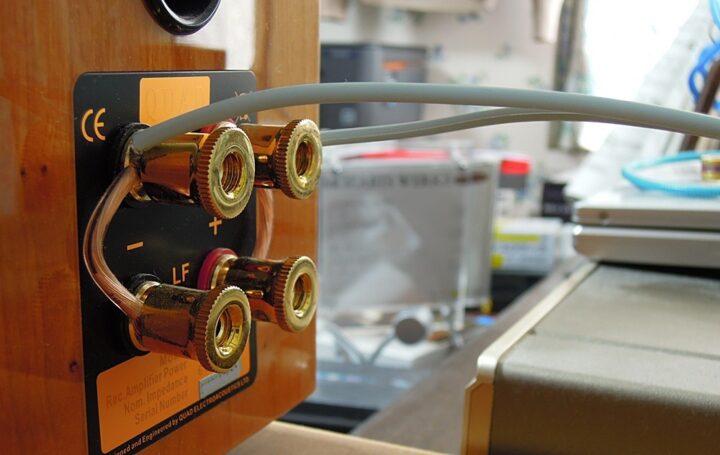
The review up to this point reflects my impressions with the two red/blue silver-plated conductors connected to red (+) and the two white/black tin-plated conductors to black (−). After that, the Acoustic Harmony N1 went through several months of further burn-in as the dedicated tweeter cable in the bi-wired Miuaudio MKTP-2 × QUAD L-ite2 configuration, before I changed the banana plugs from the rhodium-plated aeco ABP-0202R to the pure silver-plated aeco ABP-1111S, and it is currently producing the best sound and balance I have heard from it so far. On the woofer side for the low frequencies, I have the ORB INNOVA TS7 (terminated), a PCOCC cable that also won the Audio Meikinshō award in 2009.
 ポチップ
ポチップ
With the N1 having settled into a stable period after extended use, I decided to try swapping the +/− assignments of the silver-plated and tin-plated conductors — on both the amplifier and speaker ends. (This time the positive side of the speaker terminals would receive the tin-plated conductors.) With a well-burned-in speaker cable, simply removing it and reconnecting it in the same way can cause the flow of electricity and vibration to shift subtly, temporarily altering the sound. So when actually swapping the conductors around, one has to be careful to distinguish how much of the change is due to the swap itself and how much is simply down to reconnection. In practice, putting the tin-plated conductors on the positive side produces a clearer sound with a crisper impression while retaining the same beautiful tonal quality. There is a slight roughness and a hint of distortion compared to having the silver-plated conductors on the positive side, but it is a minor enough difference that it would likely settle after initial burn-in. Piano acquires a harder, more extended quality, and the overall impression becomes drier and more Hi-Fi in character. That said, the change from swapping them is not so large as to shift the overall system balance — it remains firmly within the realm of minor flavour adjustments within a similar overall tonal character.
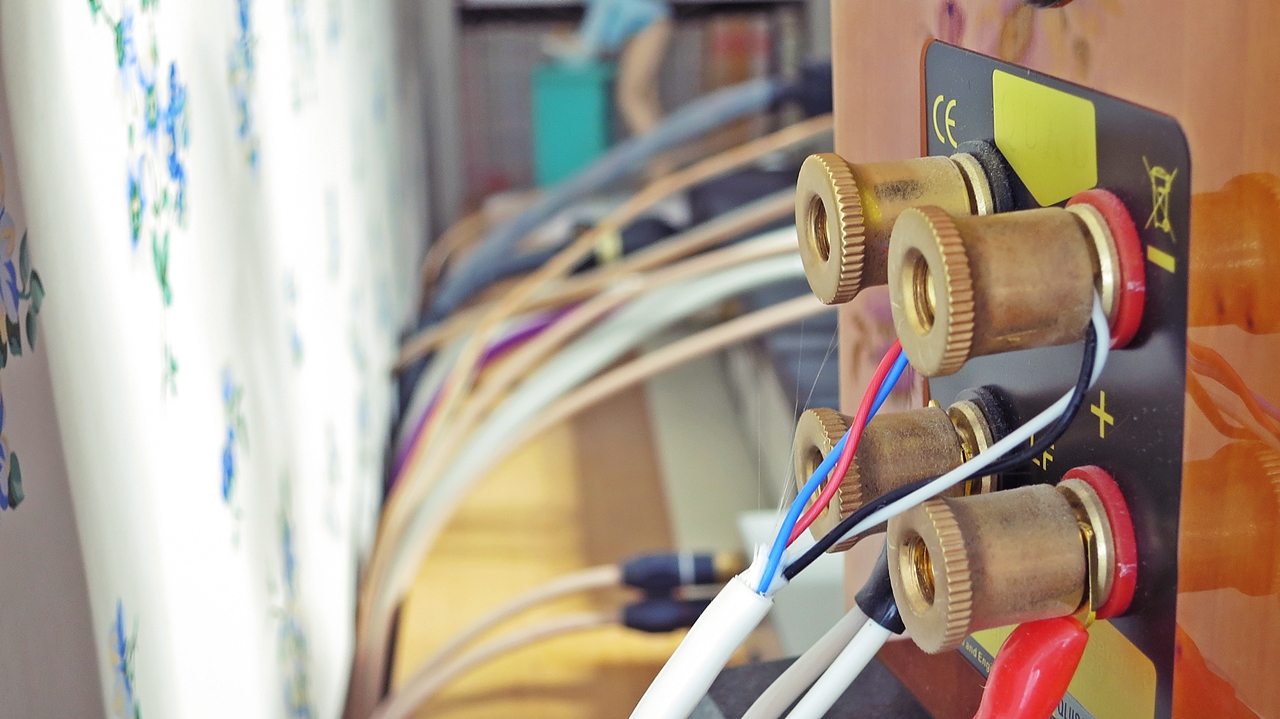
If you do not wish to emphasise the character of either plating type, distributing them as red + black / blue + white — one silver-plated and one tin-plated conductor bundled to each polarity — should yield a more balanced, intermediate sound quality, and that is likely to be the most sonically balanced approach overall. (I would particularly recommend starting with the mixed configuration rather than keeping them separate.) My own MKTP-2 × QUAD L-ite2 system has a naturally soft character to begin with, so the most balanced result came from putting the two harder-sounding tin-plated conductors on the red (+) side and using the aeco silver-plated banana plug ABP-1111S on the amplifier side — but this is entirely case by case, and I think there are all sorts of discoveries to be made by experimenting in your own way.
Auto Translated by CS4.6