【QUAD L-ite2 British Small Speaker Review】
Prologue|Part 1|Part 2|Single-Wire|Bi-Wire|Reservations|Jumpers
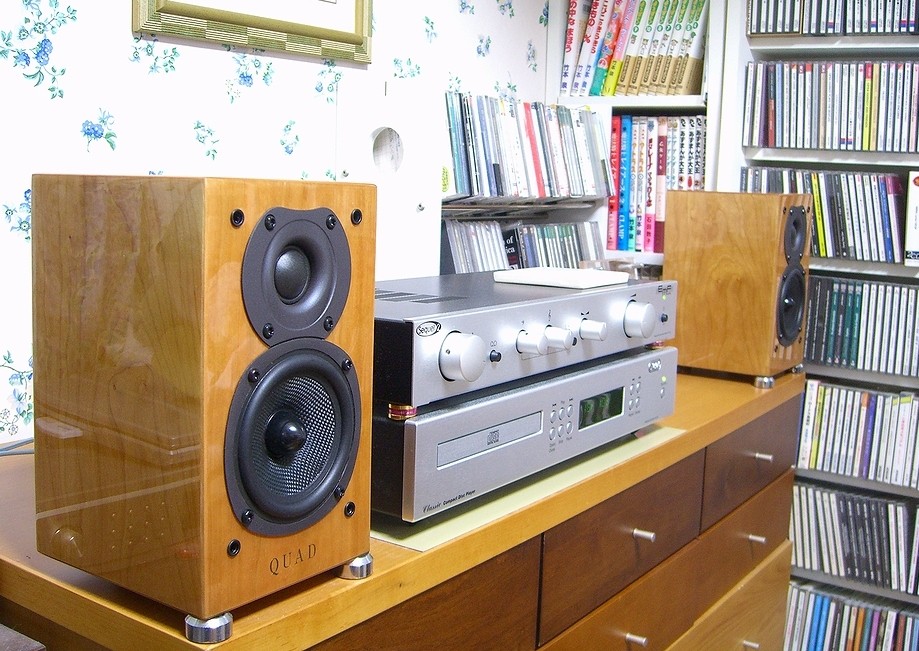
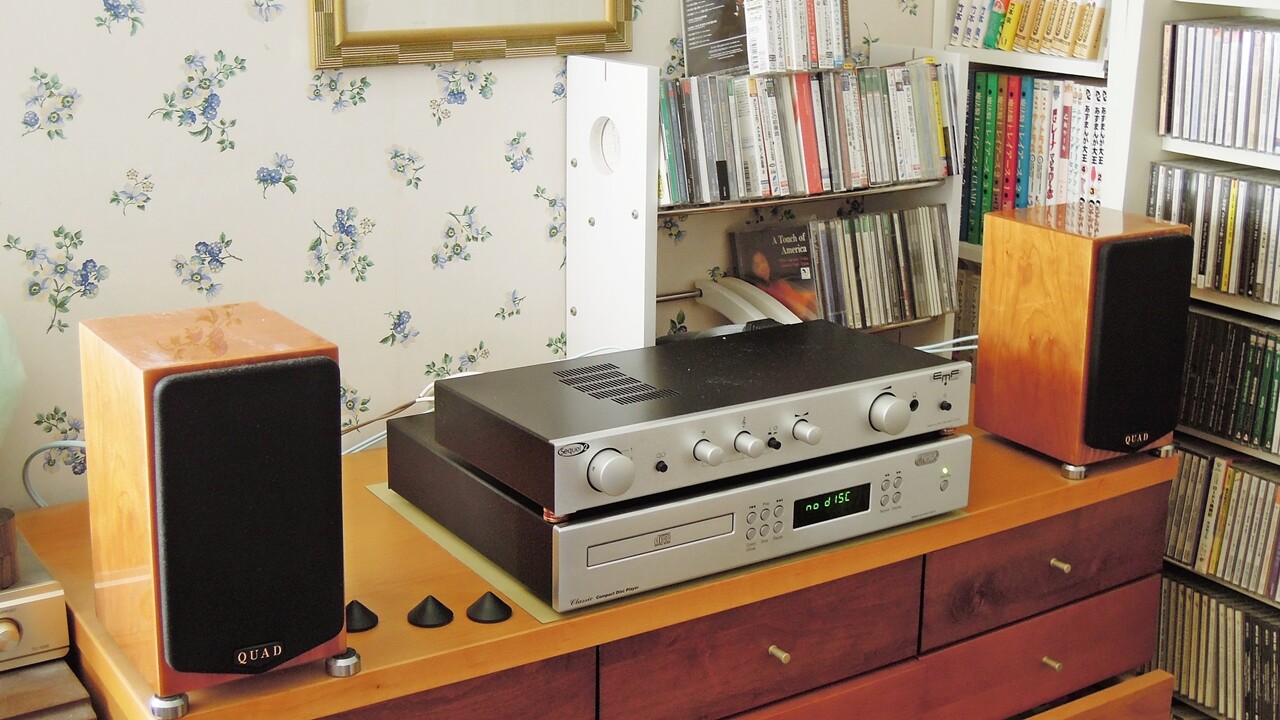
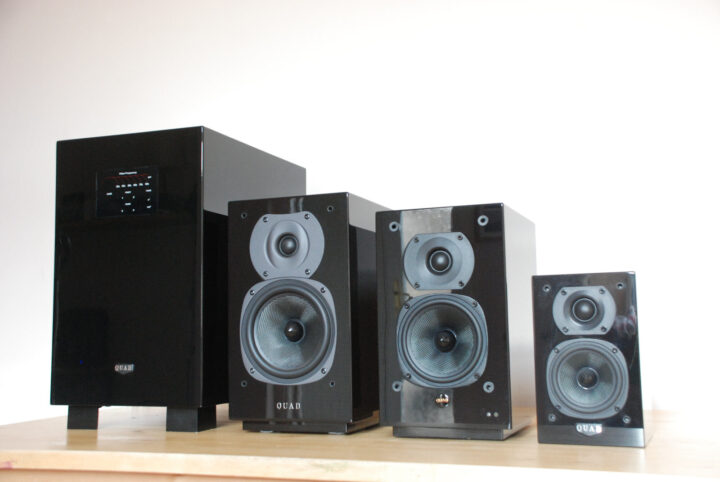
As for Sub-system C, as of August 2013 this is the combination it has settled into. The speakers are the QUAD L-ite2 (Lite2), from the venerable British Hi-Fi manufacturer QUAD. In fact I only brought them in just the other day, and they are still partway through burn-in (running-in). It has been a good five years since the QUAD L-ite2 first appeared on this blog, and if you trace it back to the QUAD 11L, it would be eight — a rather belated moment, I admit, but I have at last joined the ranks of QUAD owners. ⇒ QUAD Official Site (UK).
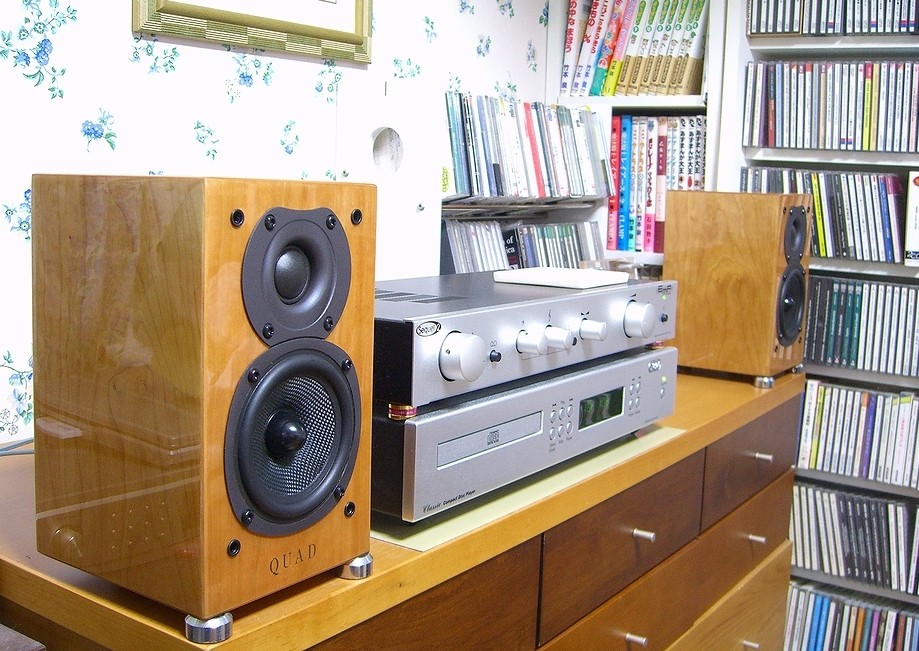
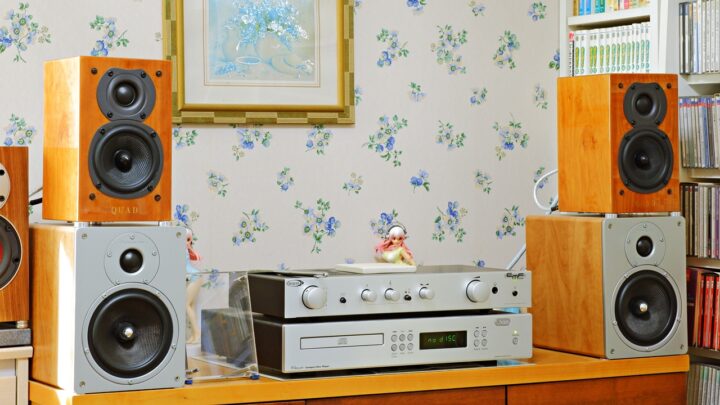
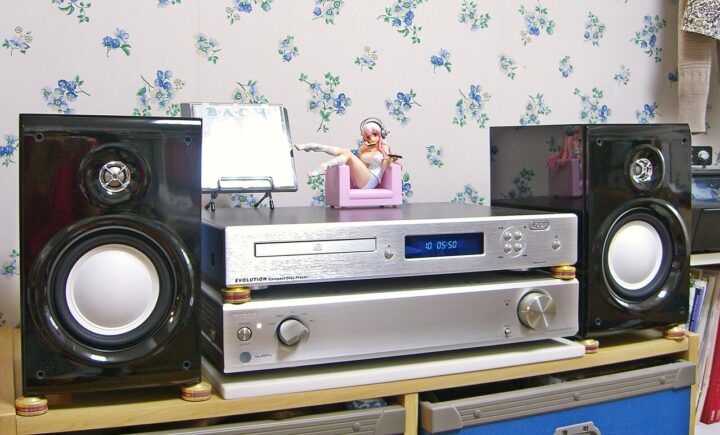
For reference, the system it is connected to (Sub-system C) consists of the integrated amplifier EMF Sequel2, CD player CREEK CLASSIC CD Player, FM tuner DENON TU-1500N, and FM antenna DX Antenna US100A. Even before QUAD’s L series became the L2 series, I had been thinking it would be rather nice to pair either the L-ite or the 9L2 with the CREEK-centred Sub-system C — in fact I wrote an entry along those lines back five years ago — and yet, by the time I noticed, that L2 series itself was already starting to look discontinued.
Late to the Party: How I Came to Get the QUAD L-ite2
Whether production has ended in the UK itself, or whether it is simply a matter of remaining stock at the Japanese distributor Rocky International, I am not entirely sure… but by the time I looked, the higher models had nearly all sold out, and only the smallest, the L-ite2, seemed to be left. Could it be that a successor to the QUAD L series is due out soon? Personally I would be rather pleased if they carried on the same design language and released an L3 series — though knowing my luck, it will probably turn out to be an entirely new lineup with a completely different look. Thinking along those lines, it struck me that I had better secure this classic piece before it disappeared altogether.
When it came to choosing the QUAD L-ite2, the only audition I had before purchase was in a dealer, in a parallel listening environment routed through a selector and a ludicrously long, cheap speaker cable. To summarise my impressions at the time: the tonal character was much the same as the 11L2 and 12L2, but the small-diameter woofer left the bass feeling somewhat constrained, and with a greater share of the load falling on the tweeter relative to the input, there was a somewhat gritty, unrefined quality in the treble. I did audition the L2 series with various integrated amplifiers — including the ATOLL IN100SE and DENON PMA-SA11 — but the crucial question of how it would pair with the CREEK, compatibility and all, remained unknown. My belief that it would work well with the CREEK came from a combination of comments left by readers on this blog over the years, plus a certain intuition built up from experience.
The aim in bringing in the QUAD L-ite2 was not to achieve a modern, high-speed, high-resolution sound, but to reproduce a rich, characterful British sound. My main system has a large soundstage with a lush, deep, artistically resonant quality. Sub-system A, built around the ONKYO A-1VL, is modern, sharp, high-speed, and transparent. The CREEK-based Sub-system C is for a retro, classical British sound; Sub-system M, with ARCAM and Miuaudio, is a lighter, understated European sound; the ELAC-based desktop PC audio is — to put it generously — something of a monotone, avant-garde affair; and the car audio is a French sound courtesy of BLAM × FOCAL, and so on. Each system is deliberately given a different sonic character. That said, when it came to finding a speaker for the CREEK Sub-system C, I had never quite found the right match, and for the past two years I had been running the audiopro Image12 there somewhat by default. For the audiopro Image12, whose strengths lie in high-speed, high-resolution reproduction, that pairing with the CREEK must have been rather unsatisfying. The QUAD L-ite2 is intended as its replacement, and as the combination I had always had in mind.
QUAD L-ite2 Catalogue Specifications, etc…
· Type: 2-way / Bookshelf / Bass reflex / Magnetically shielded
· Nominal impedance: 6Ω
· Power handling: 120W
· Drive units: 25mm soft dome tweeter / 100mm woofer
· Frequency response: 70–28,000Hz (±6dB), lower limit 32,000Hz / −10dB
· Crossover frequency: 2,200Hz
· Sensitivity: 86dB
· Dimensions: (H) 226 × (W) 135 × (D) 160mm (Note: cabinet actual depth excluding terminals: 150mm)
· Weight: 2.8kg per unit (not measured by the author; not stated on the UK product page)《I intended to lift the product information wholesale from the distributor’s official page, but a number of the figures differed from the QUAD UK catalogue, so some values have been corrected and reproduced from the UK catalogue and actual measurements.》
The musical essence, distilled. Monitor Table Pod Speaker [L-ite2 Series]
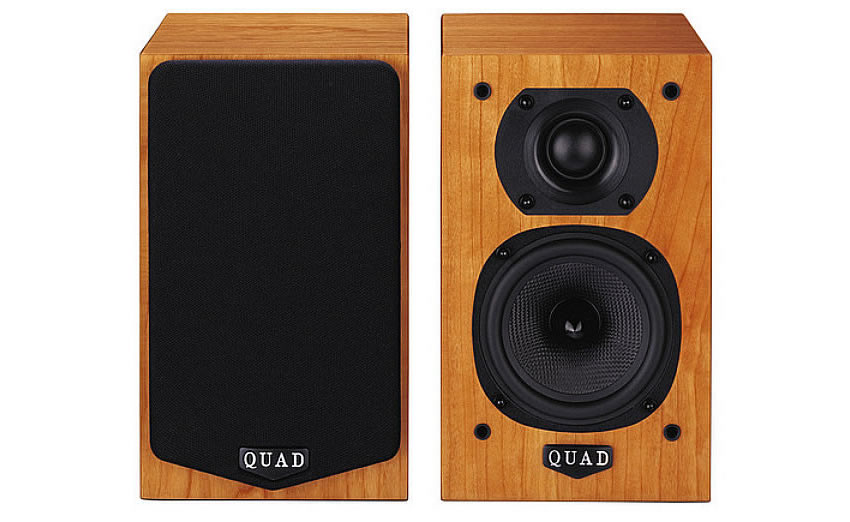
High-grade drivers shared with higher models — a full-scale system in miniature
The silk dome tweeter uses a neodymium magnet, while the woofer employs a resin-impregnated Kevlar cone that is both lightweight and highly rigid, with the speed to handle demanding transients. Despite their size, the speakers achieve a pleasing balance centred on the midrange in terms of fundamentals, making them suitable for all genres. Whether as a main system or as front/rear speakers in a home theatre, they excel across a wide range of musical listening scenarios.A luxurious finish that exceeds its class
http://www.rocky-international.co.jp/quad_index.html
The enclosure is constructed from 15mm and 25mm MDF. QUAD’s proprietary high-gloss finish — solid natural veneer polished and lacquered through seven successive coats — is available in three colour variations. In an age when MP3 players and digital audio devices have made casual listening outdoors effortless, this speaker was conceived from the idea that indoors, one should not have to listen to music through a “compromised sound”. Precisely because of its small size, the greatest care was taken in material selection, with materials comparable to those found in full-scale systems.
One of the characteristics of the QUAD L/L2 series that can be read from the published specifications is that, unusually for a conventional bookshelf speaker of this type, the crossover frequency is relatively low at 2.2kHz — meaning the tweeter is carrying a relatively large share of the work. And for the size, reaching down to 70Hz is quite commendable. The high-frequency characteristics also look good on paper. Incidentally, I did not actually know the woofer used a Kevlar cone until the unit arrived. I had assumed it would be the sort of polypropylene-with-carbon-mixed-in, embossed cone you often see on cheaper speakers. As I currently have no Kevlar-cone speakers in the house — having parted with my B&W and FOCAL/JMlab — this was a rather pleasant surprise. On the subject of colour options, I believe that in addition to Black, Rosewood, and Cherry, there were originally also Silver, White, and Bird’s Eye Maple finishes available.
Differences Between the Original QUAD L-ITE and the L-ITE2
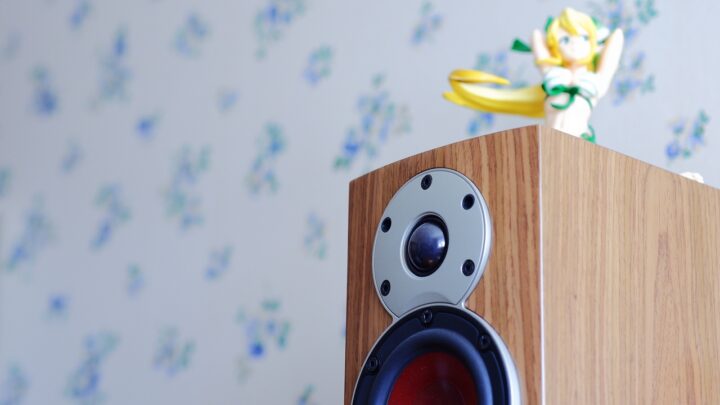
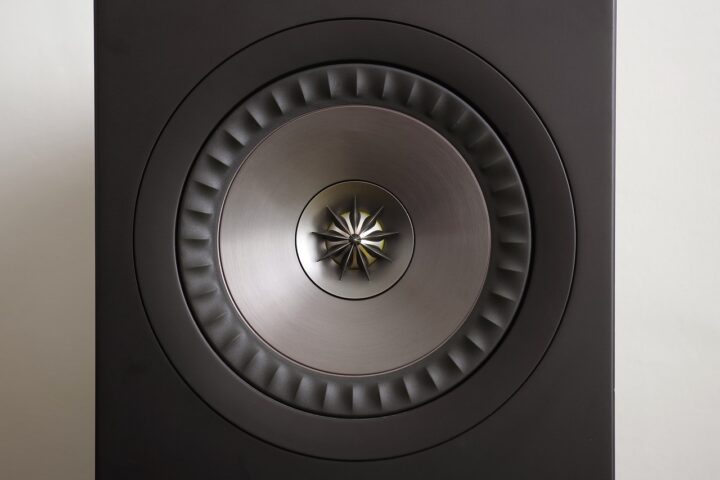
I had not actually understood what had changed before purchasing, but looking carefully at the unit when it arrived, I could see that both the tweeter and the woofer had been updated to new-design units, just as with the higher L2 series models. Comparing the original with the L2 revision, the plastic faceplate of the silk dome tweeter has been changed to a pincushion shape. That was something I had not noticed until the unit arrived — because every product photo online showed only the original L-ite, and there were no images of the L-ite2 to be found anywhere. Even the official distributor page at Rocky International showed only a photo with the speaker grille fitted — which is probably just a reused image from the original L-ite.
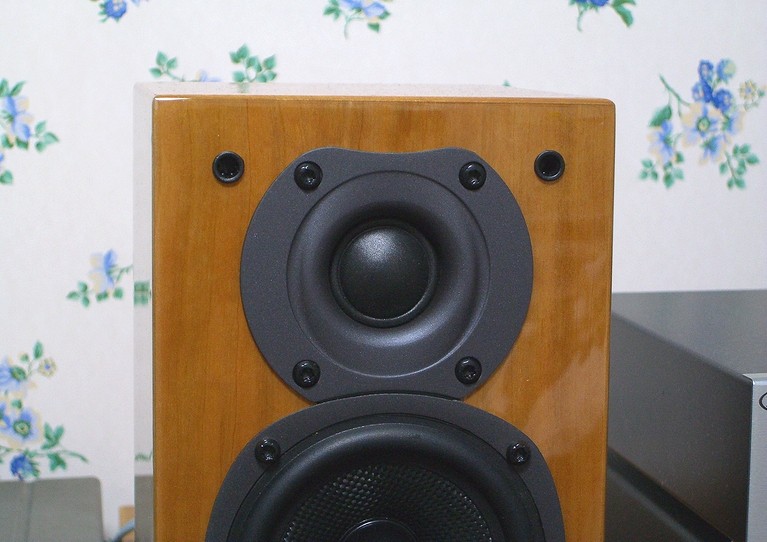
In short, the new L-ite2 uses a 25mm silk dome tweeter of the same design as the 9L2, and shared with the 11L2 and 12L2. The cabinet finish, external dimensions, and all other numerical specifications are identical to the original. The L-ite2 looks a touch bolder and more Hi-Fi in appearance, but personally I prefer the look of the original L-ite, where the tweeter and woofer sit separately on the baffle — it feels more refined and clean. With the L2 series (and the higher models too, for that matter), the black frames of the tweeter and woofer are joined together on the baffle rather than sitting separately, which is something that niggles at me aesthetically. Sonically, however, the L2 series has the better reputation — resolution appears to have improved, and since the L2 model came along the notorious harsh treble problem seems to have completely disappeared.
Opening the Box…
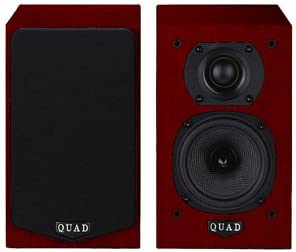
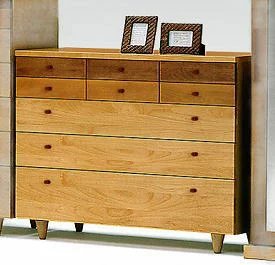
What I purchased this time was the high-gloss Cherry finish — chosen to match the colour of the chest of drawers it would sit on. Just between us, it has long been said that within the QUAD L series, the ebony and rosewood finishes produce a slightly superior sound — the idea being that the thin veneer applied to the outside, differing in material, subtly affects the tonal character. Ebony, also used in woodwind instruments, is tight and clear in its resonance; rosewood has a flavour to its sound, more acoustic in nature. By that logic, the Cherry finish would presumably yield a slightly softer tonal character. I did consider going with the rosewood, but having seen it in the shop, it was a genuinely glossy, deep wine-red with a real sense of luxury — quite different from the subdued rosewood finish of the Vienna Acoustics in the living room — and I thought it might look a bit out of place in the room.
When I opened the box on delivery, the packaging was impressively thorough. To protect the high-gloss piano finish, there was a polythene bag inside the polystyrene — nothing unusual so far — but then, beyond that, the speaker was placed inside a white cloth bag with a desiccant packet included. The printed manual was not a plain black-and-white sheet either, but a full-colour product catalogue in style — quite lavish. One does wonder where the cost priorities lie there. On top of all that, a pair of cotton gloves was included to handle the speaker without leaving fingerprints. Cotton gloves came with my audiopro speakers too, come to think of it. The Japanese are often said to be meticulous about such things, but in terms of fastidiousness, European products seem to go even further in various respects. For reference, the QUAD L series and L2 series are manufactured in China — well-known to existing QUAD owners, so no surprise there. If this level of finish were to be done entirely within the UK, the price would probably be roughly three times as much.
The seven-layer high-gloss finish is, as one might expect, genuinely beautiful. As the veneer is real wood, the grain differs from cabinet to cabinet. The glossy sheen has a quality that could momentarily be mistaken for a speaker costing upwards of £2,000 or so. That said, the driver units visible once the grille is removed are somewhat plasticky, it has to be said. The grille itself is also finished to a notably high standard — a wooden frame of some thickness, with a fabric that has a satisfying quality to its texture — but naturally, those of you who are serious about your Hi-Fi will be listening without it, I would assume. With that in mind, I compared the sound briefly with and without the grille, and — perhaps partly because the speakers had not yet run in — I found I actually preferred the sound with the grille on: there seemed to be a certain acoustic quality added by the wooden frame and the grille cloth that made it feel more like a proper British speaker. ※ Postscript: once the running-in was complete, I ended up using them without the grille after all.


 ポチップ
ポチップ
As for the differences between the L-ite2 and the higher L2 models, it appears that the cabinet, woofer, tweeter, crossover network, and rear terminals all use the same materials and shared components across the series — the only real difference being the smaller woofer diameter. The QL2, one size up, shares even the driver units with the L-ite2, differing only in cabinet size. From the perspective of mass-production economics, the smallest, most entry-level speaker in any such series is generally the best value for money — a point I have made on this blog more than once. While the bass extension and overall volume are naturally constrained by the cabinet size, if the component quality is the same, then the intrinsic sonic character is arguably no different from the higher models — the balance may differ, but the essential quality does not. (Continues in QUAD L-ite2 British Ultra-Compact Bookshelf Speaker Review — Part 2.)
【QUAD L-ite2 British Small Speaker Review】
Prologue|Part 1|Part 2|Single-Wire|Bi-Wire|Reservations|Jumpers


Auto Translated by CS4.6
List of comments (5)
pastelさん こんばんは。(…というには微妙な時間。。。)
とうとう!!QUAD導入されたのですね☆ レビュー楽しみ~にしています。
私も量販店でL-ite2を試聴し候補にしながら…パステルさんの過去エントリ同様、9L2が気になってしまって。中古サイト、オクをぶらぶらしています。
L-ite2足元のインシュレーターも合わせて導入されたものでしょうか?。
寝られなくて起きてます。深夜なのに31度・・・あづい・・・。
インシュレーターはオンキヨーのAS-258です。
https://www.audiostyle.net/archives/51870176.html
セッティングする時に余ってたのが目の前に転がっていたからで選択に特に意味はありません。エージング中の印象としてはオーディオテクニカのインシュレーターの中から、一番合うのを選ぶのが良さそうです。
このスピーカー、気付いたのがつい数時間前なんですが、QUAD Lシリーズの例のキンキン問題の所以がやっと判りかけてきました。無印11L/12L程ではありませんが、どうもツイーターにナーバスな気が有って、普段お聴きのジャンルによってはろくでもないことになり得ます。クラシックは大半大丈夫そうですけれども。たぶんバイワイヤリングのコントロールでどうにかなりそうな予感がしてますが、上手に解決するためには結構テクニックが要りそうです。
ヤッパQUADかっこいいですね
えぁは音はいいけど顔がぶちゃいく・せめてBEだったら……
パステルさん、こんにちわ!
少し前の記事にもコメントをいただきありがとうございました。
クオードいいですね。私も、現行モデルの中ではいい出来だと思います。
なにかこの道?に入ると、全然、新モデルがよいとは限らないことがわかってきますので、もう古今東西のモデルが全て選択の対象になってしまうんですよね。
クオードのCD77も一時期5年くらい持っていましたし、クオードの44シリーズ(プリとパワー)の導入を一時期検討して自分のシステムのスピーカー(プロアックのタブレット50とインフィニティのテシマル)につないでみましたが、いまいち相性が悪いようでアンプの導入は諦めました。その後に、ネイムのナイト2とリンのクラシークKを比較して、テシマル用にネイムを購入したんですがね^^?
スピーカーは、やっぱりなんといってもシステムの要なので、これが変わるとアンプを見直さないといけないという命題があるので、なかなかスピーカーの新調には慎重にならざるをえないのですが、サブとして使うならおもしろいかも!という感じです。
レビューを楽しみにしていますね^^?
そうそう、近況報告ですが、松田聖子さんがこの1年、マイブームで、わざわざ特設のブログを作ってしまいました。
名前にリンクしてあるので、よろしければどうぞ!
ではでは^^・
>なかたさん
かっこい~ですか?てへ♪実機は既に部屋のインテリアに溶け込んでしまいクラシカルな佇まいでありんす。
>しばやんさん
オーディオとカメラは懐古趣味です(キッパリ)販売終了して手に入らなくなってから、或いは手放してから悔やむのがこの道の修行です…。 L2シリーズはエントリークラスですので、あくまでエントリークラスとして良くできているって印象です。QUADにはなんと言っても本命の静電型スピーカーESLがありますし、作ってる人達も自宅のメインはESLで、L2シリーズ等々のトールボーイやブックシェルフはサブ機やホームシアター機のつもりで設計しているでしょうから。個人的にはLS3/5aに迫って欲しかったりするのですが・・・まだまだ遥か上の存在かな。
松田聖子さんブログ、トップのリンクリストに登録しておきました。ビートルズのネタはQUAD Lite2の後日エントリで取り上げる予定です。その時にまたリンク張らせて下さいませd(^_-)