【Compact Speaker Search for Tiny Rooms】
QUAD|Wharfedale|JAMO|audiopro|EPOS
Truth be told, it was the Wharfedale bookshelf speaker DIAMOND 5 — a British loudspeaker I acquired more than fifteen years ago — that first opened my eyes to the wonders of imported audio.
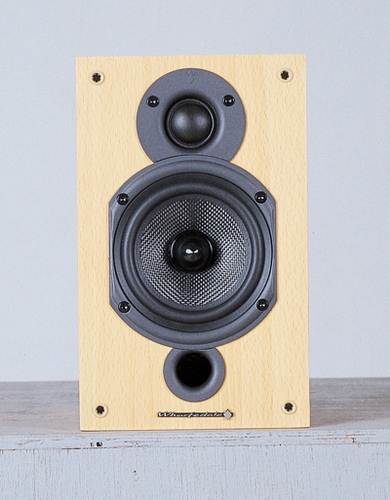
The Wharfedale DIAMOND V was a compact speaker that earned the nickname “Excellent” in Britain at the time, and it is a fondly remembered piece that taught me — still in my teens — that foreign audio equipment was something altogether different from anything made domestically. This was my very first encounter. Had I never met the Diamond 5, the CREEK integrated amplifier 4240, and the PHILIPS portable CD player AZ6829, I — who at the time was chasing nothing but catalogue specifications on mid-range domestic gear — would never have been able to grasp, in any felt sense, what people mean when they speak of “musicality” as something somehow inherent to audio reproduction. . . . The details of those memories can be found in the author’s profile below . . .

Japanese imports dried up after the successor model Diamond 6, but the Diamond series has survived nonetheless — repeatedly undergoing drastic and bewildering design changes that, for a heritage brand founded in 1932, can only be described as a complete absence of any consistent policy — and has endured as Britain’s representative budget loudspeaker. This year it has finally reached its ninth generation with the 9.x series. The Diamond 9.0 occupies the smallest position in that lineup, and in terms of size it is closest to the old Diamond 5. Being a budget Hi-Fi speaker for ordinary people, the faint air of cheapness that has been faithfully passed down from those early days is, in its own way, rather endearing. ※ Though it has improved considerably, one might say — with the 9 series there was a sudden jump in perceived quality.
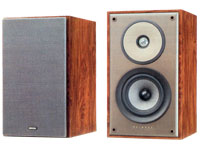 The Wharfedale Diamond V I used back then had a rear bass-reflex design, pairing a 120mm woofer — somewhat large for the cabinet size — with an aluminium dome tweeter. The Wharfedale woofer used a polypropylene cone coated with a paint mixed with crushed mineral, giving it a rough, textured finish; the same driver was adopted at the time by DENON in speakers such as the PRESTA SC-E232 and SC-E535. The Diamond 5’s front baffle was a laminate of MDF and plastic — thoroughly poverty-stricken in atmosphere — yet the sound was unmistakably, thoroughly British. It was not exactly Hi-Fi, and transparency was only moderate; if anything it was an analogue-tinged sound haunted by a certain muddiness that seeped out from cabinet resonance and cheap materials. But put on the Beatles and it swung along with an energy and atmosphere that made you feel nothing else would do. For classical music, small-scale works were handled with ease. That said, the newly designed 25mm aluminium tweeter — which was so central to Wharfedale’s distinctive character — was vulnerable to overloading, and if you listened carefully there was a buzzing noise creeping into the upper soprano register, and the violin had a tendency to tip over into a rather shrill, jutting quality. Yet the remarkable thing was how even those flaws got folded into the overall charm. It was apparently not the most durable of speakers: after two or three years of use the sound became thin and loose, and the final blow was delivered by a burn-in disc called the PAD Ultra System Enhancer. After running it through that process, the ageing had gone too far and the sound collapsed into something thin and flabby . . . orz. In the end it was in no condition to sell, and I had to put it out for bulk refuse collection with a heavy heart.

 ポチップ
ポチップ
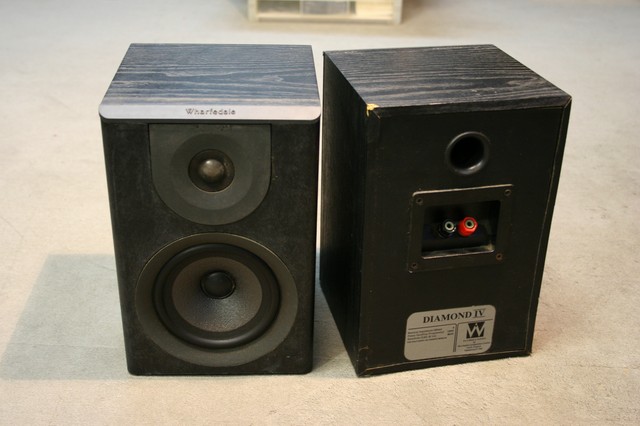
As an aside, I have heard that the Diamond IV (with its 19mm tweeter), one generation before the Diamond V, was actually the better-sounding of the two. Aesthetically, I find the DIAMOND 4 more to my taste as well . . .
Now, the latest-generation Diamond 9.0 features a 25mm silk dome tweeter paired with a slightly smaller 10cm mid-woofer positioned more or less at the centre of the baffle — a design whose visual proportions somehow lack a little in the way of aesthetic sensibility, it has to be said. That aside, the front-firing bass-reflex port means fewer placement restrictions for a small-space speaker, which makes it practically easy to live with. External dimensions are 145×236×165mm, squarely in the sweet spot. The frequency response is quoted as 60Hz–23kHz at -6dB. The crossover sits at 2.2kHz, comparably low to the QUAD. And the most important point of all: an almost unbelievable budget price of £100 / $250.
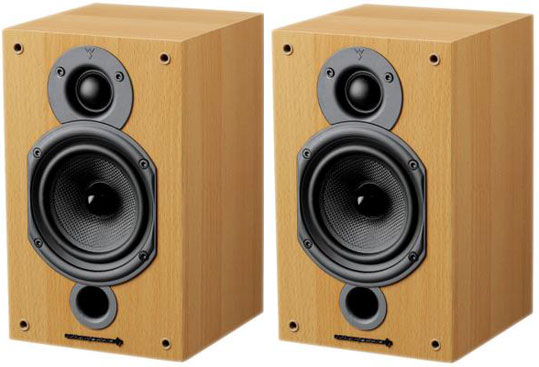
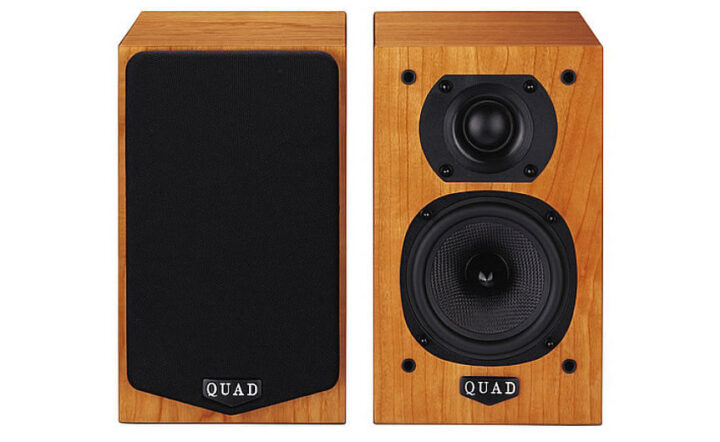
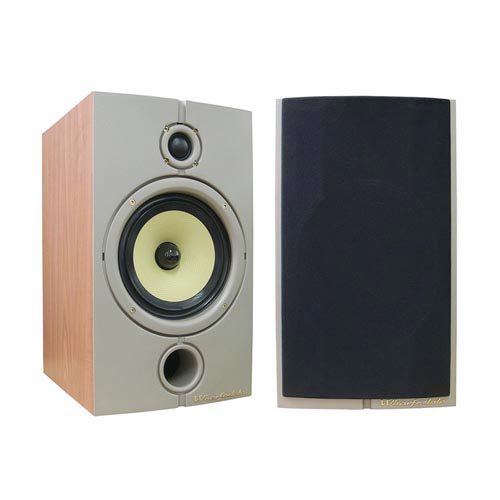 The DIAMOND 9.0 follows the basic design of its predecessor, the Diamond 8, but where the front baffle was previously grey plastic(?), it is now fully clad in a wood-grain print panel, which does give it a somewhat more upmarket feel as a loudspeaker. In terms of the drive units, the yellow cones of the Diamond 8 had a certain visual air of quality about them, but the units in the 9.x series — both tweeter and woofer — look to me rather like they might be the same type used in the QUAD L series, though I could be wrong. The grille shapes differ, but both are manufactured in China, and Wharfedale and QUAD are, if I recall correctly, sister companies. With all that in mind, frankly speaking, apart from the name this thing shares absolutely nothing with the original Diamond 5 — and yet here I am, a lover of British audio, still helplessly susceptible to the Wharfedale brand name. Incidentally, the British magazine WHAT HI-FI? awarded it the same five stars as the QUAD Lite, describing it as Tight and punchy. Whether it’s lively and energetic or simply noisy remains to be seen . . . There is no small chance it could be over in an instant, but I still want to hear it for myself one day. Note that as of 2022, the current successor model is the twelfth-generation Wharfedale DIAMOND 12.0 (released 2021). (Continues with JAMO)

 ポチップ
ポチップ
【Compact Speaker Search for Tiny Rooms】
QUAD|Wharfedale|JAMO|audiopro|EPOS
A bonus: the Wharfedale DIAMOND 7.
Auto Translated by CS4.6

List of comments (4)
SC-E232のバッフルはプラスティックの一枚板ではなくぷにょぷにょしたいかにも反射音を吸収するんですよ、という感じのものじゃなかったでしたっけ? 自分もあまり記憶にありませんが……
遠目だと確かにプラスティック板に見え激しく安っぽかったのは覚えています。
主語がぬけていてすみません。ビンボ臭い云々はあくまでDiamondⅤの話です。判り難いので修正しておきました。デンオンのSC-E232は国産なので箱はそれなりの高級感がありました。フロントのベージュ色バッフルはぷにょぷにょでしたか?触ったこと無いので。DENONとDIAMONDとの一番の違いはトゥイーターの音です。ワーフェデールはアルミドームの明るいしゃくれた音で、トータルで快活なサウンドでしたが、SC-E232はソフトドームで、歪みっぽさは全くない、翳りのある優しく大人しいサウンドでした。
http://audio-heritage.jp/DENON/speaker/sc-e232.html
コラーゲンコーティングですか。
検索で飛んできました。ワーフェデールダイアモンド5+クリーク4040+フィリップスと言えば、サトー無線の工藤氏が広めたものですね。懐かしいです。ひょっとしてお店で会っていたかもですね。
ねっしーさんはじめまして。せっかくコメントいただいたのに、管理人不在で直ぐにレスできず申し訳ございませんでしたm(__)m
当方の都合で現在ブログの更新を一時休止しておりますが、なるべく早く再開したいと思っております。それでは。