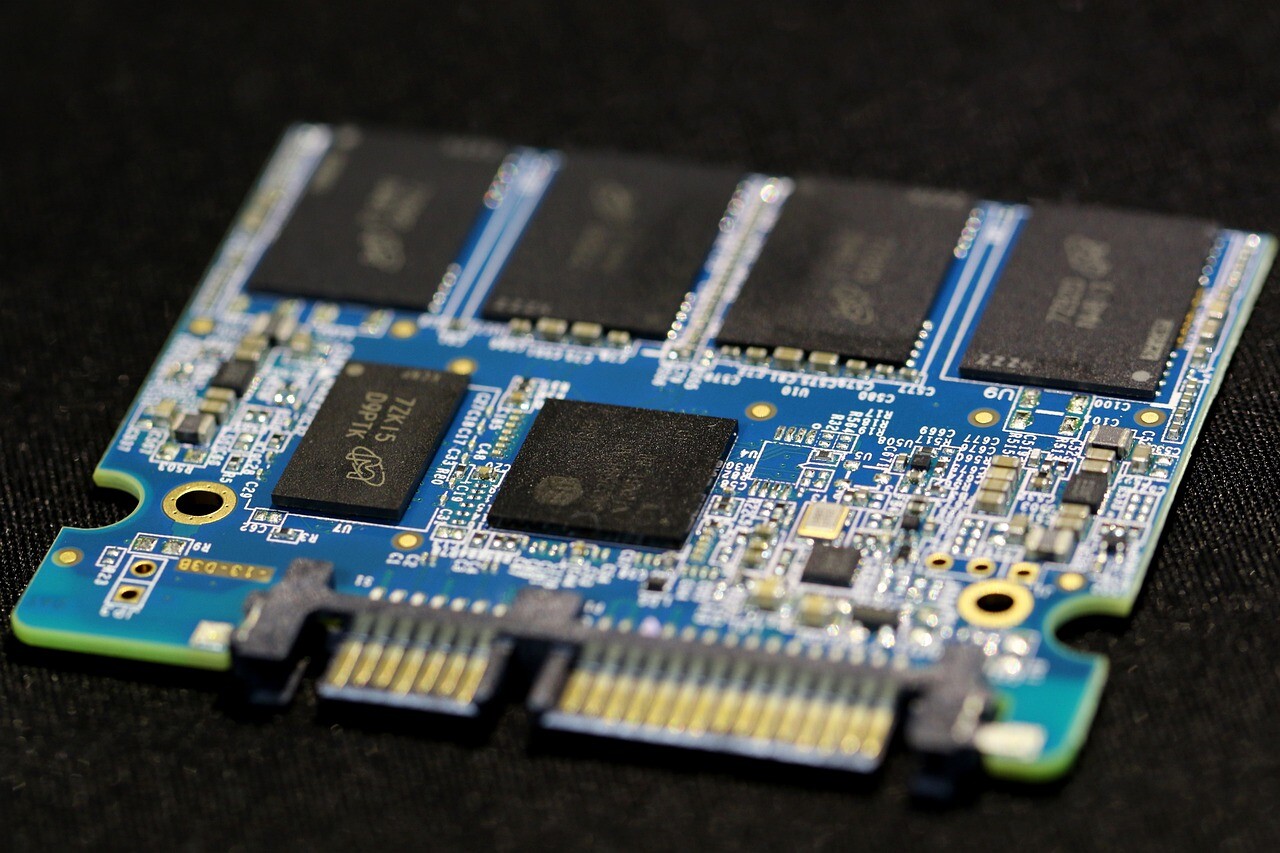
【A purely subjective comparison of SSDs from various manufacturers】
Comparison 2017|850EVO|Comparison 2019|860EVO Part 2|860EVO Part 3|870QVO|WD SN770
That’s a provocative opening, but I mean nothing by it… To be honest, in these times when even a vice-chairman has been hauled off and arrested, there is something that feels ever so slightly awkward about writing up a product from South Korea’s Samsung Electronics — or is there not, or is there, or isn’t there? That’s more about the general mood of the times than my own personal feelings, mind you. That said, I self-identify as a cosmopolitan of the lumpen-bloggeriat persuasion, so when it comes to good products and good talent, I genuinely don’t mind — or rather, can’t afford to mind — whether something is made in Japan, Europe, America, Taiwan, South Korea, or China.
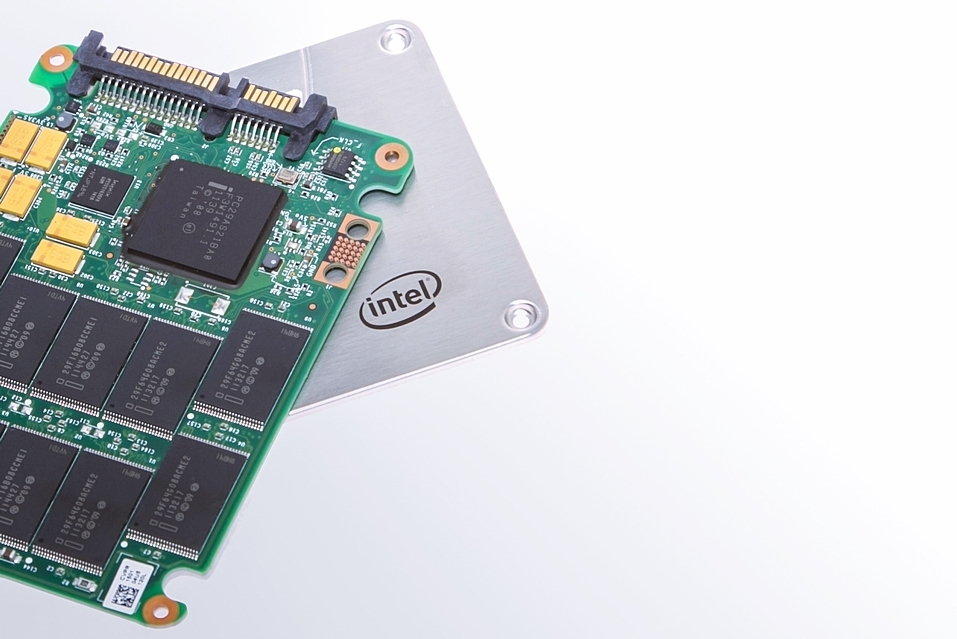
Well, anyone who follows PC hardware will know this already, but in the world of NAND memory and SSDs — where the pace of development has been ferocious in recent years — it is Samsung Electronics of South Korea that has been running away with the top share of the global market, and showing no sign of slowing down.
How my system came to be fully SSD-based
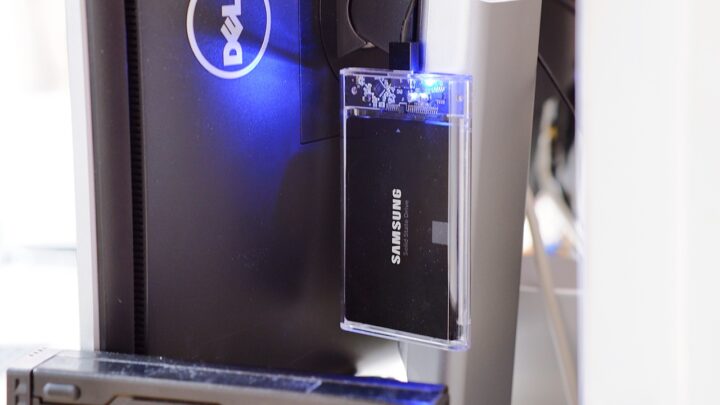
At the start of 2014, I replaced the HDD in my ASUS UL20FT with a SAMSUNG 840 EVO — my first-ever SSD — and you can read about that in the entry I wrote at the time. Since then, roughly three years have passed, and the drive has now clocked up 14TB of writes over 16,500 hours of use. That’s roughly equivalent to leaving it powered on continuously for two years. Divided by the number of days, that comes to 20GB per day. Toshiba has stated that the average for a general user is around 4GB per day, so apparently I’m writing quite a bit more than most people… The 840 EVO itself has been astonishingly, remarkably trouble-free throughout. I think the single biggest reason I was able to keep that 2010-era netbook, the ASUS UL20FT, going for a full six years was precisely that I had swapped out the Seagate internal HDD for the snappy, fast-responding SAMSUNG 840 EVO.
In moving the UL20FT to a rear-support role and introducing the ASUS VivoMini VC65 as the new main machine, the one absolute prerequisite was replacing the internal HDD with an SSD. Once you get used to the lightning-fast response of an SSD, you simply cannot bring yourself to run on an HDD again, even temporarily — so I bought a new SSD together with the PC itself and, as I wrote here, promptly cloned across to the SSD right from the very first installation. What follows is the author’s drawn-out excuse-making — policy being to root for the underdog and absolutely avoid anything with the top market share — for why, of all things, Samsung SSD was yet again chosen, all while comparing the performance of various SSD brands with nothing but thoroughly personal preference on full display.
So which country’s brand of SSD is actually the best choice?
The manufacturers of NAND flash memory — the core component of any SSD — can be broadly divided into roughly these four.
Japan: KIOXIA (formerly Toshiba Memory) and USA: Western Digital / SanDisk
South Korea: Samsung
South Korea: SK Hynix and USA: Intel / Solidigm
USA: Micron Technology (Crucial by Micron)
NAND memory fabrication plants are few in number, and the market is almost entirely dominated by these four players: major Japanese manufacturer KIOXIA, major American manufacturers Western Digital (KIOXIA) and Micron Technology, Korean giant Samsung, and SK Hynix, which has grown considerably after recently acquiring Intel’s SSD division. There are occasional mentions of poorly-regarded Chinese-made NAND and the like on the fringes, but with products such as Colorful SSDs — which became notorious for poor quality — the origin is deeply unclear, quality and all. There are rumours of chip counterfeiting, and one cannot help but wonder what exactly becomes of sub-grade SSD memory boards that fail to meet performance standards at major manufacturers’ Chinese factories.
Beyond high-performance NAND chips, an SSD also requires controller design and a manufacturing facility for assembling and productising the whole package. With international consolidation through acquisitions, there are in practice many hybrid arrangements — NAND chips made in Japan paired with controllers from the US, for instance — and on top of that, assembly plants may be located in China or Brazil regardless of where the manufacturer itself is headquartered, making it increasingly difficult to assign a clear national identity to any given SSD brand. And beyond country of origin, there are two further distinctions: brands that belong to actual component manufacturers, and brands that are simply trading-house labels for PC supplies. As of 2022, the main brands and manufacturers selling SSDs are as follows.
【Japan】
KIOXIA |Nextorage|Plextor|BUFFALO|CFD Sales|ELECOM|HIDISC Magnetic Laboratories|I・O DATA|JNH Jia Nian Hua (Chinese trading company) | SPD (made in China) |SUNEAST (made in China)|ARCANITE (GISH JAPAN)|PASOUL|TLET|WINTEN (made in China/Taiwan)
【South Korea】
Imation|Samsung|SK Hynix / Solidigm / ESSENCORE KLEVV (Hong Kong)
【USA】
CORSAIR|Crucial Technology|DATARAM|Intel|Kingston Technology|Lexar (manufactured by Longsys, China)|OWC|Patriot Memory|SABRENT|Super Talent (manufactured in Taiwan)|Seagate|Timetec|SanDisk – Western Digital
【Taiwan】
Acer Storage (BIWIN OEM)|ADATA|addlink|Apacer|Gigastone|GIGABYTE|KINGMAX|LEVEN J&A|MMOMENT – LinkMore |MSI|PNY |SEKC – GISH JAPAN|SP Silicon Power|Team Group|Transcend
【China】
Acclamator|BIWIN |Dahua|Dogfish – Gamerking – KingShark|Faspeed|Hanye|HIKSEMI|Kingfast|Kingspec|Netac|LONDISK|Readyxio|ReleTech |TECLAST|TECMIYO|TOPDISK|Zheino
【Details unknown】
AOSNKE|EDILOCA|Fanxiang|Fikwot|JOIOT|KEXIN |Kingdata|Kuesuny|RAOYI|Shark|Superpard
Brands listed as “details unknown” are those whose manufacturers could not be traced. Listed in alphabetical order.
Brands listed as “details unknown” are, in nine cases out of ten, likely Chinese brands, judging from their names and the country-of-origin markings on their packaging. Over the past few years, a large number of ultra-cheap SSD brands with names nobody has ever heard of have appeared, and looking into them one by one, many turn out to be up-and-coming Chinese suppliers, followed by small and mid-sized Japanese and Taiwanese vendor (trading company) brands. Among domestic brands, the PC component suppliers that have been well known for years are trustworthy enough, but as for unknown trading companies — even if they are registered as Japanese or American companies, there are a fair number where the products are, no matter how you look at them, clearly Chinese, aren’t they?
With newer planning-and-trading-type companies, it is quite common for brands that were around just recently to have quietly disappeared before you notice. If you want a genuinely reliable SSD, I would recommend narrowing your choices to brands affiliated with major manufacturers from Japan, South Korea, or the United States, and selecting from there according to your needs. Even when you are forced to compromise on price, do try to stick to products where the controller and NAND chips can be confirmed from the product information to be made in Japan, the USA, South Korea, or Taiwan. ※ With major affiliated brands, assembly in China or Thailand should be fine, but with SSDs, the design is everything. There are many aspects of operational stability and durability that cannot be read from the stated specifications or the apparent warranty alone, and personally I still make a point of avoiding products where the design and manufacturing are entirely Chinese.

The complex relationships and shifts between manufacturers involved in NAND and controller production subcontracting and product commercialisation are covered in the Wikipedia article above. And as for my own entirely personal and frankly biased impressions of each brand at this point in time, they go something like this↓
Samsung Solid State Drive


 ポチップ
ポチップ
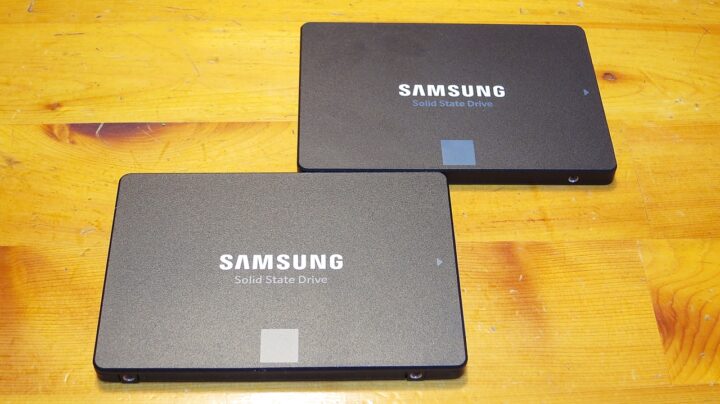
An overwhelming industry-leading market share and cutting-edge technology. The 860 PRO in particular is of unimpeachable quality. The mainstream models, the 860 EVO and 870 EVO, are decent enough. The entry-level 870 QVO is exceptional value. The packaging design sense is also impressive. That said — South Korea, though. Not in any derogatory sense, but with repeated governmental collapses and the threat from North Korea, one does rather wonder about near-future national security. Pretending to be anxious about all that aside, I, being a thoroughgoing performance absolutist, have gone through the 840 EVO → 850 EVO → 860 EVO → 870 QVO, choosing Samsung SSDs across successive generations.
WD Western Digital & SanDisk
 ポチップ
ポチップ
SanDisk’s NAND chips are the same Japanese-made chips as Toshiba’s — long live the Toshiba Yokkaichi plant (now Kioxia)! For now, if you are unsure, WD or SanDisk is the safe recommendation. Incidentally, the SSD that came pre-installed in the ASUS VivoMini VC65-G209Z is apparently SanDisk as well.
Under the US SanDisk brand, the Extreme PRO with its 10-year warranty — built with MLC NAND — has long been the gold standard for consumer SSDs, but it has risen sharply in price recently and is now out of consideration. And frankly, since everyone who knows their stuff recommends it so enthusiastically, I was deliberately refusing to buy it on principle (contrarian that I am). While I was sitting there sulking with folded arms, it went and got discontinued… orz. We are also in a transitional period as the brand moves over to parent company WESTERN DIGITAL, so I am personally taking a wait-and-see approach on the mid-range Ultra 3D and the budget SSD Plus models… That said, anyone who still wants a SanDisk-branded red-and-black MLC NAND model had better secure one before stocks run out.
 ポチップ
ポチップ
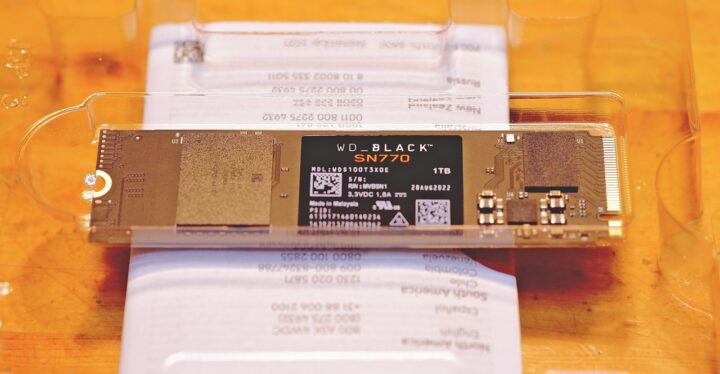
Using the same Japanese-made NAND as SanDisk and KIOXIA, combined with an in-house controller. The SATA 2.5-inch SSDs offered under the Western Digital WD brand are as follows: the WD Green, a budget model for light-use workloads; the WD Blue, which runs cool and draws little power; the WD Black, a high-performance model aimed at gaming; the WD Red, a high-endurance upper-tier model designed for NAS use; and there is also the WD Gold for enterprise applications. As a side note, as of 2023, I am using the WD BLACK SN770 NVMe M.2 SSD as my main SSD — though it is not a SATA 2.5-inch drive.
KIOXIA EXCERIA SATA SSD
 ポチップ
ポチップ
At first I thought — what on earth is Kioxia!? — but it turns out Toshiba Memory simply changed its name. In other words, it is Toshiba. The NAND fab in Yokkaichi remains as it was, and the company manufactures NAND for the likes of Western Digital, SanDisk, KIOXIA, and others. ※ The generation of NAND used and the controller paired with it differ from manufacturer to manufacturer, so there are performance differences even between products using Toshiba-made NAND. I had high hopes when I heard that everything, including the controller, uses Kioxia’s own original ICs and is fully made in Japan — but looking at benchmarks from various sources, the figures come out rather low. It apparently uses BiCS FLASH TLC NAND with no DRAM cache, and there is an undeniable sense that the design is a generation behind. This may change with a new model down the line, but honestly, it was a bit of a letdown.

CFD Sales MGAX / RGAX
 ポチップ
ポチップ
The ever-popular CFD Sales, with its reasonably priced CFD Selection lineup. The budget-tier “CG3VW” series from 2020 uses South Korean SK Hynix NAND paired with a Phison “PS3111-S11T” controller. The “CG3VX” series released in 2022 uses Toshiba-made NAND, but apparently retains the same Phison “PS3111-S11T” controller as its predecessor. The general verdict is that performance is underwhelming because the controller is poor, regardless of the Toshiba NAND. SK Hynix itself is a global heavyweight that competes at the very top of SSD market-share rankings, yet for some reason it does not seem particularly keen on pushing its own products in the Japanese market.
 ポチップ
ポチップ
※ I also purchased the RGAX 2TB in M.2 NVMe.
 ポチップ
ポチップ
※ The boxed section below is an archive from 2017 about CFD Selection SSDs.
The higher-end models, which appear to be of OCZ (US) design, feature Toshiba-made chips. The lower-end models use South Korean SK Hynix. That said, Toshiba itself had been teetering on the edge of collapse — the result of years of accounting fraud and the implosion of its nuclear power business. Continuing as a going concern would require nothing short of a divine intervention on the scale of “let’s pretend none of it ever happened” nuclear accident clean-up. For the record, the only divisions actually turning a decent profit at Toshiba were the medical equipment business (CT scanners and the like) and this very NAND memory business — both of which were apparently being spun off and sold imminently to raise funds. Incidentally, as of today, 24th February, the new name was announced: “Toshiba Memory.” Translated loosely, that’s “Memories of Toshiba”… well, you get the idea. As for the SSDs themselves, being based on the well-regarded OCZ platform, benchmarks around the web suggest they perform rather well beyond what the price would imply — but the prototype-looking 2.5-inch plain silver enclosure, and the garish packaging that makes you question CFD’s sense of taste as a product brand, are things I personally cannot stop noticing.
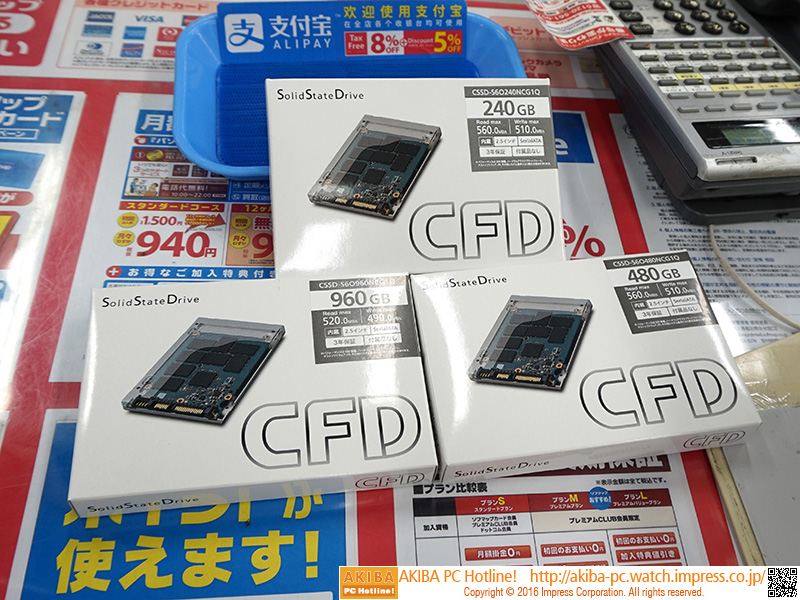
Even within CFD’s own SSD lineup, the entry-level S6ONCG1Q series with South Korean Hynix chips still has rather nicer packaging, doesn’t it. And then there are models like the CSSD-S6TNHG6Z and S6TNHG5Q — almost certainly OCZ-designed boards with Toshiba chips. Benchmark performance is decent, but the maximum operating temperature is a rather low 55°C (CFD’s own rated value), and with thermal pads stuck on in a way that looks like a cottage-industry handicraft job, the architecture has no sense of aesthetic, which somehow bothers me. The cheaper CSSD-S6TNMG1Q (≒ OCZ Trion 150) has a cleaner board, though even that feels a bit complicated. CFD’s SSD model numbers read like passwords and are bizarrely hard to make sense of… in short, I’m objecting not to the performance but to the look of the thing, which is rather a harsh way to dismiss something, I’ll admit. If it were in the original Toshiba OCZ Trion design packaging, for some reason I’d want it three times as much.
Crucial by Micron — MX Series / BX Series
Crucial is a brand of Micron Technology, USA. The author has a fondness for Western brands so strong it could make President Trump down an energy drink in one go, so on the basis of price and brand image, Micron was originally the top purchase candidate. Crucial by Micron memory has been used across successive PC memory upgrades as well. ※ Incidentally, CFD販売 (CFD Sales) is the distributor for Micron in Japan too. However, in benchmark comparisons doing the rounds online, it comes out with a somewhat middling verdict, trailing Samsung and WD/SanDisk slightly… Also, there have been some serious bugs over the years — the Crucial M4 5,184-hour problem, the LPM incompatibility issue, and the like — so it may be better suited to intermediate users and above who can cope with the occasional mess and sort things out by searching online. That aside, the products themselves are solidly made, and there is the added advantage that, compared with rivals in the same class, the capacities on offer tend to be larger — so personally, for a second drive not holding the OS, the 750 GB or 1 TB models feel like rather good value.
 ポチップ
ポチップ
Intel SSD ※ Acquired by South Korea’s SK Hynix in 2022 — New brand: Solidigm
 ポチップ
ポチップ
Intel was the leader in the early days of SSDs. Precisely because those were early days, there were a good many problems back then, and as a result Intel has since lost a significant share of the market — yet despite that, the selling price remains high relative to what you actually get inside, so unless you have a particular attachment to the American Intel brand, it’s probably one to pass over on cost-effectiveness grounds. That said, there’s no denying that Intel at its best is genuinely impressive. For those who don’t need to agonise over small differences in outlay, it could well be the best choice. The 535s and 540s series in particular have low power consumption, making them SSDs that should arguably be the first candidate for anyone who cares about energy efficiency to the extent of deliberately choosing a T-suffix CPU (such as the Core i5-6400T), as I do.
In 2022, Intel sold its NAND and SSD business to South Korea’s SK Hynix. The Dalian, China factory — Intel’s SSD production base — also came under SK Hynix. The new brand name is “Solidigm”, and Intel SSDs going forward will effectively be Solidigm ≒ SK Hynix.

Transcend SSD
 ポチップ
ポチップ
Taiwan’s Transcend — I’ve been well looked after by them across a range of things: SD cards that are affordable yet reasonably fast, USB memory sticks, DVD drives and portable HDDs reviewed here previously, and so on. Their SSDs have a perfectly decent reputation too. DRAM cache included despite the low price. The casing design is smart as well. Overall it’s a well-balanced, sensible performer, so if the price is right, I’d say go for it. The thing is, if the price is right — but for some reason Transcend, for all that it’s Transcend (meant kindly), stubbornly holds its price at a higher level, which rather rules it out…
ADATA SSD

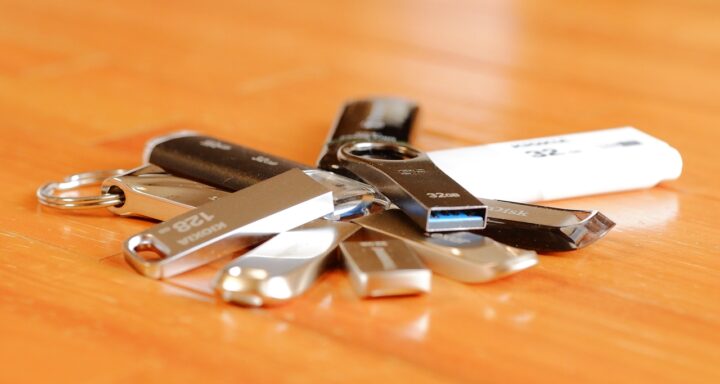
A-DATA, from Taiwan. Written in Chinese characters: 威剛科技. Their hummingbird logo is rather charming. And the quality of their SSDs is, well, ordinary — probably. The SU750 and SU800 series come with DRAM cache.
Kingston Technology SSD
 ポチップ
ポチップ
Kingston, from the United States. Commonly known as “the Moai” (for the design on the packaging). One look and you’d rather not buy it — a surreal design, to put it mildly. From a quick scan of reviews around the web, it’s a bit… hmm. Expecting top-tier performance is probably going to be difficult. That said, their smaller-capacity drives — 120GB, 240GB, and so on — are exceptionally affordable, so if you simply want an SSD at the lowest possible price without worrying too much about performance, they’re certainly worth considering.
Silicon Power SSD
 ポチップ
ポチップ
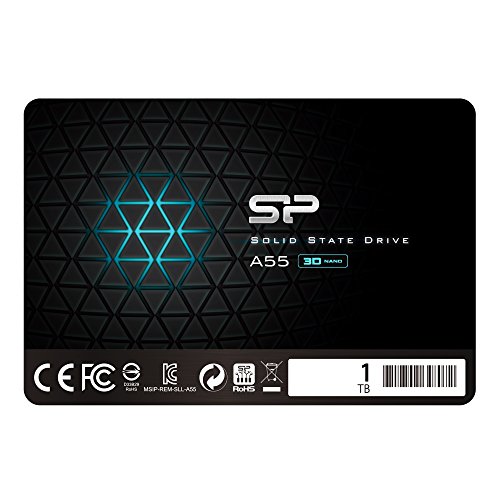
Silicon Power, from Taiwan. Their logo design is rather cool. Some older models used the slow PS3109-S9 controller, so this is another brand where it’s worth reading the Amazon reviews carefully before buying. That said, they’re relatively reasonably priced, so if you happen to land a good one, it’s a genuine bargain. Silicon Power is a well-established major Taiwanese vendor that has been selling memory-related products for many years, so unlike obscure Chinese brands of uncertain origin, you can buy with a degree of confidence even at the lower price points.

PLEXTOR SSD
 ポチップ
ポチップ
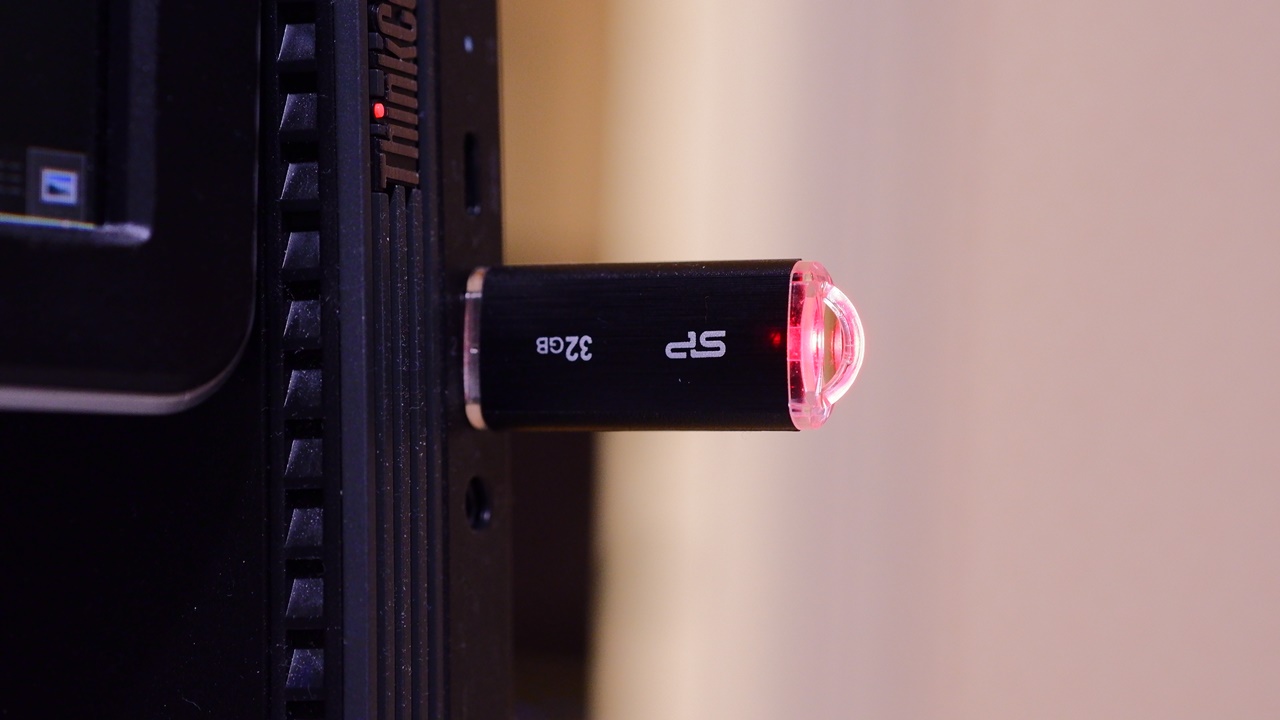
The Plextor brand originally belonged to Shinano Kenshi Co., Ltd. of Nagano Prefecture. However, the SSD business was spun off and is now unrelated to the original company. KIOXIA (formerly Toshiba) NAND chips are used. The parent company Lite-On is Taiwanese, but the Lite-On brand apparently held third place in global OEM market share (as of 2017). Incidentally, in 2020 Plextor’s SSD division was apparently acquired by KIOXIA (formerly Toshiba Memory) and revived. So the current PLEXTOR could reasonably be called a sub-brand of KIOXIA. Since it is, in a sense, a Japanese product, buying it as a show of support might not be a bad idea. The limited availability is a concern, and I do hope the distribution channels expand. That aside — SSDs are all well and good, but what I really want is for the original Plextor’s optical drives to come back — those optical drives from the old days that could rip at ultra-high quality with low jitter. Please bring them back!
SUNEAST SSD

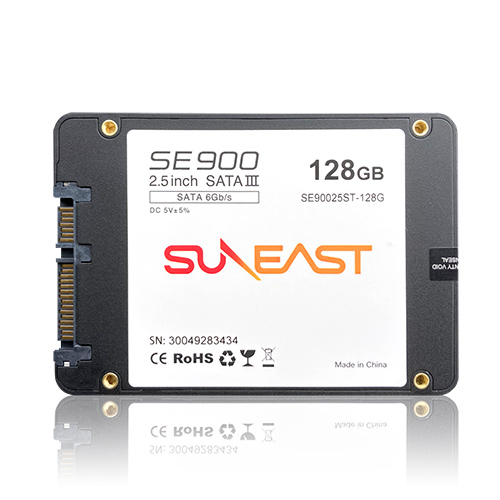
SUNEAST is less an SSD manufacturer and more a retail brand — a budget SSD brand sold by Kyokuto Electronics of Osaka. The prices are so remarkably low that it has become, in a sense, quite a hot brand, with people jumping in just to see what all the fuss is about. Information about what is actually inside is scarce and rather mysterious, but on the positive side there are surprisingly many favourable reviews saying it works perfectly fine in everyday use, and it comes with a standard three-year warranty through a domestic trading company. For now, using one as a second layer of backup on top of your existing backup, or putting one into a low-priority PC where you would not mind too much if it failed, might actually be worth considering.
~ Summary ~
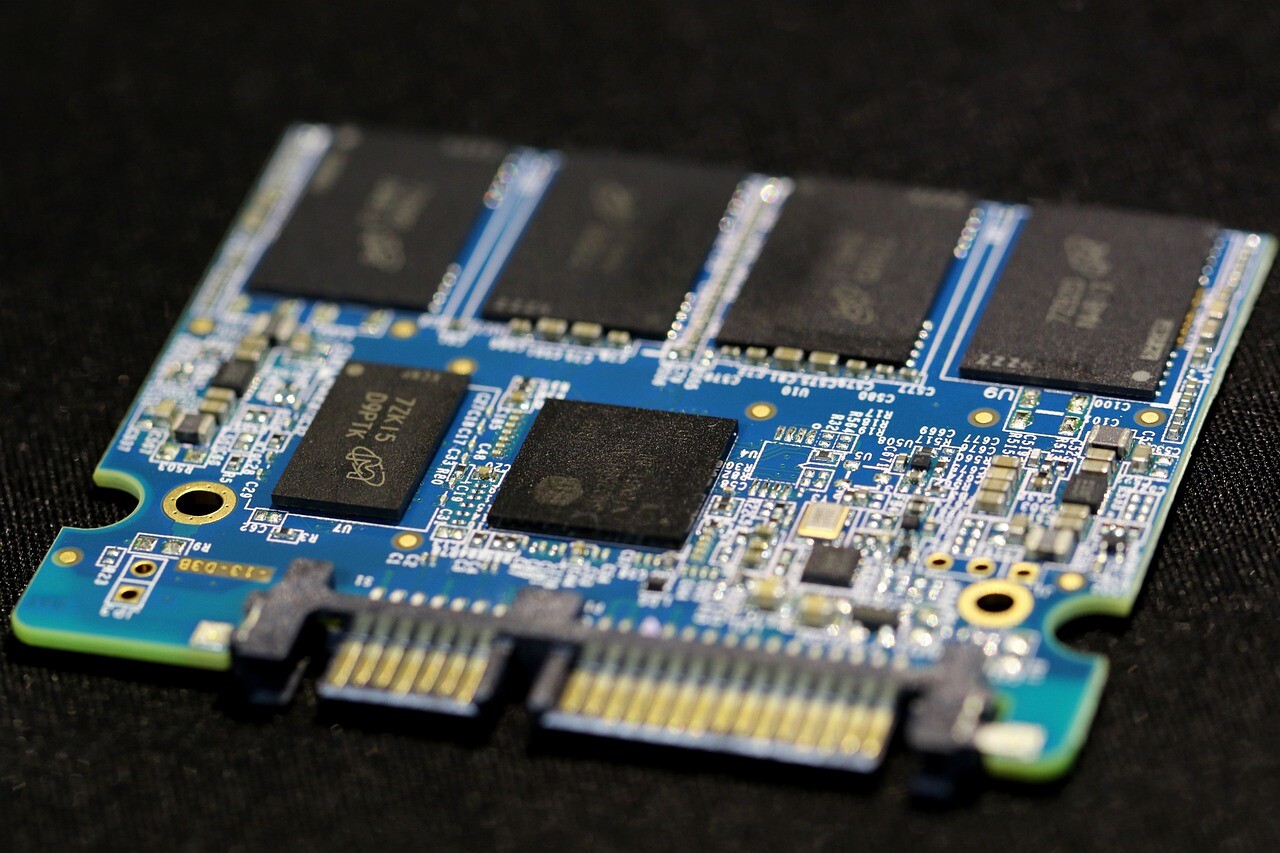
Laying it all out like this, with my personal biases on full display, you can really see just how much of an SSD novice I am and how lopsided my views are. And the second half of this article is a complete mess, on top of that. Anyway, having skimmed through reviews from all over the place and tried to summarise them, SAMSUNG, WD Western Digital & SanDisk, Crucial by Micron, KIOXIA, SK Hynix — these five would appear to be the SSDs that offer both speed and durability and can be used with relative confidence… though I should add the caveat that this is entirely based on my own personal judgement.
⇒ Continues in: Why I ended up choosing the Samsung SSD 850 EVO, of all things…
【A purely subjective comparison of SSDs from various manufacturers】
Comparison 2017|850EVO|Comparison 2019|860EVO Part 2|860EVO Part 3|870QVO|WD SN770
Auto Translated by CS4.6