【QUAD L-ite2 British Small Speaker Review】
Prologue|Part 1|Part 2|Single-Wire|Bi-Wire|Reservations|Jumpers
I’m fairly sure I once pompously declared something to the effect of expensive commercial jumper cables — really?, but various things have happened since then, and I have gone and changed my tune entirely. I’m sorry, I’m sorry, I’m sorry m(__)m.
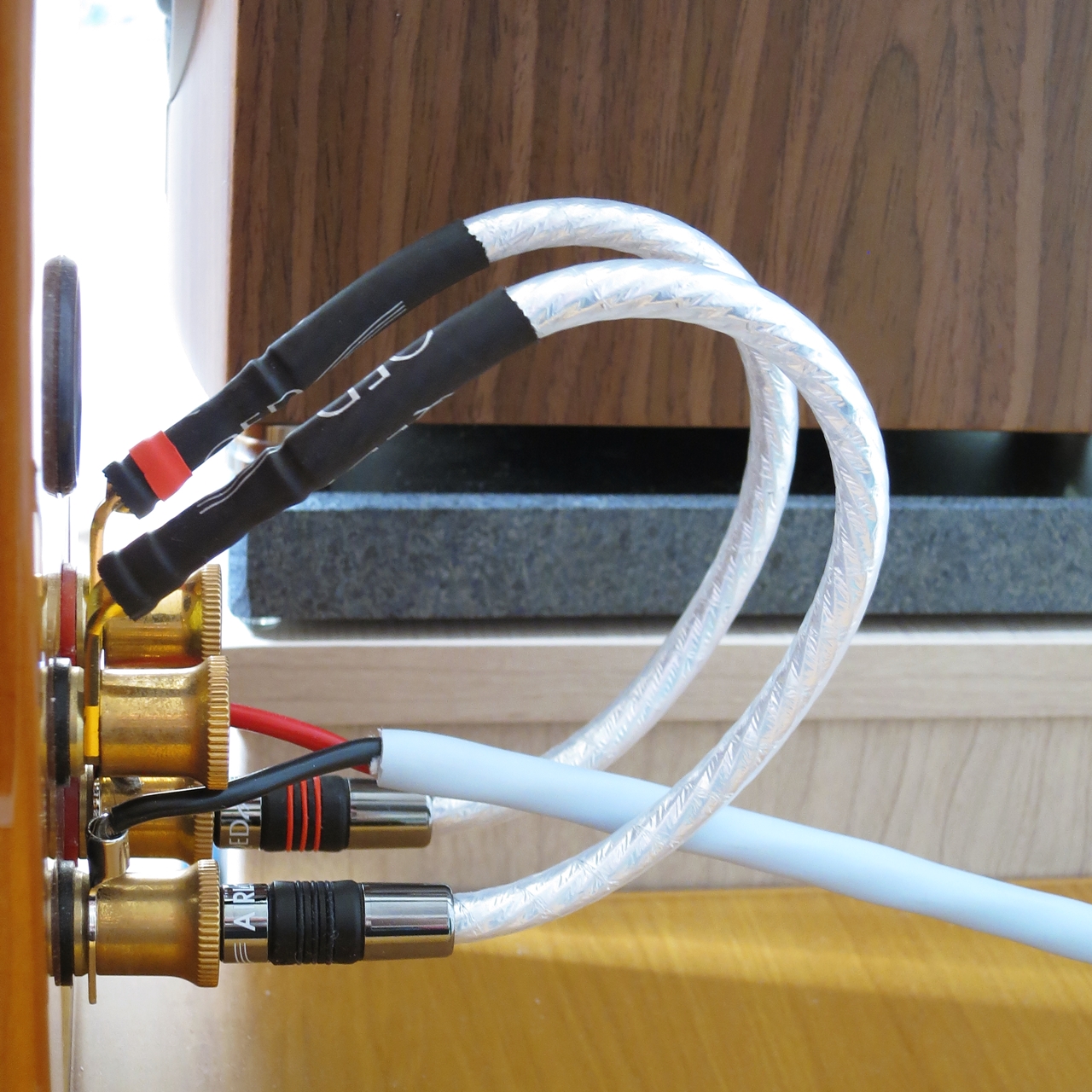
Well, it’s rather unclear exactly who I’m apologising to, but — let us press on. I’d like to go ahead with a review of a jumper cable made from the internal conductors of British QED’s flagship speaker cable, the Genesis Silver Spiral.
Small Speakers and the Need for Jumper Cables
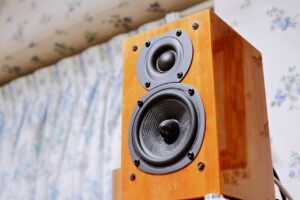
Of the small speakers I currently have piled up here, the models that support bi-wiring are the QUAD L-ite2 and the Cambridge Audio Sirocco S30 (under construction). The QUAD L-ite2, which has secured itself a regular spot in Sub-system C, has had various jumper cables made from offcuts of budget speaker cable tried with it over the time I’ve owned it, but none of them have ever quite felt right. To be fair, most speaker cables (or rather, offcuts thereof) do reduce distortion somewhat compared to the gold-plated brass jumper plates that come with the speaker, so they are marginally better — but somehow, there was always this feeling of being unable to escape the sound of a budget speaker that cost £140 a pair, and I found myself going round in circles.
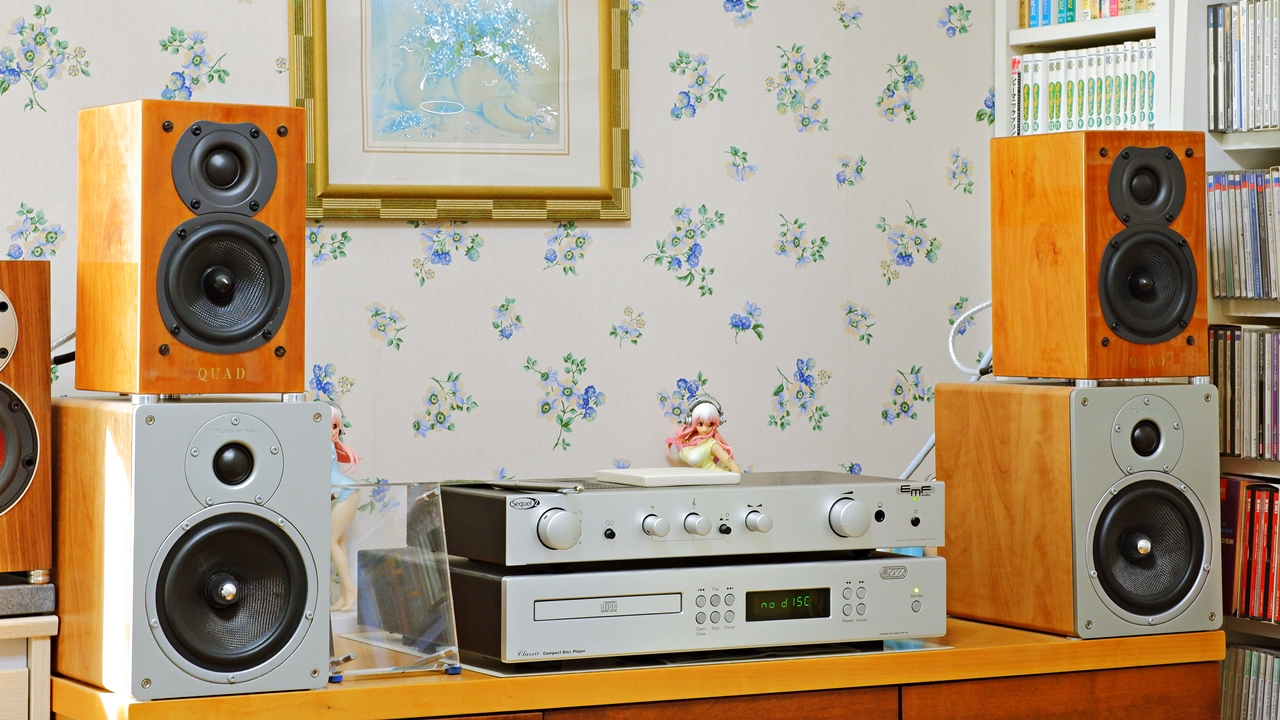
Over the past several years I’ve been swapping through something like twenty-odd types of speaker cable, running the system primarily in bi-wiring configuration with two runs of cable rather than using jumpers. In terms of “sound quality” — soundstage width, frequency range and so on — bi-wiring does come out ahead of single-wire, yet on the other hand, single-wire with jumpers tends to have the edge when it comes to musical timing, so “rhythmic enjoyment” and “audiophile-grade sound quality” ended up being a trade-off against each other.
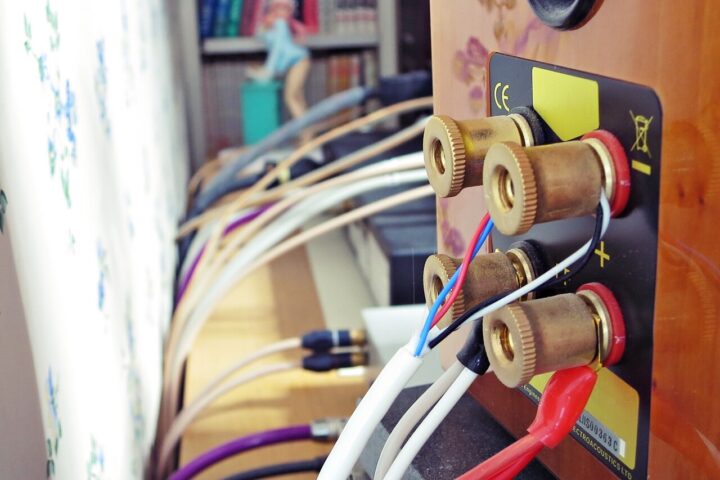
For the time being, the cable that has settled in most comfortably is the SUPRA RONDO 2.5 (under construction), which turned out to be a good match. Even so, the situation never quite moved beyond a feeling of budget Hi-Fi written all over it. When I tried connecting the TAG McLaren F3-10SPK (under construction) speaker cable that I’d been using in Sub-system A, it did produce a genuinely different-class sound even in Sub-system C. Which is to say — there is, after all, a wall that cables in the few hundred to low thousands of yen range simply cannot break through. Someone once said to me, “couldn’t you just buy a high-end speaker cable with all the money you’ve spent on those cheap ones put together?” — la la la, I can’t hear you, I can’t hear you.
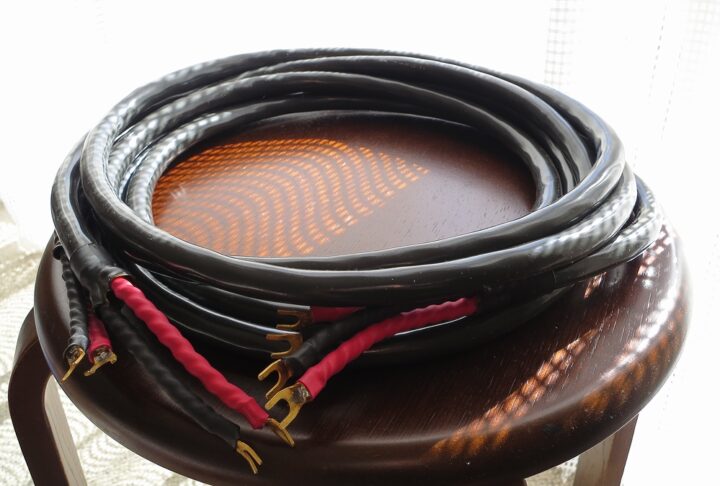
On a whim I also tried a second-hand high-end Ensemble HOTLINE speaker cable at one point, but that was unfortunately rejected within a single day. Expensive or not, if it doesn’t suit the system it simply doesn’t suit. That aside — even with budget-class speakers and integrated amplifiers, connecting a speaker cable that costs considerably more than the equipment itself does produce a sound noticeably different from what the price tag might suggest; something unexpected does come out. The issue is compatibility. If you splash out on an expensive speaker cable and it doesn’t work, you’ve rather wasted your money — so finding an affordable cable with good compatibility is the more sensible path to a well-balanced result. But then a thought suddenly occurred to me.
With jumper cables, couldn’t you find ones made from the conductors of high-end speaker cables that are, depending on the product, surprisingly affordable — perhaps even a whole order of magnitude cheaper? (Or couldn’t you make your own?) — now there’s a thought. In other words: if you use a high-end jumper cable, then even if the speaker cable itself is an ordinary mid-range product, surely you’d effectively achieve something close to high-end speaker cable-level sound quality? That was the counting-your-chickens-before-they’ve-hatched calculation I found myself running.
QED Signature Genesis Silver Spiral — Conductor Construction
So, browsing through overseas audio accessories retailers looking for a promising jumper cable, what I came across was the QED Signature Genesis Silver Spiral jumper cable reviewed here. Going by the character of the affordable QED speaker cables and digital cables I’d used up to that point, I had a feeling this one would likely be a good match for the QUAD L-ite2. Incidentally — rather foolishly of me — I looked at the price listed as a pair, and when the order arrived I was quite taken aback. “A pair” meaning one speaker’s worth, of course, yet I had somehow convinced myself I was getting a set of four. I scrambled in a mild panic to order an additional pair, and the whole thing ended up costing twice as much (£62.50) plus extra postage — roughly the price of a ¥10,000 note all told. Since it was the misunderstanding about the price being half of what it actually was that prompted me to buy in the first place, I honestly wouldn’t have gone near it had I known the real cost from the start.
At the time, the Japanese authorised distributor Eastern Sound Factory did not yet stock these, but they are now available domestically — carefully assembled in Japan at the same price as in Britain — so I would recommend purchasing through ESF’s authorised domestic direct sales rather than ordering from overseas.
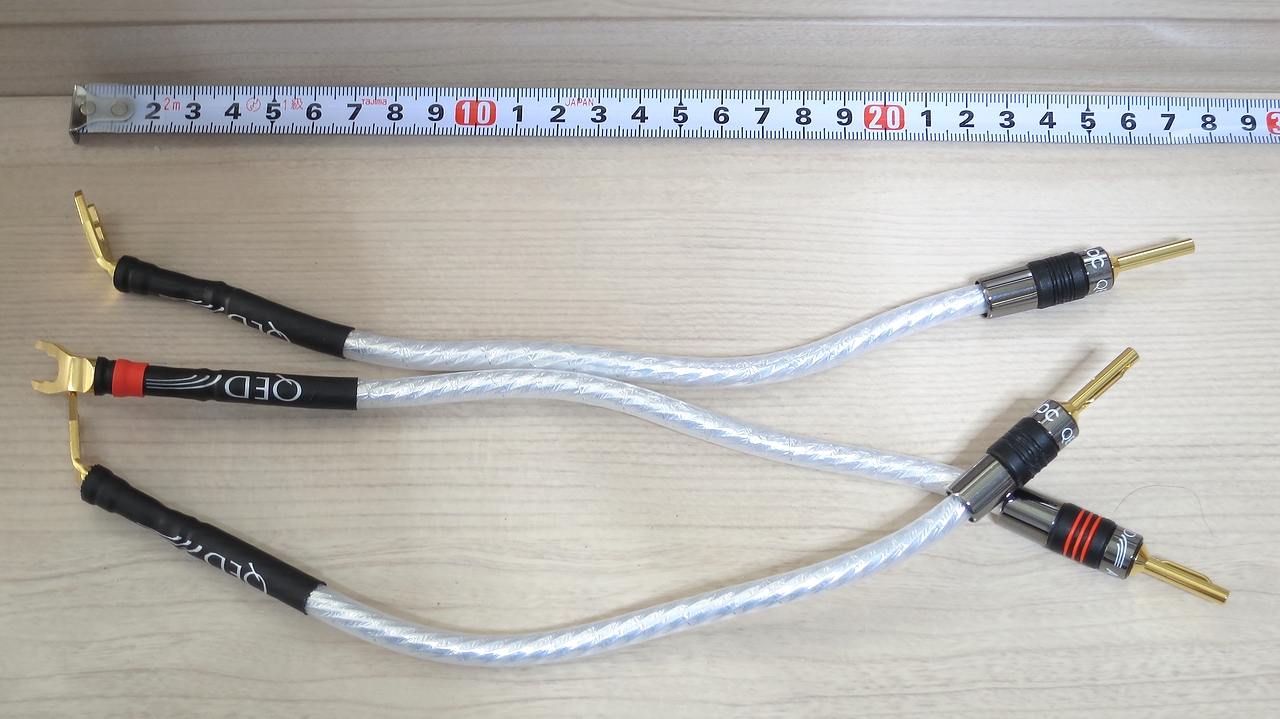
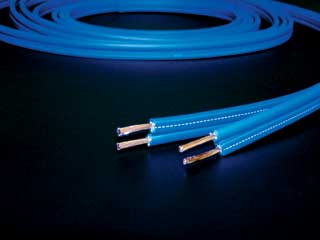
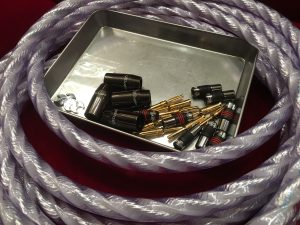
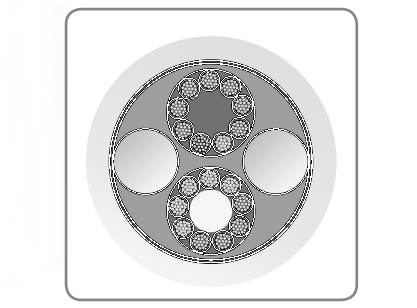
The jumper cables as they arrived look something like this. The Genesis Silver Spiral is an extremely thick speaker cable at 10AWG/5.5SQ, so even a single conductor from inside is quite substantial — around Φ8mm. The original QED Signature Genesis Silver Spiral is Φ16.6mm in diameter, and stripping the transparent outer jacket reveals two conductors suitable for use as jumper wire (four in the Bi-Wire version), along with the same number of white drain wires. Each conductor is shielded with silver foil, and inside that, wound in a spiral around a central insulating core, are apparently nine strands of silver-plated 5N oxygen-free copper (OFC) per conductor. There was a feature on the assembly process over at Audio Denkido Square Shonan, and — what an extraordinarily involved construction it is. It is quite frankly not something I would ever want to attempt myself, so I can only be truly grateful to whoever took the trouble to make these up for me.

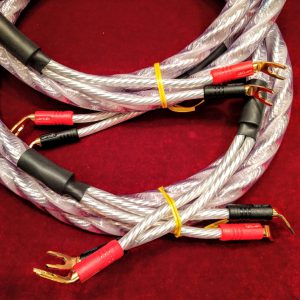
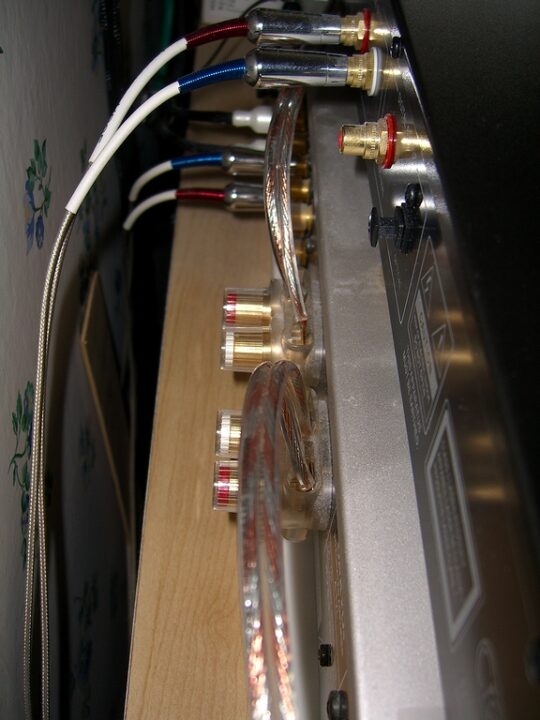
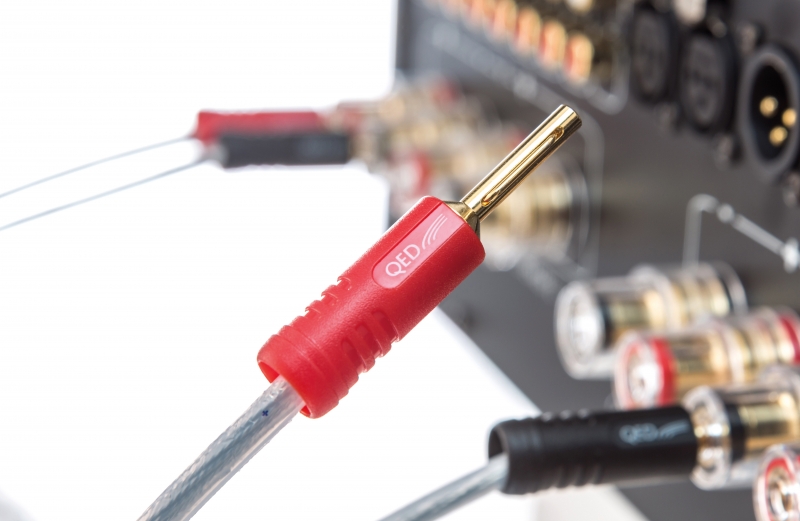
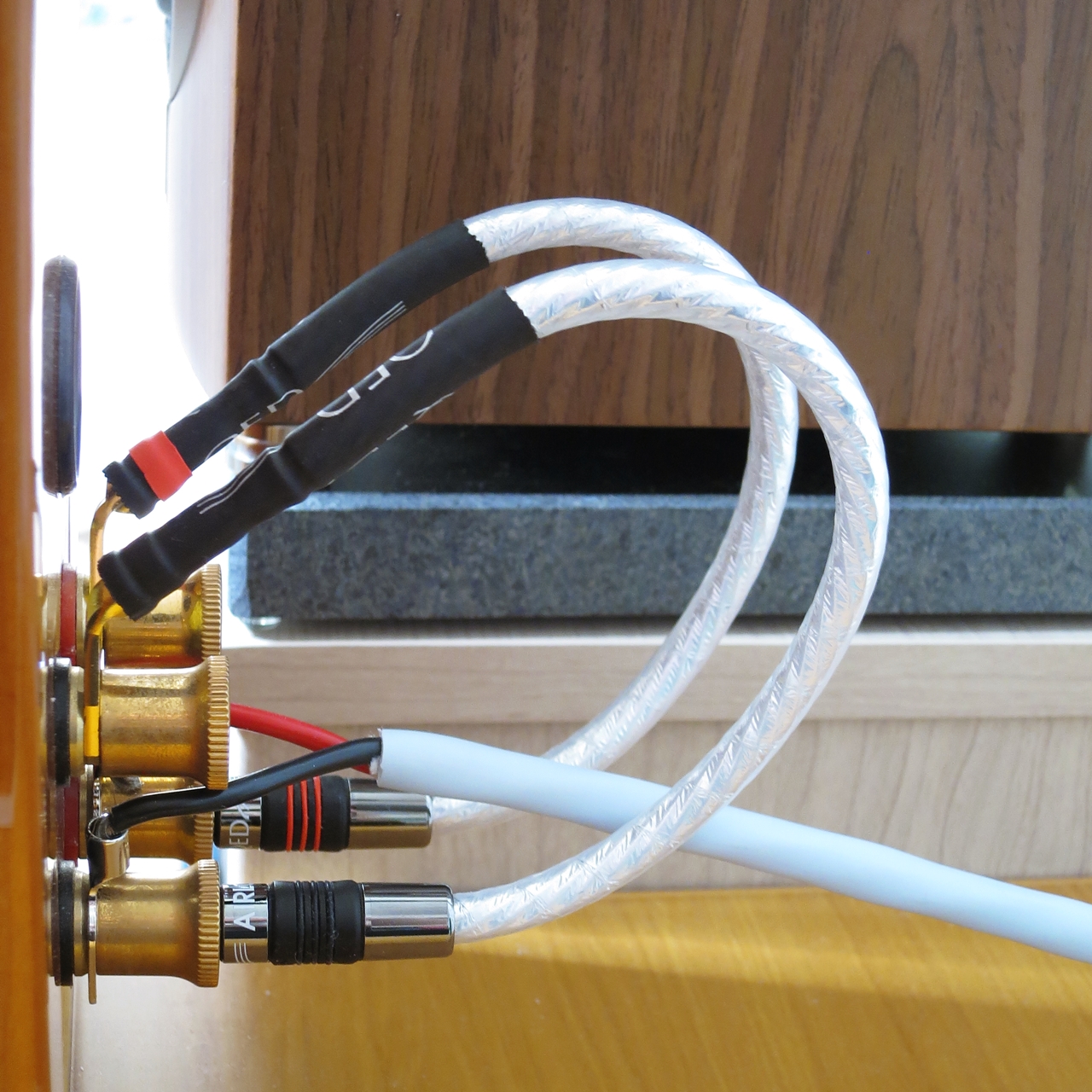
The QED AIRLOC banana plug and spade terminal ends are rigid, and the conductors themselves are stiff with poor flexibility, so care is needed regarding length when using these as jumper wires. The pair I have measures approximately 28cm from the banana top to the tip of the spade terminal, and even with the QUAD L-ite2’s speaker terminals — which are fairly generously sized for the cabinet — there is a slight sense of it being rather a tight bend. Had both ends been AIRLOC banana plugs, I suspect it would have been impossible to fit without forcing an unreasonable bend. As for the QED AIRLOC connectors at both ends, both the banana plug and spade terminal versions are machined to a very high degree of precision. The quality of these plugs (along with the crimping carried out with the dedicated tool) contributes considerably to the sound quality of the jumper cable and speaker cable as a whole — so when ordering QED speaker cables, I would recommend specifying AIRLOC plug termination even for lower-grade cables, wherever possible. Incidentally, the AIRLOC banana plug version, with its cylindrical body of metal and plastic, has a distinctly premium appearance and gives the impression of having a considerably greater influence on the sound than the spade terminal.

QED Signature Genesis Silver Spiral — Sound Quality Review
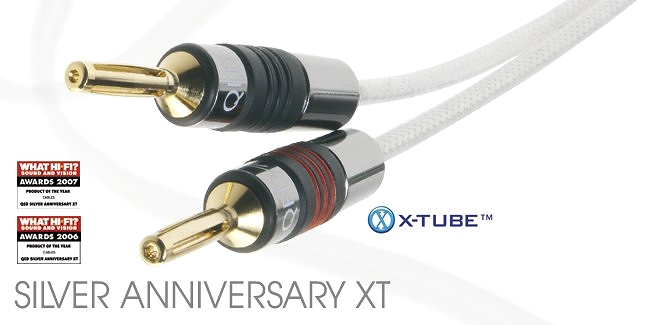
Now for the all-important sound quality review. First and foremost — the tonal character is gorgeous. It has a full, rich sound with a bright, lustrous sheen that is very much in keeping with what you’d expect from a silver-conductor cable: this is richness and body in the best sense. The glossy, luxurious tonal quality is quintessentially high-end — highly musical, and in a good way characteristic of the thick, heavily coloured, flavoursome sound associated with prestige cables of a generation past. Also, and this is something common to QED’s other cables to a degree, rather than the modern-trend 3D portrayal type that spreads a wide soundstage with abundant reflected sound, this is the type that renders the images themselves with concentrated density and richness — an older-school Hi-Fi presentation, if you will. In terms of frequency balance, it leans towards the lower registers in a pyramid balance. The high frequencies are relatively mild, with very little sense of distortion. The rich resonance and particle-like detail that clings to each image is remarkable, and overall there is an impression of abundant information simply spilling forth. With the Silver Anniversary XT the character was something like fine white snowflakes drifting through the air, but with the Signature Genesis Silver Spiral, each individual particle seems to reflect light like diamond dust in bright sunshine — a brilliantly bright and gorgeous presentation all round. All told, I think it’s fair to say that the QED Signature Genesis Silver Spiral is precisely the type of speaker cable that sounds exactly as it looks.


 ポチップ
ポチップ
The considerably greater physical mass of the speaker cable — SUPRA RONDO 2.5 (and a 2.5m run at that) — is completely overshadowed, and the sound is entirely dominated by the Signature Genesis Silver Spiral. My impression is that even using the Genesis Silver Spiral only at the jumper position, it’s probably achieving somewhere around 60–70% of the dominance you’d get from using Signature Genesis Silver Spiral as the full speaker cable run — which means the original plan has, it seems, succeeded rather completely. Of course, if you want the best possible result, using QED Signature Genesis Silver Spiral for the full speaker cable is still the ideal!
 ポチップ
ポチップ
Speaker Cable and Jumper Cable Connection Method
However, after listening in this configuration for a few days, I found the frequency balance was tending to sit rather too far towards the lower registers. Even the QUAD L-ite2, with its tiny cabinet and 11cm woofer that shouldn’t really be producing any serious bass to speak of, was sounding somewhat too thick in the mid-bass to bass region — to a degree that was quite unimaginable from the relatively straightforward, flat-leaning SUPRA RONDO 2.5 cable alone.
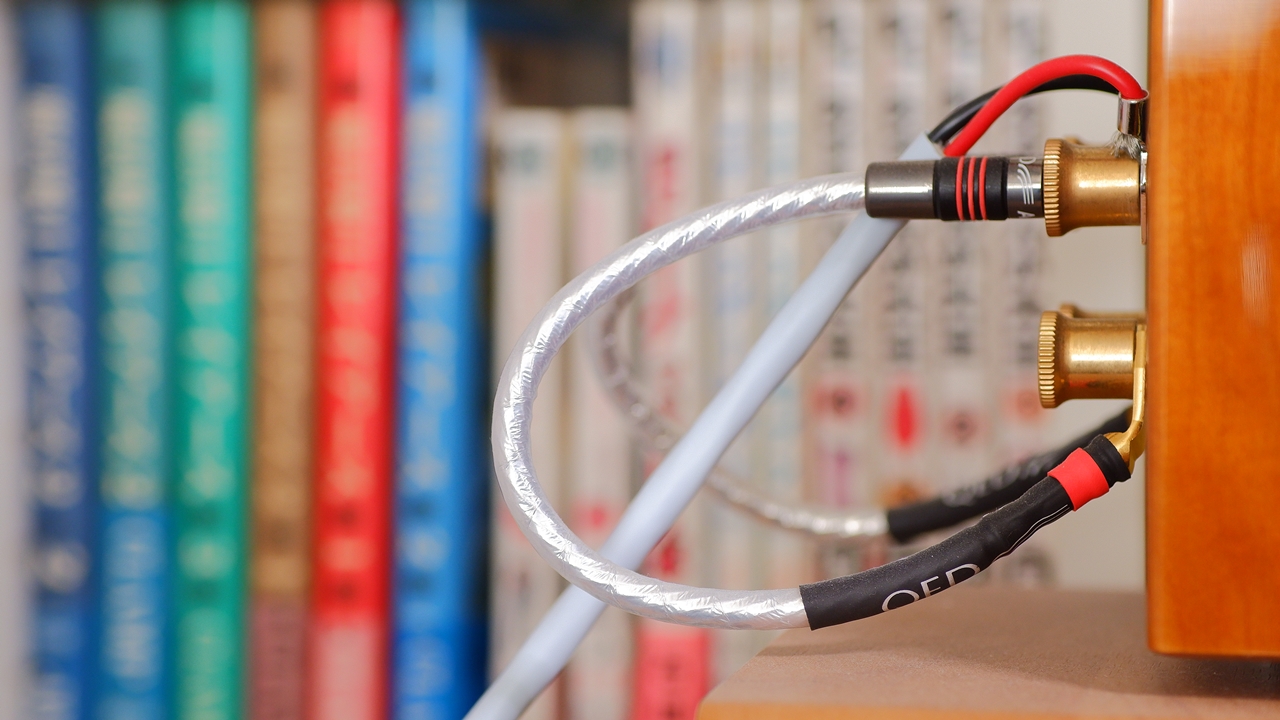
As this balance was in various ways compromising the inherent tonal balance of the music, I decided — going against the basic convention for a 2-way speaker — to deliberately connect the speaker cable that had been going to the woofer terminal to the tweeter terminal instead. At the same time, I reversed the orientation of the QED Signature Genesis Silver Spiral jumper as well (I had actually specified the directionality as “Banana to Spade” as an option when ordering. It makes no visible difference, but the conductors are presumed to have a directional characteristic.). Playing music in this new configuration, the result was a beautifully well-balanced sound. The sluggish excess in the bass disappeared, and the high frequency region, rather than being the thin, treble-heavy character of budget speaker cables, became a rich, dense “sparkling and lustrous” sound centred on the midrange. Musically, the originally bright and richly expressive character gained an additional rhythmic flow on top, making the whole presentation feel even more alive and vibrant.
Adding the Rhodium-Plated Spade Terminals — ORB HL-YSi-R
At this point the bass through to midrange was quite sufficient, both in terms of balance and quality — but there was still a lingering feeling that the high frequencies could do with just a little more openness and air. Part of this is down to the QUAD L-ite2’s tweeter being a silk dome, which by its nature is not the type to deliver a sharp, pin-sharp top end (compared to its predecessor siblings, the 11L and 12L, which were whispered to be somewhat edgy in the upper midrange, the L-ite2 is clearly lacking in high-frequency extension). I suspect that with something like B&W, which tends to push slightly hard in the treble, the balance would actually be rather well-suited. So a thought occurred to me — didn’t I have some unused ORB rhodium-plated spade terminals sleeping somewhere at the back of a drawer?
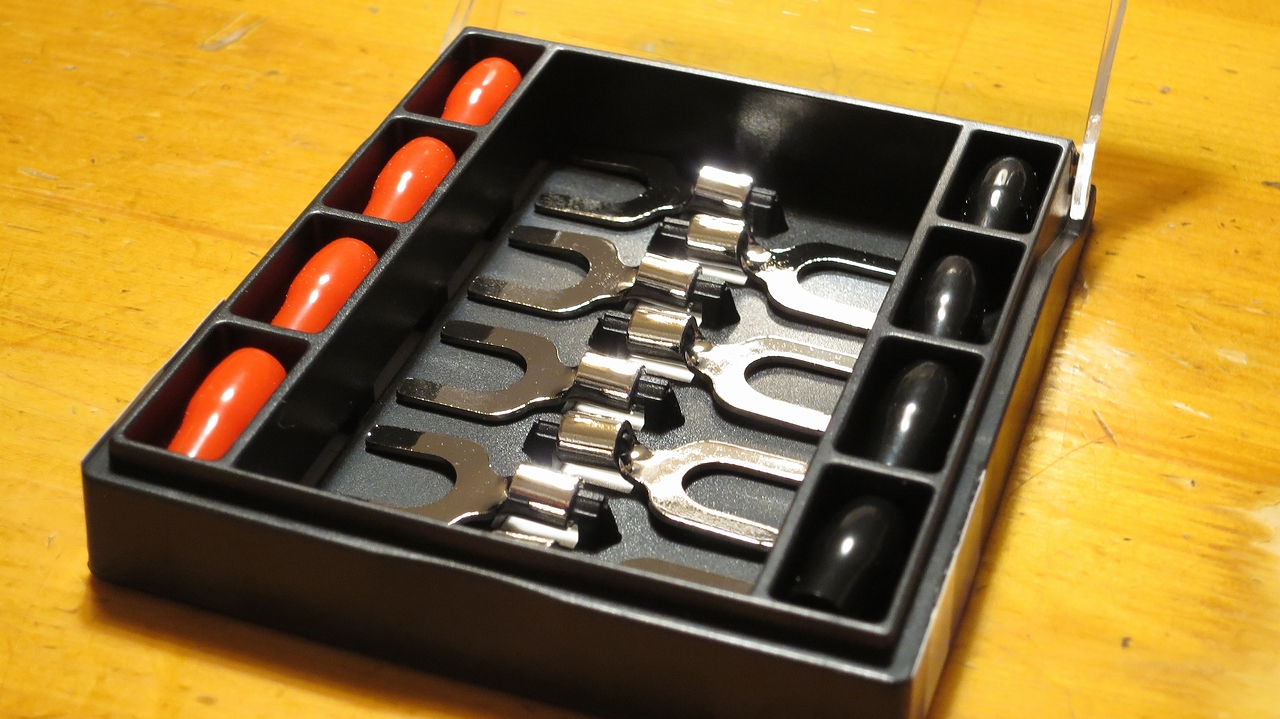
The ORB HL-YSi-R is not a screw-fit spade terminal but the type that is crimped onto the end of a speaker cable — it’s a pure copper spade terminal with a quality rhodium plating, and costs a fair amount. Once crimped onto a speaker cable it cannot be undone (i.e. it cannot be reused). Not wanting to risk a mistake, I threaded the conductor of the SUPRA RONDO 2.5 speaker cable through it without crimping and simply clamped it together at the speaker terminal to confirm the sound first. Frankly speaking, the sonic effect of banana plugs and spade terminals is much the same whether you actually crimp them or simply clamp them together securely so they can’t pull free.
※ Incidentally, I regularly use ORB’s spade terminals (Y-plugs), which are made from pure copper with a very fine gold or rhodium plating.
 ポチップ
ポチップ
The result was a great success. The high frequencies were complemented in just the way you’d hope from rhodium, and the smooth, slightly hard lustre characteristic of ORB’s plating was added to the mix — the slightly excessive stranded-wire texture and softness that had been a touch too much with the QED Signature Genesis Silver Spiral alone was refined, and the already luxurious tonal character moved up another level to something that felt genuinely more premium still. Both the Signature Genesis Silver Spiral and the HL-YSi-R are, in colour terms, white-light emitters — bright and lustrous in tone. Combining the two completely stripped away the cherry-blossom and brick-red colouration that some describe as characteristic of CREEK’s sound, and utterly banished the sepia-tinted colouring that the original music’s character had been seen through, as though through a pair of tinted sunglasses. And yet the overall temperature retains a pleasing warmth — it never becomes a cold sound. This, at last, felt like a long-standing weakness had been decisively overcome. To put it another way — closing my eyes, what I hear no longer sounds like CREEK but has metamorphosed into something closer to the sound of Aura Design — those who know will know. ※ The HL-YSi-R is used on the speaker terminal side only. I would not recommend using it in systems where the high frequencies are already fully extended and not rolled off (as it would likely make things too sharp). On the amplifier side, I am using aeco’s banana plug ABP-1111G.
QED Supremus Speaker Cable
Come to think of it, I referred to the QED Genesis Silver Spiral as QED’s flagship, but strictly speaking it is the former flagship. Since September 2016, the even higher-ranking QED Supremus has been available, so it is now second in the lineup. In fact, the Signature Genesis Silver Spiral design is quite old — as far as I know it was first introduced in Japan back in 2006 during the period when Toshi Co. was the distributor, so it must have been released in Britain some time before that. ※ At the time it was simply called QED Genesis and QED GENESIS BW. With that in mind — if you’re after the rich taste that carries the lineage of the classic British sound, QED Signature Genesis Silver Spiral. If you want the modern 3D high-end sound that represents QED’s latest technology, QED Supremus seems the one to go for. I should say I’ve only ever read reviews of the eye-wateringly expensive Supremus and have never actually heard it in person.
~ Summary ~
For better or worse, the QED Signature Genesis Silver Spiral is a cable whose appeal lies in its strongly individual, heavily flavoured character. It has a powerful ability to transform a system — match well and it’s a great success, match poorly and it’s a disaster, with opinions likely to divide sharply. The perceived frequency balance also leans quite markedly downward in a pyramid shape, so in a system that is already weak in the treble and over-abundant in the bass, it may in some cases become difficult to control. That said, when used as a jumper, it is possible to adjust the perceived balance to a degree by swapping the main speaker cable between the woofer terminal, the tweeter terminal, or in a “cross” configuration. When things work out, as described in Ippinkan’s review, it raises the system’s sound quality in one dramatic step — to a level that feels two to three times its actual price. I, who once wrote that expensive jumper cables were a pointless indulgence, have apparently discovered that depending on the product, that is not necessarily always the case. Since only a short offcut is needed, done right it can actually serve as a shortcut to enjoying most of the sonic benefits of a high-end speaker cable at a fraction of the cost. Having gone through this experience, I’ve come to a fresh appreciation of just what the point of investing in quality jumper cables actually is.
【QUAD L-ite2 British Small Speaker Review】
Prologue|Part 1|Part 2|Single-Wire|Bi-Wire|Reservations|Jumpers
Auto Translated by CS4.6