【Hi-Fi Culture, Refinement, and Nouveau Riche Taste】
Investment vs. Satisfaction|High-End Part 1|High-End Part 2|Nouveau Riche Taste
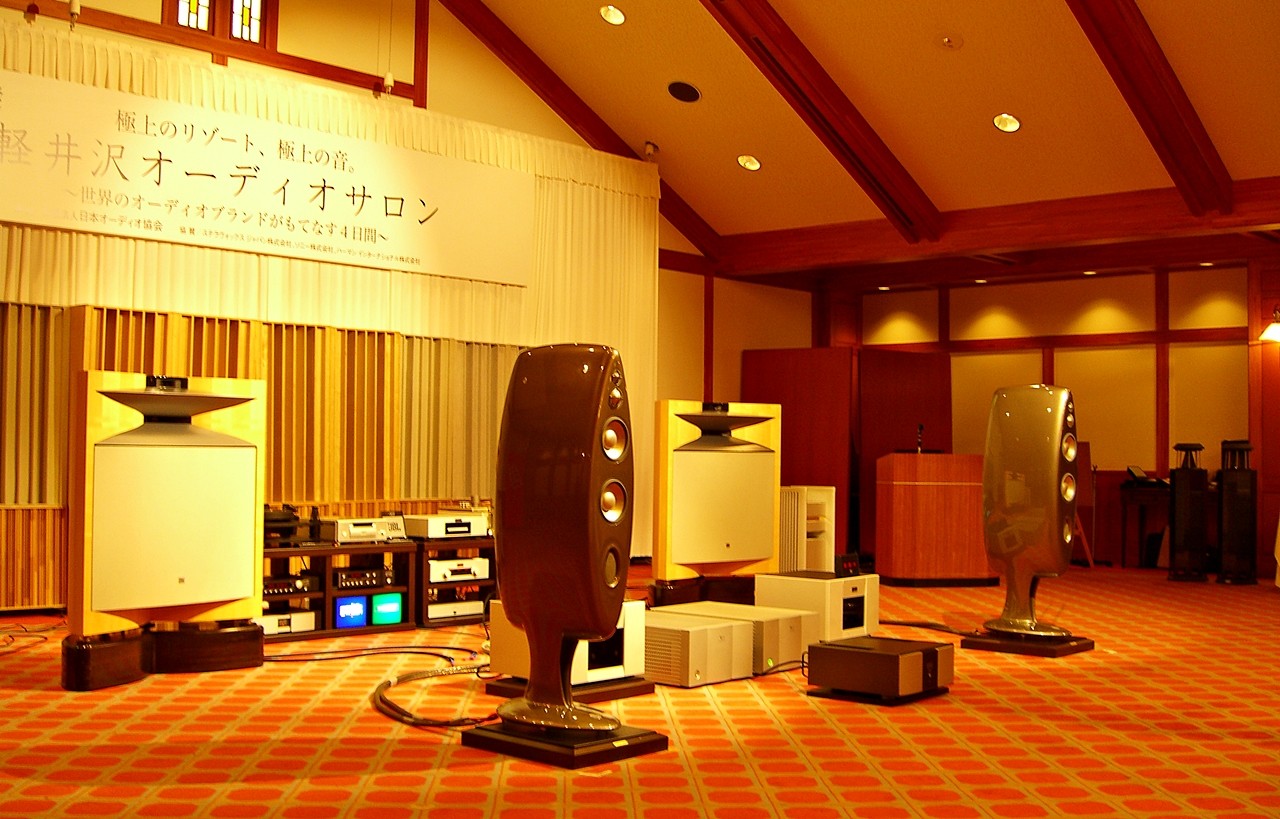
I have given this piece a somewhat provocative title. AUDIO STYLE — “a recommendation for compact, self-contained pure audio systems” — is written primarily as a blog of reflections on audio equipment from the entry-level to the popular price range, and rarely touches in any depth on the expensive equipment known as high-end audio. Today I would like to set out, deliberately, the reasons for that. Put simply, it is because — with a few exceptions — I have little interest in high-end audio, and because I cannot honestly say I look favourably upon the values that are peculiar to the high-end world.
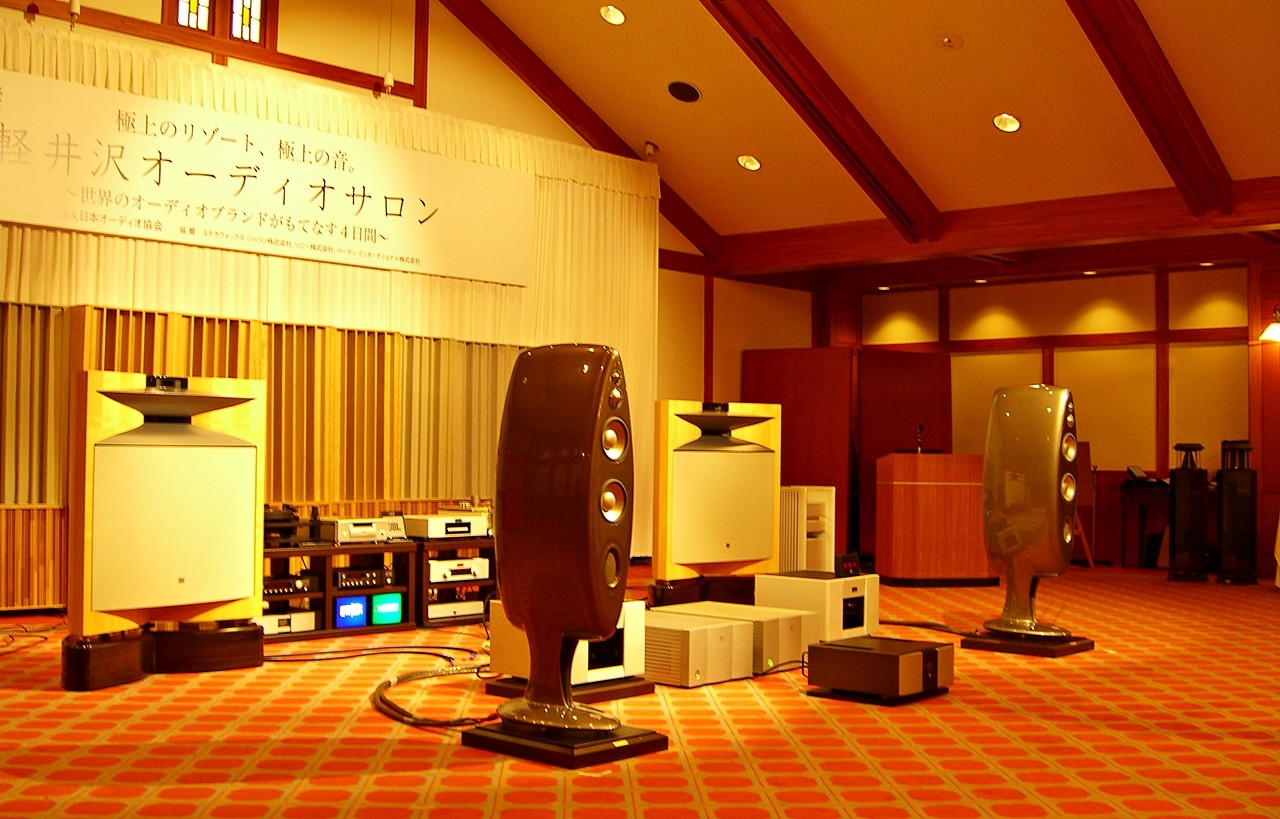
When I say “anti-high-end”, I do not necessarily mean that I dislike individual high-end products as such. Regardless of price, what one likes or dislikes in a piece of equipment varies enormously from person to person, and there are quite a few high-end products that have genuinely impressed me and drawn me in. What I perhaps ought to say is that what I dislike is the brand business that places excessive weight on added value around consumer high-end audio, and — encompassing both that business and the enthusiasts who embrace it — an indescribable something that seeps out from both sides: a vague sense of unease; or, to put it less kindly, a materialistic sense of superiority; a financial sensibility that tacitly endorses rip-off pricing; and an atmosphere steeped in the worship of money that I find deeply off-putting.
※ There are various views on how “high-end audio” should be defined, but here I use the term not in the narrow sense of each manufacturer’s flagship model, but broadly to mean what an ordinary person would consider relatively high-end in relative terms — roughly speaking, consumer audio equipment costing from one million yen per unit, or where the total system cost exceeds that of a luxury car, together with peripheral equipment, accessories, and so forth that are priced at a level “beyond what common sense would consider normal” and are made with such systems in mind.
I have tried to think back on why I came to feel this way, and I believe a large part of it comes from the various experiences I had — when I was a teenager, not long after first venturing into the world of audio enthusiasts — of encountering a reversal phenomenon in which price and sound quality do not necessarily go hand in hand, particularly in terms of musicality, across all manner of equipment and accessories. As a beginner I had broadly believed that sound quality was determined by specifications, price, and the sheer quantity of components used, so it came as quite a shock. But when I set aside the reviews on paper and the dazzling appearances, and simply listened carefully to equipment of all shapes and sizes and let the music wash over me, I found myself confronted with the reality that the grandeur of a system and its ability to communicate music do not go hand in hand — and indeed there are not a few cases where the two are inversely correlated. I was shaken by the cognitive distortions that pervade this genre, and yet at the same time it was the realisation that price and the quality of the sound produced do not correlate all that directly in audio tinkering that, paradoxically, made me begin to feel the genuine appeal of it as a hobby — or so it seems to me looking back.
If there were a strong correlation between how much money one pours into pure audio and the sound quality — particularly the musicality — I do not think I would have become as interested as I have in consumer pure audio equipment as a music lover and student of music. After all, I started getting into audio when I was in middle school. If the quality of the sound could simply be solved by spending more money, there would never have been any point in a modest, middle-class person like me even trying.
In the early 1990s, there were a number of shop owners and staff who patiently bore with the foolish questions of a middle and high school student who was new to audio, had little money and little knowledge, but whose pride in music was outrageously large, and who took the trouble to give me long, candid lectures. Speaking not as salespeople but from genuine conviction, they taught me all manner of things: how to identify truly good models from among their own stock; and, as people on the manufacturer’s side as well, the fact that high-end and luxury models are not necessarily superior — because the needs of wealthy customers and business strategy inevitably come into play — and that simpler, entry-level machines can actually sound better.


 ポチップ
ポチップ
There was also the president of an import distributor who, when it came to cables and accessories, gave me examples of how the more audiophile-refined, wider-range upper models could actually take music further from its essence — worse, in a sense — and who set commerce aside and instead recommended combinations of inexpensive models. Being in the position of a young learner, I was taught the appeal of audio from a genuinely music-first perspective — quite different from the materialistic money-worship and added-value business that sustains modern high-end audio — by all manner of people, and I feel I was truly fortunate in that regard. In those days, a reasonable pure audio setup was modestly widespread even among ordinary middle-class households, and it was not yet the harsh age we live in now, where the industry must ensnare a handful of wealthy customers and fleece them with added value simply to survive.
Even among deeply committed music lovers, sound source collectors, and performers, there are many who care little about audio equipment. So why did I, while feeling uneasy about this world, go out of my way to get involved in the niche and somewhat occult pursuit of pure audio, to the point of making it a lifelong hobby? It is probably because my starting point — the desire to listen to music in better sound, with musicality as the foundation — has never wavered. And because, from the experiences described above, I was taught at an early age, as a basic sense of things, by people far senior to me in this field, that spending more money and getting better sound are surprisingly unrelated — that is to say, the quality of audio playback is determined not so much by the potential of the equipment itself as by the listener’s essential musical sensibility in seeing through to the heart of the music, a sense for choosing equipment unconstrained by price, and a feel for synergy in combination and for getting the best out of every detail.
 ポチップ
ポチップ
Thereafter, in my twenties and into my early thirties, I attended distributor demonstrations and audio shows, and encountered all manner of people’s audio systems — including high-end systems where the spending was an order of magnitude greater than mine, yet where I personally felt the quality of the sound was entirely wide of the mark; and conversely, beginner systems that spent one order of magnitude less than what I had at the time, and yet musically captured something more essential, bringing me up short and prompting genuine reflection. Through the accumulation of such experiences, my thinking along the lines described above deepened further.
In practical terms, stepping up the sound quality of an audio system does require a certain amount of money as a necessary outlay, and up to the mid-range there is, broadly speaking, a general correlation between cost and quality (※ though this industry has no shortage of landmines and exceptions…). However, watching from the sidelines as high-end enthusiasts plunge without hesitation into the murky world of ever-greater expenditure beyond that point, I am left with the impression that their sense of what “good sound quality” means is fundamentally at odds with mine, and that the point of recognition — what melodic lines are being heard within the music, what important elements are being felt — seems to differ considerably between the “audio ear that fixates on sound quality” and the “musical ear that fixates on music.”
I think of myself as someone who can listen from both perspectives to at least some degree, but there are those who perceive a variety of sound qualities that I personally find strongly off-putting — artificial, like a virtual reality — as straightforwardly high-quality sound, without any sense of unease. I have also frequently found myself noticing an inverse correlation between the amount each person spends on their equipment and their receptiveness to music itself, their capacity for reflection on it, and the sheer volume of what they have listened to. The result is that, honestly speaking, I have gradually lost faith in high-end audio, where non-sonic added value accounts for a large proportion of the price and the gap between price and substance is extreme, and in the high-end enthusiasts who never stop believing in its superiority.
Based on the experiences described above, I personally believe that if one approaches the pure audio hobby as a means to music reproduction stripped of pretension, then it is entirely possible — and not even difficult — to overturn the spending hierarchy through the listener’s own musical understanding and sense. Especially when it comes to musicality. Having noticed this fascinating gap at an early stage of my involvement with audio, I arrived at a value system — viewing things entirely from the standpoint of a music fan, in reaction to the high-end supremacist values that are, at bottom, motivated by the financial satisfaction and the desire to show off that come with spending more money — that is in a sense the complete opposite: when it comes to audio as a tool for music reproduction, putting in more money than is necessary, losing sight of what actually matters, is in fact a kind of defeat.
 Sōzō no Yakata: What is High-End Audio?
※ When it comes to criticism of accessories, my position differs somewhat from theirs, but I find the criticism of high-end audio as “interior decoration and junk for the wealthy” rather apt and sharp.
Postscript: When I express opinions like these, I am frequently met with a counter-argument from those who steadfastly believe in the superiority of high-end, to the effect that “what matters is the sound quality — the price is a consequence and has nothing to do with it!” If that were genuinely meant in the literal sense, I would agree entirely. My argument is, at its core, nothing more than an explanation of that very same point: “what matters is the sound quality, and price has nothing to do with it.” And yet the many people who make this counter-argument often pay no attention whatsoever to good products in the popular or budget price ranges, and make no actual attempt to put together an audio system that sets aside price bias for the sake of music and takes an approach that does not depend on price. For some reason, when it comes to tuning that costs little, or to trial and error within a world accessible to ordinary people, the conversation simply does not connect. There are of course high-end enthusiasts who have the sensibility and flexibility to identify what is genuinely good for music, try things out without fixating on price, and incorporate what they find — but such people feel, sadly, like a minority.
At which point one begins to suspect that the truth of the matter is this: because they do not wish to have their high-end supremacist sense of superiority denied, and because they find the jibe at new-money excess — buying pride with money — unpalatable, they respond in kind with the sophistry of “sound and price are a consequence and unrelated” — a statement that is, logically speaking, something of a boomerang. Because if there were no underlying money-worship — no unquestioning belief that greater spending power brings superior results — then one might, in a sense, find some sympathy with the criticism of a bias towards expensive things, but there would be no conceivable reason to respond with such a misdirected counter-argument. If one were truly approaching audio for music alone, one could not possibly be unaware of the countless examples where price and substance are far apart — cases so egregious they could not be defended even under criticism. If one genuinely cannot see that, it is simply because one does not have the ear or the disposition to listen to music in a straightforward way. To put it plainly: no matter how much money one pours into high-end audio, the deeper sensibility that resonates with music is something that can never, ever be bought with money.
 Continues in For the Sharing of Music — Why I Do Not Care for High-End Audio, Part 2
【Hi-Fi Culture, Refinement, and Nouveau Riche Taste】
Investment vs. Satisfaction|High-End Part 1|High-End Part 2|Nouveau Riche Taste

Auto Translated by CS4.6
List of comments (4)
>yotappeさん。
(コメント移動です)
音楽への素養が浅く、ハイエンドオーディオがお好きな方達に訊いてみた印象では、彼らは自己実現のツールとしてハイエンドオーディオに取り組んでいらっしゃる印象でした。彼らにとっての音楽は、あくまでオーディオというツールで音を弄る為の素材という風に見えます。自我より上に音楽へのリスペクトを置いていないという事ですね。ですから、出音に癖があったりくすんでいたり不自然なものであっても、一つの味付けでありキャラクターの好みとして受け入れられるのは、その辺りの価値観の違いから来るのだと感じました。
元の音楽を再生時もなるべく「良い音」で聴きたい。「良い音」の基準は生演奏で聴いた時のあの表現と感覚という共通認識が皆で出来れば良いのですが、ハイエンド界隈でその主張をすると大抵は訝しがられて受け入れて貰えません。生演奏での質感をあまりご存じない人や、音楽そのものに深い興味を持っていない方の占める割合が想像以上に多く、音源ソースや演奏に執着することよりも、機材に投資する方に遥かに熱心な人種が集まるからだと思います。彼らが求めているのは現実の音楽ではなくて、現実では得られない機械によって創作された蠱惑的な美音や電気音響のダイナミズム、自然な聴感を越えた定位や解像度なのだと思いました。
pastel_piano 様
成る程、私は綺麗なバイオリン、ピアノ等の生の音に近い音でオーディオを聴きたいと思っています。
以前、久し振りにクラシック 生演奏を聴きに行ったのですが、舞台の下で聴いたため音が悪かったです。家でステレオで聴いた方がよっぽど良い音でした。
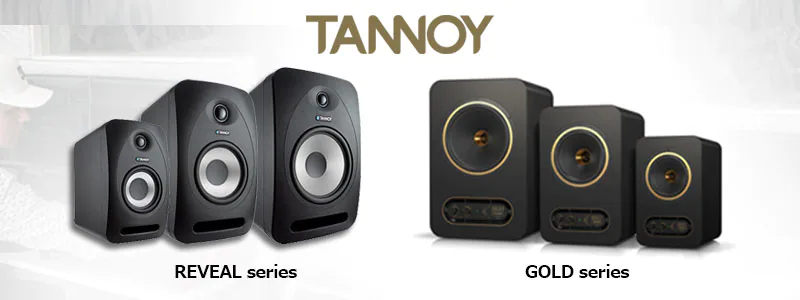
2014年にハイエンド販売店に試聴しに行きました。そのCDプレーヤーの音質は、パソコンのヘッドホーン端子より遥かに劣っていました。それでも、店の人は昔のタンノイとかハーベスのスピーカーを置いていて、私はこのスピーカーはもう30年も50年も前に終わった音質だと思いましたが、自分の感想を胸にぐっと収めて帰宅しました。
ネットでハイエンド オーディオマニアを見てますと、とっかえひっかえ高額の機器を売り買いしていますが無駄な事だと思っています。いつまで経っても、癖のある機器を選んでいては生演奏に近くはならないのになと言うのが私の感想ですが。癖のある音は、直ぐに嫌になるに決まっています。
ゴールドムンド 笑ってしまいますね。電源トランスなり、電源を強化すれば音質は一般に良くなるのですが、それにしても 詐欺師みたいな事で私には出来ません。
勉強になる記事有難う御座いました。
生演奏はホールの音質と座席の位置に大きく左右されますので色々難しいですよね。とは云え、オーディオ独特のクリアネスでは生演奏の悪い席やホールの音に表面的に勝っていても、音楽としての音の色彩やグラデーション、自然さ、表現のダイレクト感については、自分の場合は未だ未だ生演奏には圧倒的にかなわないと思うことが多いです。
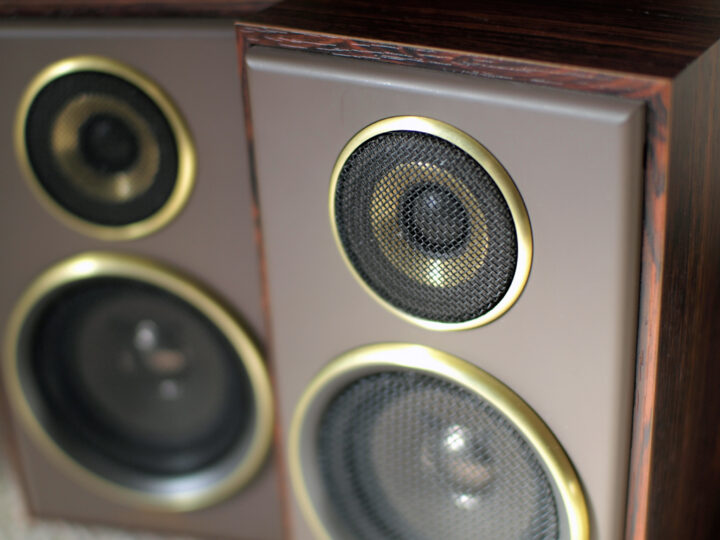
TANNOYやHARBETHは鳴らし方次第だと思います。簡単にぼやけた酷い音にもなりますし、上手く鳴らせれば、音楽愛好家にとって一生向き合うべき懐の深さを持っているとも云えます。今時のシャープでクリアな音質を追求したり、それこそ機材ヲタクがコロコロと買い換えするような玩具では無いと思っています。特に、ピアノはともかくHARBETHで鳴らす弦楽器は上手く鳴らせれば格別のものがあり、個人的には高く評価しております。
買い換えについては、買い換え自体が目的になってしまっているケースが散見されますね。一つの機器とじっくり向き合うことをせず、年に何台も、累計で数十台、数百台と買い換えている方がハイエンダー界隈には少なからずいます。良く言えば中古市場を彼らが支えている訳ですけれども、完全に目的と手段が入れ替わってしまっていて、沢山の機材を経験することと、音楽性や良い音を知っているかは、実のところ全然関係ないのだなと思ってしまいました。
ハイエンドオーディオってのは例えるならば。
持つことを楽しむためのオーディオ
似たようなのに
・性能的に街で走れないフェラーリ。眺めるのが吉!
・林業しないけど植林して風光明媚を楽しむ地主
・魚を大量に獲るなら漁船。ゆえに高級クルーザーで魚を釣るのは獲ることが目的じゃない。
・趣味かつ晩のおかずなら突堤で釣りするのが十分
・うまいコーヒーを入れるのに山に入って湧水名水を汲みにゆくのが正道。
かかる経費はガソリン代と体力。
例えるならキャブタイヤのケーブルか?
別荘に深い井戸を掘って高いろ過装置を建設するのがハイエンド。
ゴールドムンドはあれだな。
・どうせフェラーリを街中でぶっ飛ばせば逮捕されるから
制限時速守ってゆっくり走るなら軽四のエンジンでいいやって…・