【iPod vs. Mark Levinson: A Sound Quality Showdown】
Blind Listening Test|First Harf|Second Harf
Phew, I’ve finally finished reading it. What an extraordinarily long article.
An iPod Takes on a ¥20,000,000 Hi-Fi System — “iPod VS JBL & Mark Levinson”
(Nikkei Trendy Net, November 2005 — the original link is dead, so I’ve linked to the Wayback Machine.)
In the comments on my recent post — Can audio enthusiasts tell the difference in sound without being influenced by brand names and prices? — someone shared the Nikkei Trendy Net article linked above. I started writing a reply, but as usual it grew absurdly long, so I’ve decided to post it as a separate article here. What follows is purely my own personal opinion, nothing more and nothing less. I should mention that I don’t currently own an iPod myself — though I have been thinking I’d quite like one DAP, or rather, one portable music player, with reasonably good sound quality. Note: I subsequently ended up using an Apple iPhone 4/iPhone 5.
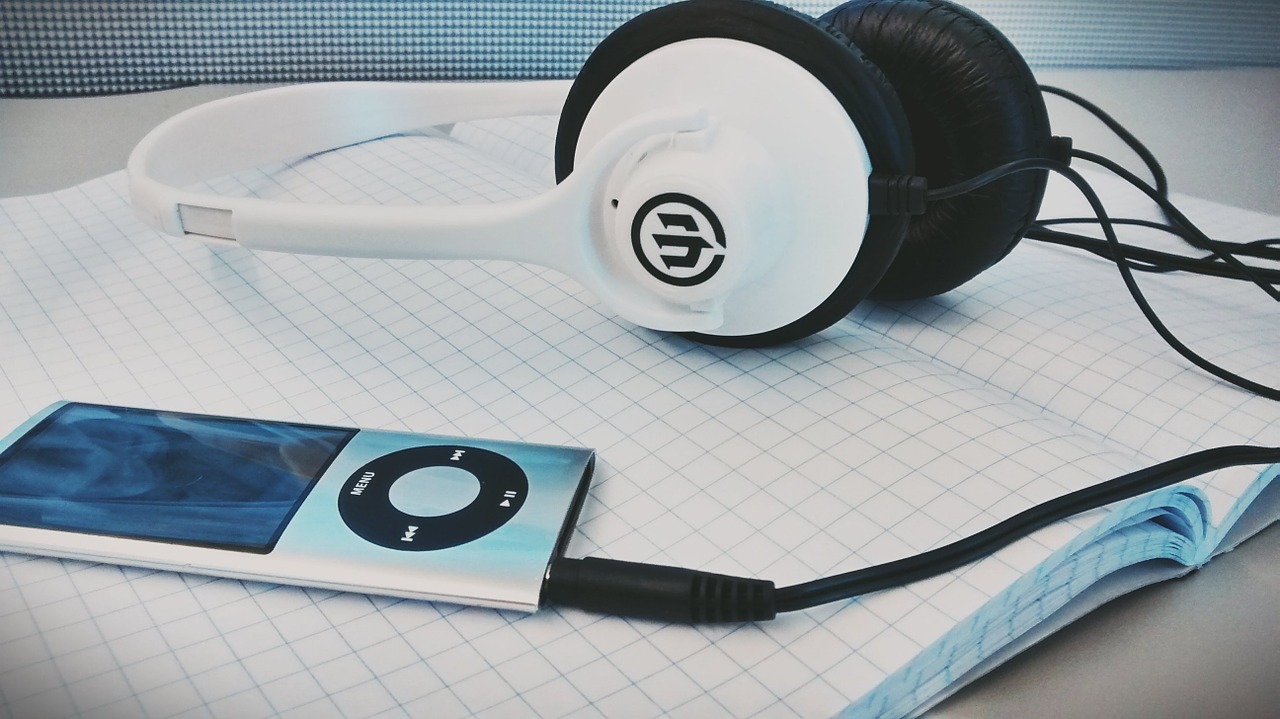
In addition, I was hoping to find some potential for existing iPods in the context of high-fidelity audio, so I looked into things as much as I could in the time available — and the general consensus among portable music player users who care about audio quality seems to be that the iPod still has considerable ground to cover in terms of sound quality, and is still very much a work in progress. If anything, the people actually using them tend to be rather clear-eyed about the iPod’s sonic limitations. And yet, seeing their careful consideration of sound quality differences between models, and their tireless pursuit of ever-better in-ear earphones, I felt that the attitude of iPod users in seeking better sound is, at its core, no different from that of the dedicated Hi-Fi listener.
Now, today we live in an age where each person can choose from all manner of options when it comes to enjoying recorded music. Below, I’ve used inequality signs to give a rough personal impression of what each audio category tends to prioritise in the market.
Note: There will naturally be objections and counter-arguments, but what I have tried to show here is the difference between placing priority on sound quality and musicality in reproduced music, versus prioritising factors other than sound quality — such as accepting the compromises of lossy compressed formats. There are also approaches to audio based on DIY or on “theory and technical interest over music,” but as these fall outside the scope of this post, I have left them out.
It is easy enough to rank these according to conventional values, but what constitutes the best solution for a playback system differs depending on how each listener engages with music within their own lifestyle. In short, what matters most — and therefore what takes priority — is different for each category. I think there should be room for all sorts of approaches to how one relates to music, and while the pursuit of “sound quality” is important, I also feel it is equally important to consider how as many people as possible can engage with music at all. The value of having opportunities to encounter music individually, for a great many people, is a fundamental premise that comes before any question of quality.
That said, this is the world of hobbies — so by all means focus on any one of these and pursue music to your heart’s content, or enjoy several styles simultaneously; that is entirely the listener’s prerogative. I do not consider pure Hi-Fi and portable music players, or indeed budget audio of the more casual variety, to be in any way opposed to one another. With all of that clearly in mind, let me try to summarise the “showdown” described in the article as accurately as I can.
【Standalone CD Player vs. Standalone CD Player】
· MARANTZ SA-11S1 (CD layer) < Mark Levinson No.390SL (CD layer)
· MARANTZ SA-11S1 (SACD layer) < Mark Levinson No.390SL (CD layer)
Note: The mid-range Marantz SACD player lost to the top-end Mark Levinson CD player, with the difference in hardware playback capability overturning the format advantage. The margin, however, was narrow.
【Portable Music Player vs. Portable Music Player】
· 4th Generation iPod (4G) > iPod shuffle > iPod nano (compared using WAV)
· 4th Generation iPod (4G) > SONY NW-HD5 (compared using MP3 at 320kbps)
Note: WAV sounded better than MP3 at 320kbps.
【iPod vs. Mark Levinson】
· iPod Shuffle < 4th Generation iPod < Mark Levinson No.390SL
Note: Curiously, no direct comparison between the iPod and the Marantz SA-11S1 appears to have been made. The article frames the iPod’s showing as an impressive performance, describing it subjectively as a valiant effort and a close contest.
【24bit/96kHz PC Source (Digital) vs. Mark Levinson】
· 24bit/96kHz audio data ⇒ Panasonic Let’s note ⇒ ONKYO SE-U55GX (TOS/optical digital output) ⇒
Mark Levinson No.40SL / DAC section > Mark Levinson No.390SL (CD section)
This time, the hitherto unbeatable CD player — the Mark Levinson No.390SL — finally meets its defeat. And what a defeat it is: blatant, unequivocal, total, utterly beyond dispute. Lose by this margin and there is actually something refreshing about it, almost liberating. Cheers, lads — the beer tastes especially good tonight. That is the kind of gap we are talking about.
A decisive margin, the article says — but this is something of a misleading sleight of hand with words, because what this is plainly describing is a contest between two Mark Levinson units. The PC is feeding 24bit/96kHz input into the No.40L (approximately ¥6,000,000), which sits in a higher tier than the No.390SL (approximately ¥1,400,000) acting purely as a standalone D/A converter — so an emphatic result is only to be expected. A substantial gap would emerge even in a 16bit/44.1kHz comparison between the two, and with one side running 24bit/96kHz the difference becomes all the more pronounced. (Incidentally, the article repeatedly refers to the “No.40SL,” which I suspect is simply a mistake for the company’s flagship media console, the No.40L.)
It wasn’t even a contest. The difference in sound quality brought about by this difference in format apparently transcends the price gap between the playback devices.
【24bit/96kHz PC Source (Analogue) vs. Mark Levinson】
· 24bit/96kHz audio data ⇒ Panasonic Let’s note → ONKYO SE-U55GX (analogue RCA output) ⇒
Mark Levinson No.40SL > Mark Levinson No.390SL (CD)
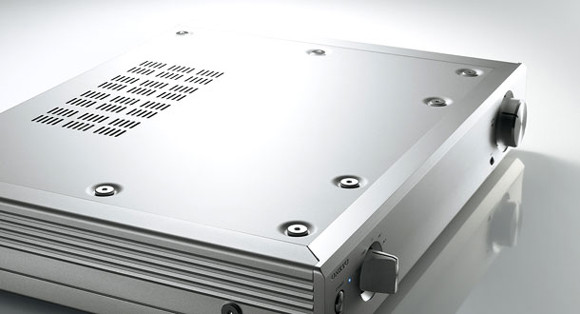
Oh… well then. What this comes down to is essentially a comparison of the DAC and analogue output stage of the Onkyo SE-U55GX — a USB digital audio processor for PC use, well regarded for its sound quality — against the analogue stage of the Mark Levinson integrated CD player No.390SL’s DAC (16bit/44.1kHz), with the Onkyo running 24bit/96kHz input via the No.40SL. The ONKYO SE-U55GX (the successor model being the  SE-U55SX2) is known for its audio quality, but even so.


 ポチップ
ポチップ
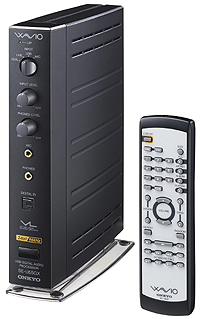 What this tells us is that the DAC and analogue output of the SE-U55GX — a device costing a mere ¥20,000 or so — is apparently good enough to surpass the sound quality of a Mark Levinson CD player. There is a format difference at play, of course, but this is a comparison that cannot be discussed without also considering the performance of the DAC and analogue stage. Strictly speaking, what one ought to do is rip the same CD used in the listening test to 16-bit data, play it back through the SE-U55GX, and use that as reference data for comparison against the No.390SL.
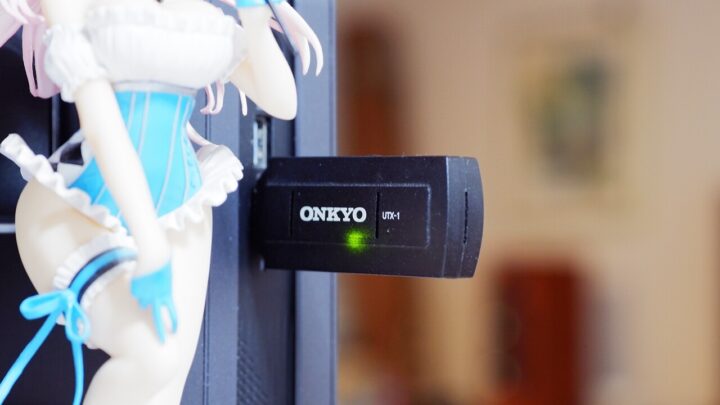
I have in fact purchased 24bit/96kHz classical downloads from e-onkyo music, loaded them onto my Let’s note, and played them back via the Onkyo UWL-1 — but whether due to the sonic limitations imposed by Windows Media Player or something else, the result is not particularly impressive. (When the source is a CD rip in WAV, I use WaveSpectra.) The transfer is nominally uncompressed 2.4GHz digital wireless, but there may well be significant degradation occurring during wireless transmission.
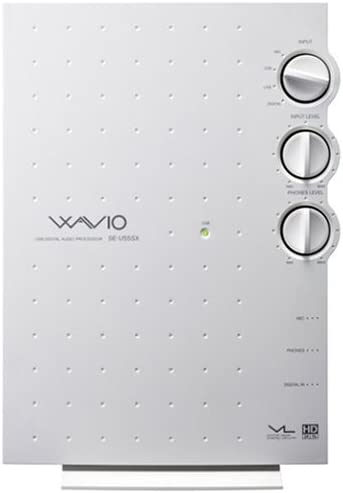
But what if a USB audio device costing a mere ¥20,000 or so — the SE-U55SX — combined with a 24bit/96kHz recording from e-onkyo music, say an Octavia Records release, were to surpass the SACD Hybrid disc of the same recording that I already own? Indeed, if it apparently trounces the No.390SL by a wide margin, then surely it cannot fail to outperform the company’s own C-1VL, or the CEC TL-51Z, or the ARCAM CD72T, or indeed the Marantz SACD players below the ¥400,000 tier that were described earlier as falling slightly — though narrowly — short of the No.390SL.
 ポチップ
ポチップ
…And now, let me pause and think about this calmly for a moment. 24bit/96kHz is, after all, the format primarily used for DVD-Audio — the format that lost its standards battle with DSD/SACD and has since become a thing of the past. DVD-Audio was widely said to be sonically inferior to SACD, and I seem to recall that experts repeatedly pointed out, whenever the opportunity arose, that it was consistently at a disadvantage in direct comparisons of the same source material.
Furthermore, regardless of whether one actually owns any DVD-Audio software, many people will have a universal player or DVD player capable of playing DVD-Audio — and yet I cannot recall ever hearing that 24bit/96kHz source material was so extraordinarily good that it overturned the hierarchy of playback hardware. If anything, the prevailing view, as with SACD, was that its sonic advantages were difficult to realise on a cheap DVD player, wasn’t it?
 ポチップ
ポチップ
To be honest, when I read this final section of the comparison, whatever enthusiasm I had been building up about the iPod — that sense of being swept along by the article’s momentum — collapsed entirely, and turned instead into a vague suspicion that there might be some other bias at work here, nudging the reader towards a particular conclusion. The software used for the comparison appears to have been a single globe album, globe2, in the pop/rock genre — which raises another question: could there simply be a difference in mastering quality between the CD and the 24bit/96kHz version? That sort of thing is common enough, after all.
Perhaps I am reading too much into it — but I can’t help feeling that the article deploys a certain trickiness in its writing: on the one hand, it flatly dismisses the sonic superiority of the SACD format in the high-end equipment comparison, while on the other, it completely reverses course when it comes to the 24bit/96kHz USB audio device, lavishing it with praise for transcending the hardware hierarchy; it leans heavily on the kind of subjective and hyperbolic metaphors that PC-oriented readers would normally find objectionable, uses them to skew the reader’s perception, and steers the whole thing towards a pre-ordained conclusion in favour of PC audio, all while making the actual results rather difficult to parse. Or alternatively, I find myself wondering whether there is some other reason for the article to go so far out of its way to champion the iPod — even dragging in a Sony rival model that has almost nothing to do with the article’s stated subject.
Well, this was written by a professional who will surely have carried out far more thorough testing than I ever could, and as for extravagant and suspect turns of phrase where one cannot quite tell where the author’s true intention lies — I am rather too familiar with that tendency myself to be casting stones at anyone else. So I shall say no more on that score. In any case, my conclusion is simply this: I would quite like a decent USB digital audio processor. (Note: that said, an external unit does yield better sound quality than an onboard solution.) If an inexpensive DAC like this can really surpass a high-end CD player, and given that I am rather fond of Onkyo products, I might just end up buying the SE-U55SX2. (Continued in Part Two.)
【iPod vs. Mark Levinson: A Sound Quality Showdown】
Blind Listening Test|First Harf|Second Harf

Auto Translated by CS4.6
List of comments (7)
http://decnonet.livedoor.biz/archives/50671397.html
↑実際に、24/96のDLした楽曲を、16bitの圧縮無し.wavと比較してみました。
やはり、24/96が一番良かったです。
ただ、WMAとQuicktimeの音の傾向ががらりと変わることに驚きました。
Quicktimeでは、WMAが再生できないので、24/96どうしの比較は出来ませんでした。
PCでオーディオを楽しんでいる人たちは、CDプレーヤーさえ持っていないと言う方が多いです。
自分自身、現在所有していませんし、、、、。
http://audio-heritage.jp/TECHNICS/player/sl-p1000.html
↑以前使っていたCDデッキはこれですけど、音飛びが出るようになって、修理に出したら「修理不能」との宣告。
それ以来、小遣い程度であの音を超える物に巡り会えず、現在に至っています。
そうですよね。同じ再生環境でしたらやっぱりビットーレート次第で音質に差が出ると思います~。
>ただ、WMAとQuicktimeの音の傾向ががらりと変わることに驚きました。
どちらも音がこもっているというか、高域が出てなかったり、変な遅延とかイコライジングによるキャラクターが感じられますので、ドライバにASIOを使い、Lilithとか音の良い再生ソフトを使うと良いと思います。(私は単純に昔からの習慣&PC音源をあまり使わないのでWaveSpectra使ってます。)
http://www5f.biglobe.ne.jp/~blitzen/page078.html
>Technics SL-P1000
そうですねぇ、、、同価格帯(実売8万~)以上のモデルでしたら、音色の好みは別としても、現行のCDプレーヤーやSACDプレーヤーは当時のモデルと比べて音質的に大きく進歩していると思いますので、機会があったら聴いてみられることをお薦めしますd(^_-)。
http://decnonet.livedoor.biz/archives/50568724.html
↑この記事で、PCサウンドがほぼ?互角に戦える機種のレビューを載せていますw
そうそう、この程度なんですよ?w
http://decnonet.livedoor.biz/archives/50568275.html
↑内蔵音源だと、こんな感じですね^^;
http://store.shopping.yahoo.co.jp/bsn-shop/bsam1103.html
↑実際には、最低でもこのくらいの物をデジタルでダイレクトに繋いでやった方がいいかな?と考えていますけど。
次は、こいうつかな??
Technics SL-P1000は最後の16bitDAC搭載機で、左右独立した16bitDACが搭載されていました。
その当時の1bitDACの廉価な機種は、ブツ切れの音に聞こえました。
現在では、CDの持つデータ以上にピュアに聴かせるための様々な工夫がされているんでしょうねぇ、、、、。
リンク先拝見しました。実際にPCオーディオをされている人々がピュアオーディオとどのくらい乖離しているのかイマイチ良く知らないのですけれど、個人的にはピュアに劣らない箱庭PCデスクトップオーディオってコンセプトでも一組みシステムを構築してみたいです♪
FireStoneの小型DACは私も欲しいのですけれど、USB接続のモデルと比べると少しお高いかなぁ。
http://store.shopping.yahoo.co.jp/bsn-shop/bsam1102.html
こっちでしたら半額…なんでだろ?
私がPCオーディオを組む場合はFirestone Fubar II USBDACは一番に挙げる候補です。
053955・・・様。
せっかくのご紹介にもかかわらず誠に申し訳ありませんが、コメントリンクを削除させていただきました。当方、平和的にサイトを運営したく思っており、該当リンク先を掲載することは現状は適切でないと考えております。何卒ご理解下さいませm(__)m
はじめまして…NO.40はアナログ入力を内部でAD>DA変換をしているので音がいいんですよね。普通こんな事すると接点が増えて音質的に不利なんですが、さすがレビンソンです。いくらオンキョーさんでも質量がものを言うアナログで勝てる訳がなく、皆さんNO.40の内部処理を知らないだけなんではないんでしょうか?
レビンソン至上主義さんはじめまして。
アナログ入力をAD-DAしていた事を私も知りませんでした。メディアコンソールですから考えてみればそうなんですね。記事中では詳しく触れられていませんが、SE-U55Xのアナログ出力をプリアンプのつもりでNO.40Lに入力していたとしたら、、、結局比較テストに全くなっていなかったという落ちになります。
どっちにしろ、アナログ段の作りがプアなPCオーディオが、ピュアのハイエンドオーディオの音質を超えるとかそういう話は、個人的には?というのが正直なところです。