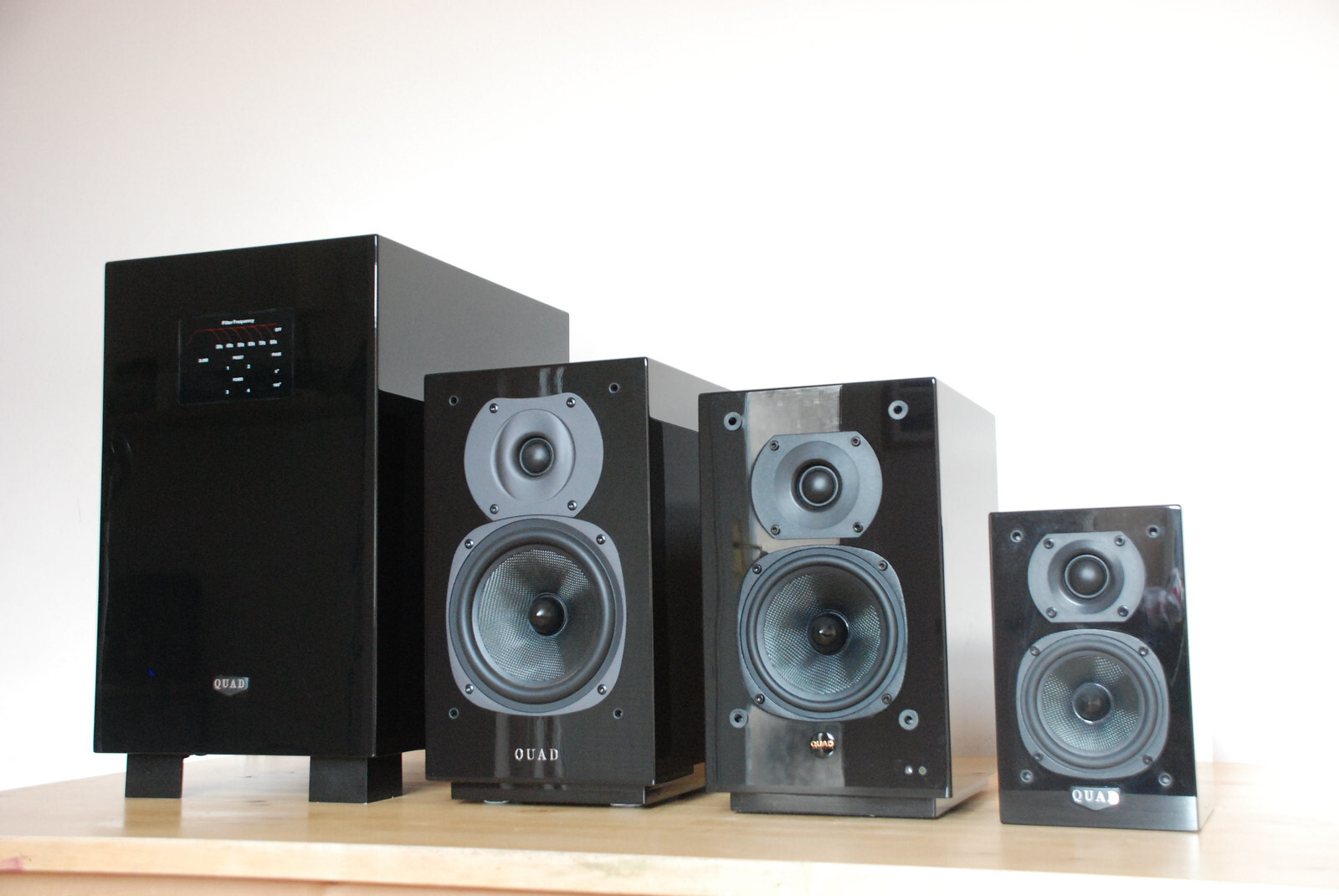
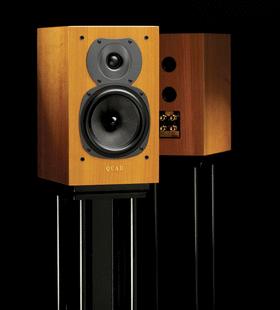
I had been meaning to write a follow-up about the audio-technica AT6099, but a regular reader, Mr U, sent in several questions about getting the most out of the British bookshelf speaker QUAD 11L, so I found myself going round and round in circles with my rather limited knowledge on the subject.
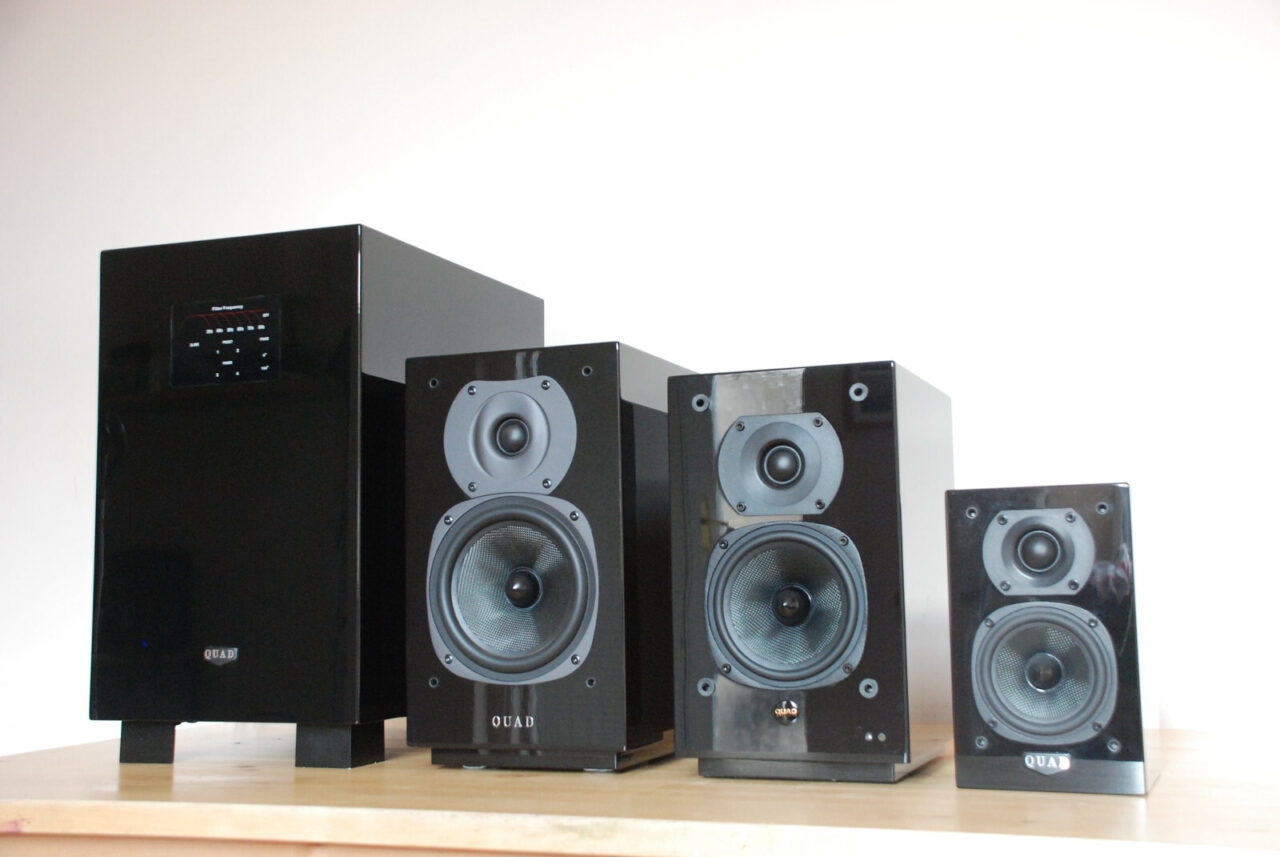
On a certain online forum these past few days, QUAD 11L owners have been engaged in quite a lively debate, and it seems many of them are struggling considerably with harshness in the high frequencies. (The discussion has been moving in a genuinely productive direction, with quite a few comments that really cut to the heart of the matter — I was rather moved by it. I personally think this very tendency is proof that the 11L is fundamentally a good speaker.)
A Speaker Full of British Character — the Traditional European Tone
The QUAD 11L has been listed as a recommended speaker in the under-£1,000 class on this blog since its early days, ever since Baba Denki, a shop I am indebted to, suggested I give it a listen. When the forum was active, it seems a number of people bought the QUAD 11L having partly referred to this blog, and I confess the current situation makes me feel a certain degree of responsibility. That said, I myself have only auditioned the 11L two or three times in a shop and have never actually purchased one — and since I have not taken the risk of being an early adopter with a unit of my own, I am hardly in a position to lecture anyone authoritatively about how to get the best from the real thing. Please bear that in mind, and take everything below with a generous pinch of salt. m(__)m
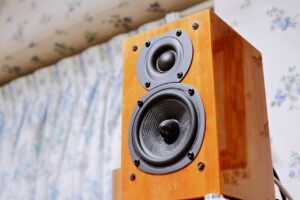
The appeal of the QUAD 11L’s sound, as I hear it, lies in the combination of a European tone with a slightly old-fashioned British flavour — warm and somewhat analogue in character, retaining a certain unpolished roughness that, put less kindly, could be called a lack of sophistication — and yet, alongside that, a wide-range, high-speed response capable of handling modern source material, together with a delicacy in the high frequencies that faintly recalls the company’s own electrostatic speaker, the QUAD ESL.
That should give some sense of what to expect — but precisely because the tonal character is, in a sense, quintessentially foreign, I am not sure it can be lightly recommended as an all-purpose speaker to those who are not particularly drawn to that kind of imported sensibility (note: this includes cases where the listener’s musical taste differs). QUAD’s sound is quite a different direction from what Japanese listeners tend to think of as “high fidelity.” As someone somewhere once put it, it is rather like Royal Milk Tea from a certain well-known brand — not the clean, refreshing green tea variety. A sound you will either love or leave, depending on how much you appreciate the Western flavour. (And for my part, I happen to love it.)


 ポチップ
ポチップ
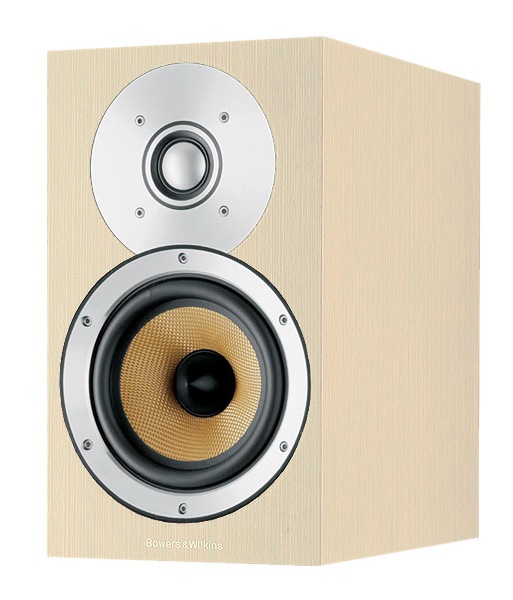
First, the harshness in the treble. I noticed this myself during my auditions. It is not so much that the very top end is harsh — in my description it would be more the upper midrange — but sibilants on vocals stand out in a peculiar way, and there is a tendency for the upper registers of musical tones (the upper midrange in terms of frequency response) to grate on the nerves. My own interpretation at the time was that this shared a certain potential with speakers a few classes above — such as B&W, Vienna Acoustics (with Scan-Speak tweeters), DYNAUDIO , Red Rose Music, and various ribbon-tweeter designs — speakers capable of the subtle resolution and spatial imaging that classical music demands. I received those characteristics as a sign of good breeding, indicating that this speaker harbours similar high-frequency potential to those more serious designs. During brief auditions, I chose to take it as a positive. In real-world use, however, I did sense that it might, depending on circumstances, present difficulties in terms of system matching and optimisation.
Whether that tendency during auditioning was purely a matter of amplifier compatibility I genuinely cannot say, but the amplifiers being used at the time were mid-class Japanese domestic models from DENON, MARANTZ, and LUXMAN — what I’d call the high-powered tank category — and I was telling myself it was simply a matter of poor matching, the amplifier driving it into a kind of overdrive distortion. Even so, inwardly I was rather alarmed.
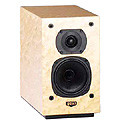
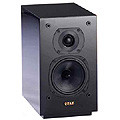
I cannot say definitively whether this problem is entirely down to amplifier matching, but it also struck me that, in the 11L’s case, the crossover sits at an unusually low 2,200 Hz, which may be producing a tonal inconsistency or colouration in the upper midrange of musical tones. Speakers with crossover points in the 2–3 kHz region do tend to make the join in that vicinity noticeable, and personally I feel that, ideally, a crossover of 4,000 Hz or above — high enough for the woofer to handle virtually all the fundamental tones of piano and full orchestra on its own — would be preferable. (The Vienna Acoustics T-2 also has a well-documented problem right around its crossover point of 2.8 kHz.)
Perhaps it reflects an ambition to achieve ESL-like delicacy from a low-cost dynamic bookshelf speaker — but because the tweeter is being asked to handle frequencies down into the lower registers of musical tones, surely the result is that any failure to properly control the tweeter will lead to high-frequency distortion rather easily?
Unit-to-Unit Variation and Driver Fitting
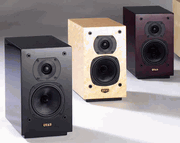
First, unit-to-unit variation. Regrettably, there is nothing to be done about this — not just with the 11L, but with any speaker. Speakers are in some respects close to handcrafted objects, and anyone who has had the chance to compare different production batches of the same model will know that the variation between a good and a bad sample can be greater than one might expect. With the 11L in particular, the finish of the veneer apparently makes a noticeable difference to the sound as well — the ebony finish, for instance, is said to produce a sharper, tighter sound, which may well make the harshness more pronounced. That said, a good specimen in ebony would probably be the finest-sounding of the lot, precisely for that tightness and resonance.
 Another thing worth trying: if the driver unit was distorted during assembly by an electric screwdriver (over-tightening is common), removing it and re-fitting it by hand with an appropriate torque can sometimes produce a dramatic improvement. In my own T-2, the tweeter was so distorted-sounding when I first bought it that I could barely listen to it — but after taking the plunge and removing and re-fitting it, the distortion vanished as if it had never existed. And yet, before I tried that, simply loosening or re-tightening the screws slightly had made barely any difference at all. It should be noted, though, that removing and refitting a driver unit will definitely change the sound one way or another (to a degree comparable to unit-to-unit variation). In some cases the result may not be to your taste, so there is an element of irreversible risk involved. I cannot accept any responsibility for the outcome, so please proceed entirely at your own risk.
Note: If you have no major complaints about the current sound, please do not attempt this. If you find yourself unable to listen for more than a few minutes, or you are on the verge of putting the speaker up for sale, then it may well be worth trying as a last resort.
An Allen key for removing driver units can be found at a ¥100 shop, but QUAD uses Torx (hexalobular) screws, which are common on British products. These are usually stocked at larger home improvement shops or major car accessory retailers, but they are not generally easy to find cheaply, so I will mention the one I use here.
The Difference Between the 11L and 12L
The QUAD 12L, being a size larger, has a more relaxed, unhurried sound to go with its greater dimensions. However, I personally feel that the 11L has considerably more musicality. Above all, it has a liveliness and a joy in music-making that the 12L cannot match. On the other hand, being the smaller of the two, it trades sharpness for something that occasionally feels a little cramped in its presentation — one could perhaps say it maintains its balance right on the edge of tipping into harshness. As a result, the 12L may ultimately be the easier speaker to drive, with a more natural sense of ease about it.
Amplifier Matching
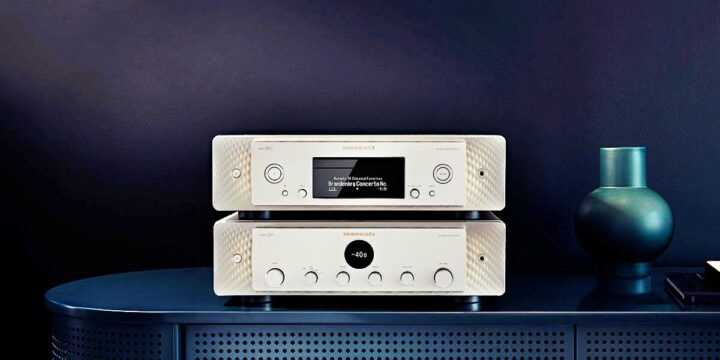
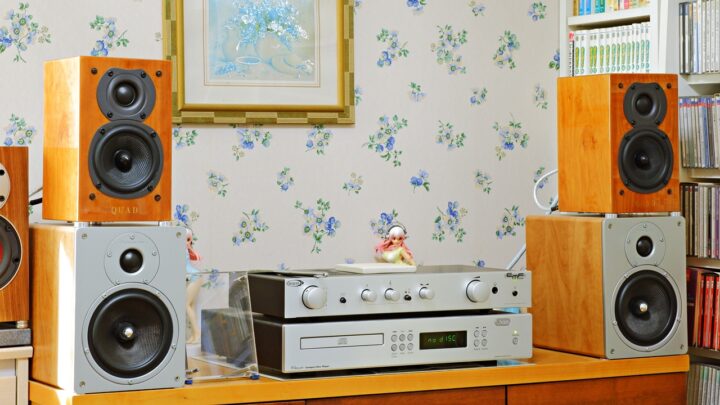
With the popular high-output Japanese domestic amplifiers, I found in most cases a distorted, congested impression as if everything were being slightly overdriven. It may be an impractical suggestion, but I think the QUAD 11L is better served by amplifiers that give no sense of distortion from the component itself — either a genuinely high-precision, high-quality high-end amplifier of modest output, or the matching QUAD 77, or British and European alternatives such as CREEK, Naim Audio, or entry-level models from Unison Research or PRIMARE — amplifiers that treat the speaker gently, with care for resonance and purity. If a Japanese domestic amplifier is preferred, then something at entry level with quite low power (around 50–80W into 8Ω) might suit, or perhaps a well-chosen valve amplifier. This is, after all, not a speaker for cranking up to high volumes and revelling in sheer loudness — and I would say that applies to QUAD speakers across the board.

Speaker Cable
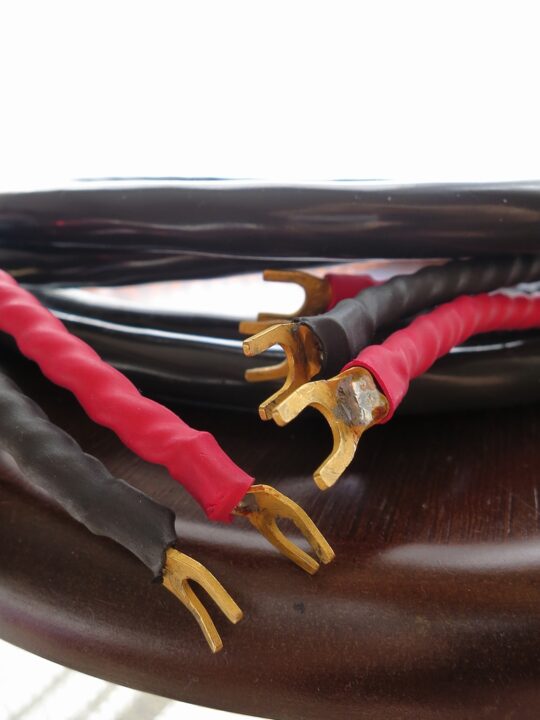
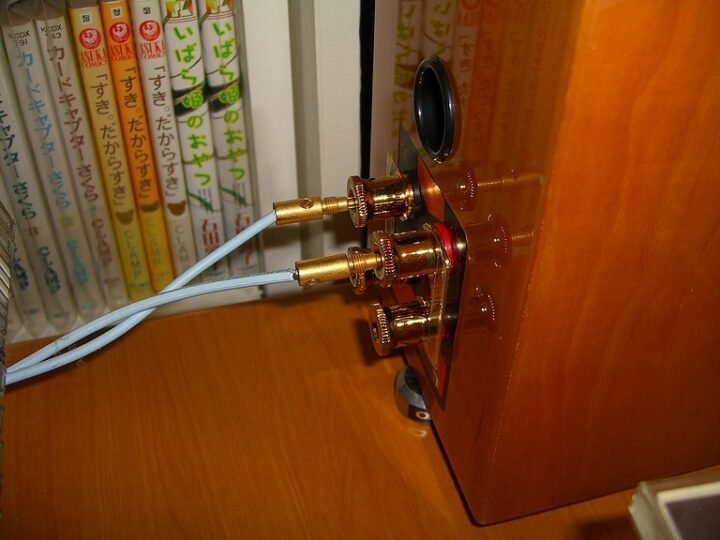
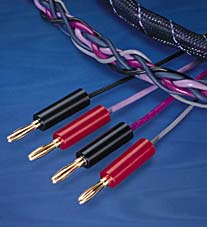 As with the amplifier, the choice is either to accept a compromise — taming the treble by deliberately using a cheap, bandwidth-limited cable — or to use something truly high quality. Mid-range cables that hype the treble or exaggerate something for effect, designed with popular appeal in mind, are best avoided. As a rather irresponsible suggestion, if budget does not stretch to expensive cable, one option worth trying might be the IXOS 6002/6003 “SUPER GAMMA” in bi-wire configuration — a British brand, like QUAD itself. IXOS‘s budget cables share QUAD’s British tone — a slightly sweet, musically nuanced sound that does not reach for more bandwidth than necessary — and using them might bring a gentler, more agreeable treble while adding to the overall British atmosphere. ⇒ IXOS — Britain’s leading Hi-Fi accessory brand. Staying with British connections, QED and THE CHORD COMPANY would also be candidates — though very expensive speaker cables tend to have a strong wide-range character and may let too much treble through, so if the aim is to reduce high-frequency distortion, it seems advisable to choose a cable that is structurally multi-stranded with a large total number of conductors and a good overall gauge, and that is reasonably flexible to handle.
Hi-Fi Insulators
I was asked about the audio-technica AT6099 — but honestly, you would not know until you try it. What I can say is that with the Audio Pro Image 11, there is a tendency to round off a sharp-edged treble in a useful way, which works well. With the 11L, though, I suspect the effect would be noticeable but ultimately still not quite enough. The fact that the speaker already comes with rubber feet as standard makes me wonder, in a slightly suspicious frame of mind, whether the manufacturer was already aware from the outset that poor placement would make it prone to sounding distorted.
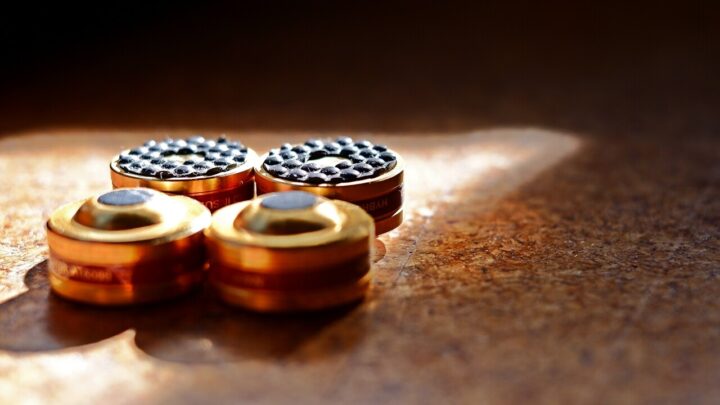
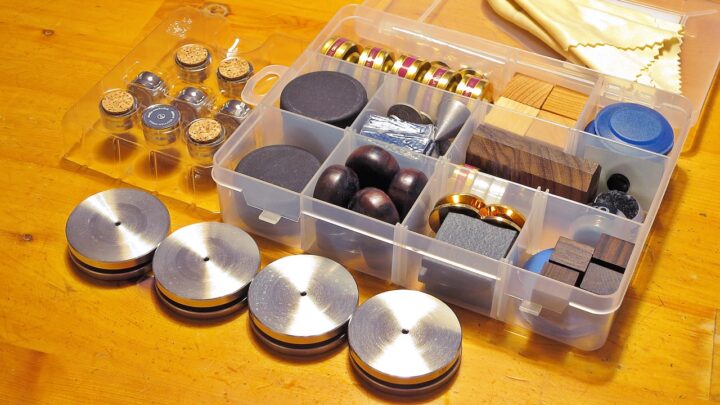
One approach worth considering is using synthetic quartz-based insulators such as those from Audio Replas — these may remove the distorted quality from the treble and add a floating, delicate sense of reverberation, nudging the tonal character further towards an electrostatic sound. However, it should be noted that quartz insulators come with trade-offs: density, rhythmic drive, and richness of colour tend to be sacrificed in exchange.
ポチップ
Radio Wave Cut (RADIO.WAVE.CUT)
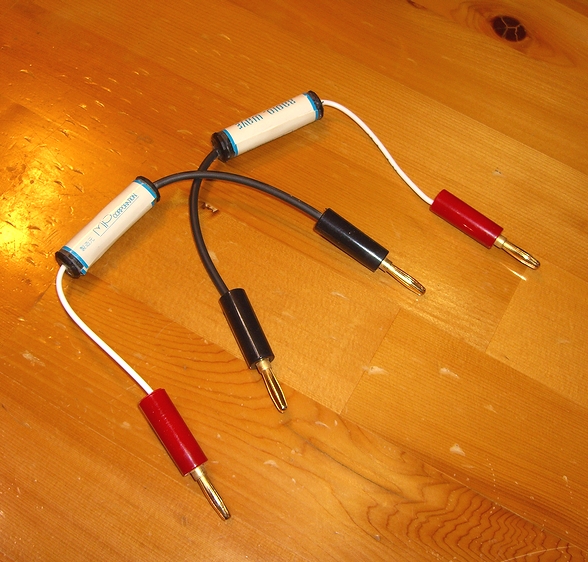
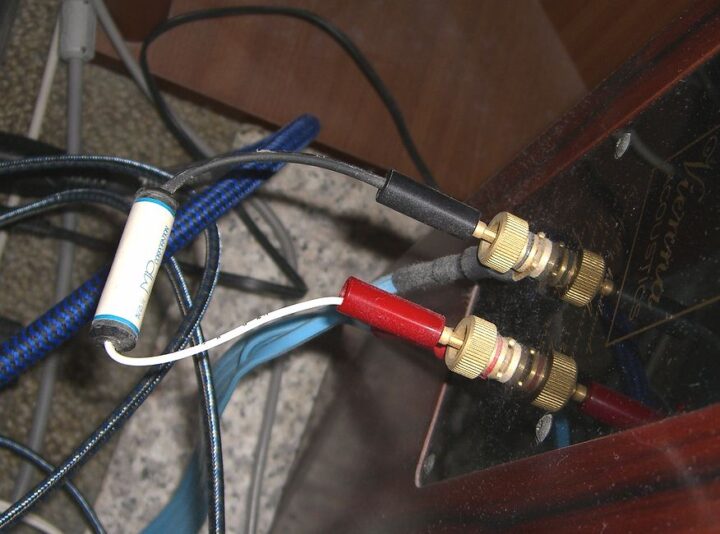
The Radio Wave Cut is an original product from Goto Sogo Onkyo (MP Corporation), and Mr U mentioned earlier was full of praise for it on the QUAD 11L. Having tried it myself, I find it genuinely effective at removing tweeter distortion in the treble on many speakers. It is well worth trying not only on the 11L but also when you want a quick fix for the kind of sharp, grating treble you get from B&W and similar speakers. I am currently using it on the main system here, the Vienna Acoustics Mozart T-2. The only thing I would say is that it is, how shall I put it, a touch on the expensive side.
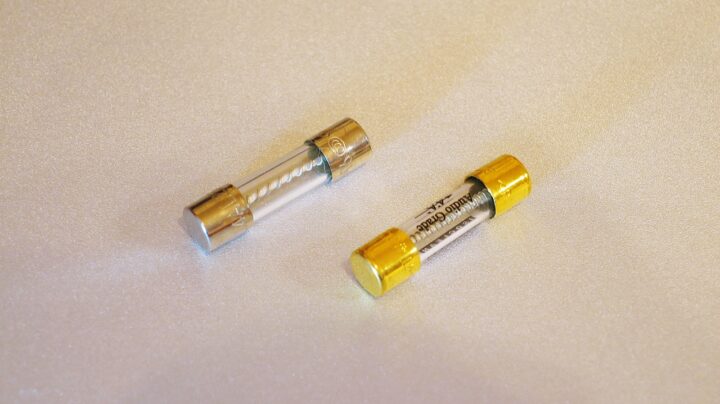
ISOCLEAN POWER FUSE
The effect of changing a fuse is similar in nature to the kind of changes you get from working on the mains supply side — wall sockets, power strips, and so on. My impression of fitting the ISOCLEAN POWER FUSE in a integrated amplifier was that the restless, grainy distortion coming from the component itself, along with the excessive extension in the upper midrange, were considerably improved. However, perhaps due to the gold plating, the character takes on something of a valve amplifier quality — so if that particular tone is not to your liking, then I am afraid that is that. ⇒ Replacing the fuse in an integrated amplifier
 ポチップ
ポチップ
An Oversensitive Tweeter That Ultimately Makes the Speaker Difficult to Control
Once a proper run-in period has passed and everything is set up well, you can get a delicate, clear sound that recalls the ESL — but the number of owners who can actually get there is limited by the constraints of their own equipment. The question is whether to fall for the QUAD 11L and pursue its potential to the limit regardless of cost, treating it like a high-end speaker, or to deliberately use lo-fi accessories to narrow the bandwidth, round off the treble, and make a practical compromise. In the end, despite appearances as an accessible, mass-market product, it demands a mid-to-high-end approach to get the best out of it — and that, I think, is precisely what divides opinion about it as a practical choice at its price point.
That said, turning it around, the QUAD 11L and 12L offer a genuinely serious sound at this price level that very little else can match — and in terms of both musicality and the deeper pleasures of Hi-Fi, I personally feel they are among the rare few speakers in this class that have the mature character and the depth to reward a long-term relationship.
The above is a modest attempt to gather together what I have been able to think of. I hope it may be of some small help to owners of the QUAD 11L and 12L. m(__)m

Auto Translated by CS4.6
List of comments (19)
はじめまして。PONAUDIOのPONと申します。
いつも拝見させていただいています。
今回の11Lの記事、とてもためになりました。
わたしの11Lはキンキンしていない方だと思いますが、こればっかりはわかりませんね^^;
大音量ではあまり聴きませんし…。
でも、私も11Lは音楽を楽しめるいいSPだと思っています。
これからも読み応えのある記事を楽しみにしています。がんばってください。
それから、この記事にトラックバックをするつもりが、間違ってひとつ下の記事にもトラバしてしまいました。申し訳ありませんが削除してください。
もうひとつお願いがあります。出来れば私のBLOGと相互リンクさせていただきたいのですが・・・。もしよろしければよろしくお願いしますm(__)m
はじめまして、よく読ませていただいてます。
自分の11Lはかなりキンキンします。
とくに気になるのがボーカルのサ行、シンバルの音ですね。
5分も聴いているといやになってしまうような状態でした。
ここ2週間自分でいろいろとやってみてだいぶ改善しました。
・SPケーブルをあえて安物にして高音を少なくする。
・SPスタンドを木製の安物にしてセッティングをルーズにする。
この2点が非常に効果的でした。
最初のは今日のブログでも書かれていますね。
ピュアオーディオとは逆行する方法ですが、まず聴ける状態にすることが先決だと思いました。
解像度は落ちましたが長時間聴けるようになりました。
ときおりハッとする位よい音を出す瞬間もありポテンシャルの高さは感じてます。
今はアンプの変更を考えています。
オーディオアナログのプリモのセットが合うかなと思ってますが、どうでしょうか?
>PONさんはじめまして(^^)。
貴サイト&素敵なリビングルーム拝見しました。相互リンクはこちらも大歓迎です♪さっそく、リンク貼り作業させていただきます。
うちのブログはコンテンツが多いのにゴチャゴチャしていて、どう整理した物か正直途方に暮れていたのですが、PON-AUDIOを拝見しておおっ!と納得♪こうやってウェブサイトとしての管理ページを作り、それぞれのカテゴリでブログをリンクすればとても訪問者様に観やすいサイトになるんですね。。。トップはホームページビルダー等を買ってくると良いのでしょうか?出来ましたら今後の参考にさせてくださいませm(__)m
トラパは両方そのままで全く問題ありませんですd(^_-)
>フーリエさんはじめまして(^^)。訪問ありがとうございます♪
ご苦労されていらっしゃるようですね。m(__)mちなみに、どういった構成で11Lを使われているのか参考までにご紹介いただけると幸いです。
11L、やはりキンキンしない派とする派、はっきり分かれるみたいですね。どうしたものやらという感じですが、良い解決策が見つかることを願っています。
PONさんの場合は最新鋭のMARANTZ中核システム。再生機器としての基本スペック・精度は抜群に良い環境では全く問題が出ない。あちらで書かれているDENON PMA-2000Ⅳユーザーの方も問題なし。
http://denon.jp/company/release/n_pma2000IV.html
関係あるかはともかくとして奇しくも両機は8Ω80Wクラスですね。古いLUXやアキュでもアンプのテイストが生きた柔らかい音がしてそうです。私がDENONのPMA-SA11で試聴した際には、キンキンした印象と、音の押し出し感が強すぎて短時間で頭痛くなりました。8Ω120Wのアンプですが、その時点ではスピーカーが負けてしまいオーバードライブ気味の印象です。
http://denon.jp/products2/pmasa11.html
しかし、PONさんや他のPM-15S1ユーザーさんの組み合わせを観ても、かなり高解像度で高域もスッと伸びた正統派システムになっていそうですが、この機器構成で問題無いのでしたら、とことん問題出ないような気がします。。。てか、仮にこれらのハイスピード機にB&W N805を使いこなし無しで入れた場合、かなり神経質でキンキンした音になりますよねぇ。。。
11Lでキンキンした音が出る場合、使われているアンプ、CDP、ケーブル等もそうですが、ufugi0331さんの様に、クリーク4330とAuvi SD-SG40等、複数のアンプを所有していて、他のアンプに取り替えてみて、程度の差はあっても症状が基本的に変わらない場合は、やはりスピーカーを疑う事になりますね。。。(´Д`;)
はじめまして。
オーディオ歴20年ほどになりますが、最近11Lを導入しました。
私の今の環境ではとても柔らかく良い音で鳴っていて、キンキンした
音とは無縁です。
キンキンした音になってしまう方はお気の毒ですね。
これは私の勘ですが、部屋のフラッターエコー、定在波等の影響で
周波数特性や残響の特性がかなり乱れてそうなっているのかなと・・。
部屋の音響が乱れている場合はアンプやケーブルでは解決不能
(アンプの静特性やケーブルの電送特性は20-20000Hzではどれでも完全に
フラットなのでそれらを替えてもこればっかりは無理です。)
私の部屋はとてもデッドでつまらん音でしたが、サーロジックの
音響パネルでチューニングをしてもらい現在の音になりました。
お金があればQRDのものも良いでしょうね。
サーロジックは無料お試しチューニングをやっているので
試してみてもいいかもしれませんよ。
長々とすみません。
それといろいろやってきて思うのですが、普通の日本の民家で
リビングの邪魔に鳴らずにオーディオをやるには管理人さんの
サブシステムみたいな超小型スピーカーでニアフィールドで
聴くのがいちばん楽しくていいのかなと思いますねえ。
これだと部屋の影響も気にしなくていいし、家族から白い目で
見られることもないし、一番楽しくて平和なのかも。
pastel pianoさん、こんにちわ^^
リンクありがとうございます。リンクはHPの方で結構です^^
>トップはホームページビルダー等を買ってくると良いのでしょうか?
はい。私はホームページビルダーで作っています。最初はBlogですべてまかなおうと思ったのですが、すっきりさせたくてコンテンツを分けました。その分、Blogは日記になってしまっていますが^^;
うちは最近プレイヤーをSA8400からSA-15S1に変更しました。これだけでも音に厚みがぐっと出て、さらに滑らかになりました。
高音も問題も感じません。
うーん・・・難しいですね。
ご無沙汰でした。いつも読んでます。今回も、とても興味深い内容でした。
うちの11Lは全くキンキンしてませんよ。
そんな問題があるとは夢にも思いませんでした。購入前の試聴時にも感じませんでしたし。
リビングルームのレイアウトの都合上、置き場所はかなりテキトーです。
金属ラックのエレクターに純正アクリル板を敷いた上に置いてます。
インシュレータは鉛合金とソルボセインを組み合わせて付属のゴム足の下に置いて、
フローティングな使い方。
11Lはメーカーからすればローエンドだし、ゴム足付きの筐体デザインからしても、
ルーズな置き方が想定されているのでは?と勝手に思ってます。
というか、それでも魅力的に鳴ってくれる事を期待してる(苦笑)
ufugi0331さんのシステムの場合、
11L+Creek4330ではキンキンしないそうですので訂正しておきます。
>きむらさんはじめまして(^^)。
部屋の影響は想像以上に大きいですよね。
でも、おいそれと替えるわけにはいかないというか、
それぞれの住環境の制約で一番手出ししにくい部分でもあります。
ちなみにImage11を中心に組んだ私のサブシステムは、
5.5畳コルクフローリングの部屋で奇麗に鳴っています。
部屋自体が楽器みたいな鳴り方をするのでラッキーでした。
ちなみにデスクとシステムは部屋の反対側にあり、ニアフィールドではありません。
ウィーンアコースティックのある16.5畳(後方の壁材は後付の吸音材)絨毯部屋では、
このサブシステムでは音がスカスカになってしまいとても聴いてられません。
ピアノの音漏れ対策のためにリフォームした部屋(あんまり音響良くないです)なので、
再生側にデッドな部屋に耐えられるだけの密度感と迫力がないと駄目みたいです。
部屋の固有のF特の影響は、住人にとってはその音が当たり前みたいな所があり、
それが原因で再生音に問題になるレベルのピークデップが発生していても、
気付きにくいポイントでしょうね。よしんば気付いても、効果的な対策にはお金かかりますし。。。
手ごろな価格で出来そうなのはレゾナンスチップくらいかしら。
>PONさん
リンクの件了解しました♪今後ともヨロシクですd(^_-)
そのままでも十分な音のする正統派の良い機器を選ばれていらっしゃる上に、
やっぱり11Lの個体の当たりが良かったのではないかと思います。
>兎脳さん
お久しぶりです(*^-^*)。兎脳さんの所でも全くキンキンしませんかー。
どうやらこうなるとキンキンしない派の方が多数派みたいですね。
うーん。。。私としては試聴時にある程度キンキンした印象を持ちましたので、
キンキン派の方の気持ちが解らなくもないです。
ただ、聴くに耐えないとかそういうレベルではなく、
サ行のキツさと中高域~高域のアタックの窮屈さが一部垣間見られるので、
あくまで”アンプを選びそうだ”程度の認識です。
ロットの問題(こうでない事を願います)がある可能性は否定できませんが、
やはり、アンプが合わないと破綻するかどちろかだと思います。
はじめてお邪魔いたします。QUAD 11Lの検索でやってきました。
国産598戦争時代の3ウェイからQUAD 11Lに変え1年が経過しました。
アンプはMUSICAL FIDELITY E100を使っているのですがキンキン論争とは
無縁な音で響いています。むしろ午後のロイヤルミルクティに練乳を
加えたような音と申しましょうか。(^_^;)
視聴時(アンプは確か国産ハイエンドプリメインだったかと)で感じた
艶っぽい響きをどうやって得ようか模索しています。
FLATさんはじめまして。
キンキン論争は一段落したみたいですね。
結局全くキンキンしないという方が大多数のようで良かったです。
どんなスピーカーでも、音色やドライブ力の合わないアンプやケーブル、
部屋の環境も含めその他の組み合わせが不幸な結果になってまうと、
良い音質を得るのは難しくなります。
傾向としては、低価格なスピーカーの場合、アクセサリや
機器の組み合わせを換えても鳴り方に大きな違いは出なかったりしますが、
高価な(高性能な)スピーカーになる程、機器との相性面や
ケーブルなどのニュアンスの違いがシビアに出てくるように思います。
11Lは価格の割に随分高性能ですので、その辺のギャップがあるかも知れません。
艶っぽい響きですか~。ミュージカルフィディリティのA3.2は、
響きが豊かで大変艶っぽかったように思います。
https://www.audiostyle.net/archives/15911710.html
夏頃まででしたら在庫処分があちこち出てましたが、もう無いですねー。
Accuphaseなんかのそれとはまた違った意味になりますが。
あとは、国内外の真空管アンプから合う物を探すと良いと思います。
後日AH!とPrimaLunaの自宅試聴をする予定があるのですが、
これ等もちょっと聴いた感じでは11Lにかなり向いていそうな気がします。
御礼が遅くなりまして申し訳ありません。参考にさせていただきます。
超ド級システムにはあまり興味が沸きませんでした。据え置く庭もなく現実味を帯びたものとして感じることが出来ませんでしたから。好みのブランド、デザインに溢れたページに巡り合いました。
早速「お気に入り追加」です。
11Lの感想です。
arcamの65とcd73と11Lの組み合わせで聞いていますが、狙い通り癒し系の音になっていて大変満足しています。
ちなみに試聴でのデノンのアンプ、CDプレイヤーとの組み合わせは硬い音という印象でした。
全体的にみるとうちの組み合わせではクラシック系とか女性ボーカルが結構いい感じに鳴っていてそこらへんが得意かなという印象です、またロック系やR&B系の音楽も品よくならしてくれるという感じです。
低音の迫力はあえて出さないように組み合わせたのであまりでませんが、マンションなので近所迷惑にもならずそれなりの音量で聞きたい場合にはいいかもしれません。
海外のレビューサイトはあったのですが日本ではみかけなかったのでこちらに感想を書かせていただきました。では
stkiyoさん感想ありがとうございます(^^)。
ARCAMとの組み合わせはかなり良いみたいですね。好印象レビューをされている方の多くがアーカム(A65/A80/FMJシリーズ)を使われているみたいで、11L+アーカムペアの組み合わせは最も安心感があり、多くの皆様にお勧めできそうです。
FLATさん、お気に入りへの追加ありがとうございますm(__)m
AUDIO STYLEのコンセプトにつきまして、これから記事をアップしますのでご覧頂けると幸いですd(^_-)
先日記事を書いたPrimaLunaのProLogue Oneですが、11Lとの組み合わせではちょっと危険というか、下手をすると情報量の多さにオーバードライブでキンキンしてしまう可能性を少し心配してしまいます。21Lの場合は大丈夫かも知れませんが、11Lではもっとドライブ力の控えめなアンプ、MFの他に、ARCAMやROTEL等を組み合わせた方が無難だと思います。真空管では東京サウンドのValve100でしたら、プリマルナと比べて穏やかでずっとナローレンジですので耳当たりも優しく大丈夫な気がします。
急いで書いた文章で、楽天等へのリンクが切れていたり滅茶苦茶になっていたみたいで、只今全て修正しました。苦笑した人多いだろうなぁ(滝汗)m(__)m
一般に高域については人によってかなり感じ方が違うようです。シンバルの音が耳障りということだと、おそらく7kHzあたりにピークが出来ていると思われますが、意外にそうしたピークに対して、華やかとか空気感といった形容を与えて好む人もいたりするものです。
日頃から高域の派手な音が得意でない人は、通販などで購入する前に店頭でしっかりチェックすることをおすすめします。
私は、クオード11L2を、ラックスL560で聞いてますが、他のスピーカーに比べて一番キンキンしてませんよ。どちらかといえば大変聞き易い疲れないスピーカーだと思いますよ。
ウォーム系でボォーカルも聞き易いです。スピーカー端子のつなげ方に問題があるのではないでしょうか。4つ端子がありいろいろためされたらいかがですか。
はじめまして。クオード11L クラシックシグネーチャーは、キンキンは改善されてますか?よろしくお願いします
僕自身が11L Classic Signatureを購入していないので確かなことは云えませんが、2代目のL2で既に問題無くなっていますし、Classic Signatureもトゥイーターの設計が全く異なります。キンキン問題はあくまで「初代モデル」でのみ議論されたもので、以降の製品では全く話題になりませんでした。11L Classic Signatureを購入された余所様で問題にされている方が特にいないのであれば、過去の過去の話になっていると思います。