【Prima Luna ProLogue One Listening Report】
AH! Njoe Tjoeb 4000|Listening Event|Part One|Part Two
This is something from last weekend — I went along to a Hi-Fi listening event for the first time in a while.
The venue was Dynaudio Japan. The organiser was Bach Kougeisha, a company known for various accessories and wooden racks. And as it happened, the amplifier and CDP used for the demo were products from the Dutch brand AH!, which I had mentioned here on several occasions. I had actually been considering picking up AH!’s NT4000 and a PrimaLuna since around summer, on the recommendation of jazzaudiofan, but had been unable to audition either and was growing rather restless — when, by chance, an invitation DM for an AH! listening event arrived in the post. What can I say — extraordinarily lucky, a perfect stroke of serendipity.
It was my first visit to Dynaudio Japan‘s showroom, and I was told that they normally open their listening room to the public (by appointment). The main lineup of Danish Dynaudio speakers was on display alongside the full range of audio brands they distribute. As this particular session was organised by Bach Kougeisha, those products had been moved to the back of the room, and unfortunately there was no opportunity to compare them individually — but they had some really attractive pieces that are not easy to come across normally, and I found myself thinking I would very much like to come back and give them a proper listen when the occasion arises.
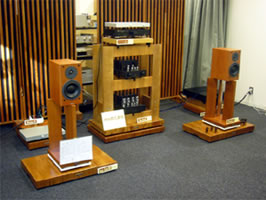
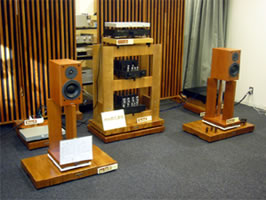
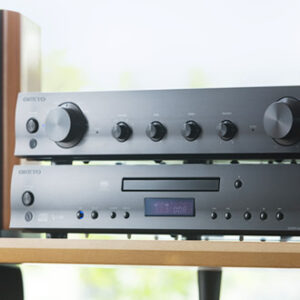
Now, to the listening session itself. Set up in the centre of a rather spacious listening room was the AH! (pronounced “Ah” or “A-ha”) Njoe Tjoeb 4000 — a valve CDP based on the Marantz entry-level player the CD4000 — together with PrimaLuna, AH!’s valve amplifier brand, in separate form: the ProLogue Three and Four as the main components, with Dynaudio‘s mid-class compact bookshelf speaker the Focus 140 handling the loudspeaking duties. All of this was positioned on Bach Kougeisha’s vertical rack Basic-Tower1 and speaker stand Basic-1, with a Basic-Stage floor board, and the company’s wooden Hi-Fi insulators T and Y beneath the components.
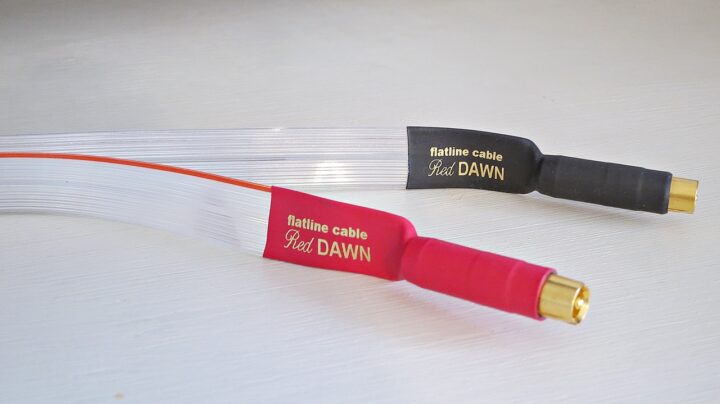
The interconnect cables were also new products from Bach Kougeisha — the FROU FROU, which uses a single-core conductor of silver alloyed with gold, insulated in silk. On the power side, a Purist Audio Design power cable (AC Dominus, perhaps?) ran from the wall outlet to a Kojo Technology DA7100 as the main distribution point, with Bach Kougeisha’s digital isolator power supply f-clef feeding the CDP and preamplifier. The power supply side of things was rather elaborate — perhaps a little high-end in feel — but the audio equipment itself was nothing extravagant, sitting firmly in the popular-to-mid-range bracket. In fact, it matched quite closely the class of equipment I use myself, and so I was genuinely curious as to what level of sound one could draw from such a system.


 ポチップ
ポチップ
I had brought along a piano recording I consider to be of exceptional quality (Perahia’s Chopin Nocturnes on DG), and asked them to play it first. The very first thing that struck me was the natural tonal character — a warmth of wood felt right at the fore. With the entire system dressed in Bach Kougeisha accessories from top to bottom, rather than hearing the sound of the Dynaudio Focus 140, or the sound of AH! and PrimaLuna in any clearly distinct sense, what came through — more than I had expected — was something very much like Bach Kougeisha’s own philosophy, a kind of sensibility towards tone colour that was quite dominant throughout.
 ポチップ
ポチップ
There was warmth of every kind, and not a trace of anything harsh. It was the polar opposite, in a sense, of a monitor-style accurate sound — a relaxed, mellow, gentle sound that enveloped you softly in its waves, one you could listen to for hours without ever feeling fatigued, a sound that simply soothes you with its kindness. If you paused and listened attentively, the soundstage had a considerable breadth and height to it — but somehow your ears were never drawn towards things like dynamic range, pinpoint imaging, or sheer information density. Instead, there was a natural gradation of touch, a kind of warm-blooded sound that seemed to dissolve away behind you.
To say your ears were not drawn to information density is not to say there was any shortage of it. AH! is certainly not a soft or vague-sounding brand, and given that the Dynaudio Focus 140 — a speaker with a well-established reputation for capability — was in the chain, a level of information retrieval comfortably above average was clearly being achieved. But rather than a Hi-Fi-ish quality — the kind of sense one gets from sharp outlines, resolution of direct sound, or a transparency of soundstage that speaks of a good signal-to-noise ratio — what prevailed was a grain-like texture of wood and a gradation of resonance that seemed to fill the acoustic space. The result was a pleasantness rather like the rustle of fabric: you simply had no interest in analysing the bass, or the treble, or the frequency response, or any other such characteristic. There was no room for that kind of pedestrian, head-first way of listening.
There was a consistent aesthetic sensibility to the tone colour, and I found it rather refreshing — so this is another way things can sound. The richness of resonance was considerable, and yet — and this is the thing — even within the same word “resonance,” what was on offer here was something rather different in direction from the kind of “cool reverberation” I tend to pursue myself: the sort that evokes the refinement and faint tension of a concert hall or church. This was more the feel of a home concert in a log cabin in the mountains with a fireplace — unassuming, warm, woody, natural, and dry in the best sense. More approachable, and more intimate.
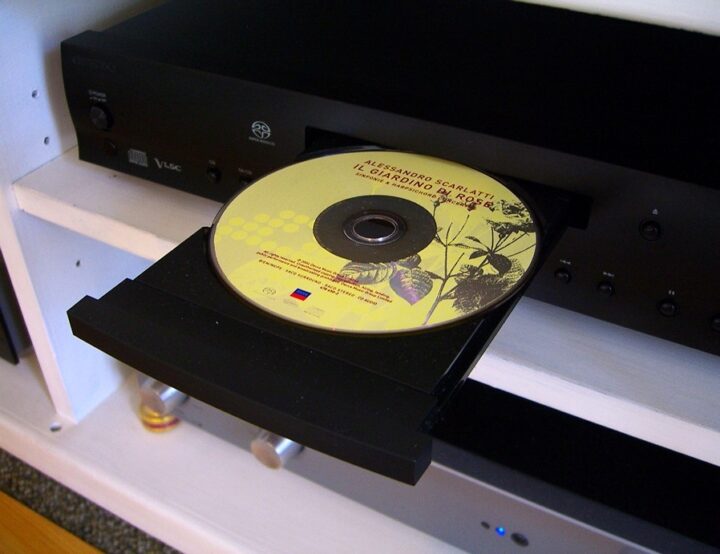
A CD that paired particularly well with the demo system and was musically very pleasing. Thoroughly soothing — and high quality sound to boot.

If there was something it was less comfortable with, it was a monitor-style cool resolution, or — to put it more bluntly — anything metallic in sound. There was virtually no sense of distortion whatsoever, and nothing harsh or metallic came through, which meant that for instruments — most of which combine wood and metal to produce their characteristic tone colour — the metallic component tended to recede while the wooden component was brought forward. As someone who plays the piano, I found myself thinking: well, the attack, the string vibration, the resonance of the frame — that side of the piano’s sound should be more… and in particular, the Fujiko Hemming La Campanella that was played during the demo momentarily made me wonder, who is this? — because I have heard her play live, and there were one or two moments where things simply did not add up. On the other hand, with cello and other string recordings, the nuance of the bowing was amplified almost beyond life-size and felt remarkably vivid — so it seemed clear that depending on the recording and the instrument, there could be a tendency for tone colour to become somewhat absorbed into the instrument, and the impression was that source material compatibility would likely be quite significant, for better or worse.
 ポチップ
ポチップ
As a comparison: Rosenkranz — another Japanese accessories manufacturer — produces a sound where the smoothness and flow of clean, undistorted metal is what comes to the fore, a sound where brass can feel more vivid than the real thing and pianos ring out with a strangely metallic quality. Bach Kougeisha’s sound sits at the opposite end of that spectrum. Both may be described as an artistically beautiful, musical sound — but in terms of the textural quality of the resonance, they appear to be polar opposites. Both are appealing in their own way, though personally I find myself wanting something in between, a balance of the two.
That said — and yes, when it comes to classical music I do tend to nitpick in ways I perhaps shouldn’t — there were moments where the sound was subtly different from what is ingrained in my body or from the live sound I carry in my imagination. (Then again, my standards are high, and I have never actually heard an audio system where I didn’t feel some gap between expectation and reality.) But for jazz-oriented material — where the point is to enjoy the energy and atmosphere of the sound without worrying about fine detail — the overall impression was largely very positive: a relaxed warmth to the resonance, and a lively, engaging delivery.
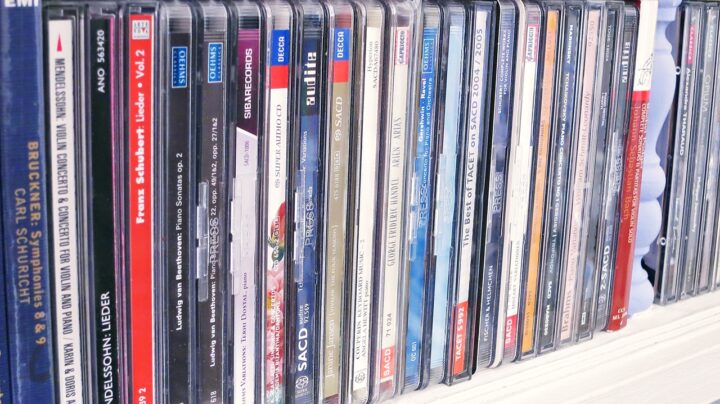
Another high-quality, realistic-sounding recording — a disc that brought out the particular strengths of the Bach Kougeisha products especially well.
 ポチップ
ポチップ
At a listening event like this, with every accessory in the chain from Bach Kougeisha, the character tends to pull decisively in one direction — which does make things easy to read — and yet this very mellowness and ease of listening is something that might, I suspect, divide opinion depending on the listener. That said, if you think about this in the context of an ordinary domestic Hi-Fi setup — say, a speaker that is spec-driven, cold, and sterile in sound; a system where the high frequencies are harsh and distortion is noticeable; or a domestic Japanese component lacking in musical expressiveness — then introducing Bach Kougeisha accessories at the right points, in appropriate balance, should go a fair way towards achieving a warmer, more natural, more human-sounding result. For anyone who has grown weary of the unnatural sound of Hi-Fi equipment, or who is looking to music for a sense of solace, I think the company’s honest and unfussy range of accessories has something genuinely valuable to offer.
As for AH!’s NT4000 and the PrimaLuna themselves — I still couldn’t quite get a clear read on where AH!’s own character began and ended, and I came away with no firm sense of whether they were good or not. The overall sound did feel somewhat jazz-oriented, which left a slight nagging worry: could it be that these are simply better suited to jazz than to classical? I couldn’t be sure. That said, they did seem to lend the system a good degree of moisture in the way you might expect from a valve design — and it struck me that the Dynaudio speakers and Bach Kougeisha accessories, for all their appeal, might in the wrong setup tip towards a somewhat dry impression, and that AH! and PrimaLuna were perhaps guarding against that, giving the whole system a suitably moist quality. In any case, it has been arranged that I can borrow the CDP and the ProLogue One from Bach Kougei at a later date, so I plan to listen carefully at home, in every detail, before deciding whether or not to buy. Do look forward to the report.
PrimaLuna ProLogue One Listening Report
My sincere thanks to Bach Kougeisha, Dynaudio Japan, and Audio Lab Ogawa (a sister company of Bach Kougeisha) — who sent me the invitation DM — for the wonderful opportunity to attend this listening event.
【Prima Luna ProLogue One Listening Report】
AH! Njoe Tjoeb 4000|Listening Event|Part One|Part Two
Auto Translated by CS4.6
List of comments (5)
お久しぶりです!
Ah!のNjoe Tjoeb 4000とPrima Lunaが試聴できたとのこと、
良かったですね! 慣れないスピーカーやアクセサリに囲
まれているとプレイヤーやアンプの素性はわからないもの
です。僕も結局Prima Lunaのアンプ類はまだ聴けてません**。
Njoe Tjoeb 4000ですが、中低域に力がみなぎる反面、
高域は少ーしロールオフしている感があり、全体的に
スピード感というかテンポ感がゆったりしたますので、
そういう意味ではクラシックよりジャズ向きなのかも?
愛器なので「クラシックもバッチリ」と言いたいの
ですが^^。
ご自宅でゆっくり試聴できるとのこと、ますます
良かったですね! ご感想を楽しみにしています♪
jazzaudiofanさんお久しぶりですー(*^-^*)。
AH!試聴云々の詳細につきましては、
メールを差し上げようかと思っていたのですが、
レスいただいたのでこちらで。
直感的にですが、Njoe Tjoeb 4000には非常に良い印象を持ちました。
私の場合、オーディオを決めるとき、購入後好きになれるかどうかを、
見た目の第一印象から直感的に第六感で先回りして感じてしまう方なのですが(デムパ)
NT4000はおおっ!て思いました。元のCD4000とは何かオーラが違います…。
実はネット上の画像や機種インプレ等の事前イメージから、
購入優先順位はPrima Lunaのプロローグ>>>NT4000だったのですが、
実物を拝見して一瞬で逆に気が変わりました。
あと、ProLogue OneかProLogue Twoどちらが私に合うか?についてもですが、
なんとなく、1の方ではないかという気が…。ども、
2(現物は4ですが)の見た目はゴツ過ぎて感覚的な違和感を覚えました。
ちなみに、バック工芸社さんの話では、クラシックに合う
ニュアンス表現はプロローグ1の方が2より良いそうです。
Ah! NT4000、僕は見た目は地味だと思ってますが、
第一印象が良かったですか。それは嬉しいです。
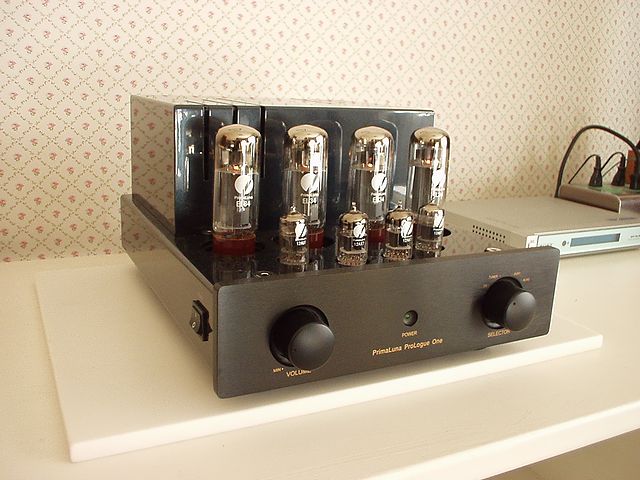
プロローグ1と2の主な違いは、出力管がEL34かKT88か
ですから、その違いがモロに出るでしょうね。
EL34は暖かくまろやかで繊細、KT88は力強くメリハリ
がある、というのが一般的な特徴ですから、
おっしゃるとおりクラシック主体ですと
プロローグ1の方がいいかもしれませんね。
見た目も、KT88のずんぐりむっくりしたボディより、
EL34はすっきり細身でスマートな印象を与えますね(笑)。
お久しぶりです。
興味深く読ませてただきました。
これからのインプレに興味津々です。
和泉さんおひさです~♪
プロローグ1とNT4000ですが、12月前半に試聴機が届きますので
インプレはそれ以降になります。ご期待下さいませd(^_-)。
>ずんぐりむっくり
プロローグは幅が狭くシンプルなデザインなせいか、
デザイン的にKT88では少し窮屈かな?と思いました。
ただ、ジャズ等でメリハリを求める場合や、
スピーカーが大型になる場合はこちらでしょうね。
出力が違いますので、どちらが本当に合うかは、
実際それぞれのスピーカーと組み合わせてみないと
本当はなんとも言えないですけど。