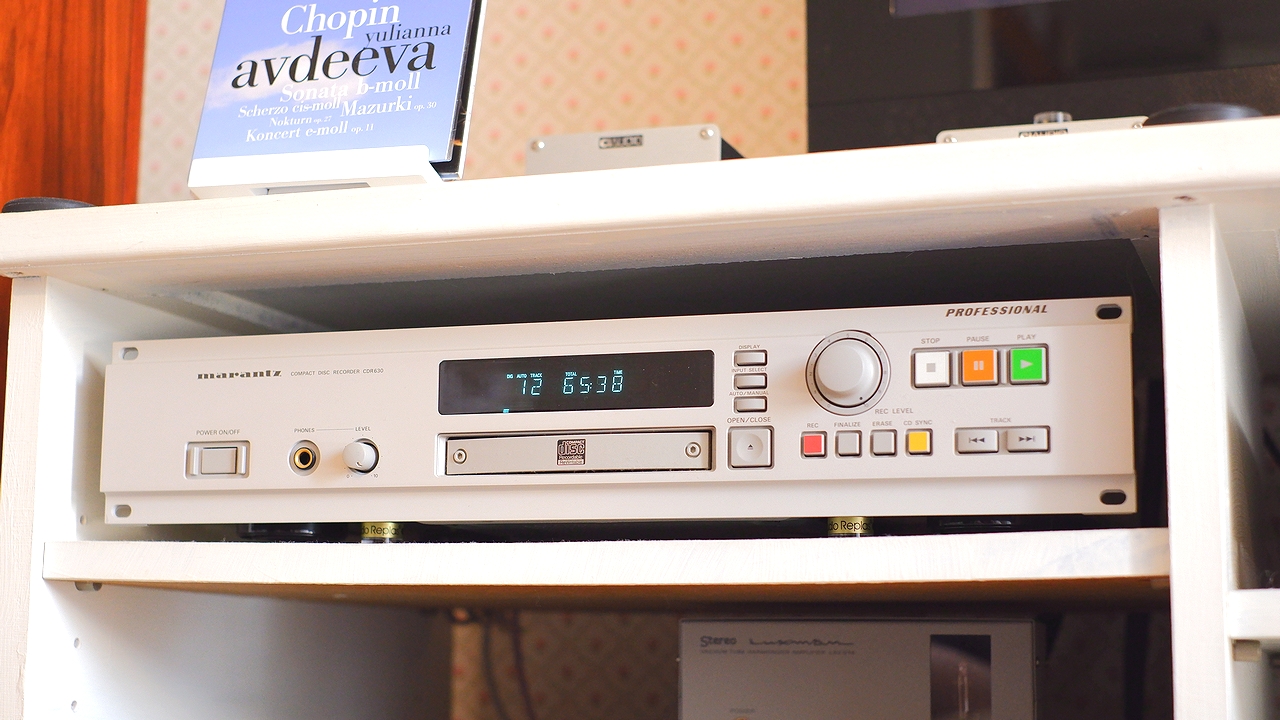
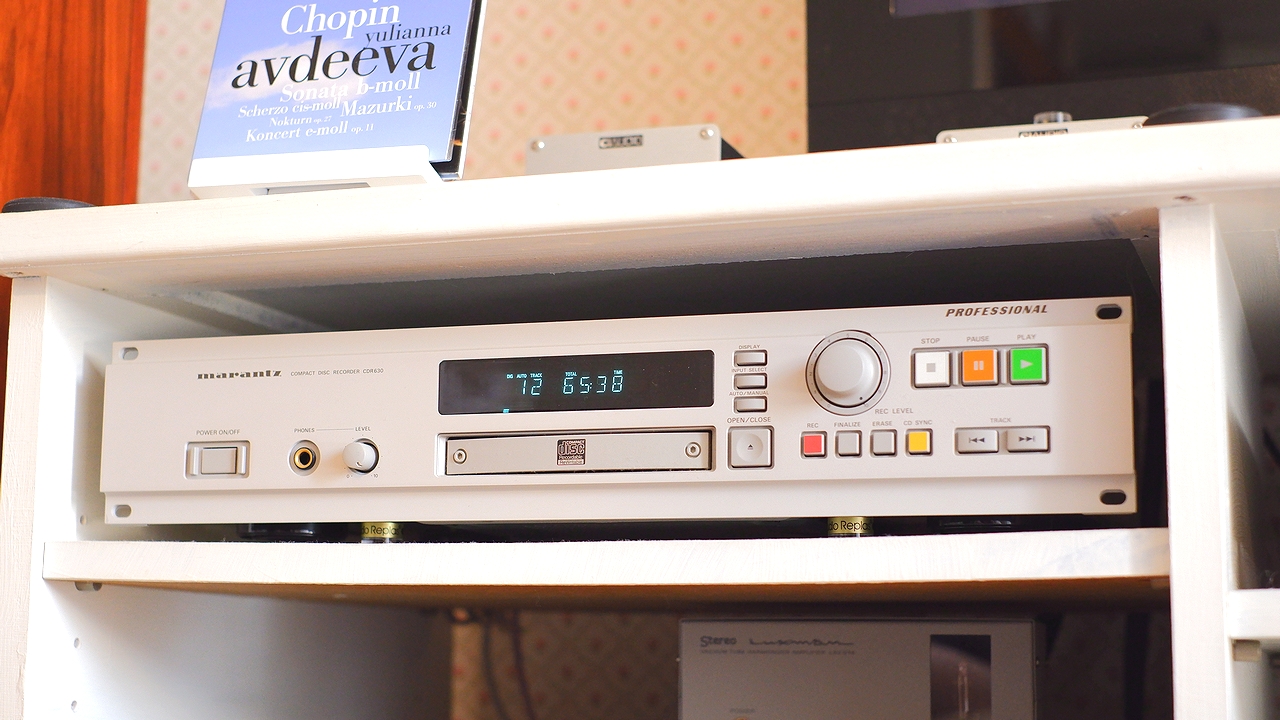
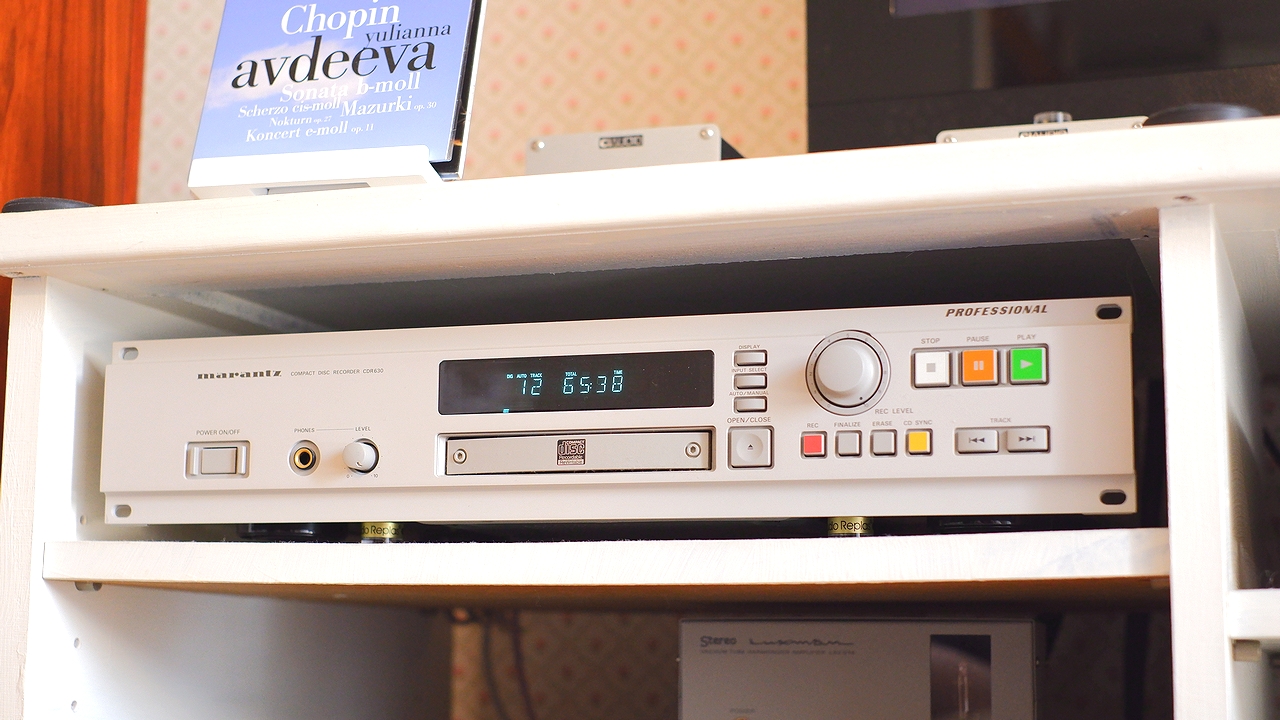
MARANTZ CDR630. Purchased in 1999, it has occupied the upper-left position in the main system’s Hi-Fi rack without moving for 22 years now. I actually replaced it with an identical unit once along the way, so this is technically the second one. As the name suggests, it is now very much an antique — a standalone recorder designed for CD-R, which can also handle CD-RW rewritable, that is, write and erase. The word “recorder” tends to make people today think of a recording-only machine, but this is also a perfectly respectable CD player for playback. So, a review at this late stage — though I wonder whether there’s any demand for it.
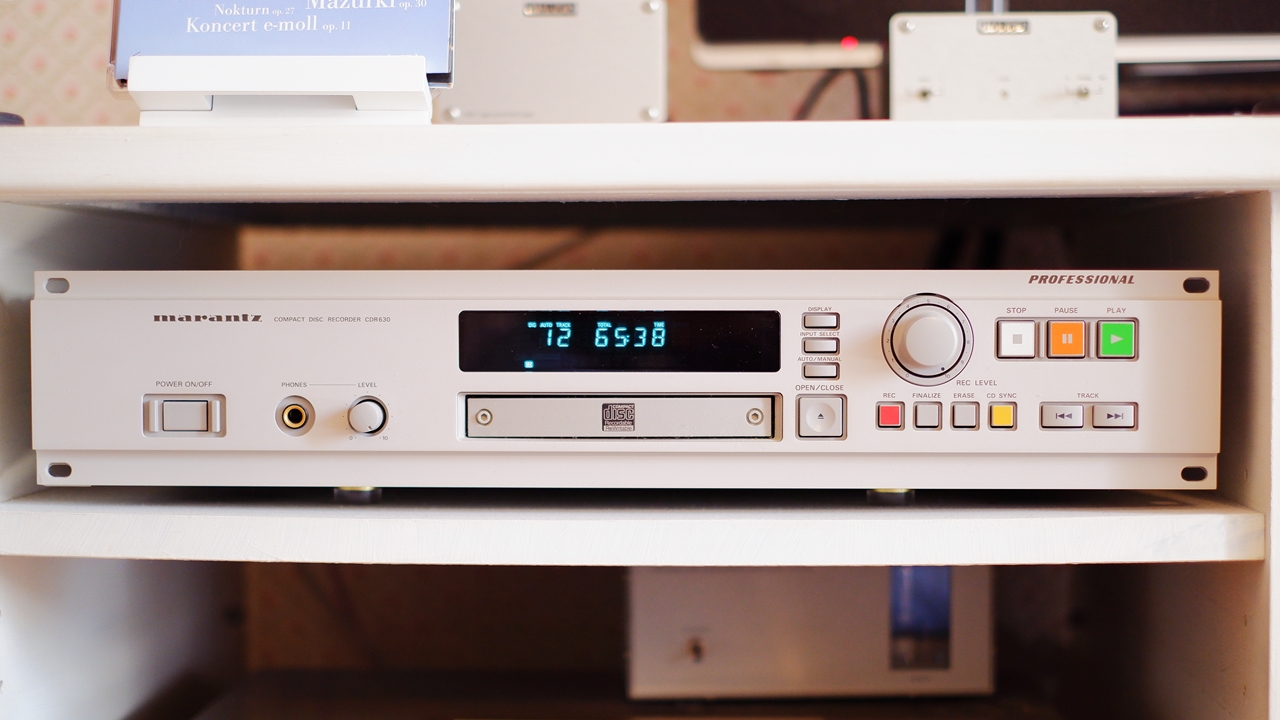
Compared to the primary CD player (also an antique, the CEC TL5100Z), the MARANTZ CDR630 sees less than one-tenth the use, yet the sound produced by the combination of the die-cast mechanism — fitted exclusively to PHILIPS/MARANTZ CD recorders of that era — and the PHILIPS bitstream D/A converter is something I regard as a genuinely special piece, firmly occupying the last position in the lineage of the “old PHILIPS-heritage CD players” whose character is irreplaceable today.
The Significance of CD-R Media and High-Quality Recording
In the late 1990s, when MD players and DCC tape decks using compressed digital audio were the mainstream in consumer digital recording, what made the MARANTZ CDR630 so groundbreaking was that it was a CD recorder capable of uncompressed PCM digital recording — in other words, lossless copying — to CD-R discs. Professional DAT was also an option at the time, but DAT shared the same drawbacks as cassette decks: tape and tape head degradation, and poor track access. CD-R was marketed as something that could be handled almost exactly like a standard 12cm CD-DA disc and played back on virtually any CD player, so to my eyes at the time, CD-R seemed far more appealing. In terms of actual audio quality, DAT was in fact considerably superior, though…
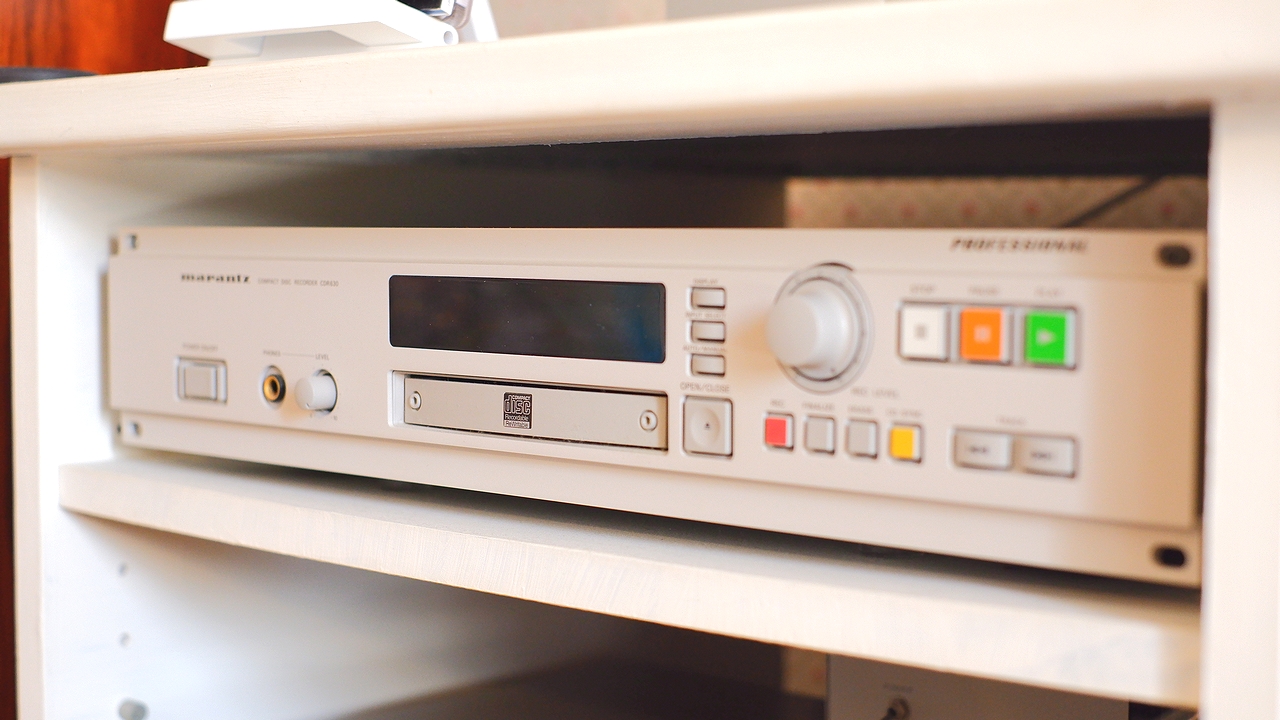
Around that time, a subset of PC enthusiasts had already begun ripping CDs using PC drives, and before long, high-quality drives from Plextor and TEAC started attracting attention. It was the period when enthusiasts began arguing heatedly about things like how, to produce a high-quality CD-R, one should avoid high-speed dubbing with its high jitter and instead copy at single speed (1×). ※ At the time, CD-R media supported a maximum of 4 to 8× speed. With hard drives of around 10 GB in those days, mass-ripping CDs and storing them on a PC was not really a practical proposition. I remember all sorts of enjoyable technical debates: that dubbing to CD-R made it sound degraded compared to the original, that further generations of copying muddied the sound, why did binary-identical copies sound different? — that sort of thing.
All of that noise is now utterly unimaginable, now that storage media capacity has grown so large and high-quality PC ripping using tools like “EAC” Exact Audio Copy has become so straightforward. But in that era, there was a view that a dedicated professional music CD-R recorder could dub CDs more conveniently than a PC drive and with better perceived audio quality — and that is what led me to jump at the MARANTZ CDR630.
Sister Models: PHILIPS CDR880S, MARANTZ DR700, CDR640, and SCMS
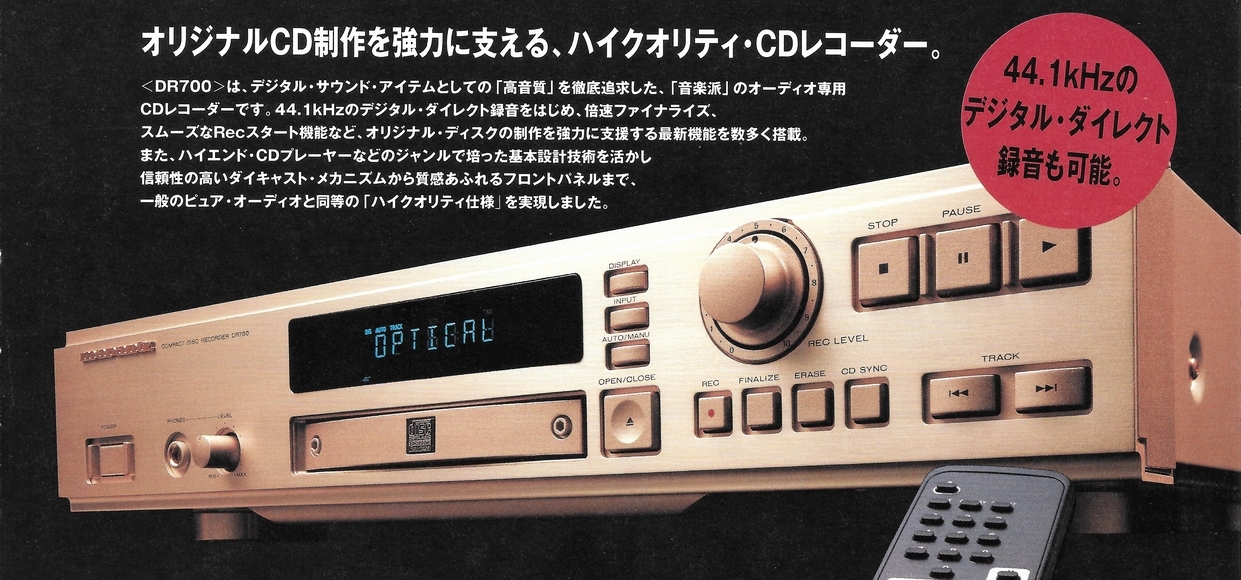
There are in fact two consumer CD recorders that share essentially the same internals as the CDR630: the PHILIPS CDR880S and the MARANTZ DR700. The PHILIPS CDR880S and MARANTZ DR700 incorporate SCMS (Serial Copy Management System) — the same as consumer DAT — which prevents generational copying of CDs (※ only a single copy is permitted). The MARANTZ CDR630, however, being a professional recorder, is not fitted with SCMS. The key point was that it could produce CD-Rs that could be copied any number of times. This is a Rip Van Winkle kind of story now that PCs can do the same thing, but at the time, the quality of CD-R burning on PCs was not widely trusted. Incidentally, all of these PHILIPS/MARANTZ CD recorders were manufactured at the PHILIPS Belgium factory in the Netherlands.
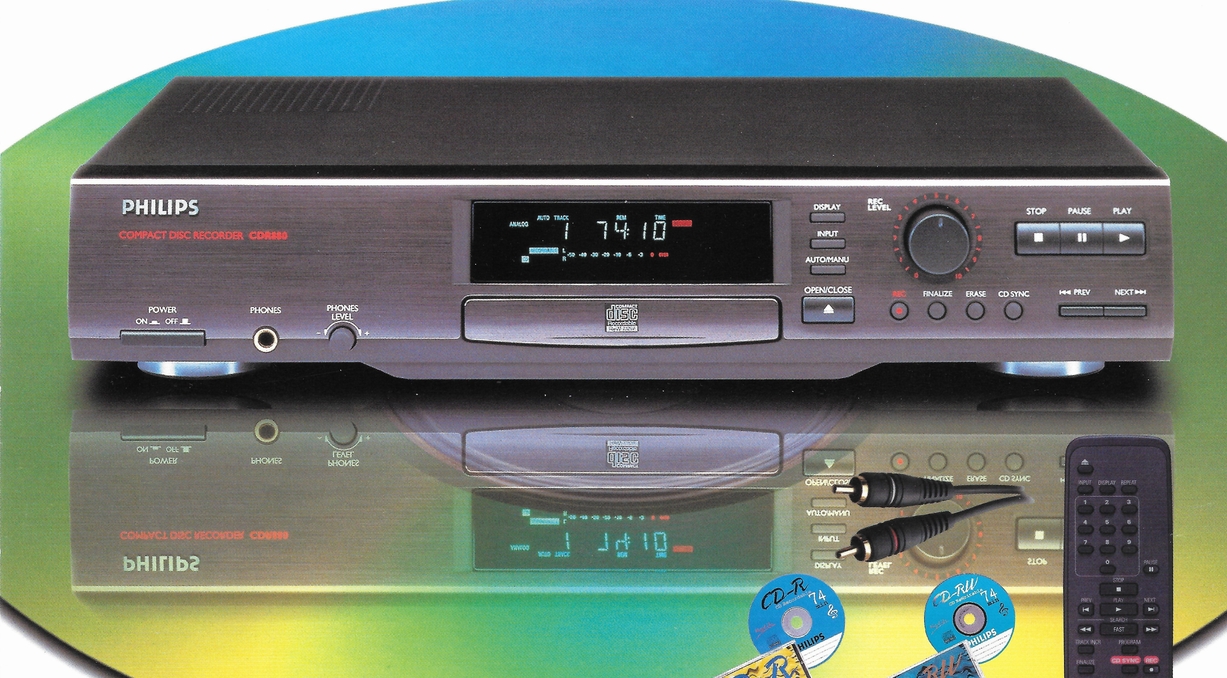
The PHILIPS CDR880S, MARANTZ DR700, and CDR630 are fundamentally the same machine, but according to someone at MARANTZ whom I spoke to directly at the time, the voicing was adjusted for each to suit its respective brand image and purpose: a MARANTZ sound, a PHILIPS sound, and a professionally neutral sound with no added colouration. Even in a model like this, the distinction between the “brilliantly bright-toned MARANTZ” and the “velvety, warm, and richly textured PHILIPS sound” — which were the respective brand characters shared within the same Marantz Japan organisation — was apparently maintained to a reasonable degree.
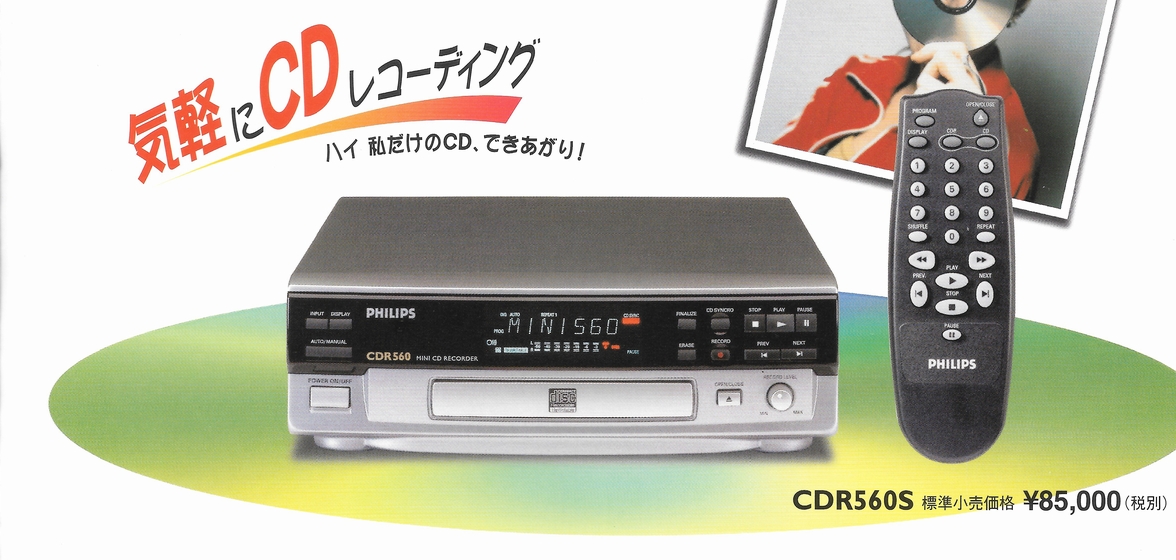
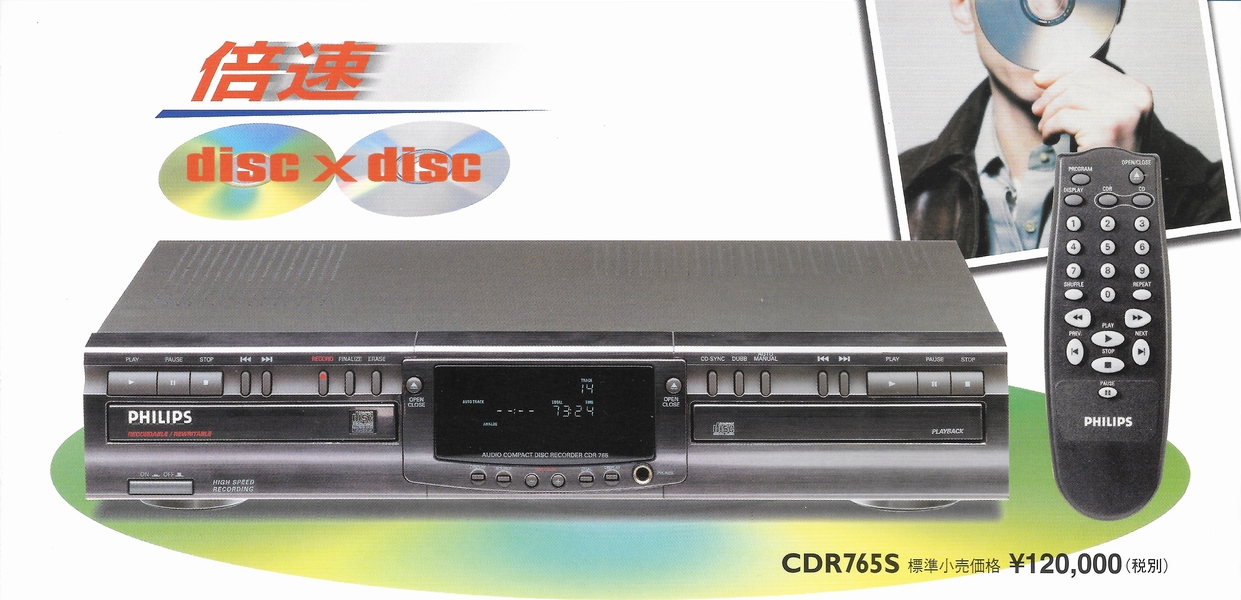
There was also the PHILIPS CDR560, a half-size model based on the CDR880S with a smaller footprint, and the PHILIPS CDR765S — a dual-deck player with a CD recorder on one side and a CD player (CDM12.4 mechanism) on the other, designed for 1:1-speed dubbing. The CDR765S shares the same key chips and recording-side drive mechanism as the CDR630, so it might well represent decent value in its own right.
As a professional unit, the CDR630’s sound quality tends to be understated with little added colouration, quite unlike the sonic image associated with consumer MARANTZ CD players. And then there is the design. All three models share exactly the same basic design, but the matte white chassis — which can also be rack-mounted — shows absolutely no sign of becoming visually tiresome even after 20 years. There is none of the cheapness typical of budget machines; it has an elegance about it that belies its professional origins, and I think it is a genuinely beautiful-looking player. Also, because the CDR630 alone uses a structure where the chassis is sandwiched by steel panels for rack mounting, it is slightly heavier than the consumer models and has a higher degree of chassis rigidity.
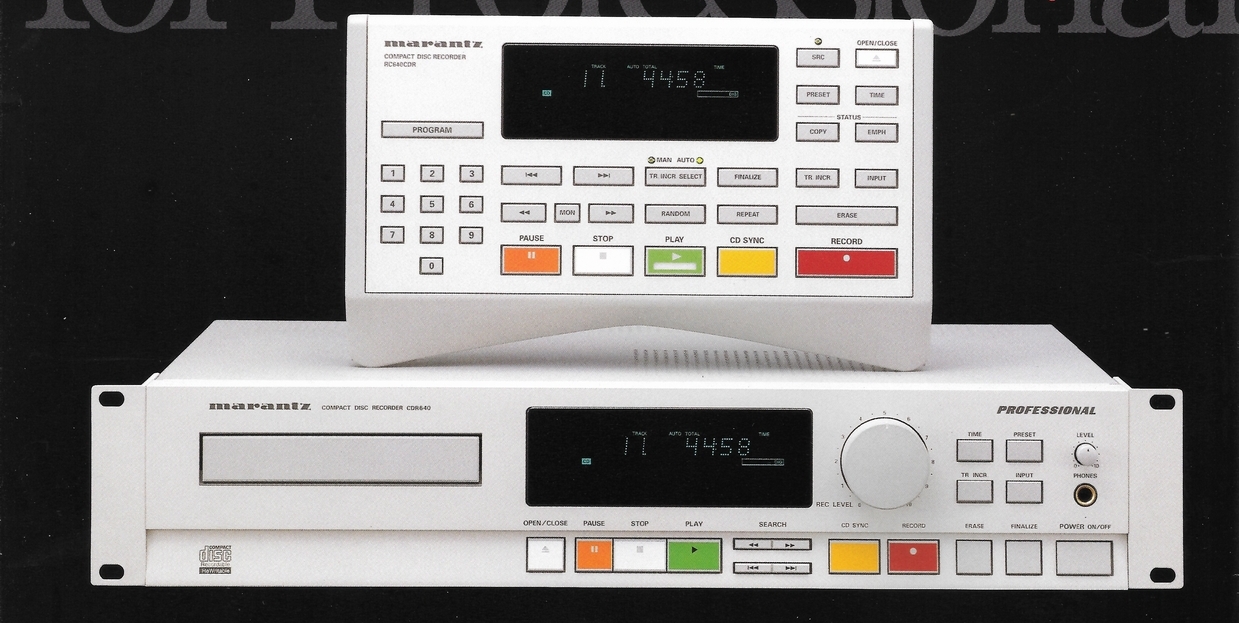
Because the CDR630 is a professional unit with SCMS bypassed, its list price was ¥165,000 (actual retail at the time was around ¥120,000–¥130,000), making it more expensive than the consumer PHILIPS CDR880S/MARANTZ DR700, which listed at ¥130,000 (street price under ¥100,000). Moreover, CD players at the time were on average far cheaper and more generously specified than today, so in terms of its circuit implementation, the CDR630 was really only equivalent to something priced at around ¥50,000–¥80,000 as a playback-only player. Relatively speaking, it was hard to call it good value as a CD player, but for me it was purely a secondary machine, and the appeal of being able to freely burn SCMS-free CD-Rs at home was something I simply couldn’t give up. There was a higher-end model above it — the MARANTZ CDR640 (¥250,000), a reference model for recording studios fitted with a more serious high-quality circuit — but it was beyond my reach, so I settled for its younger sibling the CDR630 as a compromise.
MARANTZ CDR630 — Sound Quality Review
The CDR630’s sound quality as a CD player is plain. There is none of the flashiness or bass-heavy/treble-bright tendencies that consumer products, particularly Japanese ones, tend to add; instead it is a conservative, neutral CD player with a matte, slightly crisp midrange-to-upper-midrange character, conveying the inherent quality of the source material in a straight, uncoloured, and unemphatic way. The CDR630 has neither the showy brightness of MARANTZ nor the rich velvety texture of PHILIPS, and anyone who knows only the consumer versions of those two brands may find this a little too understated. If pressed to say which it leans towards, it is something like the tonal balance common to slim, budget Marantz models from the 1990s, with the flamboyance stripped out.
The tonal warmth is ever so slightly warm. Both frequency range and dynamic range are narrow, and there is a relative lack of reverberation and note density. The midrange to upper-midrange comes forward just a touch, while bass weight is on the lean side. The treble is noticeably understated. Soundstage size and depth are ordinary, as one would expect from a budget machine. If there is one area that stands out, it is a sense of latent energy and textural grain in the notes that I feel is characteristic of the die-cast drive mechanism — more on that below. Overall, this is not a player that sounds like a typical Japanese product, nor does it come anywhere near today’s clear, three-dimensional hi-res sound. It sits squarely within the 1990s European tonal tradition — a CD recorder/player whose character, one might say, is an analogue-like quality with little of the harsh digital edge.

 ポチップ
ポチップ
While the sound keeps firmly to the background in tonal terms, it is not the type that makes music feel dull, and it clearly inherits — beneath its restrained presentation — the distinctively rhythmic and musically expressive nuance one expects from a PHILIPS bitstream DAC. It is something of a quiet unassuming type that, unlike the consumer PHILIPS and MARANTZ machines, does not exaggerate its eroticism in an immediately obvious way — but look more closely and…!
MARANTZ CDR630 — Interior
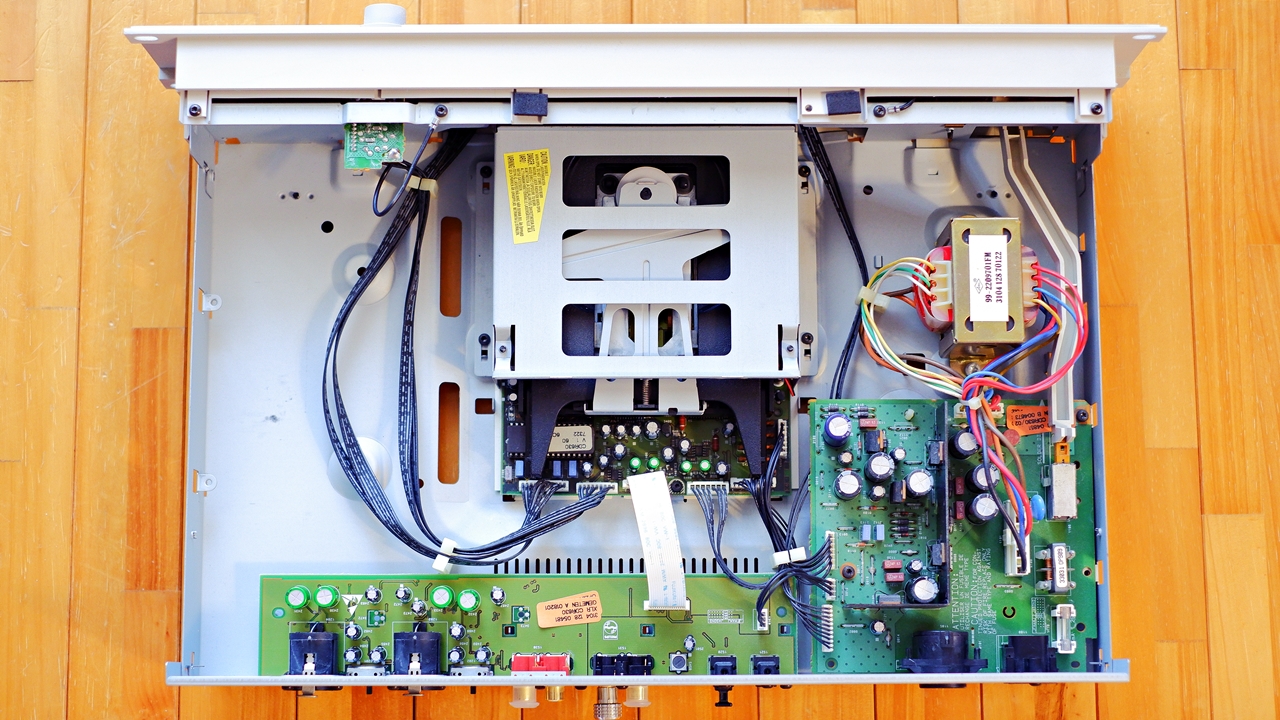
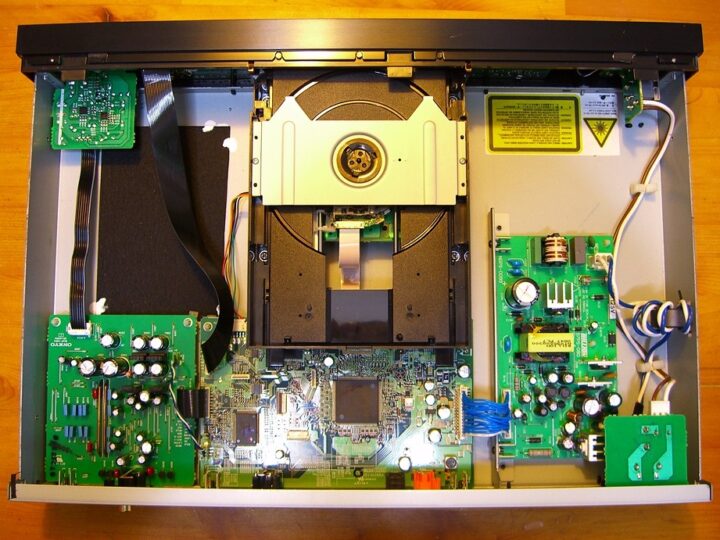
To access the interior, you use a T10 Torx wrench — very much in keeping with the European product tradition. It is impressively sparse inside, but this kind of simple, straight-to-the-point no-compromise approach was common to European CD players of the era. The all-important digital board is underneath the drive mechanism, so the full layout cannot be seen. On the right is the power supply board; the fuse is a T315mA (SB). Switching between 100V and 200V is possible from the rear panel.
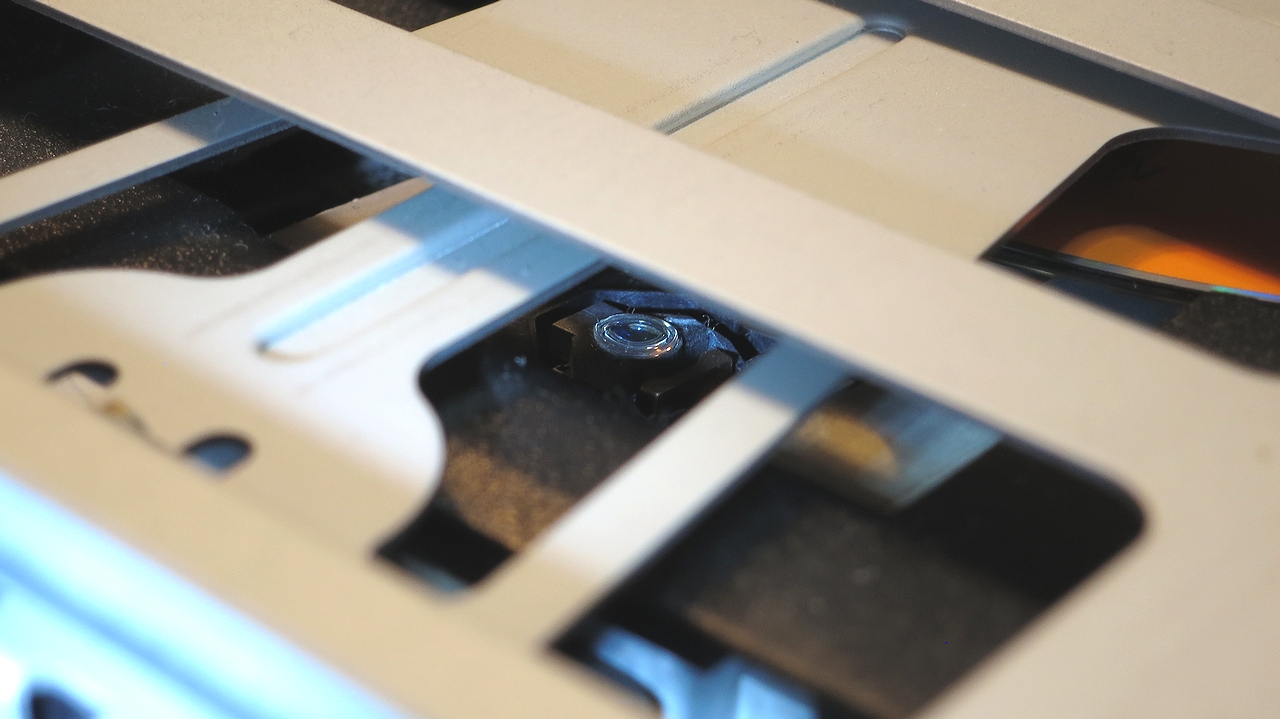
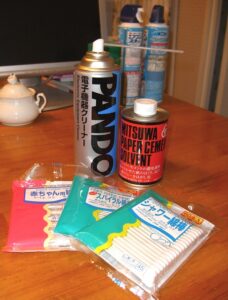
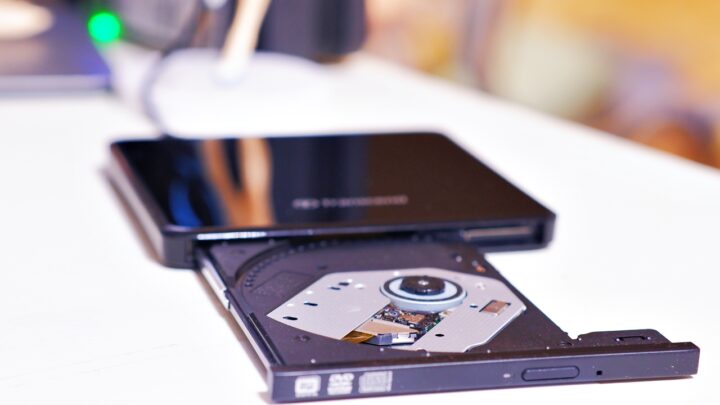
The cover makes it difficult to see, but if you power the unit on and leave the tray extended, the pickup becomes visible. It was rather dusty, so I cleaned it with a cotton swab and a pickup lens cleaner.
Die-Cast CD Drive Mechanism and Bitstream D/A Converter
The DAC chip fitted is the PHILIPS TDA1305T, which was widely used in budget-to-mid-range European players and DACs of the era. The digital input and SRC is the TDA1373H, and the ADC is the SAA7366. The circuit is extremely simple, and it does not offer the richly dense sound available from machines fitted with the DAC7 (TDA1547) used in many higher-end models — so in that respect, the DAC sound quality is entirely in keeping with the entry-level class (equivalent to around ¥50,000–¥80,000 at the time). The musicality itself is high, and the audio quality is by no means poor, but it remains at an entry-level standard, and setting aside the flavour and textural appeal of the PHILIPS bitstream sound, there is nothing about the DAC section that stands out as sonically exceptional.
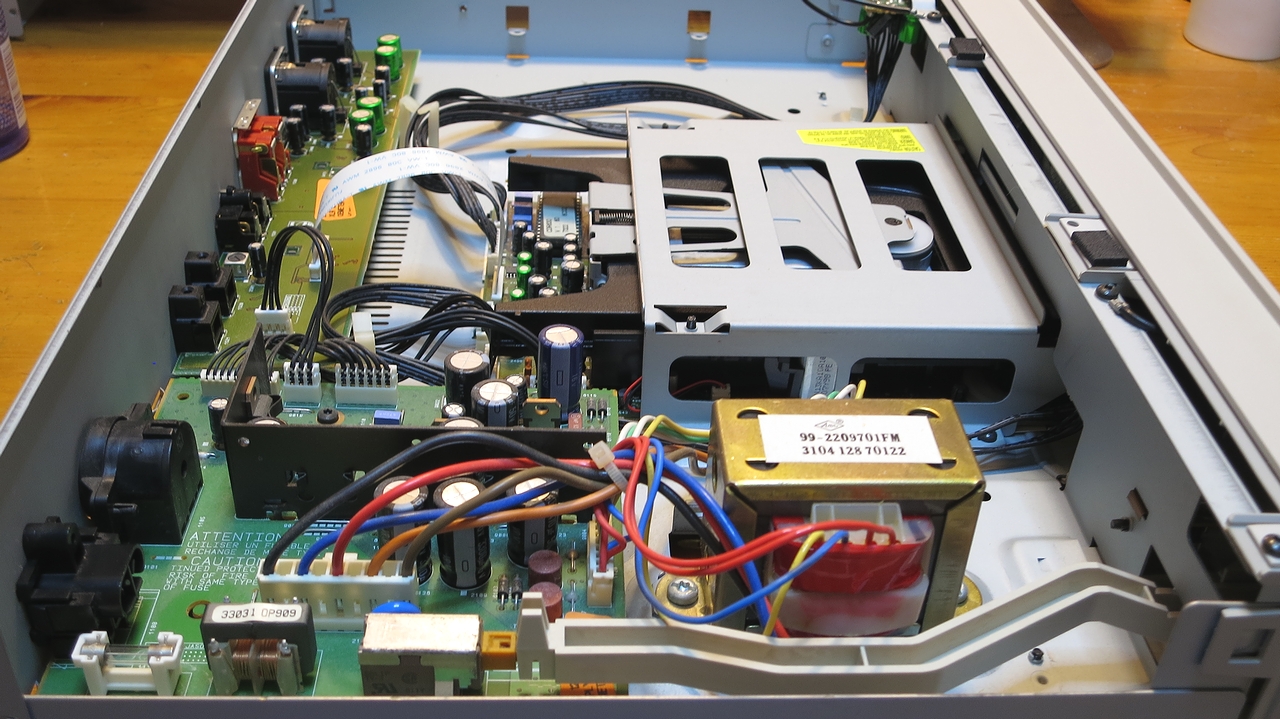
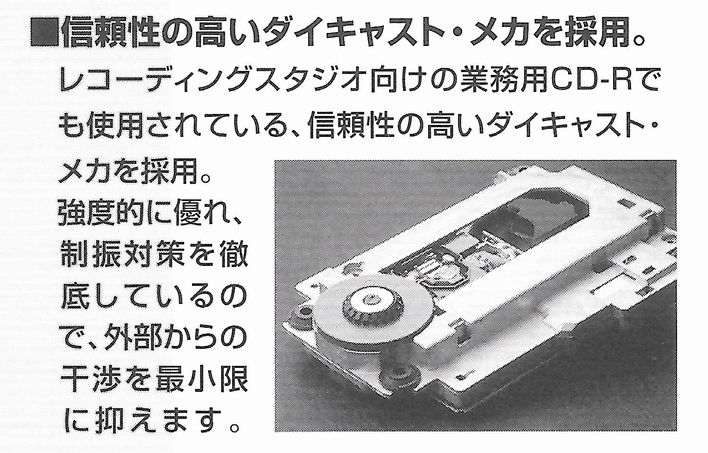
The drive mechanism is the CDM36 (CDL3610/01), a die-cast mechanism developed for CD-R recording based on the PHILIPS CDM-12/VAM-12 series. While it departs from the swing-arm die-cast mechanisms of earlier generations in favour of linear tracking, as the last die-cast mechanism made by PHILIPS it offers a distinctively lively, living quality of energy, along with the slightly coarser granular texture common to all die-cast mechanisms — qualities unattainable from the standard plastic CDM-12/VAM-12. It does not have quite the density and raw heat of the CDM4 or CDM9 swing-arm mechanisms, but I feel its character lies in a well-balanced combination of liveliness and composure.
Now that machines with a decent optical drive have become so scarce — and when they do exist, tend to command quite a price — the CDM36 (CDL3610/01) die-cast drive mechanism alone is, as one might say, worth three bowls of rice as a CD transport; its value of ¥165,000 back then feels more justified today than it did at the time. ※ Setting aside the analogue and digital circuitry, I think that even in its day, models priced under ¥100,000 as playback-only CD players with a drive mechanism of this calibre were rare — at least after the PHILIPS CDM9 had been discontinued.
Incidentally, when considering the CDM36 (CDL3610/01) purely as a die-cast transport, if CPRM compatibility is not a concern, I think the MARANTZ DR-17 — which came out the following year with a DAC7 fitted in the consumer range — is the strongest option in terms of the combination of drive mechanism and chassis quality. ※ That is to say, the distinctively thick, warm, brilliantly bright, and gloriously flamboyant MARANTZ sound of the era. If the drive mechanism is good, you can always use it as a transport and upgrade to any level you like with an external DAC. These CDM36 (CDL3610/01) linear-tracking die-cast mechanism machines were overshadowed by their reputation as CD-R recorders, and their hidden capabilities as standalone transports were largely overlooked — a real shame, in my view.
CD-R Recording Quality
In fact, I have not used it as a CD-R recorder for over ten years now. Everything can be done on a PC these days; real-time copying takes time; 1× recording speed-rated high-quality CD-R media became difficult to source a very long time ago; high-speed CD-R media rated for 24× and the like have, as a trade-off, higher jitter at low speeds and are not well suited as media for 1× dubbing; I no longer have the habit of recording FM radio off-air — for all of these reasons, its use as a recorder has all but vanished.

 ポチップ
ポチップ
As for the CD-R burning quality of the time — since dubbing could be done as a binary-identical copy without any noisy PC equipment in the environment, the resulting CD-R media was, I believe, quite good in terms of jitter and bit-writing accuracy. Furthermore, for whatever reason, the sonic character of the source CD transport and the digital cable comes through quite strongly in the burn, so it was possible to produce CD-Rs with all manner of different sonic tendencies depending on the quality of the source transport.

That said, this is ultimately a discussion about CD-R media, and no matter how far you push it, the fact remains that it cannot compete with the sound quality of an original aluminium (or gold) pressed CD-DA disc. CD-R media tends to have a somewhat murky, woolly quality to its sound; however good the burn quality, and regardless of how much that affects the degree of the problem, it simply does not reach the level of a CD-DA. Because the reflectivity is lower than a standard CD, older CD players that predate CD-R compatibility — such as some Nakamichi car stereos in my collection — are prone to skipping that cannot be avoided, which was also, quietly, a problem that CD-R never really solved. Still, compared to CD-Rs carelessly burned at high speed on a PC with their washed-out, blurry sound, being able to burn with maximum S/N and minimal smear was a genuine advantage.
Getting the Most from the CDR630 — Hi-Fi Insulators
It has good bones, but being a professional unit, the overall impression of the sound is unavoidably “understated” as it stands. That understated quality means it does not impose any odd colouration on the musical expression captured in the recording, which is a genuine advantage — yet when placed alongside the other equipment in the Hi-Fi rack, the urge to seek out that little something extra is, I suppose, the occupational hazard of being a Hi-Fi enthusiast… So I, as the author of this little Hi-Fi blog, have done what I always do: swapped the Hi-Fi insulators, RCA cables, and mains lead to add a degree of character, bringing the CDR630 into an overall system balance that works.
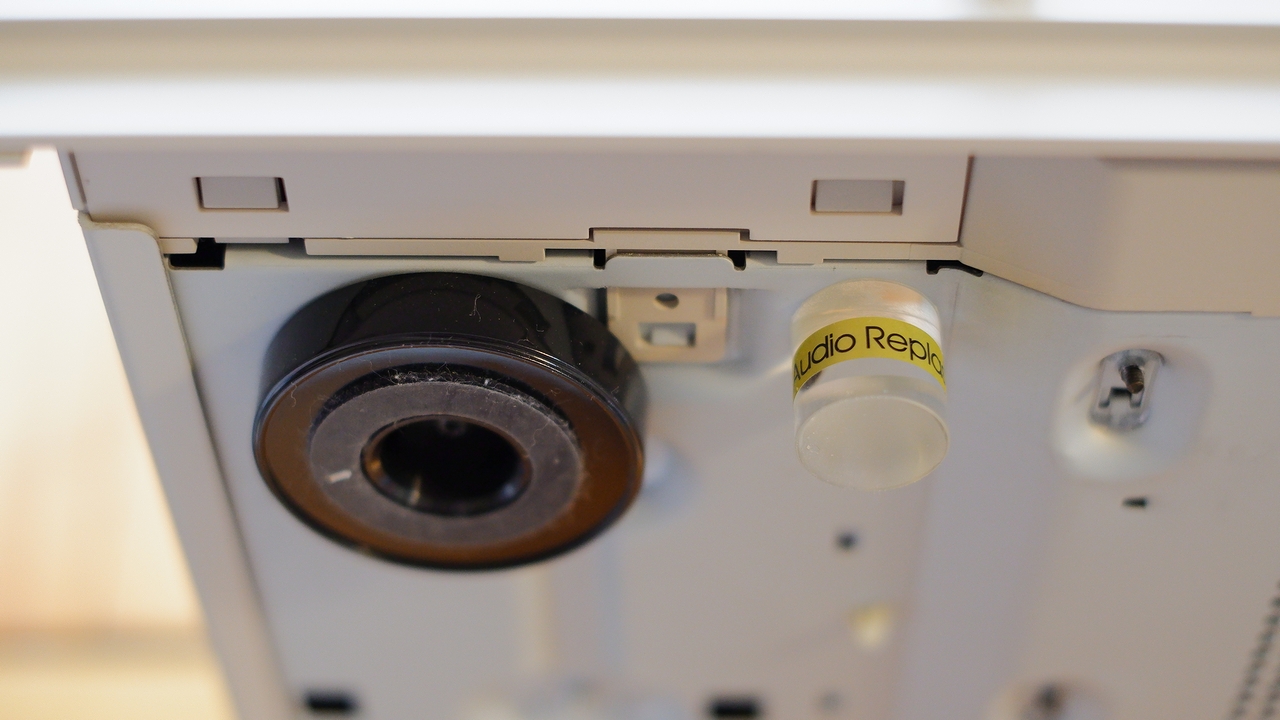
The first thing I did — and this was already back in 1999 — was fitting insulators. The unit originally came with the usual round plastic feet with non-slip pads, and I left those in place rather than removing them, then added four-point support using Audio Replas OPT-1 insulators made from synthetic quartz (fused silica), positioned at the centre-front directly under the drive mechanism, at the left and right of the tray, and at two points towards the rear. ※ The second unit has OPT-1HR fitted instead. In my personal experience, Audio Replas quartz insulators produce a particularly striking effect on digital players, and I have them in several other positions in the system as well — though I do sometimes wonder, with a somewhat fanciful notion, whether they might be resonating sympathetically with the quartz crystal oscillator inside…
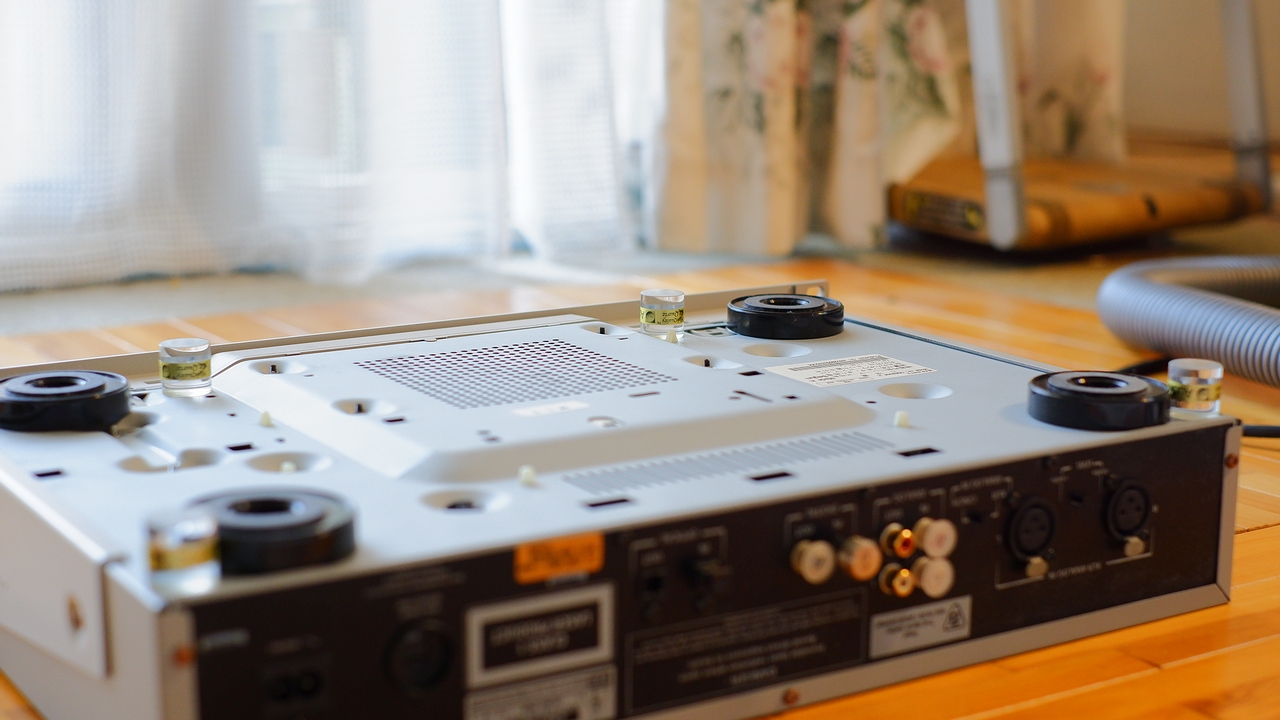
The CDR630 has a somewhat matte, crisp, and dry quality to its sound — possibly due to the finish of its chassis paintwork — ※ the front panel area and chassis finish differ from the consumer MARANTZ DR700 and PHILIPS CDR880S — and in the sense of adding an appropriate degree of transparency and resonance, the Audio Replas OPT-1HR has become an indispensable part of the setup here. It lowers the tonal temperature slightly and adds a refined, clean, and somewhat luxurious quality to the sound.
 ポチップ
ポチップ
I use an “0.15mm ultra-thin” acrylic double-sided tape for attachment, though even this changes the sound depending on the backing material — non-woven fabric, plastic, and so on — so it may well be worth experimenting. A removable type is the safe choice, but if it seems unlikely to come off cleanly after years of use, dental floss will do the trick.
 ポチップ
ポチップ
Getting the Most from the CDR630 — Interconnect Cables
The second is the RCA cable. The right match will differ depending on the amplifier and the overall system it is paired with, but I think something that adds lustre, brightness, and resonance suits it well. What I have in at the moment is the Stereovox HDSE, though that is purely by process of elimination from what was left over after the better cables had all been allocated to other components — I do not think the HDSE is necessarily the best option here.
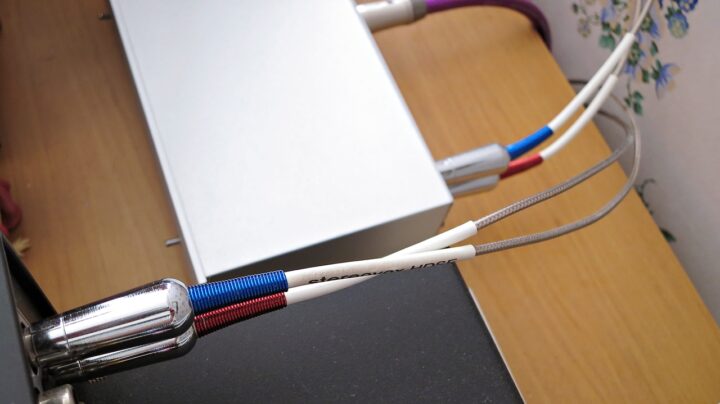
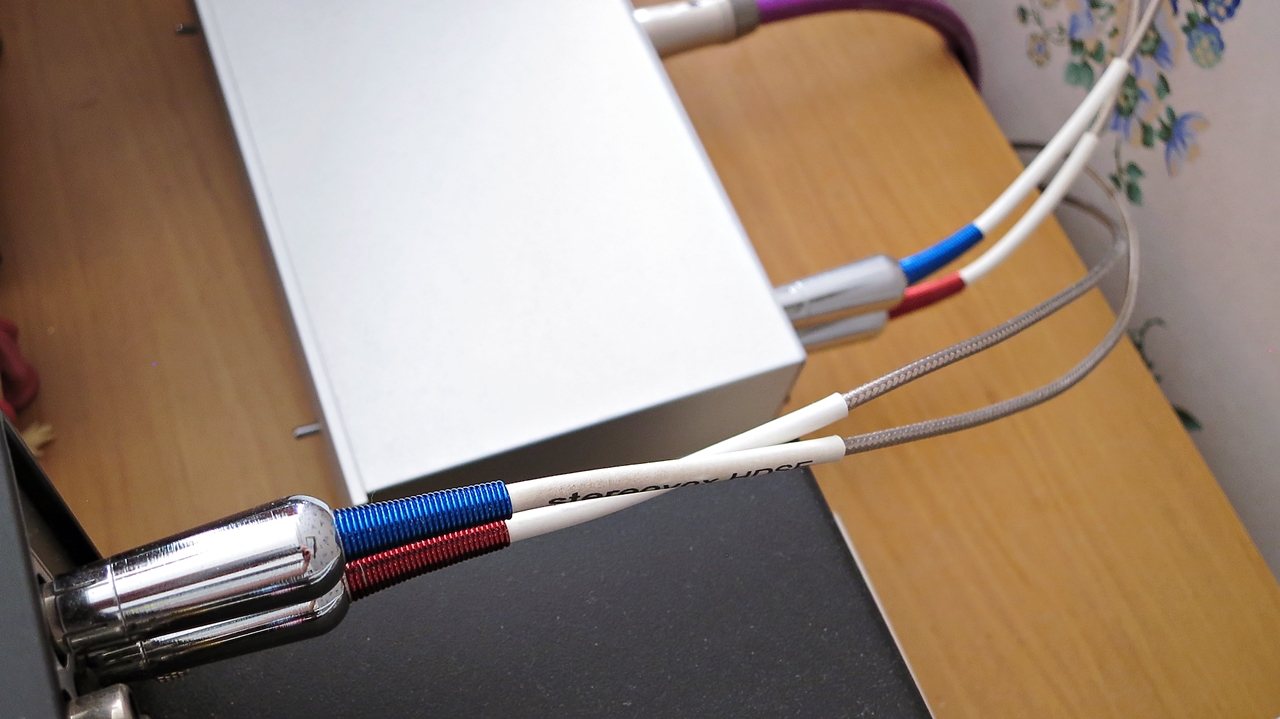
The HDSE is fine for brightness and openness of soundstage, but it may be slightly too dry when it comes to adding resonance to the CDR630. During the TAG McLaren 60i era, I always had the Space & Time Prism 22 in there, adding a rich, dense, PHILIPS-like quality. Come to think of it, both are solid-core cables. Among current products, something like WireWorld would pair well, I think — though putting in something from Gotham, in keeping with its professional character, would also be a pleasingly knowing choice. If I were using it in a studio context myself, I think I’d reach for DH Labs to keep the colouration out of the picture.
Getting the Most from the CDR630 — Figure-8 Mains Lead
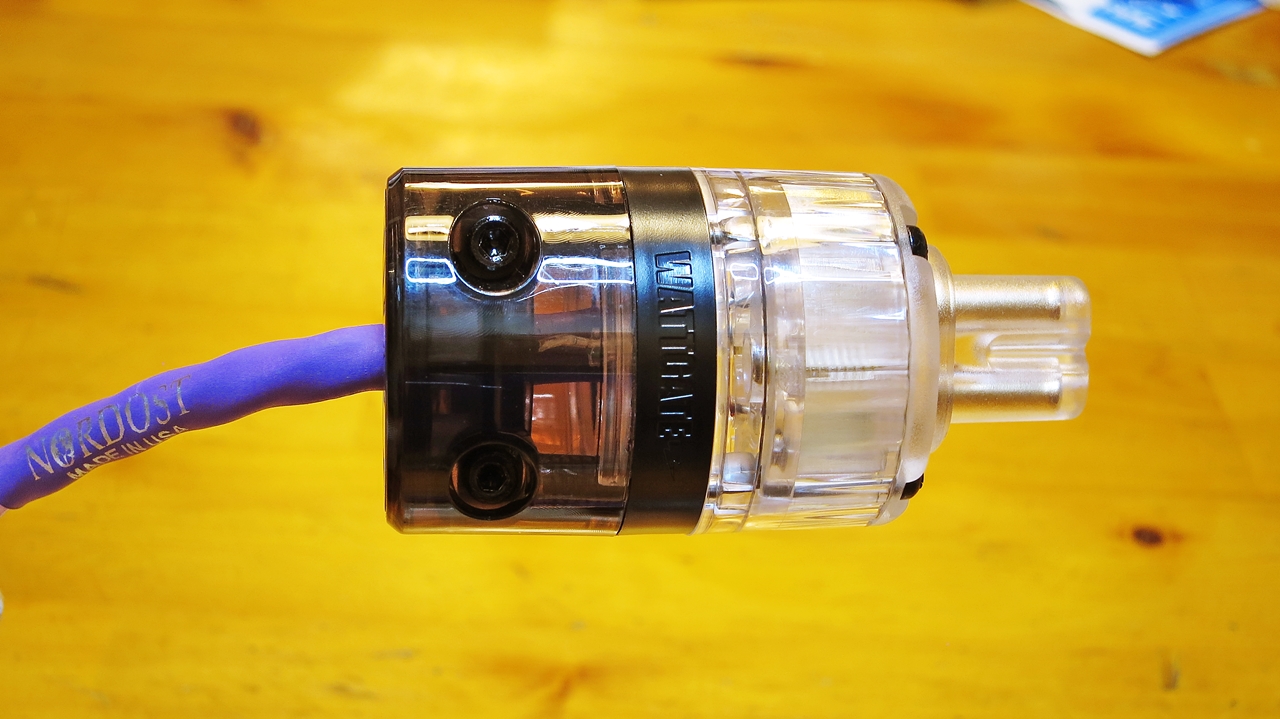
Third is the mains lead, and this is where the greatest effect is to be had. The inlet on the rear of the CDR630 is a C7 figure-8 connector, so over the years I have tried several commercially available audiophile-grade figure-8 mains leads. Here is what I can recall:
 Panasonic OFC RP-CA108A
 Oyaide L/i15dpcAudioQuest NRG-1 (under construction)Sir Tone VFF-2508Nordost SHIVA
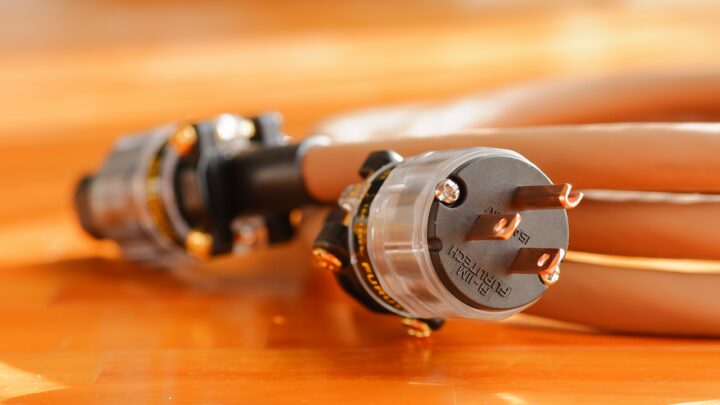
I feel as though I used the AudioQuest NRG-1 for quite a long time, but the one currently in place is the Nordost SHIVA. Both are solid-core power cables. I have written a review of the SHIVA here, but broadly speaking it works in the direction of a beautiful-sounding, buoyant musicality, adding a sense of brightness. If I were to put it in a metaphor, it is rather like dressing a plain, unassuming girl at her piano recital in a slightly revealing, flashy dress. ※ To connect the Nordost SHIVA to the CDR630, you will need to swap the IEC inlet for a figure-8 connector. For details on how to do this, please refer to the entry below.
Getting the Most from the CDR630 — Tuning with Input/Output Terminal Caps
The fourth tip is tuning with terminal covers. The CDR630 is a record-and-play deck, so there are a good number of input and output terminals on the rear panel. Any unused RCA or XLR terminals are best kept covered with caps to prevent oxidation, but the material of these caps does make a fair difference to the sound, and after going around the full circle, leaving nothing on them at all can sometimes produce the best results.
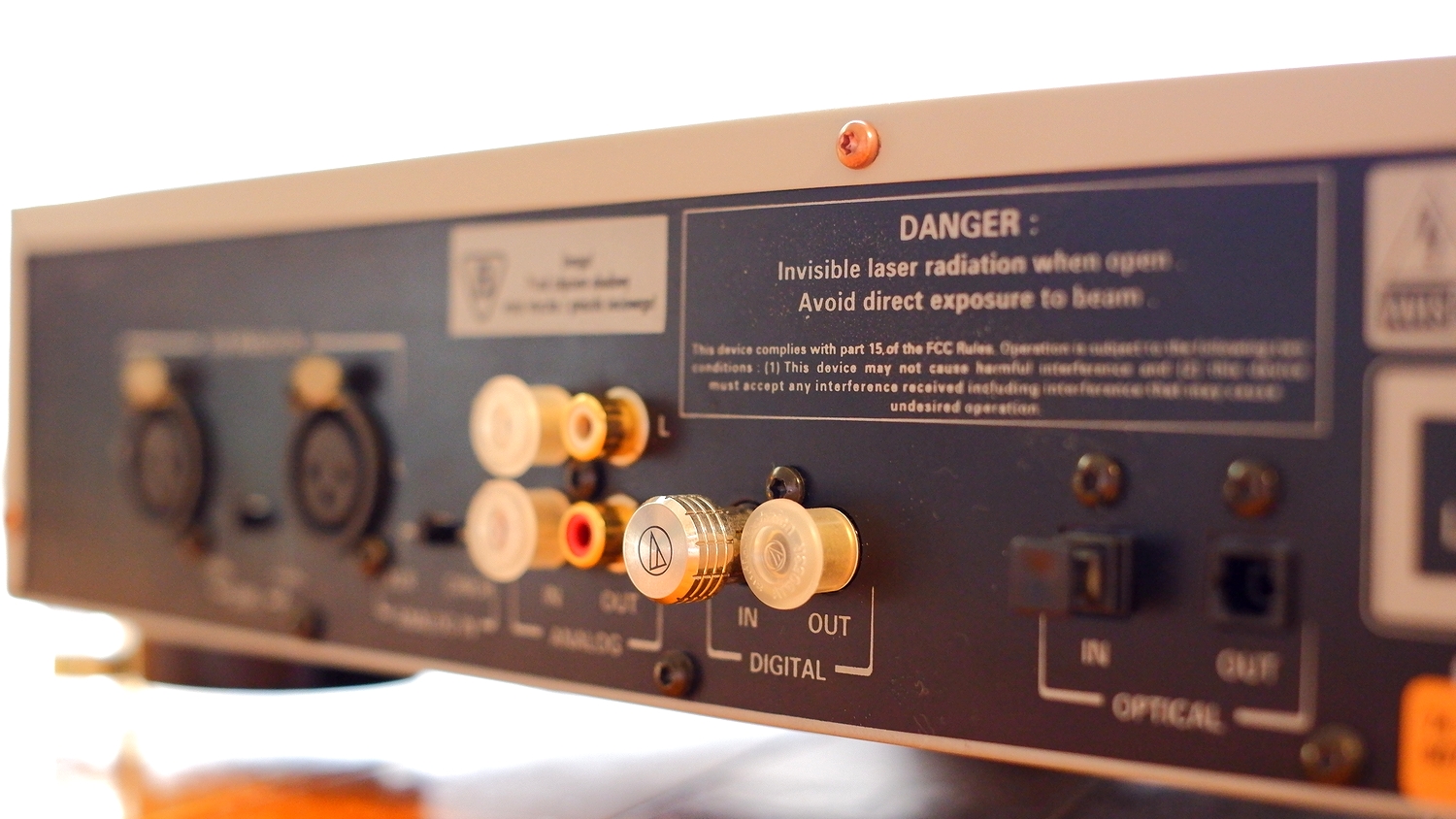
One could say that the character of the material colours the sound, and it is true. The commonly seen audio-technica transparent plastic caps, the AT6063R Pin Jack Protector, do reduce a sense of distortion, but they tend to blunt the transient attack and round things off. Using a lot of them together does ease the listening experience, but in exchange the sound becomes rather boxy and cheap-feeling. That said, this tendency can be put to use when you want to soften the edge of equipment that sounds a bit harsh.
 ポチップ
ポチップ
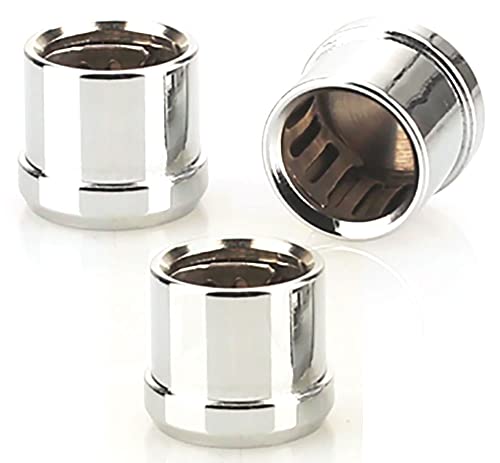
The RCA terminal cover I tend to reach for most often is the audio-technica PG-JP6 Metal Pin Jack Protector, which was originally sold for car audio use. One way or another, I end up fitting one to more or less every piece of equipment that has a spare terminal. They are solid brass with nickel plating, and even a single one makes quite a difference — which is precisely why I use them sparingly. The tonal character is cool and metallic, adding a smooth, high-grade-sounding resonance. However, use them in two or more places and the sound tends to lose its vitality, so one must be very careful about how many are in use at once. There are all manner of metal terminal covers — RCA caps, XLR caps, short pins, and so on — available from various manufacturers, and each one has a different tonal character, so building up a small collection of different types can prove very useful.
[PR]
AudioQuest Noise-Stopper RCA Caps RCA-CAPSCARDAS RCA C-SSAcoustic Revive IP-2QMUTECH MU-RCAPLOJECT LJ-STPMG-M RCA Cap / RCA Jack CoverMonosaudio RCA CapsAET EVO-RPS EVO-RPB ※Short pinsAcoustic Revive SIP-8Q ※Short pins
One point to note: ordinary caps can be used on both input and output terminals, but short-pin types, while theoretically effective at suppressing noise, cannot be used on output terminals, so please be careful.
 ポチップ
ポチップ
~ Summary ~ Use as a CD Transport Is Recommended
This was a model used in large numbers in recording studios, and there are still people seeking it out on the second-hand market, so I thought a review like this might still be of some use to someone. If I am honest, it does not see as much use as my main belt-drive CD player or SACD player, but when I want to hear a sound that is less embellished — straightforward, brain-like, neutral — I will deliberately choose to play back through the CDR630 instead. And its sound quality as a CD transport is surprisingly good; connecting an external DAC makes it possible to achieve a quality that punches well above its class. Demand for it as a CD recorder has all but vanished by now, but in my own mind, the value of the CDR630 breaks down to something like 8:2 in favour of CD transport over DAC.
 ポチップ
ポチップ
Around the same time I bought the CDR630, I also owned the Pioneer PDR-D5, another consumer standalone CD-R recorder. I found that using the CDR630 as the digital transport and the Pioneer PDR-D5 as the DAC produced a result that comfortably surpassed both units used on their own, so there was a period when I ran the two together in that combination. It is, admittedly, a rather irregular pairing, but a decent standalone external DAC in the conventional sense works perfectly well too, and feeding into an amplifier’s built-in DAC input should also yield reasonably good results.
ポチップ
Among machines fitted with the same CDM36 (CDL3610/01) die-cast drive mechanism, the DR-17 — with its bright, vivid tonal character very typical of Marantz — is actually the more recommendable choice, but there is also a case for choosing the CDR630 or CDR640 precisely because of the lower degree of colouration that comes with a professional machine, so if you still have one, do give it a try. Incidentally, even when the drive mechanism itself is identical, the sonic character of each model comes through with a surprising degree of clarity — which also makes it quite useful for pondering the question of which actually has the greater influence over the music: the DAC or the transport.
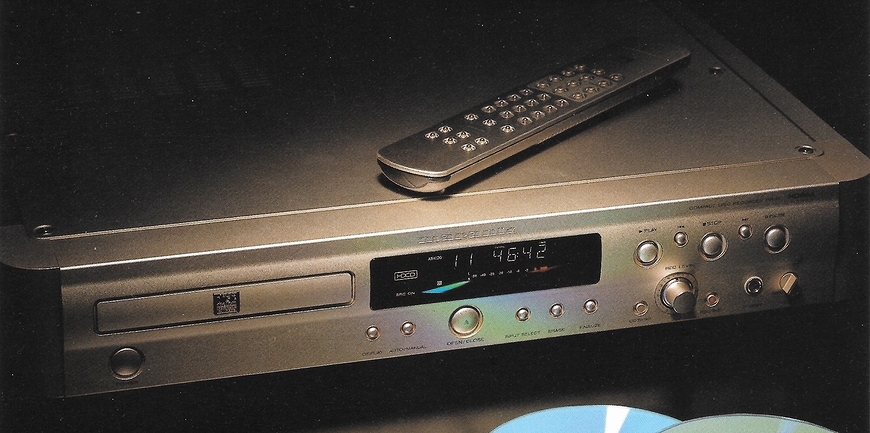
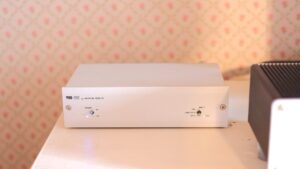
At present, I am using the CDR630 not as a CD player but as a CD transport, connected to the external DAC Musical Fidelity V-90 DAC. That setup is covered in the entry below, in the form of an introduction to the standalone DAC.
Auto Translated by CS4.6
List of comments (1)
CDM-24の マランツ CDR-615とCDR-640を主に使っていますが、615が壊れたので DR-700fのCDM-36からメカを移植しました。調べたらピックアップ部はebayで4000円くらいで売られていますね。ただし、新品ですが社外品なので品質はダメな可能性があります。ところで、やはり予備パーツとしてPHILIPS CDR880を買ったのですが、CDR-640やTASCAM DVD-R1000で焼いた太陽誘電のマスター用CDRを読んでくれませんでした。音楽CDRでないと書けないのはわかるのですが、読むことすらできないようですので使い物になりませんです。