【Still Torn Over Which SACD Player to Buy】
Part 1|Part 2|Part 3|SONY|Marantz|Pioneer|DENON|Cambridge|ONKYO
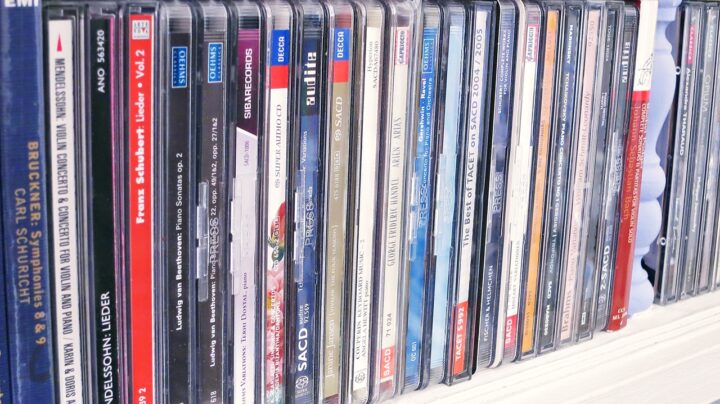
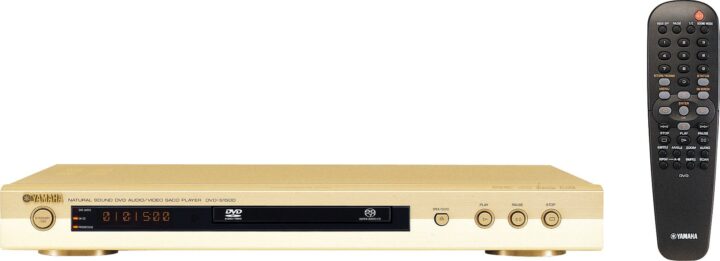
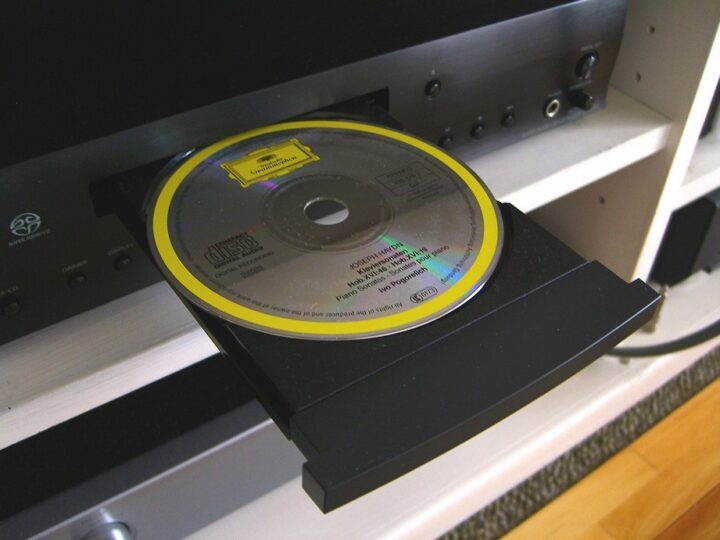
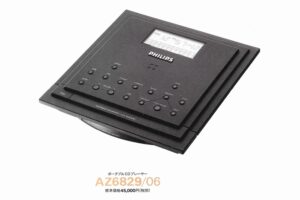
Lately, I’ve been noticing that Hybrid-SACD discs have been quietly multiplying on the CD shelf in my room. On the other hand, despite having such a large collection of CDs, I somehow don’t own a single disc in the DVD-Audio format — not one. And so, with all that in mind, this time I’d like to actually experience the true sound quality of the DSD hi-res audio that’s been accumulating on those SACDs — and, partly out of a sense of duty as someone who at least claims to be a classical music and Hi-Fi blogger, I’d like to take a belated look at comparing the current SACD player models available, with a view to finally adding one to my setup.
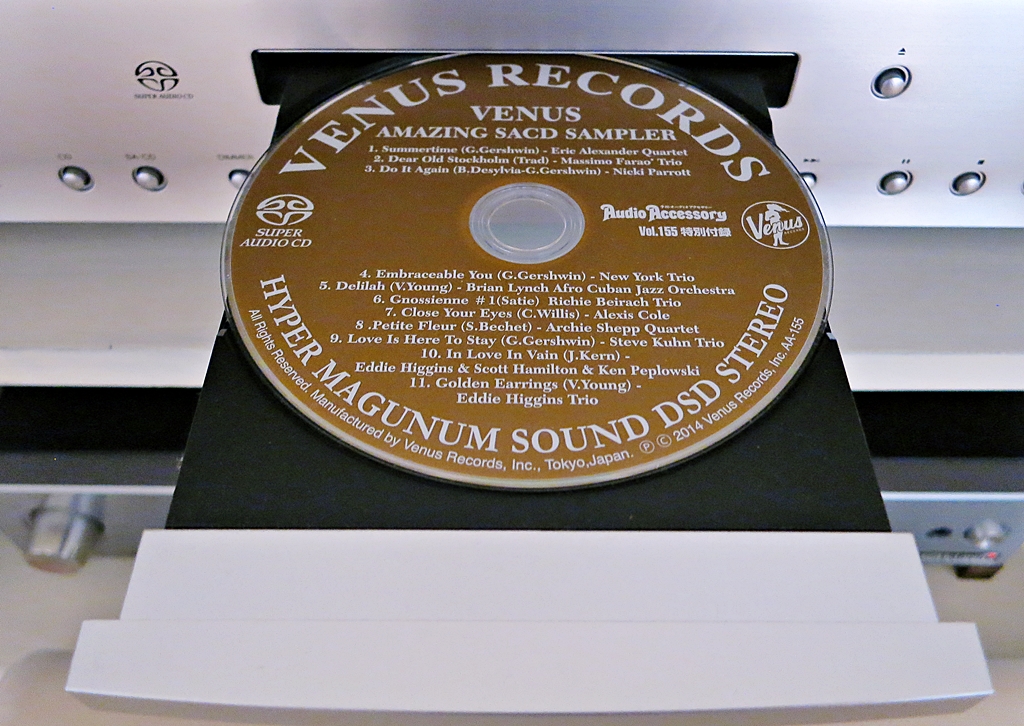
The battle for supremacy between Super Audio CD (SACD) and DVD-Audio as next-generation high-quality music formats has continued in a rather low-key, subdued fashion in terms of actual penetration — yet when you compare the sheer volume of software releases, SACD does feel as though it is becoming the de facto mainstream going forward.
This is partly because DVD-Audio was, as a format, already sonically inferior to SACD to begin with — but beyond that, unlike DVD-Audio, which can only be played back on a “DVD-Audio/SACD multi-player or universal player” that is, for pure Hi-Fi purposes and the pursuit of high sound quality, inherently at a disadvantage due to the drawbacks of being multi-functional, SACD hybrid discs are backwards-compatible with conventional CD players and can be played on virtually any existing CD player without needing an SACD player at all. That gives SACD an overwhelming advantage. There is also the fact that the CD layer of an SACD hybrid disc is, for some reason, often recorded at a higher quality than the standard CD release of the same album — and I suspect this is one of the reasons why the audience for Hybrid-SACDs has broadened beyond those who own dedicated high-grade SACD players, reaching general music fans and Hi-Fi enthusiasts alike.


 ポチップ
ポチップ
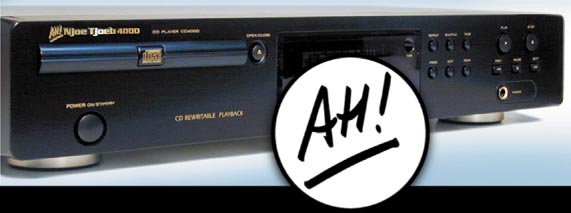
The upshot of all this is that, regardless of whether one actually owns an SACD player, re-purchasing SACD versions of CDs one already owns, or — when a new release comes out in both SACD-Hybrid and standard CD — deliberately choosing the SACD hybrid disc for its better sound quality even at a somewhat higher price, seems to be becoming a growing trend among the enthusiast community who care about sound quality. In practice, the only SACD-capable player I own is the PIONEER DV-585A, which I won in a competition two years ago (note: as of 2007). Its retail price at the time was just over ten thousand yen, so it was nothing more than the bottom-of-the-range model in the company’s line of multi-channel DVD/SACD multi-players.
 ポチップ
ポチップ
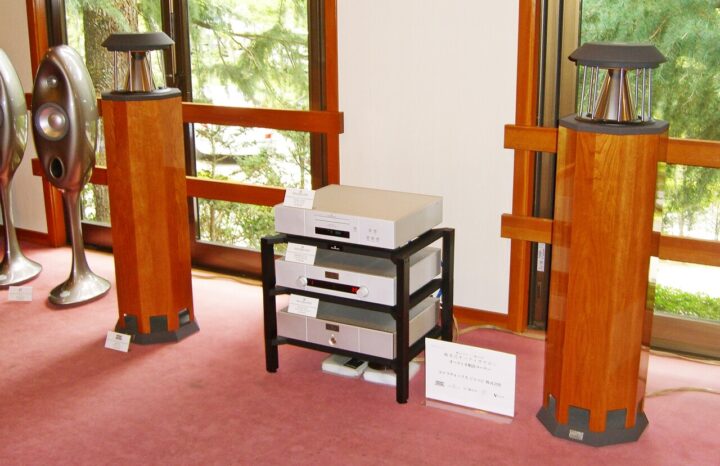
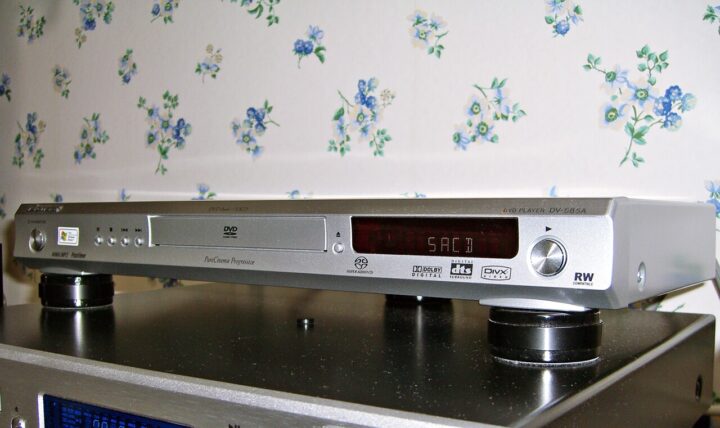
Even with an inexpensive SACD-compatible DVD player of this class, at least when comparing playback on the same machine, one can still appreciate to a degree the sonic difference between the SACD and CD layers, and the strengths of SACD (DSD) — the extension of high-frequency spatial information particular to SACD, and a certain overall refinement to the sound, that sense of hitting a ceiling one often notices with CD-DA (PCM) being entirely absent. That said, given that the overall sound quality level is bottom-of-the-range to begin with, it is unfortunately also true that when comparing the DV-585A against a reasonably ordinary dedicated CD player, the CD layer played back on that dedicated machine sounds considerably better than the SACD layer on the DV-585A.
Among CD players without SACD capability, I personally feel that a CEC CD player or standalone CD transport fitted with a belt-drive mechanism gives the most naturally musical and expressively satisfying sound quality.
 ポチップ
ポチップ
When looking at the advantages of SACD from the perspective of the playback machine, in order to fully draw out the sonic benefits of the SACD format as recorded in DSD — its wide frequency bandwidth, its sheer information density — including in terms of how the analogue stage is voiced, the player needs to offer quality equal to or better than whatever dedicated CD player one is comparing it against. At the very minimum, when playing the SACD layer of a Hybrid disc, it must clearly surpass the sound of the CD layer of that same disc played on the reference CD player — otherwise, there is simply no point in going to the trouble of acquiring an SACD player at all.
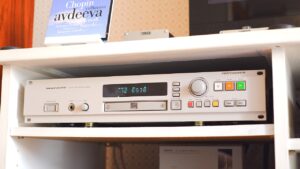
I have been using the ONKYO C-S5VL since 2011 — currently on my second unit
 ポチップ
ポチップ
And if one were to ask for more still — ideally, the player should also offer enough sonic appeal as a CD player to make it worth using alongside a dedicated machine, and should have a character distinct from one’s reference CD player, a musical personality of its own.
In practice, however, this is genuinely quite difficult. The CD player, now approaching nearly thirty years since the format’s launch and thoroughly matured, exists in countless forms the world over, and there is no shortage of models — past and present — that transcend their price and are revered as classics, rich in musical appeal. What’s more, the quality of the CD layer on SACD-Hybrid discs is something that these conventional dedicated CD players can, somehow and inexplicably, reproduce perfectly well.
What this tells us is that even with the conventional PCM/CD format, the way the recording is made — skillful digital encoding, or simply the physical construction of the disc — can result in a sound that approaches that of a DSD-recorded SACD. It also means that the character and sensibility brought about by the voicing of a player’s analogue stage and beyond can quite easily overturn, in terms of what one actually hears, any physical advantage in information density that a hi-res source may possess.
 ポチップ
ポチップ
And furthermore, for a listener to clearly perceive the qualities that this hi-res DSD — the SACD format — actually offers, it requires speakers and amplifiers of at least mid-range Hi-Fi grade, capable of conveying that precision and information density without squandering it; and not an old-fashioned approach to voicing that merely pads out the audible range, but modern, wide-range accuracy, equipment designed with wide-bandwidth reproduction in mind — without all of this, the sheer informational richness that DSD-recorded SACD inherently carries, and its advantage over CD-DA (PCM), risks simply vanishing into nothing.
 Continued in Search for the Right SACD Player Part 2
【Still Torn Over Which SACD Player to Buy】
Part 1|Part 2|Part 3|SONY|Marantz|Pioneer|DENON|Cambridge|ONKYO

Auto Translated by CS4.6
List of comments (2)
残念ながら、DVD-Audioの方はライセンサー達が自ら、勝負を放棄してしまいました。
DVDオーディオ プロモーション協議会
http://www.dvdaudio-net.com/
>当ホームページは、
>2007年3月31日を持ちまして、
>サイト上でのサービス提供を終了
こんばんわ。この記事に貼った上から2つ目のリンクが正にそれです。(記事内容の補足になると思い敢えてリンクしました)
いつの時代もそうですが、規格争いについては、肝心の音楽コンテンツと無関係で不毛な行為だと思っています。純粋なエンジニアでもミュージシャンでもなく、政治的な利権屋さんの主張が行き過ぎることで、結局ユーザーが不利益を被ることになりますから。
DVDオーディオの再生については、ユニバーサル/マルチプレイヤーで現行十分にカバーされていますが、今後ピュアオーディオでは特に積極的に出てこなくなってしまうという事でしょうね。
音楽ファンとしては、DVDオーディオディスクとしてリリースされたのみで、SACD/CD化はされていない音源がありましたら、未来に残すために是非全てをSACD化でサルベージして欲しいと思います。(たぶん、そんなに沢山はないと思いますので)
…とはいえ、20~30年後くらいのオーディオ雑誌に、誰かのコラムでDVD-Audioでしかリリースされなかったレアものお宝特集なんてのが記事になるのかと思うと、それはそれで時の流れを楽しめそう♪