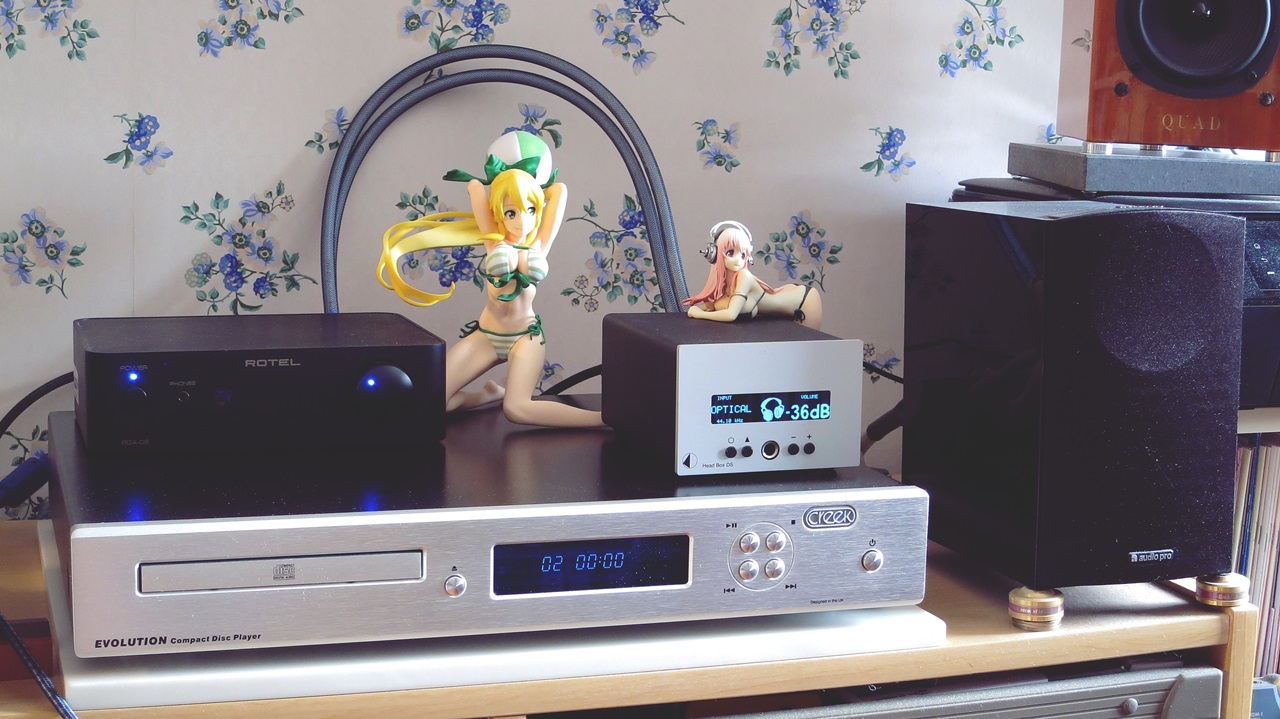
【Bringing Home the CREEK Evolution CD Player】
Part 1|Part 2|Part 3|Part 4
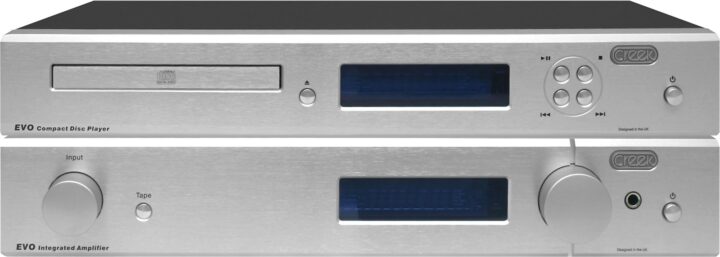
Now, the all-important question of the EVO-CD’s sound quality. I originally bought it for my secondary system, but for the purposes of evaluation I first connected it to my main system, and… I was left utterly speechless by how different it sounded from any CD player I had heard before. In a good way.
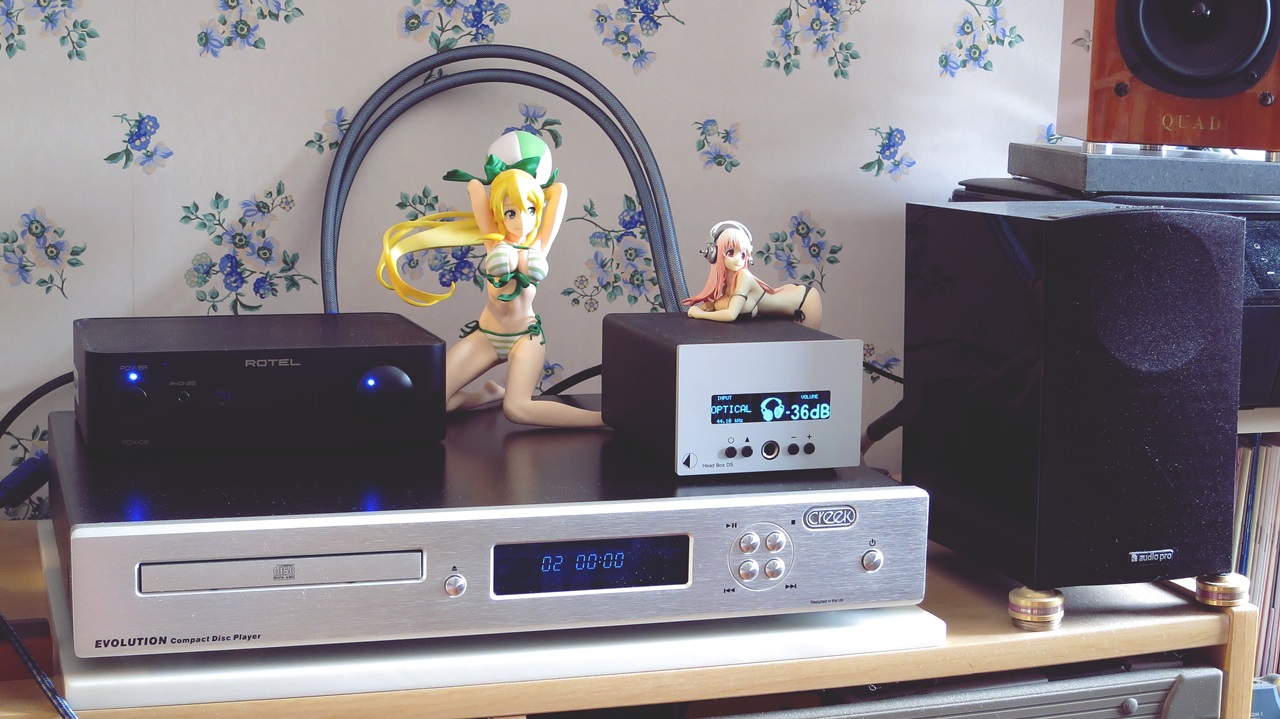
To call this an entry-level CD player would be utterly absurd. In terms of character and refinement, this is frankly the sound of a high-end CD player. What on earth…
First of all, it has an extraordinary sense of breeding. The soundstage is quiet. The perceived S/N ratio is outstanding. It is the complete opposite of any kind of showy, crowd-pleasing sound — no false warmth, no exaggerated body, no forward push. The soundstage between and behind the speakers is laid out in a flat and orderly manner… with pinpoint imaging of exceptional clarity. Superb stereo separation. And a sense of timing precision in the way sounds unfold along the time axis. On paper its specs are rather unremarkable compared to Japanese-made CD players, yet how does it manage to sound this fresh and alive…
The musical vitality that has always been one of Creek’s defining attractions is certainly present here, but what stands out even more is an intellectual, disciplined quality — a mature expressiveness with a quiet sensuality, the kind where the edges are held in check. The rendering of different piano touches, the tonal shifts that come with pedalling, the reality of a note fading into silence — all of this is handled magnificently. I am slightly unnerved by all the background ambience I can now hear that I never noticed before… The high S/N in reproducing low-level signals — the kind that lets you hear joins in a recording — becomes even more apparent through headphones.


To be honest, in terms of sound quality it easily surpasses my C.E.C TL51Z/TL5100Z here. When I switch back, the belt-drive machines inevitably leave me noticing the conversion accuracy of fine detail in instruments and the low-level signals tangled up in the background noise floor… Of course the C.E.C belt-drive CD players win out in terms of musical vitality, weight in the lower registers, the analogue-like smoothness and low-distortion softness in the mid-to-high frequencies, and the sheer scale of the soundstage spreading beyond the speakers — but setting aside the analogue-like appeal of deliberately rounding off the rougher edges of CD, when it comes to a straightforward approach to accurate digital conversion of what is actually on the disc, the Creek simply leaves the C.E.C machines with no foothold whatsoever in terms of basic sound quality and refinement…
I suppose more recently designed CD players really are just on a different level when it comes to sound quality — particularly the realism of low-level signals. The ONKYO C-1VL was also a thoroughly impressive CD player in this respect, but compared to the C-1VL, the Evolution CD brings something further — a deeper cultural musicality and a philosophically weighted sense of conviction in its sound. The C-1VL is stricter and more monitor-like with less colouration, but when it comes to possessing a certain quality that one might genuinely call high-end sound, the Evolution CD has the edge.
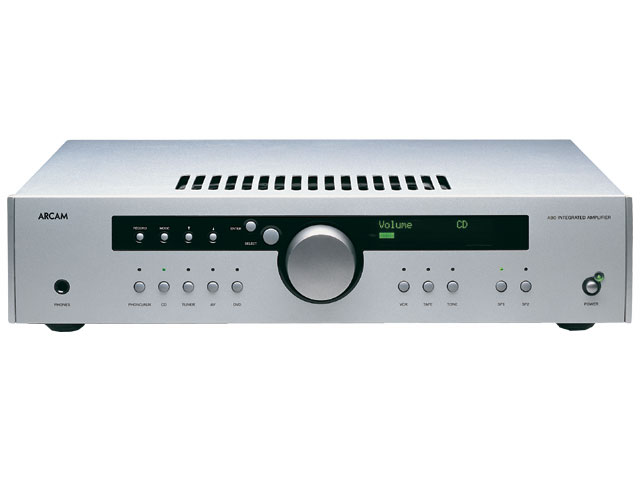
Incidentally, the ARCAM CD72T — which ought to be a rival British CD player in the same class — is simply not in the running at all. Open the lid and the internal components are not drastically different in quantity, yet the sound quality is easily two classes apart. If you were looking at ARCAM CD players to match against the CREEK Evolution CD, you would probably need to go up to the FMJ range… Beyond Creek’s own higher models, others that might offer a similarly dry European tone at an even higher standard would include the MYRYAD MXC6000, and from LINN the MAJIK CD or IKEMI, and the recently released QUAD 99-CDS/CDP Classique. To put it plainly, the Evolution CD is more genuinely high-quality and more musically orthodox than any other CD player I have here.
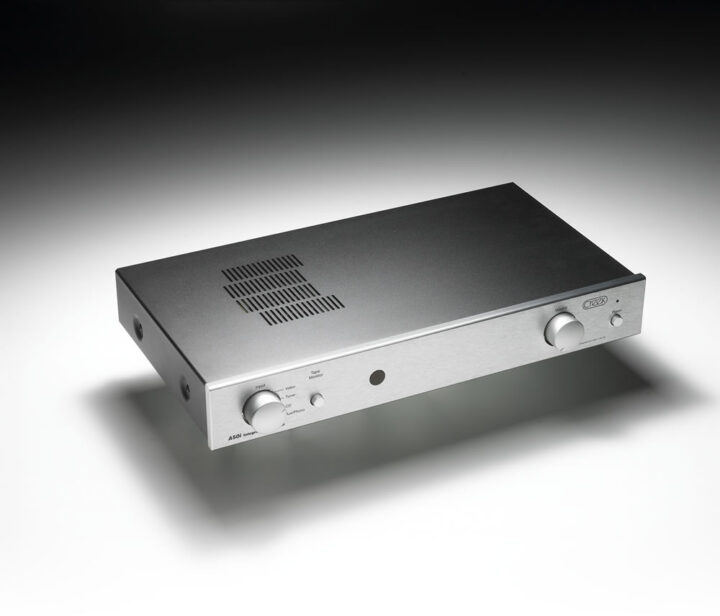
The tonal character is unchanged from the days when I used the integrated amplifier 4240 — this is unmistakably the sound of Mike Creek. I find it remarkable that the fundamental tonal character of this brand has remained entirely consistent for twenty years. Mike Creek →
I have long compared this sound to a dry Scotch whisky, but to put it in more accessible terms: it is the colour of the stage when the lights in a concert hall are dimmed at the start of a recital. Or, to describe it more romantically, it is the kind of tonal quality that evokes sitting in a British brick house by firelight, a glass of whisky in hand, reading. An entirely authentic European tone that no Japanese-made product could ever reproduce. The soundstage is not colourless and transparent — rather, it is suffused with the palette of an old European masterpiece, faded gently with the passage of time. Whether or not you can fall in love with this particular sense of colour and coloration — that is likely to be the deciding factor in how one feels about Creek. It is a sound of considerable refinement and, in some ways, a certain loftiness, and those who have a latent unease with the British gentlemanly sensibility or with British culture in general will almost certainly find this tonal character not to their taste. Conversely, for those like myself who are thoroughly Westernised in their sensibilities, this is precisely the kind of sound that one quietly and deeply savours.
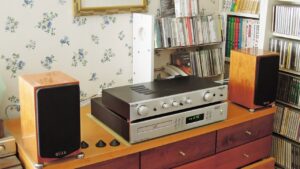
I described the European tone as a form of colouration, but I should add that the colourless, transparent clarity that Japanese audio equipment offers to Japanese listeners can, from the other side of the world, sound like a mysterious Oriental sound — so interpretations of what is natural and what is coloured differ depending on one’s cultural vantage point.
I have not made a direct comparison with other Creek CD players, so I cannot say for certain, but I believe the Evolution CD’s sound is shifted in a somewhat harder direction. The rendition of piano touch, its crystalline quality, and the speed of transients are all first-rate. Hat cymbal resolution is also impressive. It has what one might subjectively call a high-speed character. Yet there is nothing artificial about it — no false quality where only the edges and outlines are emphasised. Stringed instruments such as violin come across with a degree of hardness in the expression; one might say it stops just short of becoming harsh. That said, the tonal changes along the time axis — the way the air trembles with vibrato — are rendered with considerable clarity. Most players tend to compress and flatten this into something indistinct, but the Evolution CD captures it with real finesse. The richness of delicate nuance at the quieter end of the dynamic range, and the way vocals are pinpointed with a mature, quietly expressive quality, hold an attraction that is difficult to find elsewhere.
On the other hand, in terms of liveliness and approachability, it may not be the best choice compared to earlier Creek models. This was honestly something of a surprise. It takes a thoroughly orthodox approach to high sound quality that one would not quite expect from a foreign product, and given that I had been expecting a different approach in the musical dimension — namely, an expressiveness that sacrifices some measured frequency response and technical sound quality — I did find myself feeling slightly underwhelmed on that front. It is clearly less musically vivid than the PHILIPS AZ6829/06 (which had a European tone very close to the Creek products of its era) that I used some time ago, though it leaves that machine far behind in outright sound quality. That said, it is not aiming for the ultra-wide bandwidth of certain Japanese machines that pursue sound quality almost to the exclusion of everything else — the impression is rather one of a balanced, moderate approach to flat response, extending the frequency range only as far as the musical bandwidth can sustain without breaking down.
 ポチップ
ポチップ
In the bass, pitch definition remains clear surprisingly far down, and the sense of realism in things like string vibration is quite striking — but on the other hand there is not a great deal of sheer weight. The bass is fundamentally solid and restrained. The overall tonal design draws one’s attention to nuance and transparency in the mid and upper-mid frequencies, so the overall impression is one of a slightly upper-mid focused sound. The soundstage spread is, if anything, rather contained — more like a miniature garden than a wide panorama. There is depth, but sounds do not come forward into the room, and there is no strong sense of the image extending well beyond the speakers. This is broadly consistent with other Creek products, so it falls comfortably within the range of what one would expect from this manufacturer’s approach. Rather than spreading and blooming the soundstage, the image is one of competing on the transparency of direct sound and the sharpness of pinpoint imaging. However, the S/N quality of the soundstage and the moistness of the reverb that hangs in the air are both fully present, and even at low volumes, an exceptionally clean and articulate sound with a high sense of S/N is readily obtained.
Also, in terms of note density it is rather restrained, and with heavily loaded source material the sound can tighten up and lose composure, occasionally tipping into something a little aggressive. The impression is of a player better suited to small-scale music that values delicacy — piano solo, chamber music, Lieder, quietly expressive female jazz vocals — than to a full orchestra. Somewhat surprisingly, synthesised anime soundtrack music actually fares rather well on it… which is not what I would have expected.
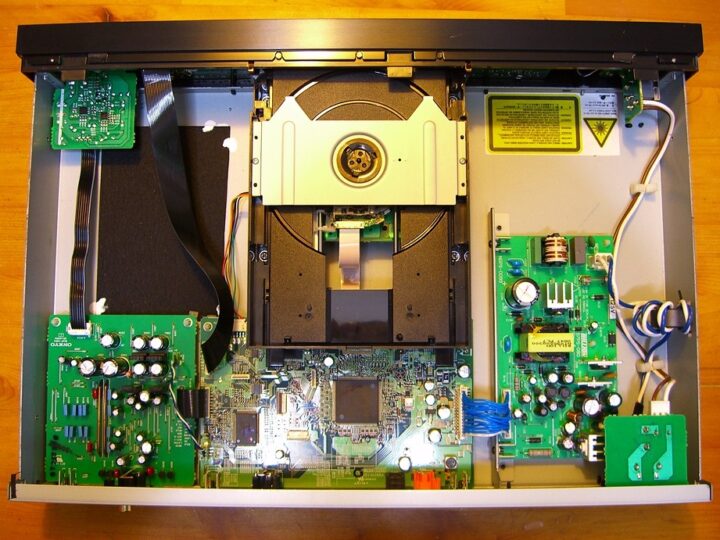
The D/A converter is a single Burr-Brown PCM1738. Rather than running multiple DAC chips in parallel for dual-mono or differential operation to extract more information, the design aims instead for a simple, clean sound arising from a minimal circuit layout — and the deliberate restraint in body and information density may well be the very reason this player sounds so transparent, while also being the element that places it in the entry-level category.
And yet, rather than the warm, inviting, easy-going character one tends to find in entry-level models, it deliberately goes for a dry, high-end flavoured, grown-up kind of sound — and that is a way of thinking that simply does not exist in the Japanese approach. I vaguely recall hearing something rather more narrow in bandwidth, more supple and bright, with a rhythmically playful quality, when I encountered the CREEK CLASSIC CD Player‘s predecessors — the CD50mkII and CD53 — in a shop, and if the CLASSIC CD has indeed inherited those qualities as the name implies, then I find myself honestly wanting to own a CLASSIC CD (or a CD50mkII/CD53) as a second Creek machine, even having already bought the Evolution CD. Somehow I feel that having both side by side would allow one to savour Creek’s two distinct musical directions — what one might call their dry expression and their sweeter one. Of course, since I have not actually compared them simultaneously, this remains purely speculation.
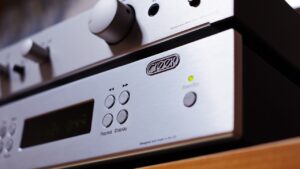
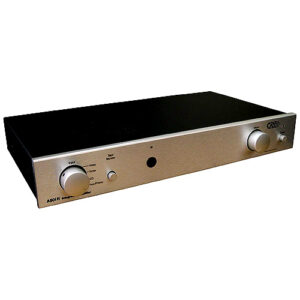
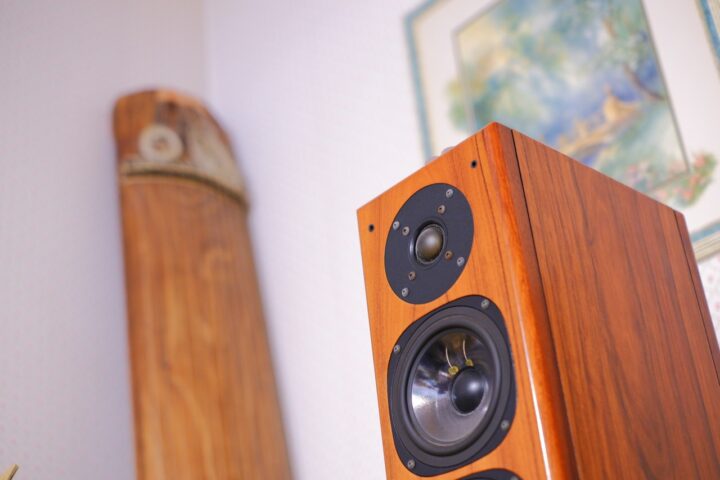
Let me mention one more quality that the EVO-CD certainly carries forward from Creek products in general. Because the imaging is precise, the image density is high, and the S/N sense is excellent, an extremely clear image and sense of perspective can be obtained even with the volume wound down to its absolute minimum. The design seems to anticipate use at very low listening levels in a typical home, and turning the volume down does not muddy the sound at all — it simply becomes a beautifully transparent, contained, three-dimensional soundscape. In my main system, there is a tendency for the softness of the Vienna Acoustics polypropylene cones to become too prominent below a certain volume level (roughly the 10 o’clock position on a typical amplifier), which blurs the transient definition and fine detail — but simply switching the source to the EVO-CD resolved this problem with almost disconcerting ease. Part of it is the CEC TL51’s life-size imaging style producing larger sound images by comparison, but for anyone in a situation where they cannot play music loudly — at night, or in a flat — Creek products come into their own in the most literal sense, and I will say without hesitation that they are not merely a good choice but potentially the best choice.
In the next instalment, I will report on the performance of the transport and DAC sections separately, and on the sound when paired with the Onkyo A-1VL, which I am currently using in my secondary system.
CREEK Evolution CD Player: My Journey Begins — continued in Part 3.
【Bringing Home the CREEK Evolution CD Player】
Part 1|Part 2|Part 3|Part 4
Auto Translated by CS4.6

List of comments (4)
こんばんは~
気に入られたようで、よかったですね◎
>英国の煉瓦造りの家で、暖炉の灯火に照らされながらウィスキーを片手に読書する感じの音(謎)
う~む、、、すごいたとえですね^^;
硬めのヨーロピアンな音ってことなんですよね
??
ナローレンジで聴きやすさを第一とするアーカムとはある意味では対極のタイプなのかな?という印象を持ちました。
P.S.
コレとprimareあたりに惹かれます。
>う~む、、、すごいたとえですね^^;
にゃははは。ポイントは音色の色彩です♪蛍光灯や太陽光ではなく、暗闇の中のろうそくの火や暖炉の明かりの方が私の中でクリークのイメージに近いです。おっしゃる通り煉瓦は程よい硬質感が伴うライブ(反響)感。炎光に照らされた煉瓦色も加味して♪
>アーカムとはある意味では対極のタイプなのかな?という印象を持ちました。
うーん、、、、対極ではないと思うです。ドライブ力や押し出しを求めない同じ箱庭音場型ですので、むしろ近いと思います。どちらも本質的に英国ならではの音ですし、何より音楽性があります。ただ、現在のアーカムは音色が無色透明に近く脱色されていますし、より国際的に誰にでも好まれる無難な音作りではないでしょうか。。。プライマーの方が全然違うタイプの音だと思います。DiVA CD72T/CD73Tがナローレンジ気味なのはエントリークラスだからという部分もあると思います。で、QUAD11Lとの相性ですが、、、キンキン問題が出ている場合EVO-CDは危険ですね。無い場合でしたらより11L/11L2の良い持ち味を生かしつつ、さらに英国調の音質が得られると思います。。ただ私が思うにQUADでしたらCREEKとPRIMARE以外にも99 Classiqueを検討した方が~と思うのですがどうでしょ。柔らかく鳴らすならプライマー。鮮度を求めるならクリーク。真っ当に純正組み合わせで99みたいな。
http://www.ippinkan.com/quad_99_series.htm
>ドライブ力や押し出しを求めない同じ箱庭音場型ですので、むしろ近い
なるほど~
解像度、またS/Nの高さといった部分に興味があったので、解釈を少し間違えたかも^^;
EVOは高域の好み、そして色彩がかなり好みの分かれ目になってきそうですね。
>99 Classique
99ですか!
確かに組み合わせでいったら純正が無難かもしれませんね。
クリークとプライマーに気を取られすぎて、すっかり忘れていました(笑)
どうもありがとうございます♪
また迷いが出てきてしまいそうですが、、、まあじっくり試聴を繰り返して選びたいと思います。
>EVOは高域の好み、そして色彩がかなり好みの分かれ目になってきそうですね。
ですので、CLASSIC-CD系の方がもしかすると無難かも知れません。CD50mkⅡは硬い音はしていなかった様に思います。あと組み合わせで失敗したくなければCREEK製品はアンプとCDプレーヤーセットで揃えた方が安全。でなければ必ず組み合わせ試聴してからをお薦めします。色彩については、11Lも音に色が付いてますし、QUADとクリークは似たような方向性の範疇です。どちらにしてもこの3ブランド、アーカムと比べればそれぞれトーンの脚色は強いと思います。