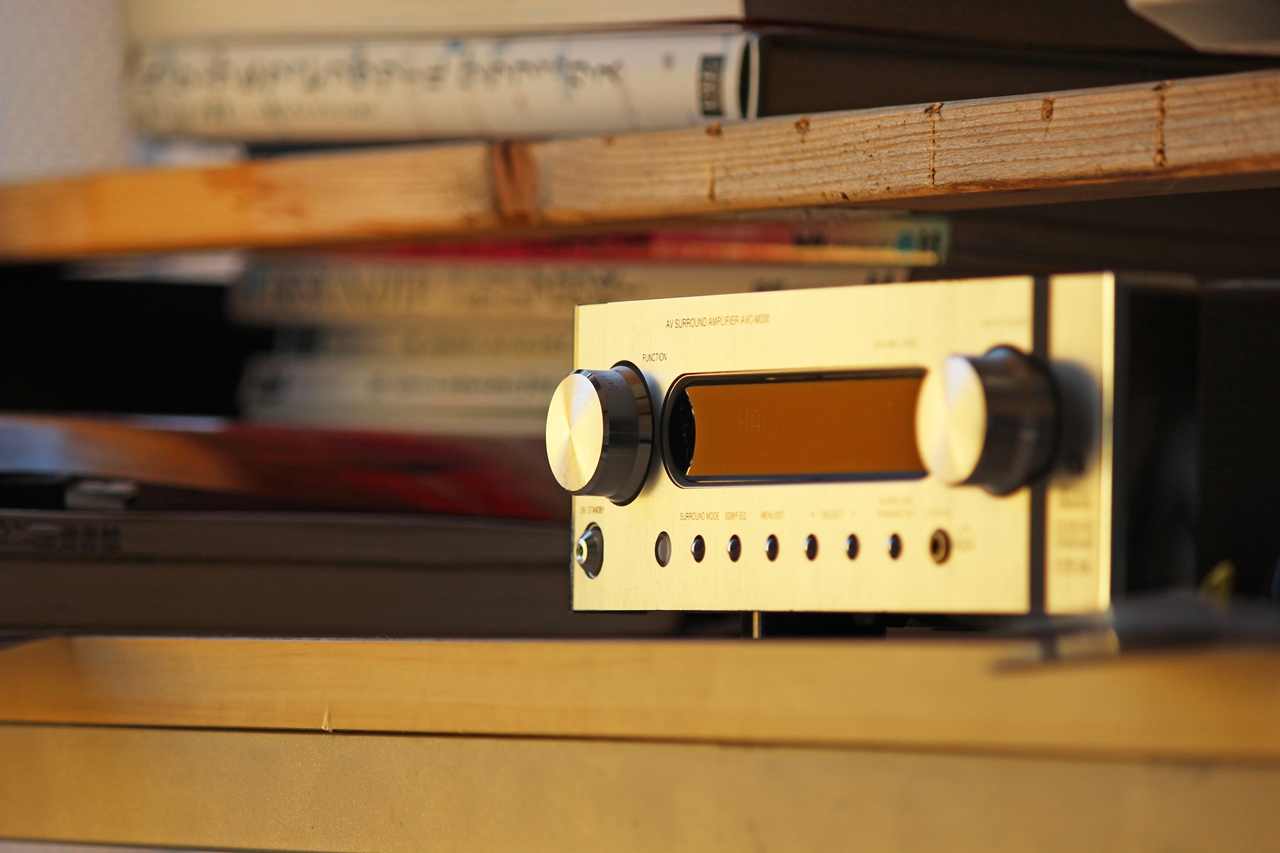
This entry is half in jest. As someone who has been a Hi-Fi enthusiast for many years — the author behind this small-scale pure Hi-Fi blog (note: quite possibly not right in the head) — I have attempted, in my usual manner and with liberal doses of personal bias, self-admonition, and self-deprecation, to say whatever I please about the ecology of those near-extinct creatures known as Hi-Fi enthusiasts…
0 Music lovers
People who love music deeply — who regularly attend live concerts and recitals and buy CDs — yet have almost no interest in audio equipment. Most of them simply use whatever happens to be at home: a mini system, a radio-cassette player, a PC, or a pair of headphones, and many cannot even tell you the make or model if you ask. In terms of sheer numbers they are orders of magnitude more numerous than those who become Hi-Fi enthusiasts, so they cannot really be called enthusiasts, but I include them here as a baseline category. The range stretches from casual music fans to deeply committed music obsessives, yet because they have no particular attachment to sound quality or audio hardware, they also tend to take a relaxed, almost radio-like attitude towards the subscription streaming services that have become increasingly common in recent years.
1 Music lovers who dabble a little in Hi-Fi
People who feel a modest need to listen to music at a reasonably decent quality, and have just about managed to put together an audio system. A common pattern is someone who assembled a system in the distant past and has been using it ever since, treating it with great care and never replacing a thing. Others once fell deep into the hobby and were proper Hi-Fi enthusiasts for a time, but eventually found the whole business too tiresome and walked away — then, without ever actively updating their equipment, they find themselves, before they know it, quietly filing into the category of vintage enthusiasts.


 ポチップ
ポチップ
2 Music lovers who are also Hi-Fi enthusiasts
The type who combine Hi-Fi enthusiasm with a genuine love of music. They approach each hobby as an ongoing, active pursuit, bringing both a “musical ear” and a “Hi-Fi ear” to bear. Music, however, remains the priority; audio equipment is a tool, a means to an end, firmly subordinate. They are generally not fond of that order of priorities being reversed. Towards the kind of inflated, hobby-for-its-own-sake values that have no real bearing on practical music reproduction, they tend to keep their distance, or regard the whole thing with mild amusement. Having originally come to Hi-Fi through music-making rather than the other way around, the author of AUDIO STYLE is at heart this type.
3 The Physical Disc Collector
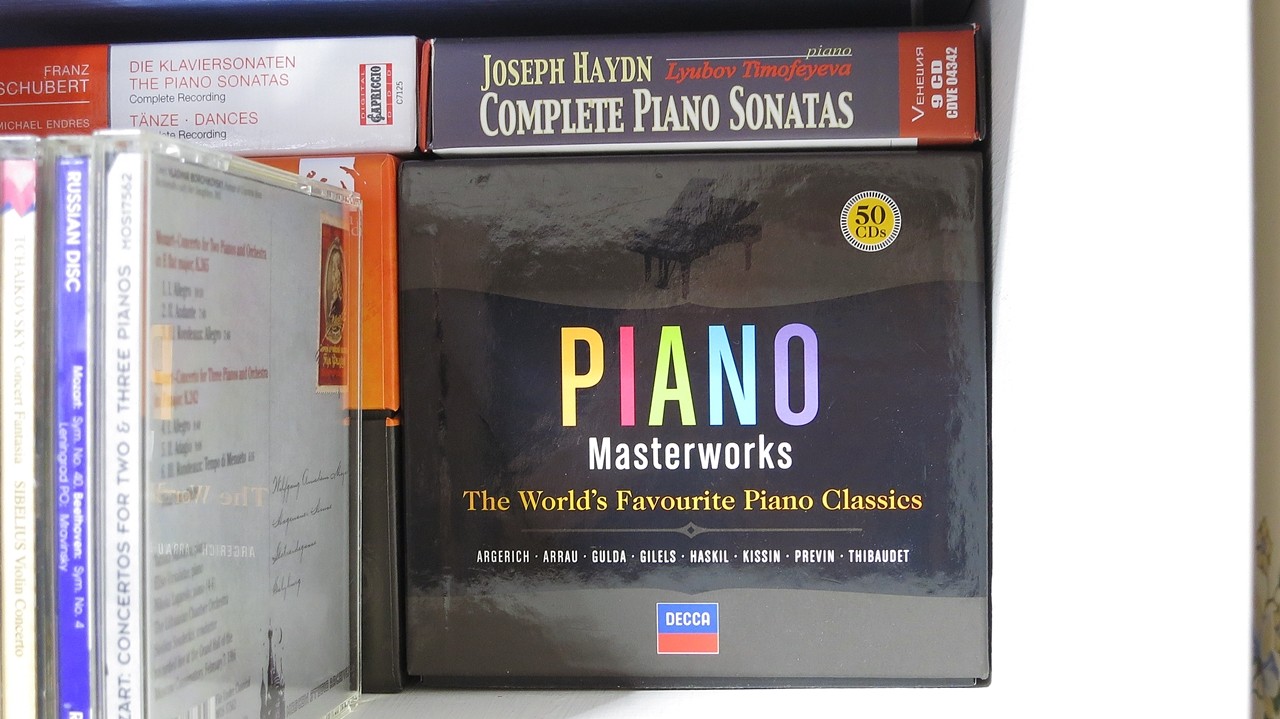
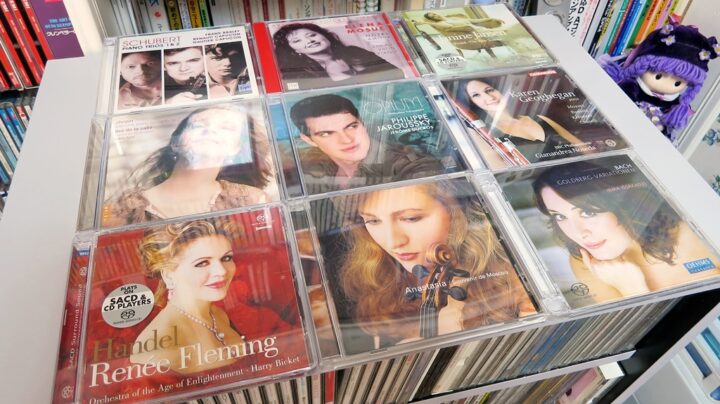
Like bibliomaniacs, these are people with a deep attachment to physical media and a collecting instinct — living surrounded on all four walls by discs they have gathered according to their own taste, treating that collection as a kind of personal intellectual estate. Because of their collector’s temperament, many are not entirely comfortable with the idea of music being shared through streaming services, and remain devoted to building their own private disc collections. When a disc collector also happens to be a Hi-Fi enthusiast, their attachment to analogue record players — as a natural extension of collecting LP records — tends to be quite beyond the ordinary.
 ポチップ
ポチップ
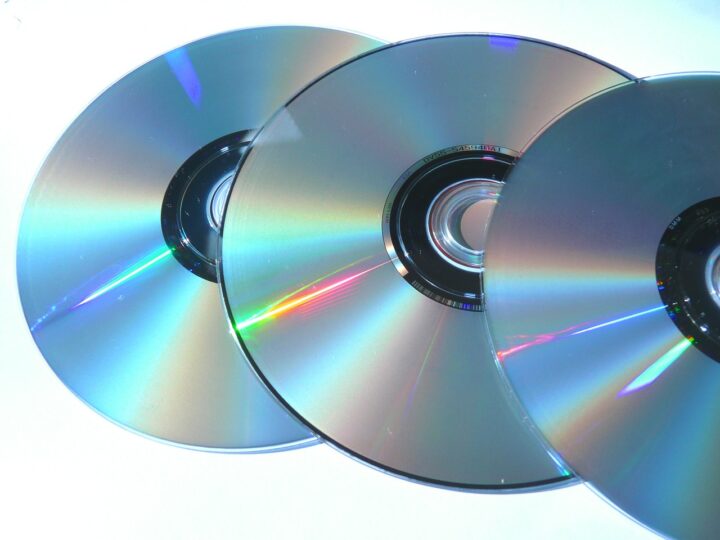
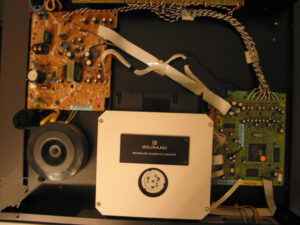
Most disc-spinning devotees insist on playback via a mechanical spinning mechanism — or rather, a CD transport (CD player) — not only for analogue records but for digital sources such as CD and SACD as well. Those souls of somewhat questionable mental faculties who find that the ever-so-slightly temporally dubious digital sound read from CEC’s belt-drive mechanism or Philips’ die-cast mechanism sounds better than the digital output of a PC… yes, that would be very much the author of this thoroughly box-garden pure-audio blog. However, whatever anyone may say, this is absolute justice as far as I am concerned, and any objections or counterarguments shall be suppressed with a fluffy beam of light.
4 The Engineer – DIY Enthusiast
There are also many people from engineering or electrical engineering backgrounds, or vacuum tube amplifier DIY enthusiasts, for whom building and tinkering with audio equipment themselves is the whole point. Audio components become considerably cheaper when bought at parts level, and home-built gear carries none of the various costs that come with commercial manufacture and retail. Since “building it yourself is cheaper” — provided you have the skill — the majority naturally inhabit the entry-level to mid-range of the market. Because they know what parts actually cost, they tend to be sceptical of extreme high-end pricing. Another characteristic is that many, with the logical mindset of an engineer, are not easily taken in by the bluster of brand names.
 ポチップ
ポチップ
There is also a certain number of people in this group who flatly deny any phenomenon that cannot be explained by straightforward electrical engineering, or that fails to show up in measurements — an anti-occult stance, one might say. (On the other hand, there are also quite a few with a freer sensibility who prioritise hands-on experience and what they actually hear, rather than clinging to armchair theory.) Whether a DIY build leads to nothing more than self-satisfaction, or genuinely produces a good sound, depends entirely on the builder’s skill, ears, and taste — but there is no doubt that making things is a bottomlessly enjoyable hobby in a way quite separate from music itself.
5 The Vintage Japanese Hi-Fi Devotee
A variant of the engineer type. These are people who love the domestic Japanese Hi-Fi equipment of the bubble era — primarily the 1980s and 90s — characterised by no-expense-spared, parts-heavy construction. Among them you find, on one hand, the technically-minded older enthusiast who, in the best possible sense, is something of a living fossil — carefully repairing and continuing to use equipment from that era — and on the other, younger treasure hunters who rummage through junk bins at HARD OFF, picking up items treated as worthless rubbish, and bringing them back to life. Even the flagship models of that era, lavish as they were in their day, would fetch no more than mid-range prices by today’s standards, so if you have the skills to repair them and restore them properly to their original specification, it is a remarkably cost-effective hobby. In a sense, perhaps light vintage?
 ポチップ
ポチップ
6 The PC Audio Pursuer
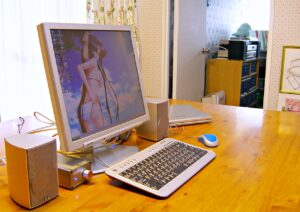
At the cutting edge are those who retrieve digital audio data from a PC and pursue high-quality playback through PC audio. Many are minimalists with a strong aversion to physical media, and network audio via subscription services and the like (which doesn’t necessarily involve a PC, mind you) probably falls under this category as well. Since the whole premise rests on using a general-purpose PC as the hub for reading digital data, quite a few in this camp are sceptical of the sound quality from old-fashioned mechanical drives — CD, SACD, and so on. Regrettably, it is not uncommon to hear sweeping claims that PC transports sound better than standalone CD/SACD players, made without any proper basis for comparison. ···I rather suspect what each side finds pleasing about the sound is fundamentally different, though of course there are flexible souls who take the broad-minded approach and use both.
Physical media — CD, LP, SACD — continues its steady decline, and network audio is set to become the mainstream of home listening going forward, yet perhaps owing to the poor compatibility between PCs and print journalism, Net Audio magazine, which had served as the central information source for this field, ceased publication in 2020. At present, coverage continues only through Ongen Publishing’s Phile-web.
 ポチップ
ポチップ
7 Earphone & Headphone Enthusiasts
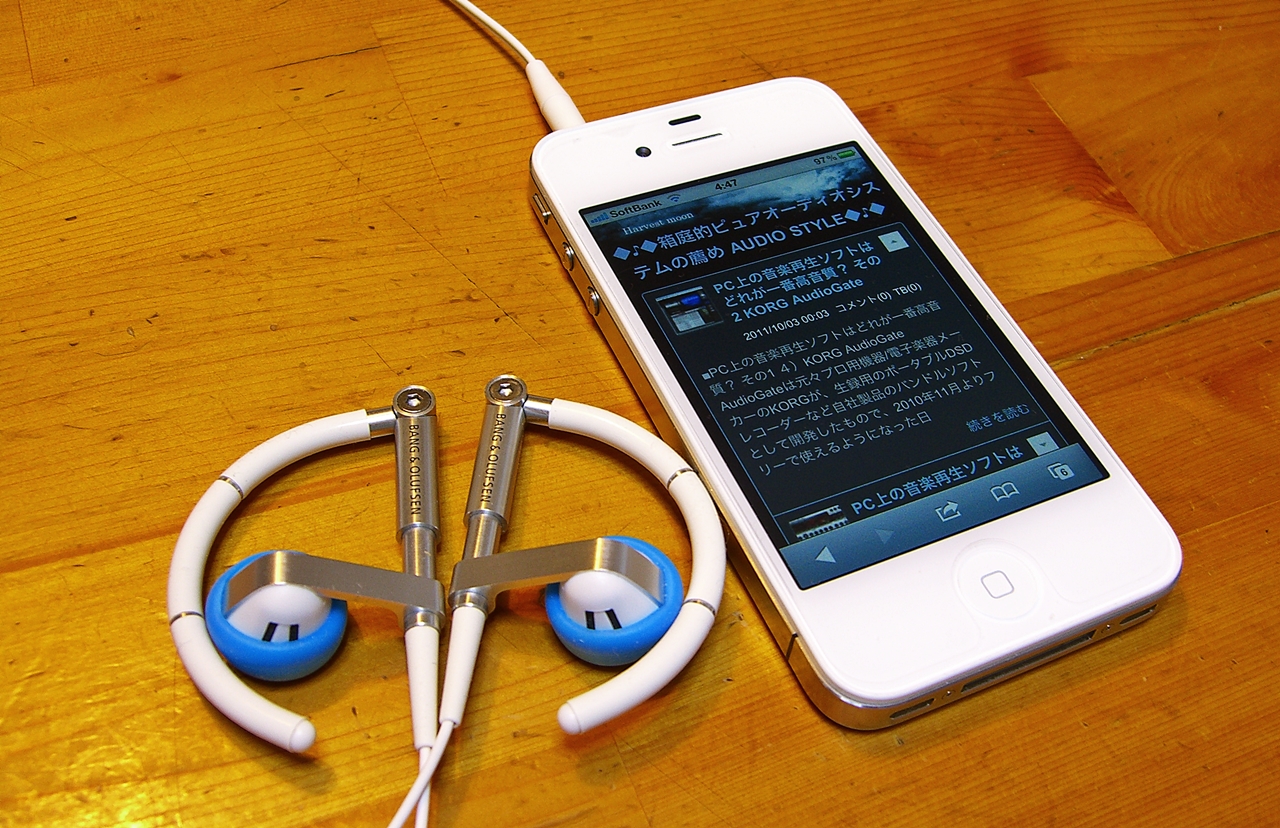
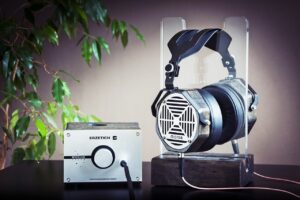
This is a listening style that has become the mainstream in recent years, particularly among younger listeners, driven by years of domestic economic stagnation, limited disposable income, and the constraints of living environments. On the go it is earphones and portable amps — portamps. At home, headphones, and beyond that a high-end desktop headphone amplifier — mixing and matching combinations, agonising over recabling, it is a wonderfully enjoyable rabbit hole of a genre. As someone whose primary interest is home audio, I only dabble in it to perhaps the very tips of one toes, though I do own a modest assortment of foreign-made headphone amplifiers and earphones. (···Modest is the word, and I suspect the serious portable audio crowd would laugh at me for it — please be gentle···)
 ポチップ
ポチップ
The earphone and headphone market, driven largely by younger buyers, has prices with one fewer zero than home audio, yet what is happening there traces the same path that home audio travelled in the past — only at three times the speed, and in an almost comical fashion. Real-world performance gets left behind while prices are bid up day by day, which is at once fascinating and something one rather wants to observe with a warmly detached eye. Profit margins tend to be higher than in home audio, and it is also a hotly contested genre into which many up-and-coming manufacturers — Chinese brands chief among them — have piled in hoping to strike it rich. That said, the momentum does seem to have faded rather rapidly of late··· the bubble may well have burst.
8 Pure Audio Enthusiasts
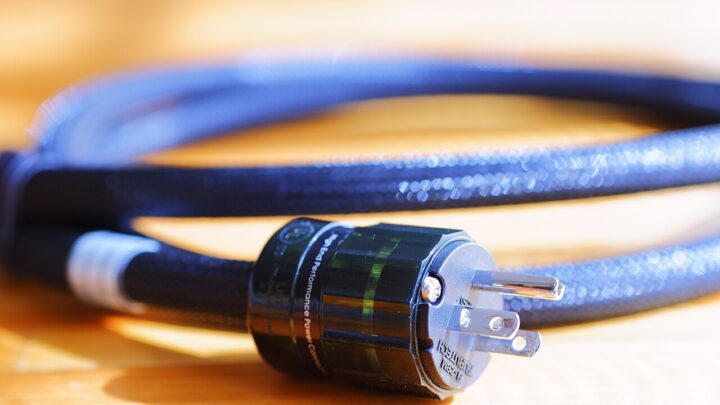
People who make a hobby of 2-channel stereo home Hi-Fi — a fossil-like concept, really — in which standalone components are combined according to each individual’s own tastes, what is often called “pure audio.” In a broader sense, this can also include those who build multi-channel surround AV (audio-visual) systems. Pure audio was originally the mainstream and the royal road of Hi-Fi, but within Japan, two decades of prolonged recession combined with the constraints of domestic living spaces have taken their toll year after year, and many of the major domestic audio manufacturers have either gone bankrupt or are hanging on by a thread. Overseas markets are a somewhat different story, though… That said, if you push far enough in pursuit of the best possible sound quality and the deepest hobby satisfaction that one can achieve at home, you will inevitably arrive at pure audio — and so I believe this pursuit will carry on indefinitely, one way or another, as long as that passion for it does not disappear.
 ポチップ
ポチップ
9 The Compact System Devotee
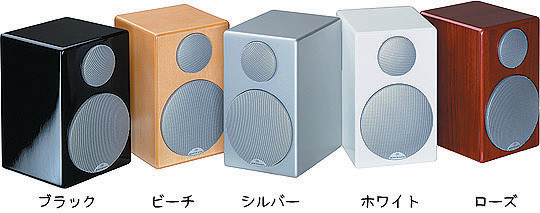
As a tributary of pure audio, this covers enthusiasts of relatively affordable, slim, lightweight models and palm-sized miniature audio components and small speakers. People who pursue purity of sound at low to moderate volumes in a rabbit hutch — well, a small room. Palm-sized components and simple, slim audio gear that fits on a windowsill have been made all over the world for decades, and despite occupying a niche, they have always had a surprisingly devoted following. European products have historically been prominent here, and in recent years the arrival of affordable Chinese standalone DACs and digital amplifiers has been expanding the compact audio scene further still, with a natural affinity for desktop PC audio as well.

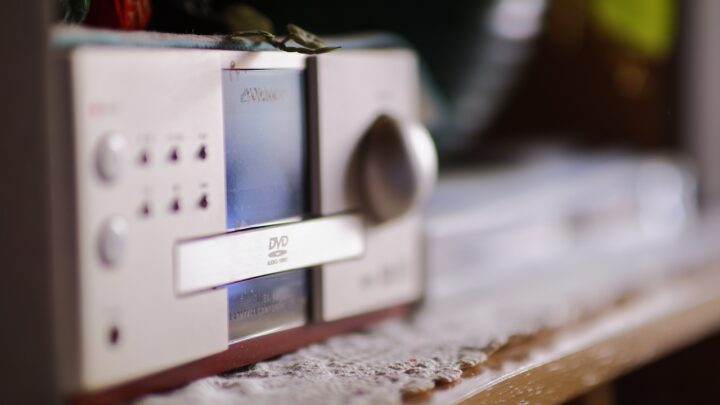
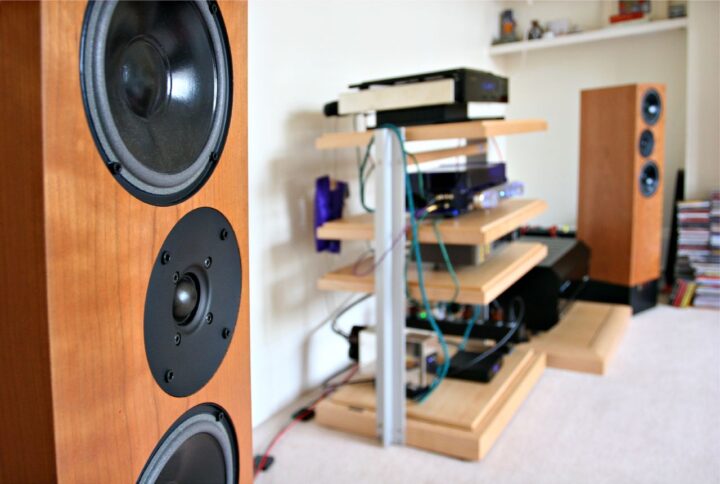
As the blog’s name suggests, I am precisely this type — placing great value on the benefit of equipment not physically consuming room space, and placing particular weight on small size, interiors and all. Many of the products involved are affordable, which means this category overlaps with No. 19, the Low-Ender type, in terms of price range. In terms of the character of the equipment, compact audio should also be a very natural step up from headphone listening to home Hi-Fi — which makes it all the more unfortunate that one so rarely sees younger people making the transition to PC audio or pure audio with small speakers.
10 The Bigger Maximum Mass Enthusiasts
The opposite of the above: people who believe that sound quality in Hi-Fi is proportional to sheer mass and the quantity of materials invested. Low-enders seek out vintage domestic products from the bubble era, built like tanks with resources poured in without restraint; high-enders tend to favour components that are simply large, heavy, and imposing in presence, along with enormous speakers loaded with multiple drive units. Some go so far as to build dedicated listening rooms with generous dimensions. In the ultra-high-end world, this approach is actually the mainstream.
As a natural consequence of prioritising sheer mass, there seem to be a relatively high number of loud-volume listeners among this group who place great importance on driveability. The vector of their preferred sound is rather the opposite of the compact audio type, so when cross-referencing each other’s reviews, it is worth keeping firmly in mind at what sort of volume levels the reviewer normally listens to music. ※ For what it is worth, I grew up in a public housing flat and am a low-volume listener — typically in the 60–70 dB range under normal conditions.

11 The Looks-First
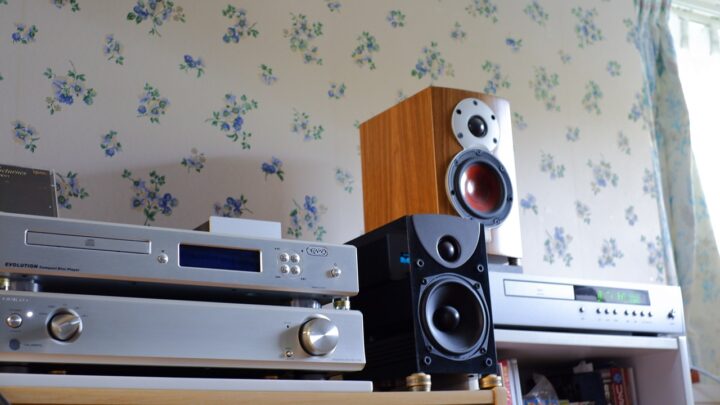
On social media, “Hi-Fi is all about looks” has somehow become a secret password. It is half genuine truth and half crowd-pleasing joke. Regardless of the price range they target, this type is always searching for a way to think about Hi-Fi gear primarily as interior décor, as stylish furnishings — somewhere within the broader idea of having a hobby. I, who advocate a lifestyle approach to Hi-Fi within the miniature-garden pure-audio world, am quite strongly biased in this direction myself. People of this type tend to have good taste and a refined sensibility, but they also tend to have peculiar fixations, and — myself included — there may be more than a few of us who are, in terms of personality, rather difficult to deal with.
 ポチップ
ポチップ
12 The Imported-Gear Devotee
People who, out of a longing for foreign music and imported goods, put together their Hi-Fi systems entirely from overseas products. Hi-end gear priced above seven figures in particular is almost entirely dominated by overseas manufacturers, so a great many high-enders naturally end up in the imported-product camp by default. Hi-Fi as a hobby, and music culture more broadly, has long carried a strong intellectual undertone of admiring what lies abroad — going back to the Shōwa era — and enthusiasts whose systems consist almost entirely of overseas equipment have been common enough in every era to be entirely unremarkable. Conversely, it is sometimes audiophiles on the other side of the ocean who are fervent believers in the excellence of Japanese products, and so it seems that people on both sides are drawn to the culture of somewhere far away.

13 The Specification-Chaser
A type found across all price ranges: people who believe that the pursuit of numerical and engineering performance translates directly and linearly into sound quality. Placing heavy emphasis on catalogue specifications is something audio beginners tend to do, and — not that I am hiding anything — the author of AUDIO STYLE was a thoroughly committed spec-obsessive in the early days of getting into Hi-Fi. Most enthusiasts, by the time they have moved past the beginner stage, tend to treat specifications as a rough reference at best and stop worrying about them much at all; but there are some who remain committed specification-chasers even after leaving those early days behind.
People of this type appear, fortunately for them, to have never run into the wall of “the non-correlation between musicality and specifications,” and one senses in them a conviction that rather than seeing “sound quality” and “musicality” as vectors pointing in different directions, the music will reveal itself somewhere beyond the pursuit of performance. Naturally, the way they choose equipment also tends to involve a certain pride in having only the finest, flagship-level gear. At the opposite end of the spectrum, it seems that in recent years a radical faction of measurement-performance absolutists has begun to gain worldwide momentum, emerging from among the lower-end camp — people who use measurement data to expose the gap between a product’s price and its actual performance, with every intention of turning the established order on its head.
14 The Compulsive-Buyer
Unlike collectors, these are shopping enthusiasts who simply churn through equipment at a relentless pace. They are rarely satisfied with any single piece of gear and more often than not will not stick with something for even a year. There are two varieties: the sleek, decluttering sort who dislike holding on to unnecessary possessions, and the more severe compulsive-buyer sort, who rush to purchase things in an attempt to satisfy some underlying frustration yet are never truly satisfied, endlessly buying and selling in rapid succession. When it gets out of hand, some find themselves repeatedly buying back things they had already let go. In a sense, these are the active participants who keep the second-hand Hi-Fi market and the auction scene alive and moving.
Tips for buying & selling second-hand on Yahoo! Auctions♪
15 The Gear Collector
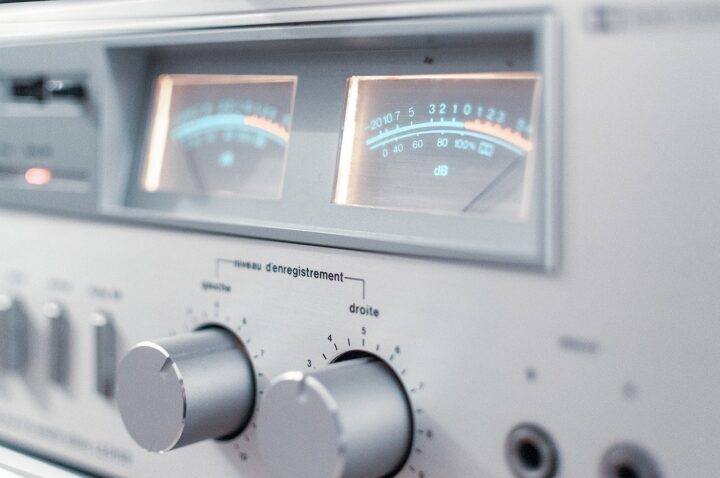
Someone with a compulsive habit of accumulating gear — they simply love collecting things. When this overlaps with the shopping-addict type described above, the equipment multiplies without limit and things get frightening. I actually have a fair bit of this tendency myself, and truth be told — just between us — some of my gear has run out of places to go and I’m at a loss with myself. Being hopeless at decluttering, I tend to hold on to Hi-Fi equipment I barely listen to and let it pile up in a storage room. And while I’m at it, I buy CDs by the box, line them up on the shelf, and roughly one in ten of them remain unopen— *cough cough* …moving on.
16 The High-End Audio Enthusiast
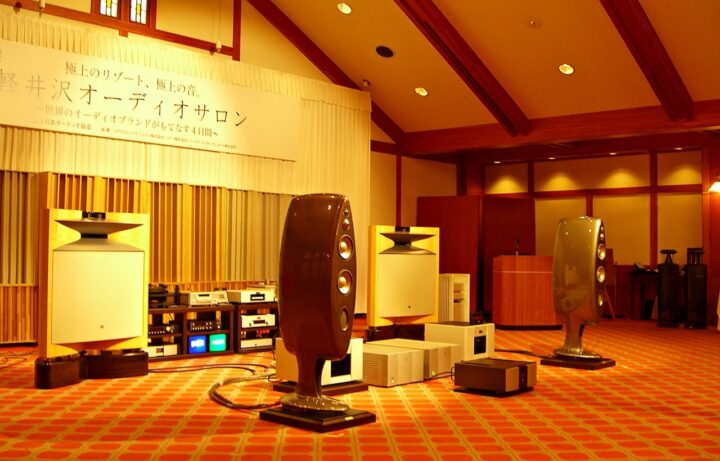
Since you cannot even begin to engage with this pursuit without a substantial disposable income, this type is, by necessity, largely found among the wealthy. Many of them are minor social success stories, and they tend to favour well-known products that reign as established names in dedicated high-end Hi-Fi, as well as impressive-looking equipment that radiates an air of luxury. A notable characteristic is that quite a few people in this category have long enjoyed showing off their prized listening rooms — fitted out with impressive gear — in magazines or online, or inviting like-minded friends over to demonstrate their systems.
They are broad-minded and tolerant of value-added business practices; sometimes a Chinese-made product is repackaged under a different brand name and sold as European, or a wildly overpriced item turns up in a lavish box with mysterious contents — and they will buy it with a smile without a second thought. This is precisely the ideal of the pure audio enthusiast, and they are the indispensable, much-appreciated customers upon whom the Hi-Fi industry depends. Being people with both the generosity of spirit and the financial comfort to match, they will never take offence if a pauper takes a small swipe at their expensive gear out of envy. They are the saviours of an audio industry gasping in recession.
17 The Brand loyalist
There is considerable overlap with the type above, but the defining trait here is an absolute love of foreign and luxury brands that look impressive — and on top of that, an inability to resist extravagantly expensive high-end cables and accessories with a suitably lavish appearance. This is the type who satisfies their pride and finds happiness by surrounding themselves with brand-name goods. Had they been born female, they would surely have been out there snapping up designer handbags, designer clothing, jewellery, and the like. Merely lacking the funds to act on it — among mid-range and entry-level Hi-Fi enthusiasts there is no shortage of people who quietly harbour a longing for prestige brands. Some of them are out there doing whatever it takes to track down brand-name items beyond their means at a bargain price second-hand, running a perpetual financial juggling act day after day…
In the case of this site’s author, the preferred brands do not lean toward the flashy “luxury high-end” orientation — but the pull is there all the same, directed instead toward what one might call “well-established brands with genuine taste.” It cannot be denied, therefore, that a certain brand-worshipping cognitive bias exists within me to no small degree, and when all is said and done, I am aware that I too am a variant of the brand devotee.
18 High-End Audio Unrestricted Ultra-Grade Enthusiasts
A type that pursues genuinely practical, real-world performance and sound quality within high-end audio. Once you truly begin chasing the cutting edge of modern high-performance Hi-Fi without limit, a total investment running into eight figures becomes unavoidable. These individuals have the financial headroom to devote to equipment and listening environments, and are the elite of the elite — free of all constraints, able to pursue true pure audio to their heart’s content. Among them you occasionally spot those possessed souls — or rather, formidable souls — who go so far as to erect their own dedicated electricity poles to improve their power supply. Sometimes they turn out to be musicians or recording engineers.
By necessity, audio can go either way depending on the user’s sensibility, and these people have encountered no shortage of cases where sound quality and price do not simply correlate. In the high-end audio world — a jumbled mix of the genuine and the bogus, overrun with all manner of dubious creatures — what is required is an independent capacity to tell good from bad without being led astray by specs, brand names, or price bias. Those who combine musical cultivation with hard-won experiential intelligence and a sharp eye for quality can naturally see through the gimmicks and the fraudulent, and so it is rare to see Hi-Fi enthusiasts who have climbed this far engaging in the futile one-upmanship you find among lesser enthusiasts. These are the real deal — high-enders of genuine substance.
 ポチップ
ポチップ
19 The Budget Hi-Fi / Low-End Pursuer
A low-ender who looks upon the high-end audio world — where margins are fat and substance often thin — with a cool, sardonic eye, and instead pursues budget Hi-Fi that is proportionate to ordinary life. In overseas audio markets, alongside the high-end aimed at a small wealthy clientele, there has long existed a well-established low-end market with a far broader base, catering to the everyday Hi-Fi enthusiast.
 ポチップ
ポチップ
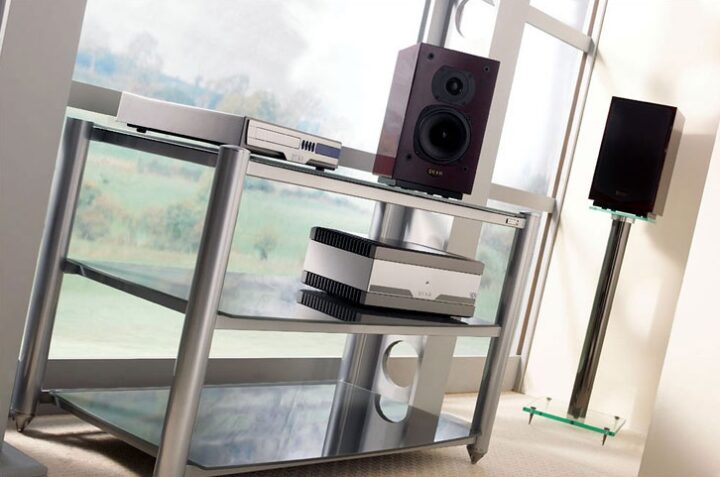
These are people who accept the constraints of budget and setup as a given, and find their hobby in using their heads — thinking through combinations, DIY, and whatever creative ingenuity they can bring to bear, all within a range that costs as little as possible. Cost-performance is paramount. If anything, theirs is a proletarian value system — the precise opposite of the bourgeois high-ender — holding that the more intellectual approach is to enjoy music while spending as little as possible, and that throwing money at it carelessly is a defeat. This is also where AUDIO STYLE, as an advocate of the compact, self-contained pure audio system, finds its own purpose.
20 Occult Audio Enthusiasts
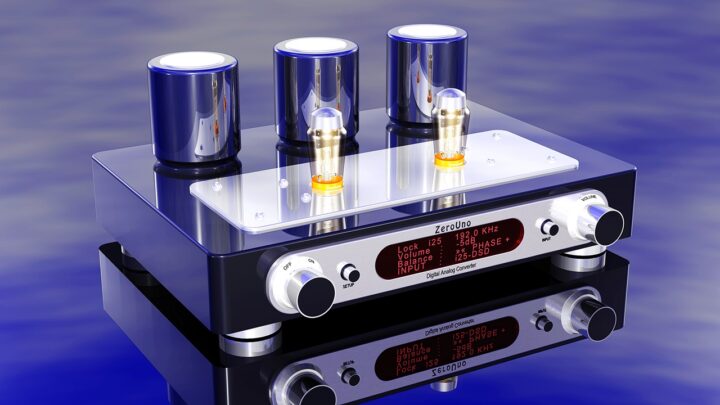
From low-enders to high-enders, there exists a certain subset of people who have a great fondness for products of dubious provenance — products where it is never quite clear whether one is dealing with religion, daylight robbery, or outright fraud. For some reason these people seem to be receiving transmissions from outer space, and at first glance they are not necessarily the sort you feel drawn to approach — and yet, the Hi-Fi systems assembled by these apparently eccentric individuals can sound startlingly good. Perhaps because no mental block operates against auditory phenomena that cannot be explained by modern science, the sound these enthusiasts create may in fact be the finest of all. It is possible they have stumbled upon a fragment of some deeper truth about the world; equally, they may simply be rather unfortunate souls who have been taken in. Whether you can understand which is which depends on the level of your own heart and mind. I myself reserve judgement — while being, from personal experience, inclined toward the affirmative.

21 Vintage Audio Enthusiasts
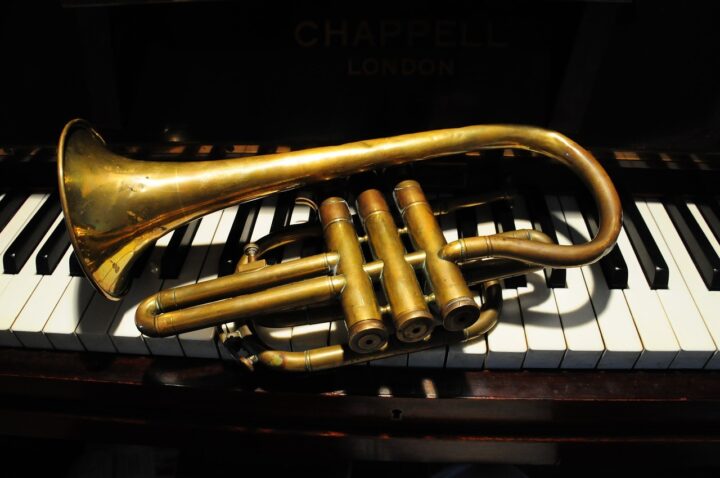
One stage further up the hobby ladder, and you enter a truly fearsome world where all manner of creatures roam. ※ There are genuinely remarkable people here, and frankly alarming ones too — possibly quite a few of both. The remarkable ones have focused on the soulful “sound quality” and “musicality” that contemporary high-end audio is in danger of losing sight of, and they feel a strong sense of antithesis towards the direction modern Hi-Fi is heading — a direction that seems to be losing what matters most. When it comes to classical music or jazz, these people tend to prefer old recordings of enduring, universal value that have stood the test of time over modern recordings. Even within high-end audio, perhaps one cannot truly call oneself an audio enthusiast without reaching this point. That said, the core vintage community is ageing considerably, and the pressing question now is whether the accumulated knowledge and expertise can be passed on to younger generations.
 ポチップ
ポチップ
22 Radio and Field Recording Enthusiasts
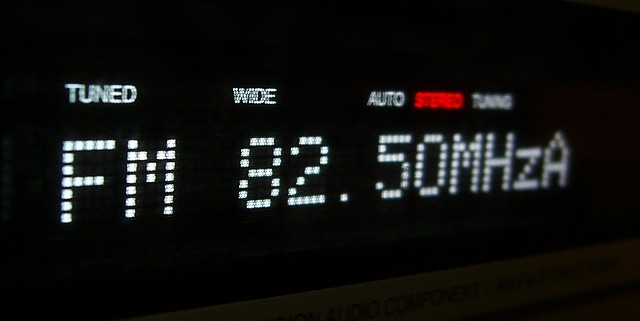
The audio boom of the Shōwa era in Japan was, to a large extent, built around recording FM broadcasts onto cassette tape — what was known as “air-checking.” Records and CDs were fairly expensive at the time, but recording the same music from FM radio onto cheap cassette tapes was the standard way people built their collections. High-end standalone FM tuners and cassette decks were something of a grown-up indulgence, owned not just by audio enthusiasts but by all sorts of people, and even the radio-cassette players that virtually everyone owned were used not merely for passive listening, but practically for recording FM radio onto cassette or MiniDisc. I grew up with a collection of classical FM recordings made on my parents’ cassette deck, the YAMAHA K-9 (dbx), and during my student days I used a Victor RC-X7 as my radio-cassette player, and the SONY TC-K333ESL as a standalone deck.

There were also enthusiasts who would head out into the field armed with a portable cassette recorder such as the SONY Densuke (which was quite substantial in size), a DAT machine, or a recording-capable Walkman, along with a microphone, pursuing not only musical recordings but also nature sounds, ambient soundscapes, steam locomotives, and all manner of active field recording. Quite a few of the people who later went on to become professional recording engineers, I suspect, actually had their roots in exactly this kind of field recording.
In the early 1990s, MD and DCC appeared, and MD in particular was, I think, the last medium through which ordinary people would copy (dub) and edit recordings. That culture of recording FM radio — “air-checking” — faded away in the early 2000s, driven out by the falling price of CDs, the spread of rental CD shops, and then the home PC and internet boom of the late 1990s. Coming full circle, in recent years a certain overlap with Type 5 — the vintage domestic equipment devotee has emerged, and there has been a reassessment among some enthusiasts of high-quality cassette tape recordings of that era — the kind represented by Nakamichi cassette decks — with younger people collecting deadstock cassette tapes, restoring old equipment, and bringing it back to life for their enjoyment.
23 ・・・And Then the Age of “Air Recording” Arrived
And in recent years, with the spread of smartphones and other convenient, high-quality recording (and video) devices, alongside the rise of video streaming platforms, a trend has been gathering momentum across social media — on Twitter, YouTube, and elsewhere — and that trend is “air recording.” The practice of deliberately recording (or filming) the actual sound coming out of an audio system and publishing it has come to be called “air recording” — a new style of documentation built around the idea that sound quality differences are hard to convey in words alone, so why not record them and let people hear for themselves. It originally began with audio shops overseas as a way of introducing products, but the principle is simply: hearing once is worth more than being told a hundred times. And since smartphones and iPhones inevitably hit a ceiling when it comes to sound quality for this kind of recording, the number of high-end enthusiasts who care deeply about such things and go so far as to equip themselves with expensive dedicated microphones and recorders has been gradually growing.
As for me — the author behind Hakoniwa Pure Audio — I don’t have a great deal of interest in publishing videos at the moment, and whether I’ll ever actually venture into “air recording” remains an open question. And yet, depending on how the online world develops, a future in which I have no choice but to finally heave myself into action may be closer than I think — or so I find myself half-suspecting. That said, I do occasionally browse other bloggers’ YouTube videos and Twitter clips comparing audio equipment.


Air recording, when you think about it, is actually something that can be quite heavily shaped — or inflated — by the quality of the recording equipment and how well it is set up, so in a sense it is a kind of trick. But then again, much like audio terminology itself, perhaps it can be seen as a new dimension of the hobby — one that demands its own kind of skill and literacy from the listener.
~ Summary ~
This was written with a fair amount of self-deprecating “look who’s talking” energy, and I’ve pushed things a little further than necessary in the interest of making it entertaining. Not everything here is a positive assessment — there’s a good dose of irony mixed in — but taking the good with the bad and putting it all together, Hi-Fi is, when it comes down to it, life itself. It is a hobby of real depth, one that reflects with great clarity the philosophy and values of the person who pursues it ・・・ probably, hopefully.
Writing it all out like this, the author’s own profile here at Hakoniwa-style AUDIO STYLE would be ・・・
I think I fall into the type of Hi-Fi enthusiast where these various categories are blended together to greater or lesser degrees. Perhaps the music lover sits at the centre, with everything else filling in around it. I can already hear people from all directions saying I’m obviously just a crank, full stop — and I’ll humbly accept that verdict too. But I imagine most of you will find yourselves fitting more than one of these categories as well, so if you like, why not try putting the question to yourself.
Including types not listed here, the world contains all sorts of Hi-Fi enthusiasts — but what concerns me personally is the reality that the “music lover / Hi-Fi enthusiast” who fits categories 1 through 3 may, in this particular corner of the hobby, actually be a minority. Among those who are active in the Hi-Fi world, the mainstream tends to be enthusiasts with a strong attachment to equipment, and there are quite a few whose actual knowledge as music lovers is, if truth be told, rather thin. They may not want to admit it, but when you talk with them you sense that the ratio of Hi-Fi to music occupying their minds is something like 8:2 or 9:1, and there are even people who won’t readily say what music they actually listen to day to day.
This sort of Hi-Fi enthusiast often owns a music library that, by a music lover’s standards, is one or two orders of magnitude smaller, or has filled it largely with so-called audiophile pressings of questionable musical value — the kind celebrated only within Hi-Fi circles. Look more closely and you find that almost all the money they have poured in over the years has gone into the system itself, with next to nothing invested in recordings or live concerts. People like that have always been a perfectly ordinary feature of the Hi-Fi enthusiast world.
Against that backdrop, what I have always kept in mind, regardless of what type of Hi-Fi enthusiast someone is, is whether they can talk about music and performance itself with genuine affection and real depth. The genre each person cares about is their own business, but those who are engaged with Hi-Fi precisely for the sake of music will naturally and spontaneously overflow with talk of the music they love, and you can feel, too, that their knowledge of whichever genre they follow runs to a considerable depth.
Of course, how one pursues a hobby is entirely a matter of personal freedom, and an approach to Hi-Fi that puts equipment or technology first is, again, entirely up to the individual — and should be respected as such. That said, there is a pattern that is all too common in this world: someone who started out intending to enjoy music through Hi-Fi finds, after being nudged along by equipment-minded enthusiasts, that without quite realising it the priority and the master-servant relationship between music and Hi-Fi have quietly reversed. Before they know it, they can no longer enjoy music at all, and they find themselves sinking ever deeper into the swamp of endless equipment upgrades. That is genuinely painful to watch. So when a newcomer is looking for a mentor to guide them through choosing audio equipment and so on, I would strongly recommend paying careful attention above all to one thing: how deeply does that person actually know music? Do they have a real attachment to it, a genuine love for it? That, I think, is the one point worth making absolutely sure of.
Auto Translated by CS4.6


List of comments (16)
お久です。帰ってきていきなり飛ばしますね!!
誘い水に乗って自分の属性を確かめるべく、チャート式に0から21までの各項目について5段階評価をしてみました。
◎大いにそう、○近いかも、―どちらとも言えない、△ごく少なめ、●全く違う
するとポイントが高かったのが、
2 音楽愛好家兼オーディオマニア ◎
5 往年の国産製品大好きタイプ ○
6 PCオーディオ追求タイプ ◎
8 ピュアオーディオマニア ○
15 機材コレクタータイプ ◎
19 低価格ローエンダー(バジェットHi-Fi)追求タイプ ◎
2と8と19は管理人さんと重なってますね。見た目とかブランドには拘らない(\拘れない)のが難点かも。参考に、10, 13, 14, 16, 18とかは●でした(滝汗;;
自己評価とpastel_pianoさんからみたイメージは違っていたりするのでしょうかゞゞ
ではでは、
こちらではお久しぶりです。
KuniさんはDIYテイストが強いので、
4 エンジニア系自作マニア
これもかなり入ってますよね。回路読める読めない云々は抜きにして、
僕も出来る範囲で自分でメンテしたり、電源ケーブル等々手作りしたしてますd(^_-)
初めまして。Livedoorブログにて「(ヴィンテージではない)レトロオーディオの世界」というブログを書いてます。
この記事を大変興味深く読ませていただきました。
自分は完全に 5 往年の国産製品大好きタイプ(ちょっと3 円盤コレクタータイプが混じるかな)です。
50歳を超えたおっさんですが、ジャンク品の再生(リユース)に血道をあげるコスパ重視型。ちなみに愛読誌は「ステレオ時代」です。(笑)
21もの類型があるのはすごいです。
20.オカルトオーディオマニアと友達になりたい…
tunefalcoさんはじめまして!「21」の類型は、もう適当に
だーっと書いてみたら、たまたま「21」だっただけです(滝汗)
コストパフォーマンス重視。良くわかります。
オーディオの楽しさの本質は、お金を掛けることよりも
「創意工夫、試行錯誤」のワクワクにあると思ってます。
ブログ拝見しました。相互リンクも出来ますので、もしご希望でしたら声を掛けて下さい。
今後ともよろしく御願いします。
pastel_piano様
初めまして。
オーディオマニアのタイプ分け、とても良く整理されてそれぞれにコメントされて参考になります。pastel_piano様の「云いたい放題の分類」、ウィットにとんだ表現に思わず笑みがこぼれてしまいます。
Kuni様がコメントされていますように、私も近々、自分の属性を確かめるべく、各項目について5段階評価をしてみます。
Myuさんはじめまして。愉しんでいただければ幸いです。今後ともよろしく御願いします
pastel_piano様
はじめまして。たぬPと申します。
過去記事を楽しく拝見させていただいておりました。
久しぶりに覗いてみたら、「あら?新しい記事!」また楽しみに読ませていただきます。
今回も自分に引っかかるのが幾つかあり大笑い!です。
貴殿の記事よりCDPとしてPIONEER DV-545を入手し、挙句には DV-600AVまで…
お陰さまで又CDが増え始め白い目で見られております。
また時々覗かせていただきます。
エキサイトで「お山な日々…時々町」というつぶやきをしております。
こんにちは お久しぶりです
いやぁマニアの分類面白かったです
概ね5つか6つくらいと思ったら21もあったとは!
もっとも5から6を細かく分類すると確かに20超えしますね
私は最近はあまりオーディオの事を書かなくなりましたが、
ここに掲げられている分類にカテゴライズされる事の反発なのかもしれません
内容が過激と仰られていましたが、まだまだツッコミが浅いですよ(笑
もっと揺り動かしてください(笑
カテゴライズへの反発とはいうものの自己分析してみれば
私は2と5と8と14と20といったところでしょうか
14の亜流としてスピーカーも安価で小型の舶来物が多数を占めてきましたね
20は自分で理論無しの聴感で電源ケーブルやアクセサリーを作りますので範疇かな
また遊びに来ますね(^‐^)
>>松本さん
超〜お久しぶりです♪
・・・ツッコミ浅いですか?。
オーディオとは別に、最近ではカメラ(僕はFUJIFILM X-A5)にも嵌まっていて、
撮った花写真をTwitterでアップしています。また色々教えてくださいませ♪
>>たぬPさん
ブログ拝見しました。DV-545やDV-600AVの中古品は
未だに人気があるみたいですね。お役に立てるかわかりませんが、
これからもぜひ読みに来て下さいd(^_-)
はじめまして。
さくの家電のーとブログのさくです。
いつも文章のうまさに感心しながら読ませていただいてます。
さて、今の自分は果たしてオーディオマニアなのか?
そんなことを近年は一人悶々と考えています。
しかしオーディオマニアもそれぞれ。
該当する分類にいくつか当てはまり、オレもオーディオマニアでいてもいいのだと、少し気持ちが楽になりました。
オーディオマニアも長くやってると該当項目が増えてくる、というよりオーディオに向き合う姿勢がその時その時で違っていたのだなと気づかされました。
さくさんはじめまして&おはようございます。
「さくの家電のーと」拝見しました。・・・自分も昔、鮎川まどかに恋をしたくちです。
差し支えありませんでしたら、箱庭オーディオのトップページにある相互RSSに登録させてください。
※さくさんはじゅうぶんオーディオマニアだと思います。
さくの家電のーとブログのさくです。
相互RSSはよくわかりませんが登録お願いします。
ところで記事の話ですが、マニア分類に該当するものを集めて行けば自分のマニア傾向が見えてくると思います。
この機会に客観的に自分の傾向を考えてみたところ、私の根幹にある大切なものが分類にないことに気づきました。
それは「録音マニア」です。
現代ではオーディオにおける録音は皆無(不要)に近く、再生に重きを置く時代です。
が、未だメディアtoメディアのダビング、エアチェック、生録などを好む人種は少なからず存在しています。
オープンリール、カセット、DAT、MDのデッキ、またその録音メディアにまでも異常に執着し、あえてダビングした劣化音源を聴くことに快感を覚えるのが録音マニアです。
かつてのオーディオの楽しみのひとつに自分で録音することが大きく占めた時代がありました。
自分なりに最高の音質を追及することで、オーディオを学び、耳を鍛える機会を得たのが録音でした。
というわけで録音マニアに報いるためにも、ここに勝手ながら補足させて下さい。
おはようございます。
相互RSSはお互いのブログのトップページある「Powered by livedoor 相互RSS」の事で、
同じオーディオや音楽関連の気に入ったブログやお友達ブログを登録して紹介するツールです。
「さくの家電のーと」さんは既に登録してありますのでご確認くださいませ。
※もし良ければこちらも登録していただけると嬉しいですd(^_-)
「録音マニア」
確かにそうですね!盲点でした。教えてくれてありがとうございます。
エアチッエク、生録、最近では空気録音・・・などなど後で分類に加えたいと思います♪
晋遊舎のmonoqloだったか家電批評だったかで中華アンプという存在を知り、youtubeで空気録音をされてる方の動画に影響され、あくまで超ローエンドでオーディオ入門したいと考えてる人間です。
この記事は大変参考になりましたし、最後に空気録音が出てきたのも面白かったです。
基本・空気録音派です。
①説明するのがめんどくさい
②高級ビンテージを何の躊躇いもなく改造しまくってて(爆)いつ逝くかわからない
③国産は10%であとは舶来品 (ONKYO D-TK10 ちょっと異質でオモロイ)
④終活してもヨウツベに上げとけば、病床ならスマホで聴ける 墓まで持っていけるのは【思い出】だけだと悟っているからです
ちなみに機械本体よりケーブルのほうが高いという【重篤電線病患者】です(笑)
>>ameさん
>>アナログ馬鹿一代さん
コメントありがとうございました。