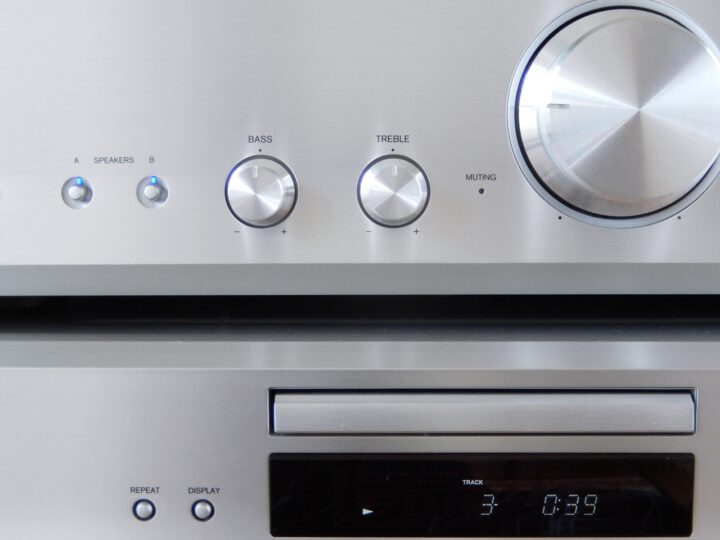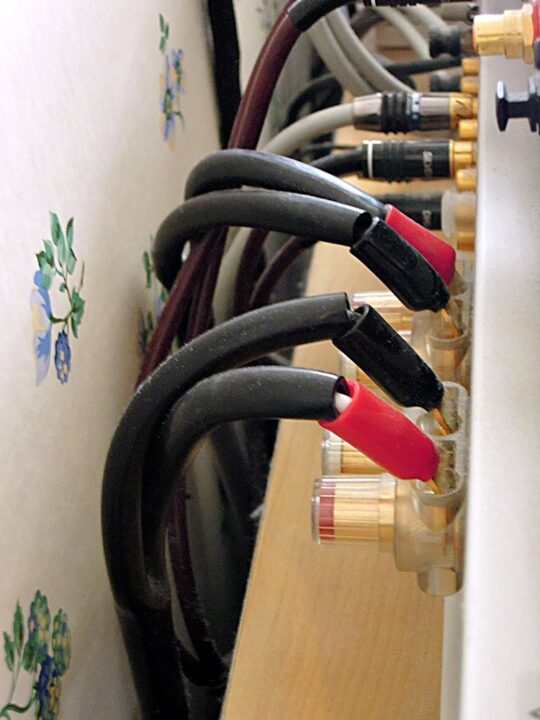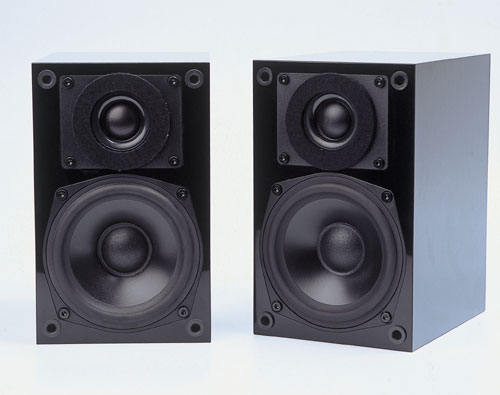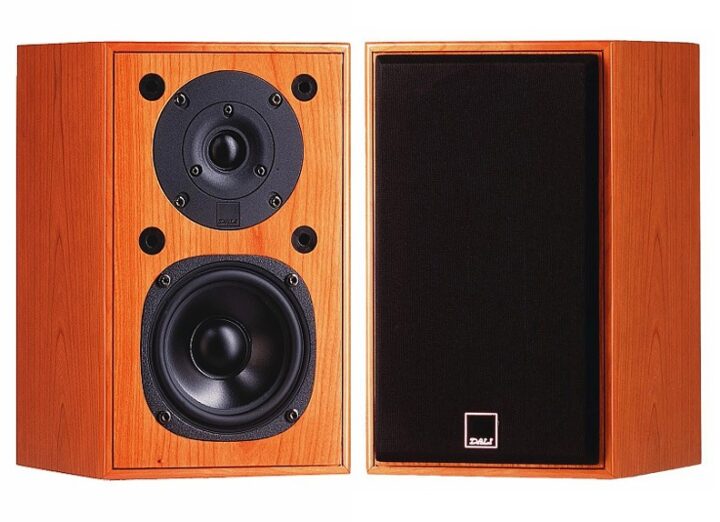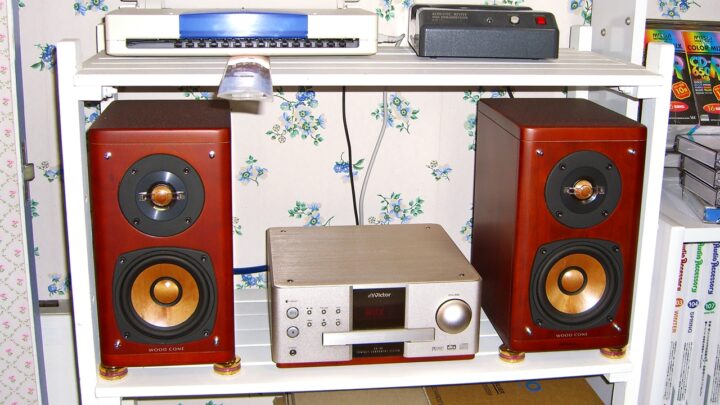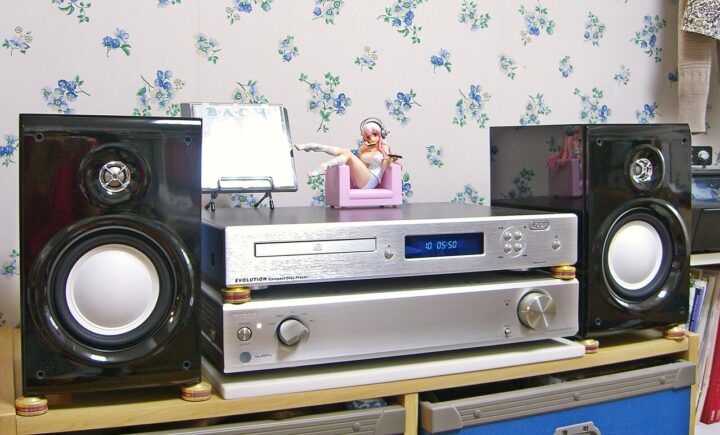
Now, if you are someone who feels that your current audio equipment or mini hi-fi system is simply not producing sound that makes you happy — or even if you are reasonably satisfied with things as they are but would still like to see some further improvement in sound quality — you will need to take some kind of effective step up from your current system.
If you have an all-in-one system such as a boombox, there is really no option but to replace the whole thing. However, if you own what is known as a mini system or a hi-fi separates-style set, the author’s first recommendation would be to start by swapping out the bundled speakers for a standalone pair. (Of course, if budget allows, it is preferable to replace the entire system — but that can come later.) With budget systems, it is no exaggeration to say that more than half of the sonic character is determined by speaker quality. (In terms of the more internal qualities, amplifier quality and compatibility are actually more important — but that will be addressed as the next step.) The dynamic speaker, unlike digital equipment, is technologically a rather low-tech affair; its fundamental structure has not advanced a great deal since the early days. For that reason, what determines whether a speaker sounds good or poor depends less on the manufacturer’s engineering prowess and more on the designer’s musical sensibility and quality of ear — an almost abstract dimension of artistic and craftsman-like instinct, if you will.
In recent years there have been rare cases where domestic manufacturers have bundled their mini systems with well-regarded overseas models — ELAC, for instance — but that remains very much the exception. As for the bundled speakers found with the great majority of Japanese mini systems: those with flashy, outlandish designs, or types loaded with an unnecessary number of driver units, are overwhelmingly style-over-substance affairs that simply do not produce quality sound — that much can be stated with confidence. (※ There are exceptions, such as the ECLIPSE TD speakers.) Given this situation, even a system component with a fair degree of latent potential will find that potential dragged down by the quality of the speaker, and one will never be able to draw out what it is actually capable of. In any case, the author would like to propose that the first step towards a meaningful upgrade is to swap those speakers out for a proper standalone pair designed for pure Hi-Fi use, one that actually sounds as it should.
 Audition Roundup Part 1: SpeakersComparative Listening: 23 Compact Speaker Models @2014–15, Part OneComparative Listening: 23 Compact Speaker Models @2014–15, Part Two
Why the Author Recommends Small Speakers Rather Than Large Ones
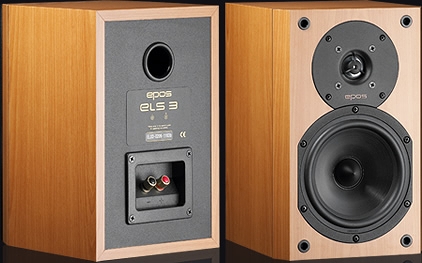
What AUDIO STYLE recommends here is a small European or American bookshelf speaker — something roughly the same size as the speakers that came with your mini system, or perhaps a touch smaller. Even when built to a high standard with quality components, small speakers can be obtained at a relatively modest price simply by virtue of their size.
The reason for this is that most speaker ranges are designed around a single philosophy and produced to consistent quality standards from very small to large, with the parts quality and fundamental design that determine the essential sonic character shared across the range. As a result, the price difference between models reflects size more than it does quality, and where the underlying design is a good one, downsizing to a smaller and less expensive model will very often preserve that sonic excellence.
※ There is also the fact that within any given range, the smaller and more affordable models — closer as they are to point sources — tend to be relatively easy to set up, and are more forgiving when driven by modest, low-power amplifiers. There is a certain paradox here: even with a beginner’s casual placement, it is often easier to achieve high sound quality and strong musical expression from a small speaker than from a large one.
For those fortunate enough to have ample room and budget — people who can enjoy full-scale jazz, full orchestra, rock, and pop at life-size levels with rich bass and high volume, in a detached house well away from the neighbours — the minimal system recommended here at AUDIO STYLE would really only be a suggestion for a secondary system, something for a study or bedside. But in truth, for the majority of typical Japanese homes, most people can only play music at small to moderate volumes, thumping bass would be a nuisance to the neighbours, and in many cases the system is used primarily as background music — is that not the reality for most?
A compact Hi-Fi system is not something the author can recommend if your first priority is bass impact or sheer volume. On the other hand, for those who value the vocal range, the flow of the music, and — at everyday low to moderate listening levels — the realistic texture and purity of acoustic instruments, deliberately choosing a small speaker that is less susceptible to placement issues is, in the author’s view, a more direct route to musical satisfaction than reaching for a larger speaker without sufficient thought.
With that said, here are a few of the author’s recommended speakers from the affordable range of overseas models available as of 2005. Simply swapping out the speakers on your current mini system for one of these should open up an entirely new level of musical experience.
Sweden: audiopro Image12


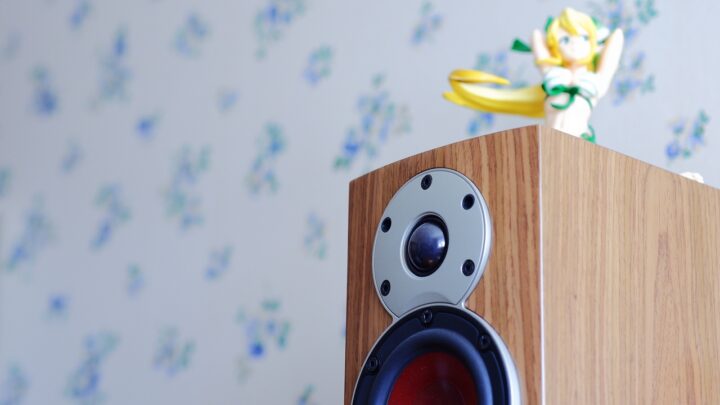
Its transparency is genuinely first-rate, making it a particularly strong recommendation for those who want to listen quietly to small-ensemble classical music, or who wish to pursue a high-end quality of sonic clarity without spending a great deal. The author uses the previous model, the audiopro Image11, as part of a secondary system in the study at home — it offers an exquisite midrange and treble, though at the cost of meaningful bass extension. The Image12 features a revised driver and is slightly larger, with an extended frequency range in both the bass and treble. By comparison it has a slightly V-shaped character and feels like a somewhat different speaker, though it may well be the more universally appealing choice, suited to a wider range of source material. The audiopro house sound — that good ear and fine musical instinct — remains very much intact. ※ The author subsequently purchased an Image12 as well.
Sweden: audiopro ALLROOM sat
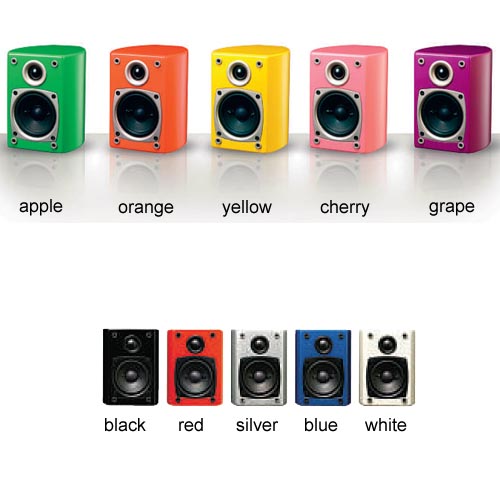
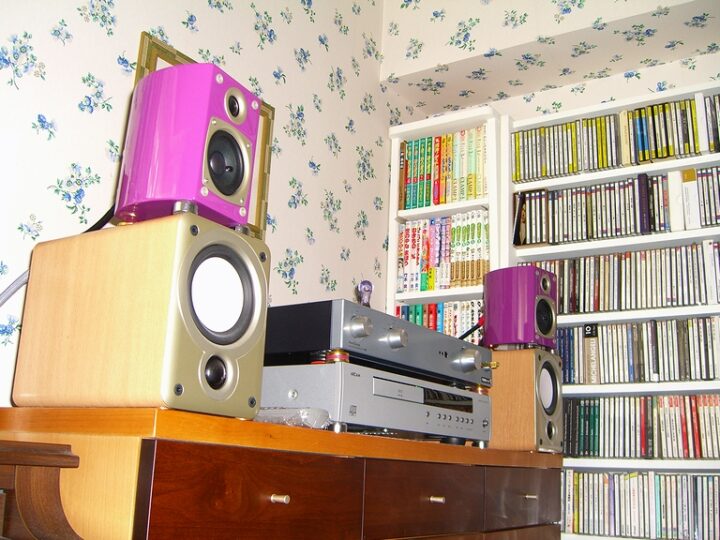
As the SAT designation implies, this is originally a satellite speaker intended for 5.1-channel surround use — but its very small size also makes it well suited to desktop near-field listening. Its frequency range is considerably narrower than the audiopro Image11 or Image12, yet it has a generous sense of space, a pleasingly open soundstage, and a charming, smooth character. When it comes to natural musical flow and expressiveness, it can at times even surpass the Image12 — it is a genuinely capable speaker.
Germany: ALR/JORDAN EntrySi
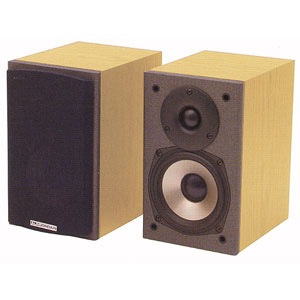
This too is an excellent speaker — the previous model, the ALR/JORDAN EntryS, was used until recently as a secondary system speaker here at AUDIO STYLE. Despite its metal cone, the midrange density is high, and it possesses a warmth and woody character distinctly its own, alongside a slightly dry yet natural texture, a dense and substantial midrange presence, a broadly generous sense of acoustic space, a robustness that refuses to buckle even when driven hard, and a real sense of musical richness — taken together, it has an appeal that no domestic Japanese speaker can match. The minor revision to the EntrySi has brought further refinements including a new tweeter, making for an even higher-quality sound.
UK: MonitorAudio Radius 90 (HD)

 ポチップ
ポチップ
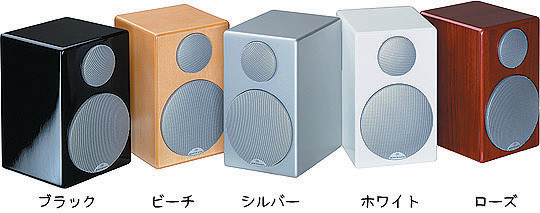
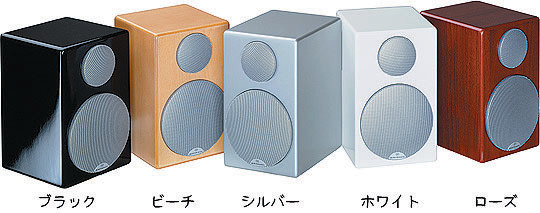
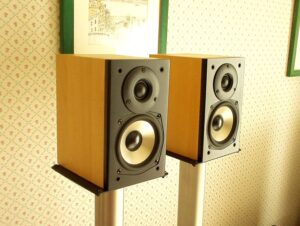
The smallest model in Monitor Audio’s Radius series, the Series 90. It is available in a wide range of finishes — black, white, silver, beech, rosewood, and more — allowing you to match it to your interior. In terms of sound quality, the high-gloss piano finishes such as black are recommended (the finish does affect the tonal character). Sonically it has the crisp, solid quality one associates with a metal-cone speaker — fast, with a particular talent for electronic and programmed music, and for rock and pop delivered with rhythmic bite. As long as you are not expecting deep bass or high sound pressure levels, this is one speaker that will give you a great deal of pleasure. The deep bass is quite lean, but for something palm-sized it extends surprisingly well and is really doing rather well for itself. The attack on drums in particular is razor-sharp, and it puts you in a thoroughly good mood when you listen.
 ポチップ
ポチップ
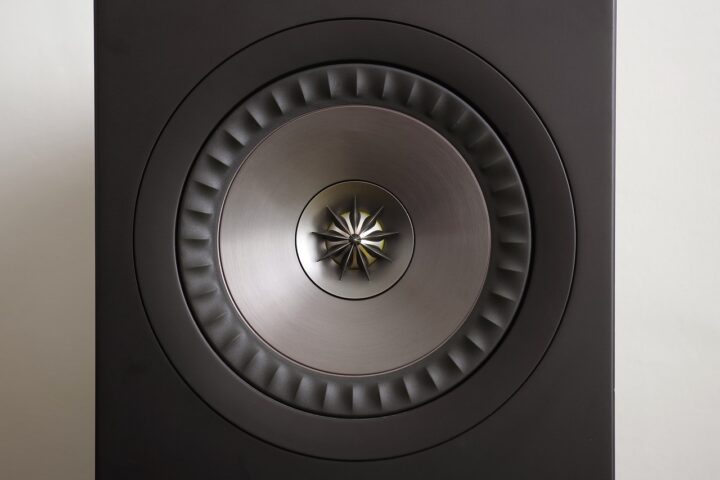
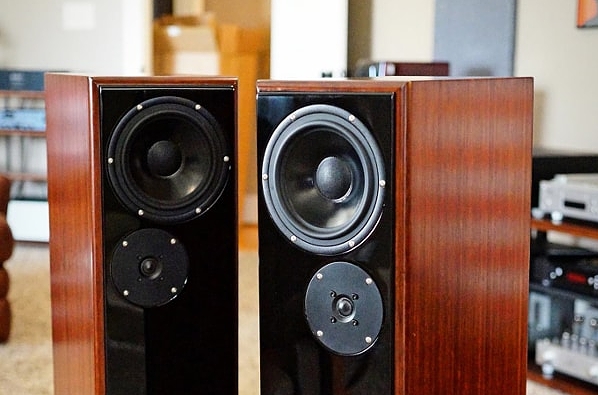
So there we have it — four speaker models currently available as of 2005, all priced under 50,000 yen at retail. For the dedicated Hi-Fi enthusiast, these are all well-known and popular compact speakers. Personal preference, name recognition, and ease of availability through online retail were all factors in selecting them. As for the author — whether or not to acquire the Monitor Audio Radius 90 remains a source of some indecision. Though first there is the matter of finding an amplifier somehow…

Beyond the four models introduced here, there are actually a great many excellent compact speakers to be found among discontinued models circulating on the second-hand market. Including some that I regretfully had to part with in the past to raise funds — it is the treasures scattered throughout the used market that rather hold my interest, if anything. I hope to cover those discontinued small speakers of bygone days in due course, that story included.
Auto Translated by CS4.6