This story takes place some 30 years ago — back when I was still a teenager. At the time, the lingering afterglow of the bubble economy was still very much in the air; Akihabara’s electronics district was bustling with energy, pure Hi-Fi had spread not just among enthusiasts but to the general public as well, and the major domestic electronics manufacturers were all fiercely competing with one another over heavy, bulky Japanese-made Hi-Fi products — speakers, amplifiers, and CD players — priced at a combined list price of 300,000 yen for the three. Then, as the 1990s arrived, driven in part by the yen’s dramatic rise, stylish and slim Western components and compact speakers in a price range accessible even to students — known as “budget Hi-Fi” — began to be imported, and started appearing on the Japanese market at prices not far removed from domestic products in the same popular price bracket.

Affordable and stylish imported speakers in particular were warmly received in the Japanese market, gradually eating into the share held by domestic speakers — to the point where even the audio corners of discount electronics retailers out in the suburbs had the likes of British TANNOY and American Infinity compact speakers lined up on display. ※ Up through the 1980s and 90s, a considerable amount of floor space in consumer electronics retailers was given over to separate Hi-Fi components and stereo system sales. In those days, when affordable pure Hi-Fi products were at their most vibrant, I wandered around Akihabara listening to all manner of things, and there were quite a few speakers, amplifiers, and CD players that stopped me in my tracks — yet which, through some unlucky turn of fate, had already been discontinued by the time I might have bought them. Even now, I occasionally find myself thinking back on a particular model and remembering how good it was.


 ポチップ
ポチップ
My First Encounter with Monitor Audio, the British Speaker Manufacturer
One of the speakers I longed for and still remember fondly is the Monitor 1 Gold, an ultra-compact speaker from British manufacturer Monitor Audio. Monitor Audio is today well known among Japanese Hi-Fi enthusiasts and has firmly established itself as one of Britain’s representative brands — but at the time, I believe they had only just begun to be imported into Japan.

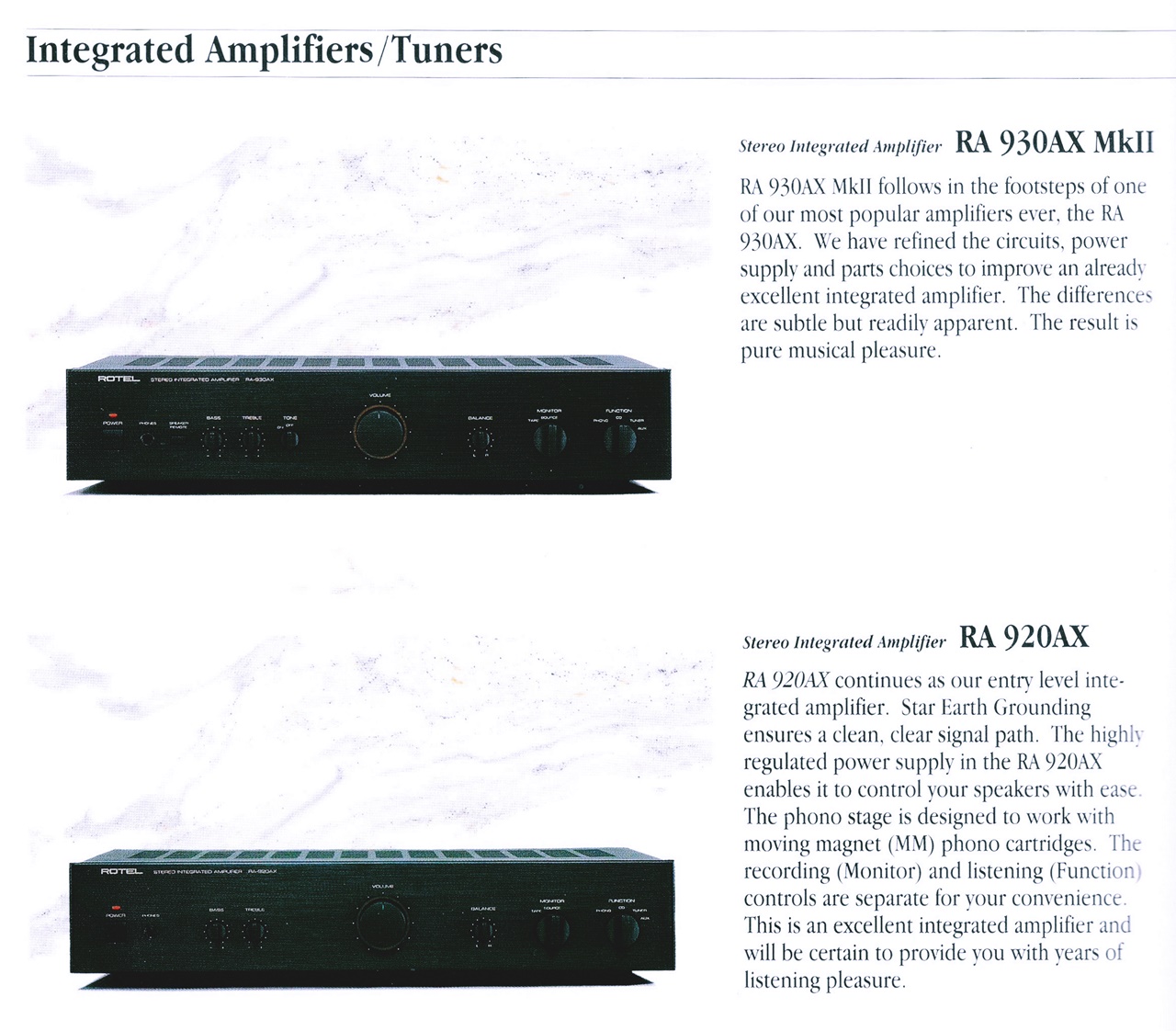
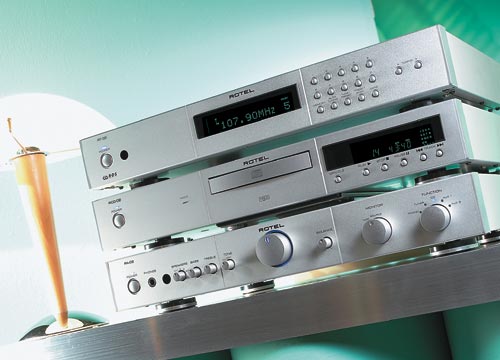
The encounter was, if I remember rightly, somewhere outside the old Radio Kaikan or the Akihabara Department Store. I was walking near the station when I heard something that sounded remarkably good coming from one of those shops with audio equipment and parts piled up in a kind of semi-outdoor stall, and when I went closer, there it was — a strikingly beautiful, tiny Monitor Audio Monitor 1 Gold in rosewood mahogany finish, producing an extraordinarily clear and vivid sound. If my memory serves me correctly, it was an outdoor display rather than inside the shop. The integrated amplifier it was paired with was a slim, entry-level ROTEL model — I recall it had tone controls. Most likely it was the ROTEL RA930AX Mk2 or thereabouts, possibly the RA930BX.
The retail price of the Monitor Audio Monitor 1 Gold at the time was around ¥45,000. Together with the ROTEL integrated amplifier it would have come to roughly ¥100,000. At today’s prices I would snap that up without a second thought, but back then my sense of what I could afford meant I never quite managed to commit, and in the end the opportunity slipped away and the years passed.
Reunited with the Monitor One Gold — after more than 25 years
Nearly 30 years have passed since then, and yet a few months ago I happened to come across a Monitor Audio Monitor 1 Gold listed somewhere online, looking to be in remarkably fine condition, and before I knew it I had bought it outright. It wasn’t as though I had been searching for a Monitor Audio Monitor 1 at this point in my life — but encounters like this arrive without warning. It felt rather as though all those feelings from those long-gone days had been quietly circling around, and had finally chosen to make themselves known.
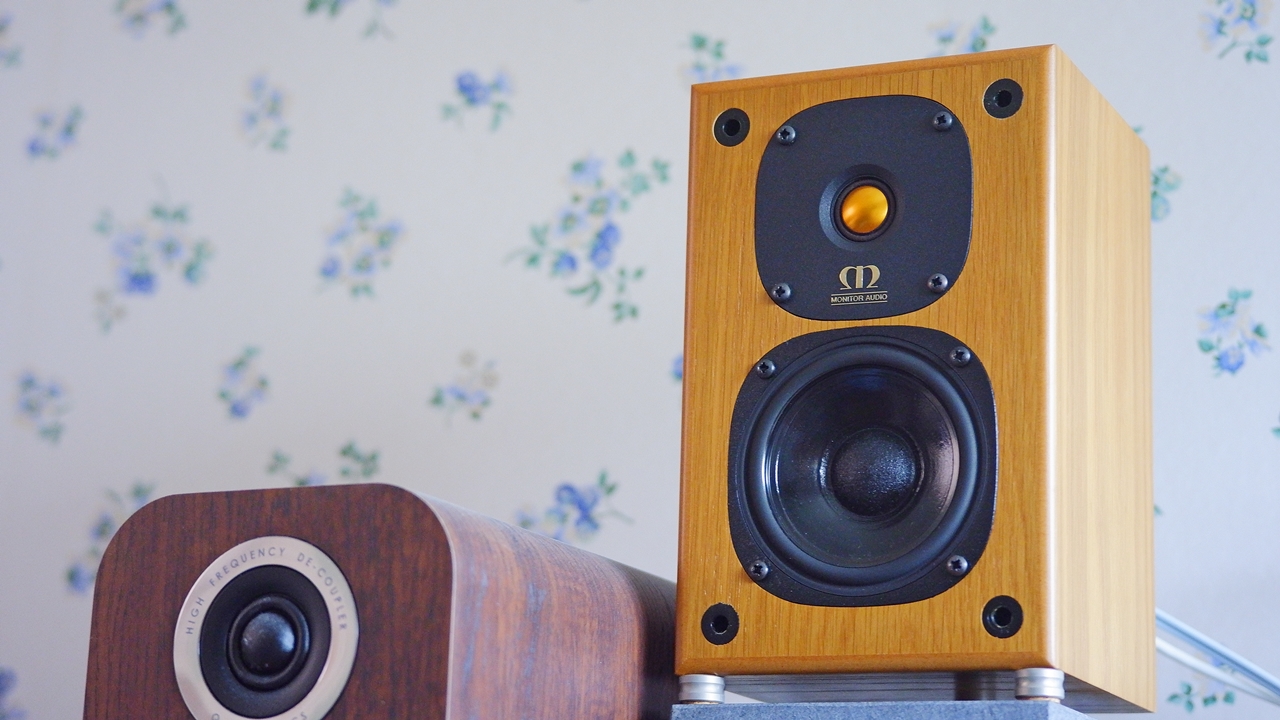
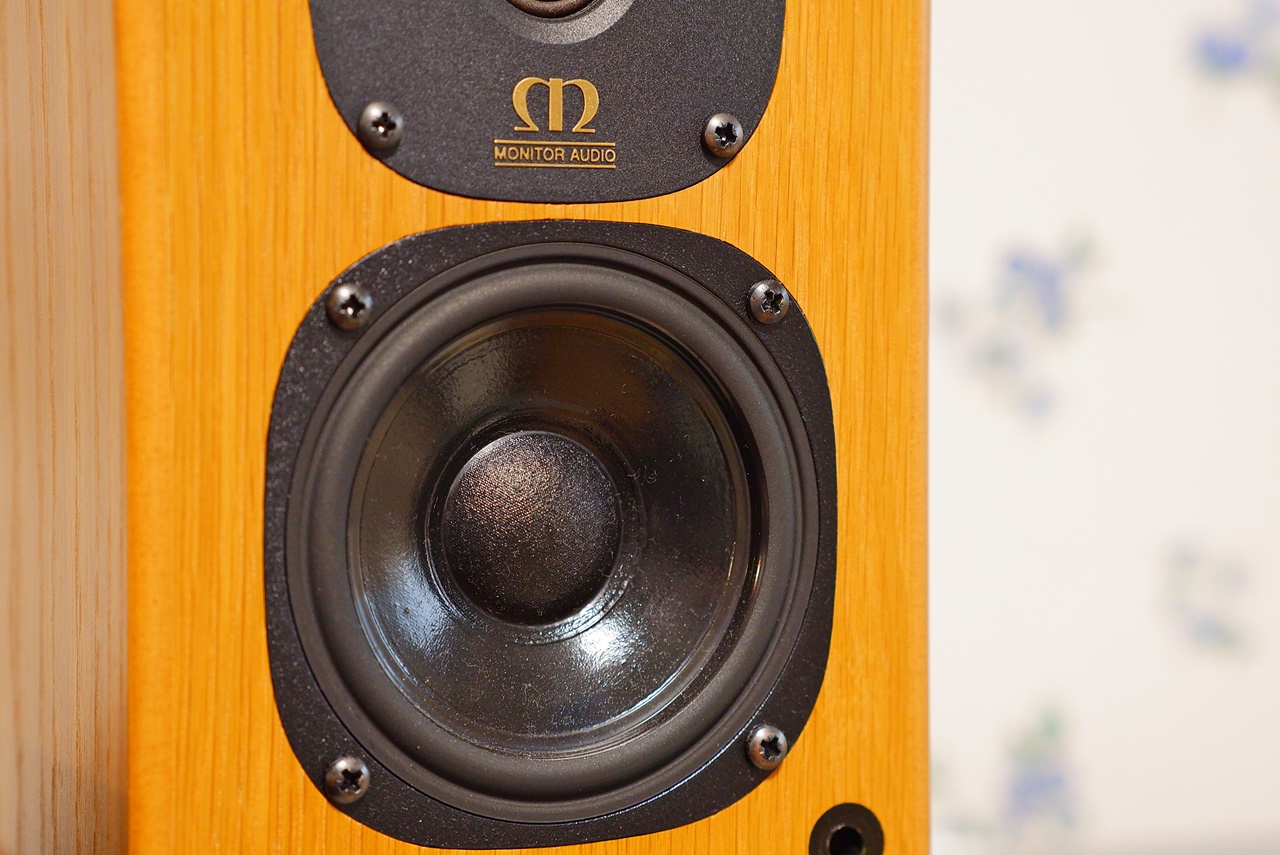
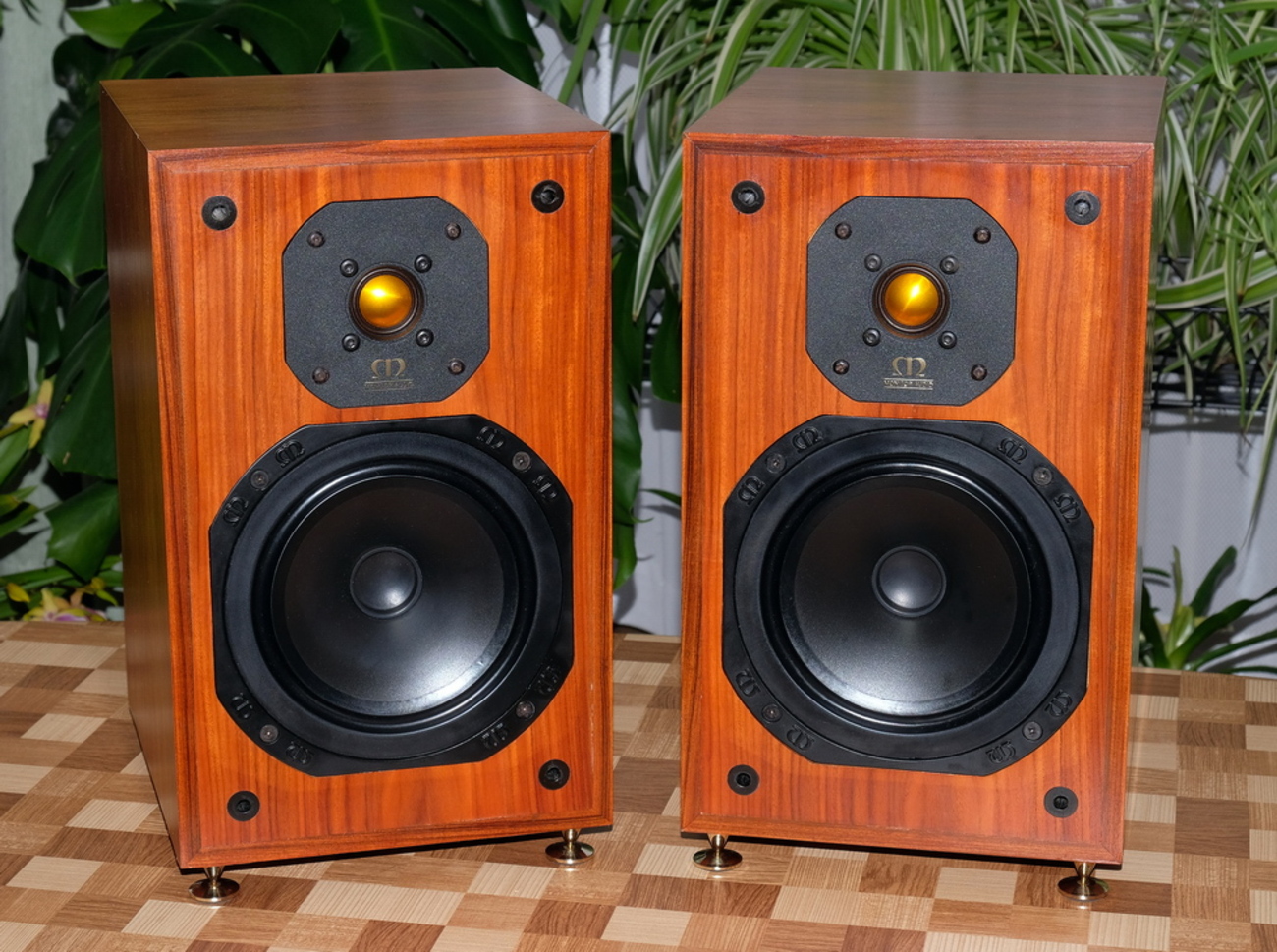
The previous owner appears to have looked after it with great care throughout, and each driver still looks as good as new; the natural oak veneer cabinet shows no notable scratches either, and it really does not look like a loudspeaker manufactured some 25 to 30 years ago. Handcrafted in England, of course. Small as it is, there is a sense of authenticity and refinement about it that is simply not found in today’s budget loudspeakers — those Chinese-made affairs that so plainly announce their cost-cutting in every material.
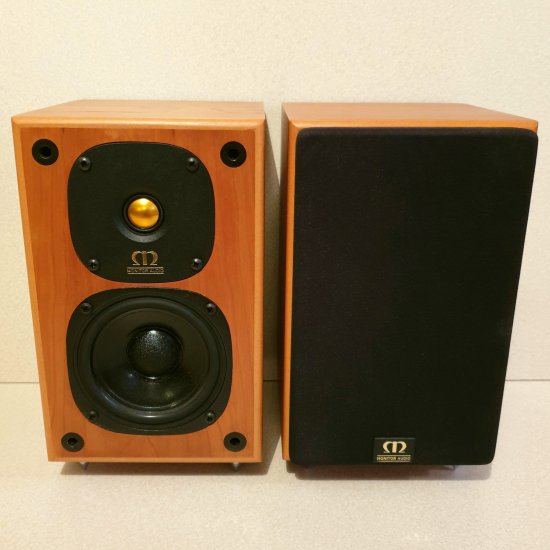
Among the budget compact loudspeakers I collect, quite a few — despite carrying prestigious European brand names — turn out to be Made in China, and the reality is that many of them have an unavoidable toy-like quality to their feel and presence. But in the 1990s, British products at this price level were still mostly made domestically, and when you place them side by side, you are left with the very clear impression that there is a “real thing” here — something that plainly differs in its dignity as a piece of furniture. It struck me, rather late in the day, that the globalisation of manufacturing has gradually diluted the handcrafted quality that once went without saying, and that this must be one of the reasons why Hi-Fi equipment has lost some of its character as a hobby object.
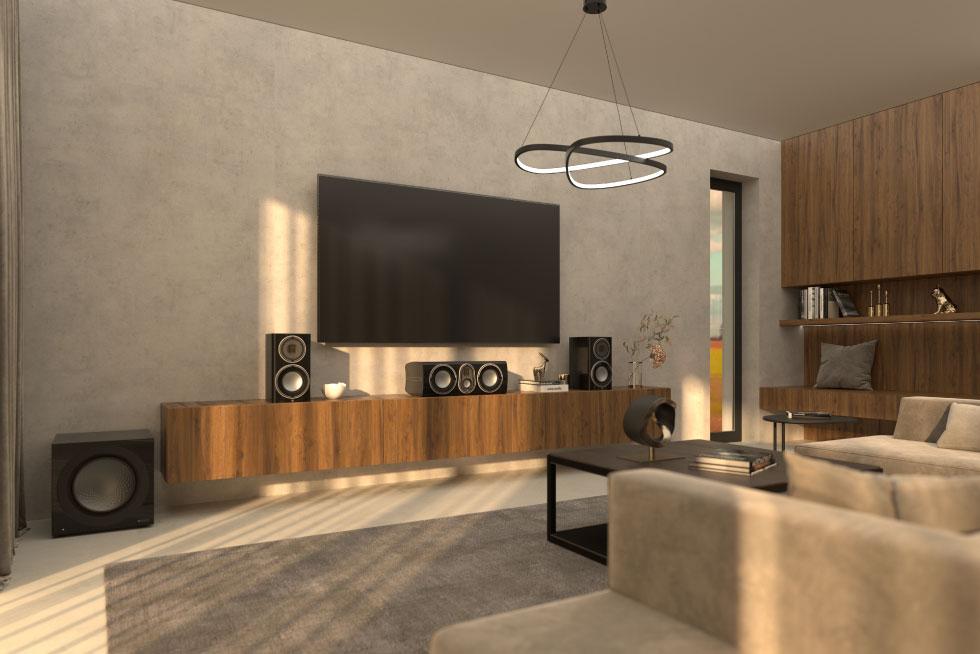
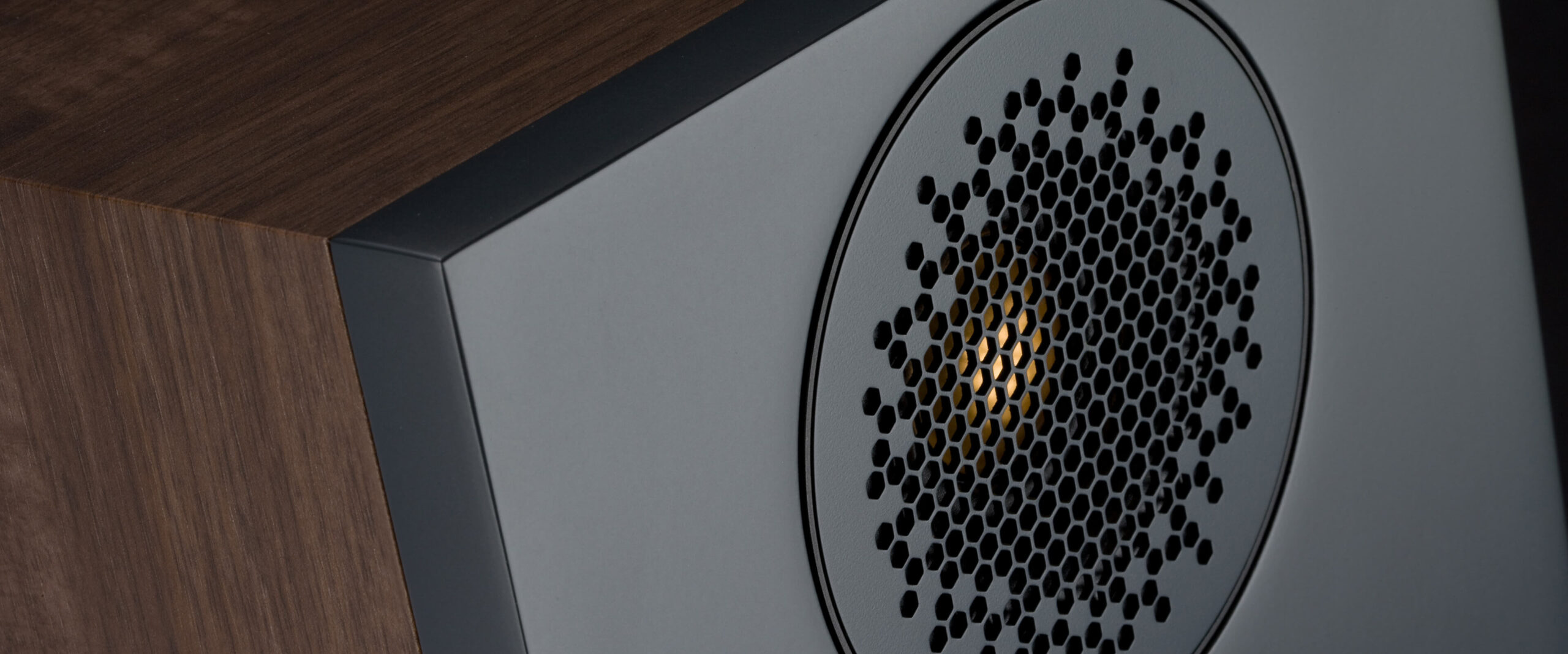
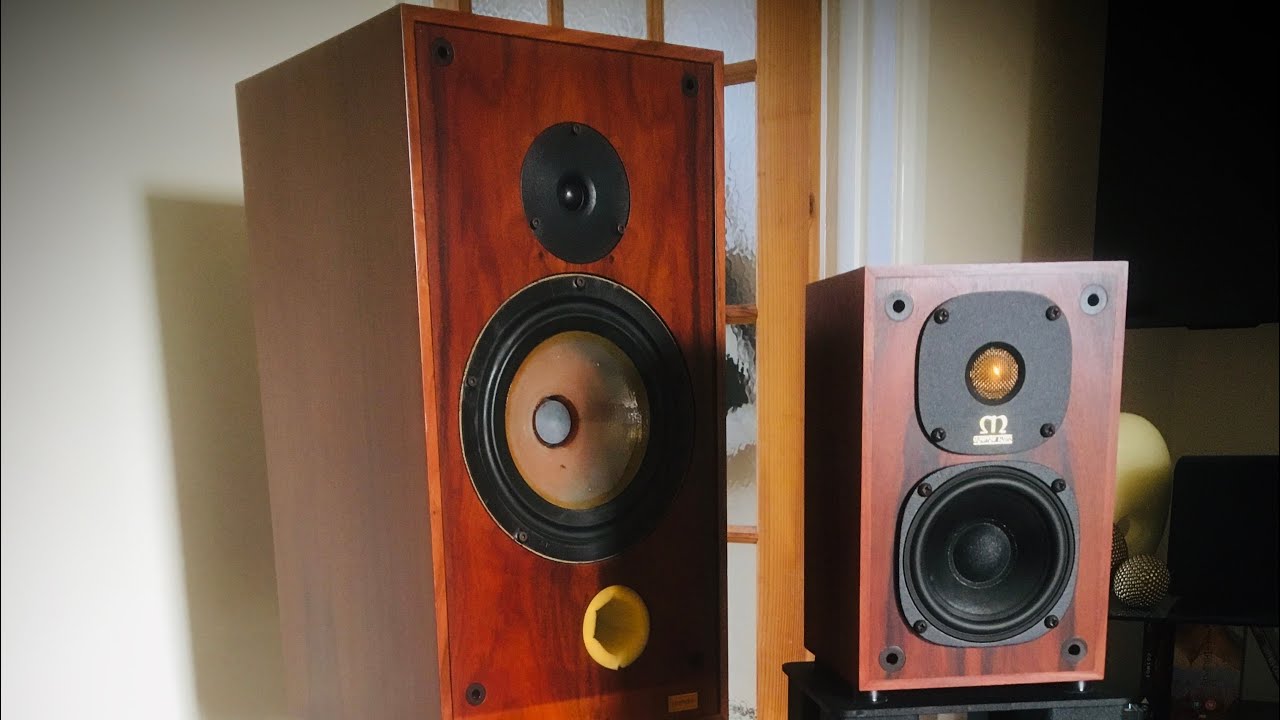
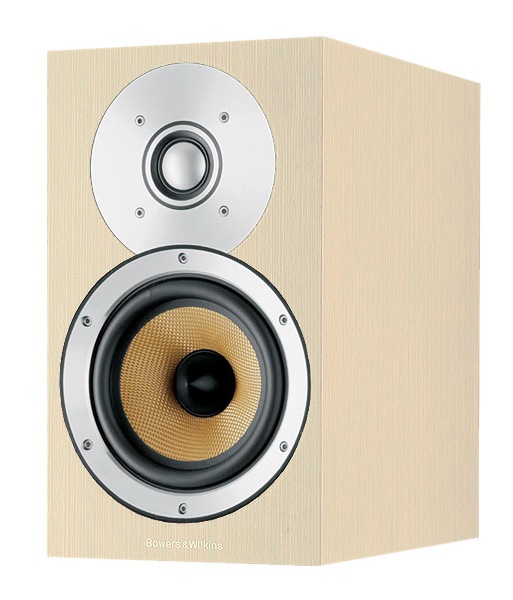
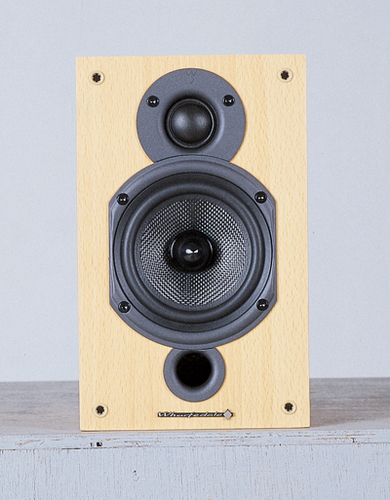
The images show the Silver RX1, but the review itself is of the Monitor One.
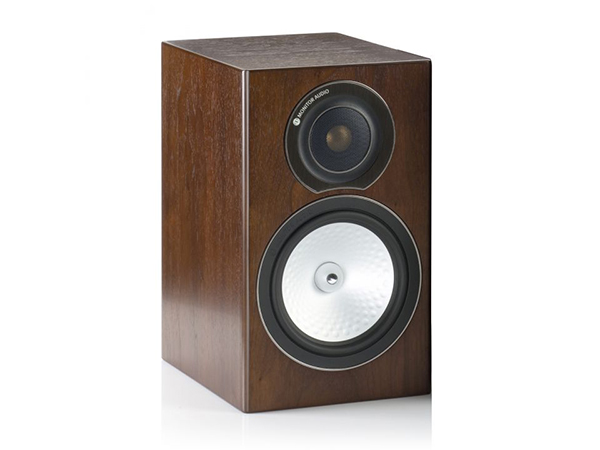
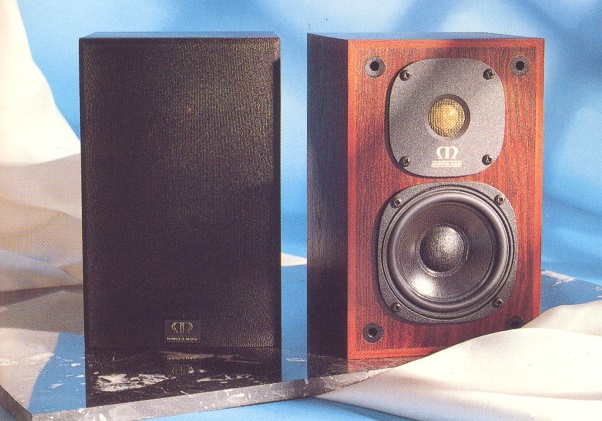
Specifications: Monitor Audio Monitor One Gold and The MA100 Gold
When exactly was the Monitor Audio Monitor 1 Gold produced? Since it no longer appears on the manufacturer’s own website, the details of its origins are not entirely clear, but there are American reviews from 1991, so it seems the early models were already available around that time. On those early models the drive units were mounted slightly proud of the baffle, though at some point this changed to a flush fit. Also, the Monitor series speakers that generally circulated in the Japanese market came with bi-wiring binding posts, but it appears that some early overseas models had single-wiring terminals.
| Monitor One Gold | Monitor 1 (later model?) | The MA100 Gold | |
|---|---|---|---|
| System type | Bass reflex | Bass reflex | Bass reflex |
| Frequency response | 70 – 26000Hz ±3dB | 60 – 25000Hz ±3dB | 50 – 24000Hz ±3dB |
| Impedance | 8Ω | 8Ω | 8Ω |
| Sensitivity | 88.5dB – 1m / 1w | 89dB – 1m / 1w | 89dB – 1m / 1w |
| Power handling | 15 – 70W | 15 – 80W | 15-120W |
| Tweeter | 19mm gold dome | 19mm gold dome | 19mm gold dome, magnetically shielded |
| Mid-bass woofer | 11cm special impregnated cone | 11cm special impregnated cone, crossover 3800Hz | 11cm special impregnated cone, magnetically shielded |
| Cabinet | M.D.F medite | M.D.F medite | All M.D.F |
| Finish | Black, Rosewood | Rose Mahogany, Natural Oak | Black, Rosewood |
| Dimensions / Weight | 24(H)×15.2(W)×16cm(D) 2.4Kg | 24(H)×15.2(W)×16cm(D) 2.5Kg | 24(H)×15.2(W)×16cm(D) 2.75Kg |
When I first encountered this speaker, it was sold under the name Monitor Audio Monitor 1 Gold, with Rotel Shoji as the Japanese importer. The recommended retail price at the time was ¥29,800 per unit. If I recall correctly, around 1998 the import rights passed to Hi-Fi JAPAN, and from their catalogues onwards the word “Gold” disappeared and it became simply the “Monitor 1”. The unit I acquired this time has a flush-mounted baffle, so I believe it is a late-production example imported by Hi-Fi JAPAN. The recommended retail price had risen to ¥39,800 per unit by then, but even so, looking back now, that was still a bargain. By today’s standards the finish looks luxurious enough that you might expect to pay ¥200,000–¥300,000 a pair, yet in those days you could buy speakers of this quality for ¥40,000–¥60,000 a pair at street prices. The median income in Japan today is far lower than it was back then, and yet audio prices have moved in the opposite direction — an extra zero has crept onto the price tag.
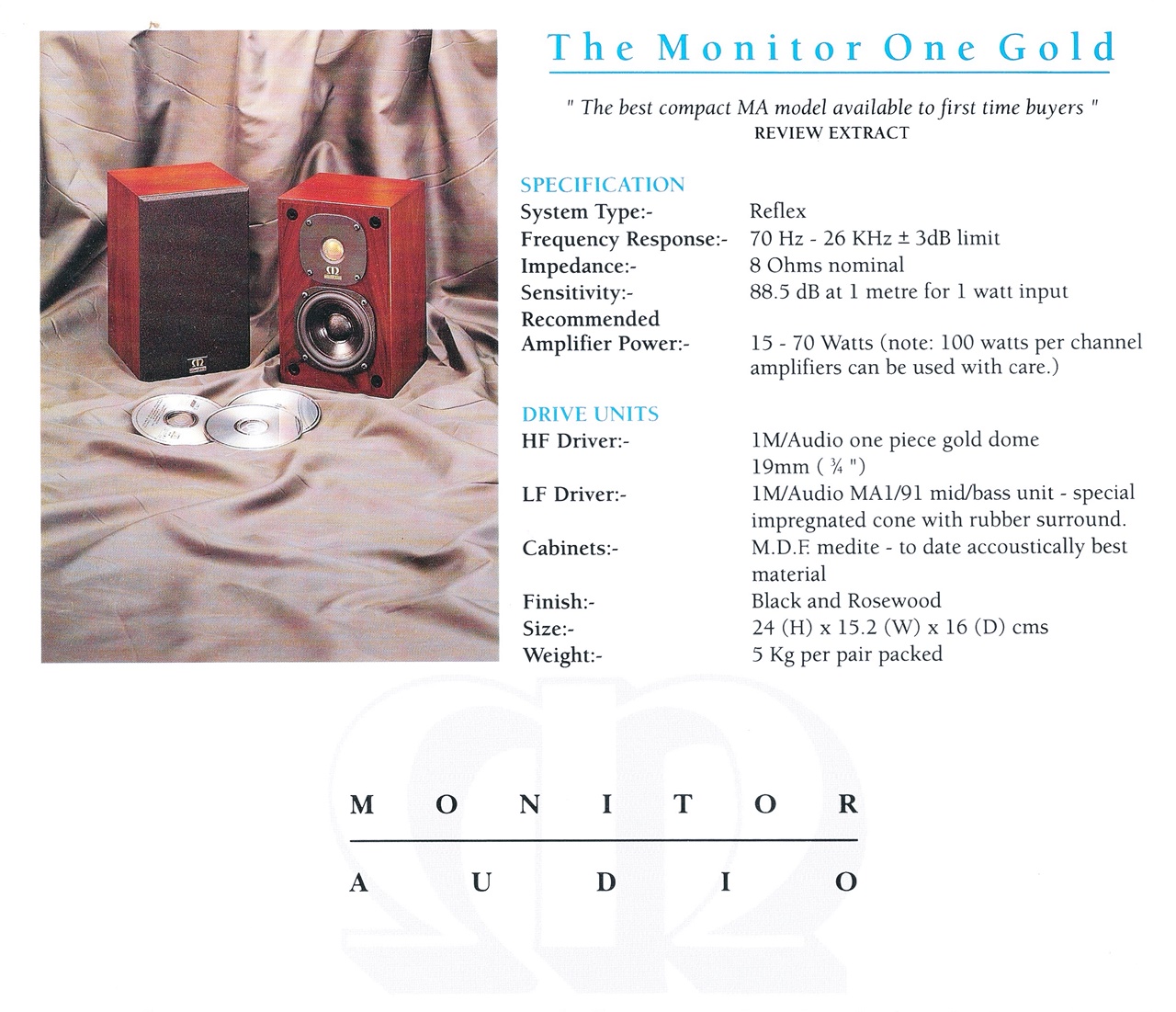
The tweeter carries an early version of the gold dome tweeter, developed in 1986 and still used in products as of 2024. It is formed from a ceramic-coated aluminium/magnesium alloy, anodised to a specific thickness to achieve ideal rigidity and damping characteristics.
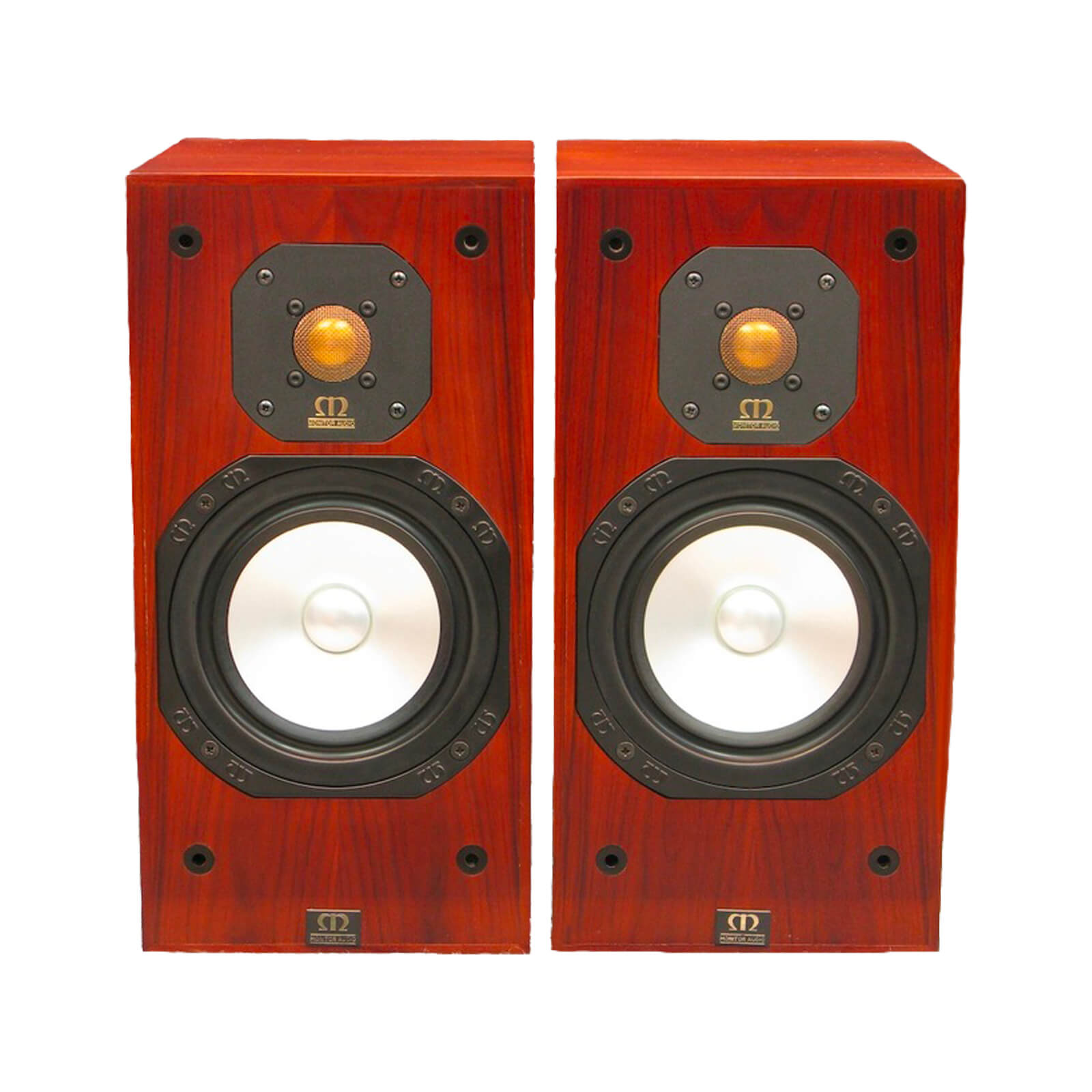
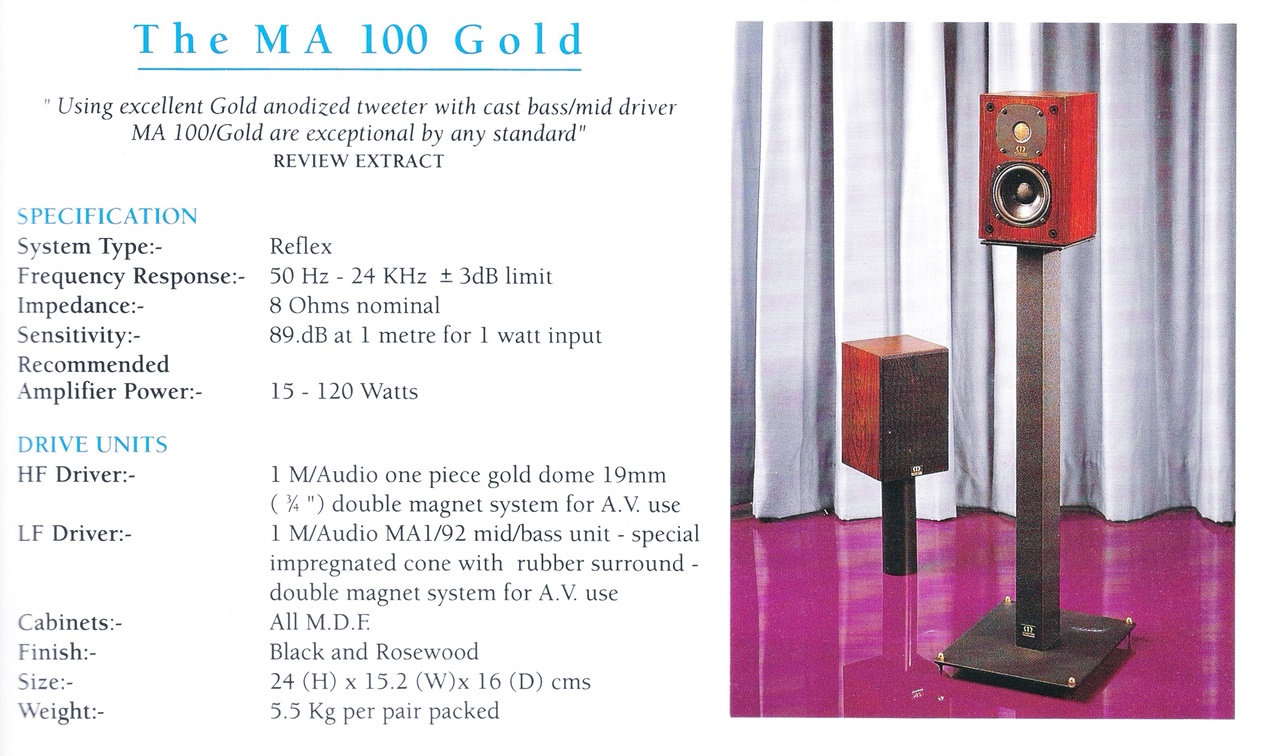
There was also a model called the MA100 Gold, which appears to have been derived from the same unit for AV use, though I never came across it being sold in Japan. Apart from the protective metal mesh placed over the tweeter, the MA100 Gold looks almost identical to the Monitor 1. Inside, it is fitted with a magnetically shielded woofer, and the low end is extended by around 10 Hz. Single-wiring seems to have been the norm for this model, though searching through images does turn up bi-wiring versions as well, suggesting that, much like the Monitor 1 Gold, specifications were changed here and there depending on when the unit was manufactured.
Monitor Audio Monitor 1 Gold — Sound Quality Review
To be honest, I had quietly steeled myself for the possibility that nostalgia had embellished my memories, and that once I actually had the thing in my hands, I would wake from the dream with the sobering thought that these are, after all, just speakers from the 1990s. And yet, when I unpacked them and cautiously played something through them, they sounded immediately and unexpectedly good, and I found myself genuinely delighted.
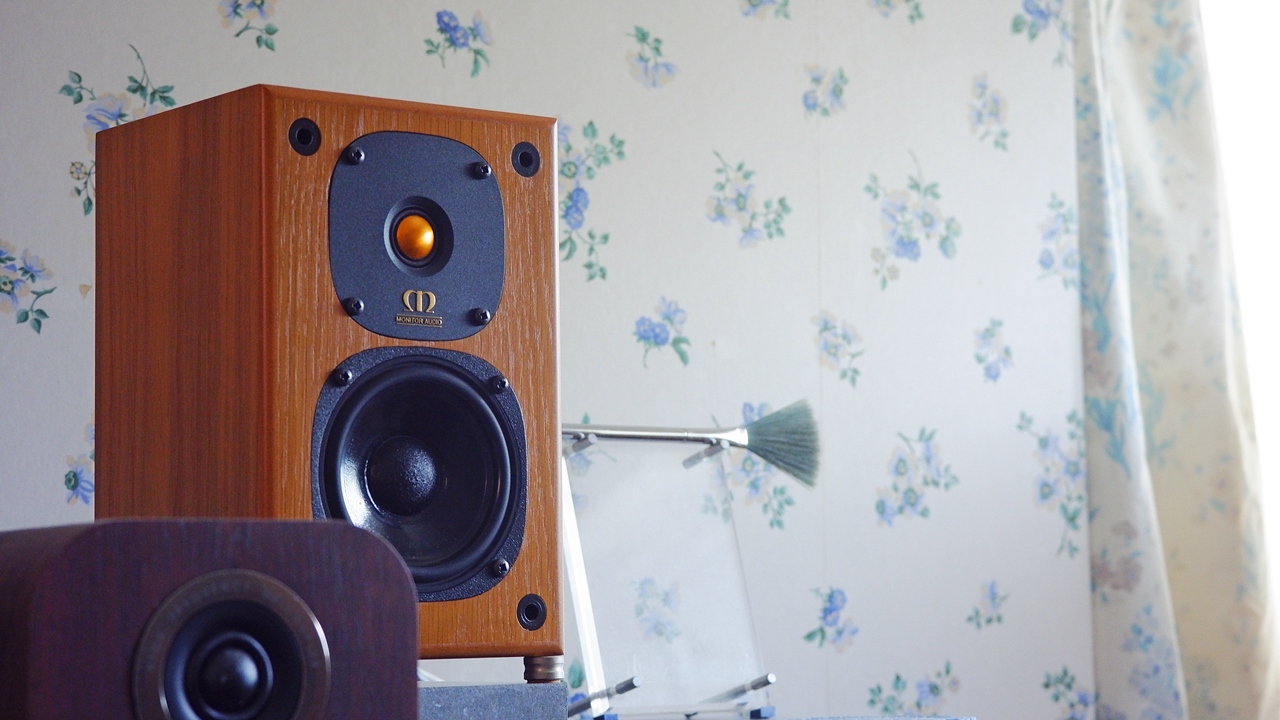
It reassures me — even now, all these years later — that my instincts when I was first drawn to this speaker were not wrong. A vivid clarity that holds its own against any modern speaker, a clean and open soundstage. Amid all that sparkling brightness, there is a depth and atmosphere that speaks to British tradition, and the hard, high-speed treble that is so characteristic of a metal dome tweeter. Yet alongside that high-frequency quality, there is also an emotional, graceful, softly refined sound that never tips the balance too far in one direction — and among all the ultra-compact speakers in my collection, I find myself thinking: hang on… might this actually be my favourite?

The weakness lies in the bass, and a big part of why I did not end up buying it back then was a nagging concern that the low end was plainly too thin. That said — pair it with a solid amplifier and a speaker cable that has some body in the low frequencies, and it seems likely to perform with a balance that is perfectly acceptable. With a low-output, entry-level integrated amplifier like the ROTEL RA930AX MkII or RA931, it would inevitably end up sounding leaner than it truly is — that much is easy to imagine now. The deep bass is weak, but resolution is high, and there is none of the mid-bass emphasis that tends to afflict small speakers, so what you get is a low end that fades out in a natural gradient making good use of the bass-reflex tuning — light in quantity, yet clear and unobtrusive to the ear.

The midrange is soft, rich, and charming. There is a pleasing degree of shadow alongside all that brightness, and it portrays musical expression with a refined, moist delicacy. The treble has the hard, glittering character that Monitor Audio’s metal dome tweeter is known for, yet — unlike the later models — it retains a wet, resonant quality even at high resolution. The harshness typical of a hard metal dome is kept in tasteful check, and it blends with the soft-material woofer with a naturalness that is almost uncanny. The crossover point of 3,800 Hz also feels exactly right. ※ Unlike the audition I had in the shop when it was brand new on display, I suspect some of the tweeter’s initial stiffness has worn away and settled with age.
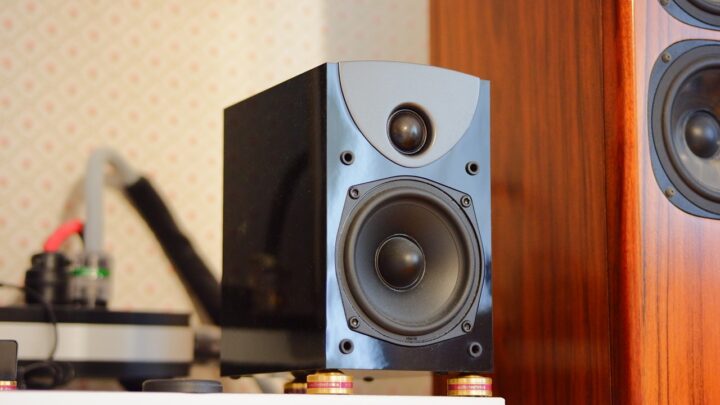
The soundstage is wide and clean in character, but as this is a bass-reflex design, adjusting the distance from the rear wall and similar placement factors can give you a fair degree of control over the bass weight as well. However, if you want to prioritise the stage imaging — which is one of this speaker’s genuine strengths — it would be best to use speaker stands and allow a reasonable amount of space around it. Even at some sacrifice to the bass, I believe you will be rewarded with a pure, highly transparent stereo image that makes it all worthwhile.
What defines the Monitor Audio Monitor 1 Gold sonically is that, despite belonging to the highly transparent, high-resolution camp, it also achieves an organic sense of song and a rhythmic musicality — qualities that so often work against each other. My memory of the time is that the slightly larger Monitor 2 Gold and Studio 2 were also highly musical, with better low-frequency extension and a more well-balanced overall presentation, but the smallest model, the Monitor 1 Gold, surpassed even those in sheer musicality. If you are using a single pair of speakers for every kind of source material, a Monitor 2 or above — with its greater depth of expression and wider versatility — is objectively the stronger choice. But for someone like me, running multiple systems at once, even setting aside the lack of bass weight, the Monitor 1 has a certain charm — a brightness and attractiveness that makes music simply more enjoyable to listen to.
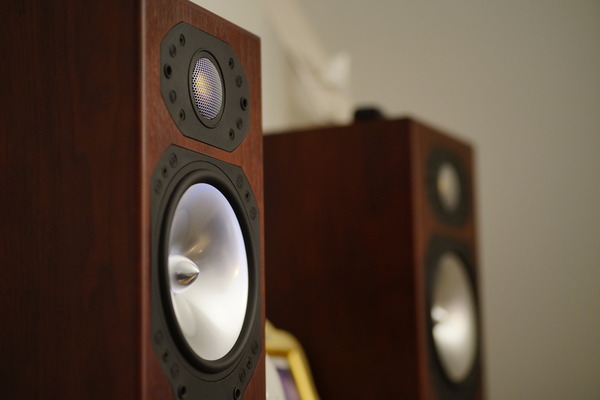
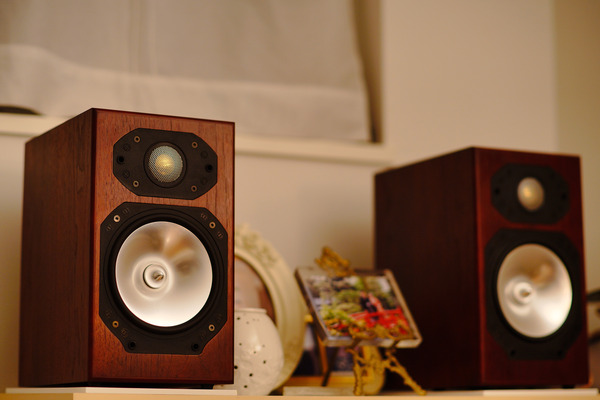
Driver and Cabinet Quality
The cabinet finish is exceptionally beautiful, with real-wood veneer in rose mahogany and natural oak over 1cm-thick MDF, lending the speaker a modest sense of luxury that feels entirely in keeping with the tradition of classic British speakers. In its home market, a black-painted version also existed, omitting the natural wood veneer in order to keep the price down. There is a bass reflex port at the rear, though it is simply painted black with the bare MDF left unfinished — rather typical of speakers from that era.
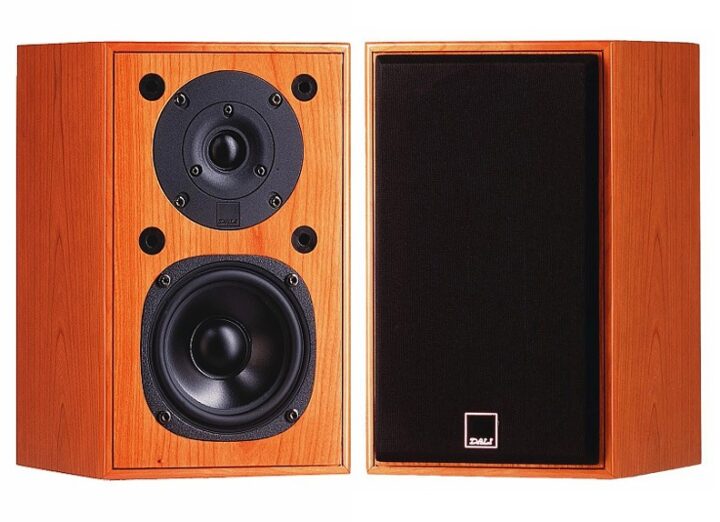
The relative placement and sizing of the 2-way drive units on the front baffle give an almost instinctively perfect sense of design balance and elegance.
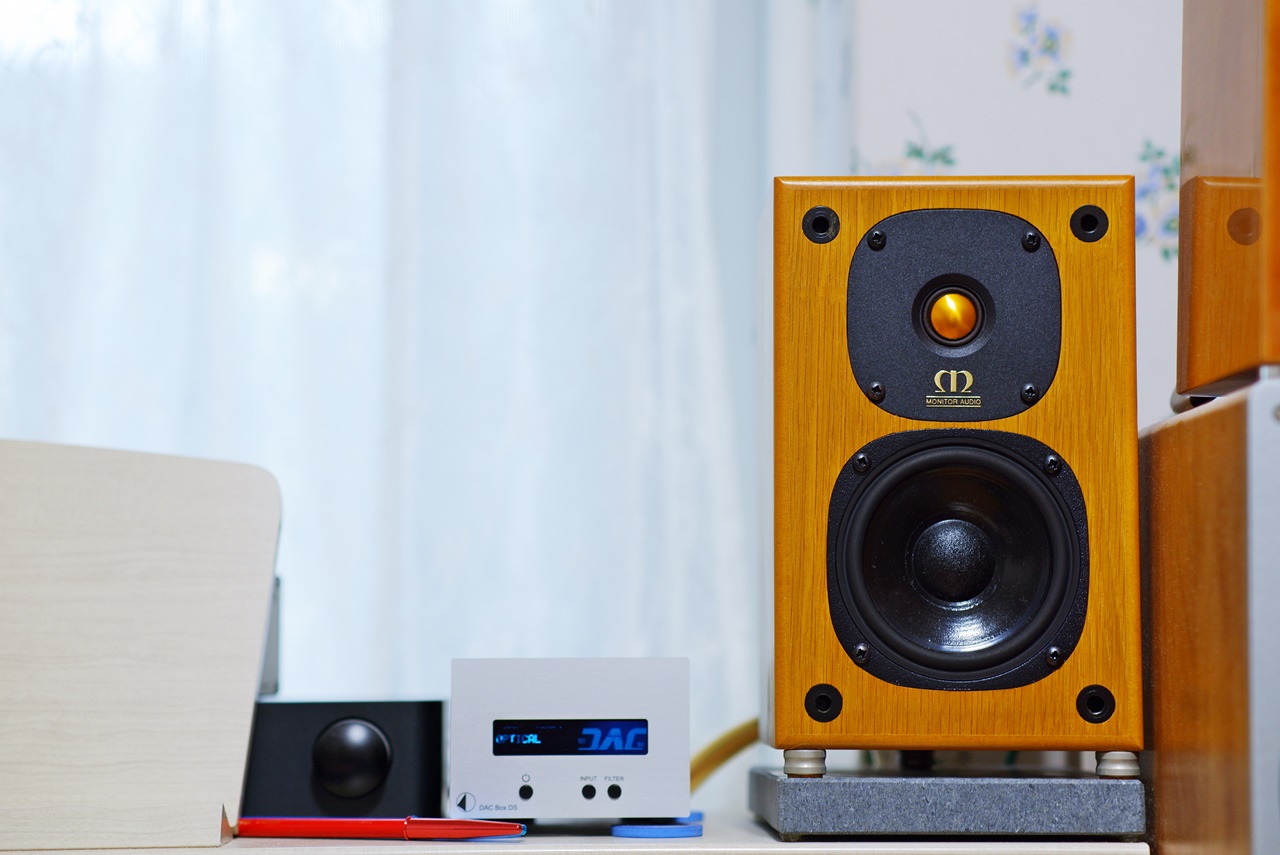
Reading through the Monitor Audio Monitor series catalogue, one notices that across the same or closely related lineup, different materials are used for the mid-bass woofer cone depending on cabinet size. To the eye, all of them look like a conventional all-black cone with a synthetic rubber surround bonded on, but in the case of the Monitor 1 Gold, the catalogue simply states “special impregnated cone” without clarifying the material. Going by appearance, my guess is that the diaphragm is pulp paper impregnated with resin, and it looks as though the Monitor 1 Gold and MA100 Gold — the two smallest models — are the only ones to have a layer of fabric applied over the centre cone section as well. The surface is not smooth; the construction has a feel of deliberate care taken to avoid any unwanted peaks in the vibrational modes.
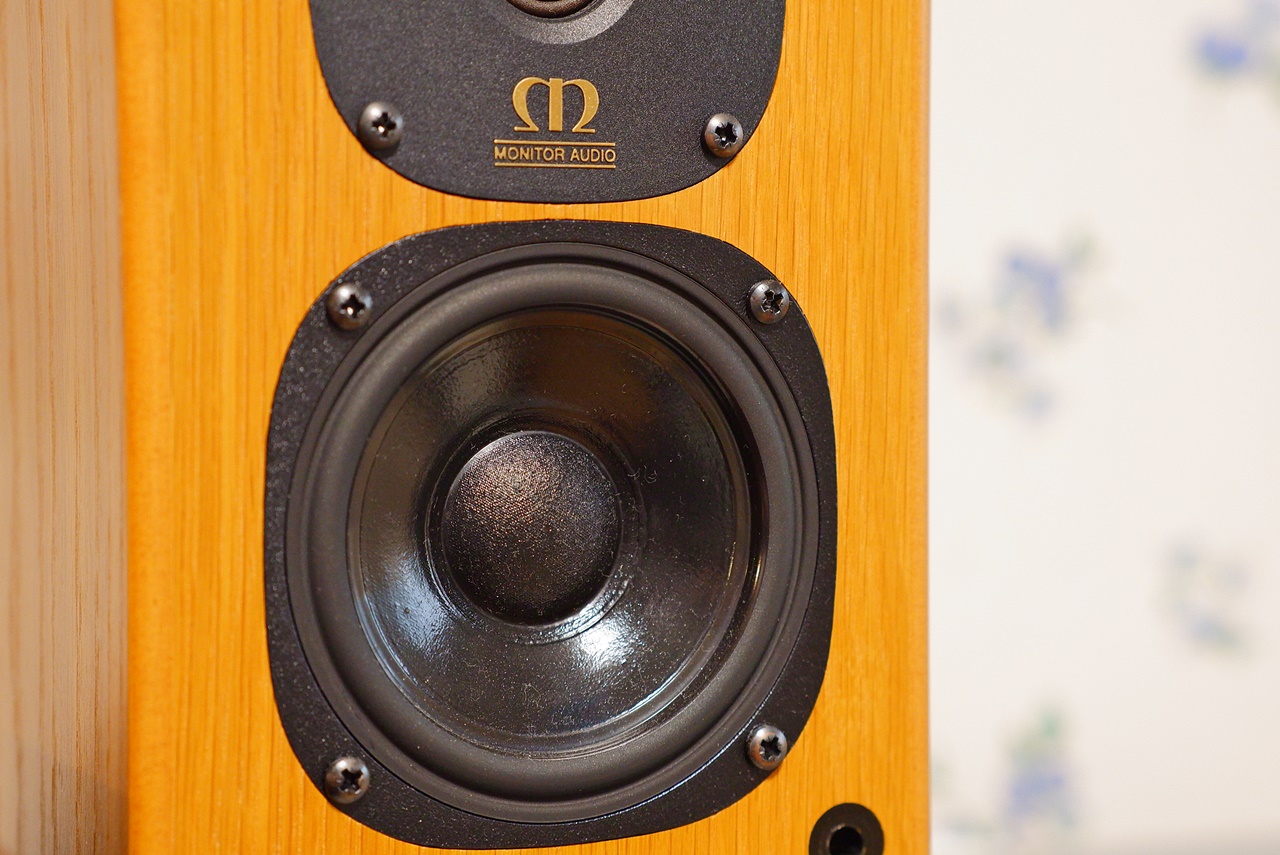
Visually, the woofer bears a strong resemblance to the Norwegian SEAS polypropylene woofer used in the Vienna Acoustics MOZART Signature T-2, which was made around the same period — and after looking into it further, it turns out the unit appears to be the same 11cm SEAS driver used in the ProAc Super Tablette, a celebrated speaker from the 1980s and 90s… no wonder it sounds so good.

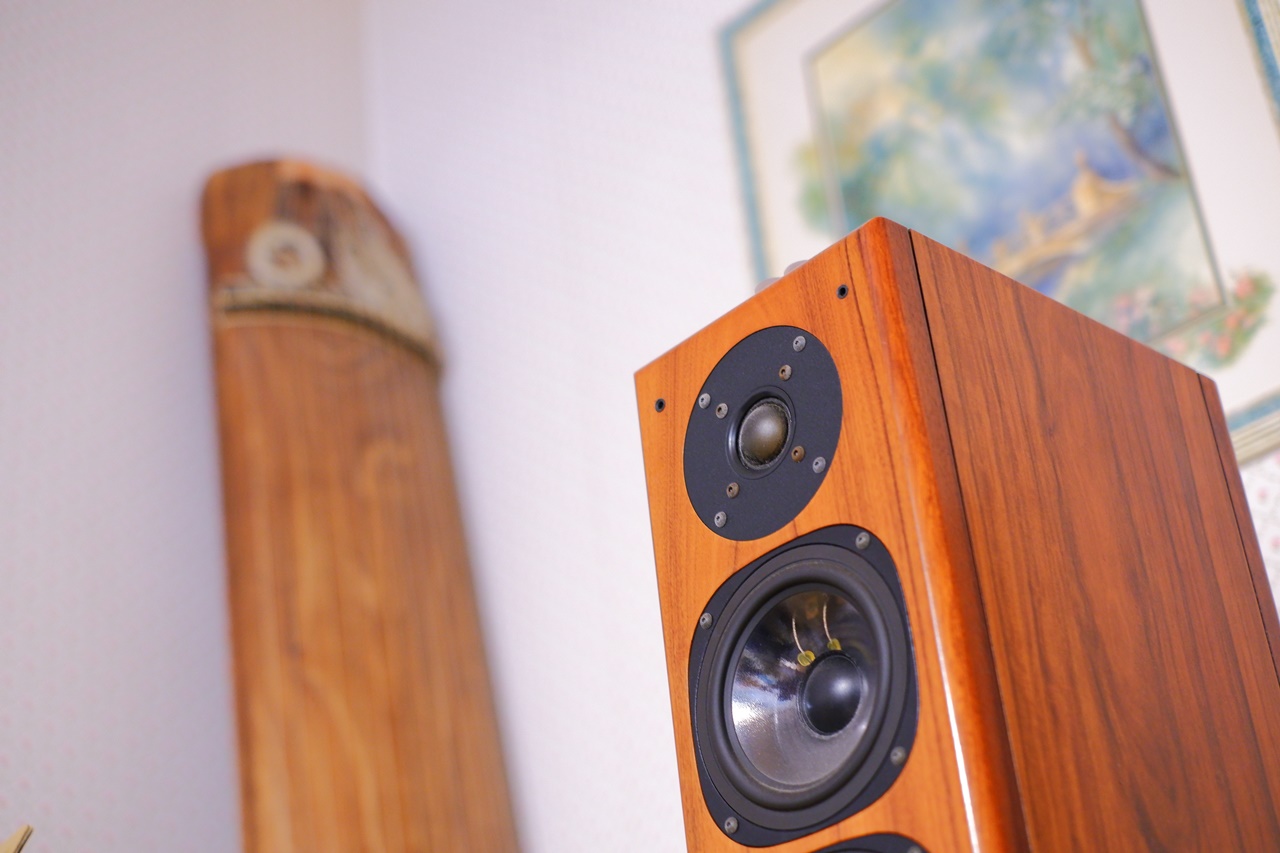
Around 1998, successor models in this series began gradually moving away from the traditional black woofers to the metal-cone drivers Monitor Audio calls C-CAM (ceramic-coated aluminium/magnesium alloy), which became the foundation of their modern product range. C-CAM gave Monitor Audio a more contemporary, high-speed, punchy sound — but personally, I could never quite shake the sonic image of those older UK-made models, and so while I kept auditioning them, they became a brand I never quite managed to actually buy. ※ This is purely a matter of personal taste on my part; in the meantime, the company went on to achieve considerable worldwide success, growing both its reputation and recognition enormously.
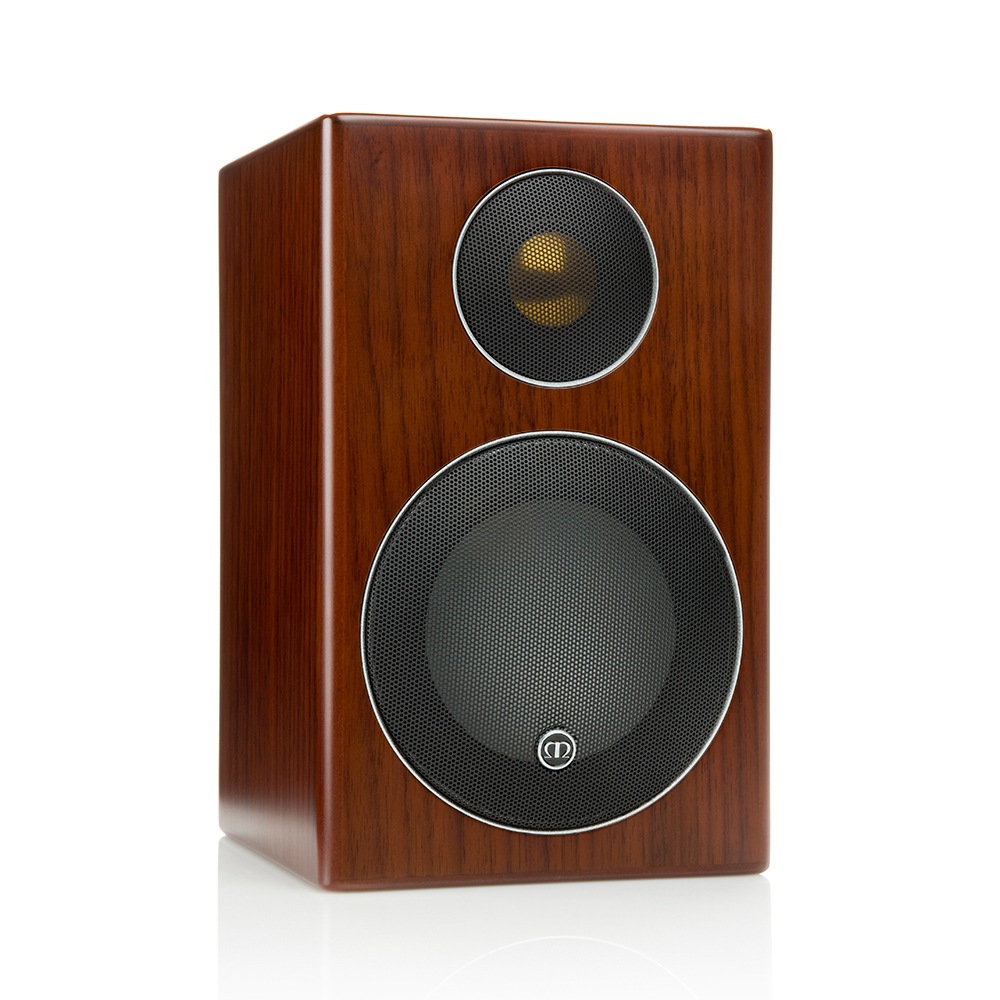
The Radius Series 90 and Radius 90 HD — its successors in terms of size across the generations — have appeared on this blog any number of times, and every time I listen to them I want one, and yet haunted as I was by the ghost of the Monitor 1 Gold, I never quite took the plunge, and here I am. The Radius Series 90 / Radius 90 HD is bright, crisp, and dry. The Monitor series of that earlier era, by contrast, had shadow and depth in its resonance — wet through and through. Even with tweeters that share the same basic lineage, sound character shifts with the times and with the designers, and having finally got my hands on a Monitor 1 Gold again, I found myself thinking: yes, this is what I was always looking for from Monitor Audio.
 ポチップ
ポチップ
~ Summary ~
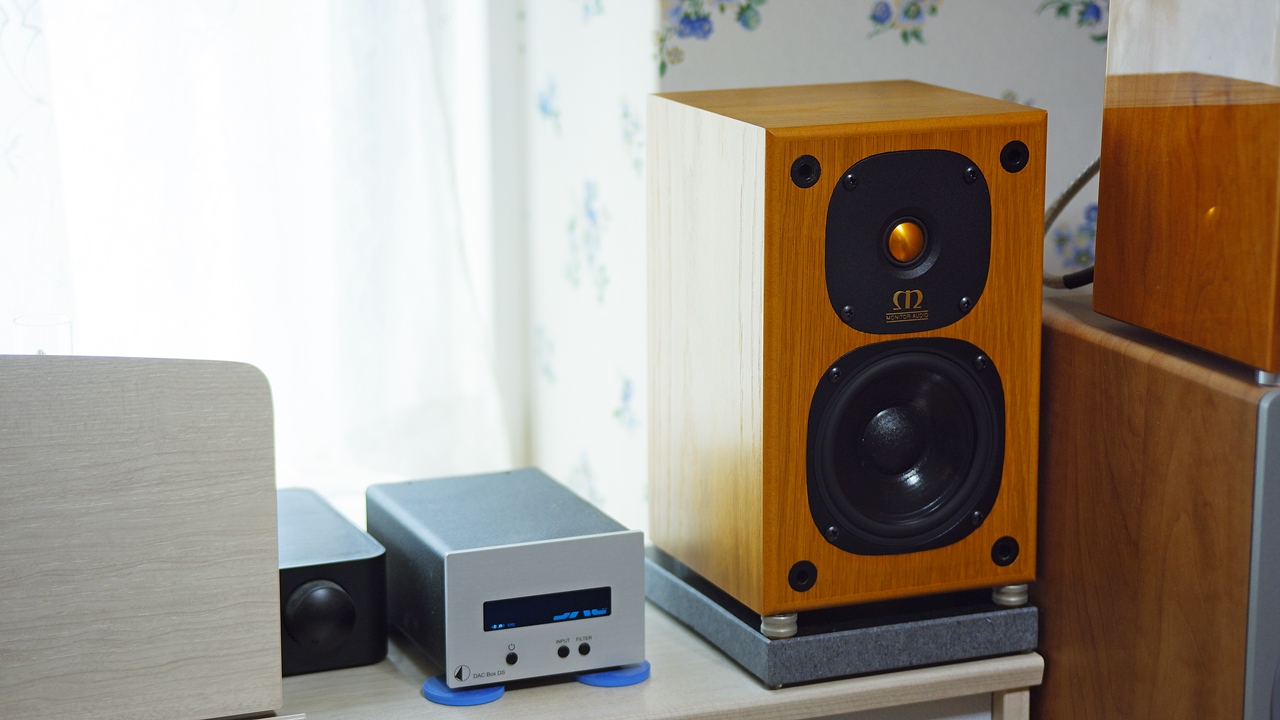
I have at last managed to acquire one of the speakers I would call a return to my roots, and in doing so unexpectedly reconfirmed that my instincts since my student days have not shifted at all. This is a speaker made almost entirely by hand, from design through to manufacture — a creation born of the analogue sensibility of its engineers — and yet, far from being outclassed by the high-precision industrial products shaped by computer-aided acoustic design, it sounds cleaner and clearer than any number of so-called hi-res-ready speakers out there. It may be that the much-vaunted march of acoustic technology has in practice had most of its resources consumed by the optimisation of cost reduction, and that it has contributed rather less than is claimed to the actual sound quality of new products. What, in the end, does technological progress in Hi-Fi even mean? It is something I find myself pondering, now of all times…
YouTube links where you can hear the Monitor 1 Gold



Auto Translated by CS4.6
List of comments (5)
このころモニオがここまでメジャーになるとは思いませんでした。
コメントありがとうございます。
モニターオーディオだけではありませんが、複数の欧米スピーカーメーカーが2000年頃から一気にグローバル戦略化し、AVホームシアター向けラインナップの大幅強化、生産国の海外シフト等々で、各ブランドの持ち味だったローカルな個性が結果的に薄まってしまった印象です。
素敵な記事をみて、始めてコメントします。
こちらのブログはよく読んでいて、とくにハイエンドオーディオについてのブログは個人的な感想ともとても一致する考えが多く、定期的に読んでは刺激を勝手に?頂いていました。私の記事も紹介いただきありがとうございます。
モニターオーディオ私も好きなのでつい反応してしまいました。
著者様の思い出のモニターオーディオはMonitor One Goldなのですね〜。すると年代的に私より10ほど上の大先輩とお見受けしました。
この時代のグローバル化する前のモニターオーディオは私は所有したことがありませんが、その後の世代に比べると高い暖色度合いで柔和で歌声のユーフォニックな雰囲気があったSilverStudio1に、昔のモニターオーディオの面影を感じで想像してます。
私もいつか試してみたいな、と思いました。
良い記事をありがとうございました〜
比較的最近のレビューにMonitor Audioの歴史をまとめたものがありますが、Monitor Audioは今日のC-CAMテクノロジーの直接のオリジンとされるセラミック・サンドイッチ・コーンが開発された1991年以降、大きく変遷して行った様です。その後のMonitor Audioのモデルで最小のRadiusシリーズも最近になってウーファーがC-CAMに変わりましたが、ウーファー表面がディンプル加工されたRST(Rigid Surface Technology)仕様の小型モデルにも興味があります。機会があればレポートして頂けますとありがたいです。
英国老舗スピーカーブランド・モニターオーディオ50年の歴史を振り返る
https://www.phileweb.com/review/article/202312/28/5439.html
Monitor AudioのHPの過去モデルの一覧が変更されて見易くなっています。
https://www.monitoraudio.com/en/monitor-audio-heritage/