【A Sensible Guide to Winning Audio Equipment on Auctions】
(1)|(2)|(3)|(4)|(5)|(6)|(7)|(8)
Beyond the sellers who are loose or strict or various other types — the sort you can explain away with a shrug of “well, everyone’s different” — there are also plenty of sellers on each online Auctions who are out-and-out deliberate criminals, knowingly selling counterfeit branded goods.

The Hi-Fi world has been in a truly dreadful state for over ten years now, with the mass listing of fakes and counterfeits from China via auction having become entirely normalised… To give you some idea of just how much fraud is out there: in the real-time Yahoo! Auctions Hi-Fi category listing that has been displayed on this little AUDIO STYLE site for years, it is perfectly routine to find several items that look for all the world like counterfeit brands or copies mixed in among the rest. That’s how bad it is.
![ブックサプライ古本買取のブックサプライ[本/CD/DVD/ゲーム]](data:image/gif;base64,R0lGODlhAQABAAAAACH5BAEKAAEALAAAAAABAAEAAAICTAEAOw==)
1) Beware of fakes! This is important, so I’ll say it again. Beware of fakes!
I do find it puzzling that sellers of counterfeit goods — whether they are businesses or individuals — manage to go years without having their accounts suspended. Perhaps there are simply too many fake designer fashion items and accessories for the platform’s operators to spare any attention for the niche little corner of Hi-Fi… One does wonder about the legal situation, too: these are counterfeits, and the brand names and model numbers are being misrepresented, but (setting aside the question of performance) the physical product does at least exist, which puts things in a slightly grey area. I dare say some absolutist somewhere would point out that I’m not much better myself — talking poetic nonsense about audio — and they’d probably have a point. What sort of tricks do these fraudulent operators use, one wonders? Are they simply extraordinarily good at customer service? Because it is genuinely astonishing: some of them have not a single negative rating. (Incidentally, in cases like this, checking the “neutral” ratings is key.)
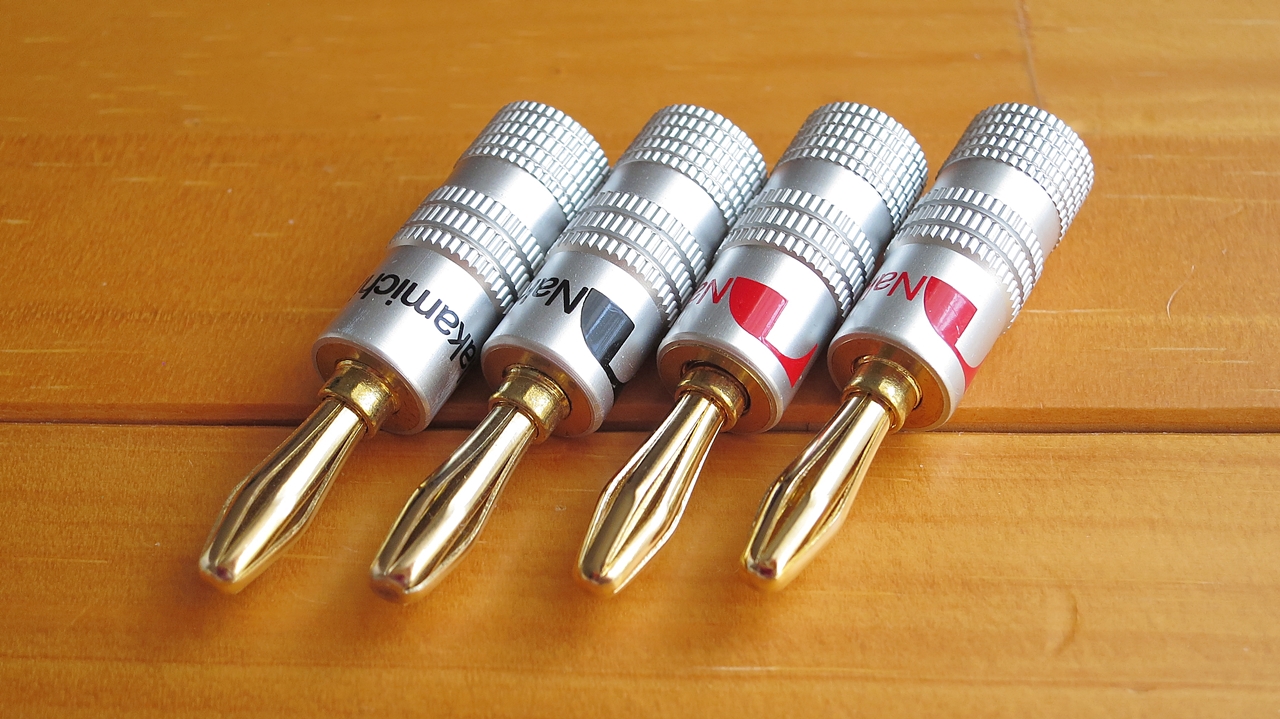
Regrettably, it seems that even seasoned, high-level Hi-Fi enthusiasts who are active in the blogging world occasionally get caught out, and I have the deepest respect for those who have had the courage to write about their experiences and sound a warning for others. Even the author of this modest AUDIO STYLE site is at real risk of being caught out depending on the item — it’s that bad. Those Nakamichi banana plugs, for instance — when they arrived, I was genuinely floored. Details below ↓
Whether people are lured in by shill bidding and sockpuppet bids driving prices up, or simply by the flashy appearance, you do see some remarkable cases — the occasional eccentric who knowingly wants a fake, and rather more commonly, a chain of misfortune in which someone who was unknowingly sold a counterfeit at auction then relists it, knowing or not knowing what it is. Yahoo! Auctions JP’ operators cannot keep up with the problem, and account suspensions based on reports have turned into a game of whack-a-mole. Even if an item does turn out to be a fake, it currently falls outside the scope of auction buyer protection, leaving you entirely on your own. And even if a fraudulent seller does get their ID suspended, they simply come straight back with a new one.
 Members-only buyer protection — Yahoo! Shopping purchase guarantee detailsNotice on the termination of the “Counterfeit Goods Dispute Support” serviceStepping up anti-counterfeit measures! Efficient use of AI and automated responsesI received an item suspected of being counterfeit or non-genuine
From the perspective of someone who knows what the genuine article looks like, common sense ought to raise a flag when ultra-premium audio cables or mains accessories with list prices in the tens or hundreds of thousands of yen are supposedly selling like convenience store snacks — day after day, in large quantities. The Hi-Fi market is so niche and so quiet that even a major, nationally known audio specialist retailer selling genuine stock at below cost wouldn’t clear it overnight in a sale… That’s the reality of this industry.

Quite apart from counterfeit brand fraud where the physical product exists, there have also been numerous cases of fake shop listings — sellers listing large quantities of new items at suspiciously low prices, collecting payment into a designated bank account rather than through Yahoo! Easy Pay, and then simply disappearing without dispatching anything. Registered shop IDs on the platform are therefore not automatically trustworthy. In cases like this, the sellers typically build up a decent “very good” rating first — including through shill reviews — before striking, which means many victims do not realise they have been deceived until it is too late. On online auction platforms, it is standard practice for the buyer to pay upfront (since allowing payment on receipt leads to a portion of buyers not paying at all), so please be careful when choosing who to buy from.
In addition, in recent years Yahoo! Auctions has seen no shortage of Chinese sellers with limited Japanese. Many are businesses with connections to mainland China or Hong Kong, and one can find many of the same counterfeit products listed on Yahoo! Auctions also appearing on AliExpress, It is not uncommon to find yourself corresponding through the transaction chat in halting Japanese, only to receive the item shipped directly from Hong Kong. If anything goes wrong, communication can be very difficult, and it is worth being aware that fake branded goods and dubious-quality counterfeit components are circulating in considerable numbers through Chinese-connected channels — not just in Hi-Fi, but across the board.
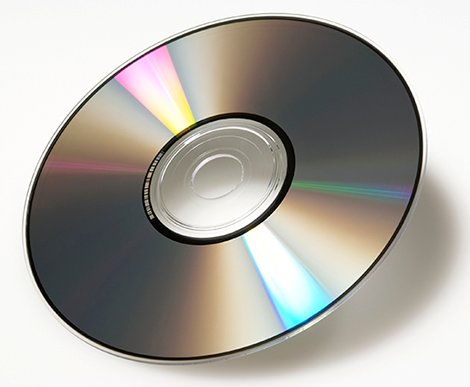
This is not Hi-Fi equipment, but it appears that counterfeit music CDs are apparently being produced even now, in 2022. These counterfeit CDs were uncovered in the UK — though one wonders whether there is really any money to be made in counterfeiting CDs at this point. I would imagine classical and jazz are probably not involved, but who on earth was having their albums counterfeited? I am quite curious to know.
2) How to spot the counterfeit audio products flooding Online Auctions
The product categories where fakes are most prevalent are: speaker cables, RCA cables, mains cables, power conditioners, HDMI cables, headphones, earphones, car audio equipment, and IC chip components such as op-amps. “Surely anyone can tell by looking — there are all sorts of little differences!” — the author is rather prone to saying this from on high, and yet somehow still gets caught out. The trouble is that common sense does not apply universally, and that is precisely why this kind of underground trade flourishes. Nor is this problem limited to Yahoo! Auctions JP; the same thing occurs on eBay, one of the world’s largest auction platforms. On domestic Amazon.co.jp and its Marketplace, fakes are also mixed in among genuine stock under the guise of second-hand or parallel-import goods, so please do not assume that being within Amazon.co.jp makes a seller trustworthy — always check carefully whether the seller and the fulfilment source are reputable. ※ In the case of Amazon, a refund is available if a problem with a purchase comes to light.
Among high-end cable brands commonly encountered in fake form: SILTECH, TARA LABS, CARDAS, KRELL, XLO, Monster Cable, AudioQuest, NBS, McIntosh, Kimber Cable, NORDOST, Van Den Hul, and more. In the headphone world: BOSE, Beats by Dre, SENNHEISER, AKG, Klipsch, SONY, audio-technica, Bang & Olufsen, and others. In car audio, the main targets are imported premium brands such as Focal, DIAMOND, MB QUART, and DYNAUDIO — particularly those that look like high-price-point products. Among domestic brands, FURUTECH power conditioners and mains cables and Ortofon mains cables have also been targeted. ※ All reviews on the linked pages are of course of genuine products.
■[IMPORTANT] Beware of counterfeit cables impersonating the WAGNUS. brand
■Kakaku.com: “Fake versions of popular brand cables are surging — everyone please be careful”
■Kakaku.com: “Fake WireWorld HDMI cables flooding Yahoo! Auctions — urgent warning”
■宮廷学士見習いの小部屋 / [Beginner’s guide] Counterfeit headphones and earphones — a roundup
■螺旋館Blog / On counterfeit high-end audio cables
■螺旋館Blog / Counterfeit audio accessories infesting the auctions
■Oyaide Mijinko Blog / We went to the Guangzhou AV Fair! Part 3
■Innocent Key / Investigating Chinese fake Nordost and comparing cable sound quality
■Notice regarding counterfeit goods / Cardas Audio
■Blog de afutura / A showcase of fake Cardas
■Nack Audio / Fake cable? — CARDAS HEXLINK GOLDEN 5C investigation
■モッチリ遅いコメの距離感 / Buying a knock-off cable on Yahoo! Auctions
■音の薫り / Is it a fake?
■オーディオ目玉親父 / Counterfeit cable alert! — Crystal Cable Absolute Dream, please be careful
■オーディオ目玉親父 / Beware of fake Nordost Odin!!
■FOCAL — Please be aware!! Counterfeit products are being sold on internet auction sites.
《Via the Internet Archive, as the original sites are no longer available》
■Don’t be fooled by fake headphones and earphones! A roundup of commonly circulating counterfeits
■Delicious_Space / FURUTECH e-TP60 fake
※ In no particular order. Links included without prior permission, in the public interest — my apologies and thanks to all concerned. Additional links are always welcome.
To give some examples of the hallmarks of counterfeit products: they are listed as brand-new or open-box new, at one yen or extraordinarily low prices, in large quantities — despite purportedly being ultra-premium products with retail prices in the tens or hundreds of thousands of yen. Being new, they come without a manufacturer or distributor warranty card or box, or are listed as “bulk stock.” Serial numbers are absent or partially obscured. Looking at the bidding history, items with high retail prices are being won for a few thousand to low tens of thousands of yen — suspiciously cheap. The same item is listed repeatedly using identical images or images lifted from the manufacturer’s official website. The product photos are somehow too beautiful, almost professional-looking… and so on. As mentioned earlier, there are also cases where the item is shipped from overseas — from Hong Kong, with a counterfeit sent directly to your door.
On closer inspection, the item is often a model number or specification that does not exist in the original manufacturer’s catalogue. But there are also rather more ambitious cases where an existing model number is used, the external appearance is copied in detail, and even the retail packaging is replicated. When something seems off and you contact the manufacturer or their local distributor with a serial number, you are told the product does not exist; or differences in details become apparent from photographs, revealing it to be a copy modelled on the original. One particular high-end cable I recall: the elaborate wooden presentation box looked unfamiliar, and when the manufacturer in the country of origin was contacted, the reply came back that all examples in elaborate boxes were fakes — the genuine product comes in a plain cardboard box only. Fundamentally, when cables or accessories that could not be sold for less than a certain price even at the manufacturer’s cost — let alone after factoring in Japanese distributor markups — are being listed and won at prices far below that, one really should treat this as something that simply cannot be legitimate.


 ポチップ
ポチップ
Furthermore, even for DIY plug components and parts — which are nowhere near as expensive as high-end cables — large quantities of inferior imitations mass-produced via Chinese channels are in wide circulation. There are apparently even cases of small overseas audio manufacturers unwittingly — or perhaps knowingly — using counterfeit parts from China, copying Oyaide or FURUTECH and similar brands, in their production runs. Presumably the low procurement cost is the draw. At any rate, for plugs and parts of all kinds, it is strongly recommended to source them from a trustworthy retailer.
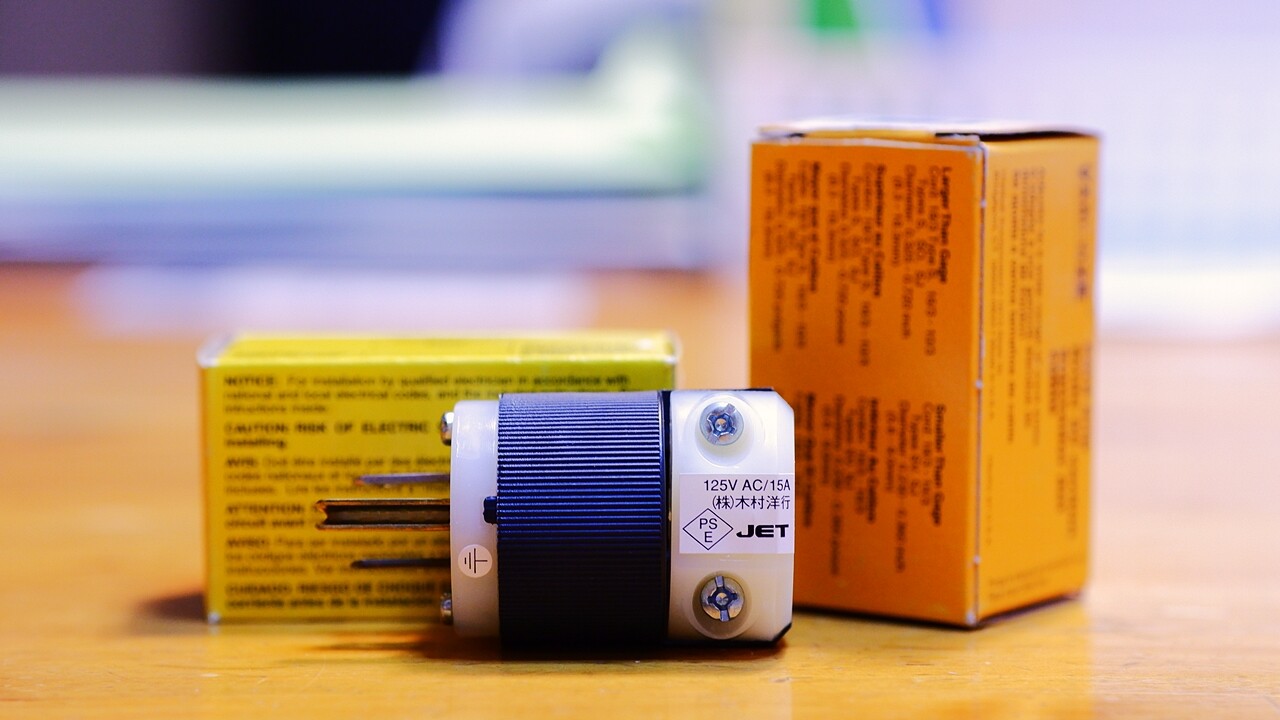
There are also counterfeit plugs and cables from brands such as BELDEN, HUBBELL, LEVITON, and Marinco — products that were originally industrial electrical materials from North America and Europe, not pure audio products at all — circulating through Chinese channels under the guise of the original brand names, with manufacturing quality that does not stand up to scrutiny. Looking at auctions on the Chinese side, the same items appear in bulk lots at even lower prices. It is a sorry state of affairs, but at present the rate of counterfeits coming through Yahoo! Auctions has become so high that it is almost impossible to reliably identify genuine products from listing information alone. For all such affordable parts and more, it is worth paying a slight premium and purchasing genuine stock through a well-known, established audio retailer. In the case of smaller shops, there are even instances where the proprietor has tried to source items cheaply via overseas auctions and ended up as a victim of fraud themselves.
When you come across a suspicious listing, do check carefully whether the product actually exists in the manufacturer’s home country, or whether it is sold anywhere in Japan through channels other than auction sites. If the item is genuine, you will find it at reputable, established specialist retailers with physical shops that also operate on Rakuten Ichiba and Yahoo! Shopping — such as Audio Square Yahoo! Store, Audio Union, Shimamusen, and Audio Ippinkan — and even for discontinued products, some trace of their existence will remain online. Even for brands or model numbers not distributed in Japan at all, comparing the manufacturer’s official website abroad, listings at well-known overseas Hi-Fi retailers, and reviews and actual prices in reputable Hi-Fi publications will, in most cases, allow you to notice that something is realistically amiss.
And as for sellers: in the case of sellers dealing in counterfeits and fake branded goods, simply searching their ID on Google will in most cases cause the truth to come tumbling out. Cases where a private individual is reselling something they were themselves deceived into buying are harder to catch, but when new or nearly-new items that are supposedly prestigious high-end products are being listed in large quantities at absurdly low prices, it is safe to say that in over 90% of cases they are fakes. So please, however tedious it may seem, do search the seller’s ID before placing a bid — and do so using a general search engine (Google or Bing‘s general search, not the Yahoo! Auctions internal listing search). Please, please do not begrudge this one small effort.
3) On parallel imports and personal imports
A few years ago I even wrote a post along the lines of “A recommendation for personally importing pure audio products,” and thinking back, I have been importing various Hi-Fi equipment and accessories personally for over twenty years. Now that the internet is ubiquitous, there are no shortage of Hi-Fi enthusiasts doing likewise, and as a result one does increasingly come across audio products on auction sites that appear to have been personally or parallel imported. However, parallel imports have a weakness: in the event of a fault, Japanese distributors are not necessarily obliged to carry out repairs.
Some brands honour their warranty worldwide regardless of where the product was purchased, as part of their distributor agreements, but outside of those, there are distributors who will handle repairs on a goodwill basis for a fee — and that is about as far as it goes. If even that is not possible, you will need to contact the manufacturer directly in their home country, and without a reasonable command of English you may find yourself completely stuck, so do bear that in mind. For speakers and similar equipment that structurally almost never develops faults, or for accessories and fully working units, there is probably little to worry about — but if you are someone who would not be able to resolve such a situation through your own language skills or technical ability, it is best not to get involved with parallel imports lightly.
There are also cases where counterfeit branded products with entirely fictitious model numbers are sold under the pretence of being parallel imports or models not officially sold in Japan, so one needs the caution to carefully verify — via overseas sources and the like — whether the product genuinely exists, or once existed, as an authentic original. Brands the author uses, such as NORDOST, Monster Cable, and SILTECH, are also widely counterfeited, which is rather thoroughly irritating. Apparently over 90% of SILTECH products sold on eBay over the past five years have been fakes.
For the record, every overseas brand product owned by the author of this AUDIO STYLE site was purchased at the time either directly from an authorised domestic distributor or authorised retailer in Japan, or sourced through a major Hi-Fi specialist retailer in the United States or the United Kingdom dealing in genuine stock. Some items were purchased by contacting the manufacturer in their home country directly and buying from the CEO in person. Even with brands like NORDOST and SILTECH, when Chinese auction listing images recycle photographs of the genuine article, it can be impossible to tell at a glance and causes a moment of alarm — but the shops I have personally bought from are all listed as authorised dealers or distributors, clearly named on the official manufacturer’s website.
Most high-end cable brands hold various patents in their home country and manufacture their cables — through to final assembly — entirely within the United States or within the EU and UK. It stands to reason that upper-range products from such manufacturers could not possibly appear as diverted components from a Chinese subcontractor. In fact, the high-end side of the Hi-Fi world is essentially a bespoke, artisanal affair — setting aside the entry-level products that certain popular brands have openly had manufactured in China with “Made in China” clearly stated — where the quantities sold are barely enough to be handled by hand in the country of origin. ← And that, one feels, is precisely why the prices, including labour costs, end up being utterly eye-watering. Unavoidably so.
In terms of timing, counterfeit branded goods began appearing on auction sites around the mid-2000s, and then increased sharply from around 2007–2008 — so for discontinued products that would have gone out of production before that period (and whose existence at the time is well documented), it is generally reasonable to assume they are the genuine article. However, brands such as Cardas and AudioQuest were targeted by counterfeiters from very early on, so when acquiring audio accessories via auction that are parallel imports or personally imported, it is advisable to have as much documentation as possible proving the item’s provenance — ideally a manufacturer’s warranty card, original packaging, and the overseas retailer’s receipt or customs invoice. And if the product photos are slightly blurry or reduced in size so that the fine details cannot be made out, do exercise particular caution.
One final suggestion to close this entry. I do think the time has come for manufacturers across the audio-visual industry, together with media such as Stereo Sound and Otogin Publishing, to mount a serious, concerted campaign to drive out counterfeit brands. The audio-visual world is already a niche, small-scale market — and when what little money its small number of customers has is flowing to counterfeits rather than genuine products, there is absolutely nothing in that for the industry.
 Smart Methods for Winning Hi-Fi Equipment on Online Auctions (5)
【Smart Methods for Winning Hi-Fi Equipment on Auctions】
(1)|(2)|(3)|(4)|(5)|(6)|(7)|(8)

Auto Translated by CS5