
Yesterday, I received a comment from byd, an interior designer with a background in architecture. He is a user of the Danish floorstanding speaker DALI ROYAL TOWER, and it seems he coordinates audio equipment — the design of sound, as it were — as part of his interior design work. Having come across this blog, I would like to write down some thoughts it brought to mind about the philosophy behind “AUDIO STYLE,” a recommendation for the compact pure Hi-Fi system approach.

This comes from a French programme I watched on BS last year. Over there, it seems there is an extraordinarily sensitive demand for the design of sound within living spaces — rather like a perfumer carefully appraising a fragrance.
Food manufacturers apparently conduct detailed analysis of the crisp crunch of cereal being bitten into, the sound of various bottle shapes being popped open, the sound of a perfume bottle cap being lifted as well as the scent itself, and research into the material sounds of children’s toys. In the design of underground railway systems, too, it is not only the architecture that is designed, but also the intricate control of how sound resonates and is heard across each platform and corridor — and even the deliberate differentiation of acoustic character between passages, so as to shape the overall spatial experience. Compared to modern Japanese culture, where one is assaulted on all sides by unpleasant and jarring noise, I was both greatly surprised and genuinely educated to discover that sound quality is taken this seriously.
Car manufacturers, apparently, find it straightforward enough to simply eliminate or reduce noise, but the real research lies in how the sound of the engine and the way exterior sounds are heard can be made to reach the driver in a way that feels both safe and exciting while preserving a sense of comfort. And then there is research into designing the sound signals for ticket machines and traffic lights, so that visually impaired people can enjoy a more comfortable, safe, and culturally enriching urban life — in every direction, it seems, something is quietly being worked on. All of this stood in such contrast to modern Japanese culture, where one is simply surrounded on all sides by disagreeable noise, that I found it both surprising and instructive to see just how seriously the quality of “sound” can be taken.
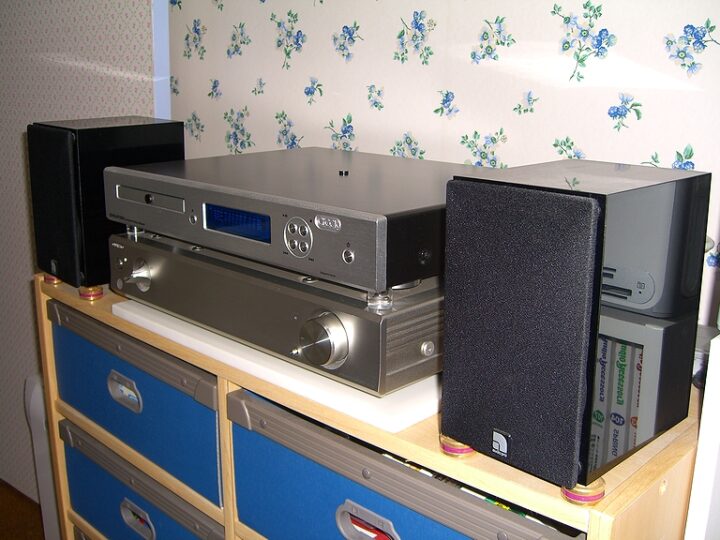
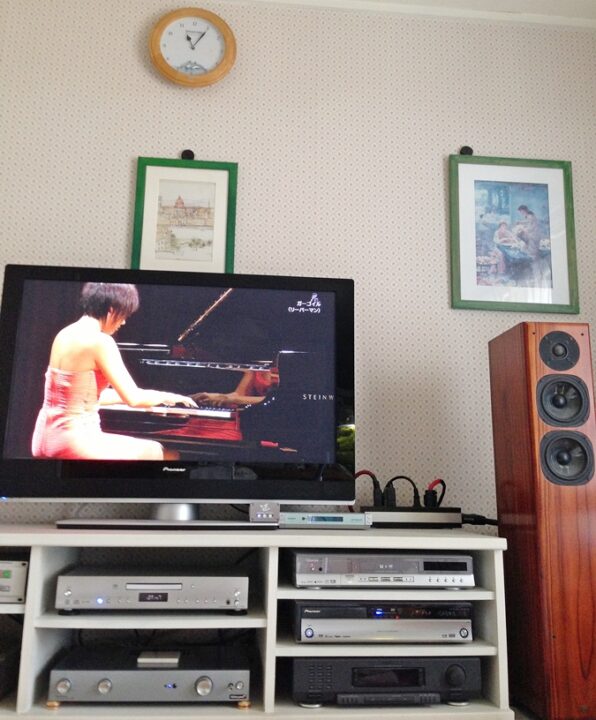
As a guiding principle of “AUDIO STYLE,” the recommendation for the compact pure Hi-Fi system approach, the author holds a fundamental belief that audio equipment exists for the sake of music, and music exists for the sake of the listener. When pursuing the Hi-Fi hobby, it is important that the order of priorities — listener’s lifestyle > music > audio equipment — does not become inverted.
First and foremost, what matters is that audio equipment has the ability to convey, as faithfully as possible without spoiling it, the expression, colour, sense of life, and spiritual quality that performers and composers have poured into a recording. This also means being able to offer genuinely fine reproduced music to the people — family members included — who live in the room where the equipment is placed. And quite apart from this capacity for musical reproduction, I believe it is also desirable that audio equipment, as furniture within a living space and as an object of industrial design, should be comfortable and pleasing for the person who uses it.


 ポチップ
ポチップ
When the primary purpose of audio equipment becomes the realisation of an engineer’s technical identity, the aesthetic design and usability of the object as a piece of furniture or a tool can end up being sacrificed for the sake of the equipment’s own existence — and, sad to say, even music itself can become the casualty. Systems that sound as though music exists merely for the audio equipment, as if music were no more than a supplementary item or a test tone among others, where the essential nature of music is absent and the sound that emerges has no warmth or humanity — such systems are, unfortunately, far from rare.
On the other hand, even in cases that appear to place “music” as the first priority rather than taking a purely technical approach, I get the sense that a certain kind of stoic extremism is not uncommon in parts of the high-end world: one that deifies music itself, treating the listener almost as a servant who must prostrate themselves before it, and taking the view that appearances, living environment, and lifestyle may quite naturally be sacrificed for the sake of “music.”
I believe that both music and audio equipment exist, in their entirety, for the listener — for people. Audio equipment should, above all, serve as a “bridge” between listener and performer. Music does not exist to satisfy the pride of audio equipment designers or owners, and most listeners do not live their lives for music alone. Nor, needless to say, do they live to be crushed beneath audio equipment and the weight of material desire. (There are cases where great musicians appear to have sacrificed their lives for “music” or for a set of religious values — but at the most fundamental level, without a genuine empathy, a shared sense of feeling with the people who listen, the music itself ceases to function as music.)
 ポチップ
ポチップ
When I apply all of this to the purpose of audio equipment and its design as a tool, I have come to feel — over the course of listening to many different pieces of equipment — that truly beautiful and honest musical reproduction may, in fact, reside in beautiful casework and architecture. These may appear to belong to entirely separate fields, yet if a finished product is not underpinned by an aesthetic sensibility and a set of values shared across music, the visual arts, and technology, then a sound quality that is universally beautiful, agreeable, and goes beyond mere self-satisfaction cannot, at its core, truly be achieved.
Reproduced music, being dependent on audio equipment, is in practice a series of compromises — budgetary and otherwise — yet is it not vitally important that we do not lose our sense of balance between “musicality, technical capability, and aesthetic sensibility”, each in relation to the others?
In “AUDIO STYLE,” the recommendation for the compact pure Hi-Fi system approach, I hope to introduce Hi-Fi brands whose aesthetic sensibility and values have a clear coherence, so that this blog may serve as a guide for choosing audio equipment — and, even in some small way, help music-loving listeners live a richer musical life without having to wander down unnecessary detours.

Auto Translated by CS4.6




List of comments (2)
こんにちは、こちらのブログに取り上げていただきありがとうございます。リンクさせてもらいました、これからもよろしくお願いします。
相互リンクありがとうございますm(__)m早速リンク更新しました。(とりあえずMUSICのカテゴリに入れましたが、AUDIOの方へ変更も可能です。)こちらこそ宜しく御願い申し上げます♪