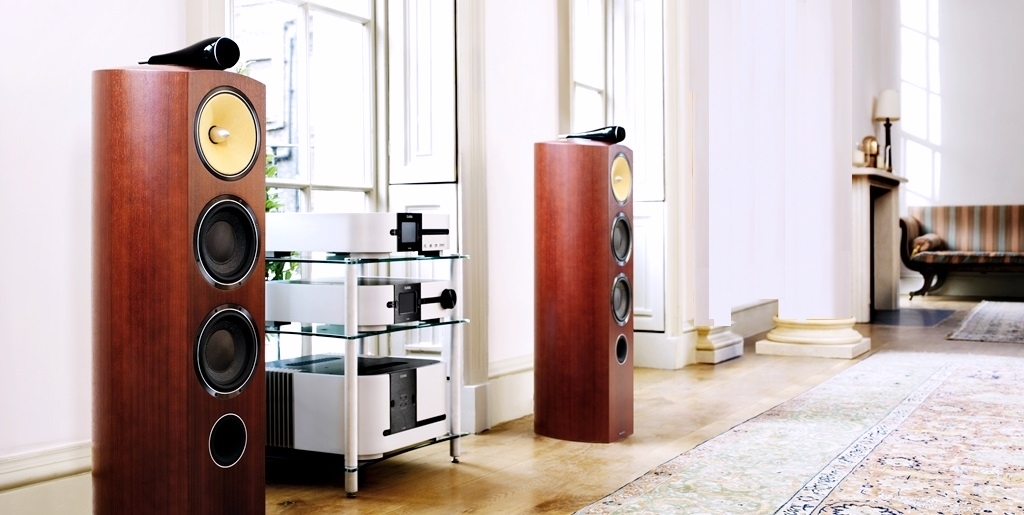
 One could almost say “know nothing of Hi-Fi until you know B&W” — Bowers & Wilkins is the brand that major labels the world over have adopted as their standard studio monitor speaker. Even in the studios of minor labels known for high-quality recordings, most use B&W’s Nautilus 800 Series or the older MATRIX series monitors. This performer, that conductor — B&W speakers have found their way into people’s homes and workplaces alike, and for the vast majority of listeners, if you want to know what a major label recording is truly supposed to sound like, get yourself a B&W first — that is how thoroughly B&W monitor speakers have become the de facto standard in Hi-Fi playback today. ※ There are exceptions, of course — Alfred Brendel, for one, is famously devoted to the QUAD ESL electrostatic speaker, and is said to have quietly had the B&Ws swapped out for QUADs during his recording sessions…


 ポチップ
ポチップ
 ポチップ
ポチップ
The British conductor Sir John Eliot Gardiner once appeared in a B&W commercial in the UK, and was reportedly using the MATRIX 802 S3 — though I wonder whether he has since moved on to the Nautilus? Similarly, it is well known that the late conductor Herbert von Karajan used B&W Matrix 801s — from the very first generation onwards — both at home and as his monitoring reference for recordings at Deutsche Grammophon. And when I once watched an interview programme with Russian conductor Valery Gergiev, in what I believe was his office at the Mariinsky Theatre, a pair of B&W floorstanders was sitting in the background.
 ポチップ
ポチップ
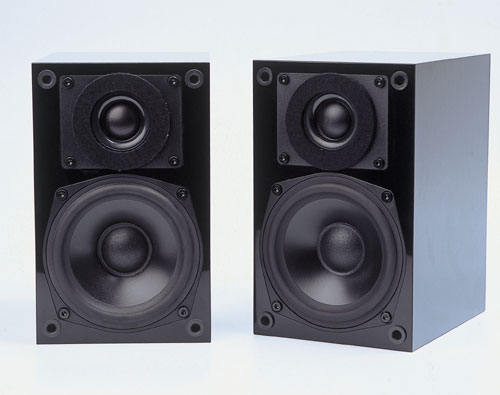
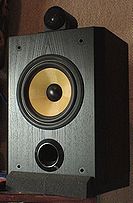 My own first encounter with a B&W speaker was the MATRIX 805V, back in the days when Nakamichi was the distributor. Despite an exterior finish that looked almost as cheap as plywood, it was an extraordinarily accurate and information-rich small speaker for its time — not merely high in sound quality, but dynamically vivid and incisive in its musical expression, and altogether far more compelling than the competition of the same era.
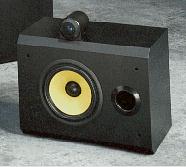 Incidentally, even within the B&W MATRIX 805 family, the 805H — a variant designed for horizontal placement in studio use, with the tweeter repositioned accordingly — shares the same tonal character, yet curiously, that lively dynamic quality of the 805V is somehow subdued. It struck me as rather remarkable that despite identical components and construction, the sense of musical enjoyment conveyed could differ so completely.
Compared with the current Nautilus series, the older MATRIX series had a light, natural ease and gentleness across the full frequency range, and the tweeters rarely gave any impression of harshness or strain. When the model change to Nautilus brought a sharp leap in modern resolution and speed, however, it simultaneously acquired the unforgiving quality of a strict monitor speaker — one that shows up without mercy every flaw in the upstream equipment and the recording itself. Faced with that kind of acute precision from the B&W 800 Series, I personally tend to feel it is rather beyond my station and find myself hesitating — and yet, as a Hi-Fi enthusiast whose listening is centred on classical music, I cannot help feeling a certain persistent longing to bring one of B&W’s top monitor speakers into my listening room.
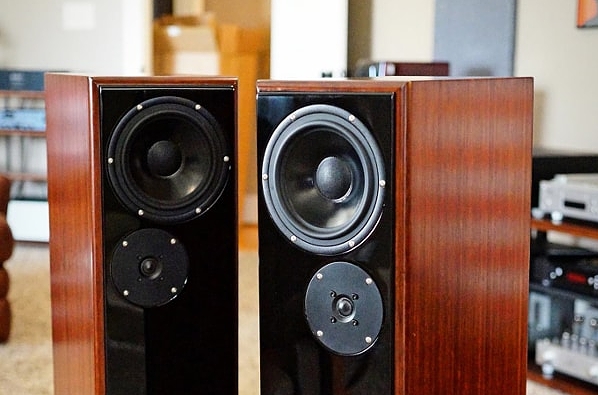
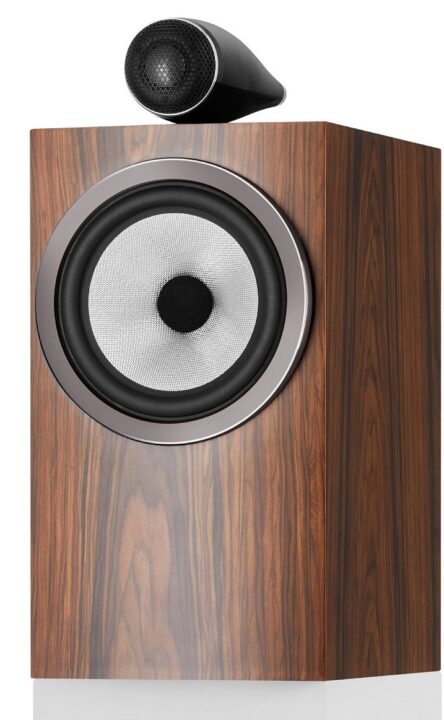
In recent years, when auditioning equipment in shops, I have been using the B&W 805S or the B&W 703/704 as my reference standard for comparative listening. There are other speakers in the mid-to-lower price range that I personally find appealing, but in terms of sheer sound quality, I believe there are very few speakers that genuinely surpass the Nautilus objectively speaking.
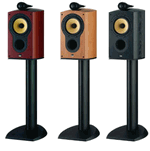
The B&W sound is, in every sense, worthy of the name monitor speaker: a wide, distortion-free and accurate soundstage, precise and sharply defined imaging within it, a sensitive and cool high frequency range with formidable resolution, flat frequency response — an overwhelming wealth of information that operates on an entirely different level from other manufacturers’ speakers. The flip side of all that information, however, is a difficulty of use that is equally first-class. The Nautilus tweeter’s exceptional responsiveness can be a double-edged sword: connect it to an amplifier or cable of even slightly insufficient quality, and the treble becomes nervy and fatiguing in a way that makes prolonged listening quite painful. On the other hand, pairing it with equipment that has low resolution and a soft, rolled-off top end will not allow the Nautilus to demonstrate its inherently high-resolution performance to anything like its full potential. To make the Nautilus sing as it should, one needs a listening environment that is excellent in its totality — a quality amplifier, SACD player, speaker cables, and clean mains power, all high-speed, information-rich, free of colouration and entirely free of any sense of distortion across the full frequency range — chosen without being swayed by brand names.
The B&W 800 Series stands at the complete opposite end of the philosophical spectrum from what one might call the “reproductive art” approach in the high-end world — where a speaker with an individual, dangerously alluring tonal character, more lusciously beautiful than live sound itself, is paired with a custom-built valve amplifier and some dubious brand of vintage(?) cabling, producing a sound that is entirely unreal yet utterly bewitching. The 800 Series is, by contrast, a speaker built on the fundamental premise of looking squarely at reality — of doing what a monitor speaker is supposed to do.
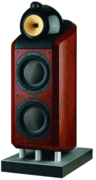
As a monitor speaker, B&W products are unquestionably superb. Among the current options available, they are in all likelihood the ultimate choice. Used as reference monitors in many recording studios including those in the PolyGram group, and as development reference speakers by audio manufacturers — they are probably the most widely adopted standard today. For those who know live music, have no interest in the more arcane realms of audiophilia, and wish to put together a truly first-rate system of the highest quality and accuracy — with fine furniture-grade finish to match — without any constraint on budget; or for industry professionals who need the best possible system for monitoring music: in such cases, it may well be correct not to consider any alternative to the B&W Nautilus 800 Series.
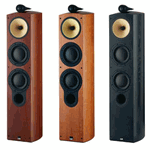
However, for those working within a limited budget, the situation looks rather different. As mentioned earlier, the B&W 800 Series leaves absolutely no room to hide anything in playback. Even the lower models — the B&W 703/704/705 and similar, which have a somewhat more accessible, acoustic presence compared with the Nautilus — offer a level of monitor-grade refinement that comfortably surpasses other speakers in the same class from competing brands. So if you can just about stretch to the speaker itself but cannot properly allocate budget to the amplifier, player, audio cables, and mains conditioning as well, and you rashly splash out on a Nautilus in a one-item-splurge mentality… you may well find yourself unable to tame its fussiness, losing control of the sound entirely, failing to achieve anything like the quality you were hoping for, and eventually feeling like throwing in the towel altogether. When a top-tier B&W is paired with a mediocre system, there is every chance that the treble will become metallic and irritating — a relentlessly nervy sound that offers no relaxation whatsoever. Whether you accept that risk and make the leap to B&W anyway, or seek a more balanced compromise within your budget — at that point, it really comes down to your own judgement.
This is my personal favourite among Karajan’s late recordings. It has exactly the sort of sound you would expect from a mastering session on a MATRIX 801.
 ポチップ
ポチップ
That said, from 2005 onwards the Nautilus series was substantially renewed through a minor model change, including the introduction of diamond tweeters. If that revision has resolved the former treble nervousness, then there really is no better option. The new Nautilus 804S and 805S unfortunately do not feature diamond tweeters, but the models from the 803 upwards carrying a “D” suffix are, by all accounts, greatly improved in overall balance — and I very much want to audition them.
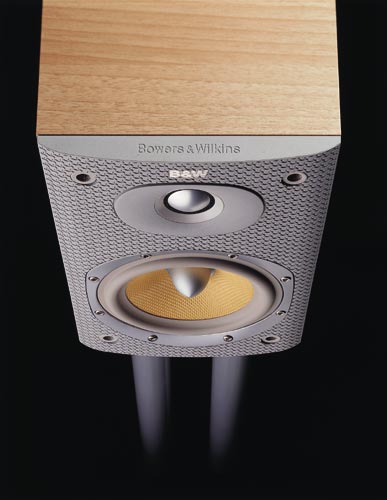
Budget is tight, but the B&W name holds an appeal. So, could one put together a modest budget Hi-Fi system around B&W? Candidates would include the B&W CM Series and the 600 Series and other relatively affordable models. These lower-range models are less a scaled-down version of the Nautilus monitor and more — ※ a sound character that makes use of the slightly dry, jaw-jutting texture characteristic of Kevlar cones and a degree of cabinet resonance — quite different in flavour from the high-resolution, monitor-oriented sound of the upper models. But within a modest budget, with enclosures that are relatively generous in size for the price, they offer an approachable character that lets you listen to music with uncomplicated, bright enjoyment, and that is their real appeal. Note: ※ The above refers strictly to the old 600 Series as it was in 2005.
There is some useful information about B&W’s manufacturing philosophy over at jazzaudiofan’s blog. I ended up ordering the DVD from the UK myself.
※ 2007 addendum: From late 2005, B&W began releasing a mid-range lineup in the form of the CM Series — CM1, CM5, CM7, CM9, and others. Their quality far exceeds what their price would suggest, and they have already established themselves as the reference and de facto standard within their class. In certain listening environments they can be even more compelling than the Nautilus, making them a truly outstanding product — highly recommended for an audition.
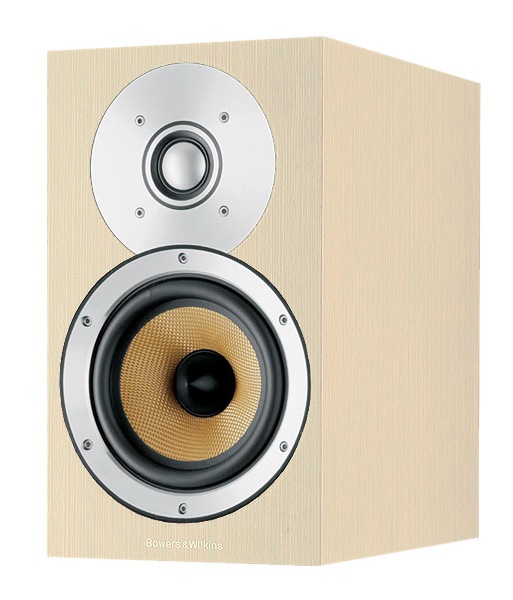
※ 2009 addendum: The CM5 and CM9 have been added to the B&W CM Series, and a piano finish is now available across the entire CM range.

Auto Translated by CS4.6

List of comments (20)
新製品のノーチラス聴きました。
ダイアモンドを使ったモデル、使わないモデルにかかわらず非常にナチュラルな方向に変化しています。
マイナーチェンジなのであまり話題にはなっていませんが、かなり高い評価を得るモデルになるでしょうね。
レス早っ!。
やはりそうみたいですね♪ノーチラスも発売後早7年を迎え、
外観は従来と一緒でも、中身は実質90%の変更らしいですので、
今回はMATRIXが好きだった(よってNautilusが苦手な)私をも、
納得させてくれるんじゃないかと大変期待してます。
といっても、買えないじゃん!って値段なのですけれど…。
ノーチラスには手が届かない普通の人には、703、704辺りをオススメしたいです。
それにしても最近、デフレ時代にもかかわらず、
モデルチェンジを境にオーディオ製品の価格がどんどん上がっている気がします。
ウィーンアコースティックも次世代モデルは大幅値上げになってますし。
ちょっとお邪魔します^^?
確かにB&Wって、オーディオを語るのに外せないブランドですよね。きちっとした論評ありがとうございます(って私がいう立場じゃないのですが^^!)
ただ、Pastel Pianoさんも触れていますが、最近のラインアップには、私も個人的には?を感じています。実は、庶民の私としては、B&Wでしたら、マトリックス805が結構好きなんですよね。
801とか802とかとは別の次元で、結構、おうちでオーディオというより‘音楽’が楽しめるよいスピーカーだと思います。
最近、たまにノーティラスとか新しいラインのモデルを聴くのですが、残念ながら、どうも音楽的にグレードアップしたとはとても思えません。
(続く)
(↑続きです^^!)
たぶん、このブログではある程度、初心者でも手に入れやすいように現行製品の紹介がメインになるのはやむをえないと思いますし、とても大切なことだと思いますが、今でも、たとえ中古でもきらきら輝くところのある十分に魅力的な旧モデルがあるというのが、このオーディオの世界の難しさというか奥の深さなのでしょうね^^?
たまには、旧モデルの特集をしてみるとか^^?
ところでpastel pianoさんの他の記事をみても思うのですが、とても具体的で参考になるレヴューで、その筆致、本当に敬服いたします。
わたしもブログがんばってカキコしますね。
ではでは^^
そうそう、2005年のあたらしいノーチラスは、まだ聴いていないです。ただ、マトリックスシリーズの後のノーティラスシリーズは、いろいろ聴きくらべましたが、そのときのノーティラス805は、非常に神経質で小難しくて、高音がキンキンしていた記憶があります。
そのとき、pastel pianoさんがおっしゃるようにCDPやアンプの素性がすぐばれてしまうような‘厳しい’スピーカーだと思いました。
結構、オーディオ雑誌の評論家の先生方の記事って、そこらへんの事情をはしょってしまうことが多いのですよね。
ちょっと、筆がすべりました^^?
ではでは。
>たまには、旧モデルの特集をしてみるとか^^?
私が所有している機器も既に殆どが旧モデルですし、オーディオ機器とクラシック音楽は息が長い=時間感覚が超スローペースな私に合ってるので、旧モデルの記事も出来るだけ書きたいと思っています。ブログ初めて2年経って既存のページも既に旧モデルばかりですけれど(滝汗)。但し今のところは休止してた昨年に購入したプラズマテレビやレコーダーなどのレビュー記事を一通り済ませてからでないと先に進めないので、そこら辺はしばらくお待ち下さいませませ♪
>その筆致、本当に敬服いたします。
日記形式でロクに推敲せず投稿するものですから、過去記事は誤字や脱字に加えて、リズムが変な文章が多すぎて、読み返すと恥ずかしくなります…。
>ノーティラスはDとSへのマイナーチェンジ以降ずっと良くなりましたよ~。805Sとか、機器やケーブルにそれなりの予算があれば家庭でも楽しめると思います。とはいえあくまでハイエンドですので、新車でメルセデスやBMWのオーナークラスの方々へのお薦めです。
箱庭オーディオ的には、現在はB&W CM1とCM7ですね。これらはハイエンドに劣らない音を一般人にも届く低価格で実現していますし、ハイエンドにはない組み合わせの扱いやすさや、より近しく気軽に音楽を楽しめる耳当たりの良さがあります。B&WのCMシリーズよりも更に廉価なモデルは個人的にはあまりお薦めしませんが、少なくともCM1はバジェットHi-Fiの一つのデファクトスタンダードになったと思います。
804s確かに全体で良くなっているんですが、
N804の3wayらしからぬまとまりのよさや、B&W
スピーカーとしてはありえないほどの鳴らしや
すさも、多少失われたような気がしなくでもな
いですね…。
もし今買うなら中古のN804やN803もいいかも
と思うんです。プラのプラグは×ですけれど
も…。
804sの方がN804より低音が良いのですが、か
えってキンつきやすい気もするのです…。
ダイヤモンドツィーター搭載機は別次元の音
ですけど。
>トムキャットさん
こんばんは&はじめまして(ですよね?)
N804をお使いとは羨ましいです。確か以前(この記事の後)にじっくりと試聴したのは既に804S/803Sになっていたものでした。直接比較していませんのでモデルチェンジでの音質差は上手く掴めなかったです。N805Sはトータルでの音質は良くなっているようでしたが、相変わらず未だピーキーでキンキンしているなぁと感じました。
はじめましてです。カタログ見比べてみると
1w時の音圧が1dbあがってること。低音側の
歪率の0.5%ポイントが下がっているとのこと
でした。でも歪の1%ポイントは逆に上がって
しまっているんです。聴感上だと量感は増えて
いるように感じますが。質はそれ程でも…
という感じです。
高音も歪が増えるポイントは上がっているので
すが低歪がまろやかな方向と言うよりも、より
高解像度な方向に出ていると思えました。
全体として、モニタースピーカーとしては確実
によくなってる。リスニング用としては、うら
やましがる程でもない…セッティングの
法が大事かなという所でした。
でも純正で金属プラグなのはいいですね~♪
スコーカーの磁気回路なんかも改善されてるみ
たいですし。同じシステムで聴き比べればその
あたりが出てくるかもしれませんね。
いきなり書きこんですみませんでした。
>トムキャットさん
こんばんわ~♪二重投稿の部分は修正しておきました(^^) 800字制限もあるのですが、GW中頃からLivedoorブログのサーバーの調子がおかしくて、まともに投稿できなかったりコメントが消えたり色々あるみたいです。スタッフブログその他に苦情コメントが殺到して凄いことになってました。いまだに箱ピュアの管理画面も飛んでますし。。。こんな感じですので4日間新エントリを投稿せず静観してましたがそろそろいい加減にエントリ公開しないと・・・。
それはともかくB&W804のお話大変参考になります。検索で来られた方は特にこういった情報を求められていると思います。ちなみにフェーズプラグはどんなものをお使いですか?
ステンレス製です。良くも悪くもよりノーチラスらしくなるみたいです。なのでツボにはまれば良いのですが、セッティングによっては硬い音になったり…。でも上流の音に左右されやすいということは、音色をコントロールしやすいって事でもあると思うんですよ。
だから足まわりはケチれないし、ケーブルなんか高額でも相性悪いと全くダメって事になるんですが、クエストのコブラあたりでも無難な音にはなるので、高額投資が絶対必要かと言うと、そうでもないと思います。
あと、所詮は軽い紙コーンの16cmウーハーなので、アンプも駆動力自体はそんなには必要ないと思います。繊細なスピーカーなので良いアンプを使うにこしたことはないと思うのですが…。
…セパレートアンプ欲しいのですが手が出ません。(笑)
でも不快な音を出すような性格がなければ、
10万円クラスのアンプで大丈夫ですね。
箱の隅をつつくくらい引き出すならいくら
でもいいアンプをおごればいいのですが、例
えば803Dが買えるような投資では本末転倒
ですよね。
高価でもきつい音出すアンプあるし。ポータブル器を据え置きのアンプにつなげば分かる事
ですけど、クオリティ云々は別として、きつい
音は意外に出なかったりしますし。
以外な組み合わせで気持ちよく聞けたりしま
すよ♪
こんばんは。
久しぶりにリンク切れと本文を修正してみました。B&W800シリーズ・・・に合ったアンプ選びですが、一般論で書くとなるとスピーカーの価格に見合ったハイエンド製品を・・・具体的にはイギリスのCHORD製品などが挙げられると思います。とはいえオーディオ機器は本質的な性能と価格が必ずしも一致しないケースが多々ありますし、”相性”は時に価格の限界を大きく凌駕しますから、低価格なアンプでも良い結果が得られれば幸せですよね。B&Wは以前にROTELの10~20万円台のセパレートアンプを自社のデモ機として使用していたりしますし、うちにあるTAG McLaren(現AUDIOLAB)の8000系セパレートアンプも、MATRIXやノーチラスを端正且つ音場感豊かにドライブすることが出来ました。他にも国産ではデジタルアンプのONKYO A-1VLやシャープの旧1bit系アンプなども、価格を考えれば十分な音質が得られると思います。
私はB&Wで一番鳴らしにくいのは、上位モデルよりもむしろ800系で一番売れているN805になると思っています。このスピーカーについてはペア価格と同等或いは超えるクラスのアンプにしないと、トゥイーターが金属的に歪んでしまいまともなバランスで鳴ってくれない・・・もちろん例外はありますがそんな傾向があると感じます。ただこれはあくまで私の個人的な感覚ですので、同様な指摘をされる方もいれば、一緒に試聴している状況でも全く感じられない方もいらっしゃいます。
対処療法として高域が聴感上控えめに聞こえるレンジ感の狭いアンプやケーブル、おっしゃるように携帯プレーヤー等を使うことで聴きやすい音にすることは可能ですが、やはりモニタースピーカーとしての本分を考えると、強烈な解像度とレンジの広さを確保しつつ、高域の歪み感と&中低域のケブラーコーン臭さを感じさせない十分なドライブ力のあるアンプを使ってあげるのがスピーカーにとっても本望ではないかと考えます。
CHORD製品ですか、とてもそこまでは手がでま
せんね。とはいえいい物はいい。
きつい音を出さず、高域から音色も自然で
中低域ユニットの癖がほぼ出ない…。
それくらいなら、今でも出来ているとおもいま
ますし。普及機で十分できる事だと思います。
それでも、音楽としての情感表現力であるとか
録音現場の空間表現力であるとか。
…そういったものはやはりそれ相応の機器
でないと無理なんでしょうねえ…。
それこそが本来の800シリーズの世界といえ
ばそのとおりと思います。
でもただ気持ちよく音楽を聴くだけに尻ごみ
するほどのスピーカーでもないと言いたかった
のです。
>でもただ気持ちよく音楽を聴くだけに尻ごみするほどのスピーカーでもないと言いたかったのです。
そうですね。まぁスタジオ用途を前提に設計された高額なハイエンドモニタースピーカーにハイエンドアンプをってのはあくまでセールストーク的な一般論ですので、個々の環境で深くお考えになる必用はないと思います。私としては低予算で無理にN805Sに背伸びをされ泥沼に陥るくらいなら、CMシリーズ(特にCM1)+10~20万円台のアンプの方が音楽を簡単に楽しめる確率が上がりますよってのが趣旨ですから。
B&W 803も804も長くつき合える一生もののスピーカーですし、最初に一点豪華主義的に組まれたとしても、機器の入れ替えやセッティングの試行錯誤なども含め長期に渡ってお付き合いできる最高峰のスピーカーだと思います。ちなみにトムキャットさんはどんなアンプをお使いですか?
少々恥ずかしいですが、ヤマハ製のプリメイン
です。SACDプレーヤーもそろえて。
言ってしまえばこれまで、セッティングでの辻
褄合わせに必死になっていた所ですね。(笑)
AS-1000かA-S2000辺りでしょうか?(この2つ実売価格があまり変わらないのが何とも・・・)
https://www.audiostyle.net/category/yamaha
どちらにしろ全く恥ずかしくありませんし卑下するようなモデルではないと思います。CD-S1000/CD-S2000のSACDプレーヤーとセットで外観イメージ的にも高級感と統一感がありますし、ん~むしろ何が問題なのかわかりませんです(^^)
僕のは、A-S1000です。実勢価格はあまり差が無いのですが…A-S2000の能力を引き出すセッティングをするとなると、実は相当価格差がでると思います(笑)
良い感じに機器を揃えられていらっしゃいますから次はどんどんSACDソフトを揃えましょう♪ また何かありましたらコメント下さいませ。
はじめまして。
ゆうきといいます。
CM9を購入予定ですが新たにデノンからPMA-A100とDCD-A100が11月から発売されるとおもいますがCM9とでは厳しいでしょうか?
組み合わせ的にいまいちですか?
スピーカーケーブルはキンバーケーブル8TCを使おうと思ってます。
宜しくお願いします。