【Banana Plugs and Spade Lugs Unnecessary in Hi-Fi?】
Part 1|Part 2|The Sound of Plating|AT6301|Banana plug sound Comparison
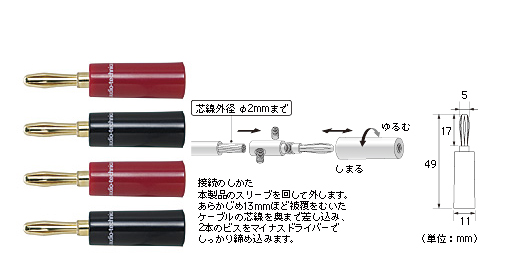
I haven’t tried enough different banana plugs to be able to write a proper recommendation, but audio-technica’s solderless banana plugs were recently given a full refresh, so I’ll take this opportunity to write a little about them. Incidentally, “solderless” means no soldering required.
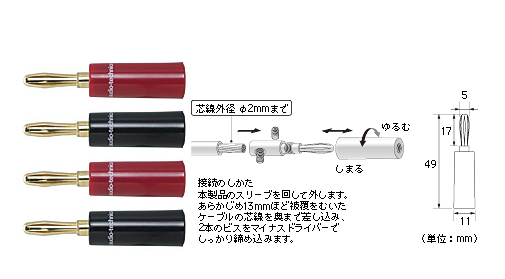
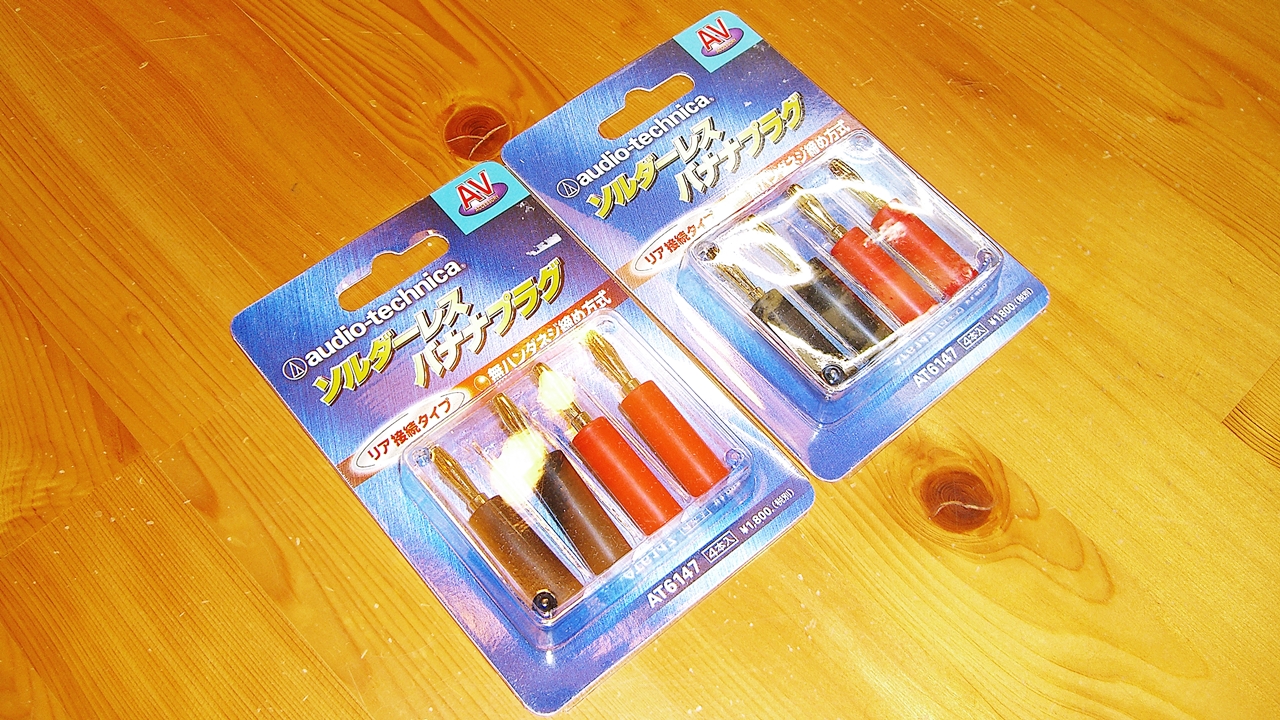
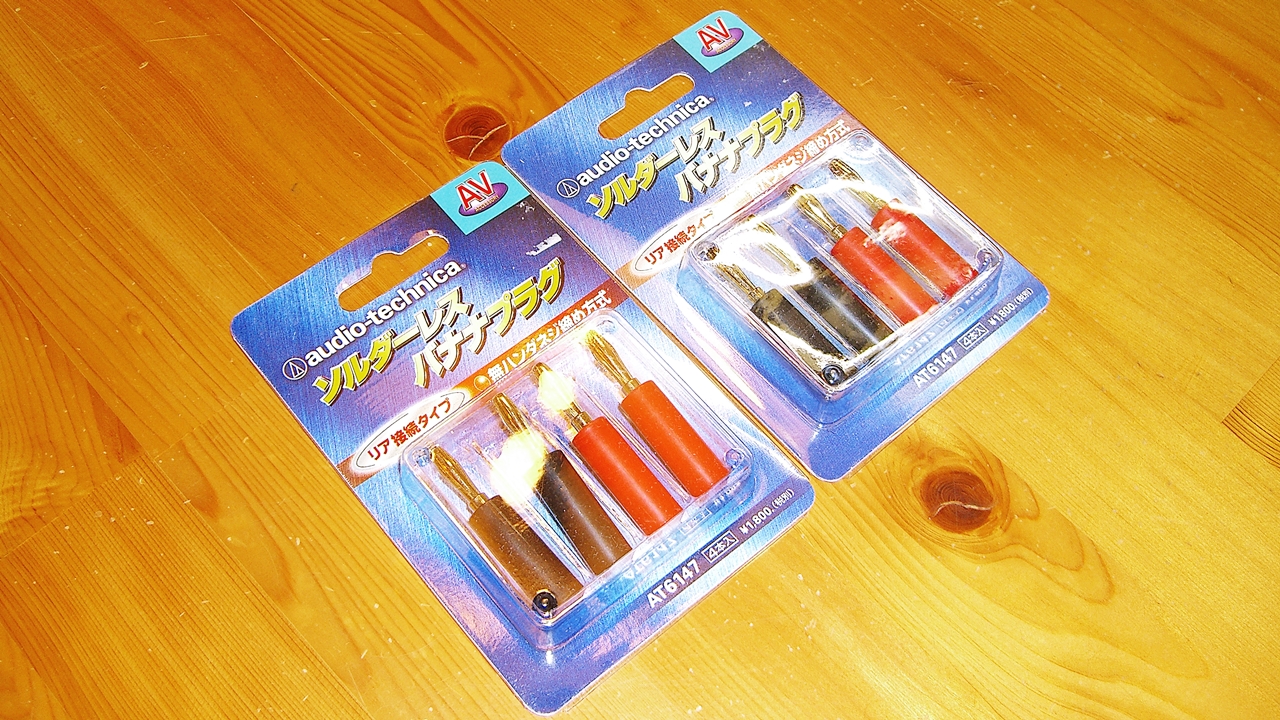
Looking closely, almost nothing has actually changed from the existing older models, though it is helpful that the model numbers have become easier to follow. The AT6147, which I had been recommending here on AUDIO STYLE, has been renamed the AT6301, and the red-and-black plastic cover now carries the audio-technica logo. The AT6142 and AT6143 have had their 24-carat gold-plated bodies replaced with a matt silver finish. As someone who rather likes gold plating, I can’t help feeling the previous versions were slightly better in that regard… though I suppose that’s just a matter of taste. The actual internal specifications of each model appear to be essentially unchanged. On a related note — this is a different brand — the Victor/JVC Kenwood AP-SC100 is probably the same banana plug as the old gold-plated-body model. Also, the AT6142→AT6303 change has brought a modest price increase, from ¥3,990 to ¥4,200. The top-of-the-range domestically made AT6C67 with rhodium plating appears to be continuing unchanged.
| Old | New |
|---|---|
| AT6147 | AT6301 |
| AT6143 | AT6302 |
| AT6142 | AT6303 |
| AT6304 (new model) | |
| AT6C63 | Continuing |
| AT6C67 | Continuing (domestic, machined brass, rhodium-plated) |
Now, as for banana plugs — I have long been a devoted user of audio-technica’s cheapest model, the AT6147 (now the AT6301). I had previously been using the WBT-0644 banana plug from Germany’s WBT, a brand well known for its premium products, and when I compared the two, I was genuinely surprised to find that the Audio-Technica AT6301 actually sounded better…
These red-and-black banana plugs, which at first glance look rather modest, are in fact the very same ones that came bundled with the old British-made CREEK integrated amplifier 4240. It was fairly common among British amplifiers up until the 1980s — from CREEK‘s early days through to the mid-1990s, integrated amplifiers up to around the 4330 had rear speaker terminals designed specifically for banana plug connections, meaning that without banana plugs, you simply could not connect speaker cables at all. If I recall correctly, Naim Audio and LINN integrated amplifiers of that era were much the same. (※ Naim Audio, whose amplifiers are both musically engaging and genuinely good-sounding, has unfortunately ceased imports into Japan — though their amplifiers remain banana-plug-only to this day.
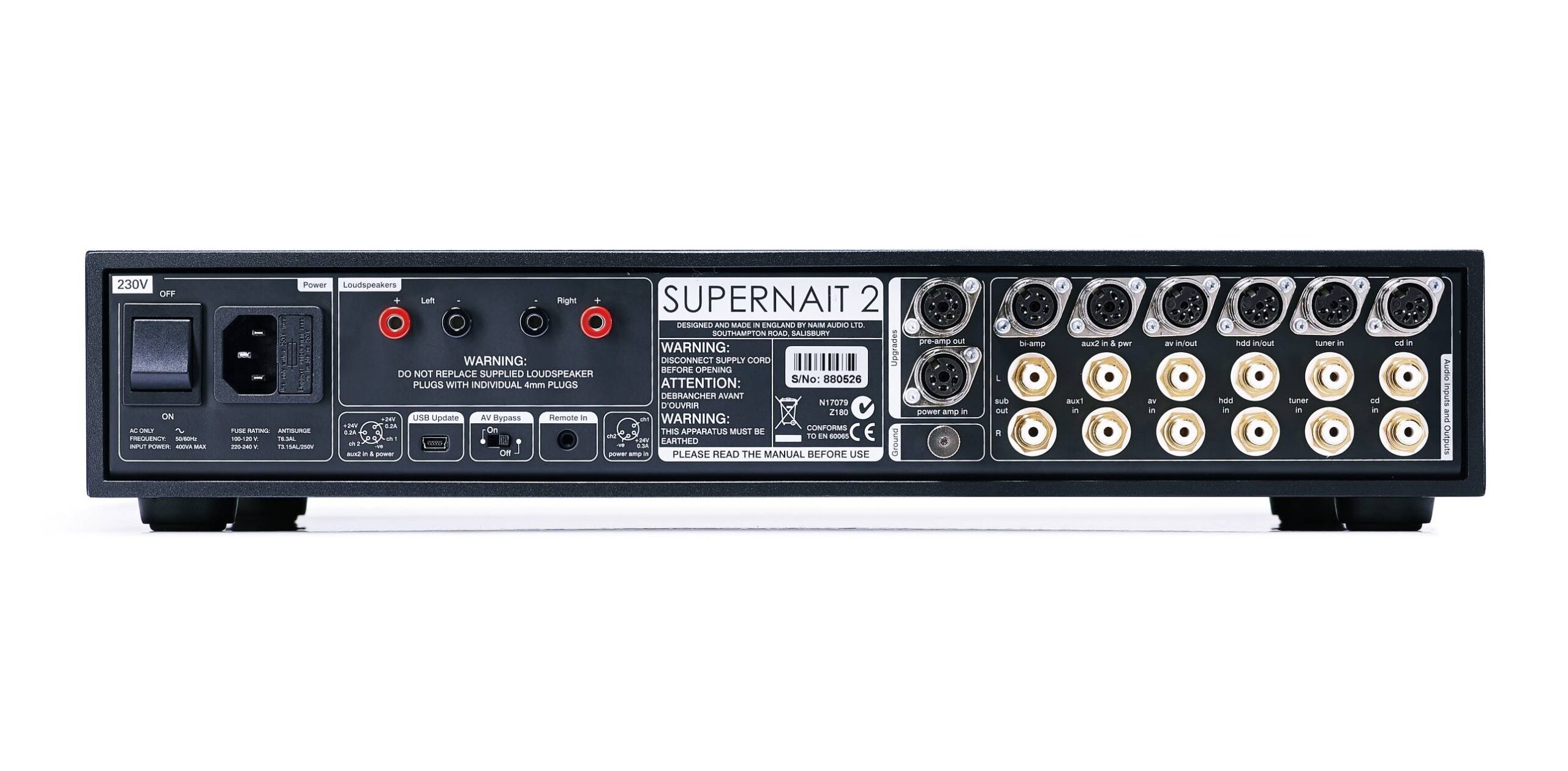
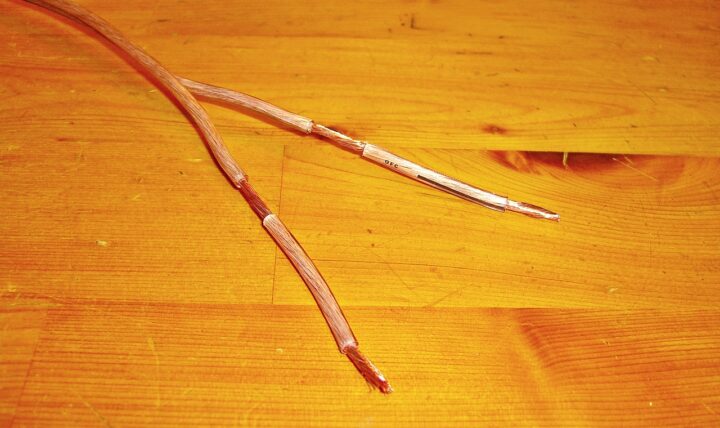
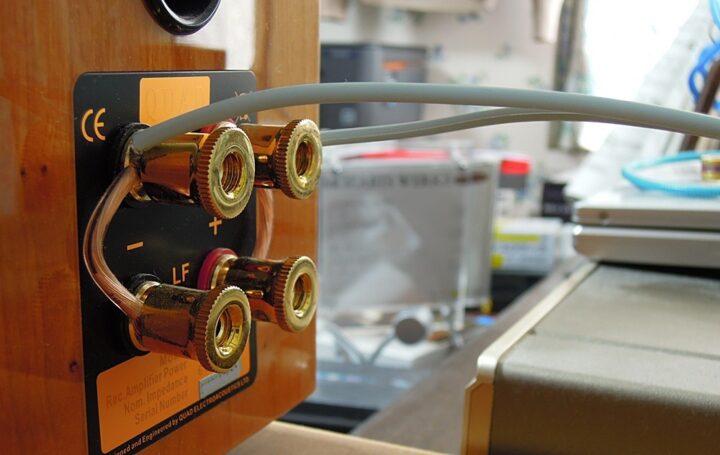
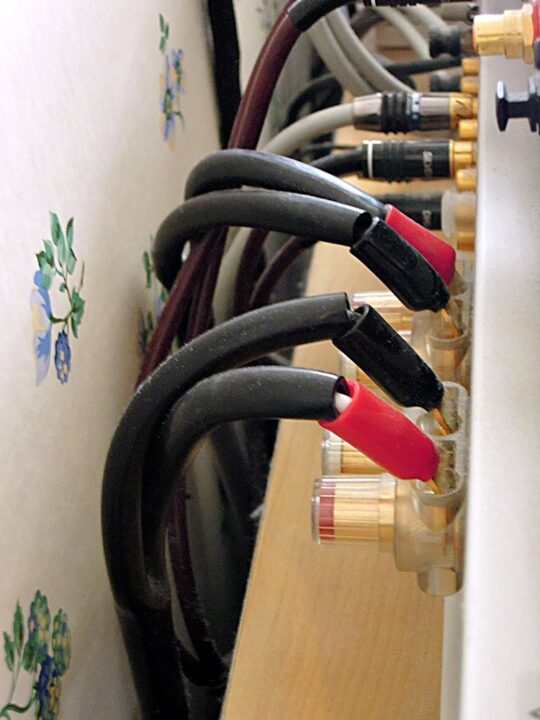
In a domestic setting, indiscriminate use of banana plugs for amplifier-to-speaker connections is not something I can readily recommend, as it increases the number of contact points in the signal path. That said, they are absolutely necessary in environments where speaker cables are frequently connected and disconnected — such as in-store demonstrations — and even at home, those who, like me, find themselves regularly swapping speaker cables may well find them a convenient option at times. Even so, when it comes to terminating speaker cable ends, I would recommend using spade terminals wherever possible rather than banana plugs — they offer a larger contact area, the parts themselves are lighter, and their negative sonic impact is comparatively smaller. (The same applies when purchasing high-end speaker cables that come with pre-fitted terminations.)
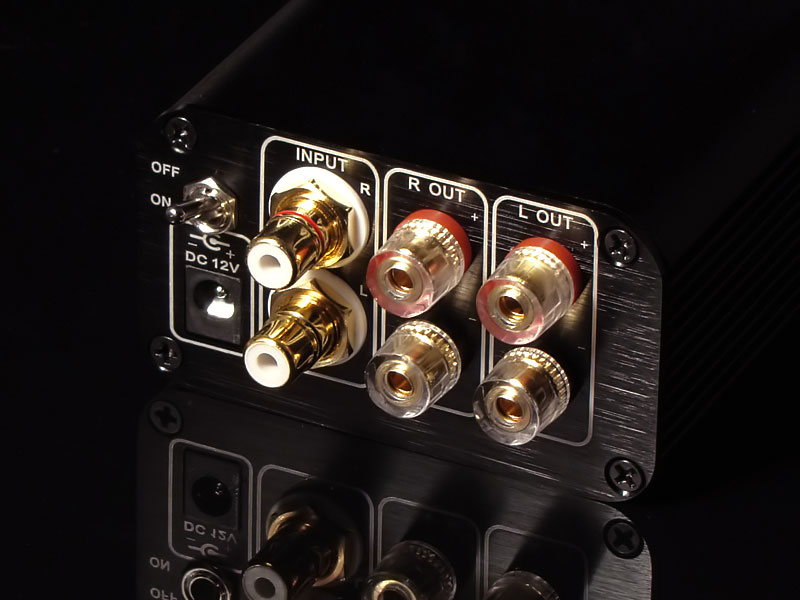
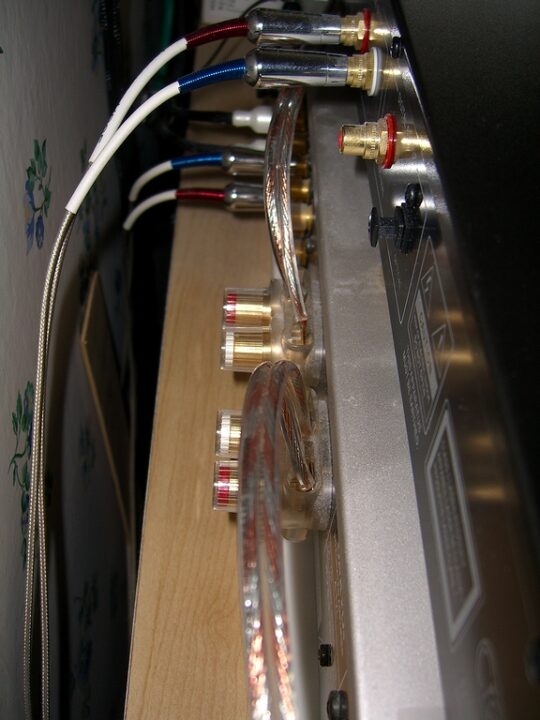
On another note — something I noticed after recently becoming particular about desktop PC audio — compact desktop integrated amplifiers and digital amplifiers of the palm-sized variety often have extremely narrow spacing between their speaker terminals, and quite a few products are effectively impossible to connect without using banana plugs. With these products, the speaker terminals are simply too small to accept thick-gauge speaker cable in the first place, and even large Y-lug connectors designed for use with standard-sized speakers and integrated/power amplifiers tend to touch adjacent terminals because the lug size is too large. If you force a connection, there is also the risk of it working loose without your noticing and causing a short circuit, and the fear of damaging something makes it really rather nerve-wracking to connect bare speaker cable or Y-lugs. In situations like this, having an inexpensive set of banana plugs makes safe connection possible, and they prove genuinely useful.
The problem with banana plugs is that the contact area ends up being a mere point contact, and on top of that, in most cases the metal body that forms the conductive part is unnecessarily large and complex in shape — so quite apart from any question of the purity or resistance of the speaker cable being connected, the plug’s very existence (※ its metal material and purity) is itself a concern. There is also the issue that the cylindrical body, the collet-chuck metal cover, the clamping screw, the spring, and so forth all vibrate, causing the banana plug’s own resonance to be superimposed on the speaker output, which not infrequently results in a distinctly odd sound.
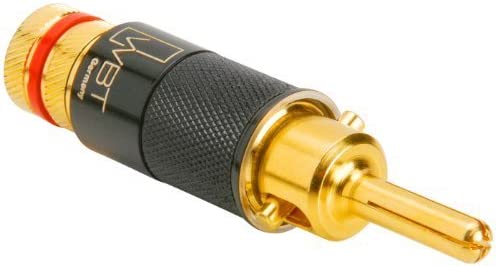
The German-made WBT-0644 had this sort of effect — the edge of the sound took on a strange glittery quality, the soundstage became thin and empty — well, one could argue it comes down to personal taste, I suppose, but it really drove home the lesson that if you are going to use WBT banana plugs, which are German-made and have a reputation for high manufacturing precision, you really must go for the WBT-0600 grade or above, otherwise it simply will not do. I suspect the same applies when making up your own interconnect or digital cables using WBT’s collet-chuck RCA plugs.
The Audio-Technica AT6147 (AT6301) has a brass machined body that is exceptionally small even by the standards of commercially available banana plugs, and its contact tip is a fairly simple one-piece construction with no spring inside to press outward — perhaps for that reason, the negative sonic impact when in use seems to be kept more in check compared to other, larger banana plugs.


 ポチップ
ポチップ
As you may gather from the fact that the AT6147 (AT6301) was included bundled with older CREEK amplifiers, this is a long-established banana plug that has been around for twenty years — probably longer. It is not a product made from the high-purity metals or thick plating that would today be called audio-grade, but I think that using the straightforwardly simple AT6301 is actually a safer choice than reaching for some half-hearted audio-specific banana plug.
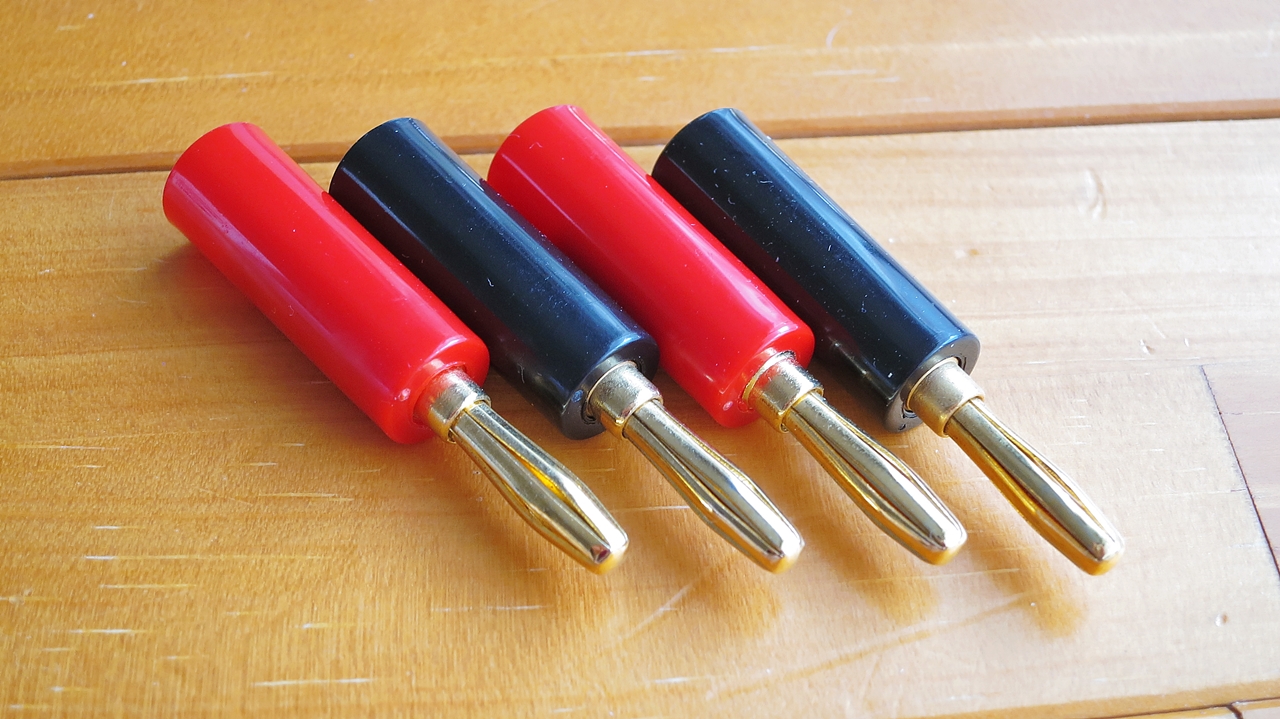
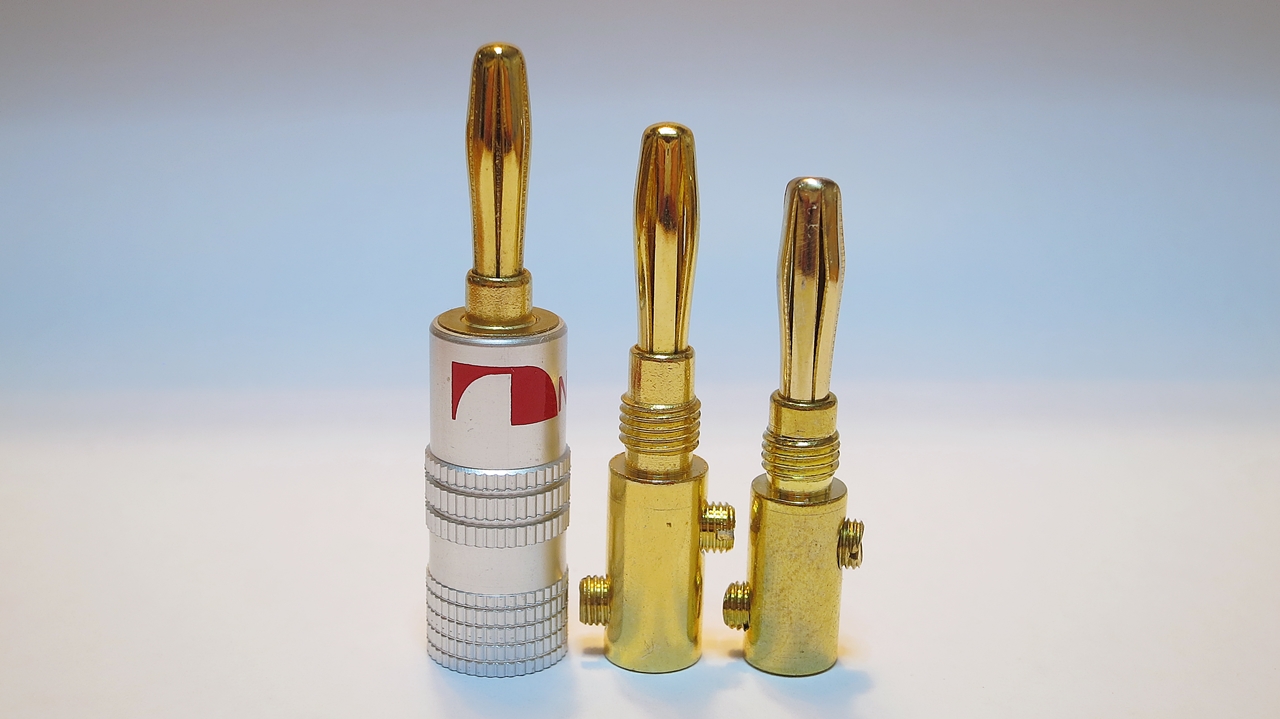
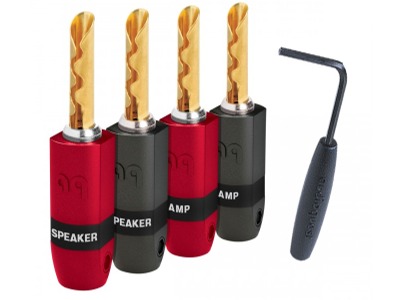
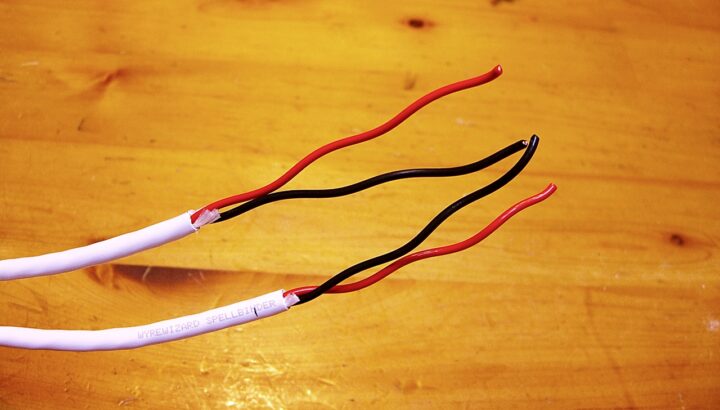
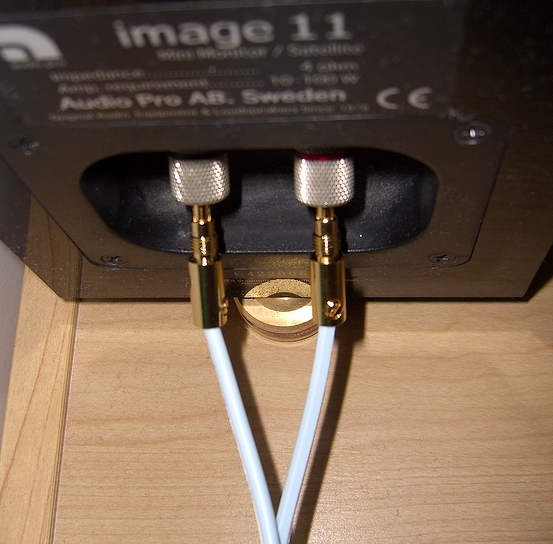
The AT6147 (AT6301) does have the drawback that the banana tip gradually loosens with repeated insertion and removal, but for the time being, among banana plugs it tends to have relatively little coloration from the plug material itself, and the sound comes close to what you’d get with an inexpensive brass gold-plated Y-lug crimped connection. The body is small, so unlike other banana plugs there is no risk of short-circuiting, which means it is also possible to connect with the red and black plastic covers removed, as shown in the photo. It’s a matter of personal preference, but removing the plastic covers may well give a slight improvement in sound quality.
To describe the sonic character of the AT6147 (AT6301) in a little more detail: compared to connecting the speaker cable directly to the speaker terminals, the sound becomes brighter and smoother. It has a slight mid-forward, kamaboko-shaped frequency response, but the density of the sound image increases and the presentation becomes more dynamic. On the other hand — the amount of information is somewhat tidied up — but here is the curious thing: use these banana plugs with a speaker whose treble tends to sound distorted, and the tweeter’s unruliness settles down, the graininess disappears, and the high frequencies become smooth and easy to listen to. One cannot say that simply adding more contact points will raise the overall sound quality, so this is admittedly an unorthodox approach — but if you have a system that is just too bright and fatiguing to listen to, trying this as a stopgap measure may help clarify the direction to take in subsequent tuning.
 ポチップ
ポチップ
Incidentally, these inexpensive banana plugs — I mentioned that they have been around for a long time — and I suspect they may not originally have been manufactured by Audio-Technica in-house. Setting aside the AT6C67 and AT6C63, the top-of-the-range domestic rhodium-plated models that appear to be genuine audio-technica originals, the budget items are all banana plugs whose shapes look as though one has seen them somewhere before.
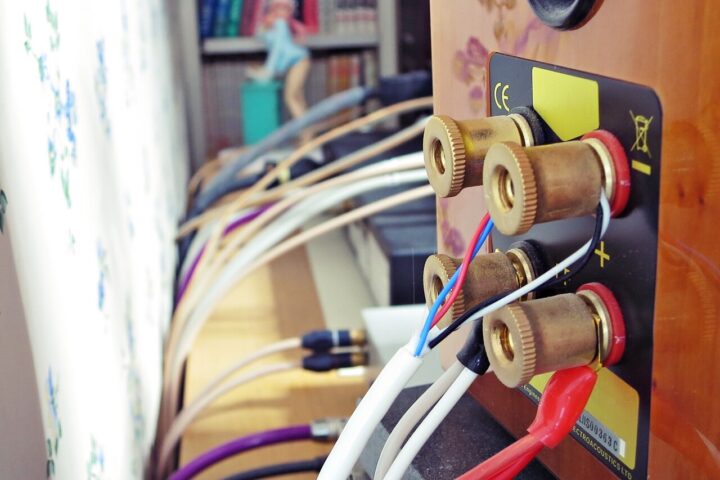
Search for banana plugs on Yahoo! Auctions and you’ll find a flood of similar-looking plugs. The AT6147 (AT6301) even comes bundled with CREEK amplifiers, and in the UK it’s been sold under the IXOS UK. They’re probably manufactured somewhere in Taiwan or China, and if you rummage around the more dubious-looking parts shops in Akihabara, you might find bulk stock going cheap. On that note, here’s one way to get them inexpensively through normal channels. It turns out that (what are probably the same) banana plugs are also stocked at radio-controlled model shops. The part number is Eagle #2815, and since it’s sold as an RC accessory rather than an audio product, it’s considerably cheaper. Later note: Eagle #2815 appears to have had its specifications changed without any change to the part number. The one shown in the image was equivalent to the audio-technica AT6301, but it seems the current version is a different type with a shorter locking-head section.
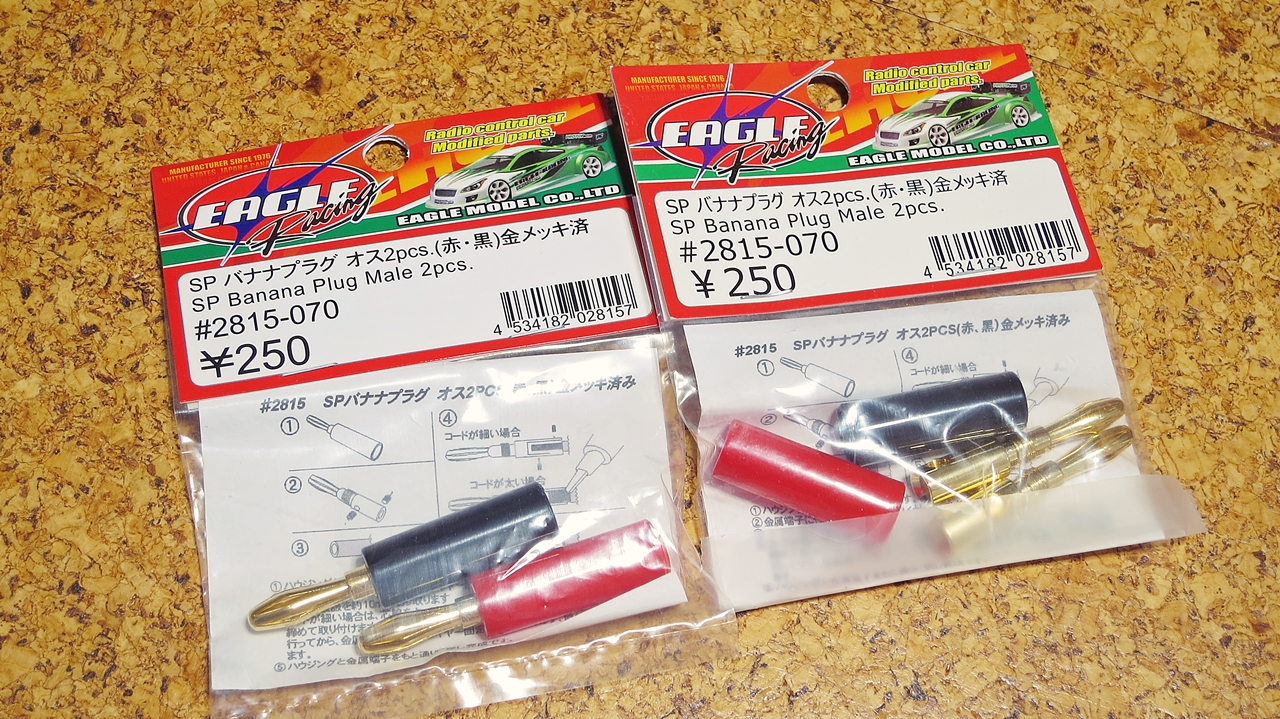
So why does the author bother paying over the odds for the retail-packaged audio-technica version, you might ask… well, how to put it — it’s the nature of the Hi-Fi enthusiast, I suppose, or in short, perhaps it’s simply because I like the audio-technica brand.
【Banana Plugs and Spade Lugs Unnecessary in Hi-Fi?】
Part 1|Part 2|The Sound of Plating|AT6301|Banana plug sound Comparison