【Is SHM-CD Really High-Fidelity?】
Part 1 |Part 2|Part 3|Platinum SHM-CD
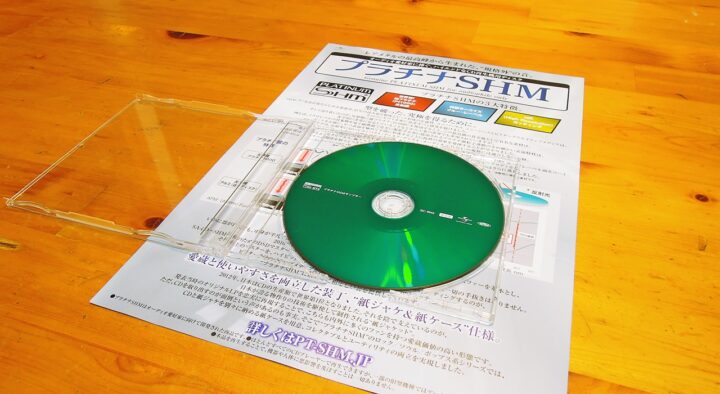
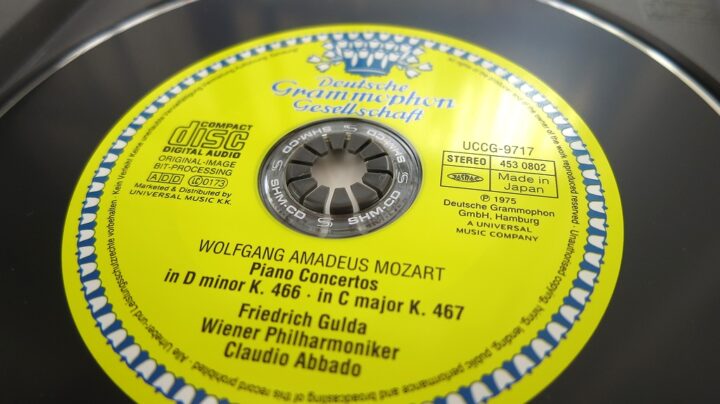
While I was laid up in bed, the shops had filled up with something called SHM-CD (Super High Material CD). As usual, it appears to be a Japan-only thing. It arrived with claims of higher quality than conventional CDs — using a polycarbonate resin with superior optical transmission properties, the same material used in LCD panels, achieving high fluidity and high transferability, along with Victor’s original high-precision stampers and a dedicated SHM-CD production line, and so on. It seems the improvements are focused primarily on the manufacturing stage.
That said, the data itself is identical to an existing CD, so if the master truly is the same, ripping it to a PC makes the whole thing completely meaningless. Any benefit from SHM-CD can only be appreciated when playing back in real time on a dedicated CD player at standard speed. Japanese pressings already had a considerable lead over imports in terms of pressing quality to begin with, so perhaps this is best understood as a further polishing of that existing Japanese advantage.
This kind of high-fidelity disc approach was also tried in the 1990s, when there were discs made from materials with superior optical properties to polycarbonate — the Arton disc, the APO disc (amorphous polyolefin), and the ZEONEX disc, among others. The APO and ZEONEX discs I unfortunately never managed to get hold of, but as for the Arton disc — Deutsche Grammophon, Canyon, and others released quite a number of domestic classical titles in limited editions using Arton, and I do own a few of those. Incidentally, the Arton disc has a clearly distinct sonic character compared to ordinary CDs. For instance, when it came to Canyon Classics releases of that era, I was so fond of the Arton version that I felt I simply didn’t want the disc unless it was on Arton. Well, I’ll save that for a separate entry when I feel like it, and pad out my article count a little.
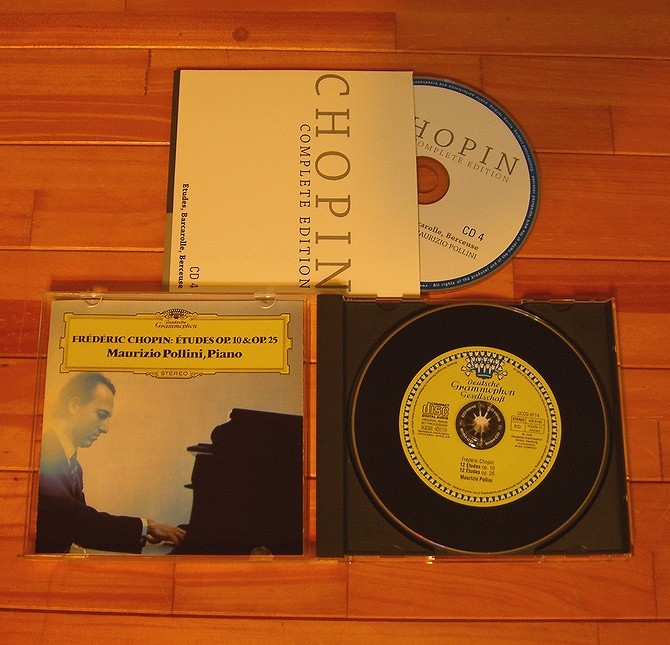
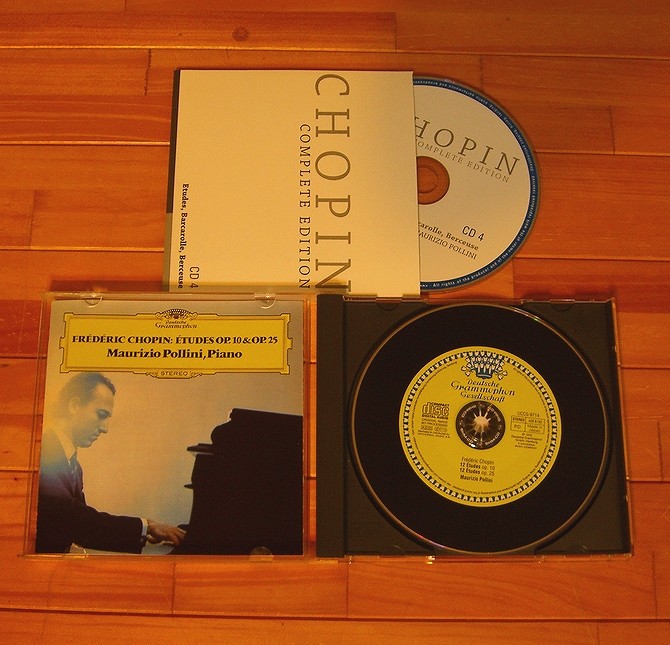
So, with a sort of half-formed sense of anticipation in my chest, I reach for my SHM-CD. The disc I have prepared for this occasion is Maurizio Pollini’s Chopin Études — the one that any serious classical pianist would have to have heard, on pain of being considered a complete amateur.


 ポチップ
ポチップ

Well, it’s the sort of CD that acts as a roach trap for untalented students the world over (there, I said it). Both are OIBP remaster editions — one the SHM-CD pressing, the other an import. The import is disc four of the Deutsche Grammophon Chopin Complete Edition 17-disc box set, released as a limited edition for the 2010 Chopin anniversary year. It includes, as a bonus, the Barcarolle and Berceuse from a different recording session, but the track data prior to those should be identical to the SHM-CD pressing. I haven’t done a binary check, incidentally. As a true believer, it goes without saying.
 ポチップ
ポチップ
Holding both CDs in hand, the SHM-CD feels as though the outer edge has been chamfered slightly. Perhaps this is to reduce stray reflections caused by the thickness of the polycarbonate layer and the disc’s outer rim? From the 1980s through to roughly the early 1990s, imports tended to be thinner than domestic pressings, with the outer edge also rounded and chamfered, but in recent years many imports seem to have adopted the same thickness and sharply squared-off edge profile as domestic pressings.
 ポチップ
ポチップ
With that, I promptly begin listening. The pieces are the third étude, “Tristesse,” and the thirteenth, “Aeolian Harp.”
SHM-CD
· Indirect sound recedes; quieter, with better separation of direct sound
· Perceived loudness is slightly higher
· Attacks are prominent; the sound has a crisp, incisive quality
· A sense of freshness and momentum in the note clarity takes precedence over atmosphere
· Mid-to-low frequencies have body; the treble is understated, with low distortion
· More of a forward, solid presence than a floating, ambient quality. Lucid.
· The ear is drawn to the attack and movement of the piano hammers
· The left-hand register feels somewhat matter-of-fact, with a faintly plastic quality remaining
· May represent high fidelity as a direct extension of existing domestic pressings
Import CD
· Indirect sound wraps around the direct sound, lending moisture to the tone
· Attacks are milder; impact is slightly reduced compared to the SHM-CD
· Pollini’s distinctive smooth, viscous tone and sense of fluctuation come through more strongly
· The bass is somewhat slack; the overall texture is on the lean side
· The treble is bright and has a sheen, though it sounds slightly distorted in loud passages
· A rich, floating sense of atmosphere; a feeling of refinement
· Tonal colour is more varied; the ear is drawn more towards the piano’s dampers and string resonance
…And there we have it, in bullet-point form.
Written out like this as a set of opposites, the two may read as quite different, but in practice the gap is considerably smaller than I had expected. With short samples and quick switching, distinguishing them might become genuinely uncertain. However, after listening to a familiar piece continuously for a long stretch, the overall impression of the performance that remains in memory does differ. It’s like two coffees that taste very similar, yet the aftertaste that lingers after you’ve finished is ever so slightly different.
※ Continues in Is SHM-CD Really High-Fidelity? Part 2
【Is SHM-CD Really High-Fidelity?】
Part 1 |Part 2|Part 3|Platinum SHM-CD

Auto Translated by CS4.6