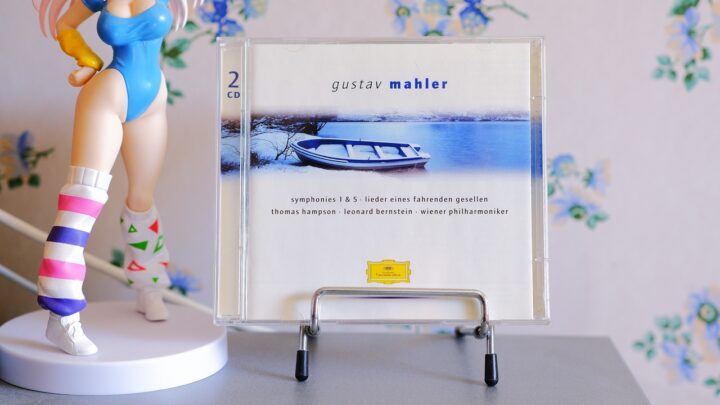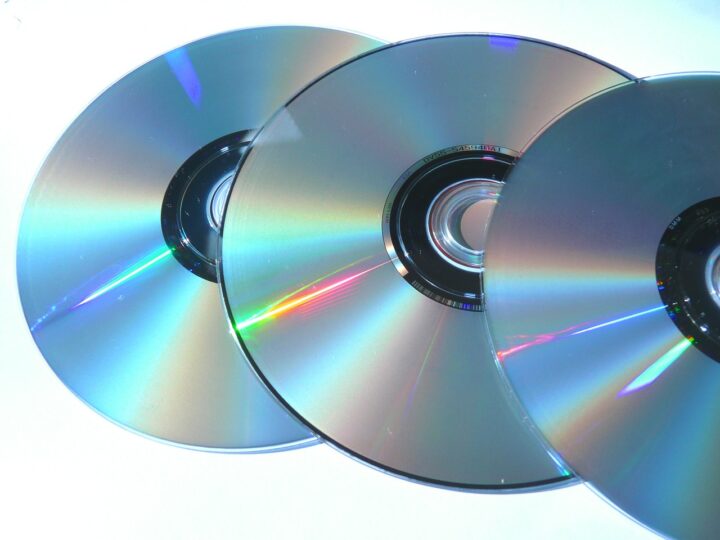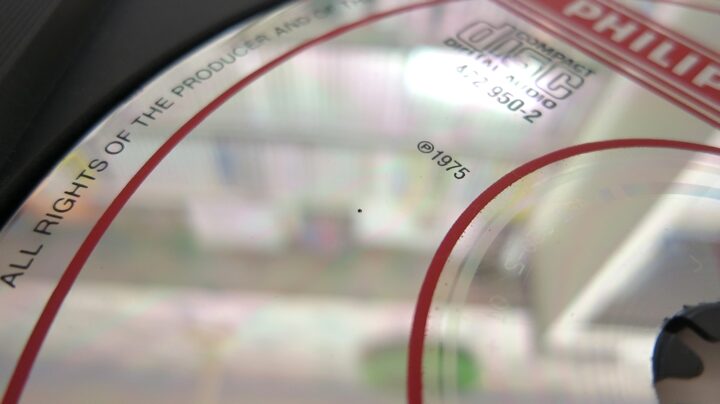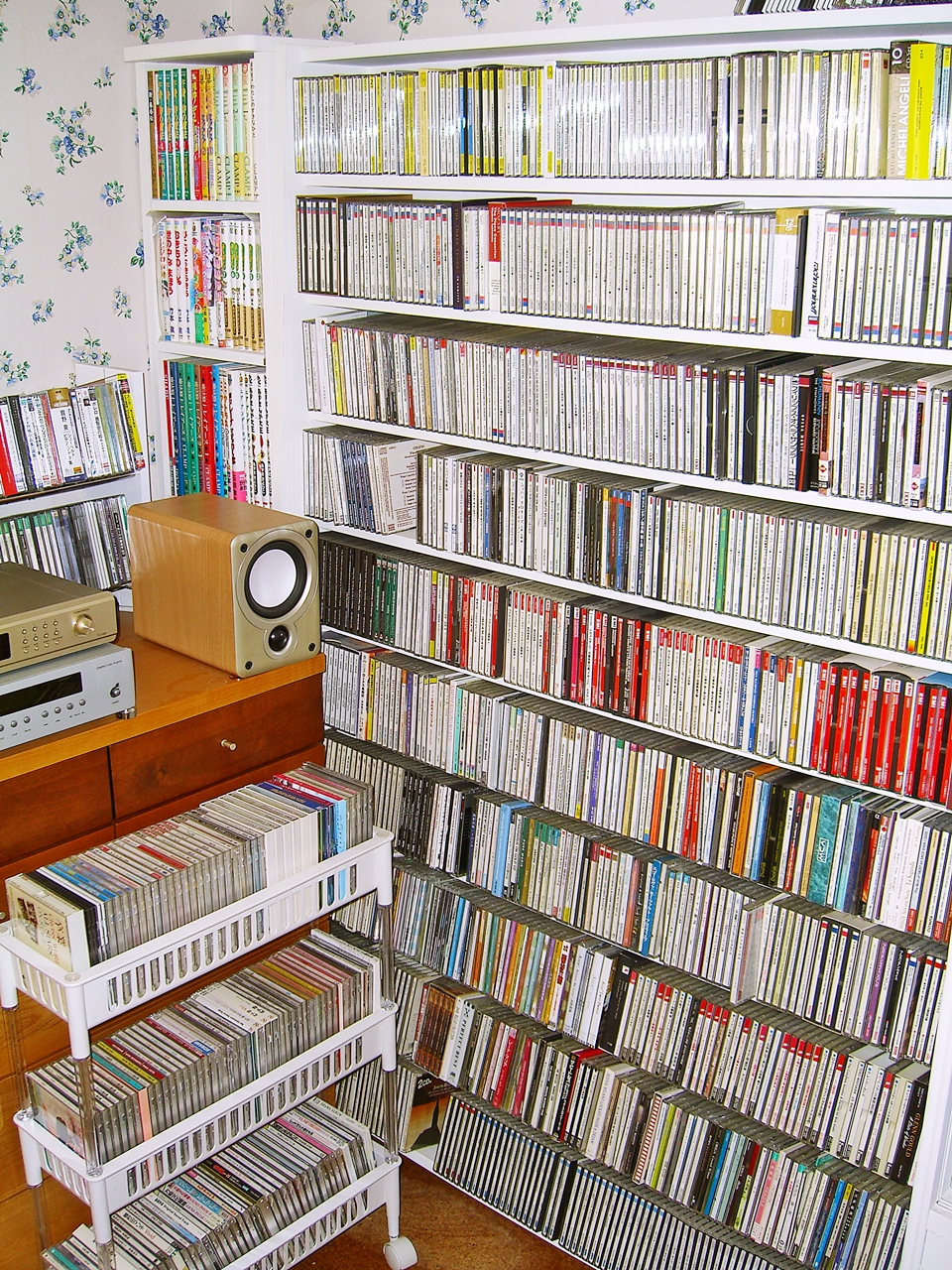
I think I first set eyes on a CD sometime around the upper years of primary school. Even now I can’t forget how I would stand there wide-eyed at the display samples — those 12-centimetre discs shimmering in rainbow colours — in front of electrical shops and record stores, thrilling with excitement at the new future that was coming. Yes, I am without question a CD generation child. The media we had at home up to that point were a large collection of LPs and cassettes, but cassettes aside, the LP flexidiscs that came as supplements in children’s magazines were never played for me, so for some reason I ended up using them as frisbees……
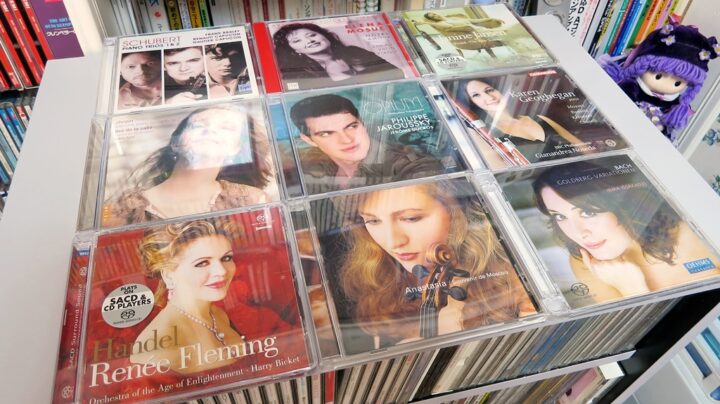
Because of all that, I had almost no chance to handle LPs as a child, so I have no particular odd attachment to them (I didn’t come to appreciate their sound until my late teens) — but with CDs, I have something like an obsessive fixation on collecting the physical discs themselves. The shining disc as an object has imprinted itself on my ego and my sense of wonder in a way I can’t quite put into words, and so, even knowing perfectly well that the data is identical as long as nothing is compressed, I simply cannot bring myself to hoard music on a hard drive.
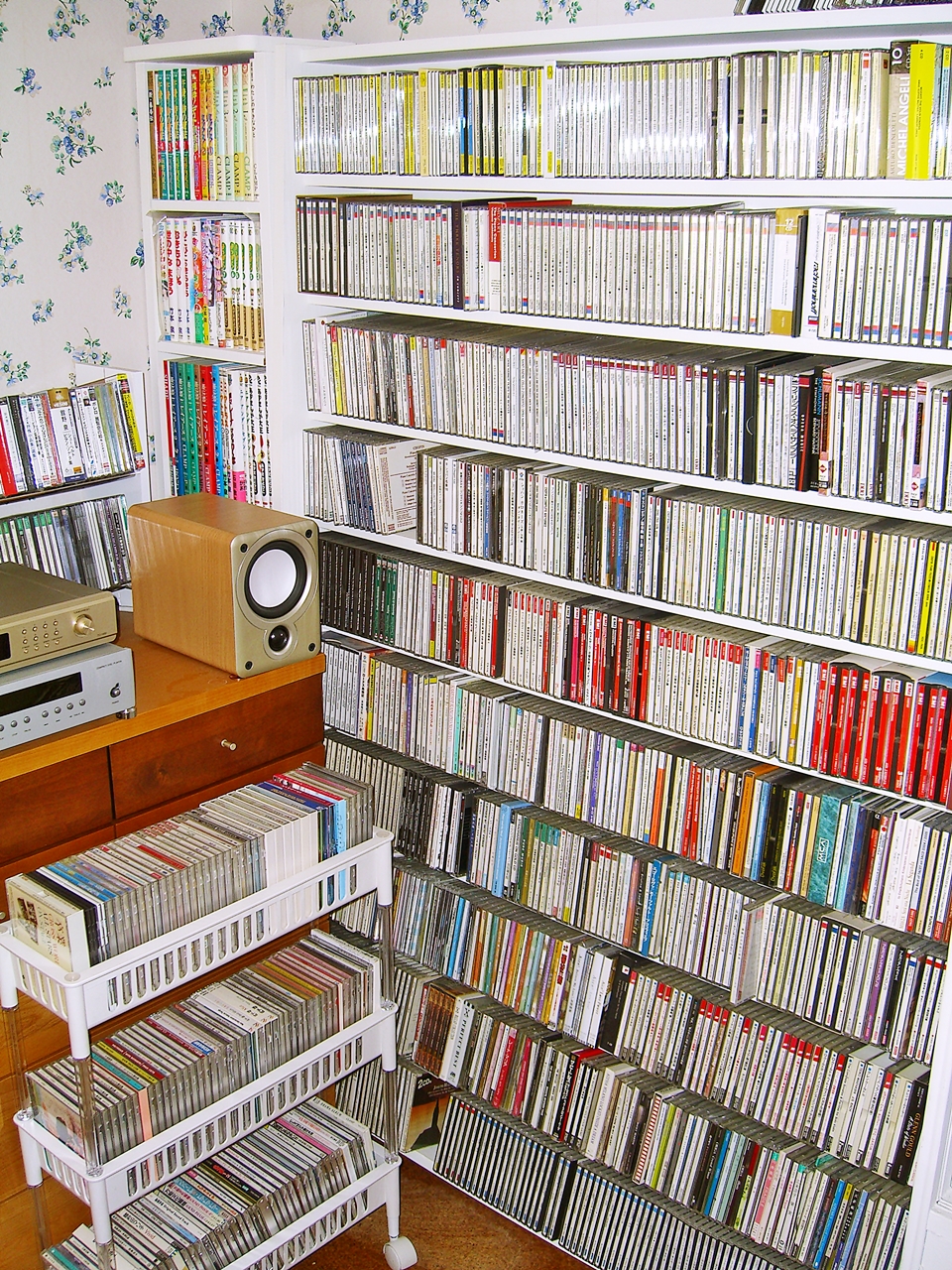
Having walked the path of CD collecting for twenty years and accumulated well over four figures’ worth of discs, one comes to notice that CD — that simple, old-fashioned digital data format — brings about changes in sound quality for remarkably trivial reasons, despite being nothing more than a carrier of digital data. The binary data on the transport side doesn’t change, and yet swapping out the digital transport makes a dramatic difference to the sound. This is treated as an established fact within the Hi-Fi world, but depending on how you look at it, it’s already close to the occult — conventional science doesn’t really explain it well.


 ポチップ
ポチップ
The data may be digital, but the transfer along the time axis is analogue, and in practice synchronisation is never perfectly tight — problems stemming from the looseness of standards particular to consumer audio do exist, which may simply mean that the quality of consumer-grade digital transports sold as audio-grade is rather low (though in most cases they share the same origins as PC drives). Or perhaps the read accuracy itself is not really an issue on any drive, no matter how cheap, and there is some other factor at work that modulates the digital output waveform from the device — beyond the straightforward matter of reading 16-bit 0s and 1s correctly in real time. Jitter, micro-fluctuations in power supply, and the like — though as someone who is not an engineer, I don’t really understand the finer details.
The data recorded on a CD is simply digital data, so if it is copied correctly without any loss, it will not degrade no matter how many times you duplicate it. Well, I cannot vouch for the accuracy of real-time copying on an unstable consumer recorder, but. As for the container, whether the data sits on a CD, a DVD-R, or a PC hard drive, the data itself is absolutely identical.
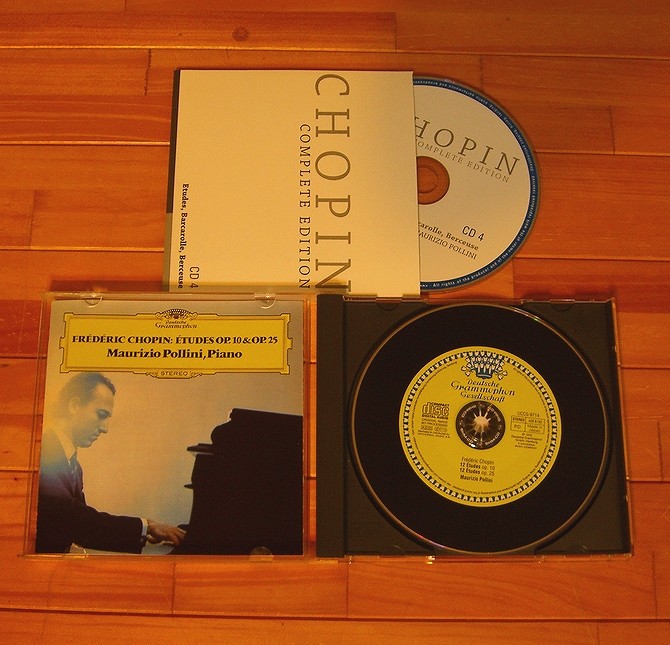
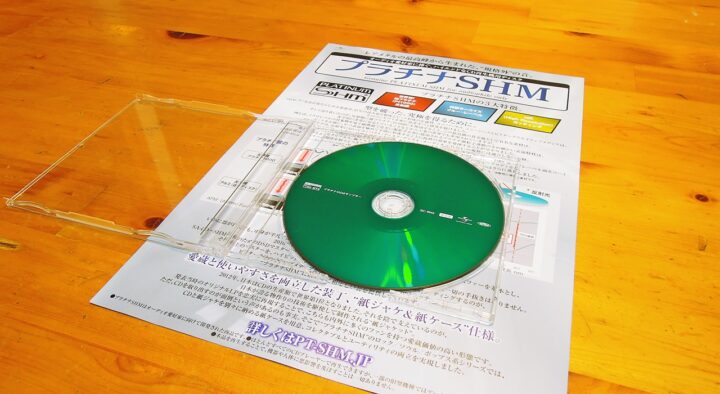
With that in mind, all the talk of polycarbonate versus Arton! Then Arton versus Zeonex (that mythical premium material)! Aluminium vapour deposition versus 24-carat gold deposition! Domestic pressings versus imports! Not to mention expensive CD cleaning fluids, coating agents, stabilisers, green marker pens, demagnetisers, negative ions, plasma irradiation… the accessories and gadgets claiming to improve CD sound quality — including a handful of outright dubious products — are literally endless. And yet, when you get down to it, no matter how much you fuss over the quality of the disc itself, from a first-principles standpoint the data simply cannot change, so in a sense it is quite true that one is going through a rather absurd process of trial and error. (2007 note: recently glass CDs have even appeared!)
And yet, in reality, what changes does indeed change.
Call it placebo if you like, but it sounds different to me and there’s nothing to be done about it. One could ask whether a slight change even matters, and perhaps that’s fair enough — but it’s surprising how even a small difference in tonal colour can completely transform the impression you receive from the music, and how deeply the sense of emotion is conveyed. That’s what makes music so difficult.
Well, in terms of “preserving the source data”, CD and other digital formats have delivered something close to a miracle — unlike analogue discs and tapes, which do nothing but slowly deteriorate, digital formats offer virtually permanent, lossless storage. That said, the actual process of converting digital back to analogue — the decoding stage — ultimately depends heavily on imperfect D/A conversion and the subsequent handling in the analogue domain. The instability, the imprecision, the DAC’s calculation algorithms loosely filling in the gaps with a certain imaginative liberty — how much of any of it is truly accurate is unclear, and at the level of commercially available Hi-Fi products, the hardware itself doesn’t seem to be especially precise or rigorous. Perhaps the world of Hi-Fi equipment is, at its core, a rather easygoing industry — one where the audible sound quality can be completely transformed by trivial variations in the condition of the disc itself, and yet somehow the whole thing muddling along at a fuzzy, approximate level of precision is perfectly fine, and everyone carries on regardless.
In any case, there’s little point getting lost in abstract theorising, so given that the sound does in fact change in practice, there is no ignoring that reality. Since the data is stored semi-permanently, the achievement of perfect playback can be left to future generations — for now, the hobby is about enjoying better sound within an imperfect and unstable playback environment. In short: a fully “scientific and theoretical” explanation may not be available, yet the fact remains that the music sounds different (and a great many people, to varying degrees, can hear and feel those differences) — and that is simply unavoidable. Unravelling and explaining why is a task I would like to leave to someone considerably more clever than I am.
While I’m at it — for me, as someone who plays the piano, isolated tones and music are clearly two different things. Why does a certain combination of pitches make people feel comfortable, or uncomfortable, cheerful, or sad? And why does a note become “music” through a precisely calibrated combination of pitches along the time axis, together with subtle fluctuations? Once you start down that path there’s no end to it — ultimately it all comes back to the physiological “subjectivity” of the human being, and when the conclusion is subjective, I would rather not be pressed too hard on the particulars. Taken to its extreme, one could almost argue that the fact of sound being heard as music at all is itself liable to be called a placebo. And while I’m at it, the life and soul of music resides in the very fine spaces between micro-fluctuations along the time axis — it is a world so delicate that even the slightest drift or bias in the playback equipment (the filter) can drastically alter how much emotional impact each piece of music carries. That being said, the author’s position is that Hi-Fi equipment exists for the sake of listening to music, and so:
The music that is there > Technology and theory
Music listening (the purpose) > The Hi-Fi system (the means)
The listener (audience) > The music (performer) > The Hi-Fi system (the medium)
— this is something I fundamentally cannot compromise on. Not in the sense that one approach is better than another, but because as a music lover, this is naturally where I stand, and it is what this blog is about. I am someone who happily believes in and enjoys everything from God to the multidimensional universe to placebo effects, so whatever the theory may be, as long as the music is enjoyable the result is good enough. The finer details I leave to the respective specialists — and I would very much like to avoid any discussion in which means and purpose are reversed and “music” ends up left behind.
That was quite a lengthy preamble, but from the next instalment onwards this section will focus not on the playback system, but on the handling of discs and optical media themselves — looking at how to enjoy CDs with better sound, from the perspective of a CD collector. (As usual, “to be continued” — though on a thoroughly irregular schedule.)
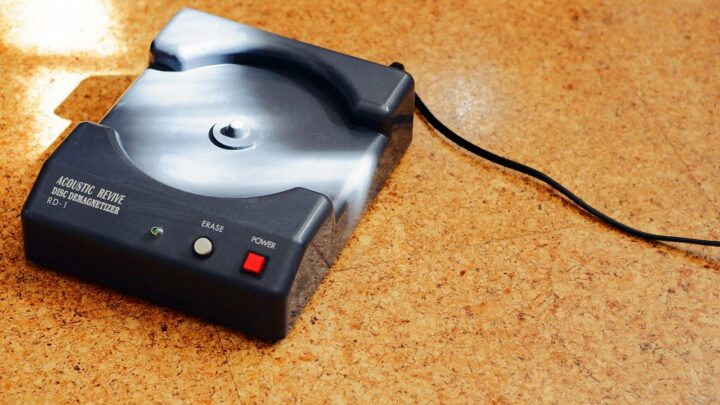
Next time: Acoustic Revive Demagnetiser “RD-1”.

Auto Translated by CS4.6