【Is SHM-CD Really High Quality Sound?】
Part 1 |Part 2|Part 3|Platinum SHM-CD
 Comparative Listening Results: SHM-CD vs. Import Standard CD
…
…
…
…
…
…
…
With all due respect, I honestly cannot tell which one is better…
Hmm, it’s a rather inconclusive result, but I have the feeling that either could work. For the purposes of this entry, I tried swapping back and forth across the three systems currently running at home, and which one suited which system differed depending on the system. And I suspect the recording itself makes quite a difference as well. As is often said, there seem to be albums where the SHM-CD version brings such a striking improvement in sound that you are genuinely moved — and then there are albums where you find yourself wanting to throw up a great big question mark and ask whether any of this is actually doing anything at all.
And on top of that, my impression also changes depending on how I am feeling physically. Depending on how tired my ears and body are, the SHM-CD can sometimes sound more comfortable to listen to than the import CD. In my case, when I grow fatigued, what starts to bother me is a kind of distortion-like quality creeping into the upper frequencies — so it may be that SHM-CD is actually pointing in the technically correct direction as an approach. Quite as one would expect from Made in Japan. Import pressings can have rather sloppy quality control, and it is not unusual to come across discs that certain CD players simply cannot play back properly.
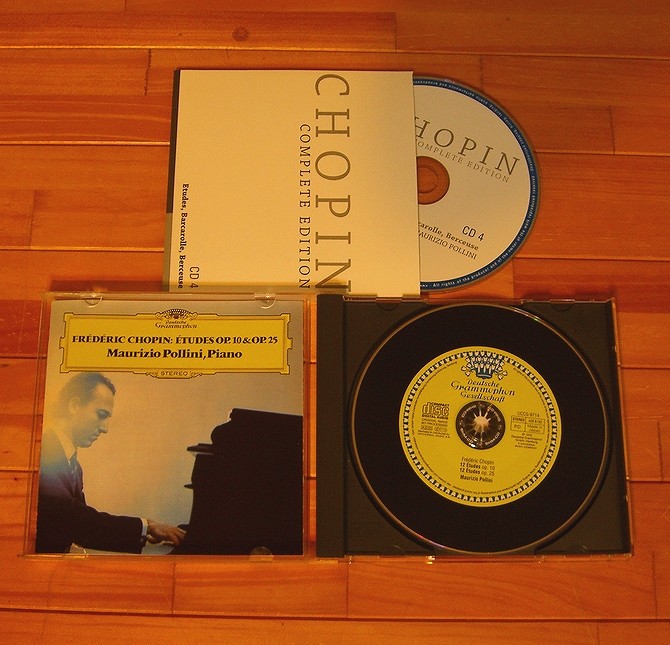
If you want to enjoy the dazzling technique of the young Pollini without reservation, this CD is a better recommendation than the Chopin Études


 ポチップ
ポチップ
And since I am not fond of Pollini, I find the SHM pressing — where the exhilaration of his fierce playing wins out over that vaguely unsettling, slippery quality he has — personally easier to listen to, in a sense because the Pollini-ness is somewhat diminished. That said, that slippery tone, and the subtly disagreeable wavering that rattles something deep in one’s brain, are precisely this man’s innate nature, his individuality, and the very mark of a genius no one else can imitate. So it becomes a question of whether you want character, or whether you want sound quality. For those who are actually fans of Pollini, I wonder if the majority would come down in favour of the import pressing.
 ポチップ
ポチップ
Personally, even setting all that aside, the import pressing would still be my first choice. Beyond mere preference, whether for better or worse, it is better to have more of the atmosphere of a recording’s finer details come through. But the listenability of the SHM-CD is not something I can simply dismiss either, so I have the feeling that no conclusion can really be drawn without comparing album by album. Oh — but come to think of it, doesn’t this Pollini album have an SACD version as well? If it can be found, that would surely be the best option of all…
At a later date, I purchased an additional copy of the same Études collection in SHM-SACD (single-layer disc) format.
 ポチップ
ポチップ
~ Summary ~
Conclusion. If the recording in question is one you want as a lifelong companion, or a CD by an artist you truly love, then I think buying the SHM-CD makes sense — driven by that collector’s instinct to gather every pressing and remaster of every version in existence. There is something to be said for buying SHM-CDs as a way of supporting the domestic music industry in Japan. But when asked whether the SHM-CD, which can run anywhere from ¥1,800 to ¥3,000, actually offers a price-justified advantage over an import CD available for ¥200 to ¥1,000 or so — a rather ambiguous atmosphere tends to settle over the room.
Well, when I think about it that way, wouldn’t you just choose SACD, which by any measure has far superior specifications? That being where my thoughts lead me, I found myself feeling a sudden urge to start calculating whether SHM-CD might be better off sold to wealthy Chinese buyers as a prestigious Made in Japan product…
If I were to make a case for SHM-CD all the same, there is the point that SHM-CD, in theory, uses better-controlled stampers and materials than conventional CD production, which should improve read accuracy — meaning that on a fossil-era single-speed CD player reading in real time, the servo current required would be reduced, and jitter and error rates should also decrease… apparently (delivered in something of a flat tone). There are people who say this based on actual measurements, so I suppose it must be true. There are also people who say the opposite, but I shall not be pursuing that line of inquiry too deeply…
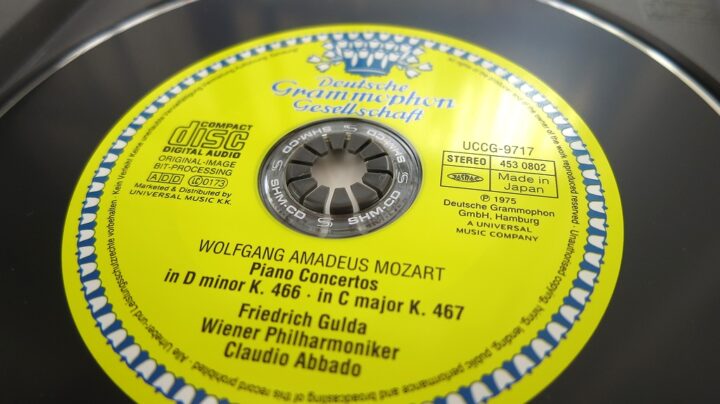
Something I noticed on every track by ear was that with the SHM-CD, there is a greater sense of body in the lower-mid frequencies and an increased sense of presence in the direct sound, compared to a standard CD — and a general reduction in that characteristic CD-like distortion quality (the sheen, so to speak). That said, this is a subtle difference, and I should be clear that compared to the overwhelming data-level advantage of SACD or DVD-Audio, it is in essence no more than a minor distinction.
※Continued in Is SHM-CD Really High Quality Sound? Part 3
【Is SHM-CD Really High Quality Sound?】
Part 1 |Part 2|Part 3|Platinum SHM-CD


Auto Translated by CS4.6

List of comments (2)
パステルさん
おかえりなさい
ちょっと目を離しているすきに復帰のお祝いラッシュに乗り遅れてしまいました
これからもパステルさんの書く文章が読めるのが楽しみです
これからもほどほどに,いい意味でのテキトーに更新していってください
TIGAさんお久しぶりです~。
TIGAさんはじめ皆さん長期休止中も気にしていてくれて、たまにコメントがあったりしてすごく励みになりました。久々返レスした2月の時点でも再開するつもりではあったのですが、直後にダウン…そしたら震災で世の中メチャクチャ…結局丸2年休止でしたね。
今の状態で健康な状態の半分+ちょいくらいの感覚です。だまっていれば何か出来そうな気がしてきますが、それで動きすぎるとあ゛~みたいな。それはともかく、やっぱり文章書くのは楽しいです。 2年前の自分と今の自分は見た目にも精神的にもかなり違う人で、自分で自分が別人のような気がしないでも無いのですが、こうやって文章を起こしてみるとやっぱり変わってない?のかなぁとあらためて自問自答しています。