【aeco ABP-1111 vs ABP-0202 Comparative Review】
ABP-0202|ABP-1111 Structure|Plating Comparison|ABP-1111 Overall Assessment
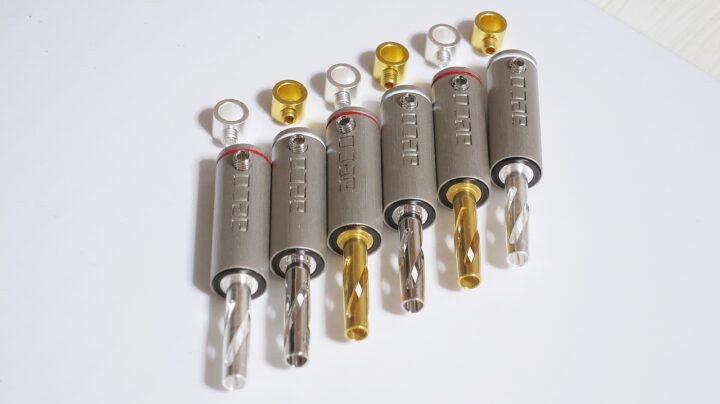
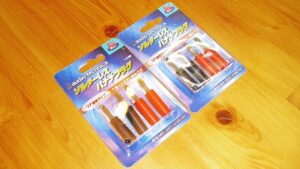
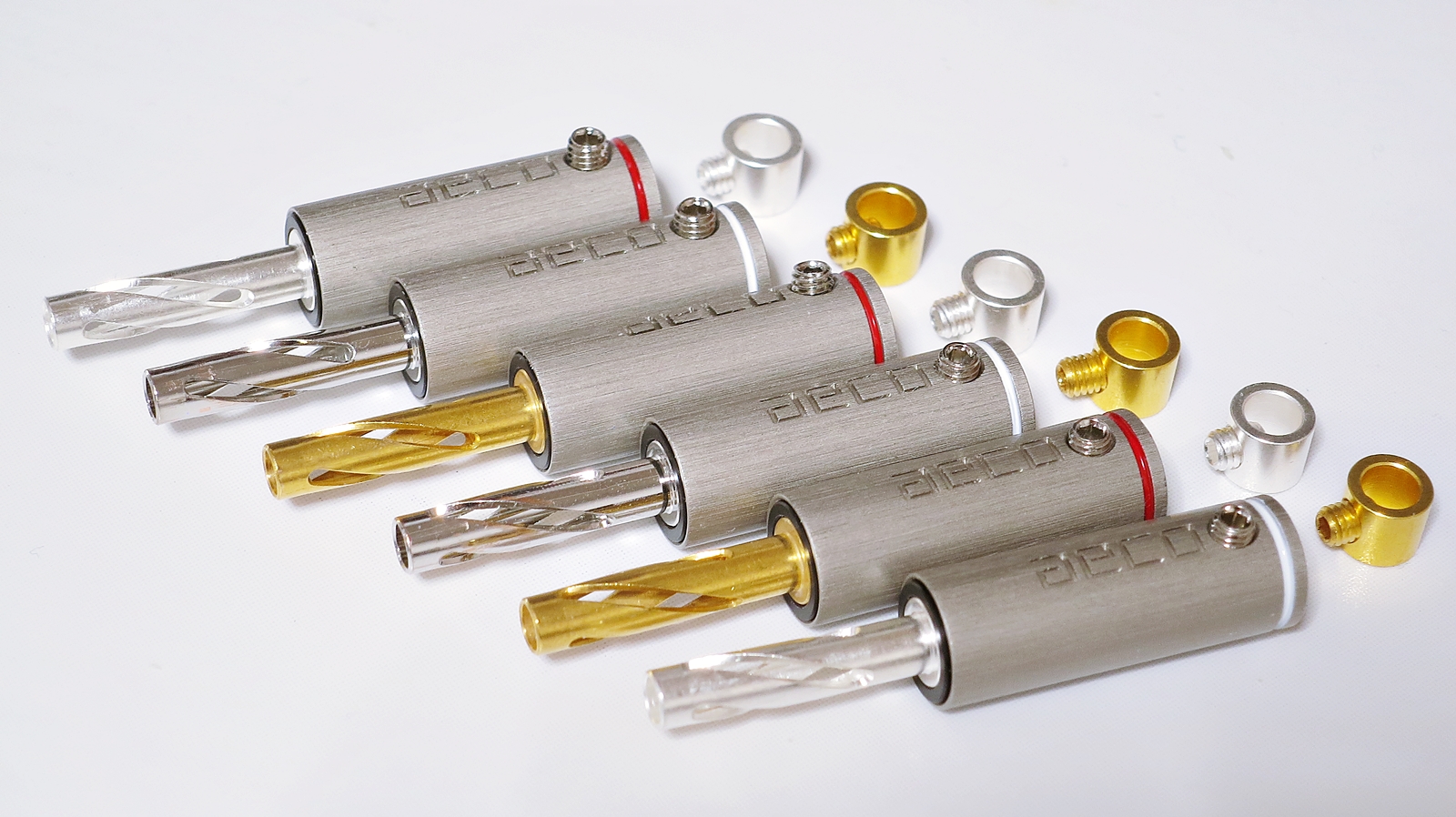
I had only reviewed last month the Taiwanese aeco banana plug ABP-0202R (older model), when shortly afterwards I was given the opportunity through Hako-Pure to evaluate three variants of the new ABP-1111 series banana plugs — and so this month, using three sub-systems, I spent a good deal of time running comparative tests on the ABP-1111’s plating differences and its sonic differences against the older ABP-0202R. The new ABP-1111 has an appearance along these lines — a sharp, crisp impression. A premium banana plug machined to exceptionally high precision.
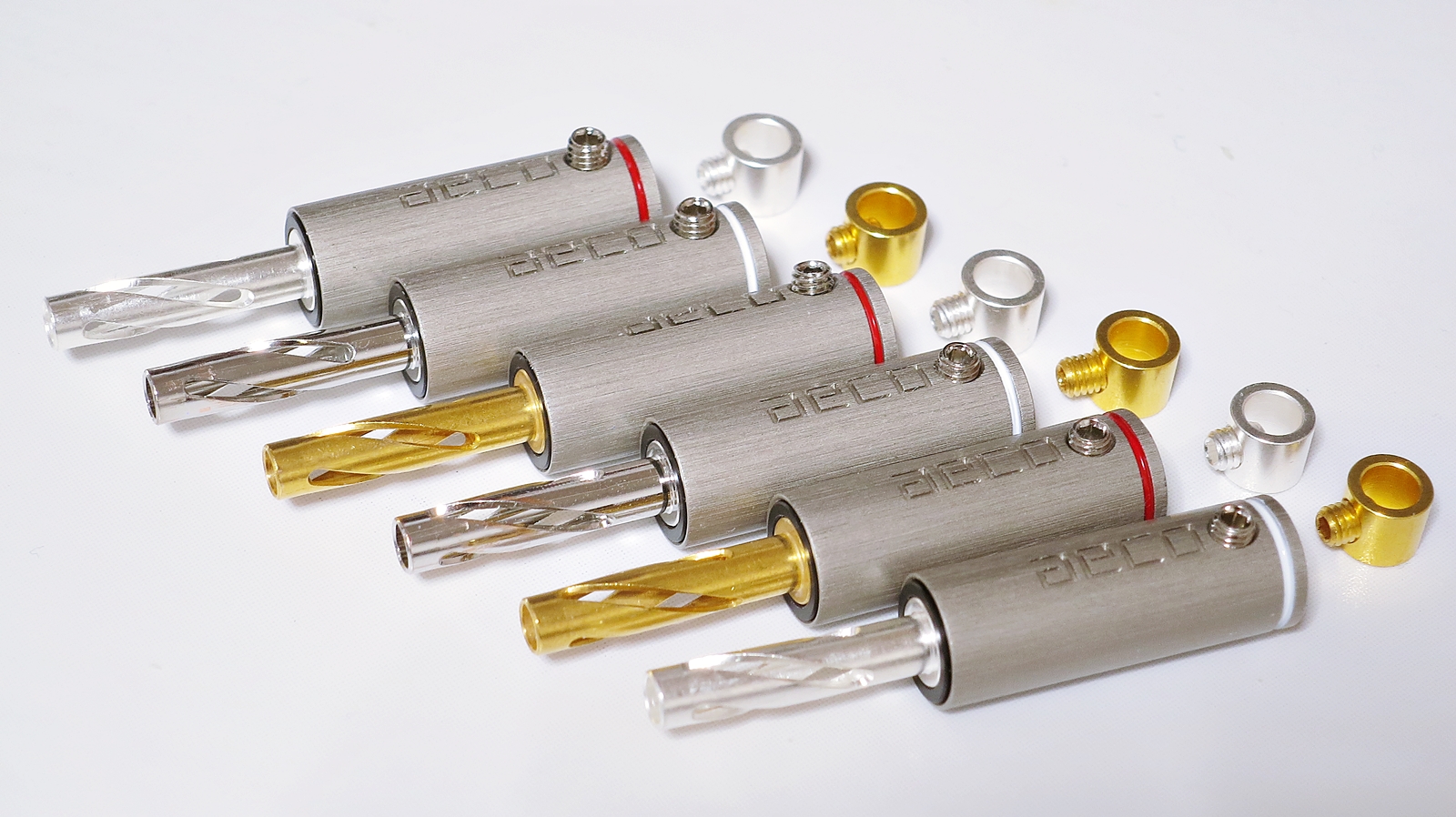
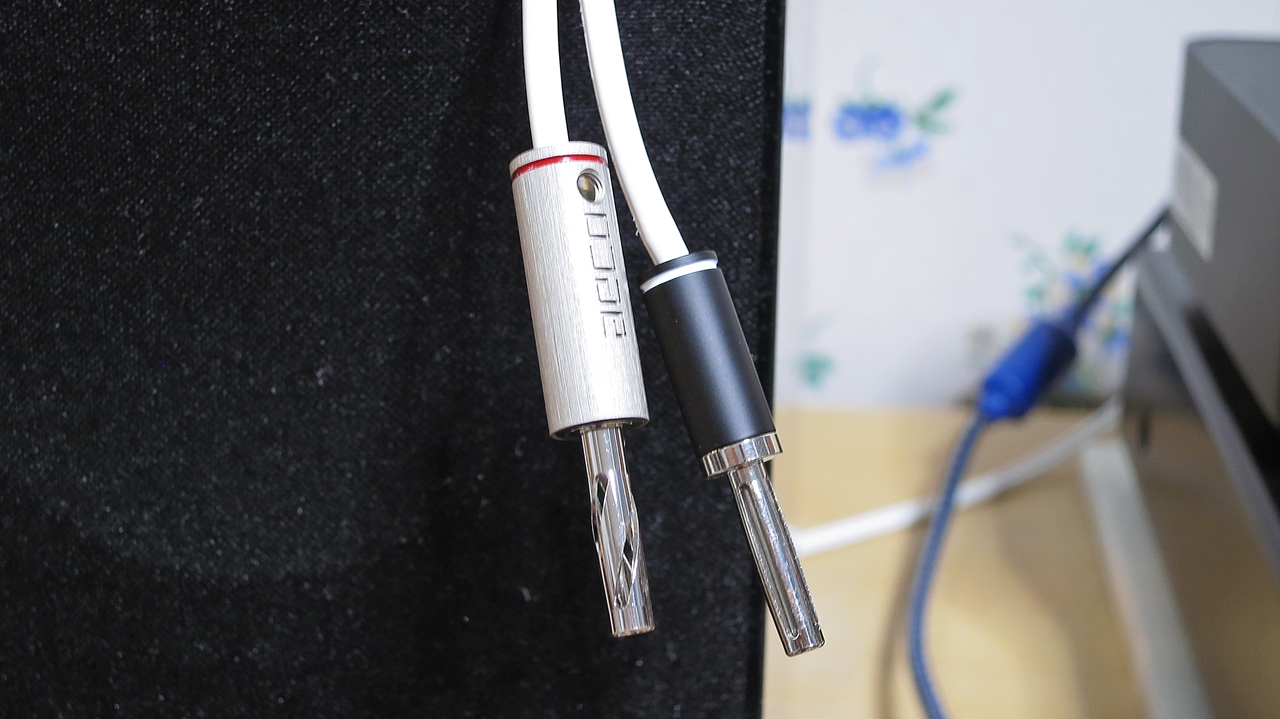
Something I hadn’t been able to tell from the product images: the outer cover on the actual unit is one size larger than on the older model (though compared with other manufacturers’ products it still falls firmly in the compact category…). Weight-wise, the older model comes in at around 26g for four plugs, against approximately 29g for the new one. Where the older model was a two-piece metal construction — a C14500-series tellurium copper lock-head with a C3604-series brass cover — the new model adopts a more complex arrangement combining dissimilar materials: tellurium copper, brass, POM resin, and steel, assembled from five pieces plus two types of screw. Honestly, I did wonder at first why they had gone to the trouble of such a complex structure — but once I actually listened, the intent behind this rather bold design approach became entirely clear (details to follow later).
Differences between the aeco ABP-1111 and the older ABP-0202R
The lock-head structure has also been redesigned, from a hollow straight banana to a spiral shape, making this essentially an entirely new design throughout. The banana head itself has more mass on the older model and is firmer — insertion was particularly demanding in the early stages — whereas the new model’s lock-head is a hollow helical structure with less spring force by comparison, making insertion and removal considerably easier.
The contact conduction section, generously made from tellurium copper, is constructed with the minimum mass possible. ※ Looking at the tellurium copper mass alone, one might wonder whether this represents a cost reduction in terms of materials — but that concern is dispelled once you actually compare the sound of the new and old models.
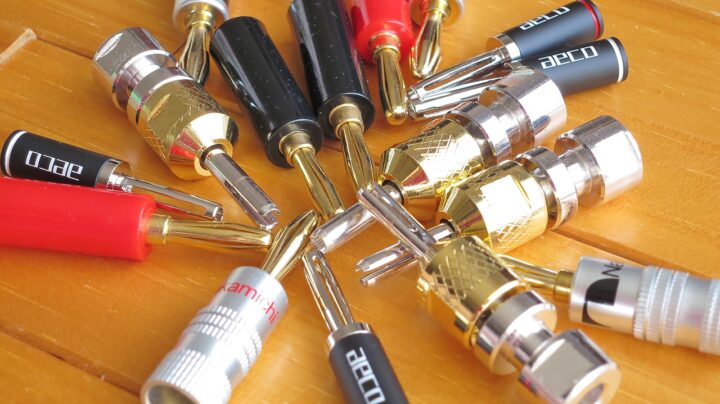
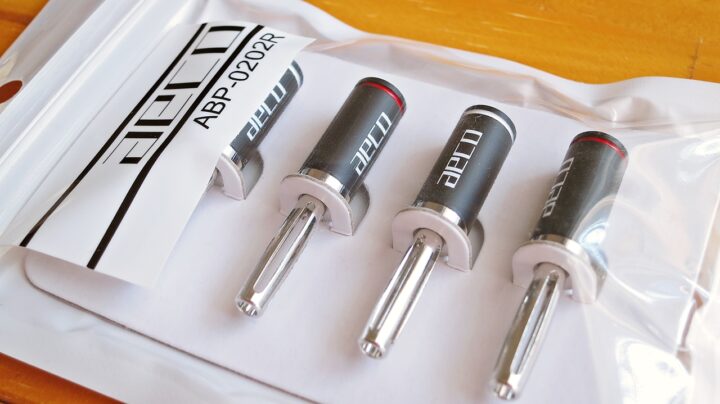
That said, tellurium copper is softer than brass, and speaking generally across manufacturers, a hollow spiral structure is by its nature a delicate construction — so it may not be the best choice for applications where speaker cables are swapped in and out frequently. In terms of physical durability under rougher use, the older banana-shaped design gives an impression of tighter contact and greater robustness.
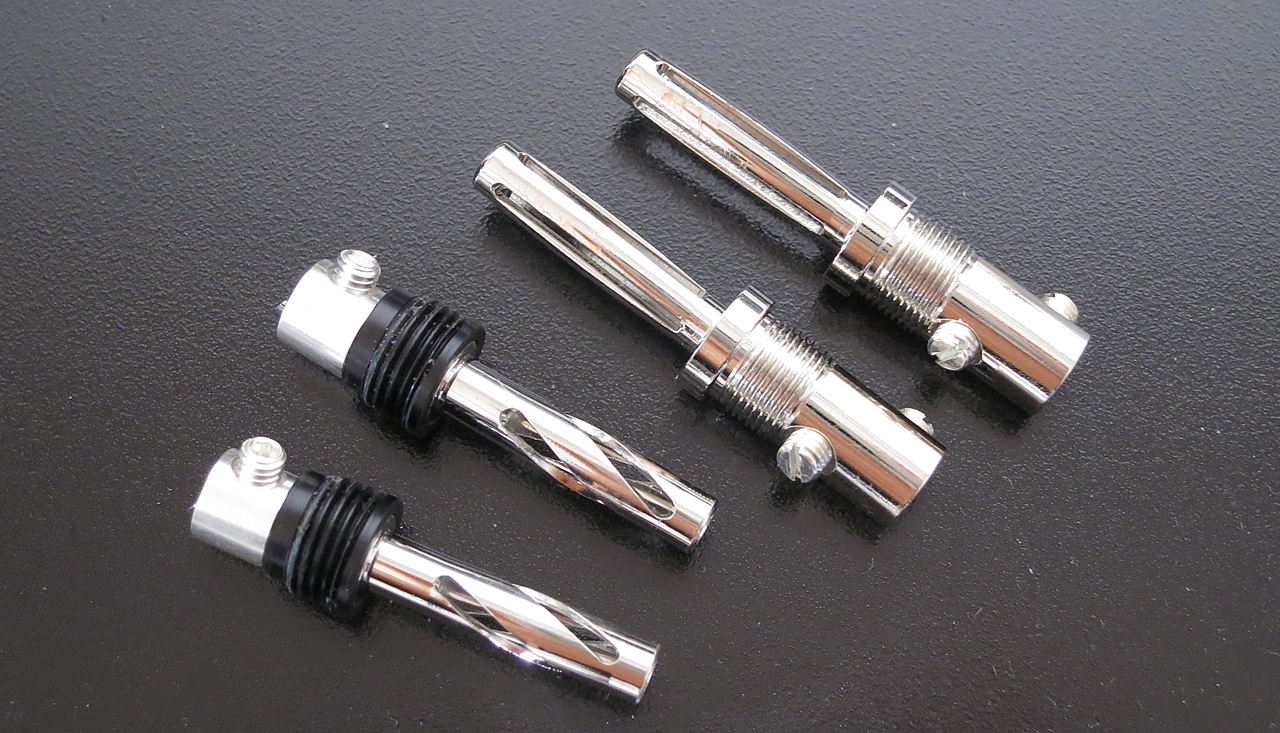
Bottom left is the new ABP-1111R; top right is the older ABP-0202R. Both are rhodium-plated, and the contact screws and fixing rings are deliberately finished in silver plating. The new model’s lock-head has a black polyacetal resin screw fitted into it, which extends through to the conduction section so that the tellurium copper makes direct contact with the speaker cable. The contacts are secured from the outside by a direct-plated C3604-series ring and screw, while the cylindrical brass outer cover (shell) screws onto the black polyacetal resin thread and is completely isolated from the tellurium copper contact conduction section.


 ポチップ
ポチップ
Disassembling the aeco ABP-1111
The cylindrical outer cover (shell) also has a removable POM polyacetal resin ring fitted at its rear, which allows the shell’s rear section and the speaker cable jacket to be secured together by a screw passing through the resin ring between them. Unlike the screw at the conduction section, this rear fixing screw is deliberately an iron screw with nickel plating — and it is the only screw here that will stick to a magnetic screwdriver. ※ The resin ring should be removed if the speaker cable is too thick to pass through it. The overall precision of the plug remains as impressive as ever, but since the threaded section is made of resin, forcing the outer cover on at an angle could strip the thread. When everything is properly aligned, the cover screws on smoothly without needing to apply any force — so I would strongly recommend taking particular care with this step.
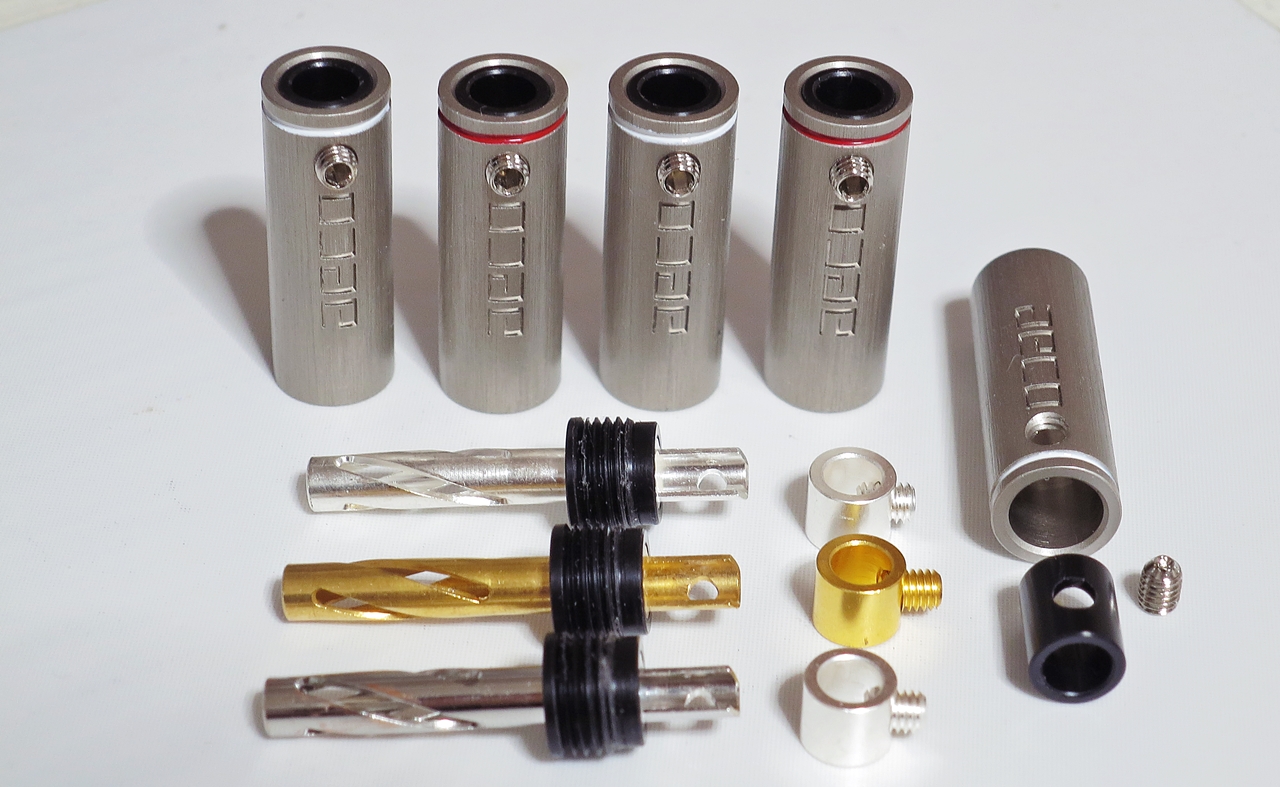
The ring material and fixing screws that secure the conduction section are brass with direct plating applied — however, while the ABP-1111G (gold-plated) uses gold plating, both the ABP-1111R rhodium and the ABP-1111S use silver-plated rings and screws. In other words, even the rhodium-plated type can be considered a product with a silver-rhodium character, where the silver plating has some degree of influence. In this respect, it could perhaps be said to bear a slight resemblance to CARDAS’s CAB (which has a dual finish of silver plating and rhodium plating).
Recommended precision screwdriver sets for fitting banana plugs
On the older ABP-0202R, the screws were tightened with a flat-head screwdriver of around T2–2.5mm, but the new ABP-1111 uses a specification requiring a T1.5mm precision hex driver. Please note that without a precision hex driver, the job simply cannot be done.
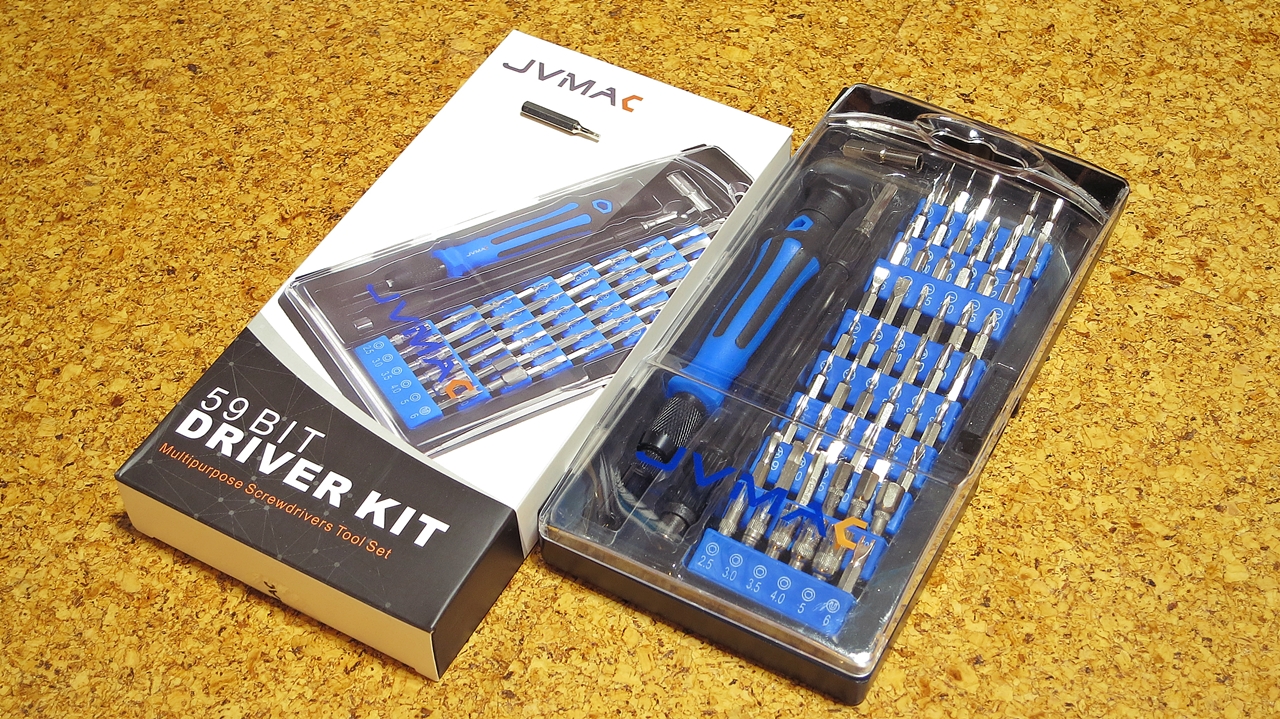
The small L-shaped mini hex keys you commonly find are extremely awkward to work with, so I use a driver set like this one, purchased from Amazon. It comes with 59 bits, including a full set of Torx star drivers that are used extensively in overseas audio equipment and imported cars — and it’s remarkable that tools like these can be had so cheaply nowadays. There are plenty of similar products out there that appear to be of Chinese manufacture, but the reason I specifically chose this one is that the bits have a silver chrome-plated finish rather than a brown heat-treatment colour. In terms of precision, it naturally cannot match professional-grade tools, but for DIY use, the practical accuracy and durability appear to be perfectly adequate.
 ポチップ
ポチップ
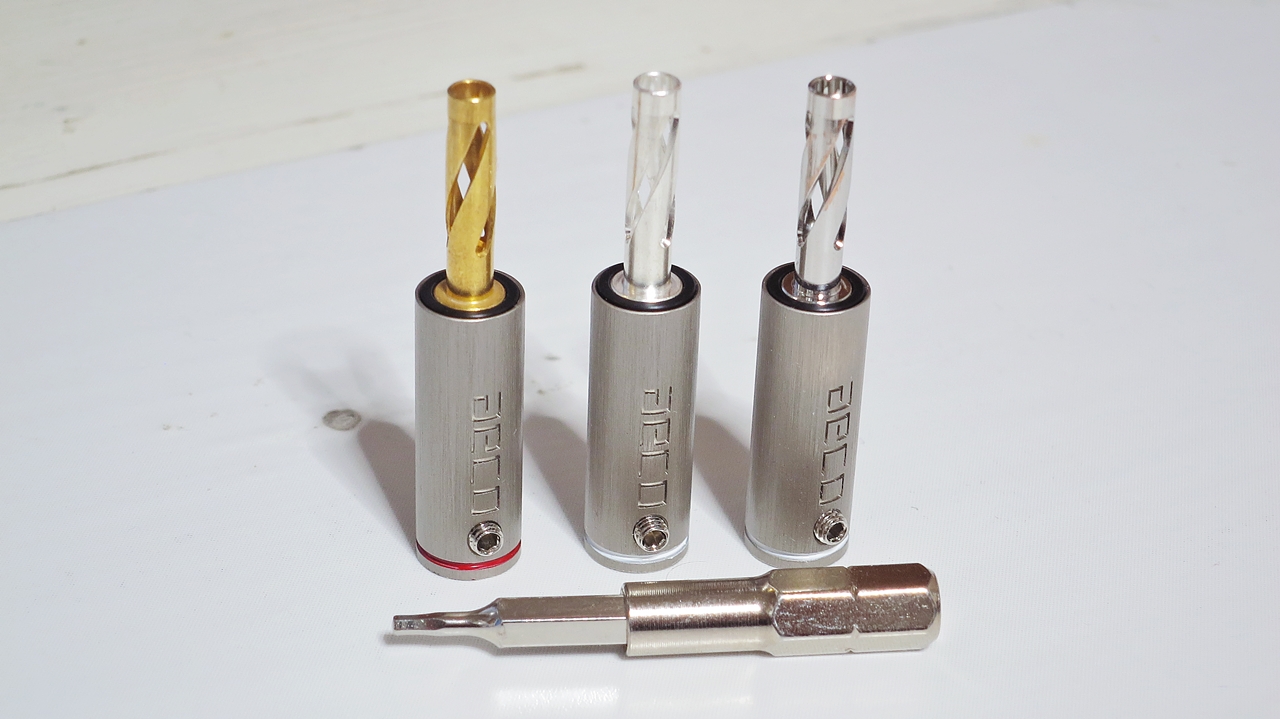
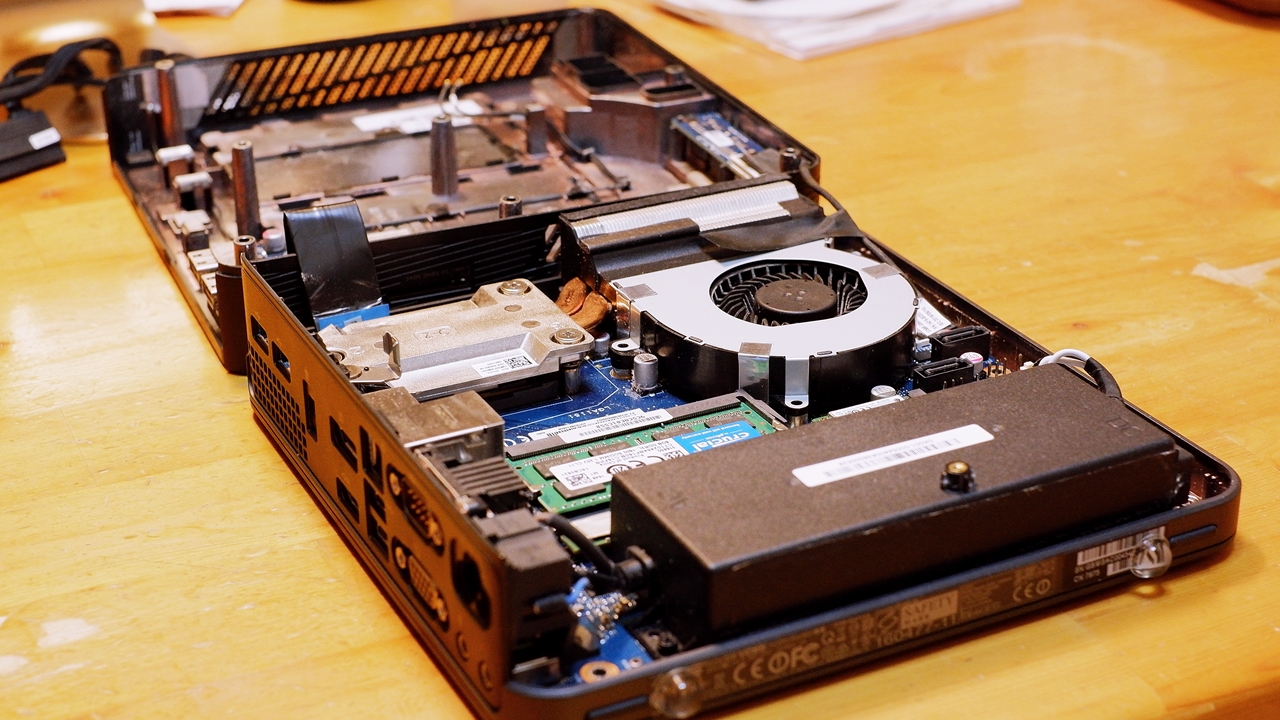
Incidentally, rather than using a large handle, I found that working with a mini-sized precision driver as shown in the image below made fine-fingered fitting and removal considerably easier.
Conditions for the comparative test
※ The comparative test was conducted across three Hako-Pure sub-systems over a period of two weeks, swapping the plugs between each in turn.
A Amplifier ROTEL RDA-06 × Speaker audiopro Image12
· SP cable AET EVO-F125 ※ Banana plug connection point ⇒ speaker terminals
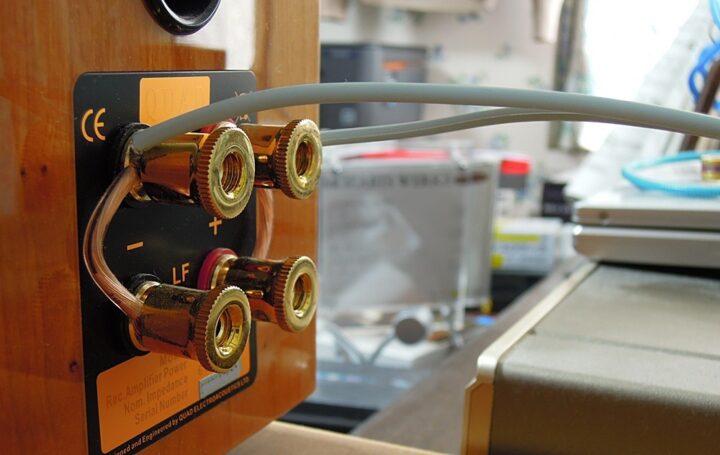
B Amplifier Miuaudio MKTP-2 × Speaker QUAD L-ite2
· SP cable Acoustic Harmony N1 ※ Banana plug connection point ⇒ amplifier bi-wiring high-frequency terminals
C Amplifier CREEK Sequel2 × Speaker EPOS ELS3
· SP cable Real Cable CAT150 ※ Banana plug connection point ⇒ amplifier terminals
Next time: a review of the sonic differences between the gold, silver, and rhodium plating variants, along with a comparison against the older aeco ABP-0202R.
【aeco ABP-1111 vs ABP-0202 Comparative Review】
ABP-0202|ABP-1111 Structure|Plating Comparison|ABP-1111 Overall Assessment


Auto Translated by CS4.6