【aeco ABP-1111 vs ABP-0202 Comparative Review】
ABP-0202|ABP-1111 Structure|Plating Comparison|ABP-1111 Final Verdict
This is the final part of a review split into three sections. The defining feature of aeco’s new ABP-1111 series banana plugs is that rather than simply combining expensive tellurium copper with a straightforward metal such as brass, the design deliberately incorporates polyacetal resin (POM) parts at two points, damping the coloration introduced by metallic resonance and pushing further in the direction of eliminating coloration altogether.
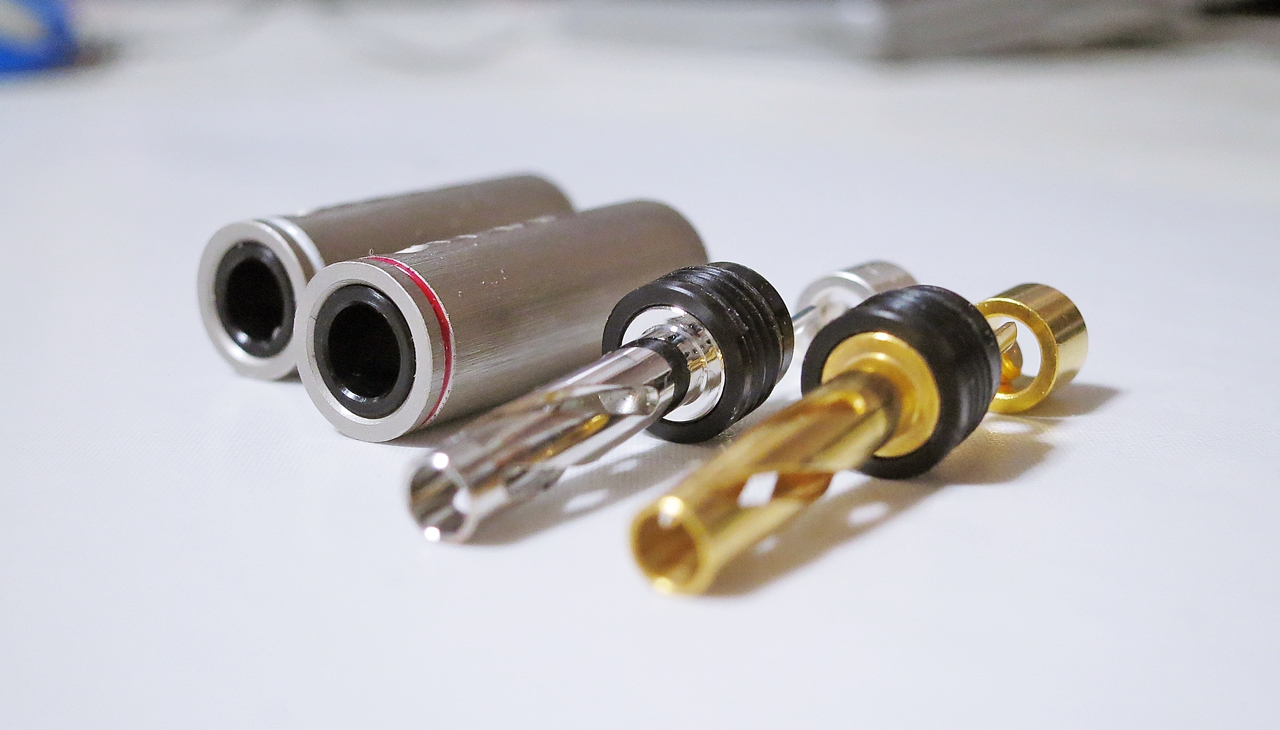
That said, plastic components are a double-edged sword. As seen with the resin cover on the audio-technica AT6301, use too much and resolution drops, the sound softens, and — to put it unkindly — it starts to sound cheap. On the other hand, going purely with metal brings its own drawbacks that cannot be ignored: a tendency towards a characteristic beautiful tone produced by added resonance, but at the cost of energy loss and fine detail masked by coloration.


 ポチップ
ポチップ
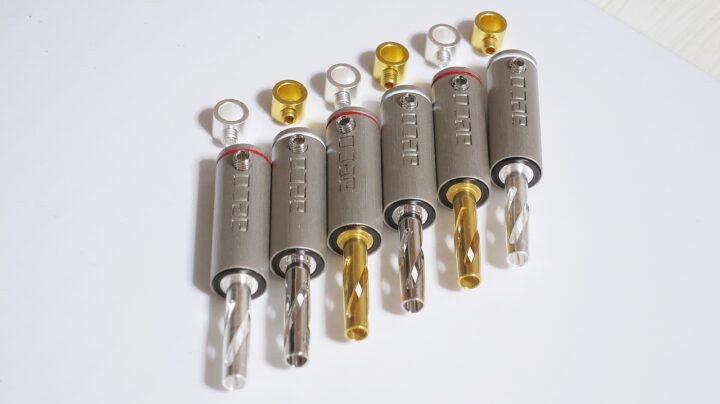
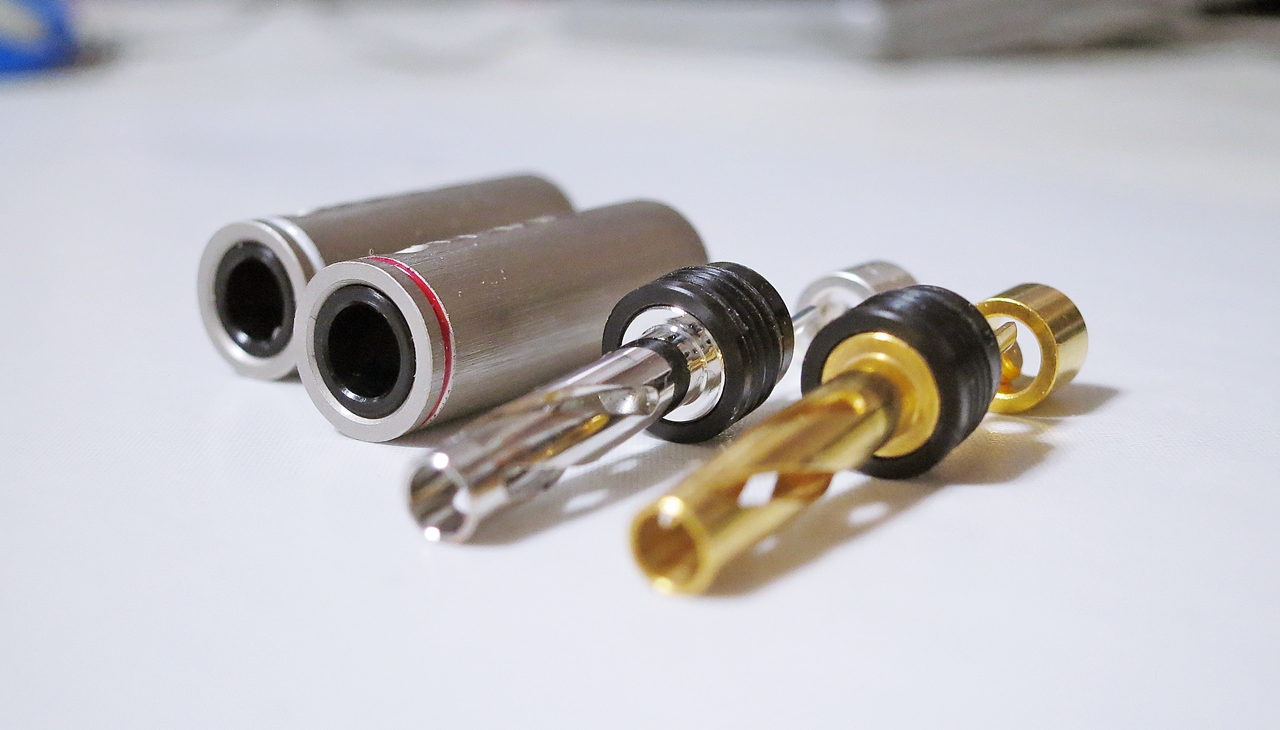
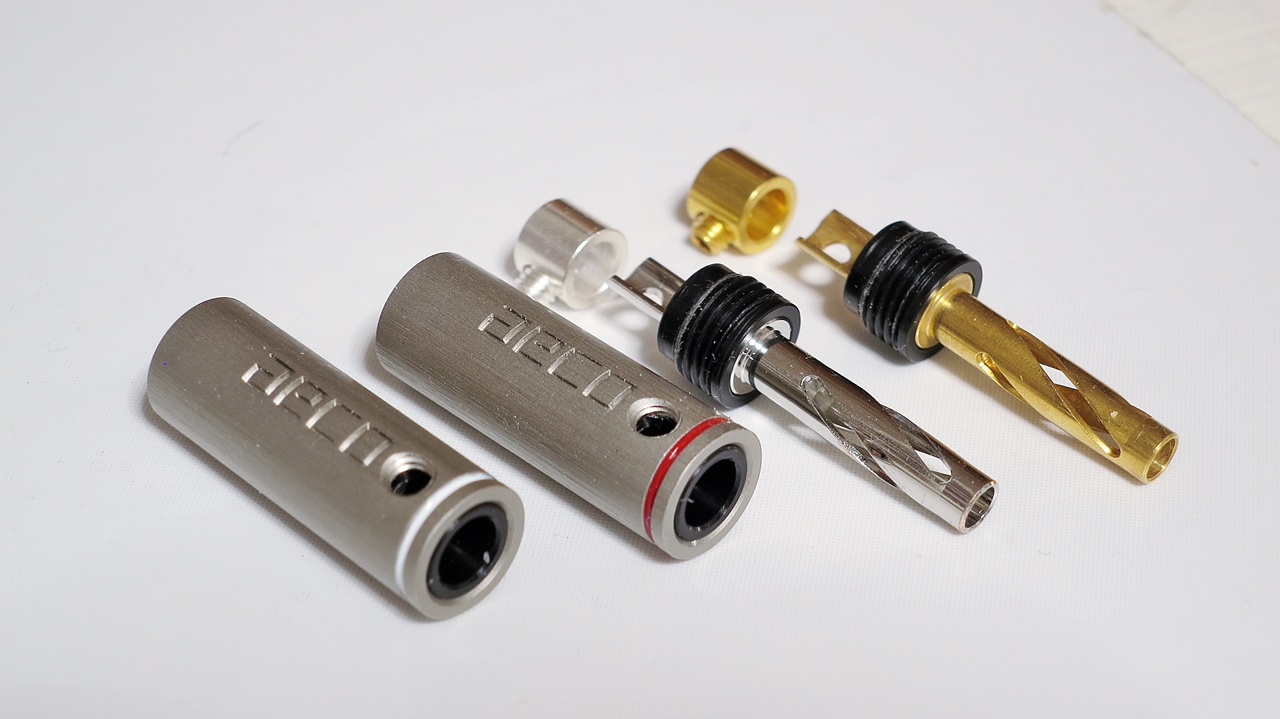
The new ABP-1111 series addresses this with what is a genuinely aggressive design from a vibration-control standpoint: tellurium copper for the lock head through to the contact section, polyacetal resin as the damper, and brass for the outer cover — a three-layer hybrid construction (plus a dual-screw fixing using two different types: silver-plated brass and nickel-plated iron). The result is a sound character where that effort is plainly audible.
In terms of sound quality, rather than glossing over detail with coloration, the design has evolved towards a cleaner, wider-range presentation that makes better use of tellurium copper’s conductivity. Above all, the way the combination of dissimilar materials achieves a high degree of musicality is not something to overlook. This improvement in expressiveness is compelling enough that one might be tempted to introduce these plugs even in systems where banana plugs would not ordinarily be necessary.
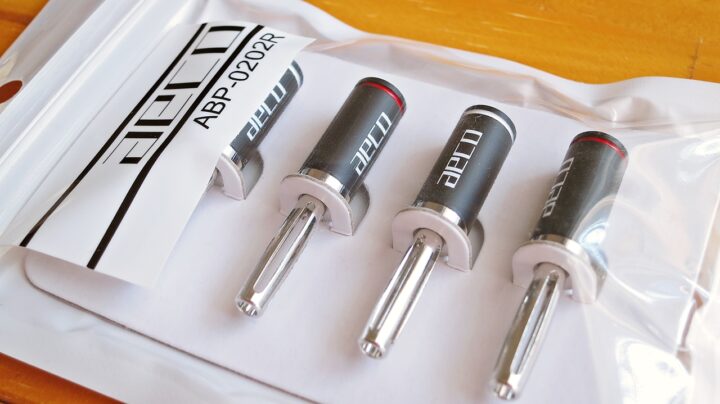
Deliberately removing the rear polyacetal (POM) ring
I fitted the ABP-1111R again on the ROTEL RDA-06 × audiopro Image12 system. Sound quality-wise, the rhodium plating is once again a notch above the rest. The image rendering is firm and energetic, with a bright, lustrous tonal quality, and of the three variants this one gives music the clearest sense of forward momentum. With the silver and gold plating the background sinks into blackness, whereas with rhodium it is colourless — or perhaps ever so faintly whitish. Resolution in the bass is high and the range is relatively wide, but with rhodium the pronounced presence and lustre in the mid-to-upper registers means the centre of gravity sounds slightly higher than with the gold plating.
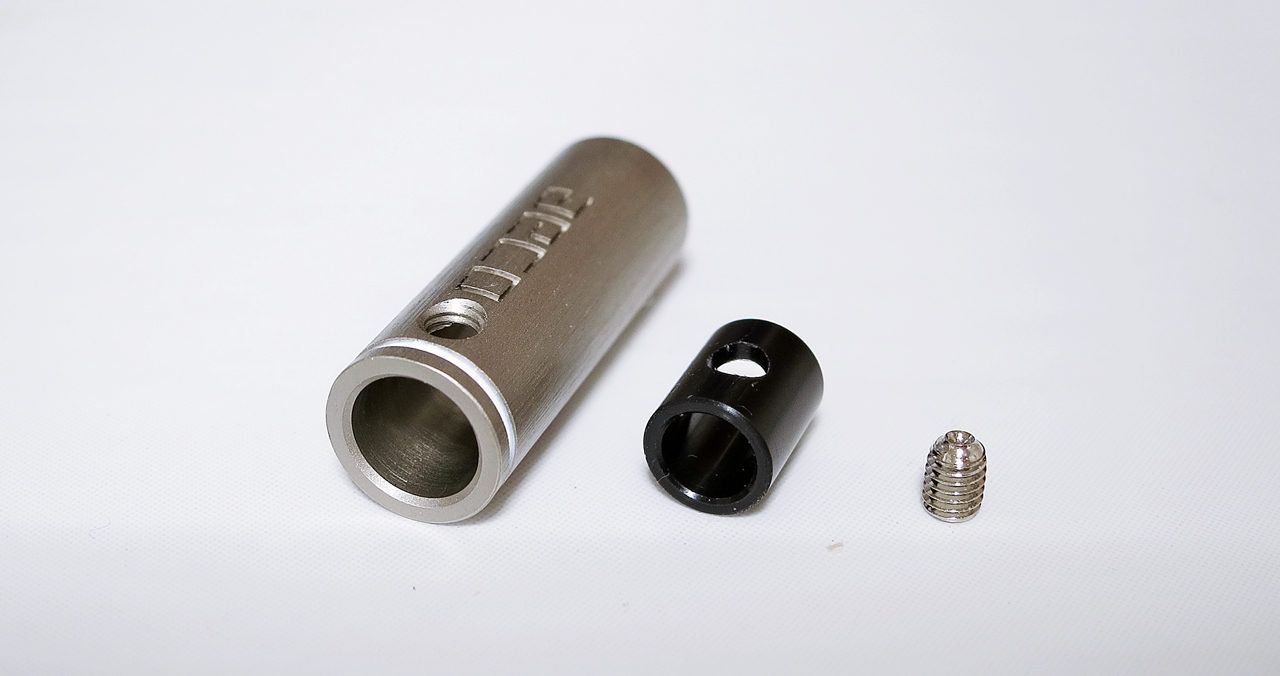
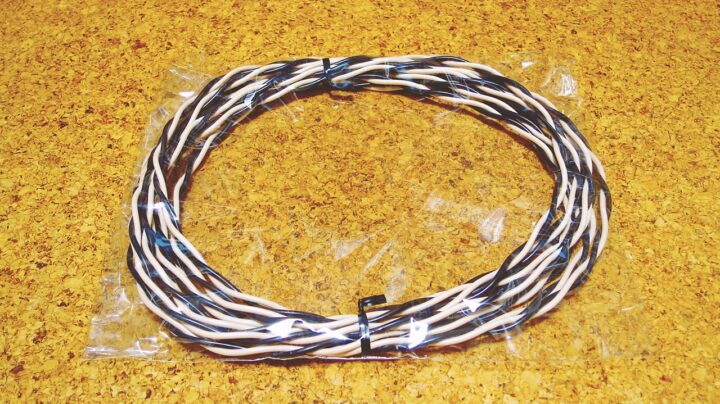
At this point I decided to remove the rear black polyacetate resin ring — which is normally taken off when using speaker cables with thicker jackets — along with the cable-retaining screw. ※ The front side is moulded integrally with the lock head and cannot be removed. The ABP-1111 series carries a faint softness in its sound that seems to come from the resin’s character, and I had been wondering during testing whether the POM resin might be over-damping things slightly — so I took it off deliberately. The jacket diameter of the AET EVO-F125 (1.25SQ) cable is 3mm, which is slender enough that the rear cable-retaining screw (nickel-plated iron) cannot grip it either, so that was removed at the same time. The plug is now held by a single screw at the contact section only.
 ポチップ
ポチップ
I was quietly expecting an improvement — but when I tried it, I was rather left flat. Without the resin ring, there is a slight increase in delicacy and a touch more bloom in the sound, and the surface of the notes becomes smoother, but in exchange the range narrows and a listless quality creeps in, as though some of the vitality has been taken away. With the POM ring and rear iron screw in place, the sound has more snap and the range is wider — it is simply better, both in terms of sound quality and musicality. Honestly, that surprised me considerably. Of course system matching with the speakers and speaker cable will play a part, and the ring can be used as a means of voicing adjustment, but personally I would want to use it with the resin ring fitted as the default wherever possible. Even in cases where the speaker cable’s outer diameter is too large for the ring, it may well be better from a vibration-control standpoint to at least secure the outer cover firmly to the cable jacket with the iron screw.
A few concerns with the new ABP-1111
This is something that applies equally to banana plugs from other manufacturers — not just aeco — specifically any with a hollow helical or cylindrical wave-slit lock head construction. Compared to the straight banana contact of the older ABP-0202, the hollow helical structure of the new lock head can achieve greater contact area, but the spring expansion is geometrically smaller, and because the contact metal is thinner the spring stiffness is lower. Depending on the banana socket on the speaker terminal side, there are occasional cases where contact becomes slightly loose.
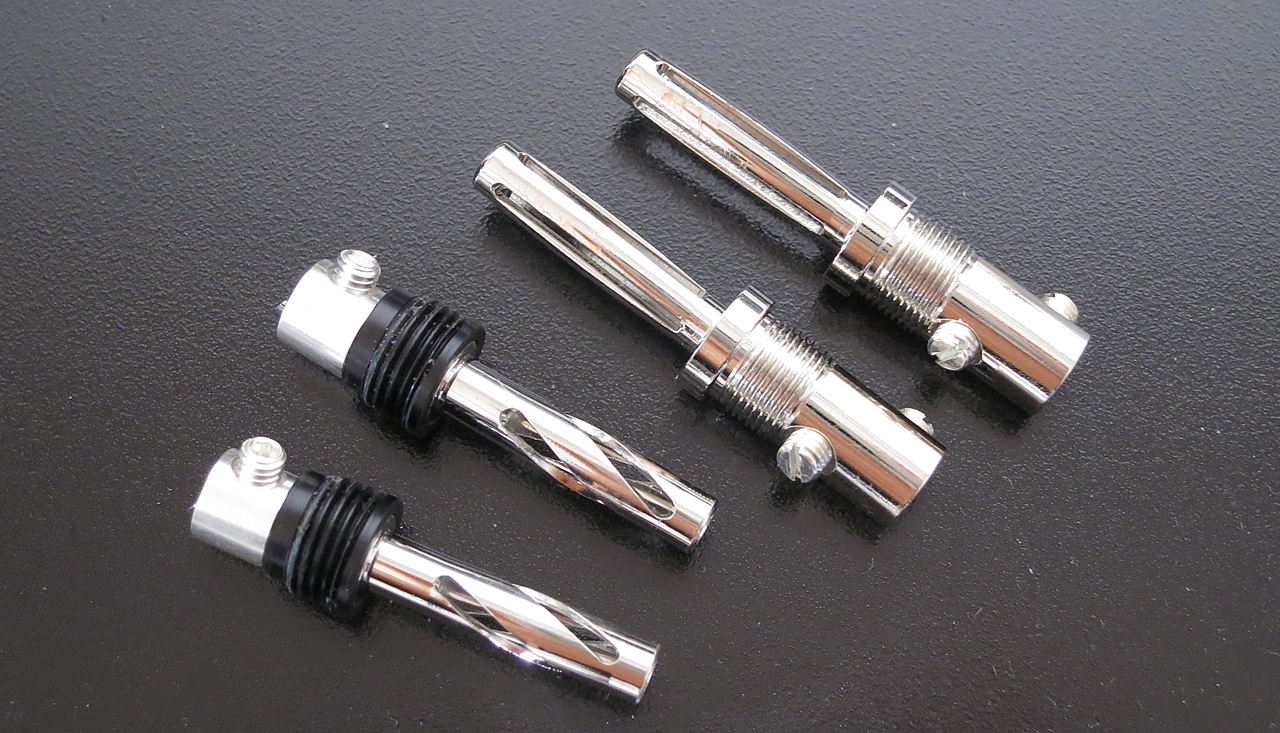
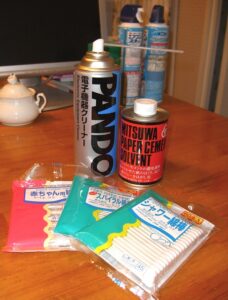
Speaker terminal sockets are generally 4.0–4.1mm in diameter, but for example if you first insert the plug into a tight socket of under 4.0mm and then try to connect it to a wider socket of over 4.1mm, the lower spring stiffness of hollow helical and wave-slit constructions means there is a risk of the contact becoming loose. With aeco, the machining precision is high from the outset, which paradoxically makes it rather exacting when it comes to contact compatibility. If repeated insertion and removal results in the plug becoming so loose it no longer makes contact, then — at your own risk — pushing a small cotton bud into the barrel of the lock head and gently expanding it outward may help.

Since the plug bites firmly into the contact, scratching with repeated insertion and removal is inevitable with any banana plug — but the quality of the direct plating is high, and after five or six insertions during testing, there was not even a hint of the plating flaking off on any of the variants, as one sometimes sees with certain other products.
~ Summary ~
The new ABP-1111 series is, across the board, better damped than the old model: the perceived range widens, the sound gains a clean, well-defined snap, dynamic musicality improves, and in terms of sound quality the imaging of direct sound and resolution both improve as well. S/N is also good. The impression is of a further step towards a wider-range, more accurate presentation compared to the old model, while reducing even further the coloration introduced by the tellurium copper and brass metal parts. The design of the banana plug itself is genuinely ambitious, and that ambition is well reflected in the sound. The older rhodium-plated ABP-0202R, by contrast, layers a mild, moist resonance and lustre over a hard-edged tonal character in a way that is beautiful and balanced, with a smooth, well-proportioned quality. The greater bloom makes the beautiful tone stand out all the more, but how one feels about the way fine detail is very slightly buried in that resonance — compared to the new model — is likely what will determine whether old or new comes out ahead for any given listener. That said, the straight banana lock head is robust, and its balance holds up well on any system, which means it is probably easier to live with in demanding environments such as shop demonstrations where plugs are inserted and removed frequently.
ROTEL RDA-06 × audiopro Image12 ⇒ 1111R > 1111G > 0202R > 1111S
Miuaudio MKTP-2 × QUAD L-ite2 ⇒ 1111S > 0202R > 1111G > 1111R
CREEK Sequel2 × EPOS ELS3 ⇒ 1111 ≒ 1111G > 1111S > 0202R
Expressing the plating compatibility results from this round of testing in order of preference — bearing in mind my own tastes play a part — the ROTEL × audiopro and miuaudio × QUAD results came out in almost perfectly opposite orders. With the CREEK × EPOS, all four variants sound better than no plug at all in terms of both perceived sound quality and musicality. The 0202R ended up at the bottom by a small margin, though it has its own distinct merits that are quite different from the new models, and it is genuinely difficult to call…
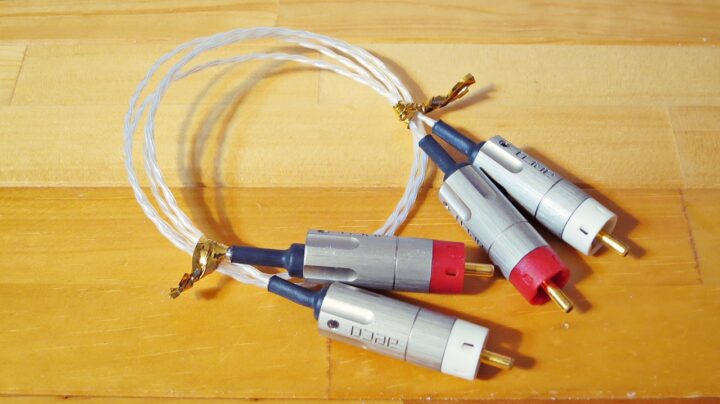
Whichever of the four plugs one uses, what all aeco banana plugs share is how little negative damage there is from the additional contact point. And what all three new banana plug variants have in common is a clean, crisp, refined and refreshing sound image, and good S/N. The fundamental direction of the design is to eliminate the disadvantages introduced by the banana plug itself, so it would be dishonest to say that nothing is lost in straightforwardness compared to a bare wire connection — but the way the design compensates for those losses, the degree to which it addresses the drawbacks, is judged with a remarkably deft touch. The overall result is a sound quality where one is barely aware of any negative feeling about using banana plugs at all — a fundamentally well-bred character. The new model applies more damping and tightens the sound slightly; the old model adds a touch of bloom and loosens it a little — but in either case the colouration never becomes excessive, and the result feels like a banana plug that knows its place.
ポチップ
I had a quiet concern that breaking the new model down into more components and adding polyacetal resin might result in a loss of rigidity compared to the old model, or introduce more added resonance. In practice, however, the materials are so well designed to cancel out each other’s weaknesses that the metallic coloration of the tellurium copper and brass is suppressed, the sound is refined as a result, and the improvement in damping brings with it a substantial gain in musicality. The resonance from the screws and so forth that I had worried about is completely inaudible — if anything, the damping effect of the polyacetal appears to be winning out. Rather than removing the screws, it seems better on balance to actively use both the front and rear resin rings and screws to secure the speaker cable. With the older ABP-0202R, one sensed an effort to minimise the drawbacks as an evolution of the conventional banana plug. With the new ABP-1111, one senses an aggressive intention to actually improve sound quality by using a banana plug — and the result feels like a more fully realised banana plug, one that can be used without being held back by any negative associations with the additional contact point.
【aeco ABP-1111 vs ABP-0202 Comparative Review】
ABP-0202|ABP-1111 Structure|Plating Comparison|ABP-1111 Final Verdict

Auto Translated by CS4.6