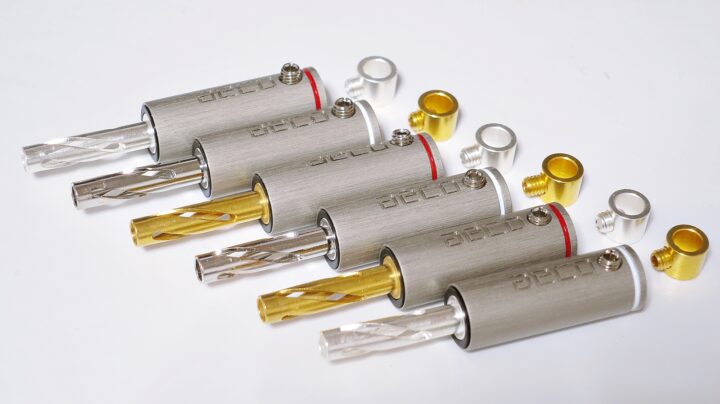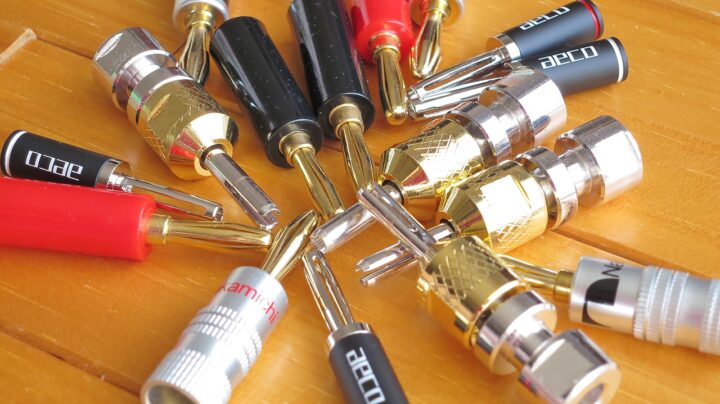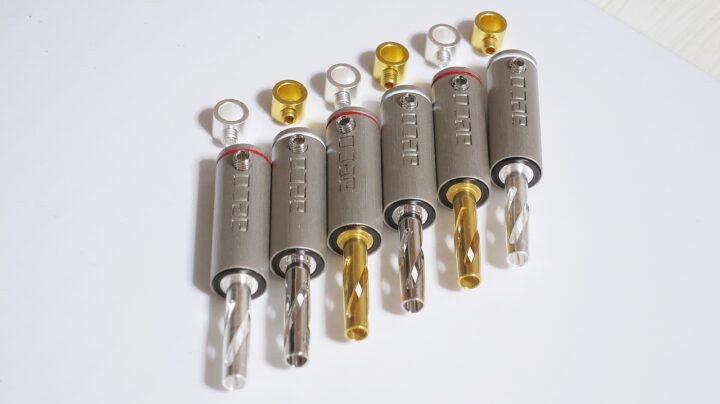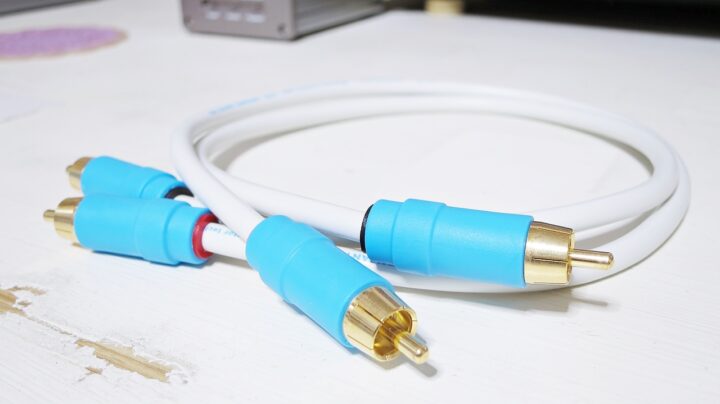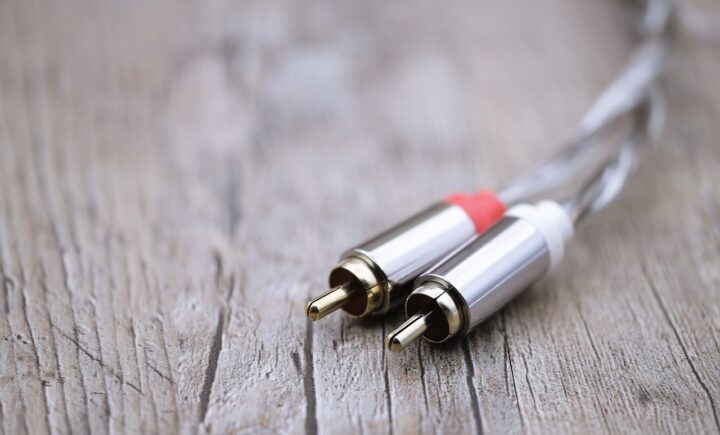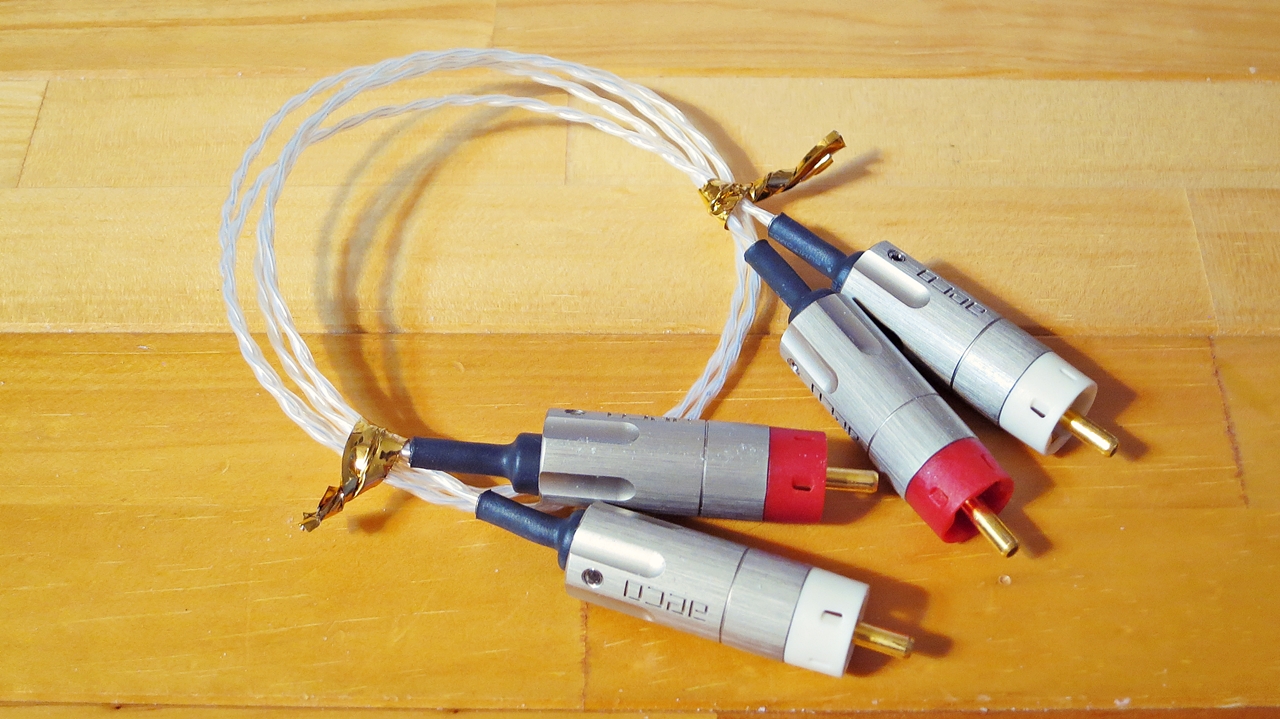
AEC Connectors is a Taiwanese manufacturer of audio plugs and connectors. Known among DIY cable builders for producing high-quality audio plugs entirely in Taiwan rather than mainland China — and at affordable prices — AEC Connectors also operates the aeco brand, a premium audio-grade line developed with even more carefully selected materials and construction than their standard range. Starting from this article, I would like to introduce several aeco products here on the blog over the coming instalments.
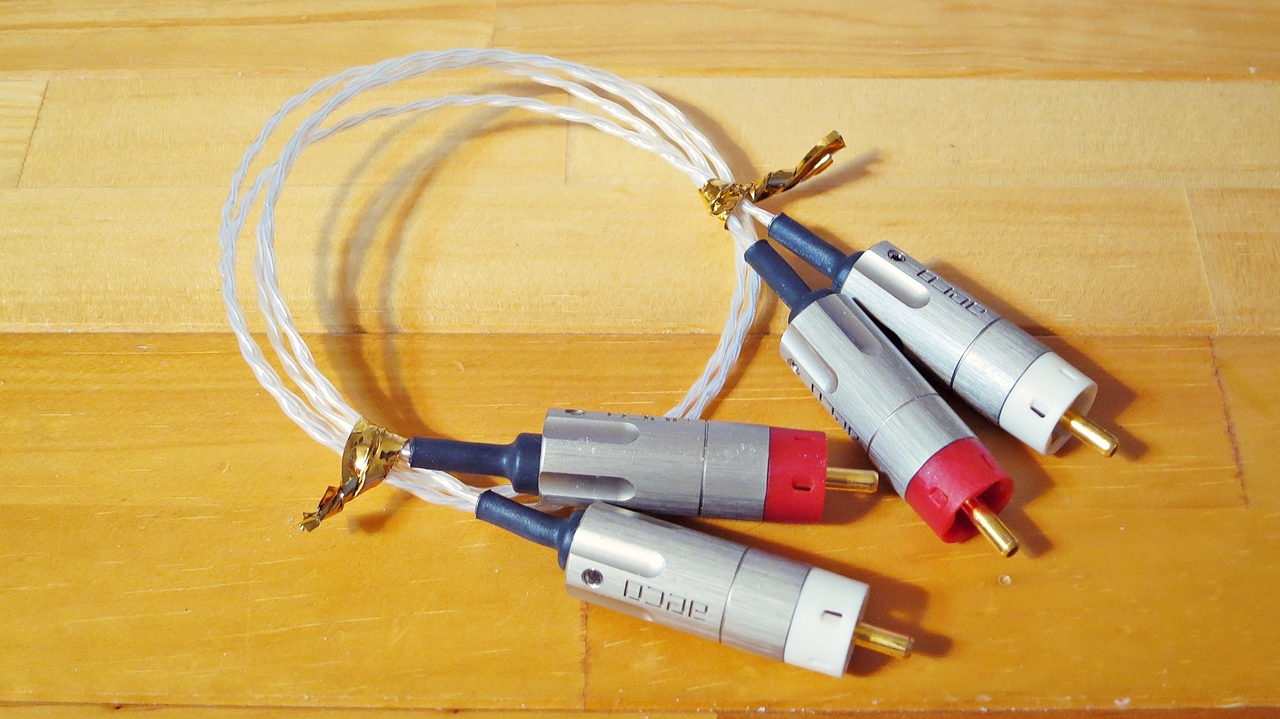
AEC Connectors originally made its name as an OEM manufacturer supplying component parts to high-end audio equipment and premium accessory brands, primarily in Europe and across the world, and its manufacturing quality and sonic reputation have been well established for many years. The aeco (pronounced “ah-eh-co”) brand is AEC Connectors’ own in-house label, offering products with the same potential and quality as those high-end OEM lines. Unfortunately, domestic distribution channels in Japan remain limited, and it would be fair to say that aeco currently has almost no brand recognition within the country. The authorised Japanese distributor is aeco Japan Store → Twitter account is here. Precisely because aeco is still so little known, there seems to be a window right now where excellent parts can be had at very reasonable prices — and as a budget-minded low-ender, my thinking was to get in before the high-end crowd catches on.
Among the range of cables that aeco’s authorised Japanese distributor has begun selling under the AudioCableCraft brand for the domestic market, the most affordable model at present is the Etoire, an RCA cable using a 5N hybrid pure silver single-wire conductor. Etoire, incidentally, is the French word for star — and combined with its appearance, it really is quite stylish. For this review, I was generously lent by the distributor a pair of 53 cm demonstration units: the entry-level RCA interconnect Etoire, and the higher-model Soleil. ※ Prior consent was obtained from the distributor before publishing this review of the demonstration units on the blog.
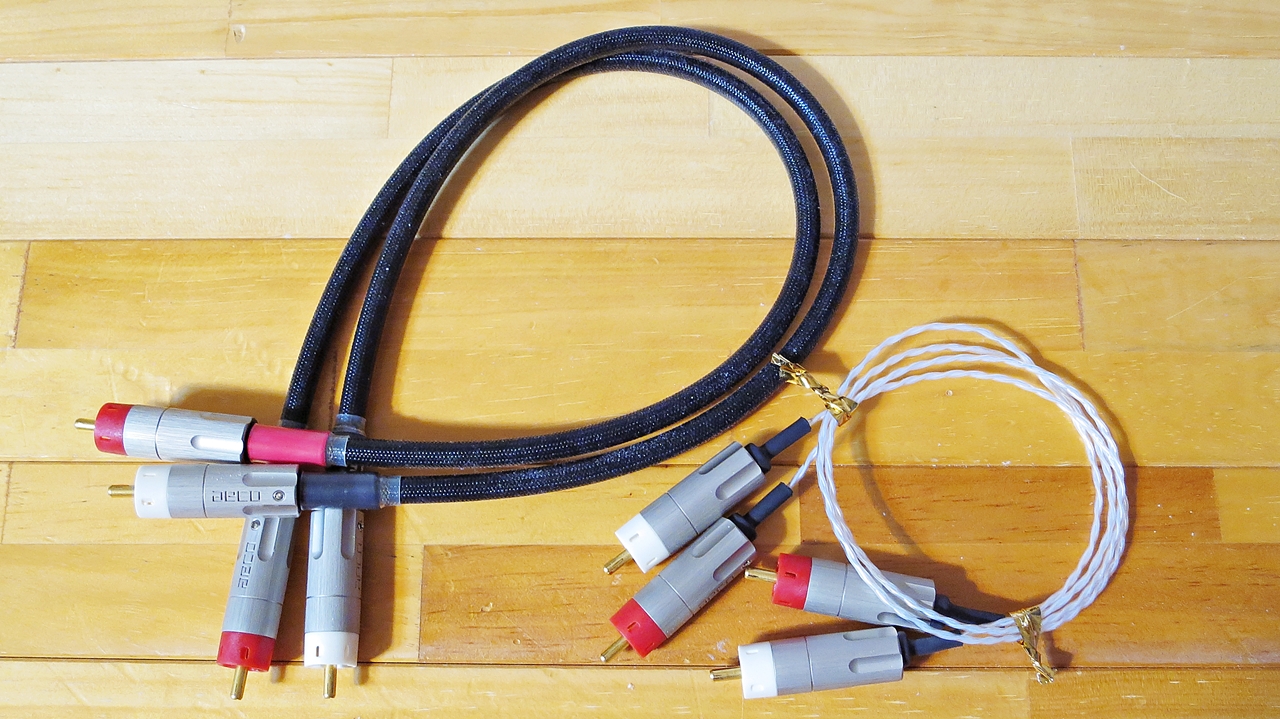
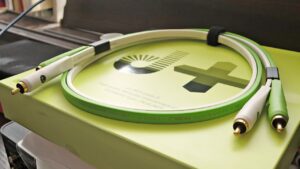
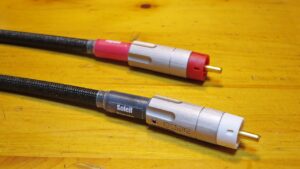
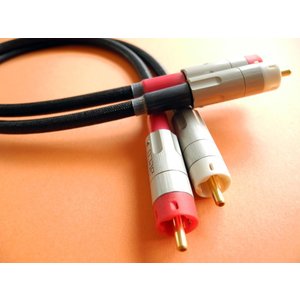
The Soleil (to be reviewed later) is on the left, and the Etoire is on the right — and both are simply beautiful to look at. In fact, it was the Etoire’s appearance that first caught my attention and prompted me to borrow it in the first place. Seeing it in person, I was genuinely taken aback: it is the most compact RCA cable I have ever held. Placed next to the Soleil (note: also on the slender side, but otherwise normal in size and appearance), you can see just how remarkably small the Etoire is. It is literally palm-sized, and as someone who has always had a soft spot for small, well-made things, this alone made a very favourable impression. The 5N hybrid silver conductor of the Etoire is soft and flexible, so routing it should present no difficulties — however, the aeco RCA plugs are fairly heavy and the wire itself is delicate, so some care is needed when handling it. To get the best out of it, a short, unsupported run through the air seems the way to go.
AudioCableCraft Etoire Sound Quality Review
First, I tried it in the Miuaudio sub-system, where the CHORD C-line had been in use for the past several months. The Etoire has no marked directionality, but swapping it around did seem to produce a difference in sound, so from this point on all listening was done in the direction I judged — entirely by my own judgement — to be the correct one. The texture and rendering of string instruments is excellent. At the same time, the hard touch and resonance of the piano are well delineated. The contrast is on the shallow side, however. From the midrange upward, a softly hovering, beautiful and gentle quality of tone is present — easy on the ear, charming, and with a feminine, feather-light delicacy that makes one want to sit and listen to music for hours on end. Despite being a pure silver cable, the bright, shiny colouration typically associated with silver wire is surprisingly restrained, and tonally it sits within the range of neutral. There is a modest amount of weight and body in the lower midrange, but taut, crisp resolution is maintained to a degree I did not expect, and there is a sense of genuine quality to the sound.
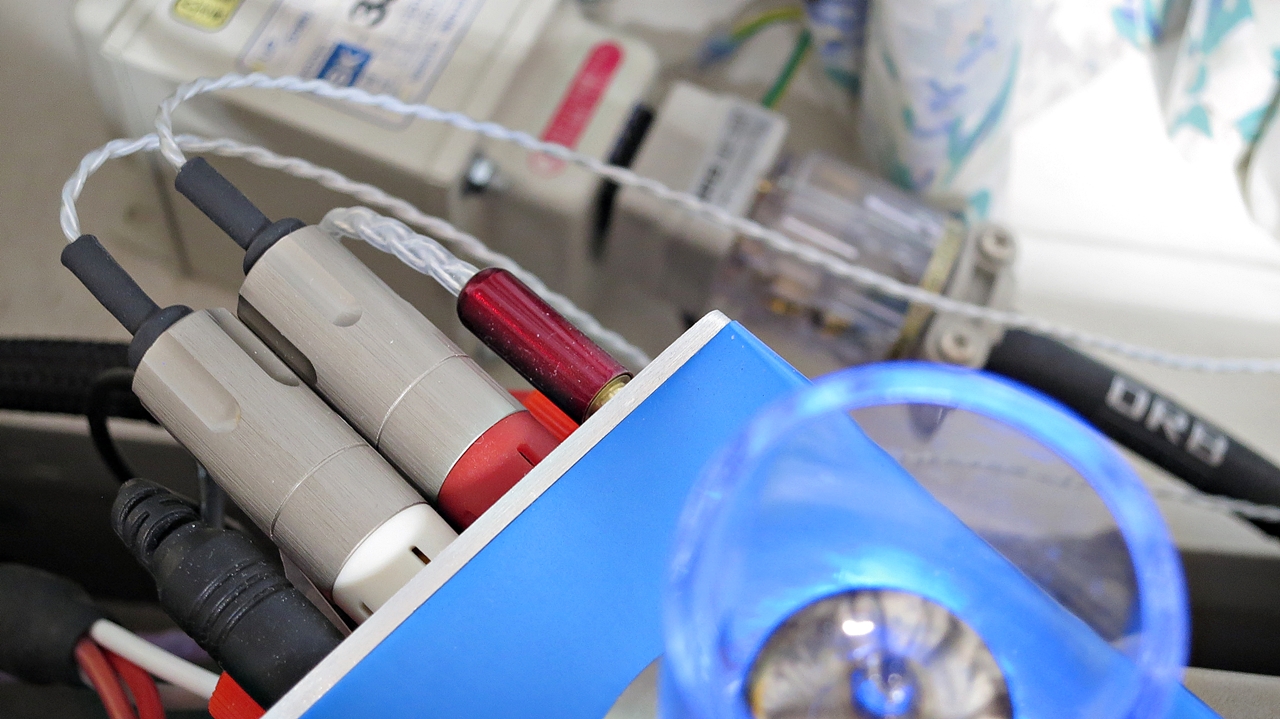
Compared with the C-line, which has a richer tonal character and a somewhat forward midrange, the Etoire presents a flatter overall balance with a natural sense of spatial breadth, and the imaging sits perhaps a touch high. There is little perceived distortion from the midrange upward, and the overall character is restrained and understated — which may be why, at the same volume position, everything seems to play slightly quieter than with other cables.
My impression is that the natural softness and yielding gentleness of the silver conductor alone might have become rather dominant, but the aeco premium plug is doing the work of tightening up the sound and extending the frequency range at both ends — creating a solidity and presence in the image that the conductor alone would not achieve. There is no sense of compression or restraint in the way notes decay, and although the imaging sits slightly high, the soundstage opens up in a natural, unconfined way. The pinpoint imaging gives it a quality rather like peering into a beautifully detailed miniature landscape. In recent months I have been trying one RCA cable after another where appearance and sound quality were wildly at odds with each other, but the Etoire is a cable where the sound matches the impression given by its looks.
Upstream of the LUXMAN Valve Harmoniser in the Main System
I would have liked to connect it directly to the main DAC in my primary system, but the 53 cm length I borrowed was not sufficient for that, so instead I swapped it in upstream of the LUXMAN valve harmoniser, replacing my reference NORDOST Blue Heaven. I expected this to be an unfair fight — but connecting it up, it turned out to be not nearly as one-sided as I had anticipated. Depending on the album, the Etoire actually came out ahead. When paired with the Miuaudio sub-system, the gentle tonal character of the 5N silver single-wire conductor was the dominant element, with the aeco plug providing support and extending the frequency range. In the main system, however, the dynamic was surprisingly reversed: the silver conductor receded into the background and the aeco plug became the dominant voice.
The imaging is solid and pinpoint, matching the NORDOST Blue Heaven and then some — adding a hardness and density of texture that even the Blue Heaven does not quite manage. Bass extension is not voluminous, but the transparency and spatial clarity are excellent, delivering a flat, well-resolved low end. The taut, tangible quality of the imaging means the bass never blooms or sounds lightweight — it is refined, and exactly the kind of low end I personally find most appealing. The musical presentation is careful and, if anything, passive — not particularly energetic in character — but being an unshielded single-wire cable, the soundstage is flat and natural; if anything, perhaps marginally shallower in depth than the Blue Heaven, which has an unusually expansive way of throwing back the stage. The Etoire also extends smoothly into the upper frequencies, but rather than the sparkling brightness one might associate with silver wire, there is a slight shadowy quality to the tone that I take to be the character of the tellurium copper plug — accompanied by a gentle, unhurried warmth and a natural texture to strings, while the tight imaging quality stands out rather more. The presence and tangibility of each individual piano note hanging in the air is genuinely appealing. Signal-to-noise ratio is also perceived as quite good in this combination. I should note, however, that this listening impression is heavily coloured — in a manner of speaking — by both the valve harmoniser and the NORDOST Red Dawn on the output side (also tight, and neutral to slightly dark in character), which makes it difficult to isolate exactly how much of what I’m hearing belongs to the Etoire alone.


 ポチップ
ポチップ
Connected to the ONKYO C-S5VL SACD Player
Since the end of last year, the reference cable on the ONKYO C-S5VL SACD player has been the Inakustik NF-202R single-wire RCA cable. The NF-202R is a cable with a distinctive character and system compatibility that is quite clearly defined — and rather unexpectedly, its pairing with the C-S5VL turned out to be the best match in my system, in the sense that it compensated nicely for the player’s weaknesses. I was fairly certain that combination would be hard to beat, but I connected the Etoire anyway — and within the first ten seconds, I had a strong feeling that it was surpassing the NF-202R in overall sound quality. To put the C-S5VL’s strengths and weaknesses plainly: the strengths are high resolution and a fine, detailed retrieval of information; the weaknesses are a thinness of sonic density and a lightness in the bass. The Etoire’s taut, high-density character immediately gives the SACD’s somewhat thin presentation a solidity and substance that goes beyond what the NF-202R achieves, while the sense of spatial precision is raised and the stage expands in all directions (the NF-202R has a forward midrange, which tends to narrow the frequency range above and below).
 ポチップ
ポチップ
When I connected the Etoire to the Miuaudio sub-system, the bass had struck me as somewhat light — but that was simply because the QUAD L-ite2 miniature bookshelf speakers in that system do not reproduce deep bass. Listening on the main system with its wider bandwidth, it becomes clear that while the Etoire does not emphasise the lower midrange, the quality of the bass itself is high — it extends well down with pitch remaining clean and coherent, without the phase going astray. Rather than sounding top-heavy, the Etoire actually pulls the inherently somewhat top-heavy C-S5VL into a flatter, more neutral balance; in terms of low-frequency quality and realism below 150 Hz, it clearly surpasses the boomy character of the NF-202R. The positioning of individual instruments — and the sense of distance to the left, right, and rear — is also rendered with accurate, pinpoint precision. The taut density of the sound is such that the thin, rather insubstantial presentation of a budget SACD player has been transformed into something with real body and presence, suggesting a product from a higher class entirely.
To name a weakness: compared with the Inakustik NF-202R, which has a lively, dynamic character, the Etoire is more composed and somewhat more objectively presented; the bright, glittering sparkle in the upper registers of the C-S5VL is less pronounced, and fine detail seems slightly tidied up and reduced in number. In a good sense, the signal-to-noise ratio of the space may simply be too good. Orchestral separation is excellent, and the individual textures of each instrument are realistic. The subtle variations in piano touch and the resonance of the strings are rendered with clarity and without smear. Compared to the NF-202R, the Etoire is somewhat less dynamic in feel — but I find myself naturally drawn into the fine details of the musical expression; there is a quiet, inward kind of musical communicativeness to it.
The Cost-Performance of the Etoire
aeco / AudioCableCraft is still little known, and despite being hand-assembled in Japan, the Etoire is priced — remarkably — at around ¥10,000 as an entry-level model (at the time of writing). In terms of component quality, it is clearly in a different category from the RCA cables priced in the few-thousand-yen to roughly-ten-thousand-yen range from the major cable manufacturers, where deliberate cost-cutting is difficult to ignore. For cost reasons, entry-level cables almost invariably use extremely cheap RCA plugs — often components that cost just a few tens of yen per piece — but the Etoire is fitted with the same aeco The STARS ARP-4045G used on the higher-end models, which is quite exceptional at this price point. This is the grade of RCA plug that other high-end cable manufacturers would typically reserve for cables priced at ¥50,000 per pair or above.
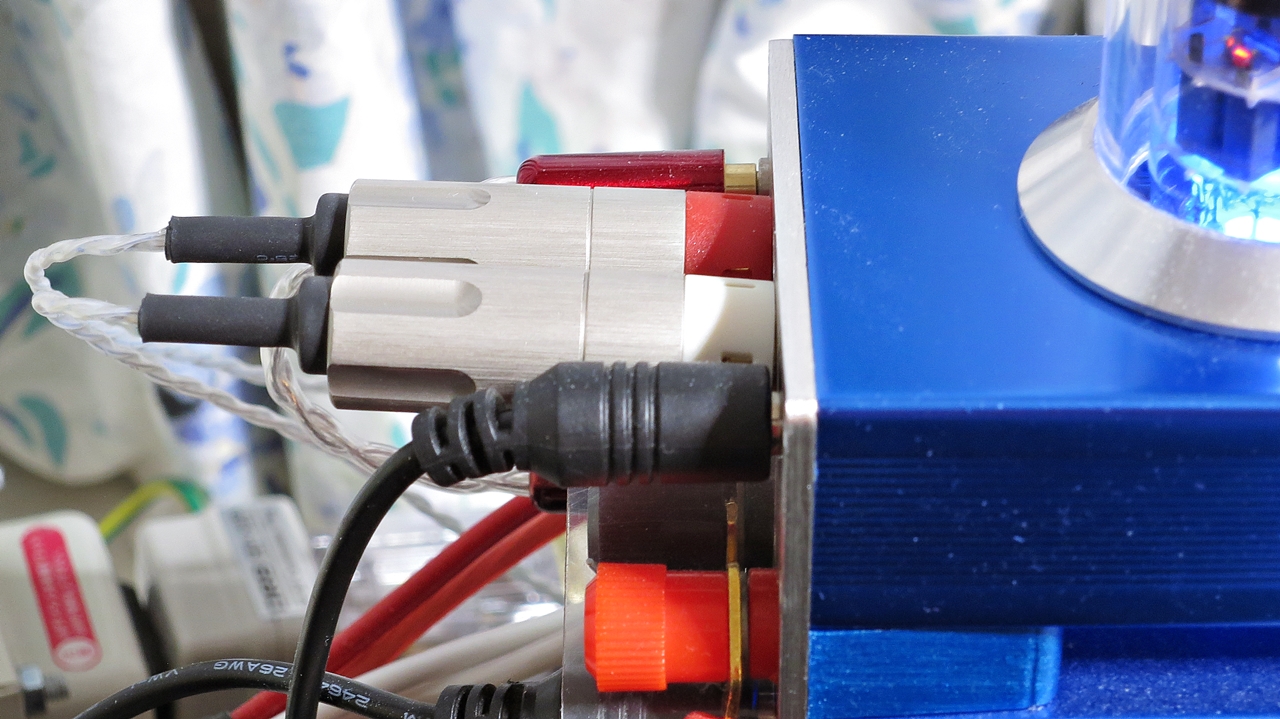
The domestic retail price for the RCA plug sold separately is currently set at a very reasonable level — which is somewhat puzzling — but the centre pin through which the signal passes is not brass, or even pure copper, but the more expensive tellurium copper (tellurium-alloyed copper), and neither the gold nor rhodium/silver plating options use nickel as an undercoat, which would impair conductivity. Handling one in person, the substantial weight and the satisfyingly high-precision finish make it immediately clear why DIY cable builders who have once tried an aeco ARP-4045 / ARP-4055 series RCA plug tend to become rather attached to them.
 ポチップ
ポチップ
In terms of quality, the Etoire’s closest rivals might be something like the Crystal Cable Piccolo or the solid Aurum Acoustics OFC cables. If the Etoire had been released by a well-known overseas high-end cable brand rather than aeco, a retail price of ¥40,000–50,000 or more per pair would seem entirely unsurprising.
What Kind of System Does the Etoire Suit?
The Etoire’s imaging is pinpoint and tight, yet there is no unnatural edge enhancement, and it offers a genuinely high-end sense of spatial presentation along with fine-grained tonal description throughout. On the other hand, when paired with the kind of entry-level system that tends to be sparse and muddy with poor resolution, there is a possibility that its phase accuracy simply would not come into its own, and the result could be something rather in-between. For those cases where a more immediately apparent improvement in sound quality is needed, the higher-model Soleil — to be reviewed shortly — would be the more suitable interconnect cable, so please do refer to the Soleil review if that is of interest.
The Etoire was apparently developed with the beginner in mind, with the price pushed as low as possible, specifically to introduce people to the idea that cables can make a real difference. That said, there is absolutely none of the cheapness that entry-level cables so often carry, and the kind of quietly creeping excellence that the Etoire possesses does, I think, require a reasonably well-sorted system to truly show itself — which means handing it to a complete newcomer with no prior knowledge might actually be somewhat wasted on them. (Truthfully, part of me is reluctant to spread the word too widely, given what a find it is.) But what makes the Etoire most appealing, above all, is that firmness combined with a surprising gentleness of tone and an oddly easy-going quality that somehow puts you at ease. Neither too soft nor too hard — for those in search of a cable that quietly wraps around a tired heart with warmth and comfort, I would very much like to suggest AudioCableCraft’s Etoire as one very appealing option.
 AudioCableCraft Soleil RCA Cable Sound Quality Review — continued


Auto Translated by CS4.6