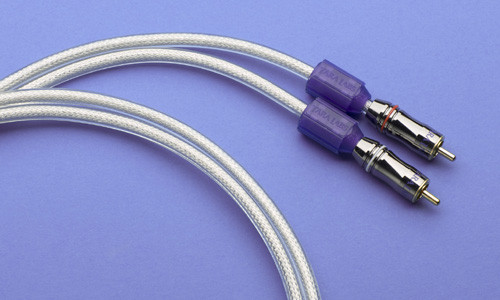
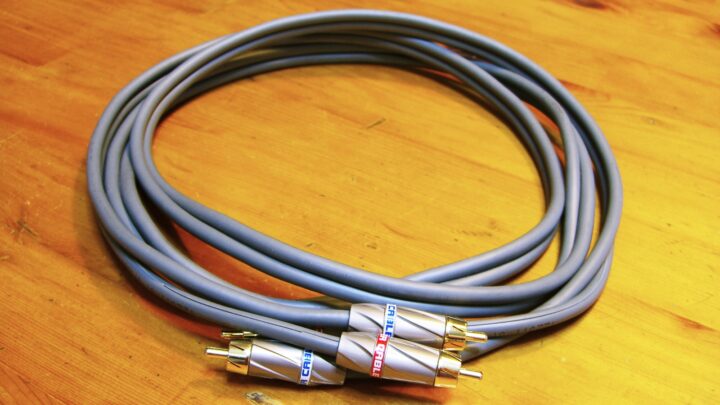
What I am reviewing this time is the American Monster Cable M350i RCA interconnect cable. The domestic price was 7,000 yen per 1m pair, placing it in the budget category (Note: late to mention this, but the US price at the time was less than half the Japanese domestic retail price). Why am I writing now, at this late stage, about a discontinued and long-forgotten cable? Well, I simply love this cable. It is cheap, yet it delivers. And it is solid-core. I can already feel the solid-core enthusiasts across the screen perking up…. For the record, Monster Cable’s RCA cables are, almost without exception, built around complex stranded conductor structures, which makes a solid-core product from them rather rare indeed.
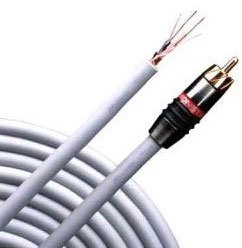
The M350i uses an unusual (for Monster Cable) 2×2-core solid-conductor construction
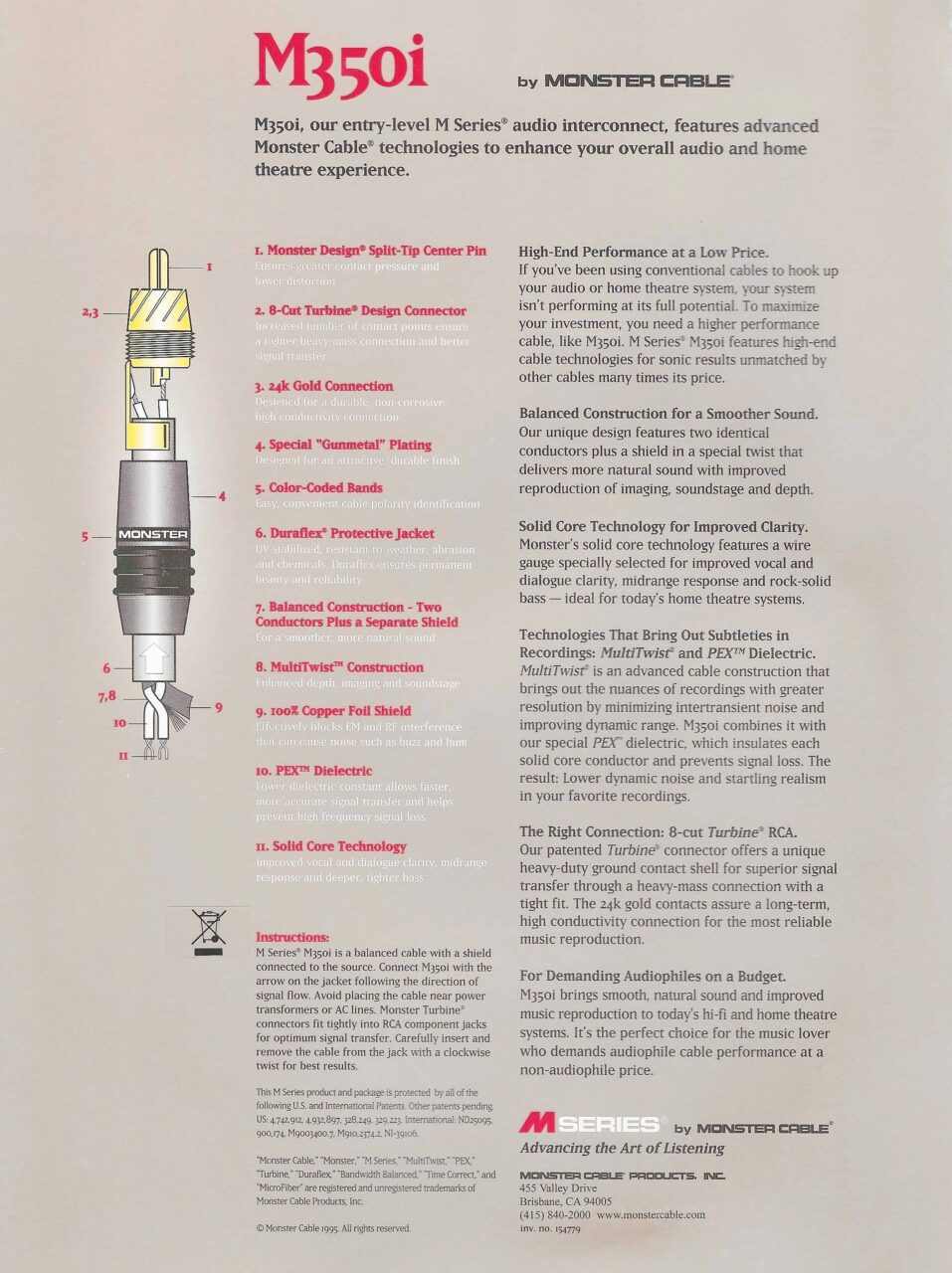
● Dual-conductor construction for more accurate signal transmission
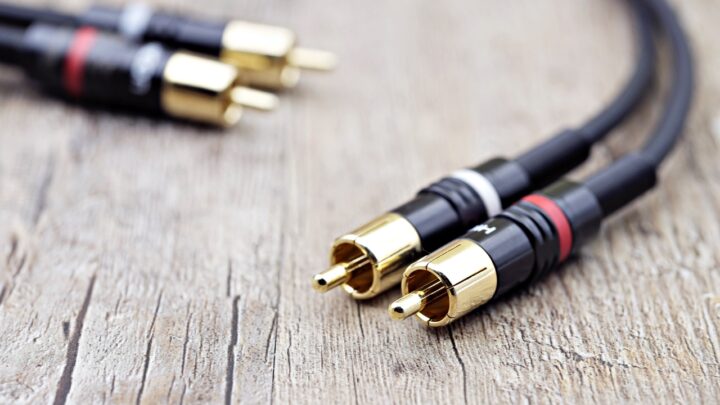
● 24-carat gold-plated turbine plugs with split centre pin for a reliable connection
● High-density copper foil shielding to reduce high-frequency noise
● PEX insulation using high-density polymer, an advanced material
● Microfibre insulation to prevent inter-band interference
● Duraflex jacket outer covering — durable, flexible, and resistant to ageing
Blocks external noise across a wide frequency range. Combines accurate transmission with durability.
Recommended for mid-to-high-end and hi-fi users.
Quoted from an advertisement by ONKYO, who were the importer at the time. Recommended for hi-fi users, you say — well, I wonder about that. The construction is a solid-core, two-conductor twisted design, purity unspecified. This was, after all, an RCA cable manufactured and sold in the late 1990s to mid-2000s, so I rather suspect it may not even have been OFC. In terms of sound, it leans toward the natural side and does not offer a particularly large amount of detail, so if you are expecting the cool, analytical resolution typically associated with OFC or PCOCC, you will likely be disappointed.
A phantom RCA cable known only to a select few
In the mid-2000s, the M350i was briefly celebrated among Hi-Fi enthusiasts in certain corners of the internet, and I believe this was the source. It was ArtRecords, a classical music specialist record shop in Tokushima. The following is quoted from their site.
Monster Cable’s 7,000-yen pin cable (M350i)
A slender cable with a construction resistant to vibration delivers good results.
With pin cables, a thinner 3C-2V performs better than a thicker 5C-2V, and Monster Cable’s excellent M350i likewise uses a slender solid conductor on a par with 3C-2V.
Because Hi-Fi magazines had somehow convinced me that thicker was always better, when I first experienced how good a thinner cable could sound, I was genuinely puzzled. How do you explain this? How do you even accept it?
It is a thoughtfully designed, well-balanced cable with outstanding musicality and a nicely open soundstage. This cable genuinely surprised me. It demonstrates clearly that the quality of a cable is not determined by its price. It is twisted, yes, but the conductors are simply two solid-core wires twisted together, which means it produces a sound that is essentially as direct and clean as a true solid-core cable.
Among commercially available cables, regardless of price, very few surpass this one. I do not mean “good for the money” — I mean its absolute quality is high compared to any expensive, elaborate cable you care to name.
The frequency range is slightly narrow, and there is a hint of colouration at the top and bottom ends. A cable where the advantages and disadvantages of a twisted-pair construction become quite apparent.
What Hi-Fi’s verdict and the author’s own sound quality review
Incidentally, in 2006, What Hi-Fi gave it a rather savage review. Since I recall auditioning the M350i back in 2000, it seems it took its time reaching Britain.
To summarise…
Better than bundled leads. Somewhat aggressive.
Sounds thin, confused. — essentially average.
Harsh… but broadly accurate. What Hi-Fi does not conceal a product’s shortcomings and critiques it head-on, which is why it stands as a model for what audio criticism ought to be. So why do I love a cable that gets this much stick? Because it is highly musical, that’s why. The sound is relentlessly bright and not especially deep, yet it is moderately direct and lively, and fundamentally enjoyable. A cheerful, uncomplicated sound. It conveys the vitality of music across any genre. ※ Besides, deferring uncritically to a review simply because it carries authority is itself not a critical stance at all.
“Better than the bundled cable” — that is underselling it, surely. Entry-level cables sold in Japan for around 5,000 yen have always, more or less, sounded like this. Calling it thin — well, compared to other Monster Cable products, fair enough. But being solid-core still counts for something: the density of the image is quite impressive. The image does not have the bloated quality you often get with stranded entry-level cables. Piano and violin surfaces sound almost laid-back, yet the transient response is sharp and quick. The soundstage, though — that is where it falls short. It does not spread very wide. What is thin is the soundstage, not the tonal body. Being solid-core, there is no phase incoherence or smearing, but the frequency response is somewhat midrange-heavy and slightly narrow, and the finer spatial details in the soundstage fade away rather quickly. Depth is also, well, moderate at best. That said, for a compact, modest system where the components are not particularly high-end, or a combination put together with musicality rather than sonic performance in mind — or simply if you want to cherish a retro piece from fifteen to twenty-five years ago and enjoy the sound character it had back then — the M350i’s naturally slightly narrow-ranged tonality actually fits rather well… heh.
~ Summary ~
To summarise the sonic character of the Monster Cable M350i: the tonal colour is bright. Musically, it leans in a positive direction. It lacks depth, but above all it is a sound you can simply enjoy. Tight, direct, and coherent in the midrange — solid-core in character, natural and with a clean transient response. Soundstage information and frequency range extension are weaknesses commensurate with the price. Bass volume, compared with the higher-end M1000i and similar models, is perhaps a little wanting. But from the lower midrange through the upper midrange, the sound is tight, direct, and lively, so it is fine as it is — nothing to apologise for.


 ポチップ
ポチップ
When I have been swapping audio cables in and out endlessly, becoming so fixated on sonic performance that I start losing sight of musicality as a basic principle, there comes a point where I think: right, I’ve had enough, this will do — and I connect the M350i on impulse. And then it clicks: ah, yes, this is it, this is what it was all about. That is exactly what happens.

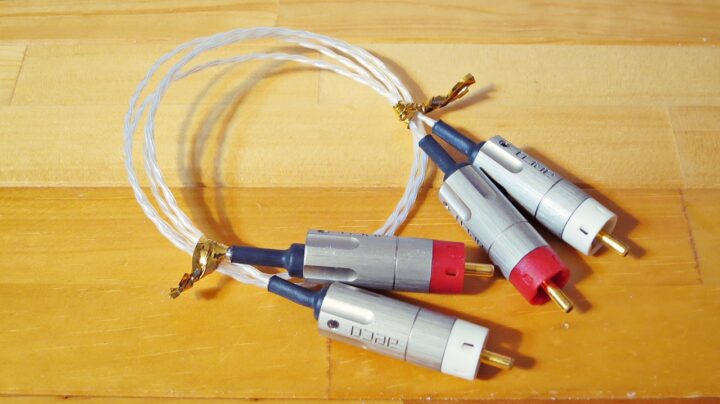
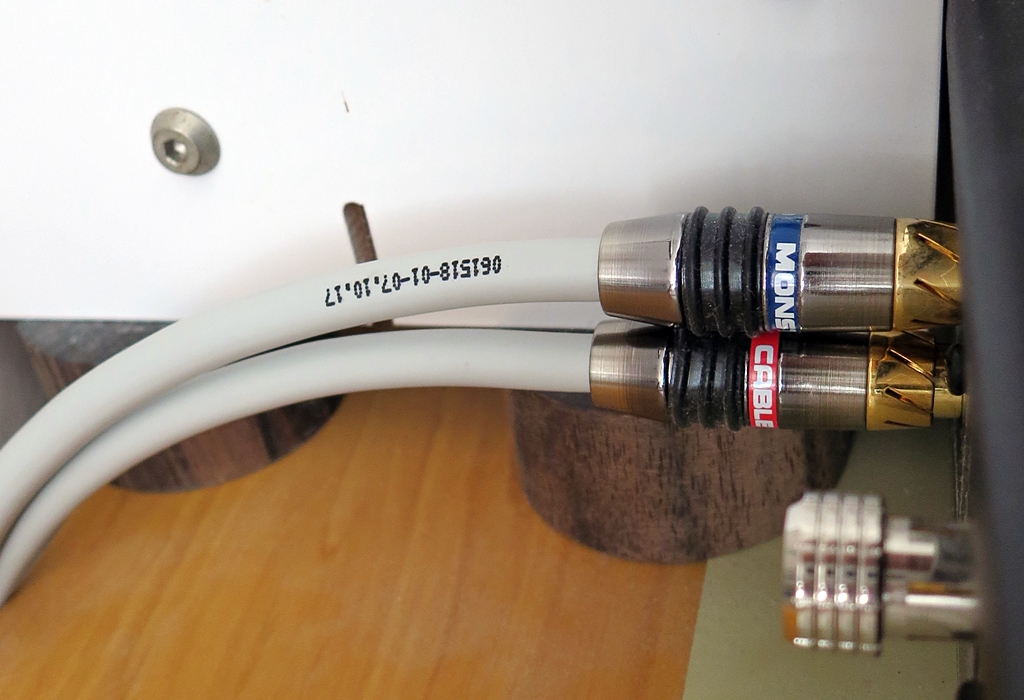
To mention one genuine drawback: true to Monster Cable form, the turbine plugs with split centre pins grip with ferocious firmness, so once inserted, you really do not want to pull them out again. With components whose rear RCA sockets are not particularly robust, you could, quite seriously, cause damage. The reason the R-channel side in the photo is not fully seated is that pushing it in any further felt genuinely risky. This is not unique to the M350i — Monster Cable’s RCA plugs are something to be rather careful about on this one point.


Auto Translated by CS4.6