Part 1|Part 2
With Japan’s long years of deflation and the Hi-Fi slump showing no sign of letting up, the best-selling pure Hi-Fi speakers in Japan have finally reached the point where a pair can be had for around 10,000 yen — or thereabouts. Just what kind of performance can you actually expect from a speaker that cheap, one that costs roughly the price of a single 10,000-yen note? I had been watching with great curiosity from the sidelines for quite some time… Entry-level, low-end audio products have been evolving rapidly in recent years, or so the rumour goes, and I thought I would give this one a proper review, as always, from my own slightly contrarian angle.
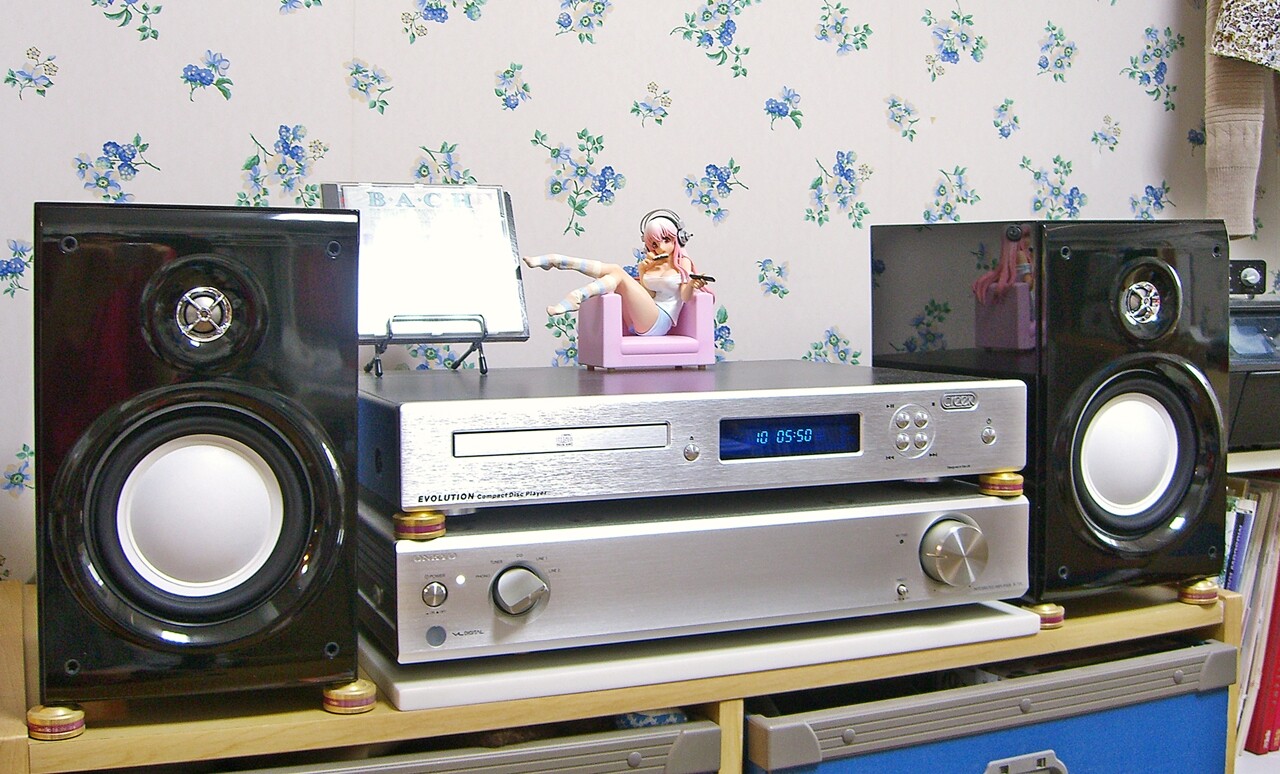
The speaker I decided to purchase this time is the TEAC LS-H265. Its reputation on Kakaku.com has been consistently excellent, and at one point it topped the popularity rankings in the speaker category. Which is to say, it’s the usual story — it was already reasonably priced, and then it went on special offer at an even lower price, so I ended up clicking “buy”.
TEAC LS-H265: First Impressions and System Setup
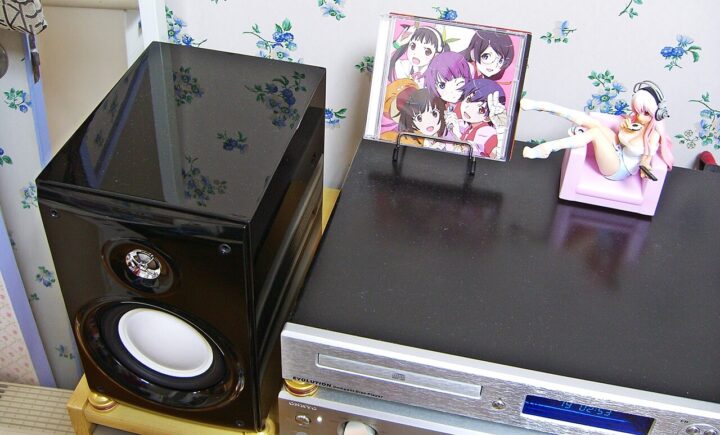
With the quoted dimensions of 174mm × 268mm × 246mm, I had assumed the cabinet would be only slightly larger than the various small speakers I typically use here at AUDIO STYLE — but upon unpacking, the enclosure turned out to be considerably bigger than expected. The enclosure volume is 8 litres per side, which means it is actually well over twice the volume of the Audio Pro Image 11 or the QUAD L-ite2. When using a bookshelf speaker as a main speaker rather than a sub-system (without a subwoofer), this sort of size is really the bare minimum needed to secure adequate bass reproduction — but putting it in a room of 5.5 tatami mats, the sheer physical presence of the thing, combined with its glossy finish, was rather striking.


 ポチップ
ポチップ
That said, picking it up it feels quite light for its size. The exterior finish is a lacquered high-gloss mirror finish. It looks like it would scratch easily, so handle with care — personally, cotton gloves are a must. Design-wise, the chrome-finished tweeter waveguide provides a nice accent, giving it a modern, youthful feel. Under normal circumstances I would have gone for the light walnut finish of the LS-H265WA to match the furniture in the room, but I chose black this time with an eye towards trading it in after a while — apparently the black version tends to be more popular. The walnut LS-H265WA went out of production in the summer, so remaining stock of that finish may actually be rarer than the black.
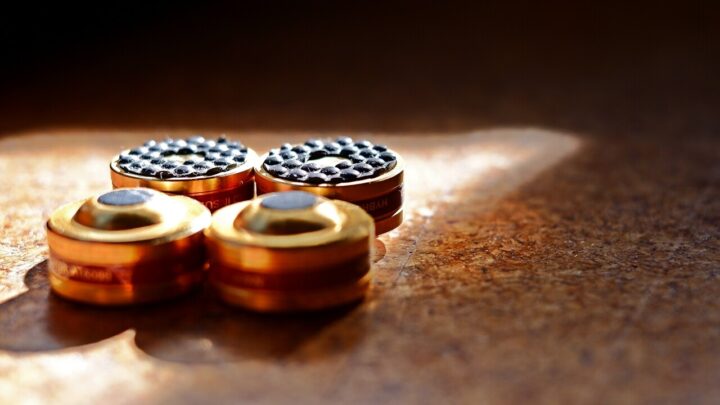
The insulators are my usual audio-technica AT6099, in a three-point support arrangement. The amplifier is the digital integrated ONKYO A-1VL. The CD player is the British CREEK Evolution CD. The speaker cable is the British TAG McLaren F3-10SPK. The interconnect is the American DH Labs Phantom RCA. In terms of component grades, it is something of an unbalanced combination — please forgive me.
 ポチップ
ポチップ
TEAC LS-H265 Sound Quality Review: Characteristics of the 2-Way Driver Configuration
The overall tonal character is dominated by the titanium tweeter, which produces a bright, lustrous, and transparent high frequency. The impression is of a smooth surface that rings pleasantly and agreeably, with information retrieval on the modest side. Despite being a titanium unit, the metallic distortion that titanium tweeters can be prone to is kept well in check, resulting in a characterful and approachable sound. Piano has warmth and feels mild. Violin is bright and tends to crack slightly upward in pitch. There is a degree of the pressure-at-the-temples peakiness that metal dome tweeters can produce in the register of husky female vocals — voice actresses and the like — but beyond that, the imaging and the openness of the sound are genuinely good, and I think it has an inoffensive, charming tonal quality overall. It is a smooth, beautiful-sounding tweeter.
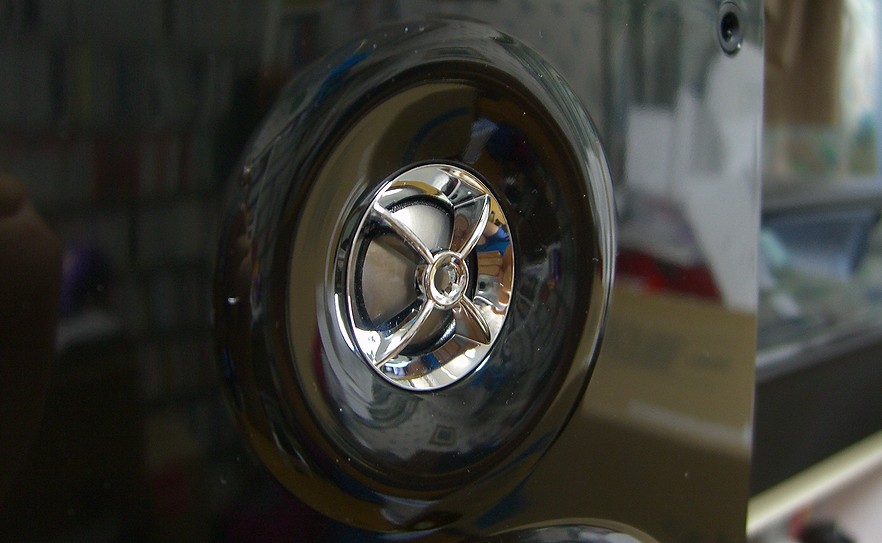
Perhaps in order to make the most of this tweeter’s beauty, the crossover point is set quite low at 1,700Hz, yet the transition between drivers is smooth. The sound has ample spread and warmth, and from the upper midrange upward it is clear, bright, and shimmering — but from the midrange downward it is warm and mellow, for better or worse displaying a tonal tendency that is recognisably that of TEAC from a generation ago. Even at low volume levels the tweeter maintains its quality of imaging and focus, so there is no muddiness. If you are not looking for weight in the bass, it is perfectly adequate for near-field listening at very low volumes in a PC audio setup. Though one must say, the cabinet is perhaps a touch too large for desktop and near-field listening.
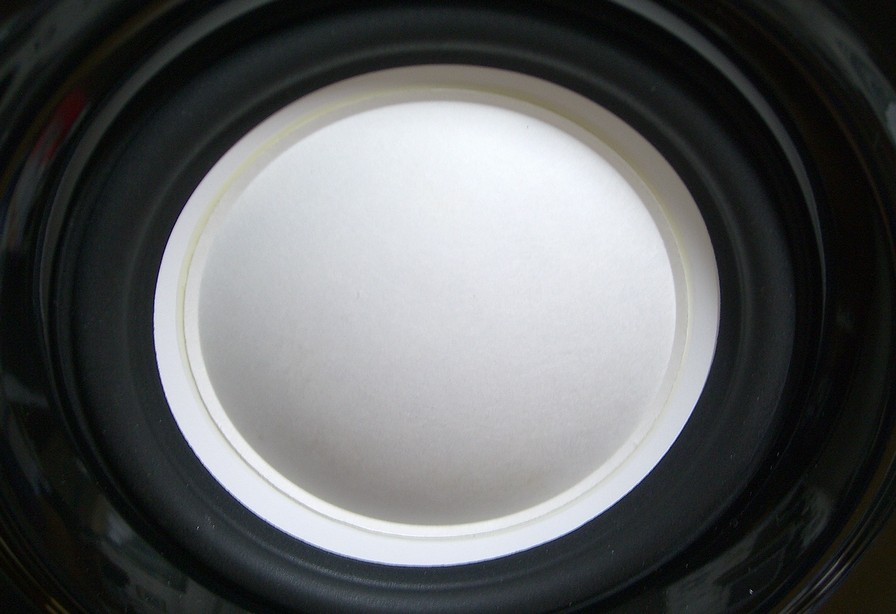
The bass, handled by the paper cone woofer together with the bass reflex enclosure, is somewhat boomy and lacking in control. The woofer looks modern enough — white, with a large centre dome that suggests firm damping — but judging by the lightness of the cabinet, the magnet is likely a small one. The sonic character is the straightforward, honest paper cone sound that has been familiar for decades. The voicing prioritises a pleasant, wet sound, and when the density of musical information increases, there is an inevitable blurring of detail that reminds you of the cost constraints involved. That said, the lightness of the woofer works in its favour where transient openness is concerned.
The cabinet is large, but rather than producing a sound with the weight and authority that the size might suggest, it exploits cabinet resonance — the natural colouration of the enclosure — to the full, resulting in a mild and comparatively gentle presentation. The tweeter images well, and given the low crossover point the tweeter’s character dominates the sound, so it comes across more like a point source — more like a smaller speaker than its size would imply. The TEAC LS-H265’s biggest charm is its tweeter tone, and the thought occurs that a super-compact PC speaker using this wide-range tweeter alongside a suitable midrange unit, with a separate subwoofer enclosure, would actually make for a rather interesting product concept.
On the whole, the TEAC LS-H265 is an honest, smooth-sounding speaker that does not impose itself on the listener. It does not have the character of a modern speaker driven hard with a powerful magnet and low sensitivity — instead it flows along with an easy, unrestrained quality that has a retro feel, almost like a speaker from the Showa era. The appearance is contemporary, but the sound has a somewhat nostalgic quality about it. Sensitivity is rated at 86dB, so the volume control sits a little higher than usual, but at 8Ω it drives easily. A budget entry-level amplifier is perfectly sufficient. As for recordings, it is a curious thing, but it suits older analogue-era classical recordings far better than it does modern digital, high-speed, impulsive recordings that demand tight control and high information retrieval — there is a kind of nostalgic familiarity in the pairing.
The weakness lies in the midrange — or rather, compared to the charming, smooth prominence of the upper midrange and its beauty, the weight and energy of the mid-to-lower midrange from a few hundred hertz up to 1,700Hz is thin. And yet the deep bass below 100Hz has reasonable extension and produces a satisfying “boom”, so the midrange ends up sounding relatively recessed by comparison. This woofer does a surprisingly convincing job with the coppery resonance of the cello and with timpani. Of course, it is a concert hall scaled down to miniature proportions — but there is something of the atmosphere of air trembling in a concert hall, and one cannot help but smile.
The sense of reverberation is quite pronounced. Since the tuning actively reconstructs the sense of ambience through cabinet resonance and the bass reflex system, the absolute level of fine detail is limited, and subtle sounds are tidied away rather neatly — it lacks somewhat in the analytical resolution one might seek from hi-res audio. The flip side of this is that even poor-quality sources are rendered pleasantly and presentably, making it a friendly and approachable-sounding speaker. The high frequency range is not over-extended, and the smooth, unforced sound does not demand a certain kind of focused attention from the listener, which makes it well suited to extended background listening.
A Good Replacement for Mini-System Bundled Speakers
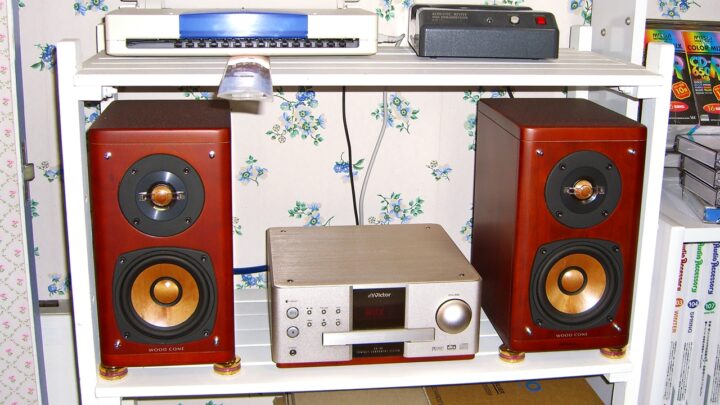
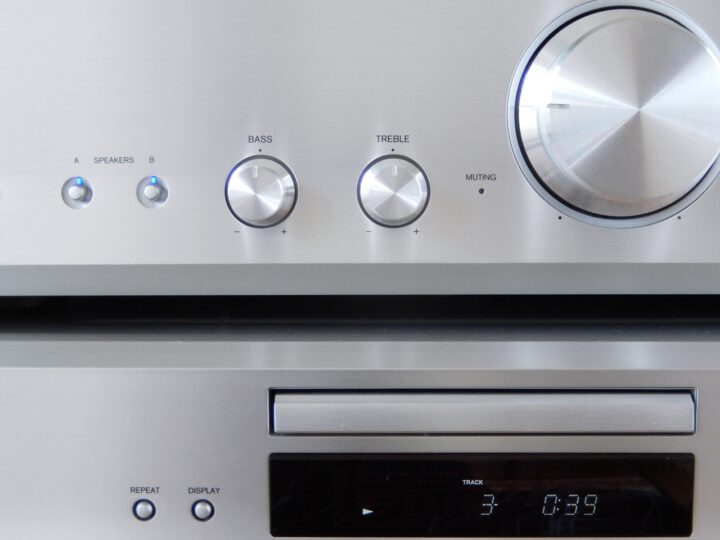
Produced in China as you would expect at this price point, the drivers and cabinet must have been built to quite tight cost constraints — and yet within those constraints, the sound holds together well and does not fall apart. It is not the kind of strained, breathless sound of a speaker struggling to punch above its weight. Setting aside a select number of high-quality mini-systems that come with genuinely excellent speakers — such as Victor’s Wood Cone series or ONKYO’s D-○12EX series — replacing a typical mini-system speaker with the dry, congested sound that characterises the average bundled unit should, in most cases, yield a meaningful improvement in sound quality.
 ポチップ
ポチップ
As an aside — among the equipment I own, the sound reminds me of the PIONEER DV-585A, famously known for its Goldmund connection. The DV-585A has long since been demoted to serving as a storage shelf with no practical use, but combined with this speaker, it might actually be a rather fitting match in terms of character.
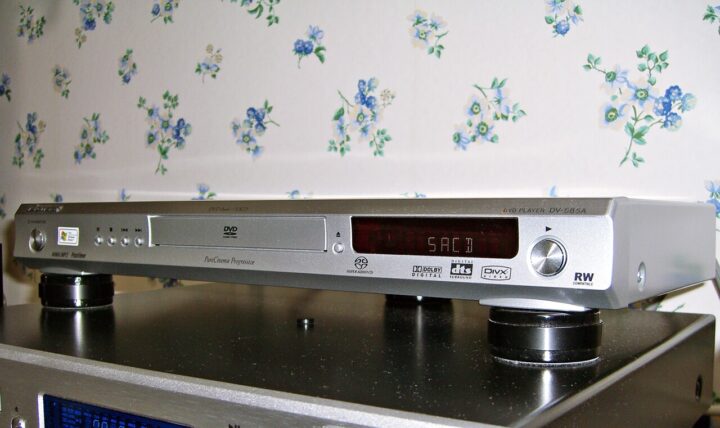
Choosing an Integrated Amplifier for the TEAC LS-H265
On the subject of amplifier pairing: with the TEAC LS-H265, even if the source equipment is somewhat mediocre in quality, the speaker seems capable of rendering it into a reasonably pleasant sound through its own kind of flattering colouration. It does not demand a great deal in terms of drive capability either, so I think it will get on well enough with most amplifiers that have a straightforward character. That said, even though this is a speaker that will sing with a relatively modest amplifier, using a Chinese digital amplifier in the few-thousand-yen bracket raises the concern that — depending on the unit — the sound could end up thin and hollow. Ideally, a Japanese-made entry-level integrated in the 20,000 to 50,000-yen range would be a more appropriate match.
 ポチップ
ポチップ
The obvious and safest choice — really the optimal one — is to pair it with a TEAC integrated amplifier such as the A-H01-S Reference 01 or the AI-301DA Reference 301. With ultra-budget speakers like this, pairing within the same manufacturer is particularly recommended if you want to extract performance beyond what the price tag would suggest. The A-H01 goes without saying, and while the Reference 301 (AI-301DA) and the Reference 505 (AX-505) may be somewhat overspecified for the LS-H265, if you have a future speaker upgrade in mind then going for a higher-tier amplifier now is not a bad idea at all.
 ポチップ
ポチップ
For those who want a more lively, brighter, and more dynamically driven sound, the ONKYO digital integrated A-5VL or the all-in-one mini system NFR-9TX seem likely to be good matches in terms of class. Incidentally, in the integrated amplifier I own, the digital power amplifier module used inside the ROTEL RDA-06 is the same ICEpower 50ASX2 SE from Denmark that is found in the TEAC AI-301DA-SP and the A-H01. The RDA-06 seems like it would tighten up the LS-H265’s somewhat loose bass quite well, and I have a feeling it could be a strong pairing. It is a shame that the timing did not work out and I was unable to test them together directly.
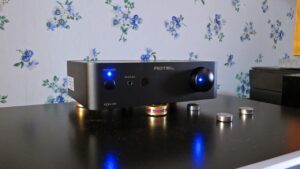
For this review I tested with the mid-range digital integrated ONKYO A-1VL, but in terms of both drive capability and resolution, the amplifier ended up being clearly overspecified for the speaker. The two did not seem to find common ground in terms of what each was trying to do — it felt rather like a gear-ratio mismatch, with the amplifier spinning its wheels. Going overspecified is not necessarily a bad thing when future upgrades are part of the plan, but pairing the LS-H265 with an amplifier above the 50,000-yen bracket — anything other than a TEAC unit — may result in compatibility friction, or simply make you immediately restless for a better speaker. If you are prepared for that kind of indecision and have the budget to spare, by all means pair it with a higher-end amplifier and welcome yourself into the wonderful rabbit hole that is Hi-Fi.
 ポチップ
ポチップ
Choosing a Speaker Cable
The TEAC LS-H265’s warmly reverberant sound spreads beautifully, which might make it a good surround speaker — though the size is perhaps a touch too large for use as a satellite. That said, it has plenty of the ambience that surround use requires, and it does not push itself forward in an overbearing way, so if the size is acceptable it could represent excellent value for money. Setting aside its appearance, this is certainly not the kind of speaker whose sound jumps out and gets in the way. The tonal character has a smooth, faintly acoustic warmth that is quite different from the artificial quality that a metal or plastic enclosure tends to produce.
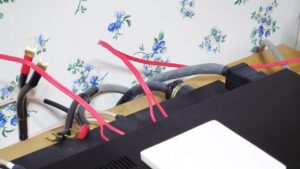
Being an entry-level model, a thin red-and-black speaker cable is included in the box — but if you care about sound quality, it is worth spending a little more on a better cable.
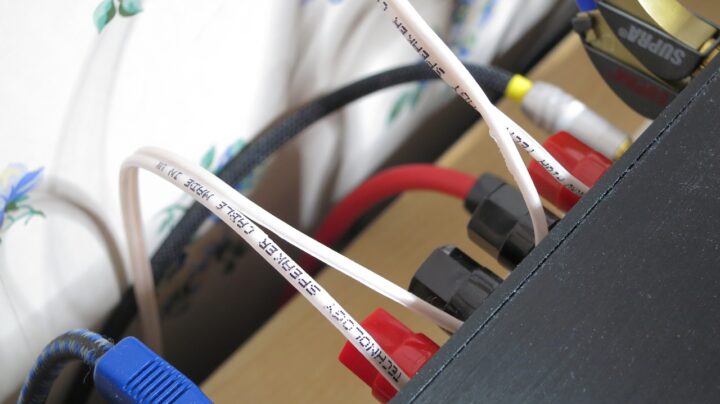
In terms of speaker cable, partly to address the LS-H265’s weakness in woofer control, I would lean towards using something as thick as possible, with a construction close to solid-core conductors, prioritising improvement on the bass driver side. Something to really grip the low end. The kind of thin, inexpensive cable with a pretty top end that I personally tend to favour would only make the overall looseness worse. This time around I used a British speaker cable costing upward of 60,000 yen for a 1.5m pair — which is of course overkill for this speaker. Sonically, anything up to around 2,000 yen per metre would be more than sufficient, but thick cables tend to be expensive simply by virtue of their gauge, regardless of quality. Japanese-made PCOCC cables seem like they could be a good match, though they are somewhat pricey to pair with a speaker at this level — and since they are now discontinued, it is first come, first served. If I were to choose from the universally beloved American Belden range, I would be tempted to try the heavier 8477.
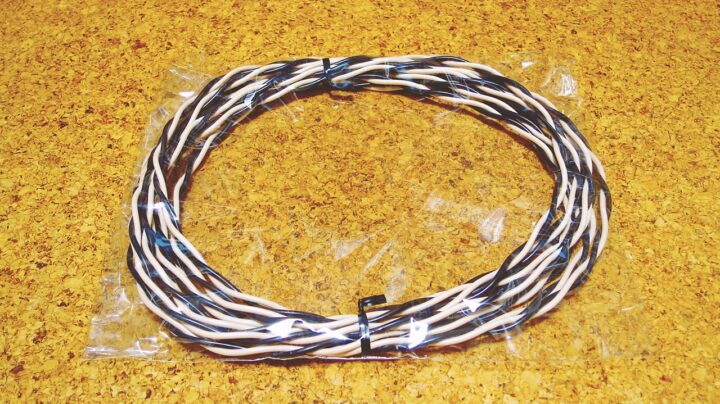
Somewhat at odds with what I said above, but given that this is a TEAC product, what I would personally like to try is the cut-length speaker cable from Dutch brand van den Hul — which may or may not (purely speculation) be used internally during development at TEAC. Van den Hul is an audio cable brand founded by Dutch physicist A.J. van den Hul, and is a well-established name in Europe. Thanks to TEAC/ESOTERIC acting as the Japanese importer, it can be obtained at relatively reasonable prices domestically. A combination of the TEAC S-300NEO with two different van den Hul speaker cables of different gauges in a bi-wire configuration — just thinking about it gives me a tingle of excitement.
This is getting rather long, so the second part of the TEAC LS-H265-B impromptu review will follow next time!
Part 1|Part 2
[PR] SOUNDHOUSE
Auto Translated by CS4.6