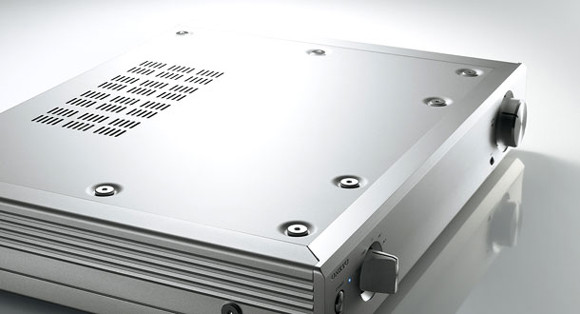
【ONKYO A-1VL & C-1VL In-Depth Review】
A-1VL/C-1VL Launch|A-1VL (Part 1)|A-1VL (Part 2)|C-1VL
One night has passed. The power has been left on throughout. The overall impression hasn’t changed dramatically, but the sluggishness may have retreated slightly. With small speakers like the audiopro Image11, the weight and solidity in the lower-mid range works rather well — the sense of elevated treble is resolved, and the result is a pleasingly stable and full sound. The left-hand register of the piano is, for some reason, easier to follow. Come to think of it, this kind of timbral resolution has a quality reminiscent of Dynaudio… even though this is Audio Pro.
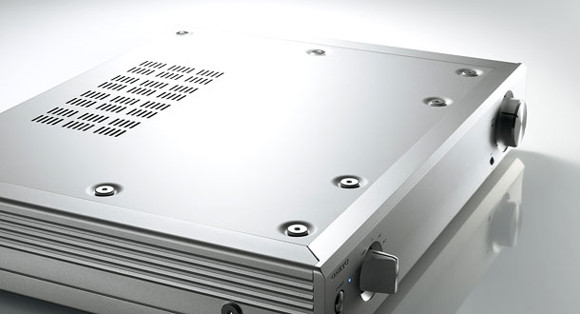
Identifying and Examining the Current Problem Areas
The original reason I decided to buy this was that I heard the A-1VL paired with the C-1VL at a certain shop’s demonstration floor and was genuinely moved by the sound quality (if not necessarily the musicality). I auditioned it several times — both in the standard switchable demo setup and as a dedicated system with the ELAC CL310.2 JET . Yet at home, that realness I felt when switching through every option in the shop simply isn’t there. It sounds perfectly good, but for someone who is after something truly extraordinary, this is not enough.


 ポチップ
ポチップ
Naturally, the environment is completely different between the shop and my home. The room acoustics should be fine, broadly speaking. The mains supply ought to be better at home, even in a block of flats. Cables and such are also far superior to the included or budget items the shop was using. When I try to pinpoint what could actually be the problem, two things come to mind. The first is the power strip.
ポチップ
At the shop it was connected to the Acoustic Revive RTP-6 Evolution — a high-resolution-type power strip. Mine is the CSE CX-63A, which has a smooth, balanced sound. The wall socket is a PAD CRYO-L2 — also a soundstage-oriented, sweet-sounding outlet rather than anything particularly sharp-edged. The sub-system wall socket is a Matsushita Electric Works WN-1318. Then there’s the equipment rack. My main system rack is MDF, and the sub-system sits on top of a flat-pack storage unit. At the shop, I believe the C-1VL was stacked underneath on a steel rack, plus either an ALPHASON or Sound Organisation glass-type rack from the UK…
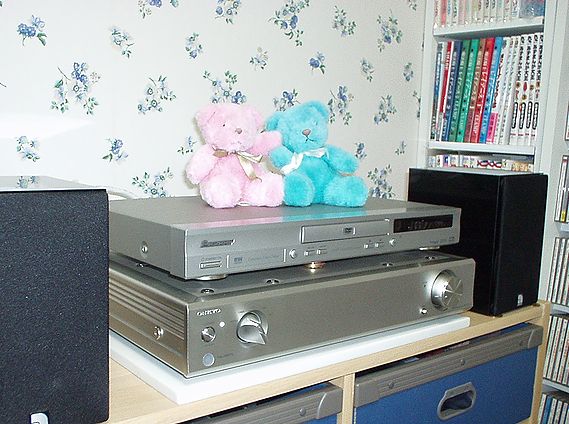
That sluggish, lukewarm quality is also something of a characteristic of plywood-type boards. Could it be that this is coming through in full force? When I touch the A-1VL while it is playing, the volume knob in particular vibrates quite noticeably. The vibration is really rather bad. So I brought out a DuPont Corian board — an Ippinkan original DuPont Corian board that had been sitting in storage — and placed it on top of the flat-pack unit with the A-1VL on top. The DV-545 sits on top of the A-1VL.
Well! A dramatic change. The sluggishness — reduced by roughly 70% compared to before. And expressiveness has improved considerably too. The sustain and resonance in the sound have started to come through properly. There is still a faint sense of compromised S/N and some residual sluggishness, but that is presumably down to insufficient run-in time and the fact that the underlying platform is still a flat-pack unit. The character of the Corian board also makes itself heard, lending a slightly matte quality with a subtle accent in the upper-mid range — but compared to using nothing at all, it is far better. Given the direction of this improvement, I can only imagine that a glass-type rack or a natural marble or granite board would bring about a further substantial improvement.
The conclusion: the A-1VL appears to be the type of amplifier that is heavily affected by where it is placed. The sensitivity to placement is a little too pronounced. It would be advisable to avoid wooden racks altogether. As long as you are using this amplifier, it is worth factoring in a hard-type board from the outset. High chassis rigidity does not necessarily mean less susceptibility to vibration and placement — and in my experience, lighter equipment tends to be less affected by vibration.
Sound Quality Changes Rapidly Within the First Few Dozen Hours of Burn-In
From the morning of the third day with the power left on continuously, a noticeably more refined sound has suddenly begun to emerge — as though a skin has been shed. The murkiness in the S/N and the woolliness have reduced considerably. This is now usable. I am beginning to catch glimpses of a startlingly vivid realism, the treble that was oddly dry and papery has started to acquire some resonance, and a greater sense of depth in the bass is emerging as well. Even so, the sound straight out of the box was really dreadful. I had read somewhere that for the first two or three days you feel like throwing it out of the window, and that was precisely how it felt. In this state, it is no surprise that shop staff and reviewers who have no choice but to test it brand new could never give it a fair assessment.
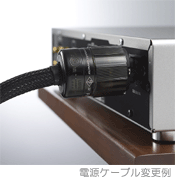
Today I tried swapping some cables. First, the supplied power cable. It is easy enough to connect and disconnect, but the fit is quite loose. I replaced it with the Kharma KPL Reference/1a that I normally use on the main system. Hmm — rejected within a minute. A complete mismatch. As with the board, the A-1VL does not respond well to soft-sounding accessories. The supplied cable actually produces a tighter, cleaner sound — particularly in the bass.
Next, I switched the Cardas speaker cable that has been in use with the audiopro Image11 back to the Space & Time Omuni. That was the right call. It is, above all, more musical, and it seems to fill in and smooth out the slightly dry quality of the not-yet-run-in A-1VL rather well. However, it does add a warm colouration, so it cannot be called the ideal choice. The Cardas Crosslink 2X is actually closer in character to the A-1VL’s natural tendencies, but in this instance the two seem to lay each other’s weaknesses bare rather conspicuously, which is a little troubling.
One issue with the A-1VL that I had not noticed at the shop is the S/N. The amplifier’s own residual noise is slightly high. Moving close to the speaker reveals a continuous hiss, and it does not fundamentally change when the selector or volume position is altered. Regarding the volume position: noise is, for some reason, lower at MIN, MAX, and the 12 o’clock setting, but at the 9–11 o’clock positions most commonly used for normal listening — and symmetrically at 1–4 o’clock — the noise level is just faintly audible to the ear during silences in near-field listening (my speakers are also fairly high-sensitivity, which does not help). It has settled down somewhat with run-in, but having been accustomed to the TAG McLaren, which produces virtually no noise at normal listening levels, I find this aspect difficult to ignore. Of course, to a greater or lesser degree most amplifiers have a constant noise floor, and only a small number of designs with genuinely outstanding S/N manage to keep it at a practically inaudible level.
 ポチップ
ポチップ
At a shop the ambient noise level is inevitably higher, and even I — who prefer listening at relatively low volumes — find the volume sitting at around 10–11 o’clock for classical music during an audition. At home, for background listening it would be 8–9 o’clock, and with the A-1VL’s strong drive capability, anything above 10 o’clock is already quite loud. At that kind of level the amplifier really comes alive, and the noise floor is completely inaudible. But for someone sitting late at night listening intently to classical chamber music at very low volume, it would be preferable to bring the noise down one notch further.
The woolly, sluggish quality I have been describing is, when I think it through, perhaps caused by this noise becoming entangled with the musical signal. In any case, to further unlock the A-1VL/C-1VL‘s inherent soundstage and imaging realism, dynamic range, and fine detail retrieval, it seems to me that the key to getting the best from this combination lies in pursuing greater depth and quietness in the sound field — in other words, working to lower this noise.
Going forward, the approach for accessory selection should probably be to combine clean, high-resolution, high-S/N accessories that lower the perceived noise level — types that tend slightly towards a harder tonal quality — and work towards a refined tuning from there.
That said, this amplifier really does make jazz sound wonderful. With small-scale classical music, I will be honest and say there is at present a slight sense of it being merely adequate — but with jazz, the heat of a live performance, the density of the instruments, the dry quality of the sound, the faintly smoky atmosphere — the recreation of the stage is life-sized and strikingly real. The S/N issue occasionally catches my attention with small-scale classical, but with jazz it may actually be working in a positive direction, contributing to the sense of atmosphere.
A CD of friend’n fellow that was sent to me some time ago by the British TAG McLaren head office is absolutely perfect with the A-1VL. It actually sounds better than on the TAG McLaren itself…
 ポチップ
ポチップ
“Purple Rose” is a CD whose content is identical to what British TAG McLaren Audio once sold as a high-quality test CD on their own “music avantgarde” label — the cover design is different — and apparently it was also available on Amazon.
The Sound Quality Improves Day by Day
From around the day before yesterday, it has passed this author’s extremely demanding… approval threshold, and now the feeling is: just how much better is it going to get? A genuine sense of excitement. After five days, the noisy sluggishness that had alarmed me at the start has almost entirely disappeared, and the cool, crystalline brilliance, the deeply transparent sense of soundstage that I had felt in the shop — these are emerging magnificently. It is turning into the kind of sound quality that makes me genuinely glad I bought it.
First, what makes the A-1VL impressive is that it feels entirely sufficient as a music reproduction device — nothing lacking, nothing in excess. Solid bass stability, density in the midrange, a beautiful sheen in the upper midrange, a treble that extends pleasingly without becoming harsh — the more CDs one plays through it, the more apparent it becomes just how well balanced it is. There are very few genres it struggles with.
The equipment I go to the trouble of buying tends to be products that possess a kind of innate genius — or an extreme affinity with classical music specifically — and are apt to have a somewhat unhinged, dreamlike tonal quality. The sound of the A-1VL is quite different from all of that; it is thoroughly reasonable and healthy. Partly because of this, when I first started using it there was an impression — alongside its positive, energetic quality — of a certain roughness in detail, and in terms of musical expression, a slight lack of depth. Scrutinising it from a high-end Hi-Fi perspective, or searching for the delicate sensitivity of musical expression in its more restrained, negative direction, one could sense a certain artistic insufficiency. But the longer one listens, the more one comes to feel that these were never shortcomings at all — rather, they reveal themselves as a straightforward, healthy form of expression that is, in fact, very appealing.
The overall sound quality and atmosphere have a distinctly Japanese character, and yet what I would otherwise implicitly criticise — the sterile, music-less quality that tends to pervade domestic audio equipment generally; the failure to understand live performance; the Hi-Fi exaggeration and unnaturalness that stems from this; the ostentatious brashness added in pursuit of a branded personality — all of this is kept in check. In its place is a positive, generous openness that is easy on the ear, the kind of sound that most people would readily and warmly accept, enveloping the music as a whole in a comfortable and agreeable way. It is cool and modern, yet above all it is a sound one can relax into — a sound that puts the mind at ease.
Even someone who knows little about Hi-Fi would find that owning this Onkyo model makes their musical life considerably richer and more accessible. And unlike Hi-Fi separates from abroad in the same class, it does not demand the same degree of nervousness in setup — so even if one were to forgo all audiophile-type tweaking entirely, there is sufficient refinement and freedom from distortion to sustain long periods of complete musical absorption. It has a musical persuasiveness that makes one feel: this is enough, what else could you possibly need?
It is not fatiguing over long listening sessions. It works equally well as background listening or as a life-sized serious Hi-Fi source. After listening, what lingers is not tiredness but a pleasant afterglow of clear tonality and bright, living energy. Good information from the music is imprinted clearly in the mind as vivid melody. It is the kind of product that draws someone like me — who is easily drawn towards a certain pathological quality in sound — back to first principles; that reminds one of the importance of being ordinary, of having one’s feet on the ground.
One of the things I consider most important when judging the merits of a Hi-Fi component is not, in fact, what I normally talk about — how high-end it sounds, how overwhelmingly good the sound quality is, how deep the musicality runs — but rather: does it fulfil the essential role of a playback device in a way that makes its owner want to keep buying CDs and records, that makes them want to listen to music every single day? For that to happen, the sound must be free from perceived distortion, the music must have vitality and a sense of presence, and the sonority of the sound must be honest and sincere. On that count, the A-1VL is unquestionably a pass.
Because I know a certain kind of dreamlike, romantic, forbidden sound… I find myself thinking: this passage should be more delicate, more like this… examining everything under a magnifying glass. Which is, in the worst sense, a textbook example of someone mired in the Hi-Fi swamp. For a music lover who simply wants to enjoy good music in good sound, without excess or deficiency, a product as thoughtfully worked-out as this one is probably, in the end, the most appropriate choice of all.
And yet — if this level of sound can be achieved from something as modest as the DV-545 DVD player,
then paired with the natural companion, the ONKYO C-1VL… what on earth would that be like? I honestly don’t know what to do with myself.
~ Summary ~
Run-in is now more or less complete, and the transparent, penetrating sound I heard at the shop is coming through magnificently. Piano tone is, it must be said, slightly tilted towards the metallic, but the purity is very high. The soundstage expands considerably in the front-to-back direction. By comparison, lateral spread is perhaps narrower. The density of the direct sound and the purity and precision of the reverberation are both high, and there is a wonderfully pleasant sensation of sound carrying away behind one’s head. And the pizzicato in the second movement of the Brahms Violin Sonata No. 2, played by Maria João Pires and Augustin Dumay — it is frighteningly real.
 ポチップ
ポチップ
The purchase price for the newly released ONKYO A-1VL, including tax and shipping, was 138,000 yen (with 10% points back), and at this price point I cannot think of another amplifier that is currently as strong sonically. It is stable and unflustered. In both imaging and soundstage, it does not produce the vague, careless presentation one finds in other amplifiers. The level of refinement here is simply not attainable in competing imports at this price — and would be difficult to match from other domestic manufacturers either. Against those popular models with twice the physical bulk — it absolutely holds its own. And on top of all that, musical expressiveness is genuinely impressive. Half the credit for that may belong to the DV-545, but it is a quality rarely found in domestic products, which makes the new Onkyo all the more remarkable in this respect. That said, it may not suit those seeking a powerful, emphatic top-to-bottom frequency range. This is an amplifier where the midrange is richer than the extremes — though the clarity of the reverberation means that it does not immediately come across that way on first listen. Honestly, the Image11 is not worthy of this amplifier. I would like to pair it with something considerably better. The scale on which it paints music is large enough that it feels slightly wasted on a sub-system. Once again I find myself thinking — perhaps it is time, after all, to go for a B&W 704 or taller floorstander.
This is an amplifier that is genuinely hard to find fault with. I believe there is no Hi-Fi component — however expensive — that is truly free of dissatisfaction, but what matters is whether the dissatisfactions one does feel are minor or significant. Components below this class tend to harbour attractive qualities alongside shortcomings that are simply below par — but with the A-1VL, even when picking away at every last corner, no low-level flaws surface. As a reviewer, not being able to find anything to complain about is, in a way, somewhat frustrating. As for its modern tonal character, beyond a certain point it simply becomes a matter of matching and personal taste. Well — this is not a sound quality complaint as such, but the volume change around the 9 o’clock position is rather abrupt and a little tricky to control. Though one would no doubt get used to it. In any case, the next review will finally cover the combination with the ONKYO C-1VL!
 ポチップ
ポチップ
June 15, 2005
The Story of a Brand-New A-1VL Breaking Down
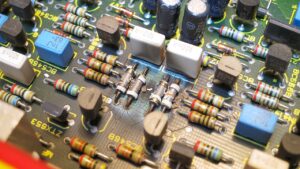
Well — the ONKYO digital integrated amplifier A-1VL has, as of yesterday, broken down. The power cut out immediately after switch-on. I first assumed a fuse had blown, but opening it up revealed the original fuse to be intact. It followed the sequence described in the manual’s fault-finding section: “power indicator flashing → unit goes silent.” When the power dropped, I thought I glimpsed a brief spark through the ventilation slots on the top panel, but the details are unclear. There are no other obvious signs of damage visible, so it appears that something somewhere in the circuitry has failed for some reason. I am sending it to Onkyo for repair, so there will be no further impressions of the A-1VL for a while. Even so, moments like this remind you how useful it is to have two amplifiers — at least music can still be heard.
Postscript: the repair turned out to require a complete board replacement, but it has come back safely. The failure was a sudden error display followed by silence; apparently this sort of fault is rare, and in the end no one was quite sure what had caused it. The sound has reverted to that fresh, clean quality of a brand-new unit, so burn-in must begin again from the start. The shop’s handling of the matter was smooth and courteous, and the repair took only a matter of days. This is worlds away from the baffling behaviour one sometimes encounters from certain retailers and manufacturers, and I feel confident recommending ONKYO products to everyone with complete peace of mind from a service perspective as well.
Fuse Rolling in the ONKYO A-1VL?
The IsoClean Power Fuse I recently purchased for the TAG McLaren 60i — this too continues to sound better the more I listen to it.
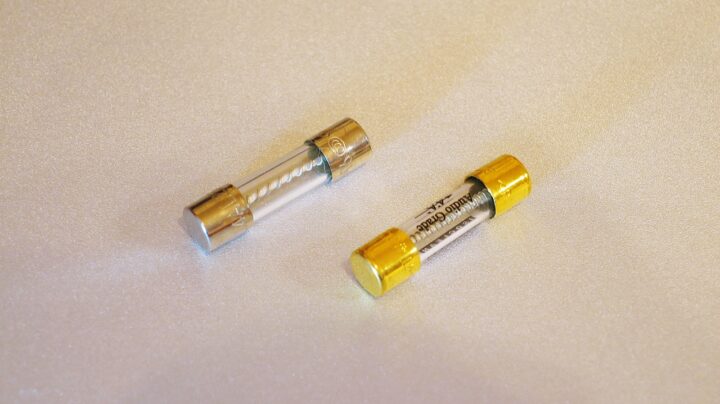
In any of these situations, I think it is well worth trying. If the direction it takes matches what you are after, this kind of change for 3,000 yen is remarkable value. Especially for classical music — the way delicate nuance comes through changes entirely, to the point where one’s assessment of a performance might actually shift depending on the piece. If it makes this much difference with the TAG McLaren 60i, then naturally one is tempted to try it in the ONKYO A-1VL as well — only human nature, really. Strike while the iron is hot. Opening up the A-1VL with a T20 Torx wrench, I found two 3A midget fuses on the left-hand side towards the front.
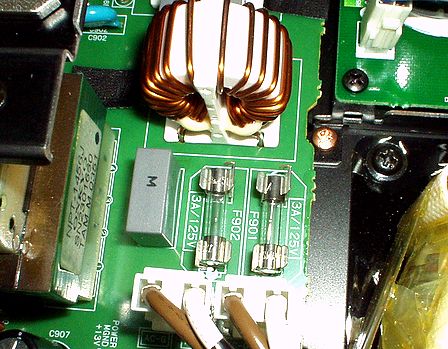
Next I would like to try swapping these out for IsoClean Power Fuse 3A midgets. I have a feeling that running these high-quality fuses in the straightforward-sounding A-1VL might add a touch of that distinctive artistry one associates with European amplifiers. However, it would mean a further outlay of 6,000 yen… hmm. Still, if there is enough interest I am happy to take the plunge as a guinea pig — so if you are an A-1VL user, I would welcome your thoughts.
 category/:ONKYO(A-1VL+C-1VL/C-S5VL/DAC
【ONKYO A-1VL & C-1VL In-Depth Review】
A-1VL/C-1VL Launch|A-1VL (Part 1)|A-1VL (Part 2)|C-1VL

Auto Translated by CS4.6
List of comments (5)
置き場所でころころ音が変わるタイプなんですね.意外でした.
振動は剛性の弱いところに集中しますから,機器自体の剛性が高いと,振動のエネルギーが剛性の弱い所にピンポイントで集中してしまって,音への影響が大きくなるんでしょう.全体的に剛性が弱いと,振動のエネルギーが分散されるので影響が少なくなる,と考えられます.
根本から振動をシャットダウンしたほうがいいみたいですね.
英国系のオーディオなどは、機器の震動から来る付帯音を
上手く取り込んで音作りがされているように思います。
そういった機器を下手にダンピングしたり重い物を乗せたりすると、
包まれるような音場感が減退して、音楽性が死んでしまうんです。
ですから、私は震動をシャットダウンするという考え方は
あまり好きではありません。重量や制震にこだわるメーカーの製品って、
どれもこれも音が暗く死んだ音になってませんか?
オンキョーのVLシリーズも、がっちり作っているとは言いながら、
要所要所は震動を殺さずに、素材を生かして音作りをした印象があります。
大理石は重量で制震しているようでいて、
実は本質的に響かせてるって所が好みです…。
デジタル機器は意外と足元で変わるようです。
1bitもかなりの変化がありました。
昔は、がちがちに制震してましたけど今は適当な遊びを持たしています。
まあ、どうせどこかが振動するんですからそれなら積極的に使おうかなと…
そのほうが、生き生きした音がしますからね。
さっき言い忘れましたが、僕の電源タップはRTP-4です。
確かに高解像度系の音ですが、手放すことができないアイテムになってしまいました。
RTP-4良いですねー(^^)。A-IVLを使う上でも、
アコリバのタップは絶対にあった方が良いと思います。
ただ、モデファイした現行モデルはちょと価格が高すぎで…(汗)